Tag Archives: Incarnation

On the Wonder of the Incarnation and Whether Mary Knew

Christmas really is one of my most favorite times of the year. I love the decorations, the gifts, the parties, and the church Christmas programs, but most of all I love the music. The traditional Christmas carols, the sacred Christmas hymns, they just give me all the feels when it comes to Christmas; in the car, at home, at church, you will almost always find me listening to Christmas music during the month of December. And one of my most favorite Christmas songs is the song “Mary, Did You Know?”, and my most favorite arrangement of the song is performed by Mark Lowry with the acapella group Voctave singing backup (posted above). Mark Lowry wrote the lyrics in 1985 when he was asked to write a script for a church Christmas play, and the lyrics were put to music in 1991 by Buddy Greene. Of course, it has been recorded by many varied recording artists over the years, both secular and sacred, and it is sung and played regularly during Christmas programs in churches all across the United States and, no doubt, around the world.

However, every year it seems, I read some renewed or repeated criticism of the song on social media. Some attempt to dismiss the song theologically, citing the Annunciation and the Magnificat as evidence that “she knew”. I have even seen some who have attempted to go line by line through the song to give a yes or no answer to each rhetorical question. Similarly, those in the Roman Catholic tradition take issue with the suggestion that Mary needed to be “delivered” and “made new” because of their (erroneous) beliefs about the sinlessness of Mary. Others argue that the song is mawkish, sappy, and infantilizing, that it is “the most sexist Christmas song ever written,” or that it “treats her like a clueless child.” Still others dismiss the song simply because it is overplayed and/or poorly performed by well-meaning church members during the Christmas season as “special” music. And to be honest, when I read criticisms like these, I just shake my head and wonder how we have lost our wonder at the miracle of the incarnation.

Biblically, it is true that Luke presents Mary as a paragon of faith. When she is confronted by the angel Gabriel with the news that she will conceive by the Holy Spirit and give birth to the Son of God, she responds with simple faith, “See, I am the Lord’s servant. May it happen to me as you have said.” (Luke 1.38) And her Magnificat (Luke 1.46-55) clearly indicates that she understood that this was a pivotal moment in the unfolding of God’s plan of redemption for the world. However, we also know that at one point during his earthly ministry, she came with her other children to try to hide Jesus away because they thought he was an embarrassment to the family. (Mark 3:31-35, parallels Matthew 12.46-50, Luke 8.19-21) Time and again, the Gospels detail how the first followers of Jesus struggled to fully understanding the significance of who he was and what he had come to do, and we should assume that Mary would have been no different. We know that Mary treasured and pondered all these things in her heart, but the Bible is clear that the first followers of Jesus, including Mary and his brothers, grew in their understanding of the person and work of Jesus over the course of his life and ministry and that they did not understand him in full until after his resurrection and the coming of the Spirit.

The point is that we should not underestimate the richness of what it means for God to become flesh. When Jesus was born in the Bethlehem 2000 years ago, there was already plenty of theological and cultural expectations as to what he was supposed to be and do. But Jesus turned those expectations on their heads, and he demonstrated that he is a Messiah who cannot be fit into a preconceived box. And as his followers, we should never lose our wonder at this fact. Jesus will always be more than we could possibly hope to comprehend; we will never have him fully figured out. Even when we reach glory, we are told that “He had a name written that no one knows except himself.” (Revelation 19.12) This means that even then there will be more to learn and understand about him when he returns as glorious king. We must never lose our wonder at the person and work of Jesus. Even the things we think we know about him pale in comparison to the fullness of his glory.

And so, when we hear the song “Mary, Did You Know?” this Christmas season, we shouldn’t try to dissect it theologically. We shouldn’t dismiss it because of its musical style, its tone and perspective, or even its emotionality. We should allow it to spur our reflections, to feed our wonder, to drive us to worship the God who became flesh for our sakes, who suffered and died in our place, and who is coming again to receive us unto himself. The song is an artistic, poetic reflection on the miracle of Christmas and the sheer mystery of the incarnation. Mary was in a unique position to feel the weight and wonder of it all, and at Christmas, it is right for us to enter into her experience, to ponder anew what it must have been like, and to fall down in worship of the God who became flesh. This Christmas, let us rekindle our wonder. Let us stand in awe and silence, and let us rejoice in the fact that we have a savior who came to heal our brokenness, to free us from sin, and to restore in us the joy of living in his presence. He is Emmanuel; He is God with us!


On Our Conduct as Members of the Local Church

TEXT

14 I write these things to you, hoping to come to you soon. 15 But if I should be delayed, I have written so that you will know how people ought to conduct themselves in God’s household, which is the church of the living God, the pillar and foundation of the truth. 16 And most certainly, the mystery of godliness is great:

He was manifested in the flesh,
vindicated in the Spirit,
seen by angels,
preached among the nations,
believed on in the world,
taken up in glory.

~1 Timothy 3.14-16

Title: On Our Conduct in the Local Church
Text: 1 Timothy 3.14-16
Series: 1 Timothy: God’s Design for a Healthy Church
Church: Redeemer Baptist Church, Jonesboro, AR
Date: October 5, 2025


On Apocalyptic Eschatology and Christian Theology

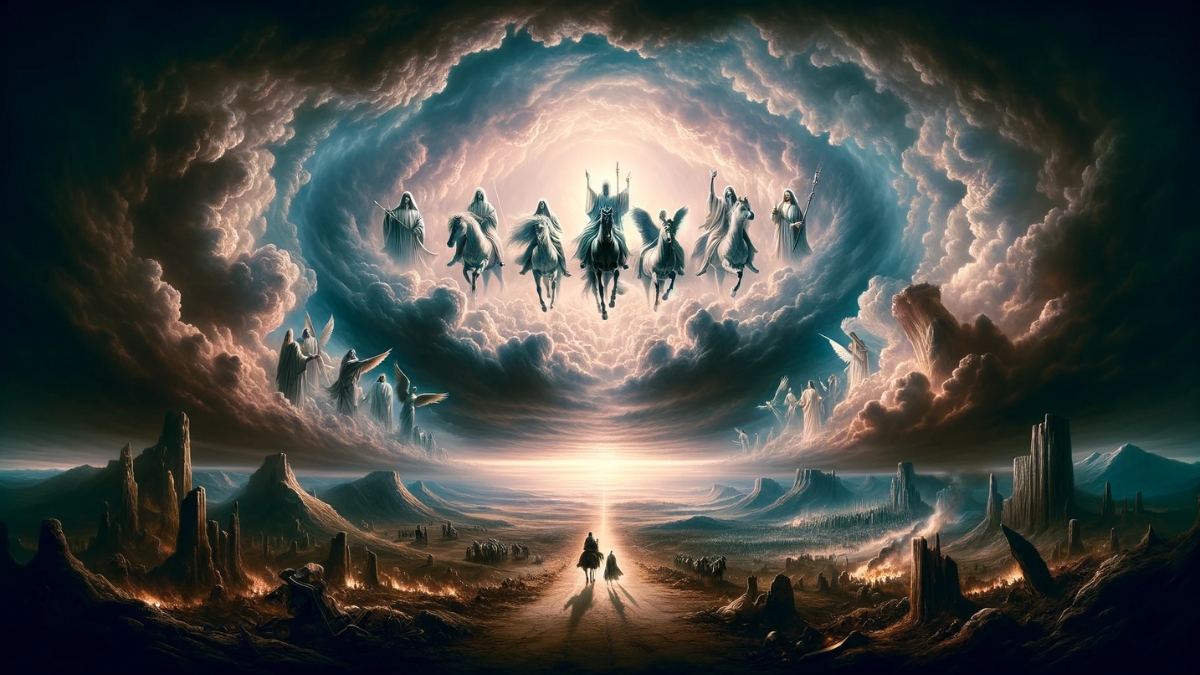
In a frequently repeated statement, Ernst Käsemann famously said that “Apocalyptic was the mother of all Christian theology.” Not as well-known is that two years later, Käsemann clarified what he actually meant by “apocalyptic”: for him, it referred to “eschatology,” or in his words, “the expectation of an imminent Parousia.” Personally, I would define apocalyptic eschatology a bit more broadly. Apocalyptic eschatology is the belief that this present age is irredeemably corrupted by sin, that God is coming to intervene in a final judgment on the wicked, and that at that time he will vindicate the righteous and deliver them into a new of age of eschatological salvation that is both personal in the sense of resurrection and cosmic in the sense of renewal. The question remains, however, as to how this perspective might rightly be considered to be the “mother of all Christian theology,” and in the space that remains, I would simply like to offer a few brief explanations for this claim.

First, apocalyptic eschatology revolves around the final, climactic visitation of God to the earth. In the Old Testament, this visitation was often referred to as “the Day of the Lord.” In fact, there were many “days of the Lord” in the Old Testament, all of which function as typological portends of the final Day of the Lord when God comes in eschatological glory and power. Christian theology believes that this final Day of the Lord began when God came to earth in the incarnate Lord Jesus Christ. He was to be called Emmanuel, which is translated “God with us.” (Matthew 1.23). And the Lord Jesus himself said of Jerusalem, “you did not recognize the time when God visited you.” (Luke 19.44) This is exactly the point, namely that the coming of Christ in his incarnation was the beginning of the apocalyptic visitation of God to the earth. Of course, we know that He is coming again in glory and power to bring to consummation that which he began in His first coming, but the point here is that in Christ, God himself came in climactic apocalyptic visitation.

And this brings me to the second reason why apocalyptic eschatology is the mother of all Christian theology, namely that the first coming of Christ to the earth as a baby in a manger marked the beginning of the end of this corrupt present age. In New Testament theology, this is commonly referred to as the already and the not yet, namely that God’s plan for the final redemption of his people has already begun in Christ but it is not yet complete. Consequently, we live in this in between time of already and not yet, already saved, already filled with the eschatological spirit, already living under the blessings of God’s eschatological salvation in part, but we await the time when Christ will come again to consummate, or to bring to completion, that which he began by his death, resurrection and ascension. This is why Peter, in his Pentecost sermon, can say, “And it will be in the last days, says God, that I will pour out my Spirit on all people.” (Acts 2.17). The underlined phrase marks a change that Peter has applied to his source text (Joel 2.28), which simply says, “After this.” Peter understood that in Christ the last days had begun, and we have been living “in the [apocalyptic] last days” now for 2000 years.

But what about the final judgment of the wicked? Isn’t this something that is still yet future? How can we say that the apocalyptic judgment of the wicked began in Christ at his first coming? The answer is that this is exactly what we must say, as Jesus says in John 12.31-32, “Now is the judgment of this world. Now the ruler of this world will be cast out. As for me, if I am lifted up from the earth I will draw all people to myself.” The verb here, “lift up”, means to lift up on high, to exalt, or to raise to dignity and honor. This is why it is so ironic that John goes on to add the explanatory note, “He said this to indicate what kind of death he was about to die.” (John 12.33) The death of Jesus on the cross is nothing less than his enthronement. By his death, he judges the wickedness of this world and its ruler; He exposes the sinfulness and the ultimate fate of those that would reject him. This is why we can say that the final judgment began in Jesus, because a person’s response to the crucified and risen Christ will determine their eternal fate. In the death of Christ, judgment has begun, and it will be meted out when “the lamb who was slain,” as the Revelation calls him, returns in glory and power.

Finally, apocalyptic eschatology is the mother of all Christian theology because in Christ eschatological salvation has come. Salvation is inherently and irreducibly an eschatological concept. Saved from what, we might ask? We are saved from the eschatological wrath of God toward sin. And in Christ this salvation has broken into this present age and been made available to all those who respond to Christ in faith. This is why Peter refers to Joel’s prophecy to explain the coming of the Spirit at Pentecost, as we saw above. We have been filled with the eschatological Spirit, the seal and sign of the new age. We are new creatures, the fruit of a new creation, in Christ because of the Spirit. This is why the Apostle Paul can say, “Blessed is the God and Father of our Lord Jesus Christ, who has blessed us with every spiritual blessing in the heavens in Christ.” (Ephesians 1.3) Every spiritual blessing, every blessing of the age to come is already ours in Christ. We have been saved. We are being saved. And we will be saved. Apocalyptic salvation has already begun in Christ, and we are partakers of it by His indwelling Spirit.

So, I agree with the sentiments of Ernst Käsemann as expressed above. Apocalyptic eschatology is the mother of all Christian theology, because in Christ the apocalyptic visitation of God has come. All of the rest of our theology must be derived from this point, that the climactic work of God for the salvation of His people and His world has come in Christ. This is the Gospel; this is the good news of our salvation. In Christ, God himself has broken into this present age to redeem his people from their sin and set us free from its bondage, its corruption, even its very presence. And this is why we can have hope.


On the Trinity, the Cross, and the Cry of Dereliction

Today is Good Friday, a day when Christians around the world will pause to think about the death of Jesus Christ. It is a scene that has gripped the imaginations of Christian artists and sculptors now for two millennia, the Son of God hanging, naked, beaten, and bleeding, nailed to a Roman cross, and left to die. The brutal and gory realities of the scene would probably turn even the strongest of stomachs. And yet, for followers of Jesus, the words of the old hymn writer capture it well, “O that old rugged cross, so despised by the world, has a wondrous attraction for me.” This is because for those whose sins have been washed away by the shed blood of Christ, there is simply nothing more beautiful, nothing more deeply profound, than the substitutionary death of Son of God.

The profundity of the scene is best expressed in the words of Jesus; “About three in the afternoon Jesus cried out with a loud voice, “Elí, Elí, lemá sabachtháni?” that is, “My God, my God, why have you abandoned me?” (Matthew 27.46) This “cry of dereliction”, which Jesus quotes from Psalm 22.1, is typically explained as the moment in which the full weight of God’s wrath toward sin was placed on the Son, and because God is essentially holy and cannot look upon sin, “the father turned his face away”, as we often sing. Of course, I am not sure that we will ever understand what Jesus was feeling in that moment, but the significance of the moment invites us to spend the next few moments attempting to understanding its theological implications.

And our reflection on this scene must begin with the affirmation of the hypostatic union, or the truth that Jesus was both God and man. He was God the Son incarnate. So, what might it mean for the Son to be “abandoned” by the Father? From a trinitarian perspective, it cannot mean that the godhead was divided in any kind of way. We confess that the God of the Bible is three in one – Father, Son, and Holy Spirit – one in essence, three in person. As a corollary, we confess that there is one God; we are not tri-theists. So, if there is only one God, then, it is metaphysically impossible for God to be divided from himself. In other words, the “cry of dereliction” cannot be understood to imply a separation or a division of the Father from the Son, or of God from himself.

Secondly, the doctrine of the Trinity also implies the idea of inseparable operations, meaning that whatever the Father does, the Son and the Holy Spirit do also, because there is only one God. This means that when the Father poured out His wrath on Jesus at the cross, that wrath belonged equally to the Son and the Spirit as well. So, it is completely accurate to say that the Son poured out His own wrath toward sin on Himself at the cross. This is the beauty of the Gospel, namely that what the justice of God required the love of God supplied. God took into Himself, in the person of Jesus Christ, the wrath that we deserve, so that we could be saved from His wrath. This truth should always leave us absolutely breathless and without words.

So, can we still sing the words “the father turned His face away”? I think yes; as Paul writes in 2 Corinthians 5:21, “He made the one who did not know sin to be sin for us.” One commentator that I recently read explains, “In a sense beyond human comprehension, God treated Christ as ‘sin,’ aligning him so totally with sin and its dire consequences that from God’s viewpoint he became indistinguishable from sin itself.” Jesus knew this to be his fate. He was fully and completely human, and, on the night He was betrayed, the burden of this task was so heavy that it caused even to sweat great drops of blood. Whatever the god-man felt in that moment, hanging there as the perfect and final sacrifice for our sin, is simply beyond our capability to fathom. Nevertheless, it was a fate that He willingly embraced for the sake of our salvation. And so we sing,

In that old rugged cross, stained with blood so divine,
a wondrous beauty I see,
for ’twas on that old cross Jesus suffered and died,
to pardon and sanctify me.

For further study, see
Matthew Emerson, “Parameters for Talking about the the Cry of Dereliction” (March 27, 2018)
and “Canonical Parameters for Talking about the Cry of Dereliction” (April 3, 2018)


On Love as the Heart of Christmas

TEXT

Dear friends, let us love one another, because love is from God, and everyone who loves has been born of God and knows God. The one who does not love does not know God, because God is love. God’s love was revealed among us in this way: God sent his one and only Son into the world so that we might live through him. 10 Love consists in this: not that we loved God, but that he loved us and sent his Son to be the atoning sacrifice for our sins. 11 Dear friends, if God loved us in this way, we also must love one another. 12 No one has ever seen God. If we love one another, God remains in us and his love is made complete in us. 13 This is how we know that we remain in him and he in us: He has given us of his Spirit. 14 And we have seen and we testify that the Father has sent his Son as the world’s Savior. 15 Whoever confesses that Jesus is the Son of God—God remains in him and he in God. 16 And we have come to know and to believe the love that God has for us.

God is love, and the one who remains in love remains in God, and God remains in him. 17 In this, love is made complete with us so that we may have confidence in the day of judgment, because as he is, so also are we in this world. 18 There is no fear in love; instead, perfect love drives out fear, because fear involves punishment. So the one who fears is not complete in love. 19 We love because he first loved us. 20 If anyone says, “I love God,” and yet hates his brother or sister, he is a liar. For the person who does not love his brother or sister whom he has seen cannot love God whom he has not seen. 21 And we have this command from him: The one who loves God must also love his brother and sister.

~1 John 4.7-21

Title: On Love as the Heart of Christmas
Text: 1 John 4.7-21
Church: South Caraway Baptist Church, Jonesboro, AR
Date: December 17, 2023


On the Annual Celebration of Christmas and Easter

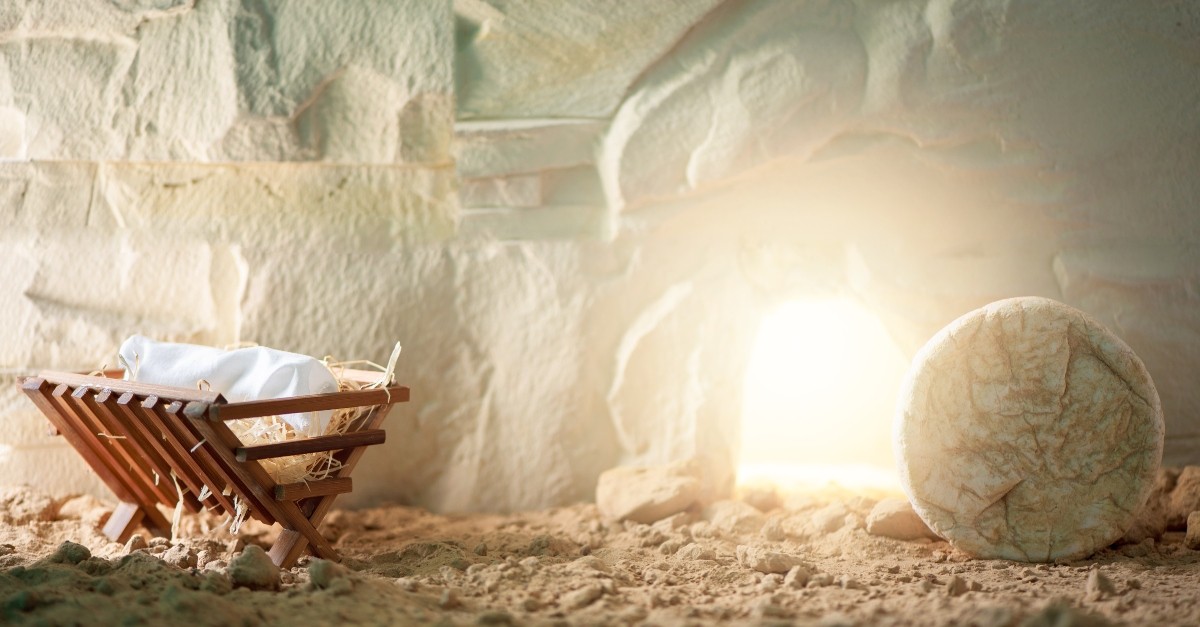
When it comes to a church’s life together, there are two pillars around which the rest of the annual calendar swings, i.e. Christmas and Easter. These are the high points in the church’s worship every year. Many churches still commemorate these holidays with special programs, musical and dramatic presentations of the Biblical story, and a focus on inviting the community in for high attendance, after all these are the only days that the CEOs come to church anyway (Christmas and Easter Onlys). It is clear that these holidays hold a special place in the devotion of most Christians. They focus our reflection on the primary movements of the story of redemption, how God the Son came to earth incarnate as a baby in a manger and how he died on the cross for sin and rose again some thirty years later. Even though they are mostly overcome by the cultural consumerism that so obviously characterizes our society these days, they are still a meaningful season in the worship of the church.

However, the question remains, “why do we celebrate these annual holidays anyway?” After all, there is no explicit command in the Scriptures to commemorate the nativity and/or the passion of our Lord Jesus Christ annually by a special holiday. In the New Testament, the church’s worship moved away from the annual calendar marked by special holidays and feasts that characterized the worship of the Jews in the Old Testament, and they moved to a weekly calendar marked by the gathering of the saints on the Lord’s Day for the preaching of the Word and the breaking of bread. Further, the Regulative Principle for Worship (RPW) states that only those elements that are clearly prescribed in the Scriptures should be included in the church’s worship. A strict application of this principle would mean that since Christmas and Easter are not explicitly prescribed by the New Testament, then we are in error when we make them a primary emphasis or central component in our devotion and worship, whether corporately or individually.

We do know that the church began to celebrate these holidays fairly early on in her existence. Within a century or so of the life and death of Jesus and His first followers, the church began to include these annual feasts as a regular part of the worship calendar. Of course, critics often suggest that these festivals were borrowed and adapted from the pagan world; however, these criticisms tend to fall apart quickly under close historical scrutiny. After examining the evidence, one author recently concluded that “no modern Christmas [or Easter] tradition can draw a straight line to any clear and decisive pagan origin.” While there has certainly been growth over the centuries in the lore and cultural traditions that surround these holidays, none of this is original and/or essential to the Christian celebration of them. Rather, it is evident that Christians recognized very early on in their history how important it was to commemorate the two decisive moments in redemptive history, namely the birth and death/resurrection of the one who is called Christ.

Of course, tradition alone is not a sufficient enough reason to justify the continued celebration of Christmas and Easter, but neither is it a sufficient reason for discontinuing the observance of them either. All traditions are not bad; in fact, some are quite helpful in the formation of our faith and practice. I have previously written on the question of tradition here, but suffice it to say that there is great wisdom in learning from the faith and practice of our Christian forebears, both from what they did well and from what they did not do well. So, perhaps the proper question should not be whether the celebration of Christmas and Easter is right or wrong, but whether it is wise and good. Does the annual observance of these holidays have spiritual value for the growth of the followers of Jesus in conformity to His image? And if this is the question, then we must answer in the affirmative. The fact of the matter is that we are a people who are quick to forget, quick to move on, quick to believe that we have outgrown our need for the Gospel. But there is nothing more foundational, nothing more crucial, for our formation in Christlikeness than to be reminded regularly of exactly what Christ has done on our behalf.

His incarnation and resurrection are the primary aspects of His redemptive work; they tell the story of how God the Son came to earth as a child, lived a sinless life, died on the cross for sin, and then rose again. In fact, the Apostle Paul instructs us in Second Timothy, chapter 2, verse 8, “Remember Jesus Christ, risen from the dead and descended from David, according to my gospel.” Or again, in the Letter to the Romans, that Jesus Christ “was a descendant of David according to the flesh and was appointed to be the powerful Son of God according to the Spirit of holiness by the resurrection of the dead.” Throughout the New Testament, these movements – the incarnation and the resurrection – are the hinge pins upon which the Gospel swings. And as followers of Jesus, we take great joy in celebrating these glorious acts of redemption each and every year, because it reminds us of the beautiful salvation that we have in Christ. It reminds us who we are, and it reminds us of why we are here. The church is a body of believers whose existence and purpose are defined by the redemptive work of God in Christ. Therefore, it is right and good that we celebrate these movements of God’s grace, not only every week, but as a matter of purposeful reflection every year on Christmas and Easter.

This, however, would seem to be the challenge in our modern culture, focusing our worship on Christ during these holidays and not becoming distracted by the cultural baggage that is so obviously associated with them. Just last month, I was chided vociferously on social media for suggesting that Santa Claus is neither necessary nor useful in the Christian enjoyment of the Christmas holiday. It would seem that in this particular cultural milieu Christians will need to be purposeful and strategic in how they celebrate going forward. We must make it clear that Christmas and Easter are about Christ and Christ alone, and if that means dispensing with some of the traditional festivities that have become associated with these holidays, then so be it. The celebration of Christmas and Easter should be a time when those who follow Jesus can celebrate anew the wonder and glory of what Christ has done for us in the Gospel. May we never grow tired of celebrating this timeless story each and every year.

This article is also posted at SBCvoices, here.


On a Christmas Joy That Lasts

TEXT

Nevertheless, there will be no more gloom for those who were in distress. In the past he humbled the land of Zebulun and the land of Naphtali, but in the future he will honor Galilee of the nations, by the Way of the Sea, beyond the Jordan—

The people walking in darkness
    have seen a great light;
on those living in the land of deep darkness
    a light has dawned.
You have enlarged the nation
    and increased their joy;
they rejoice before you
    as people rejoice at the harvest,
as warriors rejoice
    when dividing the plunder.
For as in the day of Midian’s defeat,
    you have shattered
the yoke that burdens them,
    the bar across their shoulders,
    the rod of their oppressor.
Every warrior’s boot used in battle
    and every garment rolled in blood
will be destined for burning,
    will be fuel for the fire.
For to us a child is born,
    to us a son is given,
    and the government will be on his shoulders.
And he will be called
    Wonderful Counselor, Mighty God,
    Everlasting Father, Prince of Peace.
Of the greatness of his government and peace
    there will be no end.
He will reign on David’s throne
    and over his kingdom,
establishing and upholding it
    with justice and righteousness
    from that time on and forever.
The zeal of the Lord Almighty
    will accomplish this.

~Isaiah 9.1-7

Title: On a Christmas Joy That Lasts
Series: Supply Preaching
Church: Cherry Valley Baptist Church, Cherry Valley, AR
Date: December 11, 2022


On Titus 2.11-15

Text:
11 For the grace of God has appeared, bringing salvation for all people, 12 instructing us to deny godlessness and worldly lusts and to live in a sensible, righteous, and godly way in the present age, 13 while we wait for the blessed hope, the appearing of the glory of our great God and Savior, Jesus Christ. 14 He gave himself for us to redeem us from all lawlessness and to cleanse for himself a people for his own possession, eager to do good works. 15 Proclaim these things; encourage and rebuke with all authority. Let no one disregard you.

Title: On Titus 2.11-15
Church: Moro Baptist Church, Moro, AR
Date: December 29, 2019


On the Fourth Sunday of Advent

advent 4

The fourth Sunday of the season of Advent is dedicated to the contemplation of love, namely that it was love that motivated the Father to send the Son into the world as the incarnate Christ-child. And though the lectionary readings do not mention the love of God specifically, they do focus us on that great act of love, whereby our Savior became like unto us so that we may become like Him. So, before we turn our attention to the readings for this fourth Sunday, let us remind ourselves of that most memorable of verses,

For God loved the world in this way: He gave his one and only Son, so that everyone who believes in him will no perish but have everlasting life. (John 3.16)

This is the gift that we celebrate at Christmas, and the lectionary readings prepare us for that celebration by reminding us that this was the eternal plan of God from the very beginning of time.

Old Testament: Isaiah 7.10-16
Of course, this is the passage where we find God’s prediction of the virgin birth, that “the virgin will conceive, have a son, and name him Immanuel,” (verse 14), and this is the verse that will be cited by Matthew in today’s Gospel reading. And so it is tempting to fast forward immediately to the those events surrounding the birth of the Christ-child. However, we would be completely remiss if we ignored the original context within which this prophecy is given. And while we do not have the space here to recount the whole story, it would behoove us to linger in these chapters, specifically chapters 7-9, before jumping to the details of the Christmas story. This passage recounts the promise given through the prophet Isaiah that God would deliver the Kingdom of Judah from the enemies, even in spite of the seemingly insurmountable odds that were arrayed against them. “For before the boy knows to reject what is bad and choose what is good, the land of the two kings you dread will be abandoned.” (Verse 16) And it is this pattern then that becomes the typological precedent for the coming of Messiah. In other words, because God loves His people, He will deliver them from their enemies, whether those enemies be temporal (as with the people of Judah) or eternal (as with us and our enemy – sin).

Psalm: Psalm 80.1-7, 17-19
In the Psalm reading, “the psalmist laments Israel’s demise and asks the Lord to show favor toward his people, as he did in earlier times.” (Study Note, NET Bible) In other words, the psalmist is praying for God’s salvation specifically as that pertains to the restoration of the people of Israel. “Listen, Shepherd of Israel, who leads Joseph like a flock; you who sit enthroned between the cherubim, shine on Ephraim, Benjamin, and Manasseh. Rally your power and come to save us.” (Verses 1-2) But what is most sobering in this Psalm is that the psalmist admits that the people of Israel have reaped the just and due consequence of their sin in punishment from God, and that it is God and God alone who can must intervene on behalf of His people for their forgiveness and restoration. “Lord God of Armies, how long will you be angry with your people’s prayers? You fed them the bread of tears and gave them the full measure of tears to drink.  (Verse 4-5) And this is not unlike the spiritual condition of all humanity; we are too justly under the judgment of God for our sin, and He and He alone is the one who must act for our salvation. And so we pray, “Restore us, Lord, God of Armies; make your face shine on us, so that we may be saved.”

New Testament: Matthew 1.18-25
The Gospel reading for this fourth and final Sunday of Advent, then, takes us to the events leading up the birth of the Christ-child. “After his mother Mary have been engaged to Joseph, it was discovered before they came together that she was pregnant from the Holy Spirit. So her husband Joseph, being a righteous man, and not wanting to disgrace her publicly, decided to divorce her secretly.” (Verse 18-19) Obviously, Joseph was facing a perplexing dilemma, and who’s to say what we might have done under those same circumstances. But God intervened in a dream telling Joseph to take Mary as his wife. “She will give birth to a son, and you are to name him Jesus, because he will save his people from their sins.” (Verse 21) Of course, Matthew goes on in verses 22-23 to make the point that this was in fulfillment of what God had said through the prophet Isaiah, as we saw in our Old Testament reading. And “When Joseph woke up, he did as the Lord’s angel had commanded him. He married her but did not have sexual relations with her until she gave birth to a son. And he named him Jesus.” (Verses 24-25) But the important point to note in this passage is that in the Christ-child, God himself has come into the world “to save His people from their sins.” 

New Testament: Romans 1.1-7
And this was God’s plan A all along, as Paul goes on to show in the New Testament reading. Of course, in the Letter to the Romans, Paul is writing to a church that he himself had never visited. He was practically a stranger to them, and so, in these introductory verses, he must establish his identity and the authority from which he writes, which he ultimately grounds in the Gospel of God. “Paul, a servant of Christ Jesus, called as an apostle and set apart for the gospel of God.” (Verse 1) And it is this concept, the Gospel of God that Paul goes on to define in verses 2 thru 6 of the passage, that it was promised beforehand through the prophets in the Scriptures (verse 2), that it concerns his son, Jesus Christ our Lord, that he was a descendant of David (verse 3), appointed the powerful Son of God by the Spirit through resurrection (verse 4), and that through Him, we have been given a mission to bring about the obedience of faith for the sake of His name throughout the nations (verse 5). The point being that this was God’s plan all along from eternity past to eternity future, the Gospel of God is the script by which history unfolds. And the coming of Christ, both in His first Advent and in His second, is the cornerstone of that Gospel.

And so, we return to where we began, that the Gospel of God is nothing less than the expression of His love for His people, and that is what we celebrate at Christmas. God himself entered into the creation as the Christ-child incarnate to save His people from their sins. And thanks be to God for giving us this gift.

For further study:
On the Season of Advent
On the First Sunday of Advent
On the Second Sunday of Advent
On the Third Sunday of Advent


On the Season of Advent

Advent

Well, it is that time of year again. ‘Tis the season, and all that jazz. Now that Thanksgiving has come and gone, the sights and sounds and smells of Christmas have begun to fill the air. However, with the month of December comes another season that sometimes gets lost in the hustle and bustle of the holidays. I am talking about the Christian season of Advent. Advent, that time of year, according to the Christian calendar, when followers of Jesus prepare themselves to celebrate the incarnation of the Savior at Christmas. Of course, the season of Advent, which consists of the four Sundays leading up to Christmas, stands at the beginning of the church year, and as such, it brings with it a sense of renewal and hope.

The name Advent comes from a Latin word that simply means “coming”, which itself is a translation of the Greek word parousia, meaning “coming”. And in the New Testament, this word almost always refers to the Second Coming of our Lord Jesus when He will return to the earth in glory and power. In other words, the season of Advent is a time when Christians reflect on the Second Coming of our Lord Jesus Christ, even as we prepare to celebrate His first coming. We look back, so that we may look forward. We look back into the hope and longing of Israel for the coming of Messiah, even as we look forward with hope and longing for the return of Messiah. And we let their expectations inform our expectation.

This sentiment is captured best in the well known hymn, O Come, O Come, Emmanuel, which begins, “O come, o come, Emmanuel, and ransom captive Israel that mourns in lonely Exile here until the Son of God appears.” The chorus follows, “Rejoice! Rejoice! Emmanuel shall come to you, O Israel.” Or again, in the hymn Come, thou long expected Jesus,” where we sing, “Come, thou long expected Jesus, born to set thy people free; from our fears and sins release us, let us find our rest in thee. Israel’s strength and consolation, hope of all the earth thou art; dear desire of every nation, joy of every longing heart.” And so, it is understandable that the corresponding lectionary readings for this season emphasize the prophetic expectation that is fulfilled in the coming of Jesus as Messiah.

For the follower of Jesus, then, I believe the season of Advent teaches us three things in preparation for the celebration of Christmas. First, it teaches us to wait. When we look back into the hopes of Israel for the coming of Messiah, we are reminded that they had to wait for quite some time. The last messianic prophecy is given in the Book of Malachi, and it was some 400 years or so after those words were spoken that the Christ-child was born. Even as Israel had to wait, so also we have been waiting for some 2000 years for the return of our King. And as long as He should tarry, we will continue to wait. Sadly, the notion of waiting well has been lost in our fast-paced, instant society, but Advent teaches us to wait patiently.

Secondly, Advent teaches us to hope. It is in the season of Advent that we are reminded that our hope has only partially been fulfilled. And even as we anticipate the celebration of Christmas, we are reminded that the incarnation is only half of the Gospel story. Our Lord Jesus came to this earth the first time as a baby in a manger, and He grew into a man who died on a cross for our sin and then rose again. And after His resurrection, He ascended unto the Father with a promise, that in the same way that He departed, so also would He return one day. He will come a second time with glory and power, and He will finally and permanently establish the kingdom of God on the earth in peace and righteousness. And we should long deeply for that day!

And lastly, Advent teaches us to be faithful. In other words, even as we wait, we are not waiting passively. We are not merely sitting back on our hands looking to the sky for His return. No, we have been given a commission, a Great Commission, to go into all the world making disciples of our Lord Jesus the Christ. We are called to be faithful, to serve, and love, and live in Christ-likeness, until that time when we will meet Him in the air. As the Apostle Paul puts it in the Letter to Titus, chapter 2, verses 11-13,

For the grace of God has appeared, bringing salvation for all people, instructing us to deny godlessness and worldly lusts and to live in a sensible, righteous, and godly way in the present age, while we wait for the blessed hope, the appearing of the glory of our great God and Savior, Jesus Christ.”

This Advent season, I pray that you all will be filled with this blessed hope.

For Further Study, see:
On the Use and Benefit of the Christian Calendar

See also:
On the Epiphany of Our Lord Jesus Christ
On the Season of Lent
On the Season of Easter


Slow To Write

"let every person be quick to hear, slow to speak, slow to anger."

lovegavehope

Just another WordPress.com site

Jared Cornutt

Pastor | Speaker | Writer

Denny Burk

A commentary on theology, politics, and culture

G3 Ministries

Events + Resources for the Local Church

Biblical Reasoning

Biblical and Systematic Theology According to the Scriptures

RetroChristianity

Reclaiming the Forgotten Faith

SBC Voices

Southern Baptist News & Opinion

Lucid Theology

Thoughts on words, books, theology, and life.

Baptist21

A pastor-led voice for Baptists in the 21st century

Center For Baptist Renewal

The Personal and Professional Blog of Phillip Powers

The Pastor's Well - Pastor Well

The Personal and Professional Blog of Phillip Powers

Articles - AlbertMohler.com

The Personal and Professional Blog of Phillip Powers

The Gospel Coalition

The Personal and Professional Blog of Phillip Powers