1 The elder: To the elect lady and her children, whom I love in the truth—and not only I, but also all who know the truth— 2 because of the truth that remains in us and will be with us forever. 3 Grace, mercy, and peace will be with us from God the Father and from Jesus Christ, the Son of the Father, in truth and love.
4 I was very glad to find some of your children walking in truth, in keeping with a command we have received from the Father. 5 So now I ask you, dear lady—not as if I were writing you a new command, but one we have had from the beginning—that we love one another. 6 This is love: that we walk according to his commands. This is the command as you have heard it from the beginning: that you walk in love.
7 Many deceivers have gone out into the world; they do not confess the coming of Jesus Christ in the flesh. This is the deceiver and the antichrist. 8 Watch yourselves so that you don’t lose what we have worked for, but that you may receive a full reward. 9 Anyone who does not remain in Christ’s teaching but goes beyond it does not have God. The one who remains in that teaching, this one has both the Father and the Son. 10 If anyone comes to you and does not bring this teaching, do not receive him into your home, and do not greet him; 11 for the one who greets him shares in his evil works.
12 Though I have many things to write to you, I don’t want to use paper and ink. Instead, I hope to come to you and talk face to face so that our joy may be complete. 13 The children of your elect sister send you greetings.
~2 John 1-13
Title: On Christian Living in the Last Hour Text: 2 John 1-13 Church: South Caraway Baptist Church, Jonesboro, AR Date: September 24, 2023
4 Therefore I, the prisoner in the Lord, urge you to walk worthy of the calling you have received, 2 with all humility and gentleness, with patience, bearing with one another in love, 3 making every effort to keep the unity of the Spirit through the bond of peace. 4 There is one body and one Spirit—just as you were called to one hope at your calling— 5 one Lord, one faith, one baptism, 6 one God and Father of all, who is above all and through all and in all.
7 Now grace was given to each one of us according to the measure of Christ’s gift. 8 For it says:
When he ascendedon high, he took the captives captive; he gave gifts to people.
9 But what does “he ascended” mean except that he also descended to the lower parts of the earth? 10 The one who descended is also the one who ascended far above all the heavens, to fill all things. 11 And he himself gave some to be apostles, some prophets, some evangelists, some pastors and teachers, 12 to equip the saints for the work of ministry, to build up the body of Christ, 13 until we all reach unity in the faith and in the knowledge of God’s Son, growing into maturity with a stature measured by Christ’s fullness. 14 Then we will no longer be little children, tossed by the waves and blown around by every wind of teaching, by human cunning with cleverness in the techniques of deceit. 15 But speaking the truth in love, let us grow in every way into him who is the head—Christ. 16 From him the whole body, fitted and knit together by every supporting ligament, promotes the growth of the body for building itself up in love by the proper working of each individual part.
~Ephesians 4.1-16
Title: On How Christians are Different Text: Ephesians 4.1-16 Series: The Letter to the Ephesians Church: South Caraway Baptist Church, Jonesboro, AR Date: July 23, 2023
A couple of weeks ago, Christians around the world celebrated the death and resurrection of our Lord Jesus Christ. It is a holiday that transcends all denominational lines, theological differences, national borders, language barriers, and time zones. Holy Week. Palm Sunday, Good Friday, Resurrection Sunday, these annual “holy-days” tell the story, that “old, old story, how a Savior came from glory, how He gave His life on Calvary, to save a wretch like me.” It is a time in which we pause to remember, when we focus our reflection, our worship on the good news that makes the Christian gospel unique, timeless, powerful, namely that Christ is risen. He is risen indeed. Each and every day of that week, from Palm Sunday through Resurrection Sunday, is absolutely rich, robust with significance for Christian faith and practice. However, there is one day of that week that is often neglected in the hustle and bustle that usually accompanies preparations for Easter Sunday.
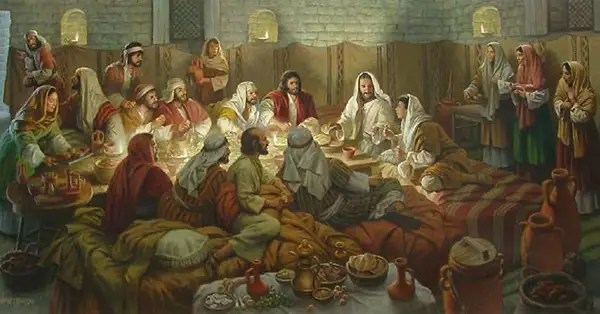
On Thursday evening of our Lord’s Passion, Jesus gathered with His disciples in the upper room. The evening began with a beautiful act of loving service as Jesus washed the disciples feet. This seemingly simple moment subsequently shaped the entire evening as Jesus went on to teach them, saying, “I give you a new command: Love one another. Just as I have loved you, you are also to love one another.” (John 13.34). He then explained that this love would be the primary characteristic that would identify them as His disciples (verse 35). Of course, He would go on that evening to define this love by His own sacrificial death which would occur the following day on Good Friday (John 15.13). This is most likely why he referred to it as a “new command”. It wasn’t new in the sense that it had never been taught; in fact, the OT taught clearly that God’s people should “love your neighbor as yourself” (Lev 19.18). However, the love that Jesus was calling the disciples to that night was something more, something different, something new. This is why we traditionally refer to this day as Maundy, which comes from the Latin mandatum meaning command, “a new command.”
The evening continued around the table as they shared the Passover meal, and it concluded with the passing of the bread and cup, which Jesus reinterpreted as symbols of His body that would be broken and His blood that would be shed for the forgiveness of sins to inaugurate the New Covenant (Matthew 26.26-30). This Lord’s Supper subsequently became central to the worship of the early church. As Christians gathered each week for worship and Word, they would do so around the table; they would share a meal together which would of course include the breaking of bread and passing of the cup (c.f. Acts 2.46). This meal would eventually become known as the Agape Feast or “love feast”, so called after the new commandment that Jesus gave the disciples that Thursday night. It was a time when the followers of Christ could come together to experience the grace of fellowship that is available through the Holy Spirit.
In the modern church, this kind of observance is sadly lacking. Though a few traditions have revived the practice (for one example, click here), for the most part it is widely neglected. We are so caught up in the busyness of our own lives, that we fail to take the time to enjoy the fellowship that binds us together. Even immediate families today barely have the time to share an evening meal together, and when they do, they can hardly be bothered to look up from their screens to interact with one another. But for Jesus and His earliest followers, spending the time to share a meal together around the table was a precious gift of God. Unrushed fellowship over the course of a meal where mutual love to can be shared with one another was foundational in the weekly rhythms of the early church; it was paramount for their life together as disciples of Jesus.
We desperately need to recover this timeless grace, the age old spiritual discipline of table. Of course, this should begin with the weekly observance of the Lord’s Supper as a part of the church’s worship. This ordinance should stand at the center, alongside the preaching of the Word, as we gather together for mutual edification and encouragement every Sunday. It should not be relegated to the end of the service as an obligatory addendum. (For more on this, see my post here.) But it need not end there; it should extend from the weekly worship gathering to homes as brothers and sisters in Christ show each other the grace of hospitality, opening up their homes, sharing meals, loving one another, and doing life together. This is Jesus’ vision for Christian community, that we would love another, even as He loves us, and this is nowhere more on display than we we gather around the table.
57The Lord is my portion; I have promised to keep your words. 58 I have sought your favor with all my heart; be gracious to me according to your promise. 59 I thought about my ways and turned my steps back to your decrees. 60 I hurried, not hesitating to keep your commands. 61 Though the ropes of the wicked were wrapped around me, I did not forget your instruction. 62 I rise at midnight to thank you for your righteous judgments. 63 I am a friend to all who fear you, to those who keep your precepts. 64 Lord, the earth is filled with your faithful love; teach me your statutes.
The eight stanza of Psalm 119 (ח/heth – sounds like the ch in Bach, you have to get a little phlegm in the back of your throat when you say it), but this stanza begins with the line “The Lord is my portion.” This is an image that occurs frequently throughout the Old Testament, and especially in the Book of Psalms. The word typically refers to a share or a portion of land received by inheritance. In an agrarian society like ancient Israel, owning land was a source of economic, political, and societal security. Those who owned land had standing and influence. But here, our psalmist affirms that the Lord is his portion. “The Lord” here (printed in all caps on most versions) represents the personal covenant name of God, i.e. יהוה, Yahweh; this is the name that He revealed to Moses from the burning bush, “I am who I am” (Exodus 3.14). In other words, our psalmist understands that Yahweh, the one true and living God, the personal covenant keeping God, is the only one in whom we may find safety, security, stability, satisfaction, and contentment in this life. As the old hymn goes, “All other ground is sinking sand.”
This principle is not unlike that famous slogan of pastor and author John Piper, “God is most glorified in us when we are most satisfied in Him.” Or as question 1 of the Westminster Shorter Catechism states, “Man’s chief end is to glorify God, and to enjoy Him forever.” This is the point, namely that glad and joyful obedience to the Word of God springs forth from a heart that is perfectly satisfied and wholly content in Him. This is why our psalmist says in verse 57, “I have promised to keep your words.” And again in verse 60, “I hurried, not hesitating to keep your commands.” And again in verse 62, “I rise at midnight to thank you for your righteous judgments.” Of course, the counter point is equally true, that when we begin to look for sources of satisfaction and contentment outside of Him, we quickly fall into sin. The world we live in is constantly offering us a plethora of competing products and services intended to satisfy and fulfill; this is the essence of an advertisement rich consumeristic society. But, these options overpromise and under deliver, because nothing can satisfy and fill the deepest longings of the human heart like the God who made it. This is why our psalmist writes in verse 59, “I thought about my ways and turned my steps back to your decrees.” Or again in verse 61, “Though the ropes of the wicked were wrapped around me, I did not forget your instruction.“
But not only does this inner contentment in God free us from the allure of sinful temptations, but its also changes our entire outlook on life, as our psalmist writes in verse 64, “Lord, the earth is filled with your faithful love; teach me your statutes.” Of course, this world is polluted, even overrun, by sin everywhere we turn, such that even the stoutest of hearts might be shaken with fear, but when our hearts are completely secure in God, then we may have that rest which Jesus promised His disciples. Then, we may have confidence that sin is not the end of the story, that evil will not win the day, because we know that where sin abounds grace abounds even more, that where the darkness seems to consume, there the light of God’s grace and love can still shine through. And this hopeful confidence energizes the desire to live in faithful obedience. But more than that, it also empowers us to live in authentic community with others. As our psalmist puts it in verse 63, “I am a friend to all who fear you, to those who keep your precepts.” In other words, when we our hearts are completely whole in God, then we are set free to love others without the need to receive anything in return. We can love others for their sake and nor for our own, because we are complete in the love of Christ. This is the essential foundation for Christian community, that we love each other even as Christ loves us, and we can only do this when are completely satisfied and wholly loved in Christ by God.
Only that life which is lived in willing and fervent obedience to God’s Word can experience genuine human flourishing to the fullest degree, and this kind of obedience can only come from a heart that is perfectly content and satisfied in God and Him alone. As our psalmist writes in verse 58, “I have sought your favor with all my heart; be gracious to me according to your promise.” This is no works based attempt to merit God’s grace. Rather, it is the reflection of a heart that understands and trusts in the promise of God. It is the perspective of a soul that is perfectly at rest in the good news of the Gospel, that pursues faithful obedience to God and His Word from the wholeness that is only available by His grace. It is by grace because Christ has already completely fulfilled God’s law; He lived a life of perfect obedience to the Father. The good news of the gospel is that He has taken our disobedience upon himself, and in a glorious exchange, He has given us His obedient righteousness. And this is why He says, “Come to me, all of you who are weary and burdened, and I will give you rest. Take up my yoke and learn from me, because I am lowly and humble in heart, and you will find rest for your souls. For my yoke is easy and my burden is light.” (Matthew 11.28-30)
The legacy of Donald Trump’s term as President of the United States will not be measured in terms of legislation passed, appointments made, or diplomatic accords achieved. It will not be counted by any advancements of the Republican party’s agenda, by any conservative causes that were championed, or by any national or international crises that were averted. No, the lasting influence of the 45th President will only be measured by the bitter division and caustic animosity that has absolutely engulfed our country. It is an insidious sickness that has pervaded every sphere of our public discourse, and sadly, the church is no exception. We are a people divided, perhaps more than ever, and this is much to our shame.
Nowhere has this mood been more evident than in the Christian blogosphere. Interactions between Christians on social media, whether via Twitter, Facebook, blogs, podcasts, etc., have become more and more antagonistic over the past several months. Whether the question has to do with CRT/Intersectionality, COVID restrictions, or with issues related to the role of women in the ministry of the church, Christians on both sides of these issues have been quick to vilify and condemn those with whom they are not in perfect agreement. This trend has resulted in an atmosphere online that is hateful, ugly, and disheartening.
Now, what we must affirm is that discussion, debate, and even disagreement are essential to the theological enterprise. The Scriptures affirm that “Iron sharpens iron, and one person sharpens another.” (Proverbs 27.17) It is through the fires of irenic debate that clarity is achieved, understanding is sharpened, and unity is hammered out. We can see this on vivid display in the Bible in the Book of Acts. In chapter 15, at the Jerusalem Council, the early church leaders met to consider the question of the Gentiles inclusion into the people of God. After hearing both sides of the discussion and airing out differences in reasoning and perspective, truth won the day and a foundation for unity was forged. It is a beautiful picture of the way that theological discussion and debate are beneficial to the church. However, in light of the current climate of anger and animosity, what we need most are clear Biblical principles for theological discourse, and in the space remaining I would like to recommend a few possibilities.
Of course, the Scriptures are replete with principles for how Christians should and should not speak to one another, and while an exhaustive examination of these principles would be beyond the scope of this medium, there is one that it is particularly helpful in the current discussion. In the Letter from James, we find an explicit warning about the power and danger of the tongue (and by extension our typing fingers). Quote:
And the tongue is a fire. The tongue, a world of unrighteousness, is placed among our members. It stains the whole body, sets the course of life on fire, and is itself set on fire by hell. … It is a restless evil, full of deadly poison. With the tongue we bless our Lord and Father, and with it we curse people who are made in God’s likeness. Blessing and cursing come out of the same mouth. My brothers and sisters, these things should not be this way.
~James 3.6-10
We must agree with James, “These things should not be this way.” Luckily, James has also provided us with a clear prescription for how these things should be, as he writes in chapter 1, verse 19, “My dear brothers and sisters, understand this: Everyone should be quick to listen, slow to speak, and slow to anger, for human anger does not accomplish God’s righteousness.” Quick to listen, slow to speak, slow to anger. If we would merely apply these three principles to our theological discourse, I believe that we could go a long way in helping to stem the tidal wave a anger and bitterness that has absolutely overwhelmed our theological conversations.
Quick to listen. Being quick to listen means listening to our theological opponents first and foremost for the purpose of clarity and understanding. Listening while only thinking of how to counter the point is not listening at all. This also means listening to the whole sermon, or even more than one sermon, reading the whole book or the entire article, not merely responding to one sentence or one segment. It means giving priority to the context in which statements are given, and giving those statements the benefit of the the doubt, assuming that the speaker is genuinely trying to be biblically faithful, Gospel affirming, and Christ honoring. Quick to listen also means seeking out the best proponents of a given position, reading the best scholarship on the issue, interacting with the best evidence and the most robust arguments.
Slow to speak. Being slow to speak means thinking carefully about our response, discerning whether our motive is to build up our opponent or to tear them down. It means refusing to label our opponents with identities meant to disparage rather than clarify. It means being careful not to caricature, misconstrue, or misrepresent the position of our opponents, not bearing false witness by assigning to them motives and agendas that they do not in fact support. Slow to speak also means humbly admitting our ignorance on some issues, acknowledging that we are not all-knowing on every theological issue or question that is raised. It means that we engage each other always out of a position of love, respect, and unity rather than out of anger and animosity.
Slow to anger. Being slow to anger means being slow to outrage, slow to alarm. It means understanding that every theological disagreement does not rise to the level of heresy or false teaching, that our opponents have not departed from the truth once for all delivered to the saints just because they do not see the issue the way that we do. It means discerning the relative importance of the issue at hand, understanding whether a disagreement is a first tier, second tier, or third tier question. It means refusing to malign the sincerity of our opponents faith over issues that are not orthodoxy defining. Slow to anger means refusing hold our opponents in contempt, refusing to criticize, refusing to castigate, refusing to condemn.
Of course, I am already anticipating the push back. You are probably thinking, “Wait a pretty little minute! We are instructed to call out error, to rebuke false teaching, to stand boldly for the truth.” More on this in my next post. However, at this juncture, I would say in response, “yes, the Scriptures do call us to this,” but the manner in which we address our theological disagreements speaks volumes about the Gospel that we profess. When we treat each other as adversaries to be defeated rather than brothers and sisters to be loved, then we betray the very faith we argue so adamantly for. And when the watching world sees nothing but a reflection of itself in us, then we sacrifice all our credibility in calling them to repent and believe in the Savior that we love. As the Apostle Paul would say, “May it never be!”
25 My life is down in the dust; give me life through your word. 26 I told you about my life, and you answered me; teach me your statutes. 27 Help me understand the meaning of your precepts so that I can meditate on your wonders. 28 I am weary from grief; strengthen me through your word. 29 Keep me from the way of deceit and graciously give me your instruction. 30 I have chosen the way of truth; I have set your ordinances before me. 31 I cling to your decrees; Lord, do not put me to shame. 32 I pursue the way of your commands, for you broaden my understanding.
Well, after taking a short break for the season of Advent, we are back to working our way through Psalm 119. And so, we come to the fourth stanza (daleth/ד), where our psalmist turns his attention to the turmoil of human existence. “My life is down in the dust; give me life through your word.” (verse 25) “I am weary from grief; strengthen me through your word.” (verse 28) This may not seem like a very positive outlook on life, especially when it is compared with the first three stanzas, but it is a brutally honest confession about the reality of the struggle. We live in a world that is stained, polluted, even controlled by sin, a world that is absolutely hostile to the ways of God and His word. And so it is understandable that those who try to live according to God’s Word will inevitably suffer pain and difficulty, whether directly or indirectly. As the Apostle Paul said, “In fact, all who want to live a godly life in Christ Jesus will be persecuted.” (2 Timothy 3.12)
Pain, heartache, suffering, loss; these are staples of the human experience in this already but not yet phase of God’s kingdom. And the temptation that we all will eventually face is to simply give up, to stop trying, to abandon the ways of God and His Word. Because, on the surface, there doesn’t seem to be a difference between our experience and that of the non-believer. But our psalmist understands that in the midst of this chaos, there is only one place to turn for stability and perspective, namely to God’s Word. “I cling to your decrees; Lord, do not put me to shame. I pursue the way of your commands, for you broaden my understanding.” (Verses 31-32) In fact, our psalmist even prays, “Keep me from the way of deceit and graciously give me your instruction.” (Verse 29) “Help me to understand the meaning of your precepts so that I can meditate on your wonders.” (Verse 27)
And so when we face inexplicable suffering in this life, what can we do? Well, our psalmist gives us two answers. First, we should be honest about our pain. As He says, “I told you about my life, and you answered me; teach me your statutes.” (Verse 26) In prayer, we can be honest with God about the depth of our sufferings, the difficulty of our heartaches; we open them up to Him so that He can comfort us with the gracious compassion of His promises. But not only must we be honest with God, but we must be honest with each other in the body of Christ. We need not suffer alone, as the Scriptures tell us, “Rejoice with those who rejoice; weep with those who weep.” (Romans 12.15) Our psalmist is doing just that in the writing of this Psalm, as it would be shared with the gathered assembly. We must learn to share our deepest and most painful heartaches with the community of God’s people, so that they can be the means of His comfort in our lives.
And secondly, we must resolve anew to stand firm on the ways of God which are given in His word. “I have chosen the way of truth; I have set your ordinances before me.” (Verse 30). The reality is that there will be times when obeying the Word of God will be the absolute last thing we want to do. We may not understand why God has commanded us in this way, or we may simply not feel like keeping it at that given moment. However, this is where faith steps in, because we trust that God is fundamentally good and all of His commands are good, even when we can’t see it. This is what comes across most vividly in this stanza, the psalmist’s faith even in the face of difficulty and doubt. And here again, we simply cannot do this alone. When we are hurting, the temptation is to withdraw and isolate our selves, but this is when we need the support and encouragement of the people of God the most, which is why we are told, “And let us watch out for one another to provoke love and good works, not neglecting to gather together, as some are in the habit of doing, but encouraging each other, and all the more as you see the day approaching.” (Hebrews 10.24-25)
But our psalmist is clear, that in the midst of the chaos and turmoil and heartache of this world, the only footing, the only foundation, the only security that we have available to us is to be found in the Word of God, because it forces us to set our faith, our hope on something, or I should say someone, other than ourselves, namely the one true and living God.
In my last post, I considered the benefit and value of denominations within the body of Christ, and I concluded that denominations, in their noblest expressions and forms, are a beautiful mosaic of the diversity that exists within the one holy and apostolic church of our Lord Jesus Christ. However, the glaring reality is that in their most ignominious of forms, they can be downright disgraceful, divisive, and even destructive to the cause of Christ and the mission of the church. This is especially true in the “Bible Belt” where denominational boundaries seem like firmly drawn lines in the sand which dare not ever be crossed and where denominational distinctives are seen more as fronts in the battle that must be defended at all costs than as opportunities to learn from each other in humility.
This more vitriolic and antagonistic form of Christian denominations is the direct result of placing our denominational identity before our identity in Christ. In other words, denominational affiliation is understood to be more primary and more determinative for our faith and practice than who we are in Christ. So, when we are asked the question “Who am I?” or “Who are we?”, more often than not, the first answer that comes to mind is whatever our particularly denominational affiliation might happen to be. We might answer, “Well, I am a Southern Baptist” or “Oh, I am Assemblies of God” or maybe “I am Roman Catholic” or insert your preferred denominational label here.
We actually sound a lot like those first-century Christians in the church at Corinth. It could be argued that the Corinthian churches caused the Apostle Paul more grief and heartache than all of his other churches combined, or it could be that we simply know more about their problems than we do any other church in the first century. Nevertheless, in the letter we know as First Corinthians, which was probably the second letter that Paul had written to them, he had this to say in chapter 1, verses 11-12:
For it has been reported to me about you, my brothers and sisters, by members of Chloe’s people, that there is rivalry among you. What I am saying is this: One of you says, “I belong to Paul,” or “I belong to Apollos,” or “I belong to Cephas,” or “I belong to Christ.”
Obviously, this is unacceptable to the great Apostle; he said back in verse 10:
Now I urge you, brothers and sisters, in the name of our Lord Jesus Christ, that all of you agree in what you say, that there be no divisions among you, and that you be united with the same understanding and the same conviction.
Of course, Paul’s instruction here does not completely preclude the existence of denominations all together, but it does temper the extent to which we should emphasize the differences among us. In other words, denominational diversity in the body of Christ need not necessarily be the same as denominational division. As Paul explains later in that same letter, “For just as the body is one and has many parts, and all the parts of that body, though many, are one body—so also is Christ.” (12:12)
That is really the key, namely expressing our unity even in the context of our diversity. Christianity is united by its central and essential truths; these are the bounds of orthodoxy. Orthodoxy is grounded in the truths of the Gospel, and its contours are outlined by the historic councils, creeds, and confessions of the church throughout its history. These are the things that a person must believe to be called a Christian. Our unified identity as Christians must take controlling precedence over any and all of our denominational distinctives. As Paul went on to say, “For we were all baptized by one Spirit into one body—whether Jews or Greeks, whether slaves or free—and we were all given one Spirit to drink.” (12:13)
Our identity as Christians, as those that are hidden in Christ, must come first, and our denominational affiliation must come second or even third in order of importance. It is this unity expressed in diversity that gives the church its prophetic witness in the world, because in this they are see firsthand what life in the Kingdom of God under the rule King Jesus looks like. We are Christians first, and we are members of the body of Christ, which is the church. And our mission is to build that body through evangelism and discipleship, not to prove ourselves right in every obscure point of Christian theology.
So then, whoever eats the bread or drinks the cup of the Lord in an unworthy manner will be guilty of sin against the body and blood of the Lord. Let a person examine himself; in this way let him eat the bread and drink from the cup. For whoever eats and drinks without recognizing the body, eats and drinks judgment on himself. This is why many are sick and ill among you, and many have fallen asleep. (1 Corinthians 11:27-30, CSB)
Certainly, no one wants to partake of the Lord’s Supper in an unworthy way, especially if the consequences are sickness and/or death! But because of our western cultural predispositions, especially toward individualism and toward feelings of guilt rather than shame, we usually read Paul’s warnings here as if they concern our individual relationship with God. In other words, when Paul speaks of partaking of the elements in an “unworthy way,” we typically think of that which makes us feel unworthy before God, namely unconfessed sins. Moreover, when we read that “a man should examine himself”, we primarily think of some kind of moralistic introspection. Practically speaking, this usually entails a time of “prayerful self-examination and confession” prior to the distribution of the elements.
The problem with this is that rather than drawing the believer to celebrate anew the glory of God’s forgiveness in the Gospel through the observance of the Lord’s Supper, we end up heaping more feelings of guilt on the believer who truly desires to confess ALL their sins before partaking of the elements. Besides, who could ever be certain that they had confessed 100% of their sins, and thus could partake “worthily”? And what about the forgiveness that we have already received when we placed our faith in the Gospel at conversion; was it not once-for-all? So, in order to understand Paul’s warning here, I think we must reevaluate Paul’s instructions light of the social issues which they were meant to address.
The text of 1 Corinthians chapter 11 is relatively clear; obviously, there were some problems in how the Corinthians were practicing the Lord’s Supper, so much so that Paul’s comments on this issue are very sharp. He minces no words so to speak, and the reason for Paul’s outrage is simply this: The behavior of the Corinthian Christians at the Lord’s Table denies all that the Gospel stands for. In verse 20, Paul says that when they come together, they aren’t eating the Lord’s Supper. They may be sharing a meal together, but it looks nothing like the Lord’s meal. In other words, their behavior at the Lord’s Table is based in the values of the surrounding culture and not in the values of the Gospel. But in order to understand how this is so, we must consider the significance of meals in Paul’s world.
For them, the purpose of meals was much broader than simply eating food and consuming the necessary nourishment for the day’s tasks. No, in the first century, sharing a meal with someone was the primary gesture of companionship and community. Table fellowship was the principal means for establishing, enriching, and reaffirming relational bonds between groups of people, whether those groups were familial, religious, or secular in nature. Sharing meals together was the primary means for developing relationships. On the other hand, though, the table could also be the place where divisions according to honor, status, and affluence were publicly displayed and reinforced. In other words, mealtimes in the first century reinforced social divisions between the social elites and the lower classes, between the wealthy and poor, between the “haves” and the “have-nots”.
It is this latter function of meals that explains the practice of the Corinthian Christians. They are eating in a way that reinforces and perpetuates the divisions that exist among them. In chapter 11, verses 18-19, Paul says, “For to begin with, I hear that when you come together as a church there are divisions among you, and in part I believe it. There must, indeed, be factions among you, so that those who are approved may be recognized among you.” And this is why their coming together is not for the better but for the worse. Apparently, the more well-to-do and affluent members of the congregation were arriving at the meeting early, gorging themselves on the best foods and the best wine, and they were getting downright drunk. Then, when the poorer day laborers arrived later in the evening, there was nothing left for them to eat, so they went hungry.
For Paul, this is an explicit denial of the unity that they should be sharing in Christ. Listen again to the words of Paul in chapter 11, verse 22, “Don’t you have houses to eat and drink in? Or do you look down on the church of God and embarrass those who have nothing? What should I say to you? Should I praise you? I do not praise you for this!” Obviously, Paul is outraged, and as a corrective, he reminds them of the Lord’s Supper tradition. In other words, he reminds them that in the Gospel, cultural values like honor, status, and wealth are no longer relevant. All people stand or fall on their response to the Gospel no matter who they are. And the gospel not only transforms our relationship with God; it also transforms our relationship with others. We no longer see people as the world sees them; instead, we see them as Christ sees them. We relate to people according to the values of the Gospel, because the ground is level at the foot of the cross. We all stand equally in need of Jesus.
So, in order to understand Paul’s warning in chapter 11, verses 27-30, we must remember that the central issue at stake for Paul is not moral or ethical; rather, it is primarily communal or social. The question is not about one’s individual worth before God. Rather, it is the quality of our relationships with each other. In other words, it is primarily social in nature. The self-examination that Paul envisions is an attempt to evaluate one’s attitudes toward others in the light of the Gospel of Jesus Christ. So, we might ask ourselves these questions:
Am I showing Christian love to the members of this community equally?
Am I reinforcing or breaking down worldly social distinctions by my actions?
Am I jockeying, competing, or striving for social advancement at the expense of others?Am I selflessly giving of myself, my time, my money in order to benefit others?
Am I evaluating people according the values of the culture or the values of the Gospel?Am I engendering unity or disunity within this community by my actions and behaviors?
If we will examine ourselves in this way, by honestly answering these questions, then we will be rightly discerning the body, and we will partake of the Lord’s Supper worthily. The Lord’s Table is where anyone who believes in Jesus Christ can come to receive the promise of pardon and forgiveness and bask in the grace and love of God the Father poured out through God the Son by the Holy Spirit. Let us celebrate this table together as one body of united believers in Jesus.










 Faith seeking Understanding