Category Archives: Spiritual Formation

On Maundy Thursday

A couple of weeks ago, Christians around the world celebrated the death and resurrection of our Lord Jesus Christ. It is a holiday that transcends all denominational lines, theological differences, national borders, language barriers, and time zones. Holy Week. Palm Sunday, Good Friday, Resurrection Sunday, these annual “holy-days” tell the story, that “old, old story, how a Savior came from glory, how He gave His life on Calvary, to save a wretch like me.” It is a time in which we pause to remember, when we focus our reflection, our worship on the good news that makes the Christian gospel unique, timeless, powerful, namely that Christ is risen. He is risen indeed. Each and every day of that week, from Palm Sunday through Resurrection Sunday, is absolutely rich, robust with significance for Christian faith and practice. However, there is one day of that week that is often neglected in the hustle and bustle that usually accompanies preparations for Easter Sunday.

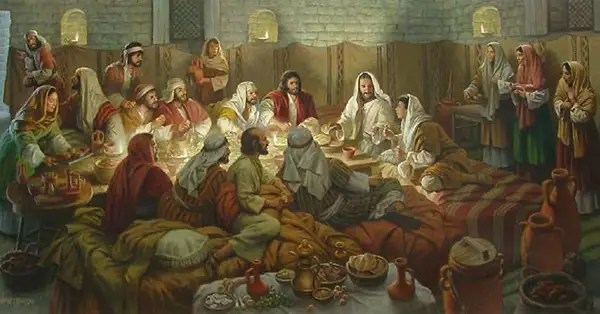
On Thursday evening of our Lord’s Passion, Jesus gathered with His disciples in the upper room. The evening began with a beautiful act of loving service as Jesus washed the disciples feet. This seemingly simple moment subsequently shaped the entire evening as Jesus went on to teach them, saying, “I give you a new command: Love one another. Just as I have loved you, you are also to love one another.” (John 13.34). He then explained that this love would be the primary characteristic that would identify them as His disciples (verse 35). Of course, He would go on that evening to define this love by His own sacrificial death which would occur the following day on Good Friday (John 15.13). This is most likely why he referred to it as a “new command”. It wasn’t new in the sense that it had never been taught; in fact, the OT taught clearly that God’s people should “love your neighbor as yourself” (Lev 19.18). However, the love that Jesus was calling the disciples to that night was something more, something different, something new. This is why we traditionally refer to this day as Maundy, which comes from the Latin mandatum meaning command, “a new command.”

The evening continued around the table as they shared the Passover meal, and it concluded with the passing of the bread and cup, which Jesus reinterpreted as symbols of His body that would be broken and His blood that would be shed for the forgiveness of sins to inaugurate the New Covenant (Matthew 26.26-30). This Lord’s Supper subsequently became central to the worship of the early church. As Christians gathered each week for worship and Word, they would do so around the table; they would share a meal together which would of course include the breaking of bread and passing of the cup (c.f. Acts 2.46). This meal would eventually become known as the Agape Feast or “love feast”, so called after the new commandment that Jesus gave the disciples that Thursday night. It was a time when the followers of Christ could come together to experience the grace of fellowship that is available through the Holy Spirit.

In the modern church, this kind of observance is sadly lacking. Though a few traditions have revived the practice (for one example, click here), for the most part it is widely neglected. We are so caught up in the busyness of our own lives, that we fail to take the time to enjoy the fellowship that binds us together. Even immediate families today barely have the time to share an evening meal together, and when they do, they can hardly be bothered to look up from their screens to interact with one another. But for Jesus and His earliest followers, spending the time to share a meal together around the table was a precious gift of God. Unrushed fellowship over the course of a meal where mutual love to can be shared with one another was foundational in the weekly rhythms of the early church; it was paramount for their life together as disciples of Jesus.

We desperately need to recover this timeless grace, the age old spiritual discipline of table. Of course, this should begin with the weekly observance of the Lord’s Supper as a part of the church’s worship. This ordinance should stand at the center, alongside the preaching of the Word, as we gather together for mutual edification and encouragement every Sunday. It should not be relegated to the end of the service as an obligatory addendum. (For more on this, see my post here.) But it need not end there; it should extend from the weekly worship gathering to homes as brothers and sisters in Christ show each other the grace of hospitality, opening up their homes, sharing meals, loving one another, and doing life together. This is Jesus’ vision for Christian community, that we would love another, even as He loves us, and this is nowhere more on display than we we gather around the table.


On Psalm 119.57-64 (Heth)

57 The Lord is my portion;
I have promised to keep your words.
58 I have sought your favor with all my heart;
be gracious to me according to your promise.
59 I thought about my ways
and turned my steps back to your decrees.
60 I hurried, not hesitating
to keep your commands.
61 Though the ropes of the wicked
were wrapped around me,
I did not forget your instruction.
62 I rise at midnight to thank you
for your righteous judgments.
63 I am a friend to all who fear you,
to those who keep your precepts.
64 Lord, the earth is filled with your faithful love;
teach me your statutes.

The eight stanza of Psalm 119 (ח/heth – sounds like the ch in Bach, you have to get a little phlegm in the back of your throat when you say it), but this stanza begins with the line “The Lord is my portion.” This is an image that occurs frequently throughout the Old Testament, and especially in the Book of Psalms. The word typically refers to a share or a portion of land received by inheritance. In an agrarian society like ancient Israel, owning land was a source of economic, political, and societal security. Those who owned land had standing and influence. But here, our psalmist affirms that the Lord is his portion. “The Lord” here (printed in all caps on most versions) represents the personal covenant name of God, i.e. יהוה, Yahweh; this is the name that He revealed to Moses from the burning bush, “I am who I am” (Exodus 3.14). In other words, our psalmist understands that Yahweh, the one true and living God, the personal covenant keeping God, is the only one in whom we may find safety, security, stability, satisfaction, and contentment in this life. As the old hymn goes, “All other ground is sinking sand.”

This principle is not unlike that famous slogan of pastor and author John Piper, “God is most glorified in us when we are most satisfied in Him.” Or as question 1 of the Westminster Shorter Catechism states, “Man’s chief end is to glorify God, and to enjoy Him forever.” This is the point, namely that glad and joyful obedience to the Word of God springs forth from a heart that is perfectly satisfied and wholly content in Him. This is why our psalmist says in verse 57, “I have promised to keep your words.” And again in verse 60, “I hurried, not hesitating to keep your commands.” And again in verse 62, I rise at midnight to thank you for your righteous judgments.” Of course, the counter point is equally true, that when we begin to look for sources of satisfaction and contentment outside of Him, we quickly fall into sin. The world we live in is constantly offering us a plethora of competing products and services intended to satisfy and fulfill; this is the essence of an advertisement rich consumeristic society. But, these options overpromise and under deliver, because nothing can satisfy and fill the deepest longings of the human heart like the God who made it. This is why our psalmist writes in verse 59, “I thought about my ways and turned my steps back to your decrees.” Or again in verse 61, Though the ropes of the wicked were wrapped around me, I did not forget your instruction.

But not only does this inner contentment in God free us from the allure of sinful temptations, but its also changes our entire outlook on life, as our psalmist writes in verse 64, “Lord, the earth is filled with your faithful love; teach me your statutes.” Of course, this world is polluted, even overrun, by sin everywhere we turn, such that even the stoutest of hearts might be shaken with fear, but when our hearts are completely secure in God, then we may have that rest which Jesus promised His disciples. Then, we may have confidence that sin is not the end of the story, that evil will not win the day, because we know that where sin abounds grace abounds even more, that where the darkness seems to consume, there the light of God’s grace and love can still shine through. And this hopeful confidence energizes the desire to live in faithful obedience. But more than that, it also empowers us to live in authentic community with others. As our psalmist puts it in verse 63, “I am a friend to all who fear you, to those who keep your precepts.” In other words, when we our hearts are completely whole in God, then we are set free to love others without the need to receive anything in return. We can love others for their sake and nor for our own, because we are complete in the love of Christ. This is the essential foundation for Christian community, that we love each other even as Christ loves us, and we can only do this when are completely satisfied and wholly loved in Christ by God.

Only that life which is lived in willing and fervent obedience to God’s Word can experience genuine human flourishing to the fullest degree, and this kind of obedience can only come from a heart that is perfectly content and satisfied in God and Him alone. As our psalmist writes in verse 58, “I have sought your favor with all my heart; be gracious to me according to your promise.” This is no works based attempt to merit God’s grace. Rather, it is the reflection of a heart that understands and trusts in the promise of God. It is the perspective of a soul that is perfectly at rest in the good news of the Gospel, that pursues faithful obedience to God and His Word from the wholeness that is only available by His grace. It is by grace because Christ has already completely fulfilled God’s law; He lived a life of perfect obedience to the Father. The good news of the gospel is that He has taken our disobedience upon himself, and in a glorious exchange, He has given us His obedient righteousness. And this is why He says, “Come to me, all of you who are weary and burdened, and I will give you rest. Take up my yoke and learn from me, because I am lowly and humble in heart, and you will find rest for your souls. For my yoke is easy and my burden is light.” (Matthew 11.28-30)

For further study:
Introduction
Psalm 119.1-8
Psalm 119.9-16
Psalm 119.17-24
Psalm 119.25-32
Psalm 119.33-40
Psalm 119.41-48
Psalm 119.49-56


On Psalm 119.49-56 (Zayin)

49 Remember your word to your servant;
you have given me hope through it.
50 This is my comfort in my affliction:
Your promise has given me life.
51 The arrogant constantly ridicule me,
but I do not turn away from your instruction.
52 Lord, I remember your judgments from long ago
and find comfort.
53 Fury seizes me because of the wicked
who reject your instruction.
54 Your statutes are the theme of my song
during my earthly life.
55 Lord, I remember your name in the night,
and I obey your instruction.
56 This is my practice:
I obey your precepts.

Zayin (ז) is the seventh letter of the Hebrew alphabet; accordingly, this is now the seventh stanza of Psalm 119. In this stanza, our psalmist begins to reflect on the relationship between hope and perseverance in the face of intense grief. This is a topic that I have written on recently here, but the main point is that the Christian hope is grounded in the promises of God’s Word. As our psalmist writes, “Remember your word to your servant; you have given me hope through it.” The God of the Bible is eternal, without beginning or end, and so, He always remembers His Word. And not only does He remember His Word, He always keeps it. He is a God of His Word, because His Word is the revelation of Himself. Therefore, His Word is certain and sure, and this is why Christians should be people of unconquerable hope.

In the New Testament, hope is one of a triad of primary virtues that distinguish the followers of Christ. As the scriptures so poetically remind us, “Now these three remain: faith, hope, and love—but the greatest of these is love.” (1 Corinthians 13.13). Of course, hope is one of the most powerful emotions in all the human experience, and it is hope, along with faith and love, that is the primary source of motivation and strength in the Christian life. For our psalmist, it is his comfort in affliction (verse 50), his courage in the face of ridicule (verse 51), his zeal in the face of sinfulness (verse 53), and his joy in the regular responsibilities of life (verse 54). This hope, a hope that is firmly grounded the promises of God’s Word by faith, gives our psalmist the strength to persevere in obedience no matter what obstacles or difficulties may come against him(verses 55-56).

However, in trusting in His promises, we are not simply left to some kind of blind faith. In many ways the story of the Bible is a record of promises that have been kept. As our psalmist puts it, “Lord, I remember your judgments from long ago and find comfort” (verse 52). The Word of God is the evidence that God keeps His promises. In his the two book set that surveys of the Bible’s message, Mark Dever describes the Old and New Testaments as “Promises Made” and “Promises Kept” respectively. And the gospel writers, in particular, are at great pains to demonstrate that “these things happened so that the Scriptures would be fulfilled.” (John 19.36, among others) This is the unanimous affirmation of the Bible’s authors, that “whatever was written in the past was written for our instruction, so that we may have hope through endurance and through the encouragement from the Scriptures.” (Romans 15.4)

This is the point, namely that our hope is not in vain, because we know beyond any shadow of doubt that God keeps His Word in every detail. In fact, He has already kept it by sending His Son incarnate to die on the cross for sin and rise again. This is why the author of Hebrews writes, “Now faith is the reality of what is hoped for, the proof of what is not seen.” (Hebrews 11.1) When it is all said and done, Christians are people of hope, and our hope cannot be extinguished no matter what difficulties or hardships may come our way. “We wait for the blessed hope, the appearing of the glory of our great God and Savior, Jesus Christ.” (Titus 2.13) While we wait, let us learn from our the commitment of our psalmist, “This is my practice: I obey your precepts.” (verse 56).

For further study:
Introduction/Overview
Psalm 119.1-8
Psalm 119.9-16
Psalm 119.17-24
Psalm 119.25-32
Psalm 119.33-40
Psalm 119.41-48


On Psalm 119.41-48 (Waw)

Waw

41 Let your faithful love come to me, Lord,
your salvation, as you promised.
42 Then I can answer the one who taunts me,
for I trust in your word.
43 Never take the word of truth from my mouth,
for I hope in your judgments.
44 I will always obey your instruction,
forever and ever.
45 I will walk freely in an open place
because I study your precepts.
46 I will speak of your decrees before kings
and not be ashamed.
47 I delight in your commands,
which I love.
48 I will lift up my hands to your commands,
which I love,
and will meditate on your statutes.

The sixth stanza of Psalm 119 (ו/waw – though modern Hebrew pronounces it vav) begins with, “Let your faithful love come to me, Lord, your salvation, as you promised.” Literally translated, it reads “according to Your word.” (NASB). Here we learn a fundamental truth for living the Christian life, namely that the primary way in which we receive and experience the love of God is through the Word of God. It is in, by, and through His Word that He communicates His love to us, and it is in, by, and through the Spirit working through the Word that we receive that love. In other words, our communion with God is always by the Spirit through the Word, and outside of the Word of God, there is no other way to know Him.

Experientialism and emotionalism have taken the place of word-centered formation when it comes to how we understand and experience growth as disciples of Christ. Simply put, there is a lot of craziness out there that flies under the banner of Christian spirituality, a lot of amorphous mystical speculations that are passed off as piety and devotion. What Christians need most in their spiritual life is to return to those classic word-centered spiritual disciplines that have been the staple of the spiritual life for God’s people going all the way back to the time when this psalm was written. It is only upon the firm foundation of God’s Word that we can come to know and experience the fullness of God’s everlasting love.

When we stand complete and secure upon the love of God through His word, then and only then are we able to step out with courage and obedience. As the psalmist goes on here to say, “Then I can answer the one who taunts me. [Then] I will always obey, [then] I will walk freely, [then] I will speak … before kings.” It is only from a place of safety and wholeness in the love of God that we are then able to walk in faithfulness to its principles and precepts. And when we are secure in His love, we know that even if we fail, even if we stumble, we remain secure in the love of God. This kind of security, this certainty, is more than a feeling or emotion; it is a confident assurance based on the promises that are found in God’s Word.

This is why our psalmist concludes this stanza with his love for the Word of God. “I will delight in your commands which I love. I will lift up my hands to your commands which I love.” These are the distinctive characteristics which identify those who are loved by God, those who are genuinely saved by faith, namely that they find their deepest sense of satisfaction and fulfillment in knowing and doing the Word of God. When we know the love of God in Christ through the Spirit, we will be people of His Word, and if we are not people of His Word, then the danger is that we have not in fact received the everlasting, never ending love of Christ. May we learn from our psalmist and find ourselves complete in God’s love as it comes to us through His everlasting and inspired Word.

For further study:
Introduction and Overview
Psalm 119.1-8
Psalm 119.9-16
Psalm 119.17-24
Psalm 119.25-32
Psalm 119.33-40


On Grief and Hope

As most churches usually do, we begin our Sunday school class every week with a time for sharing prayer requests. And just personally, I am so glad that we do this. I have actually heard pastors criticize this practice, complaining that the requests are always the same, i.e. praying for someone’s illness or medical condition. The complaint, as it usually goes, has to do with the perceived depth of these requests, as if they are not important enough, not spiritual enough, to occupy our time and concern. What a shame! Sharing burdens with one another, no matter how trivial they may seem, is the beauty and the power of the body of Christ. But I digress; we will save that topic for another time. Over the last several weeks, I have been amazed to see and hear how many of the prayer requests that have been shared that have to do with COVID. Every week there is someone else who has been diagnosed with COVID. Every week there is someone else who has been hospitalized due to COVID. Every week there is someone else who has passed away from COVID.

Every time I hear one of these requests, along with the many others that are shared, I find myself taken by a twinge of grief. There is a sadness that is appropriate to the suffering of those that we love, and we must allow ourselves to feel it. The Scriptures encourage us to “rejoice with those who rejoice; weep with those who weep,” to “carry one another’s burdens; in this way you will fulfill the law of Christ.” (Romans 12.15, Galatians 6.2) However, we must not allow ourselves to be overtaken by this grief, whether it be that of others or even our own. When we allow our pain to become all-consuming, we fall quickly into feelings of depression, despair, and hopelessness. As Christians we must remember that we do “not grieve like the rest, who have no hope.” (1 Thessalonians 4.13) Grief, sadness, heartache; these are not the end of our story. “For our momentary light affliction is producing for us an absolutely incomparable eternal weight of glory.” (2 Corinthians 4.17)

This is the point, namely that what we are waiting for so far outshines our present difficulties as to almost make them seem trivial by comparison. They are not trivial, of course; we feel them acutely. But we know that when our Lord returns, all of our griefs, all of our groanings, will prove to have been worth it. “We wait for the blessed hope, the appearing of the glory of our great God and Savior, Jesus Christ.” (Titus 2.13) What I am trying to say is that this vibrant hope, this anxious expectation, should characterize the disciples of Jesus; it should stand at the very foundation of our faith. We should all be anticipating and desiring that day when our Lord Jesus will return to establish His Kingdom on this earth once and for all, when He will do away with sin and sickness and death, and when He will welcome us into His glorious presence to remain for all eternity. However, for many Christians, it would seem, this glorious hope is the farthest thing from their minds, and their lives sadly reflect the want of it.

For the most part, our eschatological reflection in the church is either entirely absent or hopelessly mired in frivolous speculation about secondary and tertiary details that result in even more confusion. This is not to say that questions regarding the rapture or the millennium are unimportant, but it is to say that having the right answers to these questions is not the basis of our hope. Our hope is grounded in the promise of our Lord Jesus Christ, who said, “If I go away and prepare a place for you, I will come again and take you to myself, so that where I am you may be also.” (John 14.3) This promise is the sure and firm foundation for our hope, especially when we are facing times of difficulty, sadness, and grief. And so, “Let us hold on to the confession of our hope without wavering, since he who promised is faithful.” (Hebrews 10.23.)

Throughout its history and even today, the body of Christ is beautifully and abundantly diverse, but one of the things that has united all Christians at all times and in all places is our vibrant hope that looks expectantly forward to the return of our Lord Jesus Christ. We are called to be a people who “love His appearing.” (c.f. 2 Timothy 4.8) And when the darkness of grief threatens to choke out every flicker of joy, on those days we must redouble our conviction, we must fan the flame of our expectation, we must set our gaze once again upon that day when “He will wipe away every tear from their eyes, [when] Death will be no more; grief, crying, and pain will be no more.” This is our blessed hope, and in it we find the strength to persevere, to endure every circumstance. Our waiting, our groaning, is not in vain. “He who testifies about these things says, “Yes, I am coming soon.” [And we say], Amen! Come, Lord Jesus!” (Revelation 22.20)


On Common Objections to the Observation of Lent

Well, as they say, it is that time of year again. No, I am not talking about tax season; I am talking about the season in the traditional Christian calendar which is set aside for the purpose of self-reflection, examination, confession, and repentance. I am talking about that time of the year when we are asked to set aside the creature comforts that we are so dependent on and to cultivate that pure and singular dependence upon Christ through His Spirit. It is that time of year when Christians from all around the world from many varied theological and cultural backgrounds are invited to set their gaze on the cross of our Lord Jesus and the price that He paid for our sin, even as they begin to anticipate that victorious day when we will celebrate His resurrection from the dead. I am talking about the season of Lent. (For more on this season and its usefulness in the Christian life, see my post here.)

However, in most non-liturgical, low-church traditions, especially down here in the good ole’ Bible belt, the idea of observing the season of Lent is most often met with hostility and a host of objections as to why Christians should not observe this ancient practice. In this post, I would like to consider just a few of these, so that we may perhaps have a clearer understanding as to the benefits and the dangers of observing the season of Lent.

One of the primary objections that is most often given against the practice of Lent, as well as any other practice that might remotely be considered liturgical, is that it comes to us from the traditions of the Roman Catholic Church. There is a deep seated antipathy, an unstated but ever present aversion to any and all things Roman Catholic, that lives just under the surface in many Protestant denominations, and this is much to our shame. (This may be a symptom of a wider problem, i.e. the hubris of denominational tribalism that treats all those outside of our own tradition with skepticism and disdain.) Now, I will be the first to admit that there are many facets of Roman Catholic theology that I find troublesome and concerning, many aspects of their belief and practice that are hard to square with the teaching of the Bible, but we do ourselves a great disservice when we dismiss their contributions to the Christian faith altogether.

After all, the Roman Catholic Church was the only church for the first 1500 years of Christian history, and though they might have gone astray along the way, they actually got many things right. From their centuries long faithfulness comes classic formulations of doctrines like the trinity, the hypostatic union, etc., and for these we must be ever grateful. But not only in matters of doctrinal orthodoxy, but in the details of faithful orthopraxy, their contributions must be considered, and not merely dismissed. They have given us a rich and beautiful liturgical tradition which we would do well to consider in our own attempts to be faithful worshippers of Christ. Practices like the lectionary and the calendar are just some of the contributions that come to us from that tradition. I believe the season of Lent to be one of these contributions from which our faith and practice could benefit deeply. In other words, we don’t have to throw the baby out with the bathwater, so to speak.

A second objection that is somewhat connected with the first has do with the purpose of the season of Lent. In some traditions, Lent is presented as a way of “earning” God’s forgiveness, as a meritorious act by which we might deserve God’s grace, even as a kind of penance. In this light, the observance of Lent is made to be a mandatory practice for all of those who call themselves Christians. Clearly, this flies in the face of the clear teaching of the Bible. Our sins were once and for all completely forgiven when we placed our faith in Christ. This is what it means to be justified. There are no actions that we can take to earn or deserve more grace from God, because He has already poured out grace upon grace to us through the person and work of Jesus Christ. We are not required to do any works of penance for our sins, because the once and for all punishment for our sins fell on the shoulders of Jesus Christ as He was nailed to the cross to die. The payment for sin has been made in full; nothing more is necessary.

However, the repentance that God requires is more than a one time event; on the contrary, it is the lifelong discipline of a follower of Christ as we turn from our sin daily. This is the first of Martin Luther’s 95 Theses, that “When our Lord and Master Jesus Christ said, “Repent” (Mt 4:17), he willed the entire life of believers to be one of repentance.” Repentance is a habit, and setting aside a season for intentional reflection and cultivation of that habit can be quite beneficial in the life of the Christian. Especially as we prepare ourselves for the festivities of Holy Week, which culminate in the events of Good Friday and Easter Sunday, this season can aid us in our sanctification by exposing our sin and then reminding us anew of the wonder of the atoning work of our Savior and the victory that we have over sin through His resurrection. So, while the season of Lent should not be observed as a means to earning God’s grace, it can help us to understand and appreciate the grace that we have already received in new and fresh ways.

A final objection that is often raised in this conversation is that the practice of Lent is nowhere explicitly commanded in Holy Scripture. And if I am being honest, this is the strongest objection to be considered, because we all want to be biblical in the practice and expression of our faith. This is often expressed as a formulation of the regulative principle for worship (RPW), which states, “The acceptable way of worshiping the true God, is instituted by himself, and so limited by his own revealed will, that he may not be worshiped according to the imagination and devices of men, nor the suggestions of Satan, under any visible representations, or any other way not prescribed in the Holy Scriptures.” (2nd London Baptist Confession, 1689) Anyone who believes that the Bible is the inspired inerrant Word of the one true and living God must affirm this as being true. And so, if lent is nowhere commanded in Holy Scripture, then why would we concern ourselves with observing it. Aren’t the Scriptures sufficient for all matters of faith and practice?

We are required to answer this question in the affirmative. (2 Timothy 3.16-17) YES, the Scriptures are sufficient. But just because something is not expressly commanded in Scripture does not mean that it is not beneficial for our faith and practice. There are many things we do in the practice of our faith, both personally and corporately, that are not directly commanded in Scripture. For example, the Scriptures do not command us to have Vacation Bible Schools during the summer, but almost every church I know and have been a part of has a VBS. The point is simply that no one follows the RPW absolutely; in fact, to do so would be impossible. The Scriptures give us general guidelines, and we are called to use our Holy Spirit guided Biblically informed wisdom in the specific applications of those guidelines. (cf. Romans 12.1-2) In the case of Lent, the Bible clearly emphasizes the importance and priority of repentance, and it is up to us, with the help of Scripture and tradition, to cultivate repentance in our lives.

In the final analysis, we must conclude that the decision to observe the season of Lent, whether that observance is personal or corporate, it must remain at the level of Christian freedom. For those who have come out of liturgically rigorous traditions bordering on the legalistic, where observing Lent was a matter of obligation, then I would advise against it. Instead, I would encourage you to relish in the finished work of Christ. However, for others, and I would surmise that this is most of my readers, observing Lent can be an opportunity to cultivate the spiritual discipline of repentance, to intentionally reflect on the condition of our souls, to identify those unacknowledged and unadmitted sins, and to turn again toward Christ in faithful obedience. We are hardly in danger of taking our repentance too seriously, and the season of Lent can help us appreciate anew the reality and significance of sin and its ongoing power in our lives, even as we anticipate the day when we will finally be set free from its very presence. And oh, how we long for that day! Even so, Lord Jesus, come quickly!


On the Practice of Holiness (1 Timothy 3.14-4.10)

Text
14 I write these things to you, hoping to come to you soon. 15 But if I should be delayed, I have written so that you will know how people ought to conduct themselves in God’s household, which is the church of the living God, the pillar and foundation of the truth. 16 And most certainly, the mystery of godliness is great:

He was manifested in the flesh,
vindicated in the Spirit,
seen by angels,
preached among the nations,
believed on in the world,
taken up in glory.

Now the Spirit explicitly says that in later times some will depart from the faith, paying attention to deceitful spirits and the teachings of demons, through the hypocrisy of liars whose consciences are seared. They forbid marriage and demand abstinence from foods that God created to be received with gratitude by those who believe and know the truth. For everything created by God is good, and nothing is to be rejected if it is received with thanksgiving, since it is sanctified by the word of God and by prayer.

If you point these things out to the brothers and sisters, you will be a good servant of Christ Jesus, nourished by the words of the faith and the good teaching that you have followed. But have nothing to do with pointless and silly myths. Rather, train yourself in godliness. For the training of the body has limited benefit, but godliness is beneficial in every way, since it holds promise for the present life and also for the life to come. This saying is trustworthy and deserves full acceptance. 10 For this reason we labor and strive, because we have put our hope in the living God, who is the Savior of all people, especially of those who believe.

Title: On the Practice of Holiness
Series: All I Want for Christmas
Church: South Caraway Baptist Church, Jonesboro, AR
Date: December 27, 2020


On Psalm 119.25-32 (Daleth)

dalet

25 My life is down in the dust;
give me life through your word.
26 I told you about my life,
and you answered me;
teach me your statutes.
27 Help me understand
the meaning of your precepts
so that I can meditate on your wonders.
28 I am weary from grief;
strengthen me through your word.
29 Keep me from the way of deceit
and graciously give me your instruction.
30 I have chosen the way of truth;
I have set your ordinances before me.
31 I cling to your decrees;
Lord, do not put me to shame.
32 I pursue the way of your commands,
for you broaden my understanding.

Well, after taking a short break for the season of Advent, we are back to working our way through Psalm 119. And so, we come to the fourth stanza (daleth/ד), where our psalmist turns his attention to the turmoil of human existence. “My life is down in the dust; give me life through your word.” (verse 25) “I am weary from grief; strengthen me through your word.” (verse 28) This may not seem like a very positive outlook on life, especially when it is compared with the first three stanzas, but it is a brutally honest confession about the reality of the struggle. We live in a world that is stained, polluted, even controlled by sin, a world that is absolutely hostile to the ways of God and His word. And so it is understandable that those who try to live according to God’s Word will inevitably suffer pain and difficulty, whether directly or indirectly. As the Apostle Paul said, “In fact, all who want to live a godly life in Christ Jesus will be persecuted.” (2 Timothy 3.12)

Pain, heartache, suffering, loss; these are staples of the human experience in this already but not yet phase of God’s kingdom. And the temptation that we all will eventually face is to simply give up, to stop trying, to abandon the ways of God and His Word. Because, on the surface, there doesn’t seem to be a difference between our experience and that of the non-believer. But our psalmist understands that in the midst of this chaos, there is only one place to turn for stability and perspective, namely to God’s Word. “I cling to your decrees; Lord, do not put me to shame. I pursue the way of your commands, for you broaden my understanding.” (Verses 31-32) In fact, our psalmist even prays, “Keep me from the way of deceit and graciously give me your instruction.” (Verse 29) “Help me to understand the meaning of your precepts so that I can meditate on your wonders.” (Verse 27)

And so when we face inexplicable suffering in this life, what can we do? Well, our psalmist gives us two answers. First, we should be honest about our pain. As He says, “I told you about my life, and you answered me; teach me your statutes.” (Verse 26) In prayer, we can be honest with God about the depth of our sufferings, the difficulty of our heartaches; we open them up to Him so that He can comfort us with the gracious compassion of His promises. But not only must we be honest with God, but we must be honest with each other in the body of Christ. We need not suffer alone, as the Scriptures tell us, “Rejoice with those who rejoice; weep with those who weep.” (Romans 12.15) Our psalmist is doing just that in the writing of this Psalm, as it would be shared with the gathered assembly. We must learn to share our deepest and most painful heartaches with the community of God’s people, so that they can be the means of His comfort in our lives.

And secondly, we must resolve anew to stand firm on the ways of God which are given in His word. “I have chosen the way of truth; I have set your ordinances before me.” (Verse 30). The reality is that there will be times when obeying the Word of God will be the absolute last thing we want to do. We may not understand why God has commanded us in this way, or we may simply not feel like keeping it at that given moment. However, this is where faith steps in, because we trust that God is fundamentally good and all of His commands are good, even when we can’t see it. This is what comes across most vividly in this stanza, the psalmist’s faith even in the face of difficulty and doubt. And here again, we simply cannot do this alone. When we are hurting, the temptation is to withdraw and isolate our selves, but this is when we need the support and encouragement of the people of God the most, which is why we are told, And let us watch out for one another to provoke love and good works, not neglecting to gather together, as some are in the habit of doing, but encouraging each other, and all the more as you see the day approaching.” (Hebrews 10.24-25)

But our psalmist is clear, that in the midst of the chaos and turmoil and heartache of this world, the only footing, the only foundation, the only security that we have available to us is to be found in the Word of God, because it forces us to set our faith, our hope on something, or I should say someone, other than ourselves, namely the one true and living God.

For further study:
Introduction and Overview
Psalm 119.1-8
Psalm 119.9-16
Psalm 119.17-24


On the Third Sunday of Advent

advent 3

On the third Sunday of Advent, also known as Gaudete Sunday (from the Latin word meaning “rejoice”), we contemplate joy. And the best definition of joy that I have ever come across, though I cannot remember where I found it, goes like this:

Joy is the settled assurance that God is in control of all the details of my life, the quiet confidence that ultimately everything is going to be alright, and the determined choice to praise God in every situation.

Because this is the lesson of Advent, that in the midst of the heartache and sorrows that abound in this present moment, we can still rejoice. We can rejoice because of the Christ-child who came into the world to live a perfect life, die on the cross, and rise again for our forgiveness, and we can rejoice because one day the Christ-King will come again to put an end to our suffering once and for all. So, on this third Sunday of Advent, with the celebration of Christmas less than two weeks away, we rejoice in the one who saves, and the lectionary readings help us to do just that.

Old Testament: Isaiah 35.1-10
In the Old Testament passage, we read of the return of God’s people from exile and the restoration of the Holy City. After the judgment and destruction of chapter 34, chapter 35 opens with a scenic vision of renewal. And so we read, “The wilderness and the dry land will be glad; the desert will rejoice and blossom like a wildflower. It will blossom abundantly and will also rejoice with joy and signing.” (verse 1-2a) And it is in this picture of renewal and restoration that “They will see the glory of the Lord, the splendor of our God.” In other words, God will restore and renew what was lost and damaged by sin, and His people are to look upon it and rejoice. As verse 10 confirms, “and the redeemed of the Lord will return and come to Zion with singing, crowned with unending joy. Joy and gladness will overtake them, and sorrow and sighing will flee.” What a day that will be when illness and death, suffering and sickness will come to an end. And so, Isaiah encourages us in verse 3, “Strengthen the weak hands, steady the shaking knees! Say to the cowardly: ‘Be strong; do no fear! Here is your God; vengeance is coming. God’s retribution is coming; he will save you.'”

Psalm: Psalm 146.5-10 or Luke 1.46b-55
Now, the lectionary gives us two options for the Psalm reading on this third Sunday of Advent. Psalm 146, verses 5-10, extols the compassion of God, especially as He attends to the neediest of His people. “Happy is the one whose help is the God of Jacob, whose hope is in the Lord his God, the Maker of heaven and earth, the sea and everything in them. He remains faithful forever.” (verses 5-6) Whether we are talking about the exploited and oppressed, the imprisoned, the blind, the resident aliens, the fatherless, it is God who is understood to be the help in their time of need. In other words, He is the one who rights the wrongs that we have suffered, because “The Lord reigns forver; Zion, your god reigns for all generations. Hallelujah!” (verse 10). The Christ-child came into the world to inaugurate the kingdom of God on earth, and one day, He will come again to consummate the kingdom of God once and for all. And so, we rejoice in praise because He is the solution for our every need.

The other option for the “psalm” reading comes from the Gospel of Luke, chapter 1, verses 46-55, which is of course known as the Magnificat, the song of Mary. And though it is not a Psalm per se, it is nevertheless stands in that vein, because in it Mary voices her praise toward the God who has blessed her with the responsibility of carrying his Son. And so, “My soul praises the greatness of the Lord, and my spirit rejoices in God my savior.” (verses 46-47). But her joy is not simply motivated by her privilege in carrying the Son of God, but because of what that child represents, namely the coming of God into the world to save His people. And so she sings in verse 50, “His mercy is from generation to generation on those who fear him.” And again in verse 54, “He has helped his servant Israel, remembering his mercy to Abraham and his descendants forever, just as he spoke to our ancestors.” Mary is able to rejoice, because she know that through her, God is setting into motion his eternal plan of salvation. So, also we rejoice as we await the completion of that plan at His second coming.

Gospel: Matthew 11.2-11
The Gospel reading then brings us face to face with the existential angst of this reality, namely that we have been promised joy but everywhere we look we only see suffering. In Matthew, chapter 11, we read of John the Baptist who has now been imprisoned and will soon be executed. So, he sends messengers to Jesus to ask, “Are you the one who is to come, or should we expect someone else?” (verse 3) Of course, this is the very man who had baptized Jesus in the Jordan River proclaiming Him to be the Lamb of God come to take away the sins of the world. But now, he is in prison, and his faith is wavering. And so, Jesus responds, not with condemnation mind you, but with compassion; “Go and report to John what you hear and see,” namely referring to the nature of His ministry. (verses 4-6) Of course, Jesus goes on in this passage to explain the importance of John’s ministry in the unfolding of God’s salvation by way of an appeal to Malachi 3:1, but the important part comes in verse 11, where we read, “Truly I tell you, among those born of women no one great than John the Baptist has appeared, but the least in the kingdom of heaven is greater than he.” In other words, we can rejoice even when the promise doesn’t match the reality, because we know that Jesus is the Christ, the Son of the living God.

New Testament: James 5.7-10
And lastly, the New Testament reading exhorts us to cultivate patience with our joy. “Therefore, brothers and sisters, be patient until the Lord’s coming. … You also must be patient. Strengthen you hearts, because the Lord’s coming is near.” (verse 7-8) And then, after he instructs us not to complain about one another, James goes on to say, “Brothers and sisters, take the prophets who spoke in the Lord’s name as an example of suffering and patience.” (verse 10) What James understands is that the strength to endure comes from joy, as he said back in chapter 1, verse 2, “Consider it great joy , my brothers and sisters, whenever you experience various trials.” And the joy that we have in light of Christ’s first coming strengthens us to endure until His second coming. And so James exhorts us in this passage, “Brothers and sisters, do not complain about one another, so that you will not be judged, Look, the judge stands at the door.” Our common joy in the Advent of the Christ child should unite us in peace, because we endure better together.

During this Advent season, may Christ lead us into the fullness of joy as we patiently await His triumphant return.

For further study:
On the Season of Advent
On the First Sunday of Advent
On the Second Sunday of Advent


On the Second Sunday of Advent

second-sunday-in-advent

In the second week of Advent, we focus on peace, that the Christ-child came into the world to offer us peace. Peace, meaning the absence of conflict, of animosity, of antagonism. In the words of the angels on the night of His birth, “Glory to God in the highest heaven, and peace on earth to people he favors.” (Luke 2.14) And when the Prince of Peace returns one day, He will establish His kingdom of perpetual peace once and for all. However, the good news pf Advent is that this is a peace that we, as His people, already experience in the here and now. And so, the lectionary readings for the Second Sunday of Advent invite us into the peace that His coming offers us and that we desperately look forward to at His coming.

Old Testament: Isaiah 11.1-10
Of course, the prophecies of Isaiah are replete with messianic overtones, and this week’s Old Testament reading is no different. In verse 1, we read, “Then a shoot will grow from the stump of Jesse,” which is Isaiah’s way of describing the Messiah according to His biological lineage descended from David, Son of Jesse. But the important thing about Him is what He will do, specifically how He will rule. Verse 2 of the passage tells us that, “The Spirit of the Lord will rest on him.” In other words, Messiah will be anointed with the Spirit of God for the purpose of ruling in justice. And what we must understand is that a just rule, established in righteousness and faithfulness (verse 5), is a prerequisite for peace, because, “He will judge the poor righteously and execute justice for the oppressed of the land.” (verse 4)

And it is His just rule that establishes the idyllic serenity that Isaiah goes on to describe in verses 6-9. “The wolf (traditionally read as lion) will dwell with lamb, and the leopard will lie down with the goat,” etc. And notice in verse 9, “They will not harm or destroy each other on my entire holy mountain, for the land will be full of the knowledge of the Lord as the sea is filled with water.” This is Isaiah’s vision for the reign of Messiah, that violence will be no more, that bloodshed and conflict will be no more. Oh, how we long for that day, because, “On that day the root of Jesse will stand as a banner for the peoples. The nations will look to him for guidance, and his resting place will be glorious.” In other words, the reign of Messiah will be characterized by perfect peace. 

Psalm: Psalm 72.1-7, 18-19
According to the traditional heading, this psalm appears to be a prayer that was written by King David (see verse 20) for his son and successor Solomon. David is praying for Solomon as he prepares to ascend to the throne. And so, in verse 1, we read, “God, give your justice to the king and your righteousness to the king’s son.” However, given the messianic implications of the term “son of David”, we must see this as a prayer for the perfect and peaceful rule of Messiah. “He will judge your people with righteousness and your afflicted ones with justice.” (verse 2) And again, “May he vindicate the afflicted among the people, help the poor, and crush the oppressor.” (verse 4)  In other words, this psalm is an expression of longing for peace that is written on every human soul, and it reminds us that our longings for peace on earth will never be fully satisified by any human ruler or government. No, “Blessed be the Lord God, the God of Israel, who alone does wonders. Blessed be his glorious name forever; the whole earth is filled with his glory. Amen and amen.” (verse 18-19). There is a deep and severe longing in every human soul for the peace, and in this prayer, we affirm that it will only be realized with the coming of Messiah.

Gospel: Matthew 3.1-12
In the Gospel reading, then, we read of a familiar character in the Gospel accounts, namely John the Baptizer. And though we may not think of him in conjunction with the Christmas story, he is, nevertheless, important because of His role as herald. “For he is the one spoke of through the prophet Isaiah, who said: A voice of one crying out in the wilderness: Prepare the way for the Lord; make his paths straight.” (verse 3) And so, as we think about our Lord’s Advent, we must recognize that John was the appointed herald to announce His initial arrival. And he did so my preaching, “Repent, because the kingdom of heaven has come near.” (verse 2) This, by the way, is the same message that Jesus preached at the beginning of His ministry in Galilee.

But what makes this passage appropriate for Advent is what John says to the Pharisees and Sadducees who came out to be baptized. In verse 7, we read, “Brood of vipers! Who warned you to flee from the coming wrath?” Admittedly, it is somewhat awkward to read about wrath when we are supposed to be focusing on peace; however, John has hit on something that is important to understand about our Lord’s coming, namely that before there can be peace, there must be wrath. Evil must be dealt with, and the wicked must be removed so that peace can rise.  And so, John proclaims that one who comes after him has “His winnowing shovel is in his hand, and he will clear his threshing floor and gather his wheat into the barn. But the chaff he will burn with the fire that never goes out.” When our Lord Christ returns to in glory, He will bring with Him two things, peace for those who repent of their sins and wrath for those that do not. And so John tells us, “Therefore produce fruit consistent with repentance.”

New Testament: Romans 15.4-13
And finally, in the New Testament reading, we can see exactly what kind of fruit that is, namely that we who have repented of our sins, trusted in Christ, and received His peace should show forth that peace toward others. As Paul puts it in verse 7, “Therefore accept one another, just as Christ also accepted you, to the glory of God.” In other words, we are called to be Christ’s agents of peace in the world; we give to others what we ourselves have already received. This is in keeping with Paul’s prayer in verse 13, where he prays, “Now may the God of hope fill you with all joy and peace as you believe so that you may overflow with hope by the power of the Holy Spirit.” The point is that the foundation for peaceful human relationships is grounded in the finished work of the Christ-child.

And the proof of Paul’s point in this passage is the full and equal inclusion of the Gentiles in the people of God. In the first century, there was no more antagonistic vitriolic relationship as that between the Jews and the Gentiles, but Paul strings together a handful of Old Testament quotes in this passage to show that it was always God’s plan to bring the Gentiles into the kingdom of Messiah. So, all of a sudden, Jewish followers of Jesus were faced with a dilemma, namely how could they accept Gentile followers of Jesus  into their communities as brothers and sisters in Christ. And Paul’s answer is that they can because they have received the peace of Christ. So, he prays, “Now may the God who gives endurance and encouragement grant you to live in harmony with one another, according to Christ Jesus, so that you may glorify the God and Father of our Lord Jesus Christ with one mind and one voice.” This is the crucial point: He gives peace, we embrace peace, and He gets the glory.

May this Advent season bring you and yours all the peace of Christ that passes all understanding, and may we all show forth His peace to a world that is in so desperate need of it!

For Further Study:
On the Season of Advent
On the First Sunday of Advent


Slow To Write

"let every person be quick to hear, slow to speak, slow to anger."

lovegavehope

Just another WordPress.com site

Jared Cornutt

Pastor | Speaker | Writer

Denny Burk

A commentary on theology, politics, and culture

G3 Ministries

Events + Resources for the Local Church

Biblical Reasoning

Biblical and Systematic Theology According to the Scriptures

RetroChristianity

Reclaiming the Forgotten Faith

SBC Voices

Southern Baptist News & Opinion

Lucid Theology

Thoughts on words, books, theology, and life.

Baptist21

A pastor-led voice for Baptists in the 21st century

Center For Baptist Renewal

The Personal and Professional Blog of Phillip Powers

The Pastor's Well - Pastor Well

The Personal and Professional Blog of Phillip Powers

Articles - AlbertMohler.com

The Personal and Professional Blog of Phillip Powers

The Gospel Coalition

The Personal and Professional Blog of Phillip Powers