43 But it is not so among you. On the contrary, whoever wants to become great among you will be your servant, 44 and whoever wants to be first among you will be a slave to all. 45 For even the Son of Man did not come to be served, but to serve, and to give his life as a ransom for many.”
~Mark 10.43-45
Topic: Submission and Service Series: Spiritual Disciplines of the Christian Life Church: South Caraway Baptist Church, Jonesboro, AR Date: March 08, 2023
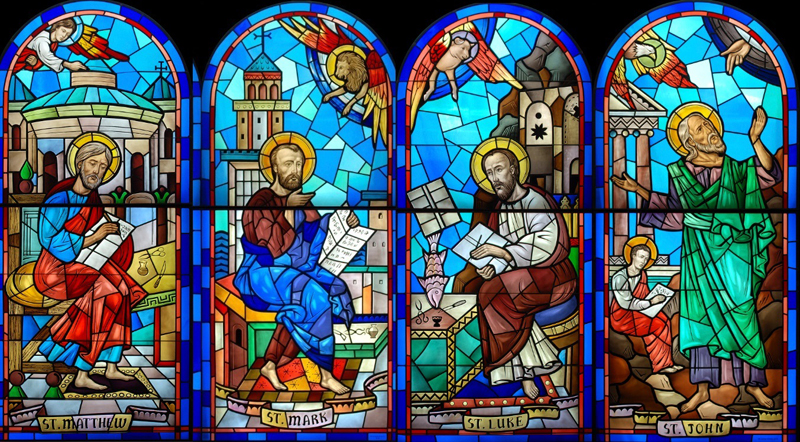
It is truly a manifestation of the grace of God that there are four accounts of the life of Jesus in the New Testament. They are rightly called theological history, because each one of them details the life of Jesus in a way that emphasizes and highlights particular aspects of who He is and what He has done for His people. While any one of them may have been sufficient on their own to convey the pertinent historical facts of His life, the four of them together paint a beautiful multilayered tapestry that has sparked the reflection and devotion of His followers now for two millennia. In the space that follows, I will sketch out the contours of that tapestry by discussing the particular emphases of each Gospel.
According to the documentary hypothesis, Mark wrote his gospel first based on the memoirs of the Apostle Peter. The vast majority of Mark’s gospel is reproduced in both Matthew and Luke, but this does not mean that Mark’s Gospel is incomplete, redundant, or lacking in historical and theological value. This value is seen clearly in the very first verse of his work, “The beginning of the Gospel of Jesus Christ, the Son of God.” Functioning somewhat like a title or purpose statement, this verse is packed with theological significance. It tells us that Mark’s work is a “gospel”, a word that means good news; it also states clearly that this good news has to do with Jesus, the messianic Son of God. That this is the primary way that Mark wants his audience to see Jesus is confirmed following His death, when a Roman Centurion says, “Truly, this man was the Son of God.”
However, what makes Mark’s gospel so compelling is that this truth is hidden throughout most of the Gospel. The so-called messianic secret, in which Jesus repeatedly instructs people not to make His identity known, stands in stark contrast to the bold affirmations at the beginning and end of Mark’s Gospel. This is probably because Mark wants his readers to understand that the messianic identity of Jesus is defined by His death on the cross for sin. Almost half of Mark’s gospel is dedicated to the events of Passion week. Whereas the first ten chapters are quickly paced and action oriented, the final six slow down to something like a snail’s pace in detailing the events of the final seven days of Jesus’ life. This is why many have considered Mark’s gospel to be an apology or a defense of the cross that was likely written for Christians in Rome shortly before the persecutions of Nero.
Of course, though chronologically prior, the Gospel of Mark is not ordered first in the New Testament canon; that pride of place belongs to the Gospel of Matthew, and it is easy to understand why. Not only does Matthew’s Gospel begin with a genealogy that traces the lineage of Jesus through David to Abraham, it also includes an infancy narrative that captivates those who read it. However, this is part of Matthew’s unique purpose to show that Jesus is the Son of David, Son of Abraham. Not only does this connect the New Testament back to the Old Testament, it also would have been particularly important if Matthew was writing to Jewish Christians, as many suppose. For Matthew, Jesus is the fulfillment of God’s covenant promises, both to Abraham and to David; he is the long awaited Davidic messiah, heir to the throne of God’s Kingdom, and the one who mediates the blessings of the Abrahamic Covenant.
More than that though, for Matthew, Jesus is a new and better Moses. This is evident in the many ways that the events of the first four chapters recapitulate the life of Moses. On top of this, Matthew has structured His gospel around five primary discourses, a fact that likely refers back to the five books of Moses. In the same way that Moses was the mediator of the Law under the Old Covenant, likewise, Jesus is the mediator of the “law” under the New Covenant. This is confirmed in the Great Commission, where Jesus commands His disciples to “teach all that I have commanded you.” The phrase “all that I have commanded you” most naturally refers back to the content of the five primary discourses in Matthew’s Gospel. Because of this, many consider Matthew’s Gospel to be a handbook on discipleship, a manual that instructs us in what it means to follow Jesus.
The Gospel of Luke rounds out the “Synoptic Gospels”, and like Matthew, it begins with a beautiful retelling of the Christmas story. However, what stands out in Luke’s infancy narrative is the role of the Holy Spirit. Of course, many consider Luke to be the theologian of the Spirit par excellence in the New Testament, not least of which is due to the continued role that the Spirit plays in Luke’s second volume, the Book of Acts, otherwise known as the Acts of the Holy Spirit. Luke’s emphasis on the role of the Spirit is largely due to his desire to present Jesus as the Spirit anointed messiah. This is confirmed in chapter 4 of Luke’s Gospel, when Jesus reads a passage from the Book of Isaiah, which says in part “The Spirit is upon me.” After He sits down, He says, “Today, this scripture is fulfilled in your hearing.” In other words, Luke wants us to see that Jesus is the spirit anointed Messiah who has finally come to pour out the blessings of the Messianic jubilee. According to the passage from Isaiah, chapter 61, these blessings are primarily manifested in the compassionate healing of those who are blind, deaf, mute, etc, and throughout Jesus’ ministry, Luke repeatedly details the compassion that Jesus demonstrated during his healing ministry. For Luke in particular, Jesus is a man of sorrows, well acquainted with grief, bearing the burdens and ailments of many.
In addition to this, a large portion of Luke’s unique material is dedicated to Jesus’ final journey toward Jerusalem. In Luke, chapter 9, we read that “He set his face like flint to go to Jerusalem;” this simply means that the final journey of Jesus to Jerusalem to be crucified was purposeful and intentional on the part of Jesus, so that “the scriptures might be fulfilled.” The fulfillment of God’s plan for salvation history is a primary emphasis in both Luke’s Gospel and in the Book of Acts. In other words, Jesus was not a victim of circumstance or the maniacal plots of evil men; He was delivered up according to the predetermined plan of God from before the foundations of the world. Luke wants his audience to understand that everything that happened during the life of Jesus from his birth to his death, resurrection, ascension, and session is the fulfillment of God’s eternal plan to redeem humanity from their sins. In fact, in the final chapter of Luke’s gospel, we read on more than one occasion that “all that was written in the Law, the Prophets, and the Psalms must be fulfilled.”
Last, but certainly not least, is the Gospel of John, and the relationship between John and the synoptics is a question that has bewildered many throughout the centuries. This is mostly because John begins His gospel with a striking description of the eternal Word, God the Son, who came incarnate and “dwelt among us”. Clearly, “the disciple whom Jesus loved” wants his readers to understand that this Jesus was no ordinary man; He is the incarnate God man, the Word made flesh, and as he indicates at the end of His gospel, “These things are written so that you may believe that Jesus is the Christ, and by believing, have life in His name.” The deity of Jesus practically jumps off of the page in John’s gospel, not the least of which is because of the several “I am” statements that are found throughout the book, the most profound of which is “Before Abraham was, I am.” Of course, these “I am” statements refer back to the divine name which was revealed to Moses at the burning bush, and so indicate a startling awareness in the mind of Jesus of His own divinity.
Of course, in the service of this purpose, John structures His gospel around seven specific miracles, or, as he calls them, “signs.” If John did, in fact, write two to three decades after the synoptics, then it seems clear that he did not believe it necessary to record all that Jesus began to do and teach; he even confesses that to do so would require more books than could be humanly conceived. But these seven signs were singled out by John because they advance His thesis that Jesus is the Christ. From the turning of water into wine to the raising of Lazarus from the dead, every one of these signs demonstrate a particular aspect of Jesus messianic identity and so prove that He is the Christ, the one who gives and sustains life in all those who are filled with His Spirit.
In the final analysis, it seems clear that if one of these four gospels were lost or removed from the canon, the followers of Jesus would be at a severe disadvantage. Each and every one of them is necessary for us to appreciate the multi-faceted beauty of the person and work of Him who is called Christ. From the earliest centuries of the Christian movement, these four evangelists have stood together in chorus, singing not in unison but in harmony, and because of this, the followers of Jesus have a sure and certain foundation upon which they can stand as they attempt to follow Christ and be more like Him.
If there was one word that might be used to describe the culture that we live in, it would most likely be “discontent”; we are a people who have forgotten what it means to be content with what we have. We are constantly inundated with media and ad campaigns that promise satisfaction and fulfillment through some new product or service. On top of that, the proliferation of social media has caused the disease of comparison to rise to pandemic levels, such that we are unconsciously driven by a nagging need to have more and better than our “friends”. Whether because of materialistic consumerism or the sickness of comparison, we have become a culture that has completely forgotten how to be content. However, for those who are in Christ, the Scriptures remind us that “godliness with contentment is great gain.” (1 Timothy 6.6) In other words, our submission to the kingship of Christ, our citizenship in His Kingdom, is exhibited in our contentment with all that He has and has not blessed us with.
This is exactly the point that Jesus makes in the “Sermon on the Mount” in Matthew, chapters 5-7. The Sermon on the Mount is essentially the manifesto of Jesus’ Kingdom; it is Jesus’ vision for what life in His Kingdom should look like. In it, He describes the attitudes, the habits of character, and the behaviors that should identify His people. And this is exactly the point, namely that the Kingdom of God is not something that is just a future hope to be realized. It is that, but during His earthly ministry, by His death, resurrection, and ascension, Jesus inaugurated the Kingdom of God, and now, He is seated at the right hand of the Father, ruling over His people through the indwelling presence of His Spirit. This is often described by the phrase “already but not yet”, which is a short hand way of saying that the Kingdom of God is already inaugurated but not yet consummated. And because we are currently living under the benevolent and gracious rule of King Jesus, we are able to cultivate the spiritual discipline of contentment. As Jesus himself says,
Therefore I tell you: Don’t worry about your life, what you will eat or what you will drink; or about your body, what you will wear. … But seek first the kingdom of God and his righteousness, and all these things will be provided for you.
Matthew 6.25, 33
In these verses, Jesus encourages His disciples to replace their worry and anxiety with contentment because His good Father knows their needs before they even ask Him. Even as He cares for the birds of the sky and lilies of the field, how much more will He certainly care for those who have been united with His Son by faith. “Therefore don’t worry about tomorrow, because tomorrow will worry about itself. Each day has enough trouble of its own.” (Matthew 6.34) But, of course, this is easier said than done. Worry and anxiety are subtle; they are feelings that often well up inside of us unexpectedly and unnoticed. How, then, can we prevent ourselves from being overcome by these stumbling blocks? Is there a spiritual inoculation that will help us fight against their infection? I would submit that there is, and I believe Jesus identifies it for us in the section that immediately precedes His discussion of contentment.
In the first half of Matthew, chapter 6, Jesus discusses the spiritual disciplines of giving, prayer, and fasting. Of course, He lays out the primary principle for the practice of these disciplines in verse 1 of the chapter, “Be careful not to practice your righteousness in front of others to be seen by them. Otherwise, you have no reward with your Father in heaven.” However, there is a reason why He follows up His discussion of these by commands us not to worry. These spiritual disciplines are the primary means by which we cultivate the inner quietude of peace and contentment. When we give sacrificially of our material possessions for the blessing of others and devote ourselves the pursuit of God rather than material comforts through prayer and fasting, we will find ourselves being more and more content with what we do or do not have. In other words, spiritual contentment is borne out of soul that is fully satisfied in its own communion with the one true and living God.
In the piety of American Evangelicalism, the discipline of contentment among the disciples of Jesus is a glaring whole in our cultivation of Christlikeness. Sadly, we often look more like citizens of this world than citizens of the already but not yet Kingdom of God. We are driven by the felt needs of the moment instead of walking in satisfied contentment with our God, and it shows. We would do well to reconsider what it means to live under the reign of Christ and submit our material resources and our physical needs to the one who taught us to pray, “Give us this day our daily bread.” (Matthew 6.11) This is the secret to the cultivation of contentment. As the Apostle Paul said,
I don’t say this out of need, for I have learned to be content in whatever circumstances I find myself. I know how to make do with little, and I know how to make do with a lot. In any and all circumstances I have learned the secret of being content—whether well fed or hungry, whether in abundance or in need. I am able to do all things through him who strengthens me.
According to the Christian calendar, today is Ash Wednesday which marks the beginning of the liturgical season of Lent. I have previously written on the season of Lent here and here, so I refer you to these posts for my thoughts on the season of Lent and its spiritual value. Of course, the primary spiritual practice that is traditionally associated with the observance of Lent is the spiritual discipline of fasting, but, even outside of the season of Lent, the spiritual discipline of fasting is a valuable practice for those who wish to be more like Jesus. However, in our consumeristic culture, the discipline of fasting is a spiritual practice that is rarely, if ever, engaged in the Christian life, and this is much to our loss. The witness of Holy Scripture and of church history is replete with examples of men and women whose engagement in the spiritual discipline of fasting had meaningful and abiding value in their walk with Christ. If this is true, why then are we so resistant to this biblically grounded and historically proven discipline of the Christian life?
Part of our resistance may stem from the fact that we simply do not understand what the spiritual discipline of fasting is all about. Because our pulpits are almost completely silent on the topic, the only kind of fasting with which we are familiar has to do with nutrition, weight loss, or some other physical or medical concern. For this reason, our consideration of the question of fasting is primarily focused on the physical aspects of the practice. What to eat, when to eat, how much to eat, we are practically consumed with our need for physical nourishment. Of course, this is very purpose of the spiritual discipline of fasting, to expose our complete and total dependence on food for the production of energy and the cultivation of physical health. In the same way that our bodies are dependent on physical nourishment, so also our souls are dependent on spiritual nourishment for the cultivation of spiritual health and vitality. The purpose of the spiritual discipline of fasting is to teach our souls to hunger and thirst for spiritual food in the same way that our bodies hunger for spiritual food. As Jesus says in the Sermon on the Mount, “Blessed are those who hunger and thirst for righteousness, for they will be filled.” (Matthew 5.6)
Another reason for our reluctance to practice this discipline, and perhaps a more fundamental one, is simply our aversion to anything that might cause us discomfort. As creatures, we love our comfort, our ease, our physical pleasure, and we resist, sometimes vehemently, any kind of activity or behavior that might take away our comfort, even temporarily. Simply put, we don’t like pain, and going without food, even if it is just for one meal, can cause some quite unpleasant physical side effects. But we must be willing to entertain the possibility that this pain is good pain, that some temporary physical discomfort could be beneficial if it results in lasting spiritual benefit. Based on the clear scriptural and historical evidence, we must conclude that this is the case. In the same way that physical exercise is often associated with aches and pains in the short term, we all know that regular exercise habits lead to a higher likelihood of physical health in the long run. So, rather than avoiding the temporary discomforts of the spiritual discipline of fasting, we must learn to embrace these as a pathway to long term spiritual health. As the Apostle Paul writes in 1 Timothy, chapter 4, verse 8, “For the training of the body has limited benefit, but godliness is beneficial in every way, since it holds promise for the present life and also for the life to come.”
However, the primary reason for why we should relearn the value of the spiritual discipline of fasting is simply this, namely that our Lord expected us to engage in it. Of course, in the Sermon on the Mount, he did say “when you fast” and not “if you fast” (Matthew 6.16), but his expectation for His disciples is even more clear in Mark, chapter 2. In verse 18 of that chapter, the disciples of the Pharisees and the disciples of John the Baptist come to Jesus to ask Him why His disciples do not fast. Apparently, their lack of practice in this area did not go unnoticed, and so, Jesus explains that they cannot fast while “the bridegroom” is with them, by which He clearly refers to Himself. “But the time will come when the groom will be taken away from them, and then they will fast on that day.” (Mark 2.20) The footnote in the NET Bible indicates that this is a veiled reference to His death, a prediction that He would make more clearly following Peter’s confession at Caesarea Philippi (cf. Mark 8.31, 9.31, 10.33). So, here Jesus is looking forward to the time when His disciples will live without His physical embodied presence, and “they will fast on that day.” In other words, one way that we commune with the risen and ascended Christ is through our submission to His Spirit in the discipline of fasting.
Of course, we must hasten to add that while Jesus may have expected that His disciples would fast, He did not expressly command them to do so. So, our lack of engagement in this spiritual discipline can in no way be construed as sin. However, if we have no driving desire to be more like Jesus, no deep longing to commune with Him by the Spirit, no genuine affection for Christ and His glory, then we may need to consider whether we know Him at all. The Scriptures are clear that to know Christ, to sit in His presence, is far better sustenance than any physical nourishment that food may offer. This is why Jesus told Martha that Mary had chosen the “better meal” (Luke 10.42, author’s translation). This is the irony, namely that fasting is feasting. In other words, the spiritual discipline of fasting is one way by which we feast on the sustenance that comes from Christ.
So Jesus said to them, “Truly I tell you, unless you eat the flesh of the Son of Man and drink his blood, you do not have life in yourselves. The one who eats my flesh and drinks my blood has eternal life, and I will raise him up on the last day, because my flesh is true food and my blood is true drink. The one who eats my flesh and drinks my blood remains in me, and I in him. Just as the living Father sent me and I live because of the Father, so the one who feeds on me will live because of me. This is the bread that came down from heaven; it is not like the manna your ancestors ate—and they died. The one who eats this bread will live forever.”
44 It was now about noon, and darkness came over the whole land until three, 45 because the sun’s light failed. The curtain of the sanctuary was split down the middle. 46 And Jesus called out with a loud voice, “Father, into your hands I entrust my spirit.” Saying this, he breathed his last.
47 When the centurion saw what happened, he began to glorify God, saying, “This man really was righteous!” 48 All the crowds that had gathered for this spectacle, when they saw what had taken place, went home, striking their chests. 49 But all who knew him, including the women who had followed him from Galilee, stood at a distance, watching these things.
~Luke 23.44-49
Title: On How the Death of Jesus Changed Everything Text: Luke 23.44-49 Series: Who is Jesus? A Study of the Gospel of Luke Church: South Caraway Baptist Church, Jonesboro, AR Date: January 1, 2023
I love Christmas music, both the secular and sacred. When I hear it on the radio, in retail stores, or even in church, it just brings back all the wonderful memories of this time of year from my childhood. So, as the song goes, it’s the holiday season, so hoop-de-do and dickory dock. That means that Thanksgiving, Christmas, and New Year’s are right around the corner, and most of us are preoccupied with decorations and presents, parties and planning, and all of the other details that fill our minds during this time of year. But for Christians, this time of year is an invitation to reflect afresh on the coming of our Lord Jesus Christ. Traditionally, the season of Advent consists of the four Sundays that lead up to the celebration of Christmas, and it is a time when we are invited to look back on the first coming of Jesus at the incarnation even while we look forward to the second coming of Jesus. For more on this, see my post here.
However, most discussions of our Lord’s second coming always ends up with the same plaguing question, “So, when is he coming? When will it be?” This is a question that has plagued the people of God since the days of Jesus’ earthly ministry, and even before. We can read in the Psalms and prophets of the Old Testament where the people of God cried out in agony wondering, “Lord, how long will the wicked—how long will the wicked celebrate?” (Psalms 94.3), or “How long will you judge unjustly and show partiality to the wicked?” (Psalm 82.2), or even “How long, Lord, must I call for help and you do not listen or cry out to you about violence and you do not save?” (Habakkuk 1.2). This has been the longing of the people of God throughout history, that He would act finally and climatically to put an end to sin, vindicate His people, and establish His perfect reign on earth.
A quick review of the New Testament and what it says about the second coming of Jesus would seem to indicate that these prayers have been answered. In those hallowed pages, we read promises like, “In the same way, when you see all these things, recognize that he is near—at the door.” (Matthew 24.33), and “Look, I am coming soon, and my reward is with me to repay each person according to his work.” (Revelation 22.12), and “The God of peace will soon crush Satan under your feet.” (Romans 16.20). Words like soon, near, at hand, quickly seem to indicate that the consummation the people of God had waited for so long was imminent and about to be realized, perhaps even within the first century. The reality, of course, is that those words were written some 2000 years ago, and we are still waiting for the return of Jesus in glory and power. This, then, is the problem. What are we to make of the New Testament’s promises of imminence, in light of the fact that we are still waiting for His coming some two millennia later?
There are really three options for answering this problem; however, one of them is out of bounds for those who hold orthodox convictions about the person of Christ and the nature of the Bible. Essentially, this option simply concludes that Jesus and His followers were wrong in their expectation. In other words, Jesus had promised and they believed that He would return in power and glory in the first century, i.e. within their lifetimes, and they were just wrong. But this solution charges both Jesus and the authors of Holy Scripture with error, which is something orthodoxy simply cannot abide. We confess that the Scriptures are wholly inerrant, that the authors of both the Old and New Testaments were kept from error by the Holy Spirit who inspired them. Their words are the very words of God himself; therefore, if they lied, he lied, but he cannot lie. Moreover, we confess that Jesus was God the Son incarnate, the very embodiment of truth. He lived a sinless life in complete obedience to God’s Law; therefore, He cannot and did not lie in anything He said. So, we cannot conclude that Jesus or the Apostles were in error in any way.
Another solution to the apparent problem of eschatological imminence is to reinterpret what Jesus and the New Testament authors meant by His coming. In other words, they did not understand His coming to mean the visible bodily return of Jesus to the earth in power and glory to judge the wicked and vindicate the righteous at the end of time. Rather, when they referred to His coming, they were simply referring to His coming in judgment on the people of Israel who rejected and murdered him, a judgment that was fulfilled when Jerusalem was destroyed by the Romans in 70 AD. This view is usually referred to as preterism, and there is certainly more to it than the definition given here. But its central tenet is that all of the New Testament’s predictions and descriptions of our Lord’s second coming are fulfilled in the first century. The strength of this view is that it seeks to maintain the relevance of the New Testament’s promises of imminence for the biblical audience, and rightly so. However, the conclusion that His coming refers to something other than a visible bodily coming is anticlimactic and unconvincing to say the least. As the church has confessed for nearly two millennia, so also must we affirm that, “He will come again in glory to judge the living and the dead and his kingdom will have no end.” (Nicene Creed)
The final solution, and the one that is most commonly accepted, is to reconsider what the Bible means by its promises of imminence. In other words, temporal qualifiers like near, soon, quickly, and at hand may not necessitate immediate fulfillment in the lifetime of Jesus and His first followers. This is even more likely when we remember that typological fulfillment is a typical characteristic of God’s comings throughout biblical history. Moreover, this is exactly how the question is answered within the New Testament itself. In Second Peter chapter 3, Peter addresses this very objection, “Where is his ‘coming’ that he promised?” (2 Peter 3.4). He gives a couple of different answers to this objection, the examination of which is beyond the scope of this post. However, in verse 8, he writes, “Dear friends, don’t overlook this one fact: With the Lord one day is like a thousand years, and a thousand years like one day.” In this verse, Peter is saying that eschatological imminence must be considered from the eternal perspective and not from a temporal one; the meaning of words like soon, near, quickly, and at hand must be measured from the perspective of the one who gave the promise to begin with. Of course, some might object that this verse should not be used as a kind of trump card that dismisses the biblical promises of imminence, and they would be right. However, whatever is meant by eschatological imminence, our understanding of those promises must be consistent with the principles outlined in Second Peter chapter 3, because there are no contradictions in the Bible.
In light of this discussion then, we may conclude that the Bible’s promises of eschatological imminence are just as relevant to the people of God today as they were when they were first given. His coming is near; it is at hand. He is coming soon; he is coming quickly. This means that the people of God must live in a constant state of ready expectation and eager anticipation, because this is our blessed hope, “the appearing of the glory of our great God and Savior, Jesus Christ.” (Titus 2.13). And while we wait, may we find ourselves consistently faithful, until we hear those wonderful and precious words, “Well done, good and faithful servant. Enter into the joy of your master.” As our Lord himself said, “Blessed is that servant whom the master finds doing his job when he comes.” (Luke 12.43)
21 Then Peter approached him and asked, “Lord, how many times must I forgive my brother or sister who sins against me? As many as seven times?” 22 “I tell you, not as many as seven,” Jesus replied, “but seventy times seven.
23 “For this reason, the kingdom of heaven can be compared to a king who wanted to settle accounts with his servants. 24 When he began to settle accounts, one who owed ten thousand talents was brought before him. 25 Since he did not have the money to pay it back, his master commanded that he, his wife, his children, and everything he had be sold to pay the debt. 26 “At this, the servant fell facedown before him and said, ‘Be patient with me, and I will pay you everything.’ 27 Then the master of that servant had compassion, released him, and forgave him the loan.
28 “That servant went out and found one of his fellow servants who owed him a hundred denarii. He grabbed him, started choking him, and said, ‘Pay what you owe!’ 29 “At this, his fellow servant fell down and began begging him, ‘Be patient with me, and I will pay you back.’ 30 But he wasn’t willing. Instead, he went and threw him into prison until he could pay what was owed.
31 When the other servants saw what had taken place, they were deeply distressed and went and reported to their master everything that had happened. 32 Then, after he had summoned him, his master said to him, ‘You wicked servant! I forgave you all that debt because you begged me. 33 Shouldn’t you also have had mercy on your fellow servant, as I had mercy on you?’ 34 And because he was angry, his master handed him over to the jailers to be tortured until he could pay everything that was owed. 35 So also my heavenly Father will do to you unless every one of you forgives his brother or sister from your heart.”
Text: Matthew 18.21-35 Series: Supply Preaching Church: Fellowship Baptist Church, Marion, AR Date: September 11, 2022
24 As Jesus left and was going out of the temple, his disciples came up and called his attention to its buildings. 2 He replied to them, “Do you see all these things? Truly I tell you, not one stone will be left here on another that will not be thrown down.” 3 While he was sitting on the Mount of Olives, the disciples approached him privately and said, “Tell us, when will these things happen? And what is the sign of your coming and of the end of the age?”
Text: Matthew 24-25, c.f. Mark 13, Luke 21 Series: Eschatology: A Study of the End Times Church: South Caraway Baptist Church, Jonesboro, AR Date: September 7 , 2022
The study of Eschatology in the church is usually met with two distinct responses. On the one hand, some become so consumed with an over fascination that it drives them to unhealthy speculations, and on the other hand, others are so filled with apathy and distaste that they would rather neglect its doctrines altogether. Recently, I heard about one church that spent eighteen months studying the Book of Revelation, and there is nothing wrong with that per se. However, to the external observer, it could appear as if this subject is more important than the Gospel itself. This is perhaps part of the reason why this area of theological reflection is so often met with such varied and disparate responses; we have failed to demonstrate clearly how these truths are connected to the saving work that God has accomplished in and through His Son, Jesus Christ. We have become so bogged down in controversial matters like tribulations, raptures, millenniums, antichrists, and the like, that we have lost the point that these events bring the promises of the Gospel to completion.
At its core, the Gospel is about how God has solved, is solving, and will solve the problem of sin. Of course, sin is first and foremost a personal individual problem; human beings are corrupted by and enslaved to sin, and because of this, they deserve to spend eternity in hell under the wrath of God. However, in the Gospel, Jesus Christ took upon himself the punishment that we deserve; He died in our place, satisfied the wrath of God, and declared, “It is finished!” Now, by grace through faith in Him, we are forgiven of our sin, clothed in His righteousness, and promised eternal life. But sin is also a cosmic problem, because all of creation has been polluted by and cursed because of sin. As the Scriptures explain,
For the creation eagerly waits with anticipation for God’s sons to be revealed. For the creation was subjected to futility—not willingly, but because of him who subjected it—in the hope that the creation itself will also be set free from the bondage to decay into the glorious freedom of God’s children.
~Romans 8.19-21
In the beginning, when God created the world, all was very good, but with the fall of mankind, sin and its consequences have hopelessly poisoned God’s good creation. This world reeks with the stench of death and decay; where there was once life and beauty, there is now sickness and death. But in the gospel, God is making all things new; he is restoring and recreating the paradise that was lost. In the Book of Revelation, chapters 21-22, we read of a new heaven and new earth which is completely free of sickness and death, heartache and pain, tear and loss. It is a world that is completely free from the stain of sin in every way. It is not just the Garden of Eden restored, it is the Garden of Eden made better.
In other words, the Gospel is inherently and irreducibly eschatological, because not only have we been set free from the penalty of sin, not only are we being set free from the power of sin, but one day we will be set free from the very presence of sin. Until then, we live in the tension of the already but not yet, already forgiven of our sin, already free from sin’s tyranny, but not yet free from its temptations and habituations in our daily lives. We rightly long for the day when the problem of sin and its effects will be no more; this is our blessed hope. And this is why the study of Eschatology should not be viewed as a distraction from the proclamation of the Gospel. On the contrary, the doctrines of Eschatology are so intricately and intimately woven into the fabric of the Gospel, that if we neglect or ignore them, we truncate the Gospel message, empty it of its power, misconstrue the nature of its promises.
This is not to say that the study of Eschatology is always done correctly. Certainly, there are many who have engaged this subject matter in improper or unhealthy ways that have shifted the focus or missed the mark. Eschatology is one of those areas in the study of which it is possible to miss the forest for the trees. There are many details and questions that fall into this category that could become a distraction. However, this does not mean that we should omit the study of it altogether, because Eschatology is fundamentally about hope, the hope of a world free from sin. This is the wonder of our salvation, not only that we have been forgiven of our sin and have received eternal life, but that the work of Christ in salvation has put something into motion that will completely transform the world as we know it.
For the grace of God has appeared, bringing salvation for all people, instructing us to deny godlessness and worldly lusts and to live in a sensible, righteous, and godly way in the present age, while we wait for the blessed hope, the appearing of the glory of our great God and Savior, Jesus Christ.
TEXT 11 He was praying in a certain place, and when he finished, one of his disciples said to him, “Lord, teach us to pray, just as John also taught his disciples.”
2 He said to them, “Whenever you pray, say,
Father, your name be honored as holy. Your kingdom come. 3 Give us each day our daily bread. 4 And forgive us our sins, for we ourselves also forgive everyone in debt to us. And do not bring us into temptation.”
5 He also said to them, “Suppose one of you has a friend and goes to him at midnight and says to him, ‘Friend, lend me three loaves of bread, 6 because a friend of mine on a journey has come to me, and I don’t have anything to offer him.’ 7 Then he will answer from inside and say, ‘Don’t bother me! The door is already locked, and my children and I have gone to bed. I can’t get up to give you anything.’ 8 I tell you, even though he won’t get up and give him anything because he is his friend, yet because of his friend’s shameless boldness, he will get up and give him as much as he needs.
9 “So I say to you, ask, and it will be given to you. Seek, and you will find. Knock, and the door will be opened to you. 10 For everyone who asks receives, and the one who seeks finds, and to the one who knocks, the door will be opened. 11 What father among you, if his son asks for a fish, will give him a snake instead of a fish? 12 Or if he asks for an egg, will give him a scorpion? 13 If you then, who are evil, know how to give good gifts to your children, how much more will the heavenly Father give the Holy Spirit to those who ask him?”
Text: Luke 11.1-13 Series: Supply Preaching Church: South Caraway Baptist Church, Jonesboro, AR Date: August 9, 2020













 Faith seeking Understanding