Category Archives: Hermeneutics

On the Old Testament’s Relevance for New Testament Believers

TEXT
“Are these things true?” the high priest asked.

“Brothers and fathers,” he replied, “listen: The God of glory appeared to our father Abraham when he was in Mesopotamia, before he settled in Haran, and said to him: Leave your country and relatives, and come to the land that I will show you. “Then he left the land of the Chaldeans and settled in Haran. From there, after his father died, God had him move to this land in which you are now living. He didn’t give him an inheritance in it—not even a foot of ground—but he promised to give it to him as a possession, and to his descendants after him, even though he was childless. God spoke in this way: His descendants would be strangers in a foreign country, and they would enslave and oppress them for four hundred years. I will judge the nation that they will serve as slaves, God said. After this, they will come out and worship me in this place. And so he gave Abraham the covenant of circumcision. After this, he fathered Isaac and circumcised him on the eighth day. Isaac became the father of Jacob, and Jacob became the father of the twelve patriarchs.

“The patriarchs became jealous of Joseph and sold him into Egypt, but God was with him 10 and rescued him out of all his troubles. He gave him favor and wisdom in the sight of Pharaoh, king of Egypt, who appointed him ruler over Egypt and over his whole household. 11 Now a famine and great suffering came over all of Egypt and Canaan, and our ancestors could find no food. 12 When Jacob heard there was grain in Egypt, he sent our ancestors there the first time. 13 The second time, Joseph revealed himself to his brothers, and Joseph’s family became known to Pharaoh. 14 Joseph invited his father Jacob and all his relatives, seventy-five people in all, 15 and Jacob went down to Egypt. He and our ancestors died there, 16 were carried back to Shechem, and were placed in the tomb that Abraham had bought for a sum of silver from the sons of Hamor in Shechem.

17 “As the time was approaching to fulfill the promise that God had made to Abraham, the people flourished and multiplied in Egypt 18 until a different king who did not know Joseph ruled over Egypt. 19 He dealt deceitfully with our race and oppressed our ancestors by making them abandon their infants outside so that they wouldn’t survive. 20 At this time Moses was born, and he was beautiful in God’s sight. He was cared for in his father’s home for three months. 21 When he was put outside, Pharaoh’s daughter adopted and raised him as her own son. 22 So Moses was educated in all the wisdom of the Egyptians and was powerful in his speech and actions.

23 “When he was forty years old, he decided to visit his own people, the Israelites. 24 When he saw one of them being mistreated, he came to his rescue and avenged the oppressed man by striking down the Egyptian. 25 He assumed his people would understand that God would give them deliverance through him, but they did not understand. 26 The next day he showed up while they were fighting and tried to reconcile them peacefully, saying, ‘Men, you are brothers. Why are you mistreating each other?’ 27 “But the one who was mistreating his neighbor pushed Moses aside, saying: Who appointed you a ruler and a judge over us? 28 Do you want to kill me, the same way you killed the Egyptian yesterday?

29 “When he heard this, Moses fled and became an exile in the land of Midian, where he became the father of two sons. 30 After forty years had passed, an angel appeared to him in the wilderness of Mount Sinai, in the flame of a burning bush. 31 When Moses saw it, he was amazed at the sight. As he was approaching to look at it, the voice of the Lord came: 32 I am the God of your ancestors—the God of Abraham, of Isaac, and of Jacob. Moses began to tremble and did not dare to look. 33 “The Lord said to him: Take off the sandals from your feet, because the place where you are standing is holy ground. 34 I have certainly seen the oppression of my people in Egypt; I have heard their groaning and have come down to set them free. And now, come, I will send you to Egypt. 35 “This Moses, whom they rejected when they said, Who appointed you a ruler and a judge?—this one God sent as a ruler and a deliverer through the angel who appeared to him in the bush. 36 This man led them out and performed wonders and signs in the land of Egypt, at the Red Sea, and in the wilderness for forty years.

37 “This is the Moses who said to the Israelites: God will raise up for you a prophet like me from among your brothers. 38 He is the one who was in the assembly in the wilderness, with the angel who spoke to him on Mount Sinai, and with our ancestors. He received living oracles to give to us. 39 Our ancestors were unwilling to obey him. Instead, they pushed him aside, and in their hearts turned back to Egypt. 40 They told Aaron: Make us gods who will go before us. As for this Moses who brought us out of the land of Egypt, we don’t know what’s happened to him. 41 They even made a calf in those days, offered sacrifice to the idol, and were celebrating what their hands had made. 42 God turned away and gave them up to worship the stars of heaven, as it is written in the book of the prophets: House of Israel, did you bring me offerings and sacrifices for forty years in the wilderness? 43 You took up the tent of Moloch and the star of your god Rephan, the images that you made to worship. So I will send you into exile beyond Babylon.

44 “Our ancestors had the tabernacle of the testimony in the wilderness, just as he who spoke to Moses commanded him to make it according to the pattern he had seen. 45 Our ancestors in turn received it and with Joshua brought it in when they dispossessed the nations that God drove out before them, until the days of David. 46 He found favor in God’s sight and asked that he might provide a dwelling place for the God of Jacob. 47 It was Solomon, rather, who built him a house, 48 but the Most High does not dwell in sanctuaries made with hands, as the prophet says: 49 Heaven is my throne, and the earth my footstool. What sort of house will you build for me? says the Lord, or what will be my resting place? 50 Did not my hand make all these things?

51 “You stiff-necked people with uncircumcised hearts and ears! You are always resisting the Holy Spirit. As your ancestors did, you do also. 52 Which of the prophets did your ancestors not persecute? They even killed those who foretold the coming of the Righteous One, whose betrayers and murderers you have now become. 53 You received the law under the direction of angels and yet have not kept it.”

~Acts 7.1-53

Title: On the Value and Relevance of the Old Testament
Text: Acts 7.1-53
Series: The Book of Acts
Church: Redeemer Baptist Church, Jonesboro, AR
Date: April 7, 2024


On Ordinary Means for Interpreting the Bible

TEXT

6. The whole counsel of God concerning everything essential for his own glory and man’s salvation, faith, and life is either explicitly stated or by necessary inference contained in the Holy Scriptures. Nothing is ever to be added to the Scriptures, either by new revelation of the Spirit or by human traditions.

Nevertheless, we acknowledge that the inward illumination of the Spirit of God is necessary for a saving understanding of what is revealed in the Word. We recognize that some circumstances concerning the worship of God and government of the church are common to human actions and organizations and are to be ordered by the light of nature and Christian wisdom, following the general rules of the Word, which must always be observed.

7. Some things in Scripture are clearer than others, and some people understand the teachings more clearly than others. However, the things that must be known, believed, and obeyed for salvation are so clearly set forth and explained in one part of Scripture or another that both the educated and uneducated may achieve a sufficient understanding of them by properly using ordinary measures.

~Second London Baptist Confession (1689), 1.6, 1.7

Series: The 1689 Baptist Confession of Faith
Church: South Caraway Baptist Church, Jonesboro, AR
Date: October 11, 2023


On Hosea, Matthew, and Authorial Intent

In my previous post, I argued that our hermeneutic for interpreting the Bible must be grounded in the conviction that what God intended to say in the Scriptures is accurately and faithfully conveyed in what the human authors actually wrote, and for most of the Bible, this seems to be rather clear. The question, however, arises when we come to texts in the New Testament that seem to interpret the Old Testament against the grain of the author’s intent. If we believe that “scripture interprets scripture” (see my post, here), then it would makes sense to suggest that we should follow the interpretive principles of the Apostles, and if they were not bound by a strict conception of authorial intent, then perhaps we should jettison this hermeneutical ground in our interpretive efforts as well. This then is the point that must be proven, namely that the New Testament authors did in fact disregard the human author’s intent when they interpreted the Old Testament. Of course, to examine every place where the New Testament author’s quote from or allude to the Old Testament would require far more space than is available here, and this work has already been done by many fine scholars in the field. I recommend Commentary on the New Testament use of the Old Testament, edited by G.K. Beale and D.A. Carson. But in lieu of that, I would like to explore one text as a test case for the thesis that the New Testament authors ignored the principle of authorial intent in their use of the Old Testament, that being Matthew’s use of Hosea 11.1 in chapter 2, verse 15 of his Gospel.

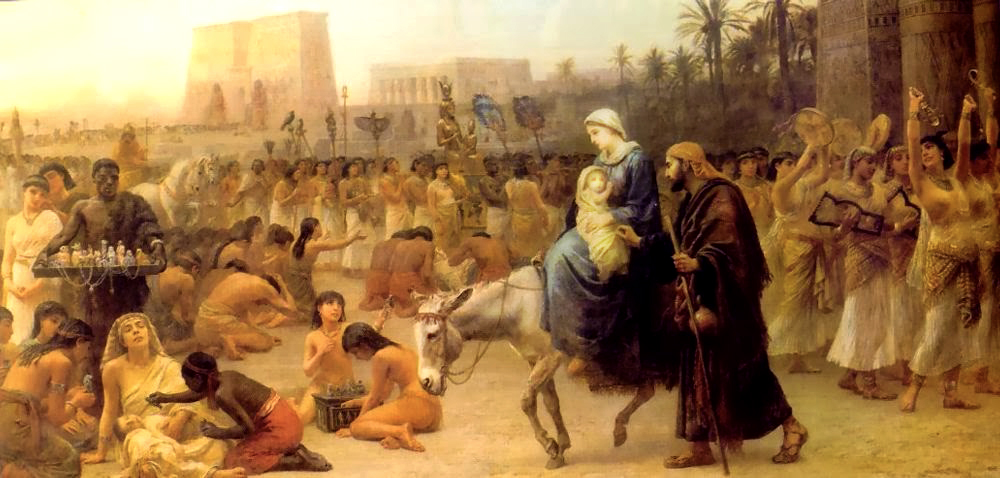
After they were gone, an angel of the Lord appeared to Joseph in a dream, saying, “Get up! Take the child and his mother, flee to Egypt, and stay there until I tell you. For Herod is about to search for the child to kill him.” So he got up, took the child and his mother during the night, and escaped to Egypt. He stayed there until Herod’s death, so that what was spoken by the Lord through the prophet might be fulfilled: Out of Egypt I called my Son.

~Matthew 2.13-15

The book of the prophet Hosea is a story of love and betrayal; set against the backdrop of Hosea’s own marriage to the adulteress Gomer, throughout the book, God repeatedly rebukes the northern Kingdom of Israel for scorning His grace, rejecting His love, forgetting His covenant, and playing the whore with the false gods of Baal. And so, in chapter 11, and verse 1, we read, “When Israel was a child, I loved him, and out of Egypt I called my son.” In these verses, God is looking back on the Exodus experience of His people as the initial overture of His love for Israel; as He goes on to say in verse 4 of that chapter, “I led them with human cords, with ropes of love. To them I was like one who eases the yoke from their jaws; I bent down to give them food.” It is clear that these verses are operating on the paternal imagery of parenthood. In the same way that parents nurture their newborn children, so also God nurtured His “son” Israel by bringing them out of Egyptian slavery, providing for them in the wilderness, and leading them into a land flowing with milk and honey. Even in spite of their repeated betrayal, God goes on to say in verse 8, “How can I give you up, Ephraim? How can I surrender you, Israel? How can I make you like Admah? How can I treat you like Zeboiim? I have had a change of heart; my compassion is stirred!” This chapter is a beautiful picture of the tenderness and mercy of God toward His rebellious son, and even though, the people of Israel will suffer His discipline, it holds out the hope that God has not ceased loving His people.

Now, in chapter 2 of the first canonical Gospel, Matthew connects the flight of the Holy family to Egypt to the words of Hosea 11.1, “so that what was spoken by the Lord through the prophet might be fulfilled: Out of Egypt I have called my Son (quoting Hosea 11.1b). But if the prophet Hosea wasn’t making a direct messianic prediction in the text in question, as we saw above, then how can the Egyptian flight of Mary, Joseph, and Jesus properly be considered a fulfillment? The answer is that this is a fulfillment by way of typology not prediction. Part of Matthew’s portrayal of Jesus is to show that He is the long awaited “prophet like Moses” (c.f. Deut 18.15-19), and he demonstrates this by highlighting the ways that Jesus recapitulates the story of Moses. A few examples should suffice. When Moses was born, Pharaoh killed all the Hebrew boys; when Jesus was born, Herod killed all the Jewish boys. According to 1 Corinthians 10.1-2, Moses had a baptism experience in the Red Sea, and Jesus was baptized in the Jordan River. Moses and the Israelites spent forty years in the wilderness; Jesus spent forty days in the wilderness. Moses went up on Mount Sinai to receive the Law; Jesus went up on a mountain to give the law (Sermon on the Mount). There are five books of Moses (Pentateuch); there are five discourses of Jesus’ sermons in the Gospel of Matthew. And “out of Egypt, I called my Son.” Based on this evidence, it is reasonably clear that the fulfillment that Matthew sees in the text of Hosea 11.1 is typological. Even as Israel was God’s typological “son”, Jesus is the true and better messianic Son of God.

In the final analysis, rather than violating the principle of authorial intent in his use of Hosea 11.1, the typological connection drawn by Matthew actually affirms the authorial intent of Hosea. And still, the question remains, “what of God’s intent in Hosea 11.1? When He inspired Hosea to write “out of Egypt, I called my son,” did he know that Matthew would take it in a different direction?” Of course, it is a theological truism to say that God knew the theological connections that Matthew would draw when He inspired Hosea to write, and so it is not wrong to say God “intended” more than Hosea understood at the time. However, this doesn’t mean that His intent stands in contradiction to or competition with the intent of Hosea. We must assume that God’s intent in Hosea 11 was to spark His people to repentance by reminding them of the great depths of His love that was demonstrated in the events of the Exodus, especially because the words of Hosea 11 are reported by the prophet as the very words spoken by God. (This is the Lord’s declaration, Hosea 11.11) Whatever “fuller sense” that we may understand from Hosea’s words, it must be grounded in the inspired intent of the human author, and this is exemplified in Matthew’s use of the text to explain the flight to Egypt.

But there is something that Matthew’s use of the Old Testament can teach us about our own interpretive efforts, namely that our hermeneutic for understanding of the Old Testament must reckon with the person and work of Christ. As Jesus himself affirms, “everything written about me in the Law of Moses, the Prophets, and the Psalms must be fulfilled.” (Luke 24.44) In other words, we have not done our full interpretive work in the Old Testament if we fail to consider how the text points to or is fulfilled in Jesus. If our understanding of the Old Testament would be accepted in a Jewish synagogue, then we haven’t understood the text Christianly. However, this does not mean that we can disregard the principle of authorial intent; we must still labor within the boundaries of literary and historical context before we can consider the broader canonical and theological implications. At the very least, our understanding of the human author’s intent must function as the true and necessary foundation upon which we stand as we seek the illumination of the Spirit in understanding the theological and applicational implications of the text for our lives in Christ. This is a thoroughly Christian understanding of how to interpret the Bible.


On Inspiration and Authorial Intent

Despite the claims of postmodern literary critics, it is reasonably certain that the meaning of any given document or literary work is grounded in and governed by its author. To put it another way, the meaning of the text is limited by the message that the writer of that text intended to communicate. This principle has been the foundation of biblical interpretation for most of the modern period, and rightly so. The Word of God comes to us through human authors who were writing to historical audiences, so we must work within the boundaries of literary and historical context in order to understand it. The problem, however, is that an overemphasis on authorial intent could relegate our interpretive efforts to nothing more than an exercise in historical investigation. But, the Word of God is more than a historical artifact; it is living and active, and its truths are just as relevant today as they were when they were first written. Over the last twenty years or so, more and more emphasis has been given to the intent of the divine author in an attempt to arrive at a more robustly theological interpretation.

However, this too has led to certain hermeneutical problems, particularly when the supposed divine intent in a given text is set in competition with or in contradiction to the human intent. This appears to be the underlying assumption of a question that was posed on Twitter a few days ago (pictured above). A pastor on Twitter recently asked, “Did the human authors have perfect/sinless intentions while writing Scripture?” Of course, Twitter polls are probably not the best resource for scholarly research, but the results are nevertheless concerning. Some 73% of respondents answered the question in the negative, meaning that almost three quarters of those who answered the poll believe that the human authors of the Bible had sinful intentions when they wrote the words of Holy Scripture. While the relationship between the human and the divine in the writing of Holy Scripture may be complex, we must conclude that this answer is out of bounds for those who believe that the Bible is the Word of God. How can sinful words be received as the Word of a sinless and righteous God? This is a contradiction in terms. As we read in Second Peter, chapter 1, verse 21, “instead men spoke from God as they were carried along by the Holy Spirit.”

Based on this text, we must affirm that there is no divine intent apart from the words of the human author. In other words, our interpretive efforts must deal directly with the words of Holy Scripture; we must labor to understand the genre, the syntax, the vocabulary, the grammatical relationships, and the literary flow of thought of the documents themselves. This is the fundamental work of biblical interpretation. There is no such thing as meaning that is separate from the text; there is no mystical or hidden Word that may be sought apart from the words on the page. Whatever the timeless supernatural theological implications of the text may be, these truths must be grounded in and derived from the actual words of Holy Scripture. In theology, this doctrine is known as verbal plenary inspiration, meaning that the quality of inspiration extends to very words that comprise the text and not just the ideas that stand behind those words. In the act of inspiration, God so worked in through and with the human authors of Holy Scripture, such that their words are His very words, thus they are without error in every way.

If their words are His words, then we may conclude that their intent is His intent as well. The difficulty, however, lies in the reality that the God of the Bible is infinite in His understanding, that He sees more and knows more than the human authors could possibly comprehend when they were writing. So, there is a sense in which the divine intent is so much more than what the human authors could understand; some have referred to this as the sensus plenior, or the fuller sense of the text. In their book Introduction to Biblical Interpretation, Klein, Blomberg, and Hubbard identify the problem with this idea, namely that “we have no objective criteria to posit the existence of a sensus, or to determine where it might exist, or how one might proceed to unravel its significance. In other words, if the human author of a text did not intend and was unaware of a deeper level of meaning, how can we be confident today that we can detect it?” To put it another way, if we understand textual meaning as something that is grounded in authorial intent, then we must assume a certain amount of similitude, if not even near identity, between the intent of both the Divine and the human author. Otherwise, we would never be able to understand what God is saying to us in any real or meaningful way.

In the final analysis, we must conclude that there is no competition or contradiction between the intent of the human the divine authors of Holy Scripture. While it is possible that the Spirit intended more than human authors, He certainly did not intend less than what they intended to communicate to their audiences through the words that they wrote. In other words, authorial intent in the Bible must be viewed as finely woven tapestry in which the human and divine is so interlaced and knitted together, such that any attempts to divide or separate them would in effect destroy its beauty and grandeur. As interpreters, we must hold these facets of the text in harmony and proceed with conviction the Bible is the very Word of God. B.B. Warfield puts it this way in his book The Inspiration and Authority of the Bible, “The Scriptures, in other words, are conceived by the writers of the New Testament as through and through God’s book, in every part expressive of His mind, given through men after a fashion which does no violence to their nature as men, and constitutes the book also men’s book as well as God’s, in every part expressive of the mind of its human authors.”

For further study, see:
Warfield, B.B. “The Divine and the Human in the Bible.” Pages 542-548 in Selected Shorter Writings, 2 Vols.


On Something Old, Something New (Part 1)

Question: How do we connect the Old and New Testaments?
Series: Wednesday Night Bible Study – Q & A
Church: South Caraway Baptist Church, Jonesboro, AR
Date: July 13, 2022


On Biblical Interpretation and the Analogy of Faith

The reality is that no one comes to the interpretation of Scripture with a completely blank slate; we all have some amount of pre-understanding that we bring with us when we read the Bible. This pre-understanding is formed through our education and our experiences, the combination of which overtime becomes part of the lenses through which we read Holy Scripture. Most of the time, our pre-understanding is helpful, because it forms a foundation from which we are able to engage the text and grasp its meaning; however, sometimes our pre-understanding can be a hindrance, if and when we are unwilling to submit it to the authority of the Biblical text. This is why the interpretive process is sometimes referred to as a “hermeneutical spiral”, because even as our pre-understanding helps us to understand the text, so in turn, the text shapes and forms our pre-understanding to be conformed with Biblical truth.

For those of us who are committed to the principle that the Bible is God’s Word, part of that pre-understanding includes our theological convictions about the nature of Bible. The inspiration, inerrancy, authority, sufficiency, perspicuity, et al. are foundational truths which ground Evangelical biblical interpretation. The truth that the one true and living God has spoken through His Word in ways that we may understand and apply is what makes our attempts to understand the Bible so significant. We are reading God’s very word. And it is precisely because we are reading God’s word that we hold to a conviction known as the “analogy of faith,” or the idea that scripture interprets scripture. It is a hermeneutical conviction that has been passed down to us from our Reformation forebears, and it is the veritable corner stone of Protestant biblical interpretation. However, in application, it has caused much confusion, because more often than not it is treated as an interpretive method rather than as a theological conviction.

The “analogy of faith”, sometimes also referred to as the “analogy of scripture,” is primarily a theological conviction about the unity and coherence of Biblical truth. It is grounded in the truth that the Bible, though it was written by many diverse human authors over several centuries, actually has only one primary author, i.e. the one true and living God. He has spoken clearly through His Word for the purpose that it may be understood, and He is not the author of confusion. Therefore, the overarching story of the Bible, its primary message and its central tenets, is essentially clear, consistent, and consonant with itself. There are no actual contradictions in the Biblical text, and if there is an apparent contradiction, then the problem lies with our understanding of the text and not with the text itself. So, the principle that scripture interprets scripture merely means that when multiple passages say something on a particular topic (either explicitly or implicitly), then what those passages say about that topic will be complementary and not contradictory.

On the other hand, the “analogy of faith” is not primarily a hermeneutical method; it does not necessarily tell us how to interpret the Bible. It does not permit us to ignore the social, cultural, or historical context of a passage, nor does it allow us to disregard the literary and grammatical conventions by which it is communicated. It also does not require that the various human authors of Holy Scripture say exactly the same thing in exactly the same way. In other words, we must allow for diversity of nuance, differences in emphasis, and uniqueness in application among the biblical authors. Our interpretation must be grounded in the meaning that the Spirit inspired human author intended to convey to his primary audience. We must follow his flow of thought, consider his purpose for writing, analyze his meaning on his terms. These are the essential building blocks of a sound interpretive method.

The “analogy of faith” also does not give us the license to move haphazardly through the Scriptures connecting passages that are otherwise unconnected. When the biblical authors quote directly from or make clear allusion to other passages, we may consider their relationship, but the principle that scripture interprets scripture does not mean that particularities and distinctions between passages can be minimized or ignored. Individual passages must be engaged on their own merits within their immediate context. This is because biblical meaning flows outward from smaller units of thought to wider units of thought, starting with the sentence, then the paragraph, then the pericope, then the section, the book, books by the same author, books in the same testament, and finally the whole Bible. To reverse this process is to impose meaning on the scriptures from the top down; it is reading meaning into the scriptures that may not otherwise be present or supported by the passage.

The composition and preservation of the Bible is nothing less than a manifestation of God’s providence and sovereignty. It was written over the course of 2000 years by several dozen different authors in three different languages across three continents, and yet, its central truths and primary message are remarkably consistent and harmonious. Its message is so simple that a child could understand it, and yet so profound that the greatest minds throughout history have failed to exhaust its mysteries. And God has ordained that it should be the primary means by which we might come to know Him and His will for our lives. The good news of the Gospel is that He wants to be known, and He has revealed Himself in the Bible so that we may read, understand, and be transformed. If we will simply seek Him in, by, and through His Word, then we may be sure that He will be found.

For further study, see also:
On Sola Scriptura and the Use of Bible Study Resources
On Biblical Interpretation and the Holy Spirit
On Hermeneutics & Interpreting the Bible


On Biblical Interpretation and the Holy Spirit

Recently, I was following a thread on a friends Facebook post where the participants were discussing their disagreement on a question of biblical interpretation. The specific issue under debate is not important at the moment, and I’ll just say that I was surprised to find that this particular exchange was more graceful than these kinds of forums usually are. However, with that being said, after reading through the various points and counterpoints being made, I came across one response that made me pause. Figuring that the minds of the other participants were unlikely to change, one commenter attempted to conclude the discussion by saying:

“When it all comes down to it we should rely on The Holy Spirit of God to reveal His truths to us!! Don’t take what man has to say about it!!”

~Unnamed Facebook Commenter

In my previous post, I examined the question of “man-made” bible study resources, and I concluded that there is great wisdom in listening to the voices of those who have studied the Bible before us. We were never intended to approach Bible study as if we are the “lone ranger” of Bible interpretation, carving a path that has somehow never been carved before. Commentaries, theologies, and the like are part of God’s gift to the church (Ephesians 4.11-13); they are part of that “great cloud of witnesses” within which we pursue Christian maturity and godliness (Hebrews 12.1). However, even greater than these is the gift that is God’s Spirit. In the New Covenant, we who have been united with Christ by faith have been indwelt by God’s very Spirit, and He is the one who writes the Word upon our hearts and moves us to obey it (Jeremiah 31.33, Ezekiel 36.27). This is what makes Christian biblical interpretation unique; we have God’s Spirit (1 Corinthians 2.10-16).

Unfortunately, there is great misunderstanding as to the exact nature of the Spirit’s role in biblical interpretation, and in the space that follows, I would like to explore the contours of the Spirit’s work in Bible interpretation. According to the view represented by the Facebook comment above, all we need to do is read the Bible and then open our hearts and minds so that the Spirit can tell us what the Scripture means. This approach is essentially a recapitulation of the ancient heresy of Gnosticism. In other words, it suggests that Biblical knowledge comes to us by some kind of secret mystical experiential revelation from the Spirit apart from the text. But this is not the way that the Spirit works. Revelation is fixed, and the canon is closed. Moreover, the Spirit will not do for us what God has equipped us to do for ourselves. He has given us rational minds with the ability to read and comprehend His revealed Word. This is why we are repeatedly commanded to read, study, and grow in the knowledge of the Scriptures.

The Spirit’s work in biblical interpretation is not primarily revelatory; He does not impart the content of biblical meaning. Rather, His work pertains more to our accepting and obeying the principles that are revealed in the Scriptures. This is what is known in theology as the doctrine of illumination.

The Spirit convinces God’s people of the truth of the biblical message, and then convicts and enables them to live consistently with that truth. The Spirit does not inform us of Scripture’s meaning.

~Klein, Blomberg, & Hubbard, Introduction to Biblical Interpretation

The Spirit illuminates our hearts to accept the truth of God’s Word, and He helps to conform our will in submission to that Word through conviction. This illumination comes to us not through some mystical experiential supra-rational revelation, but through the classic word-centered spiritual disciplines. In other words, once we have done our exegetical work in the text, then we must do our closet work (ala Matt 6.6) through memorization, meditation, and prayer. When we engage in these rhythms of the Spirit, we put ourselves in a posture where He can use the fruits of our study to sift our souls. As the Scripture says,

“For the word of God is living and effective and sharper than any double-edged sword, penetrating as far as the separation of soul and spirit, joints and marrow. It is able to judge the thoughts and intentions of the heart.”

Hebrews 4.12

Under the New Covenant, one of the primary roles of the Spirit is to mediate the knowledge of God, but this ministry cannot, nay must not, be separated from the Word of God. Throughout all of Holy Scripture, the Spirit of God and the Word of God work together to transform the people of God into the image of God. More often than not, this transformation happens in ways and means that are consistent with the way God has made us. We do not seek any secret mystical revelation of God’s Word; rather, we use all of the natural and supernatural resources that God has given us to understand His revelation of Himself to us through His Word.

For further study:
On the Spirit and the Word


On Sola Scriptura and the Use of Bible Study Resources

Five hundred years ago, the leaders of the Protestant Reformation championed the refrain sola scriptura, that scripture alone is the ultimate and final authority for all questions pertaining to Christian faith and practice. It is a refrain that continues to ring out today in Bible believing churches all over the world. The perspicuity, sufficiency, and authority of the Bible are convictions that are foundational for the overall health and wellbeing of the church, and this is especially so when these truths are under the kind of direct attack that they have suffered in this current cultural climate. It is no understatement to say that the trends of the culture are moving against the authority and sufficiency of Holy Scripture. Therefore, it is imperative for every new generation of Christians to affirm, proclaim and defend these truths.

However, in my experience, there is widespread misunderstanding about what the doctrine of sola scriptura actually means. Many Christians commonly confuse the doctrine of sola scriptura, or “scripture alone”, with a position that might be called solo scriptura, or “scripture only”. Solo scriptura is the position that Holy Scripture is the only valid resource for matters of Christian faith and practice, and usually, it holds that other kinds of extra biblical resources are unnecessary, nay even inappropriate. According to this perspective, biblical commentaries, historical studies, biblical and systematic theologies are typically viewed as distractions or obstacles in the study of the Bible rather than as aids in the process. These resources are typically viewed as merely the opinions of men, and so they are deemed to be inappropriate for the Christian who truly wants to hear the voice God in His Word.

Now, I think that the believers who hold this kind opinion are genuine in their desire to know and obey the Word of God, and this should be applauded. But, to eschew all extra biblical resources out of some supposed devotion to the primacy of Holy Scripture is fundamentally short sighted and unwise. This is primarily because God has gifted his church with pastors and teachers (Ephesians 4.11), and these gifts have been preserved for us in the form of commentaries, theologies, and the like that have been passed down through the ages. Moreover, the Proverbs remind us that “A fool’s way is right in his own eyes, but whoever listens to counsel is wise” (Proverbs 12.15), and “Without guidance, a people will fall, but with many counselors there is deliverance” (Proverbs 11.14). In other words, it is in keeping with Biblical wisdom to listen to the counsel of those who have studied the Bible before us. Or to put it another way, “[Interpretations] fail when there is no counsel, but with many advisers they succeed” (Proverbs 15.22).

Of course, the doctrine of sola scriptura rightly affirms that these extra biblical resources do not stand above the Bible in any kind of authoritative or determinative way. The Bible is norma normans non normata; it is the norming norm that is itself not normed. On the other hand, biblical commentaries, systematic theologies, and the like are norma normata, or “normed norms”, in the process of biblical interpretation. They are the guard rails that keep us from falling into the canyon of interpretive subjectivism, but they are ultimately subservient to that final authority which is the inspired and inerrant Word of the one true and living God. This is the doctrine of sola scriptura rightly understood; it is the affirmation that scripture the final and highest authority on matters pertaining to Christian life and practice, but it is not the only authority on these matters.

So, when it comes to reading and studying the Bible, Christians are right to avail themselves of the plethora of resources both modern and ancient that are available today. This includes but is not limited to biblical commentaries, biblical, systematic, and historical theologies, socio-cultural background studies, linguistic and literary aids, and many others. These are valuable helps in the interpretive process. However, as helpful as these kinds of books are, we must remember that nothing can substitute for simply reading the Bible; this is the God-ordained means by which we are transformed into His image by the renewing of our minds. As Charles Spurgeon once said, “Visit many good books, but live in the Bible. ” Or as the Bible itself reminds us,

“But beyond these, my son, be warned: there is no end to the making of many books, and much study wearies the body. When all has been heard, the conclusion of the matter is this: fear God and keep his commands, because this is for all humanity.” 

~Ecclesiastes 12.12-13

For more on this topic, see also:
On the Use and Benefit of Tradition
On Hermeneutics & Interpreting the Bible


On an Introduction to Ephesians

TEXT

1 Paul, an apostle of Christ Jesus by God’s will:
To the faithful saints in Christ Jesus at Ephesus.
Grace to you and peace from God our Father and the Lord Jesus Christ.

Title: On an Introduction to Ephesians
Series: John Newton Pastors Conference
Church: Grace Baptist Church, West Memphis, AR
Date: May 20, 2022


On Psalm 119:33-40 (He)

Hebrew he33 Teach me, Lord, the meaning of your statutes,
and I will always keep them.
34 Help me understand your instruction,
and I will obey it
and follow it with all my heart.
35 Help me stay on the path of your commands,
for I take pleasure in it.
36 Turn my heart to your decrees
and not to dishonest profit.
37 Turn my eyes
from looking at what is worthless;
give me life in your ways.
38 Confirm what you said to your servant,
for it produces reverence for you.
39 Turn away the disgrace I dread;
indeed, your judgments are good.
40 How I long for your precepts!
Give me life through your righteousness.

In the the fifth stanza of Psalm 119 ( ה/he – pronounced “hey”), the psalmist expresses his complete dependency upon God for understanding His Word. And so, he prays to God for illumination. “Teach me, Lord, the meaning of your statues, and I will always keep them. Help me to understand your instruction, and I will obey it and follow it with all my heart.” (Verses 33-34) Illumination is simply that work of the Holy Spirit in the life of the believer by which He opens our minds to understand and apply the Scriptures. And it is this “spiritual” understanding that distinguishes the believer’s reading of Holy Scripture from the nonbeliever.

The reality is that there are secular scholars (historians, linguists, philosophers) who know the history, language, and theology of the Bible better than the average Christian. Their historical reconstructions are more compelling, their literary analyses are more sophisticated, their exposition perhaps even more accurate. However, they do not believe in the one who said, “and yet they testify about me.” (John 5.39) The difference being that they do not have the indwelling Holy Spirit whose specific job is to lead believers into all truth. Therefore, we must conclude that illumination gives us an understanding that is more than merely intellectual. It goes beyond the literary and the historical to the transformational. It is the Spirit who brings the dead words to life, who renews and revives the weary soul.

And so, we must affirm that illumination is not the imparting of new information, as opposed to that which is largely gained simply by being a good reader. Rather, illumination is the creation of a new capacity to receive the inspired Word of God and to be changed by it. As our psalmist goes on to pray, Turn my heart to your decrees and not to dishonest profit. Turn my eyes from looking at what is worthless; give me life in your ways.” (Verses 36-37) Our psalmist clearly understands that what he needs is more than a mere intellectual reading of Holy Scripture; what he needs, and what we all need, is that Spirit given illumination leading to transformation. “How I long for your precepts! Give me life through your righteousness.” (Verse 40)

It is somewhat appropriate, I think, that I am writing on this on the day in which many Christians will make a “New Years Resolution” to read the Bible more in 2020, perhaps, by starting some kind of Bible reading plan, e.g. the Bible in one year, etc. And, of course, this is a worthy goal to aim for. But there must be a realization that we are not simply reading for information; we are reading for transformation. This does not mean that every reading will be some kind of mountain top spiritual experience. Some, in fact, will be dull drudgery (re: Leviticus). But faithfulness over time, daily dependence upon the Spirit, humbly praying for eyes to see and ears to hear will slowly result in the transformation of our being into the image of Christ. This is why we call it a spiritual discipline, faithful obedience while relying upon the Spirit.

For further study:
Introduction and Overview
Psalm 119.1-8
Psalm 119.9-16
Psalm 119.17-24
Psalm 119.25-32

See also:
Sermon: On the Spirit and the Word


Slow To Write

"let every person be quick to hear, slow to speak, slow to anger."

lovegavehope

Just another WordPress.com site

Jared Cornutt

Pastor | Speaker | Writer

Denny Burk

A commentary on theology, politics, and culture

G3 Ministries

Events + Resources for the Local Church

Biblical Reasoning

Biblical and Systematic Theology According to the Scriptures

RetroChristianity

Reclaiming the Forgotten Faith

SBC Voices

Southern Baptist News & Opinion

Lucid Theology

Thoughts on words, books, theology, and life.

Baptist21

A pastor-led voice for Baptists in the 21st century

Center For Baptist Renewal

The Personal and Professional Blog of Phillip Powers

The Pastor's Well - Pastor Well

The Personal and Professional Blog of Phillip Powers

Articles - AlbertMohler.com

The Personal and Professional Blog of Phillip Powers

The Gospel Coalition

The Personal and Professional Blog of Phillip Powers