Tag Archives: The Gospel of Matthew

On Hosea, Matthew, and Authorial Intent

In my previous post, I argued that our hermeneutic for interpreting the Bible must be grounded in the conviction that what God intended to say in the Scriptures is accurately and faithfully conveyed in what the human authors actually wrote, and for most of the Bible, this seems to be rather clear. The question, however, arises when we come to texts in the New Testament that seem to interpret the Old Testament against the grain of the author’s intent. If we believe that “scripture interprets scripture” (see my post, here), then it would makes sense to suggest that we should follow the interpretive principles of the Apostles, and if they were not bound by a strict conception of authorial intent, then perhaps we should jettison this hermeneutical ground in our interpretive efforts as well. This then is the point that must be proven, namely that the New Testament authors did in fact disregard the human author’s intent when they interpreted the Old Testament. Of course, to examine every place where the New Testament author’s quote from or allude to the Old Testament would require far more space than is available here, and this work has already been done by many fine scholars in the field. I recommend Commentary on the New Testament use of the Old Testament, edited by G.K. Beale and D.A. Carson. But in lieu of that, I would like to explore one text as a test case for the thesis that the New Testament authors ignored the principle of authorial intent in their use of the Old Testament, that being Matthew’s use of Hosea 11.1 in chapter 2, verse 15 of his Gospel.

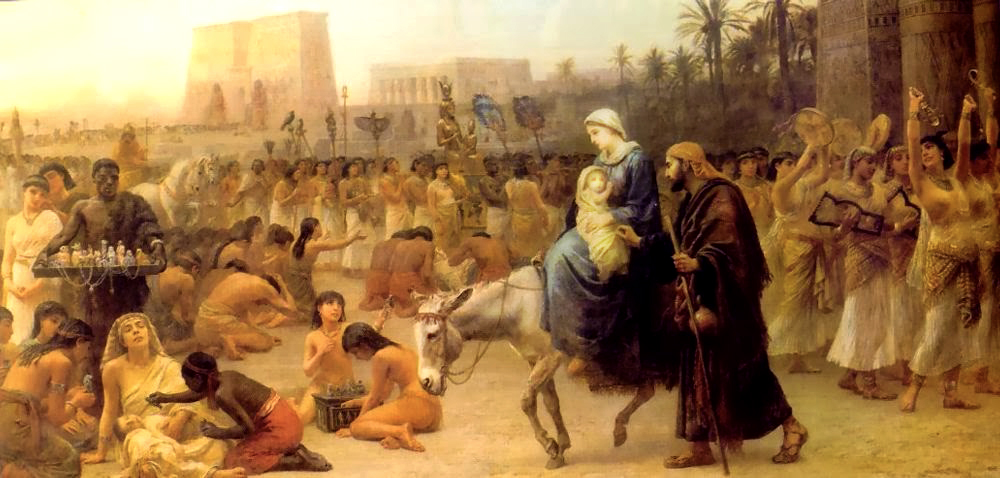
After they were gone, an angel of the Lord appeared to Joseph in a dream, saying, “Get up! Take the child and his mother, flee to Egypt, and stay there until I tell you. For Herod is about to search for the child to kill him.” So he got up, took the child and his mother during the night, and escaped to Egypt. He stayed there until Herod’s death, so that what was spoken by the Lord through the prophet might be fulfilled: Out of Egypt I called my Son.

~Matthew 2.13-15

The book of the prophet Hosea is a story of love and betrayal; set against the backdrop of Hosea’s own marriage to the adulteress Gomer, throughout the book, God repeatedly rebukes the northern Kingdom of Israel for scorning His grace, rejecting His love, forgetting His covenant, and playing the whore with the false gods of Baal. And so, in chapter 11, and verse 1, we read, “When Israel was a child, I loved him, and out of Egypt I called my son.” In these verses, God is looking back on the Exodus experience of His people as the initial overture of His love for Israel; as He goes on to say in verse 4 of that chapter, “I led them with human cords, with ropes of love. To them I was like one who eases the yoke from their jaws; I bent down to give them food.” It is clear that these verses are operating on the paternal imagery of parenthood. In the same way that parents nurture their newborn children, so also God nurtured His “son” Israel by bringing them out of Egyptian slavery, providing for them in the wilderness, and leading them into a land flowing with milk and honey. Even in spite of their repeated betrayal, God goes on to say in verse 8, “How can I give you up, Ephraim? How can I surrender you, Israel? How can I make you like Admah? How can I treat you like Zeboiim? I have had a change of heart; my compassion is stirred!” This chapter is a beautiful picture of the tenderness and mercy of God toward His rebellious son, and even though, the people of Israel will suffer His discipline, it holds out the hope that God has not ceased loving His people.

Now, in chapter 2 of the first canonical Gospel, Matthew connects the flight of the Holy family to Egypt to the words of Hosea 11.1, “so that what was spoken by the Lord through the prophet might be fulfilled: Out of Egypt I have called my Son (quoting Hosea 11.1b). But if the prophet Hosea wasn’t making a direct messianic prediction in the text in question, as we saw above, then how can the Egyptian flight of Mary, Joseph, and Jesus properly be considered a fulfillment? The answer is that this is a fulfillment by way of typology not prediction. Part of Matthew’s portrayal of Jesus is to show that He is the long awaited “prophet like Moses” (c.f. Deut 18.15-19), and he demonstrates this by highlighting the ways that Jesus recapitulates the story of Moses. A few examples should suffice. When Moses was born, Pharaoh killed all the Hebrew boys; when Jesus was born, Herod killed all the Jewish boys. According to 1 Corinthians 10.1-2, Moses had a baptism experience in the Red Sea, and Jesus was baptized in the Jordan River. Moses and the Israelites spent forty years in the wilderness; Jesus spent forty days in the wilderness. Moses went up on Mount Sinai to receive the Law; Jesus went up on a mountain to give the law (Sermon on the Mount). There are five books of Moses (Pentateuch); there are five discourses of Jesus’ sermons in the Gospel of Matthew. And “out of Egypt, I called my Son.” Based on this evidence, it is reasonably clear that the fulfillment that Matthew sees in the text of Hosea 11.1 is typological. Even as Israel was God’s typological “son”, Jesus is the true and better messianic Son of God.

In the final analysis, rather than violating the principle of authorial intent in his use of Hosea 11.1, the typological connection drawn by Matthew actually affirms the authorial intent of Hosea. And still, the question remains, “what of God’s intent in Hosea 11.1? When He inspired Hosea to write “out of Egypt, I called my son,” did he know that Matthew would take it in a different direction?” Of course, it is a theological truism to say that God knew the theological connections that Matthew would draw when He inspired Hosea to write, and so it is not wrong to say God “intended” more than Hosea understood at the time. However, this doesn’t mean that His intent stands in contradiction to or competition with the intent of Hosea. We must assume that God’s intent in Hosea 11 was to spark His people to repentance by reminding them of the great depths of His love that was demonstrated in the events of the Exodus, especially because the words of Hosea 11 are reported by the prophet as the very words spoken by God. (This is the Lord’s declaration, Hosea 11.11) Whatever “fuller sense” that we may understand from Hosea’s words, it must be grounded in the inspired intent of the human author, and this is exemplified in Matthew’s use of the text to explain the flight to Egypt.

But there is something that Matthew’s use of the Old Testament can teach us about our own interpretive efforts, namely that our hermeneutic for understanding of the Old Testament must reckon with the person and work of Christ. As Jesus himself affirms, “everything written about me in the Law of Moses, the Prophets, and the Psalms must be fulfilled.” (Luke 24.44) In other words, we have not done our full interpretive work in the Old Testament if we fail to consider how the text points to or is fulfilled in Jesus. If our understanding of the Old Testament would be accepted in a Jewish synagogue, then we haven’t understood the text Christianly. However, this does not mean that we can disregard the principle of authorial intent; we must still labor within the boundaries of literary and historical context before we can consider the broader canonical and theological implications. At the very least, our understanding of the human author’s intent must function as the true and necessary foundation upon which we stand as we seek the illumination of the Spirit in understanding the theological and applicational implications of the text for our lives in Christ. This is a thoroughly Christian understanding of how to interpret the Bible.


On the Events of Holy Week

The events of Holy Week stand as the climax of the public ministry of Jesus in the Gospel accounts. All four of the Gospel writers devote almost half of their material to these events. Clearly, they intended for this story to stand at the center of our reflection on the person and work of Jesus. However, for most modern Christians, the events of Holy Week receive only a passing nod. Of course, we look forward to Easter and the cultural dressings that accompany it, and most churches emphasize the resurrection of Jesus on Easter Sunday, whether through song, sermon, or drama. But other than that, the final week of our Lord’s life mostly goes unacknowledged in the reflection and devotion of many people who call themselves His followers. As the Apostle James would say, “My brothers and sisters, these things should not be this way.” (James 3.10) The person and work of our Lord Jesus Christ should be the central focus of our reflection, not only during Holy Week, but every week of the year, because He is the never ending source of the sustaining grace that we need to live as His followers. So, in the space that follows, I would like to briefly sketch out the daily events of Holy week, so that we may grow in our understanding of what He accomplished on our behalf.

Palm Sunday
On Palm Sunday, Jesus made His triumphant entry into Jerusalem. This was His official presentation before the Jerusalem religious establishment as the long-awaited Messianic King. Matthew informs us that this event is the fulfillment of the prophecy of Zechariah 9.9 (Matthew 21.4-5), and we have this confirmed by the shouts of the Galilean pilgrims who sang “Hosanna” (Mark 11.9-10). However, as elated and joyous as the crowds were that day, we know that there is darkness on the horizon. Even as He was approaching the Holy City, He paused to weep over their lack of faith (Luke 19.41-44). It is likely that many of those who joined in the procession that day expected that this would be the day when Jesus would overthrow the Romans and establish Israel as an independent kingdom, and yet His disciples knew that He had already predicted three times that He would be crucified in Jerusalem. So, even as the disciples celebrated the arrival of Messiah, they waited with bated breath as His public ministry began to approach its primary purpose.

Monday
The last thing Jesus did on Sunday before retiring to Bethany for the night was to inspect the Temple (Mark 11.11), and in the subsequent scenes, the Gospel writers make it clear what He found there. On Monday, as they were heading back into the city, Jesus happened upon a fig tree that appeared to be fruitful, but finding it empty, He cursed it. It subsequently withered. In between these scenes, we have the familiar story of the temple cleansing. The implication is clear; the temple (and the Jerusalem religious establishment that it represents) was fruitless and empty. Though it had all the right external dressings, it was empty of any and all spiritual substance. And so, in what can only be described as a public act of prophetic judgment, Jesus clears the temple and begins to teach the people. This act was the final straw for the Jewish religious leaders, and from that point on, they began to look intently for a way to kill Him.

Tuesday, the “Day of Controversy”
On Tuesday of His passion, Jesus returned to the “scene of the crime”, so to speak, and as He was walking through the Temple, various factions representing the leadership of the Jewish religious establishment began to question him. The first question that they ask is the most telling and sets the tone for the rest of the day. “By what authority are you doing these things? Who gave you this authority to do these things?” they asked, in what was clearly an accusatory manor. It is obvious that their questions were not in earnest, and each successive interaction reveals their scheme with more clarity. But as the “Day of Controversy” unfolds, Jesus ably avoids their traps, and in the process, He exposes the true nature of their problem. Time and again, He brings the discussion back to the Scriptures, exposing the stubborn refusal of His opponents to submit to their authority. In other words, their problem is not with Him per se; rather, it is with the authority of God which He represents as Messiah. His is an authority that they all but refuse to submit to, and it is this refusal that ultimately provokes Jesus to condemn of the Temple and all that it represents in the Olivet Discourse. In this discourse, Jesus turns the attention of His disciples away from the religious, political, and nationalistic hopes of the Jewish religious establishment to a hope that culminates in His return in glory to establish the Kingdom of God once and for all.

“Silent” Wednesday
Wednesday of Holy Week is known as “Silent Wednesday”, because the Gospels are practically silent as to the activity of Jesus and the Disciples on that day. It is most likely that they spent the day in Bethany with Mary, Martha, and Lazarus enjoying the limited time that they had left to be together. It is also likely that it was on this Wednesday, as they were sharing a meal together in the home of Simon the Leper, that the woman with the alabaster jar came to anoint Jesus (Mark 14.3-10). Immediately, Judas raised the alarm that this valuable commodity had been wasted when it could have been sold and the profits given to the poor. But, when his concerns were seemingly dismissed by Jesus, it was the final straw.  Apparently, this event was the breaking point for Judas, and immediately, he went out to plot with the Jewish religious leaders to betray Jesus for 30 pieces of silver.  This is why this day is also known as “Spy” Wednesday.

Maundy Thursday (See also “On Maundy Thursday”)
On Thursday morning, Jesus instructed His disciples on where they could prepare to celebrate the Passover, and later that evening, Jesus arrived at the location where He would celebrate His Last Supper with them. The evening began with Jesus donning the apparel of a servant and washing the disciples feet. Using this action as an object lesson, Jesus went on to teach them in the Upper Room Discourse (John 13-17) about a New Commandment, “that you should love one another.” This is why we call it “Maundy” Thursday; the name comes from the Latin mandatum which means command, “a new commandment.” During the course of the evening, Jesus predicted that the disciples would betray Him (even Peter would do so three times before the rooster crowed), and Judas left to prepare for his act of betrayal. The evening concluded with the sharing of the bread and cup as symbols of His body that was about to be broken and His blood that was about to be shed for the forgiveness of sins as the inauguration of the New Covenant. After their meal, they adjourned to the Garden of Gethsemane, and while the disciples slept, Jesus prayed three times that “this cup” (by which He meant His passion) would pass from Him. Shortly thereafter, the mob arrived, Judas completed his betrayal with a kiss, and Jesus was arrested.

Good Friday
After His arrest, Jesus was carried away to the house of the High Priest where He was subjected to a sham trial in the darkness of night. The fix was in, as they say, as one by one witnesses were brought in to make false accusations against Him, and yet, throughout it all, He remained quiet. At first light, they brought Him before the Roman authorities, because the Jewish religious leaders lacked the authority to put anyone to death, and after being examined and found innocent by both Pontius Pilate and Herod Antipas, the religious leaders stirred up the crowd to call for His death. So, Pilate offered them a choice; he would release Barabbas the murderer or Jesus, the so-called King of the Jews. Again, the religious leaders stirred up the crowd, and they called for the release of Barabbas and for the crucifixion of Jesus. Pilate gave them what they asked for; he turned Jesus over to the Romans soldiers to be mocked and beaten, and then they led him away to be crucified. At the top of Golgotha, they nailed him to a cross and crucified him between two criminals. The soldiers cast lots for His clothes, and the Jewish religious leaders mocked him. At about three in the afternoon, He cried out  with a loud voice “It is finished” and yielded up His Spirit to His Father. The Roman soldiers pierced His side with a spear to confirm that He was dead. Joseph of Arimathea requested His body and buried it in his own personal tomb before the start of the Sabbath at sundown.

Holy Saturday
The Gospels are mostly silent as to the details of Holy Saturday. Of course, it was the Jewish sabbath, a day dedicated to rest and to the worship of God, but for the followers of Jesus, this day was probably not very restful, to say the least. After all, they had just watched in horror as their beloved Master was wrongfully accused, unjustly convicted, and tragically executed. Jesus was dead, and it appeared that all their hopes had died with Him. He was supposed to be the Messiah, the prophesied and anointed King who would establish the Kingdom of God on earth, and He had been murdered, seemingly defeated by the worldly powers that be. Sure, he had predicted His own death and resurrection, but it is clear that they had no understanding of what that might mean until after all these things had taken place. On this Saturday, they were most likely overcome with grief and despair, and on top of that, there was the fear that what happened to Him might yet happen to them as well. And so, it is most likely that they spent the day locked behind closed doors cowering in terror. It was a dark day indeed, and yet, we know looking back that His death would not be the final word, that light and hope were still on the horizon. But this is the nature of Christian discipleship; sometimes we must endure the depths of the darkness before we ever begin to see the light of hope. 

Resurrection Sunday
On the first day of the week, Sunday morning, at daybreak, Mary Magdalene, Mary the mother of James, and Salome went to the tomb to anoint His body for burial; there hadn’t been time to do so on Friday due to the haste of getting Him buried before the start of the Sabbath. As they made their way to the tomb, they began to wonder how they might roll the stone away. However, when they arrived, they found the stone had already been rolled away, and when they looked inside the tomb, they were met by an angelic being who informed them of what had taken place. “Don’t be alarmed,” he told them. “You are looking for Jesus of Nazareth, who was crucified. He has risen! He is not here.” (Mark 16.6) Immediately, and with the angel’s express instruction, they returned to the city to inform the disciples of what they had seen. Of course, Peter, along with John ran off to see it for themselves, and finding it as the women had said, they were amazed at what this could mean. But Mary Magdalene stayed behind at the tomb, crying and confused. A man approached her, and at first, she did not recognize Him, assuming Him to be the gardener. “Sir, if you’ve carried him away, tell me where you’ve put him, and I will take him away.” (John 20.15) But when He called her by name, she immediately understood that this man was none other than her Lord and Savior. Later that day, He appeared to all of them in the upper room, even though the door was still locked, comforted them with the peace of His presence, and commissioned them to proclaim all that they had seen and heard.

If you are like me, and you have been raised in church, this may seem like the same ole’ story that has been told and retold too many times to count, but we must remember that this is the greatest story that has ever been told. These events are the pendulum upon which the course and destiny of human history hangs. The story of Jesus, especially His death and resurrection, are the foundation of God’s redemptive work in the world, and it is the very soul of our salvation. As followers of Jesus, we must never tire of hearing it, telling it, reading it, and singing it; we must never cease to be amazed at the wondrous work of Jesus on our behalf. And so this Holy week, let us echo the words of that great hymn writer, who wrote,

Tell me the story of Jesus
Write on my heart every word
Tell me the story most precious
Sweetest that ever was heard

~Fanny Crosby, “Tell Me the Story of Jesus”

For further study, see
On the Annual Celebration of Christmas and Easter
On the Crucifixion and Why It Matters at Christmas
On the How the Death of Jesus Changed Everything
On Why Christians Still Need the Gospel
On Remembering the Gospel
On Jesus’ Understanding of His Death
On the Season of Easter

See also:
Cook, William F., III. Jesus’s Final Week: From Triumphal Entry to Empty Tomb. Nashville, TN: B&H Academic, 2022.


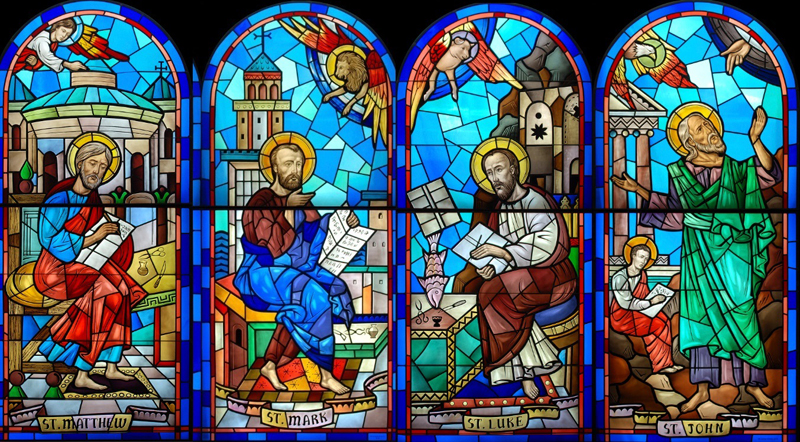
On the Beauty of the Fourfold Gospel Witness

It is truly a manifestation of the grace of God that there are four accounts of the life of Jesus in the New Testament. They are rightly called theological history, because each one of them details the life of Jesus in a way that emphasizes and highlights particular aspects of who He is and what He has done for His people. While any one of them may have been sufficient on their own to convey the pertinent historical facts of His life, the four of them together paint a beautiful multilayered tapestry that has sparked the reflection and devotion of His followers now for two millennia. In the space that follows, I will sketch out the contours of that tapestry by discussing the particular emphases of each Gospel. 

According to the documentary hypothesis, Mark wrote his gospel first based on the memoirs of the Apostle Peter. The vast majority of Mark’s gospel is reproduced in both Matthew and Luke, but this does not mean that Mark’s Gospel is incomplete, redundant, or lacking in historical and theological value. This value is seen clearly in the very first verse of his work, “The beginning of the Gospel of Jesus Christ, the Son of God.” Functioning somewhat like a title or purpose statement, this verse is packed with theological significance. It tells us that Mark’s work is a “gospel”, a word that means good news; it also states clearly that this good news has to do with Jesus, the messianic Son of God. That this is the primary way that Mark wants his audience to see Jesus is confirmed following His death, when a Roman Centurion says, “Truly, this man was the Son of God.” 

However, what makes Mark’s gospel so compelling is that this truth is hidden throughout most of the Gospel. The so-called messianic secret, in which Jesus repeatedly instructs people not to make His identity known, stands in stark contrast to the bold affirmations at the beginning and end of Mark’s Gospel. This is probably because Mark wants his readers to understand that the messianic identity of Jesus is defined by His death on the cross for sin. Almost half of Mark’s gospel is dedicated to the events of Passion week. Whereas the first ten chapters are quickly paced and action oriented, the final six slow down to something like a snail’s pace in detailing the events of the final seven days of Jesus’ life. This is why many have considered Mark’s gospel to be an apology or a defense of the cross that was likely written for Christians in Rome shortly before the persecutions of Nero. 

Of course, though chronologically prior, the Gospel of Mark is not ordered first in the New Testament canon; that pride of place belongs to the Gospel of Matthew, and it is easy to understand why. Not only does Matthew’s Gospel begin with a genealogy that traces the lineage of Jesus through David to Abraham, it also includes an infancy narrative that captivates those who read it. However, this is part of Matthew’s unique purpose to show that Jesus is the Son of David, Son of Abraham. Not only does this connect the New Testament back to the Old Testament, it also would have been particularly important if Matthew was writing to Jewish Christians, as many suppose. For Matthew, Jesus is the fulfillment of God’s covenant promises, both to Abraham and to David; he is the long awaited Davidic messiah, heir to the throne of  God’s Kingdom, and the one who mediates the blessings of the Abrahamic Covenant. 

More than that though, for Matthew, Jesus is a new and better Moses. This is evident in the many ways that the events of the first four chapters recapitulate the life of Moses. On top of this, Matthew has structured His gospel around five primary discourses, a fact that likely refers back to the five books of Moses. In the same way that Moses was the mediator of the Law under the Old Covenant, likewise, Jesus is the mediator of the “law” under the New Covenant.  This is confirmed in the Great Commission, where Jesus commands His disciples to “teach all that I have commanded you.” The phrase “all that I have commanded you” most naturally refers back to the content of the five primary discourses in Matthew’s Gospel. Because of this, many consider Matthew’s Gospel to be a handbook on discipleship, a manual that instructs us in what it means to follow Jesus. 

The Gospel of Luke rounds out the “Synoptic Gospels”, and like Matthew, it begins with a beautiful retelling of the Christmas story. However, what stands out in Luke’s infancy narrative is the role of the Holy Spirit. Of course, many consider Luke to be the theologian of the Spirit par excellence in the New Testament, not least of which is due to the continued role that the Spirit plays in Luke’s second volume, the Book of Acts, otherwise known as the Acts of the Holy Spirit. Luke’s emphasis on the role of the Spirit is largely due to his desire to present Jesus as the Spirit anointed messiah. This is confirmed in chapter 4 of Luke’s Gospel, when Jesus reads a passage from the Book of Isaiah, which says in part “The Spirit is upon me.” After He sits down, He says, “Today, this scripture is fulfilled in your hearing.” In other words, Luke wants us to see that Jesus is the spirit anointed Messiah who has finally come to pour out the blessings of the Messianic jubilee. According to the passage from Isaiah, chapter 61, these blessings are primarily manifested in the compassionate healing of those who are blind, deaf, mute, etc, and throughout Jesus’ ministry, Luke repeatedly details the compassion that Jesus demonstrated during his healing ministry. For Luke in particular, Jesus is a man of sorrows, well acquainted with grief, bearing the burdens and ailments of many. 

In addition to this, a large portion of Luke’s unique material is dedicated to Jesus’ final journey toward Jerusalem. In Luke, chapter 9, we read that “He set his face like flint to go to Jerusalem;” this simply means that the final journey of Jesus to Jerusalem to be crucified was purposeful and intentional on the part of Jesus, so that “the scriptures might be fulfilled.” The fulfillment of God’s plan for salvation history is a primary emphasis in both Luke’s Gospel and in the Book of Acts. In other words, Jesus was not a victim of circumstance or the maniacal plots of evil men; He was delivered up according to the predetermined plan of God from before the foundations of the world. Luke wants his audience to understand that everything that happened during the life of Jesus from his birth to his death, resurrection, ascension, and session is the fulfillment of God’s eternal plan to redeem humanity from their sins. In fact, in the final chapter of Luke’s gospel, we read on more than one occasion that “all that was written in the Law, the Prophets, and the Psalms must be fulfilled.”

Last, but certainly not least, is the Gospel of John, and the relationship between John and the synoptics is a question that has bewildered many throughout the centuries. This is mostly because John begins His gospel with a striking description of the eternal Word, God the Son, who came incarnate and “dwelt among us”. Clearly, “the disciple whom Jesus loved” wants his readers to understand that this Jesus was no ordinary man; He is the incarnate God man, the Word made flesh, and as he indicates at the end of His gospel, “These things are written so that you may believe that Jesus is the Christ, and by believing, have life in His name.” The deity of Jesus practically jumps off of the page in John’s gospel, not the least of which is because of the several “I am” statements that are found throughout the book, the most profound of which is “Before Abraham was, I am.” Of course, these “I am” statements refer back to the divine name which was revealed to Moses at the burning bush, and so indicate a startling awareness in the mind of Jesus of His own divinity. 

Of course, in the service of this purpose, John structures His gospel around seven specific miracles, or, as he calls them, “signs.” If John did, in fact, write two to three decades after the synoptics, then it seems clear that he did not believe it necessary to record all that Jesus began to do and teach; he even confesses that to do so would require more books than could be humanly conceived. But these seven signs were singled out by John because they advance His thesis that Jesus is the Christ. From the turning of water into wine to the raising of Lazarus from the dead, every one of these signs demonstrate a particular aspect of Jesus messianic identity and so prove that He is the Christ, the one who gives and sustains life in all those who are filled with His Spirit. 

In the final analysis, it seems clear that if one of these four gospels were lost or removed from the canon, the followers of Jesus would be at a severe disadvantage. Each and every one of them is necessary for us to appreciate the multi-faceted beauty of the person and work of Him who is called Christ. From the earliest centuries of the Christian movement, these four evangelists have stood together in chorus, singing not in unison but in harmony, and because of this, the followers of Jesus have a sure and certain foundation upon which they can stand as they attempt to follow Christ and be more like Him.


On the Spiritual Discipline of Contentment

If there was one word that might be used to describe the culture that we live in, it would most likely be “discontent”; we are a people who have forgotten what it means to be content with what we have. We are constantly inundated with media and ad campaigns that promise satisfaction and fulfillment through some new product or service. On top of that, the proliferation of social media has caused the disease of comparison to rise to pandemic levels, such that we are unconsciously driven by a nagging need to have more and better than our “friends”. Whether because of materialistic consumerism or the sickness of comparison, we have become a culture that has completely forgotten how to be content. However, for those who are in Christ, the Scriptures remind us that “godliness with contentment is great gain.” (1 Timothy 6.6) In other words, our submission to the kingship of Christ, our citizenship in His Kingdom, is exhibited in our contentment with all that He has and has not blessed us with.

This is exactly the point that Jesus makes in the “Sermon on the Mount” in Matthew, chapters 5-7. The Sermon on the Mount is essentially the manifesto of Jesus’ Kingdom; it is Jesus’ vision for what life in His Kingdom should look like. In it, He describes the attitudes, the habits of character, and the behaviors that should identify His people. And this is exactly the point, namely that the Kingdom of God is not something that is just a future hope to be realized. It is that, but during His earthly ministry, by His death, resurrection, and ascension, Jesus inaugurated the Kingdom of God, and now, He is seated at the right hand of the Father, ruling over His people through the indwelling presence of His Spirit. This is often described by the phrase “already but not yet”, which is a short hand way of saying that the Kingdom of God is already inaugurated but not yet consummated. And because we are currently living under the benevolent and gracious rule of King Jesus, we are able to cultivate the spiritual discipline of contentment. As Jesus himself says,

Therefore I tell you: Don’t worry about your life, what you will eat or what you will drink; or about your body, what you will wear. … But seek first the kingdom of God and his righteousness, and all these things will be provided for you. 

Matthew 6.25, 33

In these verses, Jesus encourages His disciples to replace their worry and anxiety with contentment because His good Father knows their needs before they even ask Him. Even as He cares for the birds of the sky and lilies of the field, how much more will He certainly care for those who have been united with His Son by faith. “Therefore don’t worry about tomorrow, because tomorrow will worry about itself. Each day has enough trouble of its own.” (Matthew 6.34) But, of course, this is easier said than done. Worry and anxiety are subtle; they are feelings that often well up inside of us unexpectedly and unnoticed. How, then, can we prevent ourselves from being overcome by these stumbling blocks? Is there a spiritual inoculation that will help us fight against their infection? I would submit that there is, and I believe Jesus identifies it for us in the section that immediately precedes His discussion of contentment.

In the first half of Matthew, chapter 6, Jesus discusses the spiritual disciplines of giving, prayer, and fasting. Of course, He lays out the primary principle for the practice of these disciplines in verse 1 of the chapter, “Be careful not to practice your righteousness in front of others to be seen by them. Otherwise, you have no reward with your Father in heaven.” However, there is a reason why He follows up His discussion of these by commands us not to worry. These spiritual disciplines are the primary means by which we cultivate the inner quietude of peace and contentment. When we give sacrificially of our material possessions for the blessing of others and devote ourselves the pursuit of God rather than material comforts through prayer and fasting, we will find ourselves being more and more content with what we do or do not have. In other words, spiritual contentment is borne out of soul that is fully satisfied in its own communion with the one true and living God.

In the piety of American Evangelicalism, the discipline of contentment among the disciples of Jesus is a glaring whole in our cultivation of Christlikeness. Sadly, we often look more like citizens of this world than citizens of the already but not yet Kingdom of God. We are driven by the felt needs of the moment instead of walking in satisfied contentment with our God, and it shows. We would do well to reconsider what it means to live under the reign of Christ and submit our material resources and our physical needs to the one who taught us to pray, “Give us this day our daily bread.” (Matthew 6.11) This is the secret to the cultivation of contentment. As the Apostle Paul said,

 I don’t say this out of need, for I have learned to be content in whatever circumstances I find myself. I know how to make do with little, and I know how to make do with a lot. In any and all circumstances I have learned the secret of being content—whether well fed or hungry, whether in abundance or in need. I am able to do all things through him who strengthens me.

Philippians 4.11-13

On the Parable of the Unforgiving Servant

TEXT

21 Then Peter approached him and asked, “Lord, how many times must I forgive my brother or sister who sins against me? As many as seven times?” 22 “I tell you, not as many as seven,” Jesus replied, “but seventy times seven.

23 “For this reason, the kingdom of heaven can be compared to a king who wanted to settle accounts with his servants. 24 When he began to settle accounts, one who owed ten thousand talents was brought before him. 25 Since he did not have the money to pay it back, his master commanded that he, his wife, his children, and everything he had be sold to pay the debt. 26 “At this, the servant fell facedown before him and said, ‘Be patient with me, and I will pay you everything.’ 27 Then the master of that servant had compassion, released him, and forgave him the loan.

28 “That servant went out and found one of his fellow servants who owed him a hundred denarii. He grabbed him, started choking him, and said, ‘Pay what you owe!’ 29 “At this, his fellow servant fell down and began begging him, ‘Be patient with me, and I will pay you back.’ 30 But he wasn’t willing. Instead, he went and threw him into prison until he could pay what was owed. 

31 When the other servants saw what had taken place, they were deeply distressed and went and reported to their master everything that had happened. 32 Then, after he had summoned him, his master said to him, ‘You wicked servant! I forgave you all that debt because you begged me. 33 Shouldn’t you also have had mercy on your fellow servant, as I had mercy on you?’ 34 And because he was angry, his master handed him over to the jailers to be tortured until he could pay everything that was owed. 35 So also my heavenly Father will do to you unless every one of you forgives his brother or sister from your heart.”

Text: Matthew 18.21-35
Series: Supply Preaching
Church: Fellowship Baptist Church, Marion, AR
Date: September 11, 2022


On Three Views for Interpreting the Olivet Discourse

TEXT

24 As Jesus left and was going out of the temple, his disciples came up and called his attention to its buildings. He replied to them, “Do you see all these things? Truly I tell you, not one stone will be left here on another that will not be thrown down.” While he was sitting on the Mount of Olives, the disciples approached him privately and said, “Tell us, when will these things happen? And what is the sign of your coming and of the end of the age?”

Text: Matthew 24-25, c.f. Mark 13, Luke 21
Series: Eschatology: A Study of the End Times
Church: South Caraway Baptist Church, Jonesboro, AR
Date: September 7 , 2022


Slow To Write

"let every person be quick to hear, slow to speak, slow to anger."

lovegavehope

Just another WordPress.com site

Jared Cornutt

Pastor | Speaker | Writer

Denny Burk

A commentary on theology, politics, and culture

G3 Ministries

Events + Resources for the Local Church

Biblical Reasoning

Biblical and Systematic Theology According to the Scriptures

RetroChristianity

Reclaiming the Forgotten Faith

SBC Voices

Southern Baptist News & Opinion

Lucid Theology

Thoughts on words, books, theology, and life.

Baptist21

A pastor-led voice for Baptists in the 21st century

Center For Baptist Renewal

The Personal and Professional Blog of Phillip Powers

The Pastor's Well - Pastor Well

The Personal and Professional Blog of Phillip Powers

Articles - AlbertMohler.com

The Personal and Professional Blog of Phillip Powers

The Gospel Coalition

The Personal and Professional Blog of Phillip Powers