Recently, I was following a thread on a friends Facebook post where the participants were discussing their disagreement on a question of biblical interpretation. The specific issue under debate is not important at the moment, and I’ll just say that I was surprised to find that this particular exchange was more graceful than these kinds of forums usually are. However, with that being said, after reading through the various points and counterpoints being made, I came across one response that made me pause. Figuring that the minds of the other participants were unlikely to change, one commenter attempted to conclude the discussion by saying:
“When it all comes down to it we should rely on The Holy Spirit of God to reveal His truths to us!! Don’t take what man has to say about it!!”
~Unnamed Facebook Commenter
In my previous post, I examined the question of “man-made” bible study resources, and I concluded that there is great wisdom in listening to the voices of those who have studied the Bible before us. We were never intended to approach Bible study as if we are the “lone ranger” of Bible interpretation, carving a path that has somehow never been carved before. Commentaries, theologies, and the like are part of God’s gift to the church (Ephesians 4.11-13); they are part of that “great cloud of witnesses” within which we pursue Christian maturity and godliness (Hebrews 12.1). However, even greater than these is the gift that is God’s Spirit. In the New Covenant, we who have been united with Christ by faith have been indwelt by God’s very Spirit, and He is the one who writes the Word upon our hearts and moves us to obey it (Jeremiah 31.33, Ezekiel 36.27). This is what makes Christian biblical interpretation unique; we have God’s Spirit (1 Corinthians 2.10-16).
Unfortunately, there is great misunderstanding as to the exact nature of the Spirit’s role in biblical interpretation, and in the space that follows, I would like to explore the contours of the Spirit’s work in Bible interpretation. According to the view represented by the Facebook comment above, all we need to do is read the Bible and then open our hearts and minds so that the Spirit can tell us what the Scripture means. This approach is essentially a recapitulation of the ancient heresy of Gnosticism. In other words, it suggests that Biblical knowledge comes to us by some kind of secret mystical experiential revelation from the Spirit apart from the text. But this is not the way that the Spirit works. Revelation is fixed, and the canon is closed. Moreover, the Spirit will not do for us what God has equipped us to do for ourselves. He has given us rational minds with the ability to read and comprehend His revealed Word. This is why we are repeatedly commanded to read, study, and grow in the knowledge of the Scriptures.
The Spirit’s work in biblical interpretation is not primarily revelatory; He does not impart the content of biblical meaning. Rather, His work pertains more to our accepting and obeying the principles that are revealed in the Scriptures. This is what is known in theology as the doctrine of illumination.
The Spirit convinces God’s people of the truth of the biblical message, and then convicts and enables them to live consistently with that truth. The Spirit does not inform us of Scripture’s meaning.
~Klein, Blomberg, & Hubbard, Introduction to Biblical Interpretation
The Spirit illuminates our hearts to accept the truth of God’s Word, and He helps to conform our will in submission to that Word through conviction. This illumination comes to us not through some mystical experiential supra-rational revelation, but through the classic word-centered spiritual disciplines. In other words, once we have done our exegetical work in the text, then we must do our closet work (ala Matt 6.6) through memorization, meditation, and prayer. When we engage in these rhythms of the Spirit, we put ourselves in a posture where He can use the fruits of our study to sift our souls. As the Scripture says,
“For the word of God is living and effective and sharper than any double-edged sword, penetrating as far as the separation of soul and spirit, joints and marrow. It is able to judge the thoughts and intentions of the heart.”
Hebrews 4.12
Under the New Covenant, one of the primary roles of the Spirit is to mediate the knowledge of God, but this ministry cannot, nay must not, be separated from the Word of God. Throughout all of Holy Scripture, the Spirit of God and the Word of God work together to transform the people of God into the image of God. More often than not, this transformation happens in ways and means that are consistent with the way God has made us. We do not seek any secret mystical revelation of God’s Word; rather, we use all of the natural and supernatural resources that God has given us to understand His revelation of Himself to us through His Word.
41 Let your faithful love come to me, Lord, your salvation, as you promised. 42 Then I can answer the one who taunts me, for I trust in your word. 43 Never take the word of truth from my mouth, for I hope in your judgments. 44 I will always obey your instruction, forever and ever. 45 I will walk freely in an open place because I study your precepts. 46 I will speak of your decrees before kings and not be ashamed. 47 I delight in your commands, which I love. 48 I will lift up my hands to your commands, which I love, and will meditate on your statutes.
The sixth stanza of Psalm 119 (ו/waw – though modern Hebrew pronounces it vav) begins with, “Let your faithful love come to me, Lord, your salvation, as you promised.” Literally translated, it reads “according to Your word.” (NASB). Here we learn a fundamental truth for living the Christian life, namely that the primary way in which we receive and experience the love of God is through the Word of God. It is in, by, and through His Word that He communicates His love to us, and it is in, by, and through the Spirit working through the Word that we receive that love. In other words, our communion with God is always by the Spirit through the Word, and outside of the Word of God, there is no other way to know Him.
Experientialism and emotionalism have taken the place of word-centered formation when it comes to how we understand and experience growth as disciples of Christ. Simply put, there is a lot of craziness out there that flies under the banner of Christian spirituality, a lot of amorphous mystical speculations that are passed off as piety and devotion. What Christians need most in their spiritual life is to return to those classic word-centered spiritual disciplines that have been the staple of the spiritual life for God’s people going all the way back to the time when this psalm was written. It is only upon the firm foundation of God’s Word that we can come to know and experience the fullness of God’s everlasting love.
When we stand complete and secure upon the love of God through His word, then and only then are we able to step out with courage and obedience. As the psalmist goes on here to say, “Then I can answer the one who taunts me. [Then] I will always obey, [then] I will walk freely, [then] I will speak … before kings.” It is only from a place of safety and wholeness in the love of God that we are then able to walk in faithfulness to its principles and precepts. And when we are secure in His love, we know that even if we fail, even if we stumble, we remain secure in the love of God. This kind of security, this certainty, is more than a feeling or emotion; it is a confident assurance based on the promises that are found in God’s Word.
This is why our psalmist concludes this stanza with his love for the Word of God. “I will delight in your commands which I love. I will lift up my hands to your commands which I love.” These are the distinctive characteristics which identify those who are loved by God, those who are genuinely saved by faith, namely that they find their deepest sense of satisfaction and fulfillment in knowing and doing the Word of God. When we know the love of God in Christ through the Spirit, we will be people of His Word, and if we are not people of His Word, then the danger is that we have not in fact received the everlasting, never ending love of Christ. May we learn from our psalmist and find ourselves complete in God’s love as it comes to us through His everlasting and inspired Word.
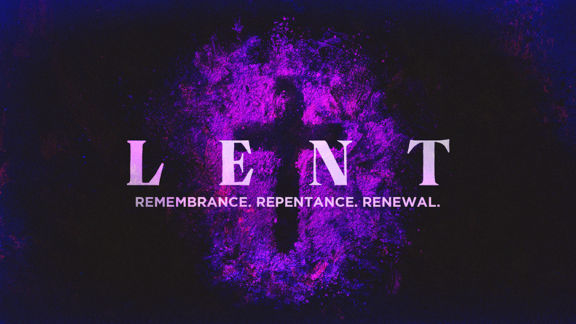
Well, as they say, it is that time of year again. No, I am not talking about tax season; I am talking about the season in the traditional Christian calendar which is set aside for the purpose of self-reflection, examination, confession, and repentance. I am talking about that time of the year when we are asked to set aside the creature comforts that we are so dependent on and to cultivate that pure and singular dependence upon Christ through His Spirit. It is that time of year when Christians from all around the world from many varied theological and cultural backgrounds are invited to set their gaze on the cross of our Lord Jesus and the price that He paid for our sin, even as they begin to anticipate that victorious day when we will celebrate His resurrection from the dead. I am talking about the season of Lent. (For more on this season and its usefulness in the Christian life, see my post here.)
However, in most non-liturgical, low-church traditions, especially down here in the good ole’ Bible belt, the idea of observing the season of Lent is most often met with hostility and a host of objections as to why Christians should not observe this ancient practice. In this post, I would like to consider just a few of these, so that we may perhaps have a clearer understanding as to the benefits and the dangers of observing the season of Lent.
One of the primary objections that is most often given against the practice of Lent, as well as any other practice that might remotely be considered liturgical, is that it comes to us from the traditions of the Roman Catholic Church. There is a deep seated antipathy, an unstated but ever present aversion to any and all things Roman Catholic, that lives just under the surface in many Protestant denominations, and this is much to our shame. (This may be a symptom of a wider problem, i.e. the hubris of denominational tribalism that treats all those outside of our own tradition with skepticism and disdain.) Now, I will be the first to admit that there are many facets of Roman Catholic theology that I find troublesome and concerning, many aspects of their belief and practice that are hard to square with the teaching of the Bible, but we do ourselves a great disservice when we dismiss their contributions to the Christian faith altogether.
After all, the Roman Catholic Church was the only church for the first 1500 years of Christian history, and though they might have gone astray along the way, they actually got many things right. From their centuries long faithfulness comes classic formulations of doctrines like the trinity, the hypostatic union, etc., and for these we must be ever grateful. But not only in matters of doctrinal orthodoxy, but in the details of faithful orthopraxy, their contributions must be considered, and not merely dismissed. They have given us a rich and beautiful liturgical tradition which we would do well to consider in our own attempts to be faithful worshippers of Christ. Practices like the lectionary and the calendar are just some of the contributions that come to us from that tradition. I believe the season of Lent to be one of these contributions from which our faith and practice could benefit deeply. In other words, we don’t have to throw the baby out with the bathwater, so to speak.
A second objection that is somewhat connected with the first has do with the purpose of the season of Lent. In some traditions, Lent is presented as a way of “earning” God’s forgiveness, as a meritorious act by which we might deserve God’s grace, even as a kind of penance. In this light, the observance of Lent is made to be a mandatory practice for all of those who call themselves Christians. Clearly, this flies in the face of the clear teaching of the Bible. Our sins were once and for all completely forgiven when we placed our faith in Christ. This is what it means to be justified. There are no actions that we can take to earn or deserve more grace from God, because He has already poured out grace upon grace to us through the person and work of Jesus Christ. We are not required to do any works of penance for our sins, because the once and for all punishment for our sins fell on the shoulders of Jesus Christ as He was nailed to the cross to die. The payment for sin has been made in full; nothing more is necessary.
However, the repentance that God requires is more than a one time event; on the contrary, it is the lifelong discipline of a follower of Christ as we turn from our sin daily. This is the first of Martin Luther’s 95 Theses, that “When our Lord and Master Jesus Christ said, “Repent” (Mt 4:17), he willed the entire life of believers to be one of repentance.” Repentance is a habit, and setting aside a season for intentional reflection and cultivation of that habit can be quite beneficial in the life of the Christian. Especially as we prepare ourselves for the festivities of Holy Week, which culminate in the events of Good Friday and Easter Sunday, this season can aid us in our sanctification by exposing our sin and then reminding us anew of the wonder of the atoning work of our Savior and the victory that we have over sin through His resurrection. So, while the season of Lent should not be observed as a means to earning God’s grace, it can help us to understand and appreciate the grace that we have already received in new and fresh ways.
A final objection that is often raised in this conversation is that the practice of Lent is nowhere explicitly commanded in Holy Scripture. And if I am being honest, this is the strongest objection to be considered, because we all want to be biblical in the practice and expression of our faith. This is often expressed as a formulation of the regulative principle for worship (RPW), which states, “The acceptable way of worshiping the true God, is instituted by himself, and so limited by his own revealed will, that he may not be worshiped according to the imagination and devices of men, nor the suggestions of Satan, under any visible representations, or any other way not prescribed in the Holy Scriptures.” (2nd London Baptist Confession, 1689) Anyone who believes that the Bible is the inspired inerrant Word of the one true and living God must affirm this as being true. And so, if lent is nowhere commanded in Holy Scripture, then why would we concern ourselves with observing it. Aren’t the Scriptures sufficient for all matters of faith and practice?
We are required to answer this question in the affirmative. (2 Timothy 3.16-17) YES, the Scriptures are sufficient. But just because something is not expressly commanded in Scripture does not mean that it is not beneficial for our faith and practice. There are many things we do in the practice of our faith, both personally and corporately, that are not directly commanded in Scripture. For example, the Scriptures do not command us to have Vacation Bible Schools during the summer, but almost every church I know and have been a part of has a VBS. The point is simply that no one follows the RPW absolutely; in fact, to do so would be impossible. The Scriptures give us general guidelines, and we are called to use our Holy Spirit guided Biblically informed wisdom in the specific applications of those guidelines. (cf. Romans 12.1-2) In the case of Lent, the Bible clearly emphasizes the importance and priority of repentance, and it is up to us, with the help of Scripture and tradition, to cultivate repentance in our lives.
In the final analysis, we must conclude that the decision to observe the season of Lent, whether that observance is personal or corporate, it must remain at the level of Christian freedom. For those who have come out of liturgically rigorous traditions bordering on the legalistic, where observing Lent was a matter of obligation, then I would advise against it. Instead, I would encourage you to relish in the finished work of Christ. However, for others, and I would surmise that this is most of my readers, observing Lent can be an opportunity to cultivate the spiritual discipline of repentance, to intentionally reflect on the condition of our souls, to identify those unacknowledged and unadmitted sins, and to turn again toward Christ in faithful obedience. We are hardly in danger of taking our repentance too seriously, and the season of Lent can help us appreciate anew the reality and significance of sin and its ongoing power in our lives, even as we anticipate the day when we will finally be set free from its very presence. And oh, how we long for that day! Even so, Lord Jesus, come quickly!
Text 14 I write these things to you, hoping to come to you soon. 15 But if I should be delayed, I have written so that you will know how people ought to conduct themselves in God’s household, which is the church of the living God, the pillar and foundation of the truth. 16 And most certainly, the mystery of godliness is great:
He was manifested in the flesh, vindicated in the Spirit, seen by angels, preached among the nations, believed on in the world, taken up in glory.
4 Now the Spirit explicitly says that in later times some will depart from the faith, paying attention to deceitful spirits and the teachings of demons, 2 through the hypocrisy of liars whose consciences are seared. 3 They forbid marriage and demand abstinence from foods that God created to be received with gratitude by those who believe and know the truth. 4 For everything created by God is good, and nothing is to be rejected if it is received with thanksgiving, 5 since it is sanctified by the word of God and by prayer.
6 If you point these things out to the brothers and sisters, you will be a good servant of Christ Jesus, nourished by the words of the faith and the good teaching that you have followed. 7 But have nothing to do with pointless and silly myths. Rather, train yourself in godliness. 8 For the training of the body has limited benefit, but godliness is beneficial in every way, since it holds promise for the present life and also for the life to come. 9 This saying is trustworthy and deserves full acceptance. 10 For this reason we labor and strive, because we have put our hope in the living God, who is the Savior of all people, especially of those who believe.
Title: On the Practice of Holiness Series: All I Want for Christmas Church: South Caraway Baptist Church, Jonesboro, AR Date: December 27, 2020
33 Teach me, Lord, the meaning of your statutes, and I will always keep them. 34 Help me understand your instruction, and I will obey it and follow it with all my heart. 35 Help me stay on the path of your commands, for I take pleasure in it. 36 Turn my heart to your decrees and not to dishonest profit. 37 Turn my eyes from looking at what is worthless; give me life in your ways. 38 Confirm what you said to your servant, for it produces reverence for you. 39 Turn away the disgrace I dread; indeed, your judgments are good. 40 How I long for your precepts! Give me life through your righteousness.
In the the fifth stanza of Psalm 119 ( ה/he – pronounced “hey”), the psalmist expresses his complete dependency upon God for understanding His Word. And so, he prays to God for illumination.“Teach me, Lord, the meaning of your statues, and I will always keep them. Help me to understand your instruction, and I will obey it and follow it with all my heart.” (Verses 33-34) Illumination is simply that work of the Holy Spirit in the life of the believer by which He opens our minds to understand and apply the Scriptures. And it is this “spiritual” understanding that distinguishes the believer’s reading of Holy Scripture from the nonbeliever.
The reality is that there are secular scholars (historians, linguists, philosophers) who know the history, language, and theology of the Bible better than the average Christian. Their historical reconstructions are more compelling, their literary analyses are more sophisticated, their exposition perhaps even more accurate. However, they do not believe in the one who said, “and yet they testify about me.” (John 5.39) The difference being that they do not have the indwelling Holy Spirit whose specific job is to lead believers into all truth. Therefore, we must conclude that illumination gives us an understanding that is more than merely intellectual. It goes beyond the literary and the historical to the transformational. It is the Spirit who brings the dead words to life, who renews and revives the weary soul.
And so, we must affirm that illumination is not the imparting of new information, as opposed to that which is largely gained simply by being a good reader. Rather, illumination is the creation of a new capacity to receive the inspired Word of God and to be changed by it. As our psalmist goes on to pray, “Turn my heart to your decrees and not to dishonest profit. Turn my eyes from looking at what is worthless; give me life in your ways.” (Verses 36-37) Our psalmist clearly understands that what he needs is more than a mere intellectual reading of Holy Scripture; what he needs, and what we all need, is that Spirit given illumination leading to transformation. “How I long for your precepts! Give me life through your righteousness.” (Verse 40)
It is somewhat appropriate, I think, that I am writing on this on the day in which many Christians will make a “New Years Resolution” to read the Bible more in 2020, perhaps, by starting some kind of Bible reading plan, e.g. the Bible in one year, etc. And, of course, this is a worthy goal to aim for. But there must be a realization that we are not simply reading for information; we are reading for transformation. This does not mean that every reading will be some kind of mountain top spiritual experience. Some, in fact, will be dull drudgery (re: Leviticus). But faithfulness over time, daily dependence upon the Spirit, humbly praying for eyes to see and ears to hear will slowly result in the transformation of our being into the image of Christ. This is why we call it a spiritual discipline, faithful obedience while relying upon the Spirit.
1 How happy are those whose way is blameless, who walk according to the Lord’s instruction! 2 Happy are those who keep his decrees and seek him with all their heart. 3 They do nothing wrong; they walk in his ways. 4 You have commanded that your precepts be diligently kept. 5 If only my ways were committed to keeping your statutes! 6 Then I would not be ashamed when I think about all your commands. 7 I will praise you with an upright heart when I learn your righteous judgments. 8 I will keep your statutes; never abandon me. (CSB)
ℵ (aleph) is the first letter of the Hebrew alphabet, and therefore, it is the first stanza of Psalm 119. And when we read the first two verses, we are immediately confronted by the simple truth that obedience to the Word of God is the only way to experience God’s blessing. The CSB (see above) renders the verb as “happy”, whereas the majority of modern translations (NET, ESV, NASB, NIV) render it as “blessed”. Interestingly, the NLT renders this word as “joyful”, and this perhaps most accurately reflects the psalmists intent. “Joyful are people of integrity, who follow the instructions of the Lord. Joyful are those who obey his laws and search for him with all their hearts.” Nevertheless, no matter which English rendering we prefer, it is clear that something more than pleasing circumstances is being described here.
In the Bible, blessing or joy is something that is experienced more deeply in the human soul than mere surface level happiness. It is that inner sense of complete satisfaction and total contentment, of unwavering peace and ultimate fulfillment. It is nothing less then the ultimate thriving of the human soul as God intended it. And lets be clear, the source of this blessed joy is completely divine. It is not something that we can manufacture or achieve on our own. Our psalmist is clear that the only way into this experience of divine blessing is by obedience to the Word of God. In fact, he goes on to say in these verses that obedience is the only way that we can be set free from the bondage of guilt and shame and bring praise into his abiding presence.
Sadly, obedience is under emphasized in most Protestant versions of spirituality. Because of our Reformation heritage, we are quick to react against anything that smacks of works based salvation. We champion the cause of sola gratia, sola fide, solus Christus, that salvation is by grace alone through faith alone in Christ alone. As Paul said in Ephesians, chapter 2, verse 9, “not from works, so that no one can boast.” However, in our haste to affirm the unconditional nature of grace, we have neglected and omitted the role that obedience plays in the Christian life. As Paul went on to say in that very next verse, “For we are his workmanship, created in Christ Jesus for good works, which God prepared ahead of time for us to do.” (Eph. 2.10) The simple truth that the psalmist is affirming in this first stanza of Psalm 119 is that obedience to God’s Word is the only available way into the fullness of divine blessing.
Of course, the reality is that none of us are able to perfectly keep the commands of God. As the Apostle James reminds us in chapter 2, verse 10 of his letter, “For whoever keeps the entire law, and yet stumbles at one point, is guilty of breaking it all.” The Gospel teaches us that we are all sinners, that we are all utterly incapable of obeying God’s Word. And left to ourselves, we can never experience the fullness of God’s blessing. This is why our Lord and Savior Jesus Christ became incarnate. He lived a life of perfect obedience to God’s Word in every way. And because we are united to Him by faith, His perfect obedience has become our obedience, His righteousness has become our righteousness. This is why Paul writes in Ephesians, chapter 1, verse 3, “Blessed is the God and Father of our Lord Jesus Christ, who has blessed us with every spiritual blessing in the heavens in Christ.”
And it is precisely because His perfect obedience has been graciously reckoned unto us as righteousness that we should value and cultivate the habits of obedience to God’s Word. We should love obedience the way that the psalmist does here, because when we walk in His ways, then we are able to experience the fullness of blessings that are already ours in Christ by the Spirit.
The Psalms are perhaps the best kept secret of the Old Testament; they are a deep well of food for the weary Christian soul. They are a rich resource for our spirituality, but sadly, more often than not, we neglect this spring of spiritual life in favor of the well worn tracts of the New Testament. However, this is merely a symptom of the larger problem, that being our fundamental neglect of the Old Testament in general, but more on that another time. For the purpose of this post, it is enough to say that most Christians are suffering from a feeble weakened spiritual life due to a basic disregard for the Book of Psalms.
Of course, there isn’t enough time or space here to completely explore the spiritual richness of each and every chapter in this central Old Testament Book, but there is one chapter in particular that demands our attention – Psalm 119. This chapter is a vast ocean of refreshing spiritual water for the dry and weary soul, and yet, so often, we fearfully ignore it simply due to its size. And at first glance it can be overwhelming; there are 176 total verses in this single chapter. However, in spite of its imposing length, there is an artistry about this chapter that is beautiful and majestic. It lifts us out of the despair of our circumstances into the glory and hope that is the Word of God.
From a composition perspective, this chapter is an absolute masterpiece of literary artistry. It is structured in a Hebrew acrostic pattern, which means that each successive stanza begins with the next letter of the Hebrew alphabet. There are twenty-two stanzas, one each for every letter of the Hebrew alphabet, and each stanza contains eight lines, each beginning with the designated Hebrew letter for that stanza. (22 x 8 = 176) However, what is truly masterful is that almost every line contains some synonym for the Word of God. Law, testimonies, ways, precepts, statutes, commandments, judgments/ordinances, Word, promises, etc. The psalmist enumerates the perfections of God’s Word in every line literally from A to Z.
And this is perhaps the most important aspect of this glorious chapter, namely that it is written as poetry, and as such, it is intended not only to speak to our intellect but to stir our affections, to lift our souls, to restore our hope and joy. It is impossible to read this psalm and not be completely awestruck by the authors absolute joy in God’s Word. In other words, for the psalmist, the Word of God is more than a mere resource for right thinking and right doing. No, it is so much more than that. It is the foundation upon which he stands; it is the source of all his hope and joy and comfort and assurance. It is the sustenance and provision for all of his being, all of his spirituality and devotion. The Word of the one true and living God is all that he needs.
However, in spite of all of this magnificent and majestic artistry, this Psalm is still largely neglected and/or completely ignored in the devotions of most Christians and their churches. Whether it is because we find it imposing and off putting due to its length, or simply because we believe it to be redundant and repetitive, we refuse to refresh our souls at this inexhaustible spring of spiritual life. And this is absolutely to our spiritual detriment. We severely need the testimony of this Psalm in both our personal and corporate devotions, especially at a time when the sufficiency of God’s Word is being questioned more and more. Let us turn back once again to the well worn paths of biblical spirituality, and linger long over Psalm 119.
For further study:
Spurgeon, Charles H. The Golden Alphabet: An Exposition of Psalm 119. Revised and Updated. Abbotsford, WI: Aneko Press, 2018.
Thomas, Gary. Sacred Marriage: What if God Designed Marriage to Make Us Holy More Than to Make Us Happy. Grand Rapids, MI: Zondervan, 2015.
If you were to visit your local bookstore – who am I kidding? No one visit bookstores anymore, right?! So let me rephrase – If you were to google for books on marriage, you would probably find yourself overwhelmed by the sheer plethora of titles from both Christian and non-Christian perspectives offering this many steps or that new and unique approach to having a better a marriage. To be honest, it can almost lead to a feeling of despair and hopelessness for your marriage, especially if you find yourself in a particularly difficult season. That is why I found Sacred Marriage by Gary Thomas to be a refreshing and unique voice in this boisterous cacophony.
And the subtitle of the book really says it all: What if God designed marriage to makes us holy more than to make us happy? Because the general sentiment of popular culture is that marriage is primarily for emotional fulfillment. In other words, the main and most often the only reason a couple might get married is so that they can find and experience romantic love and personal happiness in their partner. Of course, on a horizontal level, that is alright, as far as it goes, but might it be possible that God has a bigger plan for marriage than simply our personal fulfillment, our happiness? Might it be that God designed marriage to serve His purposes rather than our own? And might it be that if we set our minds and hearts to pursue God’s purpose for our marriages, that we might find that our relationship with our spouse improves as well?
Obviously, I think so, and this is where Sacred Marriage comes into the discussion. In this book, Thomas explores the various aspects of the marriage relationship, not by offering any practical “how to’s”, but by exploring how God might be using that particular area of our marriage to teach us about who He is and to draw us into a deeper relationship with Himself. We may, then, regard marriage as a spiritual discipline, a Christian practice that by engaging in which we grow more and more in our own Christ-likeness, a posture of submission and humility in which we allow the Spirit who indwells to do His perfect work.Or we might say that God has so designed marriage that it, more than any other human relationship, forces us to deal directly with our own sinfulness.
The chapter that was most impactful for me was chapter 9, “Sacred Struggle: Embracing Difficulty in Order to Build Character.” The following quote summarizes the overall gist of the chapter:
If your marriage is tough, get down on your knees and thank God that he has given you an opportunity for unparalleled spiritual growth. You have the prime potential to excel in Christian character and obedience. (125)
Now, I want to be careful here, especially in light of what has recently transpired in the Southern Baptist Convention. In speaking of a tough or difficult marriage, we are not including here any kind of abuse, whether that be physical, sexual, emotional or verbal. All forms of spousal abuse are an evil and heinous sin in the eyes of God, and where there is violation of civil or criminal law, there should most certainly be consequences. And there is a great and pressing need for Christian churches to train people and implement processes to assist victims in these cases.
However, outside of those kinds of situations, difficult trying seasons in marriage are not cause for dissolution, which is precisely why we need a grander understanding of the purpose of marriage than mere emotional fulfillment. If marriage is only for the satisfaction of my need to be loved, accepted, and cherished, then when I no longer feel those needs are being met, I will find it justifiable to leave and seek out a new marriage that will meet those needs. But if marriage is for our sanctification, then difficulties in the marriage relationship can be embraced as opportunities to grow in Christ-likeness. In my opinion, this is a point of view that is sorely needed in today’s easy-divorce culture.
There were many other insightful and challenging aspects of this book, which is why I believe it’s voice is even more needed and applicable today than when it was first published nearly 20 years ago. For example chapter 10, “Falling Forward: Marriage Teaches Us to Forgive” was particularly helpful for me and my wife. As a pastor, I would certainly recommend this book to any all persons in my congregation regardless of what seasons they are in as it relates to marriage. For unmarried singles to dating/engaged couples to newly weds to those who find themselves in marriages of various lengths, whether you marriage is good or not so good, this book can definitely help shape your understanding of what God is doing in and through your marriage.
See Also:
Thomas, Gary. Devotions for a Sacred Marriage: A Year of Weekly Devotionals for Couples. Grand Rapids: MI: Zondervan, 2017.
Yesterday, February 14th, marked the annual cultural commemoration of Valentine’s Day. It is a day that is supposed to celebrate romantic love and affection, and it is usually expressed through the giving of flowers, candy, cards, and the like. And there is nothing wrong with that; however, for Christians, this February 14th also marked another holiday, namely Ash Wednesday. Ash Wednesday marks the beginning of the season of Lent, a 40 day period of preparation for the celebration of Holy Week climaxing in Easter. This preparation is usually characterized by repentance, confession, fasting, and acts of service.
Since most churches here in the area do not observe Lent, or if they do they don’t have a traditional Ash Wednesday service, my wife and I attended Ash Wednesday Mass at Blessed Sacrament Church, so that we could participate in the imposition of ashes, where a cross is marked on a worshippers forehead with ash. In the Bible ashes are most often a symbol of repentance, contrition, even mourning; a pentitent person would mark themselves with and/or sit in ashes to show outwardly their inward emotional state. Ashes also symbolize our mortality, as in the stanza, “Remember that you are but dust and into dust you shall return.” During Lent, we remember our mortality, because Jesus took our mortality into himself at the incarnation. He went to the cross to die, even as we all will die someday, and he rose again to new life, even as we all shall be raised. This life is passing, short, and fleeting, but our eternal hope rests in the immortality of Jesus in his resurrection.
Repentance means to change one’s mind, and it implies an intentional turn from sin to godliness. However, what is missing in this definition is that true repentance is motivated by godly grief over our sin. (2 Corinthians 7:10) During Lent, we try to see and feel our sin the way God sees it, so that we can appreciate the atoning death of Jesus even more. He who knew no sin became sin for us. So, in repentance, we acknowledge our sin as the abhorrent afront it is before a holy God. We turn away from it in righteous disgust as we learn to truly desire godliness in our character and behavior.
Lent is also usually accompanied by fasting. And Jesus did not say “If you fast”; he said “when you fast”, implying that He assumed that fasting would be a regular part of Christian discipleship. (See Matthew 6) Fasting is a timeless and valuable spiritual discipline, but our cultural aversion to anything uncomfortable and our insatiable need for self-indulgence has caused us to neglect it altogether. Yes, fasting challenges us to throw off the insanity of our cultural slavery to consumerism, to give up our creature comforts, and to forsake our dependence on stuff for the sake of Christ.
Now, when it comes to fasting, the specifics of the fast are ultimately irrelevant; whether you fast one meal or one whole day, whether you do it every Friday or not, or whether you give up something other than food. The goal of fasting is to free us from our dependence on things and to cultivate our dependency on Christ. I am giving up coffee for this Lent season, and if you know me, then you know that coffee is vital part of my morning routine. I am not a morning person, not even close. But I have chosen to give up this creature comfort, this practical addiction, for the 40 day duration of Lent, because as my body aches for the fix of caffeine, so my soul should ache for communion with the Spirit of the living God.
The season of Lent is also usually accompanied by acts of service or charity, as we seek to become more like Jesus. He spent his time ministering to the bottom rungs of society, the sick, the lame, the blind, the demon possessed, and we are called to be His hands and feet in the communities and neighborhoods we live in. After all, He said, “whatever you did for one of the least of these brothers and sisters of mine, you did for me.” Some people choose to give the money that they would have spent on whatever they chose to give up to charitable or Christian causes. Whatever you choose to do, the teaching of Jesus is clear, do it in secret without seeking the praise of others, “and your Father who sees in secret will reward you.” (Again, see Matthew 6)
Lent is an invitation to follow Jesus, once again, as He journeys toward the cross. Along the way, we seek to become more like Him, to be set free from “the sin that so easily entangles”, and to soak in anew our need for a savior, for His atonig death and His lifegiving resurrection. There are no rules, regulations, or requirements for its observance, only freedom in the Spirit as we seek to allow the Spirit make us more like Jesus. It is a time to renew once again our repentance from the way of the world and our embracing of life in the Spirit.
Every church has a calendar, and by that I mean that every church has an annual rhythm of seasons that defines their corporate life together. Every year, churches tend to observe the same set of holidays, seasonal emphases, remembrances, and milestones. Now, in most low church or free church traditions, especially here in the “Bible Belt”, these annual rhythms are usually indistinguishable from the civic, cultural, and sentimental holidays celebrated in the larger culture, so, in the final analysis, we would have to acknowledge that this type of annual calendar cycle is not distinctively Christian.
We celebrate our American civil and patriotic holidays, like Independence Day, Memorial Day, Veterans Day, Flag Day, or Presidents Day. We remember the Hallmark holidays, like Valentine’s day, Mother’s Day, Father’s Day. We even commemorate holidays for history and heritage, like Halloween, Thanksgiving, , Columbus Day, or Martin Luther King’s birthday. And these are not bad or wrong things to remember or celebrate; they are unique to our cultural and historical identity, but, are they making us more like Christ? By marking our year by this calendar, are we growing in our understanding of the person and work of Jesus, and are we conforming our identity and values to his?
Of course, there are two Christian holidays that we celebrate every year, those being Christmas and Easter. However, it seems their Christian meaning often gets lost in the unbridled consumerism of our culture. These historically Christian holy days have become more about Santa Claus and the Easter Bunny, Christmas trees and other seasonal decorations, exchanging gifts, egg hunting, and having holiday parties, and their Christian significance is relegated to a 1-2 hour Church service, if that. So, is there a way to reckon our yearly and seasonal cycles in a way that is more centered on the person and work of Jesus Christ? Is there a way to move the Gospel from the periphery of our remembrances, our celebrations, and our commemorations to the center of them?
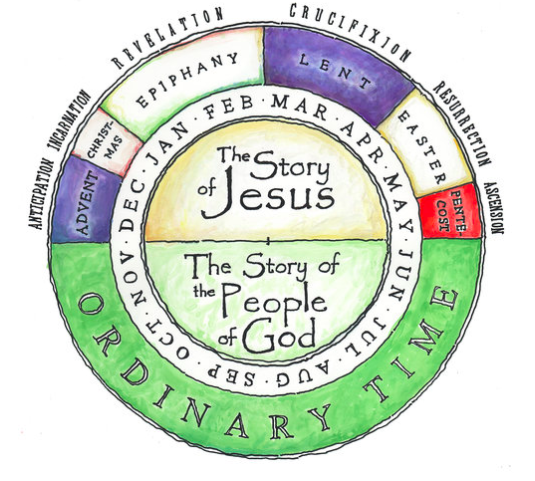
I would submit that there is, and I would also submit that the church has been following this annual seasonal cycle for the vast majority of its existence. For most of church history, Christians all over the world have followed the Christian calendar or the Church year. This is a calendar that begins four Sundays before Christmas with the season of Advent, proceeds through the seasons of Christmas and Epiphany, continues through the seasons of Lent, Holy Week, Easter, and Pentecost, then ends with the celebration of Ordinary Time which climaxes on Christ the King Sunday. This annual celebration of the Gospel focuses our celebration, remembrances, and commemorations on the person and work of Jesus Christ, and as we repeat it every year, it forms us more and more into his image. It conforms our values, our priorities, and our perspectives to those of the Kingdom of God.
This is what might be called the spiritual discipline of time. Richard Foster has the best definition of spiritual disciplines in his book Celebration of Discipline: The Path to Spiritual Growth. He describes the spiritual disciplines as a way of assuming a posture of submission within which God can do his sanctifying work. In other words, they are God’s way of putting us where God can work within us and transform us. The Disciplines can only get us to the place where something can be done; they open the door to life in, with, and through the Spirit.
And the need for a spiritual discipline of time has never been more pressing than in today’s fast paced instant gratification seeking culture. In our world, we do not know how to wait for anything. We rush from one experience to the next hardly allowing the time and space necessary for the significance of those experiences to soak into our souls. The seasons of the Christian Calendar force us to slow down and to sit in the grand narrative of Gospel of Jesus Christ week after week, Sunday after Sunday.
In the final analysis, the holidays and occasions that we choose to remember reveal our true values and priorities; they tell a story that reveals the most fundamental realities about who we understand ourselves to be. As Christians, our identity is to be grounded in and conformed to the identity of Jesus Christ. We are Christians first and foremost, and all other claims that attempt to form our identity must come second. Observing the Church Year tells the story of Gospel as the controlling narrative for who we are and what we are called to do, and as we cycle through it year after year, we hopefully move deeper and deeper into it’s mystery. May we rediscover this historical discipline as we seek to be made more and more into the image of Christ.




 33 Teach me,








 Faith seeking Understanding
On Biblical Interpretation and the Holy Spirit
Recently, I was following a thread on a friends Facebook post where the participants were discussing their disagreement on a question of biblical interpretation. The specific issue under debate is not important at the moment, and I’ll just say that I was surprised to find that this particular exchange was more graceful than these kinds of forums usually are. However, with that being said, after reading through the various points and counterpoints being made, I came across one response that made me pause. Figuring that the minds of the other participants were unlikely to change, one commenter attempted to conclude the discussion by saying:
In my previous post, I examined the question of “man-made” bible study resources, and I concluded that there is great wisdom in listening to the voices of those who have studied the Bible before us. We were never intended to approach Bible study as if we are the “lone ranger” of Bible interpretation, carving a path that has somehow never been carved before. Commentaries, theologies, and the like are part of God’s gift to the church (Ephesians 4.11-13); they are part of that “great cloud of witnesses” within which we pursue Christian maturity and godliness (Hebrews 12.1). However, even greater than these is the gift that is God’s Spirit. In the New Covenant, we who have been united with Christ by faith have been indwelt by God’s very Spirit, and He is the one who writes the Word upon our hearts and moves us to obey it (Jeremiah 31.33, Ezekiel 36.27). This is what makes Christian biblical interpretation unique; we have God’s Spirit (1 Corinthians 2.10-16).
Unfortunately, there is great misunderstanding as to the exact nature of the Spirit’s role in biblical interpretation, and in the space that follows, I would like to explore the contours of the Spirit’s work in Bible interpretation. According to the view represented by the Facebook comment above, all we need to do is read the Bible and then open our hearts and minds so that the Spirit can tell us what the Scripture means. This approach is essentially a recapitulation of the ancient heresy of Gnosticism. In other words, it suggests that Biblical knowledge comes to us by some kind of secret mystical experiential revelation from the Spirit apart from the text. But this is not the way that the Spirit works. Revelation is fixed, and the canon is closed. Moreover, the Spirit will not do for us what God has equipped us to do for ourselves. He has given us rational minds with the ability to read and comprehend His revealed Word. This is why we are repeatedly commanded to read, study, and grow in the knowledge of the Scriptures.
The Spirit’s work in biblical interpretation is not primarily revelatory; He does not impart the content of biblical meaning. Rather, His work pertains more to our accepting and obeying the principles that are revealed in the Scriptures. This is what is known in theology as the doctrine of illumination.
The Spirit illuminates our hearts to accept the truth of God’s Word, and He helps to conform our will in submission to that Word through conviction. This illumination comes to us not through some mystical experiential supra-rational revelation, but through the classic word-centered spiritual disciplines. In other words, once we have done our exegetical work in the text, then we must do our closet work (ala Matt 6.6) through memorization, meditation, and prayer. When we engage in these rhythms of the Spirit, we put ourselves in a posture where He can use the fruits of our study to sift our souls. As the Scripture says,
Under the New Covenant, one of the primary roles of the Spirit is to mediate the knowledge of God, but this ministry cannot, nay must not, be separated from the Word of God. Throughout all of Holy Scripture, the Spirit of God and the Word of God work together to transform the people of God into the image of God. More often than not, this transformation happens in ways and means that are consistent with the way God has made us. We do not seek any secret mystical revelation of God’s Word; rather, we use all of the natural and supernatural resources that God has given us to understand His revelation of Himself to us through His Word.
For further study:
On the Spirit and the Word
Share this:
2 Comments | tags: Bible Study Resources, Closet Work, Commentaries, Exegetical Work, Gnosticism, Holy Spirit, Illumination, Meditation, Memorization, New Covenant, Phillip Powers, Prayer, Spiritual Disciplines, Theologies | posted in Biblical Theology, Hermeneutics, Spiritual Formation