Christmas really is one of my most favorite times of the year. I love the decorations, the gifts, the parties, and the church Christmas programs, but most of all I love the music. The traditional Christmas carols, the sacred Christmas hymns, they just give me all the feels when it comes to Christmas; in the car, at home, at church, you will almost always find me listening to Christmas music during the month of December. And one of my most favorite Christmas songs is the song “Mary, Did You Know?”, and my most favorite arrangement of the song is performed by Mark Lowry with the acapella group Voctave singing backup (posted above). Mark Lowry wrote the lyrics in 1985 when he was asked to write a script for a church Christmas play, and the lyrics were put to music in 1991 by Buddy Greene. Of course, it has been recorded by many varied recording artists over the years, both secular and sacred, and it is sung and played regularly during Christmas programs in churches all across the United States and, no doubt, around the world.
However, every year it seems, I read some renewed or repeated criticism of the song on social media. Some attempt to dismiss the song theologically, citing the Annunciation and the Magnificat as evidence that “she knew”. I have even seen some who have attempted to go line by line through the song to give a yes or no answer to each rhetorical question. Similarly, those in the Roman Catholic tradition take issue with the suggestion that Mary needed to be “delivered” and “made new” because of their (erroneous) beliefs about the sinlessness of Mary. Others argue that the song is mawkish, sappy, and infantilizing, that it is “the most sexist Christmas song ever written,” or that it “treats her like a clueless child.” Still others dismiss the song simply because it is overplayed and/or poorly performed by well-meaning church members during the Christmas season as “special” music. And to be honest, when I read criticisms like these, I just shake my head and wonder how we have lost our wonder at the miracle of the incarnation.
Biblically, it is true that Luke presents Mary as a paragon of faith. When she is confronted by the angel Gabriel with the news that she will conceive by the Holy Spirit and give birth to the Son of God, she responds with simple faith, “See, I am the Lord’s servant. May it happen to me as you have said.” (Luke 1.38) And her Magnificat (Luke 1.46-55) clearly indicates that she understood that this was a pivotal moment in the unfolding of God’s plan of redemption for the world. However, we also know that at one point during his earthly ministry, she came with her other children to try to hide Jesus away because they thought he was an embarrassment to the family. (Mark 3:31-35, parallels Matthew 12.46-50, Luke 8.19-21) Time and again, the Gospels detail how the first followers of Jesus struggled to fully understanding the significance of who he was and what he had come to do, and we should assume that Mary would have been no different. We know that Mary treasured and pondered all these things in her heart, but the Bible is clear that the first followers of Jesus, including Mary and his brothers, grew in their understanding of the person and work of Jesus over the course of his life and ministry and that they did not understand him in full until after his resurrection and the coming of the Spirit.
The point is that we should not underestimate the richness of what it means for God to become flesh. When Jesus was born in the Bethlehem 2000 years ago, there was already plenty of theological and cultural expectations as to what he was supposed to be and do. But Jesus turned those expectations on their heads, and he demonstrated that he is a Messiah who cannot be fit into a preconceived box. And as his followers, we should never lose our wonder at this fact. Jesus will always be more than we could possibly hope to comprehend; we will never have him fully figured out. Even when we reach glory, we are told that “He had a name written that no one knows except himself.” (Revelation 19.12) This means that even then there will be more to learn and understand about him when he returns as glorious king. We must never lose our wonder at the person and work of Jesus. Even the things we think we know about him pale in comparison to the fullness of his glory.
And so, when we hear the song “Mary, Did You Know?” this Christmas season, we shouldn’t try to dissect it theologically. We shouldn’t dismiss it because of its musical style, its tone and perspective, or even its emotionality. We should allow it to spur our reflections, to feed our wonder, to drive us to worship the God who became flesh for our sakes, who suffered and died in our place, and who is coming again to receive us unto himself. The song is an artistic, poetic reflection on the miracle of Christmas and the sheer mystery of the incarnation. Mary was in a unique position to feel the weight and wonder of it all, and at Christmas, it is right for us to enter into her experience, to ponder anew what it must have been like, and to fall down in worship of the God who became flesh. This Christmas, let us rekindle our wonder. Let us stand in awe and silence, and let us rejoice in the fact that we have a savior who came to heal our brokenness, to free us from sin, and to restore in us the joy of living in his presence. He is Emmanuel; He is God with us!
21 For me, to live is Christ and to die is gain. 22 Now if I live on in the flesh, this means fruitful work for me; and I don’t know which one I should choose. 23 I am torn between the two. I long to depart and be with Christ—which is far better— 24 but to remain in the flesh is more necessary for your sake. 25 Since I am persuaded of this, I know that I will remain and continue with all of you for your progress and joy in the faith, 26 so that, because of my coming to you again, your boasting in Christ Jesus may abound.
~Philippians 1.21-26
Title: On Death as Gain when Life is Christ Text: Philippians 1.21-26 Occasion: Celebration of Life for Mr. Bobby Garrison Church: Redeemer Baptist Church, Jonesboro, AR Date: November 15, 2025
Several months ago, Matthew Barrett, then a professor at Midwestern Baptist Theological Seminary, announced that he was leaving the SBC to become Anglican. Shortly thereafter, he took a position as Research Professor of Theology at Trinity Anglican Seminary, and he and his family joined St. Aidan’s Anglican Church in Kansas City. He detailed his reasons for making this change in an article on his blog/newsletter, Anselm House. Basically, he suggests that the SBC “officially rejected” Nicene orthodoxy, that the SBC values image over external (read episcopal) authority, and that the “baptist” hermeneutic is ultimately individualistic in its rejection of infant baptism. Though I find these criticisms to be greatly flawed and wholly inaccurate as representations of Baptist theology and ecclesiology, it is not my purpose to respond to them here. This has already been done by several others who are more capable than me. (For example, see Denny Burke’s response here.)
Rather, I would like to respond to another component of Barrett’s argument for Anglicanism, that being the beauty and and antiquity of its liturgy. After giving a rather glowing description of the elements and order of an Anglican worship service, including pictures, he goes on to write, “What a comfort to tell our kids, “The way we are worshipping is how Christians have worshipped across history. It’s really, really old. You are participating in the church universal.”” Now, let me just say that I have no small appreciation for high church liturgy. I have previously written on the use and value of the lectionary, the Christian calendar, and church tradition. I think there is much that modern churches, with their consumeristic performance based, emotion driven worship services, could learn from these practices. However, to say that “Anglicanism is the most beautiful representation of classical Christianity” is surely to place preferences of form over matters of substance.
The fact of the matter is that the early church’s worship was simple; it revolved around Word and Table, fellowship and prayer. As we read in Acts 2.42, “They devoted themselves to the apostles’ teaching, to the fellowship, to the breaking of bread, and to prayer.” Beyond this, we simply do not know what worship services in the early church consisted of. We have scattered liturgical details and other descriptions throughout the New Testament, but we do not have an official liturgy for the early church. Did they sing psalms? Probably. Did they read the Scriptures? Definitely. Did they pray together? Likely. Did they observe the ordinances of baptism an the Lord’s Supper? Clearly. Did they recite early kinds of creedal statements? Possibly. Of course, as the church grew, more formal liturgies were understandably developed, especially in the second and third centuries, and by the fourth century, there seems to have been a common or shared understanding of what the worship of the church should include and how it should progress. But, contrary to Dr. Barrett’s claim above, there is simply no proof that the Anglican liturgy is “how Christians have worshipped across history.” No doubt there are many similarities, but there is likely just as many differences that vary across place and time.
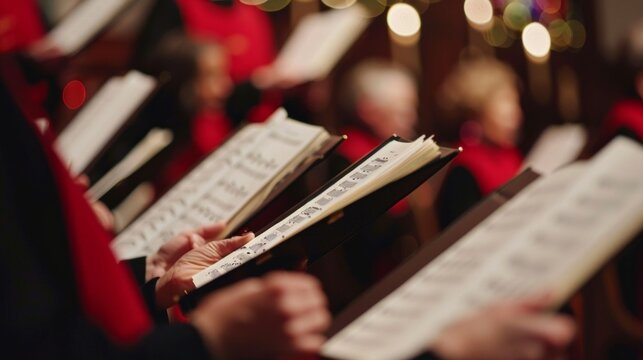
However, the more basic point that needs to be underscored here, I believe, is that the church’s worship, no matter what form or style it is expressed in, is beautiful. When God’s people gather together to sing His praise, to hear from His Word, to intercede in prayer for one another, to commemorate the Gospel is baptism and eucharist, there is simply nothing that is more beautiful, nothing more majestic, nothing more glorious. The voices of the saints singing and praying and confessing and expositing the great works of God in Christ as one gathered and united body in the Spirit is the most beautiful thing in this world. Of course, as I noted above, this beauty has sadly been lost in many churches today; we have turned the church’s worship into a show. We have exchanged beauty for spectacle, truth for emotion, participation for entertainment, and this is especially so in churches that do not come stand in the line of high church traditions. But, the point is that it is narrow minded and arrogant to suggest that one particular form or tradition of worship is the most beautiful, the most ancient, the most formation to the exclusion of all others.
In the Book of Revelation, John writes, “After this I looked, and there was a vast multitude from every nation, tribe, people, and language, which no one could number, standing before the throne and before the Lamb” (Revelation 7.9). This vision of the diversified and redeemed people of God standing before the heavenly throne praising God should help us to understand the beauty of the church’s worship. We do not all sing with one voice, we do not all worship in the same way. Every tradition, every culture, every community has its own way of worshiping God, and this is beautiful. The glory of God in Christ cannot be wholly encapsulated in just one worship tradition, but wherever there are genuine believers who are gathered together to worship God in Spirit an truth, this is beautiful. Every church has its own liturgy, whether it be formal or informal, but when we prioritize the form of our worship over the object of our worship, then we have missed the mark. Christ is the focus of our worship, there is no way that we could ever find enough ways to magnify and exult in His glory.
6 If you point these things out to the brothers and sisters, you will be a good servant of Christ Jesus, nourished by the words of the faith and the good teaching that you have followed. 7 But have nothing to do with pointless and silly myths. Rather, train yourself in godliness.8 For the training of the body has limited benefit, but godliness is beneficial in every way, since it holds promise for the present life and also for the life to come. 9 This saying is trustworthy and deserves full acceptance. 10 For this reason we labor and strive, because we have put our hope in the living God, who is the Savior of all people, especially of those who believe.
~1 Timothy 3.14-16
Title: On Our Training for Godliness Text: 1 Timothy 4.6-10 Series: 1 Timothy: God’s Design for a Healthy Church Church: Redeemer Baptist Church, Jonesboro, AR Date: October 19, 2025
14 I write these things to you, hoping to come to you soon. 15 But if I should be delayed, I have written so that you will know how people ought to conduct themselves in God’s household, which is the church of the living God, the pillar and foundation of the truth. 16 And most certainly, the mystery of godliness is great:
He was manifested in the flesh, vindicated in the Spirit, seen by angels, preached among the nations, believed on in the world, taken up in glory.
~1 Timothy 3.14-16
Title: On Our Conduct in the Local Church Text: 1 Timothy 3.14-16 Series: 1 Timothy: God’s Design for a Healthy Church Church: Redeemer Baptist Church, Jonesboro, AR Date: October 5, 2025
12 The iniquity of Ephraim is bound up; His sin is stored up. 13 The pains of childbirth come upon him; He is not a wise son, For it is not the time that he should delay at the opening of the womb. 14 Shall I ransom them from the power of Sheol? Shall I redeem them from death? O Death, where are your thorns? O Sheol, where is your sting? Compassion will be hidden from My sight.
15 Though he flourishes among the reeds, An east wind will come, The wind of the Lord coming up from the wilderness; And his fountain will become dry And his spring will be dried up; It will plunder his treasury of every precious article. 16 Samaria will be held guilty, For she has rebelled against her God. They will fall by the sword, Their little ones will be dashed in pieces, And their pregnant women will be ripped open.
~Hosea 13.12-16 (NASB95)
Title: On the Curse of Death and the Hope of Resurrection Text: Hosea 13.12-16 Series: Hosea: A Love Story Like No Other Church: Redeemer Baptist Church, Jonesboro, AR Date: July 13, 2025
8 Put the ram’s horn to your mouth! One like an eagle comes against the house of the Lord, because they transgress my covenant and rebel against my law. 2 Israel cries out to me, “My God, we know you!” 3 Israel has rejected what is good; an enemy will pursue him.
4 They have installed kings, but not through me. They have appointed leaders, but without my approval. They make their silver and gold into idols for themselves for their own destruction. 5 Your calf-idol is rejected, Samaria. My anger burns against them. How long will they be incapable of innocence? 6 For this thing is from Israel— a craftsman made it, and it is not God. The calf of Samaria will be smashed to bits!
7 Indeed, they sow the wind and reap the whirlwind. There is no standing grain; what sprouts fails to yield flour. Even if they did, foreigners would swallow it up. 8 Israel is swallowed up! Now they are among the nations like discarded pottery. 9 For they have gone up to Assyria like a wild donkey going off on its own. Ephraim has paid for love. 10 Even though they hire lovers among the nations, I will now round them up, and they will begin to decrease in number under the burden of the king and leaders. 11 When Ephraim multiplied his altars for sin, they became his altars for sinning. 12 Though I were to write out for him ten thousand points of my instruction, they would be regarded as something strange. 13 Though they offer sacrificial gifts and eat the flesh, the Lord does not accept them. Now he will remember their guilt and punish their sins; they will return to Egypt. 14 Israel has forgotten his Maker and built palaces; Judah has also multiplied fortified cities. I will send fire on their cities, and it will consume their citadels.
Title: On the Danger of Mixing Religion with Politics Text: Hosea 8.1-14 Series: Hosea: A Love Story Like No Other Church: Redeemer Baptist Church, Jonesboro, AR Date: May 11, 2025
Is the Roman Catholic Church a Gospel-denying church? This question was the theme of a recent debate between Allen S. Nelson IV, pastor of Providence Baptist Church in Perryville, AR, and Father Stephen Hart, pastor/priest at Sacred Heart Church in Morrilton, AR. (A video of the debate can be found on the YouTube page of Providence Baptist Church, here.) While it is true that both participants had strong moments in the two hour event, it is not my purpose to evaluate their performances or to name a winner. I think that Pastor Nelson was at his best when he was pushing the details of the official teachings of the Roman Catholic Church as stated in their published documents, and Father Hart was at his best when he was giving the Catholic understanding of relevant New Testament texts. In the final analysis, though, I suspect that most people went away from the event feeling confirmed in the positions they held coming in and believing that their preferred candidate had won the evening. In the space that follows, I would simply like to suggest four important takeaways that were clarified for me.
First, the debate made it clear that the Roman Catholic Church generally misunderstands the New Testament concept of justification. Lexically, the δικαι- word group (words that are usually translated in the NT as righteousness and/or justified) refers to a forensic or legal status of innocence or guiltlessness. In his commentary on Romans in the NICNT series, Douglas Moo writes, “To justify signifies, according to forensic usage, to acquit a guilty one and declare him or her righteous.” (86) As we read in Romans 5.19, “For just as through one man’s disobedience the many were made sinners, so also through the one man’s obedience the many will be made righteous (δικαίωμα).” In other words, it is a once-for-all gavel dropping declaration that a person is not guilty of their sin before God because of their faith in the atoning work of Christ. And what is important is that this status cannot be changed because of our sin, nor can it be augmented by good works. From beginning to end, it is a gift that is given by faith alone and that is preserved, maintained, and completed by God through His Spirit. As the Apostle Paul writes, “I am sure of this, that he who started a good work in you will carry it on to completion until the day of Christ Jesus.” (Phil. 1.6) Or again, in Romans 8.29-30, we read, “For those he foreknew he also predestined to be conformed to the image of his Son, so that he would be the firstborn among many brothers and sisters. And those he predestined, he also called; and those he called, he also justified; and those he justified, he also glorified.”
However, the RCC insists that this declaration of righteousness, being God’s powerful word, must be effectual, and include thereby moral transformation. For example, the Council of Trent defines justification as that “which is not remission of sins merely, but also the sanctification and renewal of the inward man.” (Chapter 7) Trent goes on to argue that “by mortifying the members of their own flesh, and by presenting them as instruments of justice unto sanctification, they, through the observance of the commandments of God and of the Church, faith co-operating with good works, increase in that justice which they have received through the grace of Christ, and are still further justified.” (Chapter 10) And so, it logically follows when Trent resolves that, “If any one saith, that the justice received is not preserved and also increased before God through good works; but that the said works are merely the fruits and signs of Justification obtained, but not a cause of the increase thereof; let him be anathema.” (Canon 24) Of course, the Council of Trent, first convened in 1545, was the Church’s response to the Protestant Reformation, and so one can’t help but wonder if there isn’t some amount of reactionism that has influenced their positions on these matters. Nevertheless, it seems clear from these statements that Trent’s understanding of justification goes well beyond the New Testament understanding of the term.
Secondly, and the statements above demonstrates this, but the debate made it clear that the Roman Catholic Church confuses the doctrine of justification with the doctrines of regeneration and sanctification. Regeneration (aka new birth or “being born again”) refers to that work of the Spirit in which a person is given spiritual life. In other words, the Spirit transforms an individual from a state of spiritual death to a state of new creation in Christ, thus, enabling them to repent, believe, and live in accordance with God’s will. By the same token, sanctification is simply the lifelong process by which a person is gradually transformed more and more into the image of Christ, becomes more holy, and learns to walk in obedience to the law of Christ. As we read in Hebrews 10.14, “For by one offering he has perfected forever those who are being sanctified.” (ESV/LSB) Note especially in this verse that we are perfected forever, and yet we are being sanctified. The point is that these are logically distinct aspects of the salvation process (ordo salutis), even if in actual experience they are sometimes indistinguishable.
But in the teaching of the RCC, all of this inheres within the doctrine of justification. As we saw above, the Catholic church defines justification as that “which is not remission of sins merely, but also the sanctification and renewal of the inward man.” Whatever the reason for this lack of theological precision may be, this indiscriminate intermingling of categories leads inevitably to the conclusion that a person’s justification is dependent upon their sanctification. Or to put it another way, the Roman Catholic view seems that imply that while justification is begun by faith, it is continued, maintained, and eventually confirmed by good works. This is perhaps why Trent envisages the possibility that a person’s initial justification can be lost. In Chapter 14, Trent reads, “As regards those who, by sin, have fallen from the received grace of Justification, they may be again justified, when, God exciting them, through the sacrament of Penance they shall have attained to the recovery, by the merit of Christ, of the grace lost.” If a person’s justification can be lost by their disobedience, then it necessarily follows that it must be maintained (or should I say earned) by their obedience. Whatever the case, it is clear that in the Catholic understanding, the determining factor in a person’s justification is their obedience, i.e. their good “works”, and not their faith.
Now, I would be remiss if I did not also submit the opposing position to equal scrutiny, and so, before I conclude this article, I would like to offer two areas of weakness in our position that I believe were exposed in the aforementioned debate. And let me hasten to add that these points should not be received as any kind of criticism of Pastor Nelson; based on the limited interaction I have had with him, I find him to be a biblically faithful, theologically astute individual. But, as it regards the way that our views are typically represented in these discussions, I think there are two important takeaways for us to consider.
The first takeaway for those holding our perspective might be stated thus, namely that Protestants have a tendency to underemphasize the importance, nay even the necessity, of good works. In our zeal to proclaim and defend that time honored Reformation principle sola fide, or justification by faith alone, we inadvertently imply that living a life of obedience that issues forth in good works is some kind of optional add-on. We suggest, though perhaps unintentionally, that the Gospel’s call to live a life of ongoing discipleship to Jesus is something that is reserved for the religious elite, those who are really serious about their faith, those who are truly devout, so-called ‘super Christians’. But the Apostle James is clear on this point when he writes, “You see that a person is justified by works and not by faith alone.” (James 2.24) Of course, this is not a contradiction of the Apostle Paul, nor is it inconsistent with the Reformation’s emphasis on faith alone rightly understood (contra Luther). Rather, it is a reminder that the kind of faith that justifies is a faith that works. In other words, the principle of sola fide does not mean that a person can believe in Jesus and then live in whatever manner they so choose. This kind of “easy-believism’ is in truth no faith at all. In fact, it is demonic (James 2.19), and it does not and cannot save. A faith that saves, a faith that justifies, is a faith that works, and on this point, James and Paul are in complete agreement.
There is a sense in which our works will play a role at the final judgment. Jesus himself says in Matthew 16.27, “For the Son of Man is going to come with his angels in the glory of his Father, and then he will reward each according to what he has done. ” And in Second Corinthians 5.10, we read, “For we must all appear before the judgment seat of Christ, so that each may be repaid for what he has done in the body, whether good or evil.” Or again, in Romans 2.6-8, Paul writes (quoting Proverbs 24.12 et al.), “He will repay each one according to his works: eternal life to those who by persistence in doing good seek glory, honor, and immortality; but wrath and anger to those who are self-seeking and disobey the truth while obeying unrighteousness.” And finally, in Hebrews 12.14, we are told to “Pursue … holiness [because] without it no one will see the Lord.” This does not mean that we are “saved” by or because of our works, but it does mean that living a life of obedience to God validates or proves that our faith is indeed a saving faith. The message of the Gospel is built on both the indicatives of what Jesus has done for us and imperatives that we are called to obey for Him. We receive the indicatives by faith, and we obey the imperatives because of what we have received by faith. The order matters here. If we put the imperatives of the Gospel before the indicatives of the Gospel, then we distort the Gospel into a salvation by works. In the logic of the Gospel, the indicatives precede and enable the imperatives. But the point is that they are both necessary parts of the gospel.
And this brings me to the second weakness of the Protestant position that I believe was exposed in the debate, namely that Protestants have a tendency to reduce the Gospel to its lowest common denominator. There can be no doubt that justification by faith is an important, even essential, foundation for our salvation, but the Gospel is so much more than justification by faith. The Gospel is the good news that in the person and work of Jesus Christ God has entered into his creation to redeem his people by dying for their sin as an atonement and by defeating death through His resurrection and to renew his creation by establishing his rule on earth, so that through the Spirit they can walk in perfect conformity to His ways and experience the blessings of His ongoing presence in and among them. It is this vision of a renewed humanity living in a renewed world in which God is eternally present to bless that is the goal of the biblical narrative (Revelation 21-22). This is why we must constantly remind ourselves that even though we have already been saved (justification), we are still being saved (sanctification), and yet one day we will be saved (glorification). And all of this is received and experienced by and through faith, but this faith must be a faith by which we walk in conformity to the way and will of Christ.
So, is the Roman Catholic Church a Gospel-denying church? I don’t know, but it does seem to me that their official teachings, whether explicitly or implicitly, confuse important concepts and components of the Gospel, and in doing so, it has the potential to lead even the most sincere and devout parishioner to believe that they are saved by living a morally upright and generally good and charitable life. Can a person be genuinely saved in the Roman Catholic Church? I think yes, but I would suspect that this is in spite of its official dogmas and teachings. And beyond their doctrine of salvation, there are many other tenets and teachings of the Roman Catholic tradition that I consider to be in clear contradiction to the teaching of Scripture. However, that is a question for another time. I will simply close this post with the words of the Apostle Paul, because I think they sum up the issues discussed in this article particularly well. “For you are saved by grace through faith, and this is not from yourselves; it is God’s gift— not from works, so that no one can boast. For we are his workmanship, created in Christ Jesus for good works, which God prepared ahead of time for us to do.” (Ephesians 2.8-10)
4 What am I going to do with you, Ephraim? What am I going to do with you, Judah? Your love is like the morning mist and like the early dew that vanishes. 5 This is why I have used the prophets to cut them down; I have killed them with the words from my mouth. My judgment strikes like lightning. 6 For I desire faithful love and not sacrifice, the knowledge of God rather than burnt offerings.
7 But they, like Adam, have violated the covenant; there they have betrayed me. 8 Gilead is a city of evildoers, tracked with bloody footprints. 9 Like raiders who wait in ambush for someone, a band of priests murders on the road to Shechem. They commit atrocities. 10 I have seen something horrible in the house of Israel: Ephraim’s promiscuity is there; Israel is defiled. 11 A harvest is also appointed for you, Judah.
Title: On God’s Lament Over False Repentance Text: Hosea 6.4-11 Series: Hosea: A Love Story Like No Other Church: Redeemer Baptist Church, Jonesboro, AR Date: April 27, 2025
*Audio begins around two minutes in due to technical difficulties*
TEXT
4 Hear the word of the Lord, people of Israel, for the Lord has a case against the inhabitants of the land: There is no truth, no faithful love, and no knowledge of God in the land! 2 Cursing, lying, murder, stealing, and adultery are rampant; one act of bloodshed follows another. 3 For this reason the land mourns, and everyone who lives in it languishes, along with the wild animals and the birds of the sky; even the fish of the sea disappear. 4 But let no one dispute; let no one argue, for my case is against you priests. 5 You will stumble by day; the prophet will also stumble with you by night. And I will destroy your mother. 6 My people are destroyed for lack of knowledge. Because you have rejected knowledge, I will reject you from serving as my priest. Since you have forgotten the law of your God, I will also forget your sons.
7 The more they multiplied, the more they sinned against me. I will change their honor into disgrace. 8 They feed on the sin of my people; they have an appetite for their iniquity. 9 The same judgment will happen to both people and priests. I will punish them for their ways and repay them for their deeds. 10 They will eat but not be satisfied; they will be promiscuous but not multiply. For they have abandoned their devotion to the Lord. 11 Promiscuity, wine, and new wine take away one’s understanding.
Title: On God’s Case Against Israel Text: Hosea 4.1-11 Series: Hosea: A Love Story Like No Other Church: Redeemer Baptist Church, Jonesboro, AR Date: March 30, 2025






 Faith seeking Understanding