1 The word of the Lord that came to Hosea son of Beeri during the reigns of Uzziah, Jotham, Ahaz, and Hezekiah, kings of Judah, and of Jeroboam son of Jehoash, king of Israel.
2 When the Lord first spoke to Hosea, he said this to him:
Go and marry a woman of promiscuity, and have children of promiscuity, for the land is committing blatant acts of promiscuity by abandoning the Lord.
3 So he went and married Gomer daughter of Diblaim, and she conceived and bore him a son. 4 Then the Lord said to him:
Name him Jezreel, for in a little while I will bring the bloodshed of Jezreel on the house of Jehu and put an end to the kingdom of the house of Israel. 5 On that day I will break the bow of Israel in Jezreel Valley.
6 She conceived again and gave birth to a daughter, and the Lord said to him:
Name her Lo-ruhamah, for I will no longer have compassion on the house of Israel. I will certainly take them away. 7 But I will have compassion on the house of Judah, and I will deliver them by the Lord their God. I will not deliver them by bow, sword, or war, or by horses and cavalry.
8 After Gomer had weaned Lo-ruhamah, she conceived and gave birth to a son. 9 Then the Lord said:
Name him Lo-ammi, for you are not my people, and I will not be your God. 10 Yet the number of the Israelites will be like the sand of the sea, which cannot be measured or counted. And in the place where they were told: You are not my people, they will be called: Sons of the living God. 11 And the Judeans and the Israelites will be gathered together. They will appoint for themselves a single ruler and go up from the land. For the day of Jezreel will be great. 2 Call your brothers: My People and your sisters: Compassion.
Title: On the Love and Justice of God Text: Hosea 1.1-2.1; 3.1-5 Series: Hosea: A Love Story Like No Other Church: Redeemer Baptist Church, Jonesboro, AR Date: March 9, 2025
26 In the sixth month, the angel Gabriel was sent by God to a town in Galilee called Nazareth, 27 to a virgin engaged to a man named Joseph, of the house of David. The virgin’s name was Mary. 28 And the angel came to her and said, “Greetings, favored woman! The Lord is with you.” 29 But she was deeply troubled by this statement, wondering what kind of greeting this could be. 30 Then the angel told her, “Do not be afraid, Mary, for you have found favor with God. 31 Now listen: You will conceive and give birth to a son, and you will name him Jesus. 32 He will be great and will be called the Son of the Most High, and the Lord God will give him the throne of his father David. 33 He will reign over the house of Jacob forever, and his kingdom will have no end.”
34 Mary asked the angel, “How can this be, since I have not had sexual relations with a man?” 35 The angel replied to her, “The Holy Spirit will come upon you, and the power of the Most High will overshadow you. Therefore, the holy one to be born will be called the Son of God. 36 And consider your relative Elizabeth—even she has conceived a son in her old age, and this is the sixth month for her who was called childless. 37 For nothing will be impossible with God.” 38 “See, I am the Lord’s servant,” said Mary. “May it happen to me as you have said.” Then the angel left her.
Title: On Jesus was Born to Reign Text: Isaiah 9.6-7, Luke 1. 26-38, Matthew 2.1-12, Revelation 11.15-19 Series: Promises Fulfilled Church: Redeemer Baptist Church, Jonesboro, AR Date: December 29, 2024
The unfortunate reality today is that the bulk of biblical scholarship on the Book of Daniel is mired in the abyss of higher critical presuppositions, not the least of which is a thoroughgoing rejection of predictive biblical prophecy as such. Because of this the Book of Daniel is viewed as a composite work that was compiled in the middle second century BCE in the midst of the Maccabean Crisis. This view would seem to be supported by the linguistic and generic divisions that exist within the text. Linguistically, chapters 2 thru 7 are written in Aramaic while chapter 1 and chapters 8 thru 12 are written in Hebrew; similarly, though not an exact correspondence, chapters 1 thru 6 comprise the court tails while chapters 7 thru 12 consist of the visionary material. The conclusion then of most biblical scholarship on Daniel is that the eschatological expectations of Daniel are essentially a contradictory hodgepodge of ex eventu (after the fact) depictions of the actions of the Seleucid King Antiochus IV Epiphanes.
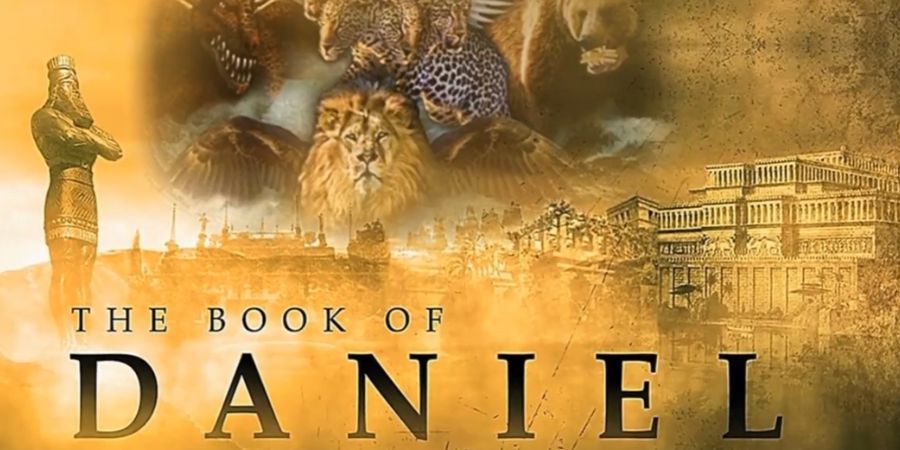
Of course, to defend the book’s 6th century Danielic authorship would go beyond the limits of this medium, but in the space that follows I would like to briefly demonstrate the essential unity of Daniel’s visions. The clearest indication of this unity comes in the correspondence between Nebuchadnezzar’s dream in chapter 2 and in Daniel’s vision in chapter 7. While these chapters come from seemingly disparate parts of the book, they both present a sequence of four kingdoms followed by the establishment of the Kingdom of God. Of course, critical scholarship widely identifies these kingdoms as Babylon, Media, Persia, and Greece. This is mostly because they understand the actions of the fourth kingdom, and particularly the little horn, to be fulfilled in the actions of Antiochus IV Epiphanes during the Maccabean Crisis from 167-164 CE. I will come back to the identification of these kingdoms in a little bit, but suffice it to say here that it is difficult to see how Daniel’s expectation for the establishment Kingdom of God is fulfilled in this time period. The subsequent period of Hasmonean independence which followed was a far cry from the grandeur of Daniel’s expectations.
This is especially so when we turn our attention to Daniel chapter 9; in that chapter, Daniel is praying about the end of the exile, and he receives an answer from the angel Gabriel, which reads,
Seventy weeks are decreed about your people and your holy city—to bring the rebellion to an end, to put a stop to sin, to atone for iniquity, to bring in everlasting righteousness, to seal up vision and prophecy, and to anoint the most holy place.
Daniel 9.24
It seems rather clear that these seventy weeks span the timeframe from Daniel’s day (“from the issuing of the decree to restore and rebuild Jerusalem” in verse 25) to the time of final consummation, the time of “everlasting righteousness”. Because of this, we may presume then that the seventy weeks of Daniel 9 cover the same span of time as the visions of Daniel 2 and 7.
Now, the key to identifying the four kingdoms mentioned in Daniel’s sequence would seem to come in Daniel chapter 8. In that chapter, Daniel sees a vision of a ram with two horns, one longer than the other, and a goat whose large horn was broken off and replaced by four smaller horns. Again, the angel Gabriel gives the interpretation.
The two-horned ram that you saw represents the kings of Media and Persia. The shaggy goat represents the king of Greece, and the large horn between his eyes represents the first king. The four horns that took the place of the broken horn represent four kingdoms. They will rise from that nation, but without its power.
Daniel 8.20-22
This interpretation indicates that the second kingdom in Daniel’s sequence should be understood as the unified Kingdom of the Medes and Persians. It is described as a ram with two horns, one longer than the other (8.3) and as a bear which was raised up on one side (7.5). The third kingdom, then, should be understood as the Kingdom of Greece which is represented, of course, by Alexander the Great and the Diadochi, the four generals who followed him. They are variously described as a goat whose large horn was broken off and replaced by four smaller horns (8.8) and as a leopard with four wings and four heads (7.6).
This understanding is confirmed in Daniel chapter 11, where we read,
Three more kings will arise in Persia, and the fourth will be far richer than the others. By the power he gains through his riches, he will stir up everyone against the kingdom of Greece. Then a warrior king will arise; he will rule a vast realm and do whatever he wants. But as soon as he is established, his kingdom will be broken up and divided to the four winds of heaven, but not to his descendants; it will not be the same kingdom that he ruled, because his kingdom will be uprooted and will go to others besides them.
Daniel 11.3-4
The rest of chapter 11, then, goes on to detail the various campaigns of the “King of the North” and the “King of the South”, which describes the various conflicts between the Seleucids and the Ptolemies during the Third and Second century BCE respectively. The point of all this is to say that Daniel’s sequence of four kingdoms is best understood to refer to the progression of empires from Babylon to Medo-Persia to Greece and finally to Rome*. Of course, it must be noted that while the Roman Empire corresponds to Daniel’s fourth kingdom, it doesn’t completely fulfill it. That fulfillment comes ultimately in the eschatological kingdom of the beast, which is described in Book of Revelation, but this is a topic for another time.
By way of conclusion, then, Daniel’s visions reveal a remarkable and multifaceted unity in their expectation despite their seeming disparities. Daniel chapters 2, 7, and 9 give the overarching flow from Daniel’s day to the establishment of God’s Kingdom, and chapters 8 and 11 zoom in on the specific actions of the second and especially the third kingdom. More importantly, this understanding lays the foundation for the typological connection that Daniel draws between the third and fourth kingdoms, specifically between the actions of Antiochus IV Epiphanes and the eschatological little horn of the fourth kingdom. In addition, it helps us see how Daniel’s eschatological paradigm serves as the foundation for the message and ministry of Jesus, especially the Olivet Discourse, and for the message of the New Testament, particularly the Book of Revelation.
Of course, the most important aspect of all of this is the certain promise of God’s victory over His enemies and the enemies of His people. Our hope rests not in earthly powers, nations, or empires, but in the Kingdom of God and in His promised Messiah. That Messiah came incarnate 2000 years ago. He lived a perfect life, and then, He died on the cross for sin and rose again. Forty days later, He ascended to be seated at the right hand of the Father, and He left us this promise, that in the same way he ascended, he will also one day descend in glory and power (Acts 1.11). This is our glorious hope, and so we pray, “Amen, Come, Lord Jesus! (Revelation 22.20)
For further study, see: Hamilton, James M. With the Clouds of Heaven: The Book of Daniel in Biblical Theology. New Studies in Biblical Theology. Downers Grove, IL: InterVarsity, 2014
For the choir director: on the Gittith. A psalm of David.
1 Lord, our Lord, how magnificent is your name throughout the earth! You have covered the heavens with your majesty. 2 From the mouths of infants and nursing babies, you have established a stronghold on account of your adversaries in order to silence the enemy and the avenger.
3 When I observe your heavens, the work of your fingers, the moon and the stars, which you set in place, 4 what is a human being that you remember him, a son of man that you look after him? 5 You made him little less than God and crowned him with glory and honor. 6 You made him ruler over the works of your hands; you put everything under his feet: 7 all the sheep and oxen, as well as the animals in the wild, 8 the birds of the sky, and the fish of the sea that pass through the currents of the seas.
9 Lord, our Lord, how magnificent is your name throughout the earth!
~Psalm 8
Series: Praying through the Psalms Text: Psalm 8.1-9 Church: South Caraway Baptist Church, Jonesboro, AR Date: May 17, 2023
1 Why do the nations rage and the peoples plot in vain? 2 The kings of the earth take their stand, and the rulers conspire together against the Lord and his Anointed One: 3 “Let’s tear off their chains and throw their ropes off of us.”
4 The one enthroned in heaven laughs; the Lord ridicules them. 5 Then he speaks to them in his anger and terrifies them in his wrath: 6 “I have installed my king on Zion, my holy mountain.”
7 I will declare the Lord’s decree. He said to me, “You are my Son; today I have become your Father. 8 Ask of me, and I will make the nations your inheritance and the ends of the earth your possession. 9 You will break them with an iron scepter; you will shatter them like pottery.”
10 So now, kings, be wise; receive instruction, you judges of the earth. 11 Serve the Lord with reverential awe and rejoice with trembling. 12 Pay homage to the Son or he will be angry and you will perish in your rebellion, for his anger may ignite at any moment. All who take refuge in him are happy.
~Psalm 2
Series: Praying through the Psalms Text: Psalm 2.1-12 Church: South Caraway Baptist Church, Jonesboro, AR Date: April 5, 2023




 Faith seeking Understanding