Tag Archives: Goodness

On the Authority of Scripture

TEXT

4. The authority of the Holy Scriptures obligates belief in them. This authority does not depend on the testimony of any person or church but on God the author alone, who is truth itself. Therefore, the Scriptures are to be received because they are the Word of God.

~Second London Baptist Confession (1689), 1.4

Series: The 1689 Baptist Confession of Faith
Church: South Caraway Baptist Church, Jonesboro, AR
Date: September 20, 2023


On Christ Our Blessing

TEXT

Blessed is the God and Father of our Lord Jesus Christ, who has blessed us with every spiritual blessing in the heavens in Christ. For he chose us in him, before the foundation of the world, to be holy and blameless in love before him. He predestined us to be adopted as sons through Jesus Christ for himself, according to the good pleasure of his will, to the praise of his glorious grace that he lavished on us in the Beloved One.

~Ephesians 1.3-6

Title: On the Blessings of Election and Predestination in Christ
Text: Ephesians 1.3-6
Series: The Letter to the Ephesians
Church: South Caraway Baptist Church, Jonesboro, AR
Date: May 8, 2023


On Psalm 119.89-96 (Lamed)

89 Lord, your word is forever;
it is firmly fixed in heaven.
90 Your faithfulness is for all generations;
you established the earth, and it stands firm.
91 Your judgments stand firm today,
for all things are your servants.
92 If your instruction had not been my delight,
I would have died in my affliction.
93 I will never forget your precepts,
for you have given me life through them.
94 I am yours; save me,
for I have studied your precepts.
95 The wicked hope to destroy me,
but I contemplate your decrees.
96 I have seen a limit to all perfection,
but your command is without limit.

The twelfth stanza of Psalm 119 (ל/Lamed) begins with a beautiful affirmation of the permanence and timelessness of God’s Word. “Lord, your Word is forever; it is firmly fixed in heaven.” (verse 89) It is not just another curiosity that has been passed down to us from antiquity; no, it is the living and abiding Word of the one true and living God. In theology, this is called the doctrine of inspiration, namely that God speaks through the human authors of the Biblical documents, such that their words are His very words. This is why the Bible has lasting relevance and authority even beyond the audiences to whom it was originally written. As our psalmist puts it, “Your judgments stand firm today. for all things are your servants.” (verse 91) Contrary to the opinions of modern culture, the Word of God is still the right and true prescription for human flourishing; the virtues it sanctions and the vices it prohibits are not outdated holdovers from people and places now long past. No, the Bible is special revelation from God in which He reveals the problem of humanity’s sin and the way of salvation that comes by grace through faith in the person and work of Jesus Christ.

Now, in verse 90, we read “Your faithfulness is for all generations; you established the earth, and it stands firm.” As we have noted in previous posts, most of the verses in Psalm 119 contain some synonym for God’s Word, e.g. laws, commands, instructions, precepts, etc., and so here we have “your faithfulness” (אֱמֽוּנָתֶךָ). It seems clear that this word is meant to stand in parallel relationship with “your word” (verse 89) and “your judgments” (verse 91); interestingly, the Septuagint (LXX) translates this word as “your truth” (ἡ ἀλήθειά σου). The point of all of this is to say that the abiding authority of God’s Word is grounded in who He is, i.e. in His unchanging character. He is faithful; He keeps His promises. Whatever He says, He will most certainly do. His Word is a reflection of who He is: His holiness, His grace, His power, His love, and even His incomprehensibility. This is why our psalmist writes in verse 96, “I have seen a limit to all perfection, but your command is without limit,” or as it reads in the NET Bible, “your commands are beyond full comprehension.” The God of the Bible is infinite; He is a mystery whose depths can never fully be exhausted. So also is His Word.

However, this does not mean that we should not read or study the Word of God. Yes, the depths of the Bible’s riches are inexhaustible, but they are also perspicuous and clear. I have previously written on this topic, here. But suffice it to say that in the act of inspiration, the infinite God condescended to our finite capacities for understanding. He is infinite in power, wisdom, and goodness, and we are His creatures, finite in our ability to comprehend His perfections. But He chose to reveal Himself in and through the Word so that we might know Him and be reconciled to Him. So yes, the Bible is so clear that any human being, regardless of their intellectual aptitude or educational achievement, can read it and understand their sin and their need for a savior; it is also, at the same time, a limitless source of mystery and wonder, such that even the finest minds throughout human history have been unable to fully explain all of its secrets.

For our psalmist, this means that the Word of God must be continuously read, studied, and contemplated. As he says in verse 93, “I will never forget your precepts, for you have given me life through them.” Here again, not only do we see that abiding authority of God’s Word, but we also see its all encompassing sufficiency. Our psalmist understands that every need of the human soul is provided for in the inspired Word of God. In verse 92, we read, “If your instruction had not been my delight, I would have died in my affliction.” The word “delight” conveys the idea of contentment, satisfaction, or pleasure. In other words, our psalmist understands that even in the midst of turmoil, adversity, and heartache, there is a joy, a “peace that passes all understanding” that is available when we rest in the promises of God’s Word. The spiritual disciplines of the Word (study, meditation, memorization) are the God prescribed antidote for our anxiety, our fear, our depression, our despair. Again, our psalmist writes in verse 95, “The wicked hope to destroy me, but I contemplate your decrees.”

This devotion, this diligence in the discipline of the Word, this affection for the perfections of God’s Law, is a distinguishing characteristic of those who belong to Him. As our psalmist writes in verse 94. “I am yours; save me, for I have studied your precepts.” We are a people of the Book. Our faith is not based on a human philosophy or mere reflections on the divine; no, it is based on the inspired, inerrant, authoritative, sufficient revelation of God Himself. In His Word, He has clearly and finally revealed the one and only path unto salvation, and He has called His people to walk upon it until we reach glory. So, when our psalmist prays “save me”, he is not simply expressing his desire to be saved from the penalty of sin. Rather, he is praying for the ongoing work of salvation to be applied in his life through sanctification, that God would save him from the power of sin through His sufficient Word. In the same breath, he is also expressing that most fundamental of Christian hopes, namely that one day he would be saved from the very presence of sin entirely, a hope that is grounded in the promises of God’s Word. In other words, our psalmist understands that the full experience of our salvation comes to us through the Word by the Spirit. Therefore, we should never cease to be amazed at the riches of His word, and we should constantly devote ourselves to its discipline.

For further study:
Introduction
Psalm 119.1-8
Psalm 119.9-16
Psalm 119.17-24
Psalm 119.25-32
Psalm 119.33-40
Psalm 119.41-48
Psalm 119.49-56
Psalm 119.57-64
Psalm 119.65-72
Psalm 119.73-80
Psalm 119.81-88



On Psalm 119.65-72 (Teth)

65 Lord, you have treated your servant well,
just as you promised.
66 Teach me good judgment and discernment,
for I rely on your commands.
67 Before I was afflicted I went astray,
but now I keep your word.
68 You are good, and you do what is good;
teach me your statutes.
69 The arrogant have smeared me with lies,
but I obey your precepts with all my heart.
70 Their hearts are hard and insensitive,
but I delight in your instruction.
71 It was good for me to be afflicted
so that I could learn your statutes.
72 Instruction from your lips is better for me
than thousands of gold and silver pieces.

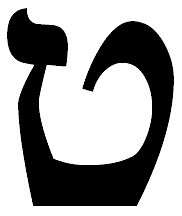
The ninth letter of the Hebrew alphabet is teth (ט), and in this ninth stanza of Psalm 119, the psalmist repeatedly affirms the essential goodness of God. Five out of the eight verses in this stanza begin with the Hebrew word tov (טוב) which means good, pleasant. It is a seemingly small and insignificant word, but it is perhaps one of richest words in all of the Hebrew language. This is especially so when it is used to describe God, because goodness is a primary attribute of His character. For our psalmist, however, it would seem to be much than this; in his view, God’s goodness is the sum total of all that He is. As our psalmist puts it in verse 69, “You are good, and you do what is good.” Or as we often say in the Bible Belt, “God is good! All the time!”

In other words, goodness is who and what He is; He is the source and standard of all that is good. There is no one and nothing that is good outside of Him. As Jesus says in the Gospels, “No one is good except God alone.” (Mark 10.18) This is why our psalmist prays, “Teach me good judgment and discernment, for I rely on your commands.” (verse 66) Literally translated, it reads “goodness of taste”, where the word taste refers to moral and ethical discernment. The law of God is a reflection of His perfect goodness, and when we live according to its precepts, we enjoy the goodness that God intends for us. This is why the Apostle Paul affirms that the law is good, holy, and just. (c.f. Romans 7.12, 1 Timothy 1.8) It is also why our psalmist affirms, “Instruction from you lips is better for me than thousands of gold and silver pieces.” (verse 72)

The reality, however, is that Christians are often so quick to doubt their conviction that God is fundamentally good. In fact, this is a point of weakness where we regularly come under the enemy’s attacks. Satan is incredibly adept at getting believers to doubt their belief in God’s thoroughgoing goodness. It is a strategy of his that goes all the way back to the garden, when he tempted Eve to eat from the tree of the knowledge of good and evil. The clear implication of his words in Genesis 3.5 is that God is not good, that God is holding out on Adam and Eve by restricting them from eating of the tree. And his strategy hasn’t changed since that first sin; he still continually attacks the Christian belief that God is ever and always good in every way. This is why the Apostle Paul tells us, “In every situation take up the shield of faith with which you can extinguish all the flaming arrows of the evil one.” (Ephesians 6.16) The shield of faith is the firm and steadfast conviction that God is good and trustworthy.

This is why our psalmist says here in verse 65, “Lord, you have treated your servant well, just as you promised.” When we hold fast to the conviction that God is good, then we will rest by faith in the promises is God’s Word, and no matter what obstacles or difficulties or challenges may come against us, we will continue to walk in faithful obedience. (c.f. verses 69-70) In fact, it is in the trials of life that we are forced to rely on God and His goodness even more; as our psalmist puts it in verse 71, “It was good for me to be afflicted so that I could learn your statutes.” Literally, it was tov, not that the affliction was tov, but that what resulted from the affliction was tov. Or as it says in the Letter to the Romans, chapter 8, verse 28, “We know that all things work together for the good of those who love God, who are called according to his purpose.”

The perspective of the psalmist in this stanza, especially in verse 71, is so radical and counter to the prevailing sentiments of our culture. The culture would have us believe that good, or the “good life”, is the absence of difficulty, trial, or trouble, that it is a life of ease and comfort and prosperity. However, this is not the perspective of our psalmist, nor is it the perspective of the Bible more generally. In this stanza, the psalmist wants us not only to know but to believe with conviction that God is the ultimate and highest good, that He is the source of all good, and that He is working out every detail and every circumstance for our good. But, of course, the good He is working in us is not our ease or our comfort; on the contrary, it is our growth into Christlikeness. And according to our psalmist, the good of Christian maturity is more effectively cultivated in our lives during times of testing and trial. As our psalmist says in verse 67, “Before I was afflicted I went astray, but now I keep your word.” Or as the Apostle James puts it,

Consider it a great joy, my brothers and sisters, whenever you experience various trials, because you know that the testing of your faith produces endurance. And let endurance have its full effect, so that you may be mature and complete, lacking nothing.

~James 1.2-4

For further study:
Introduction
Psalm 119.1-8
Psalm 119.9-16
Psalm 119.17-24
Psalm 119.25-32
Psalm 119.33-40
Psalm 119.41-48
Psalm 119.49-56
Psalm 119.57-64


Slow To Write

"let every person be quick to hear, slow to speak, slow to anger."

lovegavehope

Just another WordPress.com site

Jared Cornutt

Pastor | Speaker | Writer

Denny Burk

A commentary on theology, politics, and culture

G3 Ministries

Events + Resources for the Local Church

Biblical Reasoning

Biblical and Systematic Theology According to the Scriptures

RetroChristianity

Reclaiming the Forgotten Faith

SBC Voices

Southern Baptist News & Opinion

Lucid Theology

Thoughts on words, books, theology, and life.

Baptist21

A pastor-led voice for Baptists in the 21st century

Center For Baptist Renewal

The Personal and Professional Blog of Phillip Powers

The Pastor's Well - Pastor Well

The Personal and Professional Blog of Phillip Powers

Articles - AlbertMohler.com

The Personal and Professional Blog of Phillip Powers

The Gospel Coalition

The Personal and Professional Blog of Phillip Powers