Tag Archives: Church

On How Christians are Different

TEXT

Therefore I, the prisoner in the Lord, urge you to walk worthy of the calling you have received, with all humility and gentleness, with patience, bearing with one another in love, making every effort to keep the unity of the Spirit through the bond of peace. There is one body and one Spirit—just as you were called to one hope at your calling— one Lord, one faith, one baptism, one God and Father of all, who is above all and through all and in all.

Now grace was given to each one of us according to the measure of Christ’s gift. For it says:

When he ascended on high,
he took the captives captive;
he gave gifts to people.

But what does “he ascended” mean except that he also descended to the lower parts of the earth? 10 The one who descended is also the one who ascended far above all the heavens, to fill all things. 11 And he himself gave some to be apostles, some prophets, some evangelists, some pastors and teachers, 12 to equip the saints for the work of ministry, to build up the body of Christ, 13 until we all reach unity in the faith and in the knowledge of God’s Son, growing into maturity with a stature measured by Christ’s fullness. 14 Then we will no longer be little children, tossed by the waves and blown around by every wind of teaching, by human cunning with cleverness in the techniques of deceit. 15 But speaking the truth in love, let us grow in every way into him who is the head—Christ. 16 From him the whole body, fitted and knit together by every supporting ligament, promotes the growth of the body for building itself up in love by the proper working of each individual part.

~Ephesians 4.1-16

Title: On How Christians are Different
Text: Ephesians 4.1-16
Series: The Letter to the Ephesians
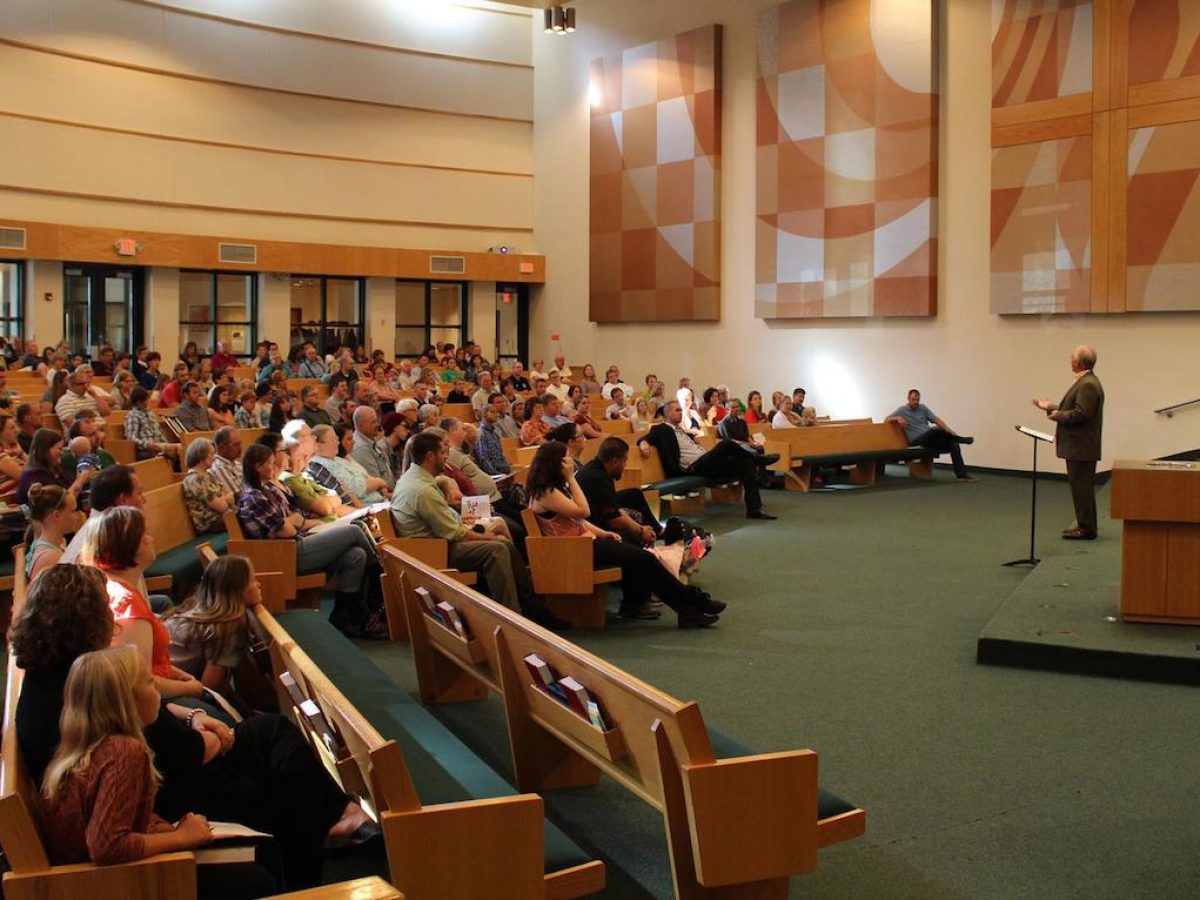
Church: South Caraway Baptist Church, Jonesboro, AR
Date: July 23, 2023


On Psalm 119.73-80 (Yod)

73 Your hands made me and formed me;
give me understanding
so that I can learn your commands.
74 Those who fear you will see me and rejoice,
for I put my hope in your word.
75 I know, Lord, that your judgments are just
and that you have afflicted me fairly.
76 May your faithful love comfort me
as you promised your servant.
77 May your compassion come to me
so that I may live,
for your instruction is my delight.
78 Let the arrogant be put to shame
for slandering me with lies;
I will meditate on your precepts.
79 Let those who fear you,
those who know your decrees, turn to me.
80 May my heart be blameless regarding your statutes
so that I will not be put to shame.

In the tenth stanza of Psalm 119 ( י/yod), our psalmist continues to reflect on the compassion, comfort, and hope that comes to us through God’s Word. As we read in verses 76 and 77, “May your faithful love comfort me as you promised your servant. May your compassion come to me so that I may live.” This is perhaps what is most challenging about this entire psalm, and yet, at the same time, it is the most encouraging. In every stanza of the psalm, the psalmist is relentless in affirming that the Word of God is the primary means by which we experience God’s grace. The comfort, the peace, the hope, the love, the wisdom that we so desperately need day by day is readily available if we would just open our Bibles and read. And yet, so many Christians today live and long for the mountain top experience, that emotional or spiritual high that thrills and exhilarates in the moment. But our psalmist is clear; lasting transformation happens through the ordinary disciplines of the Spirit and the Word, those repeated rhythms of grace that bring us back time and again to the foot of the cross.

Of course, the God of the Bible is free to dispense His grace by whatever means and in whatever ways He so chooses. Sometimes He does carry us to the top of the mountain of religious experience, but more often than not He meets us in the regular moments of faithfulness in our day to day lives. And this is exactly the point, namely that as our creator, He knows exactly what we need to grow in godliness. As our psalmist says here in verse 73, “Your hands made me and formed me; give me understanding so that I can learn your commands.” God has ordained the regular disciplines of the Spirit as the primary means by which we are transformed by His Word; steady, plodding faithfulness in the disciplines of the Spirit is His preferred method of transformation. By way of analogy, we understand that the regular intake of a well balanced diet leads to general health and well being; on the other hand, a diet of large and rich meals eaten only sporadically and intermittently would not provide the nutrition that we need to grow physically. So, also the regular intake of the Word through the classic spiritual disciplines leads to our growth and transformation into the image of Christ.

Another way that the psalmist challenges our experiential expectations is that he affirms that these rhythms are not to be solitary or individual affairs. As we read in verse 74, “Those who fear you will see me and rejoice, for I put my hope in your word”, so also in verse 79, “Let those who fear you, those who know your decrees, turn to me.” While daily devotional reading is a crucial part of the Christian life, God’s grace also comes when we gather with other Christians around the Word. The vision of the New Testament is that the regular gathering of the Christian community, i.e. the church, would be saturated in the Word. The simple fact of the matter is that no one person has exhaustive and complete knowledge of God’s Word; we need each other’s perspectives and experiences to help us grasp God’s Word more fully. As Proverbs 27.17 reminds us, “Iron sharpens iron, and one person sharpens another. Or as we read in Colossians 3.16, “Let the word of Christ dwell richly among you, in all wisdom teaching and admonishing one another through psalms, hymns, and spiritual songs, singing to God with gratitude in your hearts.” In other words, the Spirit of God brings the people of God together by the Word of God that they might grow in the grace of God.

This principle, namely the necessity of each other as we grow in godliness, is even more pressing when we are facing the difficulties and hardships of life. As our psalmist writes in verse 75, “I know, Lord, that your judgments are just and that you have afflicted me fairly.” Now, this verse deserves extensive treatment all on its own, and perhaps we can return to this thought another time. But the Bible is clear that God uses the trials in our lives to bring us to the end of ourselves, so that we have no other choice but to rely upon Him and his Word. As Elihu says in Job 33.29-30, “God certainly does all these things two or three times to a person in order to turn him back from the Pit, so he may shine with the light of life.” After all of the discussion between Job and his three friends, Elihu comes along to minister the grace of God’s Word to Job in his trials, and in the same way, when we are facing hardships and heartaches, we need the Word infused grace of God’s people to help us persevere in godliness. As our psalmist prays in verse 78, “Let the arrogant be put to shame for slandering me with lies; I will meditate on your precepts.” and again in verse 80, “May my heart be blameless regarding your statutes so that I will not be put to shame.”

With all of being said, the main point is that we are fundamentally dependent upon God’s grace; it is a posture that we called to live in, one of dependence, of trust, of faith. And the good news is that God has already provided all that we need through His Son by His Spirit in His Word. As the apostle Peter writes, “His divine power has given us everything required for life and godliness through the knowledge of him who called us by his own glory and goodness.” (2 Peter 1.3) The resources of His grace come to us through the ordinary means of faith, those classic spiritual disciplines, whose efficacy has been witnessed in every generation of believers. Scripture, prayer, community. These are the primary ways in which God renews and transforms, disciplines and heals. Of course, when God takes us to the mountain top, we should revel in it and enjoy Him to the utmost. But rather than living for the next spiritual or emotional high, we must learn to embrace the grace of the ordinary, to celebrate the small moments of God’s faithfulness, and to pursue steady and intentional growth in Christ through His Word moment by moment, day by day.

For further study:
Introduction
Psalm 119.1-8
Psalm 119.9-16
Psalm 119.17-24
Psalm 119.25-32
Psalm 119.33-40
Psalm 119.41-48
Psalm 119.49-56
Psalm 119.57-64
Psalm 119.65-72


On Unrealistic Expectations in Pastoral Ministry

It is no secret that the last few years have been extremely difficult for churches and even more so for pastors. Of course, pastoral ministry is commonly fraught with its own set of unique stresses, but those stresses have grown exponentially over the past few years due to the chaos and turmoil that has so regularly characterized our society. This has led to unprecedented numbers of pastors leaving the ministry, a trend some are now calling the “Great Resignation”. The Barna Group has recently reported that some 42% of pastors have given real, serious consideration to quitting being in full-time ministry within the last year, a number which is up 13 points from 29% just over a year ago. It is a trend that should concern all of us, both pastors and congregants alike. If pastors are called by God and love His church, why are they leaving ministerial service seemingly in droves?

Over at churchanswers.com, Thom Rainer recently shared some of his findings pertaining to this question in an article entitled “Ten Reasons Pastors Are Glad They Quit Vocational Ministry.” It would be redundant to reproduce the entire list here; however, suffice it to say that all of the reasons stated reflect the relief of having a massive burden lifted off of the shoulders. But what exactly is the massive burden that these former pastors were carrying? I believe that it was the unhealthy and unrealistic expectations of the church and its members. So many churches in this country expect their pastors to be superheroes, masters of every skill, having impeccable personality and charisma, able to carry every burden of ministry, always available, never to feel exhausted or drained or burned out. A quick perusal of online advertisements for pastoral openings reveals that for most churches, Jesus Christ himself wouldn’t be qualified; after all, he was a single thirty-something with no children, no experience, and no seminary training.

Whether because of the rise of celebrity pastor culture or due to the influence of values taken from the business/political world, expectations regarding pastoral responsibilities and qualifications in most churches are nearly unattainable. However, the problem is not necessarily that the expectations are wrong; they are usually reflections of a congregation’s felt needs or past hurts, though many of these still go unacknowledged or unspoken. Rather, the problem is that they are all heaped upon one person, i.e. the solo or senior pastor. This is why a plurality of elders leadership model is more healthy, because it shares the responsibilities of leadership among a group of biblically qualified and trained men. A single or solo pastor/elder is unable to be all things to all people at all times; he is not able to be everywhere and everything that the members of the congregation might need him to be. Or to put it another way, he is not omnipotent, omniscient, or omnipresent. He has limitations on his time, his energy, and his resources. A plurality model for elders eliminates these limitations by sharing the burdens of ministry among a group of pastors of equal authority and responsibility.

Of course, this does not mean that there are no qualifications or expectations for those called to serve as pastors. The Bible is clear that a man must be spiritually mature, that he must have proven Christ-like character as well as sound theological and biblical convictions. It is also clear that a pastor’s primary duty is to be devoted to prayer and to the ministry of the Word, to care for and feed the flock of God. In many ways, pastors should be held to a higher standard of faith and practice than the regular church member, but as church members, we must remember that our pastors are still human, that they are members of the same body, that they need the same care, encouragement, prayer, and support that we all need. This is why the Bible so often uses the body metaphor to symbolize the nature of the local church. As a body, the church has one head, and that head is Jesus Christ. Beyond that, the rest of the parts of the body are interdependent, and pastors are just one of the parts of that body. They need the life and nourishment of the body just as much as any other part. As the Apostle Paul puts it,

Now as we have many parts in one body, and all the parts do not have the same function, in the same way we who are many are one body in Christ and individually members of one another.

~Romans 12.4-5

Like any relationship, the relationship between pastors and church members must be grounded in trust, worked out through open and honest communication, and always characterized by grace toward one another, because only when both sides are able to admit their most vulnerable needs without fear of judgment will we be able to build the kind of foundation that can sustain long-term ministry faithfulness. It is the church’s Scriptural responsibility to raise up men from within their body to serve as pastors/elders. However, so many churches in the world today have adopted the mindset that they exist only to be served by their pastors, rather than to serve them. This attitude is the primary reason that good and godly men flee pastoral ministry in droves. They have been used up and beat down over and over; they have been chewed up and spit out too many times. We desperately need to rediscover what it means to build each other up rather than tear each other down, and this applies to pastors as much as it does everyone else. Who is caring for the pastors? Because they desperately need it.

This article is also posted at SBCVoices, here.


On Pastoral Tenure as Covenant

I recently read an article about an Oklahoma pastor who is retiring after serving in the same church for 60 years. And let me just begin by saying that this is the kind of pastor that deserves the platform though he would probably never ask for it. So often, we platform the personalities that are the most visible, those pastors who have the largest churches, who have published the most books, who speak regularly on the conference circuit. It would seem we have missed the mark. Our measures of ministry success reflect all of the values and metrics of the world and none of the values of God, who says in His Word that, “Humans do not see what the Lord sees, for humans see what is visible, but the Lord sees the heart.” (1 Samuel 16.7) This pastor exemplifies the kind of nameless faithfulness that is the backbone of Christ’s church; pastors serving tirelessly in insignificant and forgotten places, loving people who are regular and ordinary, proclaiming the Word of God week in and week out. He never published any books; he wasn’t asked to speak at anyone’s conference. He held no denominational influence or power beyond his local association. May his tribe increase!

However, this story is not simply about a pastor who served in the same place for six decades. According to the pastor in question, and I quote, “A lot of it has to do with a church that has kept a pastor for years.” This, it would seem, is the key to long term pastoral tenure; it is churches that keep pastors. A pastor’s theological fidelity and moral integrity notwithstanding, churches bear a God given responsibility to keep the pastors that God has called to care for their souls. (c.f. Hebrews 13.17) According to research, the average pastoral tenure has risen over the years, from 3.6 years in 1996 to 6 years in 2016, but it is clear that the constant churning of pastoral leadership in churches all across this county is at least one major contributor to the weakness of American Christianity. Every pastor I know, myself included, has been hurt by churches who prematurely requested their resignation at the first sign of disagreement, disappointment, or difficulty. Sadly, these stories are often filled with the tears of betrayal, of broken trust, and of shattered confidences.

The point is that we need a better paradigm for thinking about the relationship between pastors and congregations. An employer/employee model that is driven by consumeristic expectations fundamentally lacks the virtues of grace that should define the church’s life together. This is why I believe we must recover the biblical idea of covenant, because covenants move us beyond a “what’s in it for me, what have you done for me lately” mindset by forcing us to consider our own responsibility for maintaining the relationship. There are many examples of covenants in the Bible: Abrahamic, Mosaic, Davidic, and New to name just a few. But I would suggest that it is the marital covenant that stands as the closest parallel to the relationship between a pastor and a congregation. Consider the following similarities.

During the “dating” period, the pastoral candidate and the interviewing church put their best foot forward. Both parties accentuate their assets and their strengths and conceal their weaknesses. For the most part, this “get to know you” phase is full of excitement and anticipation of the possible match and its attendant benefits, and each subsequent interaction merely adds to the perception that this is a “match made in heaven.” Both parties wonder if the other might be “the one God intended”. The votes are totaled; the call is accepted. And the relationship moves into the “honeymoon phase”; it is a time that is filled with great idealism and blissful naiveté. Both the pastor and the congregation view each other through “rose colored glasses”; neither party can do any wrong in the eyes of the other. As the relationship grows, every new experience, every new situation is an opportunity to relish in the seeming perfections of the other.

Eventually, however, the difficulties come. The rose petals fall off; the idealism fades. What was once endearing is now annoying; what was once a source of great fulfillment now causes great frustration. Differences in opinion and perspective on all sorts of issues seem nearly insurmountable. The waves of conflict and division threaten to tear the relationship apart, and sadly, in many cases, it does. Marriages end in divorce, and pastors resign, sometimes of their own volition, other times at the behest of church leaders. It is a cycle that is all too familiar, but it need not be so. As in marriage, so also in the church, both parties have a decision to make as to how they will navigate this season. Instead of separation, they can choose to remain committed to each other. They can choose to work through their differences by listening, by showing grace, by compromise. They can persevere and come out on the other side together and stronger for it. Churches can choose to keep their pastors, and pastors can choose to love and serve the church that God has called them to.

This is what relationships should look like within the Body of Christ. We do not give up each other when relationships get hard; we do not throw in the proverbial towel because circumstances are difficult or challenging. We choose love, we choose grace, we choose hope. We covenant together for the sake of the Gospel, for the growth of each other in Christlikeness, for the glory of God. It has been said that most pastors, and I would include most churches, overestimate what can be accomplished in the span of three years, but underestimate what can be accomplished in the span of ten years. So, rather than aiming for some set of five year goals that are ultimately unrealistic, let us strive for that biblical standard of godly faithfulness over time. And when we do this, we can rest assured that we will one day hear those most blessed of commendations from our Lord Jesus, “Well done, good and faithful servant! Share your master’s joy!”

This post was also posted at SBCvoices, here.


On Spirit Led Preaching and the Heresy of Donatism

Painting of Augustine of Hippo arguing with a man before an audience
Charles-André van Loo’s 18th-century Augustine arguing with Donatists

I once was told by a well meaning deacon in a church that I previously pastored that my preaching was not “spirit led”. Now, in the interest of transparency, at that time, for the AM services I was ordering my preaching schedule by the traditional Christian calendar and selecting my texts from the Revised Common Lectionary. For my reasoning on this, see my posts here and here. And for the PM services, I was preaching expositionally verse-by-verse through the Minor Prophets. My purpose in this post is not to defend myself against the criticism; it was perhaps well intended. Rather, I would like to examine the underlying presupposition that informs such a critique.

In many rural Bible-Belt churches, it is usually assumed that being “spirit led” is synonymous with spontaneity, that the preacher who is “led by the Spirit” receives a direct word from the Lord to be preached to the church every week. To put it another way, it is the spiritual perception of the preacher that informs and empowers the preaching task rather than the systematic study of Holy Scripture. In its most egregious expression, I have seen many a preacher step into the pulpit and cast his prepared sermon aside, explaining that God had given him another sermon just a few moments before during the song service.

The problem with this kind of perspective on preaching is that it locates the efficacy of preaching in the preacher, in his spirituality, in his perceptivity and attunement to the voice of the Spirit. It removes the power of preaching from the inspired Word of God and puts it in the experience of the “so-called” man of God. As the Apostle Paul would say, “May it never be!”

Of course, this is not a new question in the life of the church; after all, there is nothing new under the sun (Eccl 1.9). This same issue had to be addressed in the early church, and at that time it was called Donatism, so named after Donatus Magnus, who was consecrated as Bishop of Carthage in 313 AD. Beginning in 303 AD, the Emperor Diocletian issued a series of edicts rescinding the legal rights of Christians in the Roman Empire and demanding that they comply with traditional pagan worship practices. This time period is now known as the “Great Persecution”, because this was the last and most severe persecution of Christians in the Roman Empire before Constantine issued the Edict of Milan in 313 AD, essentially legalizing Christianity.

However, during that ten year period of persecution, rather than become martyrs, some Christian priests capitulated to the persecution and surrendered their copies of Holy Scripture as a token repudiation of their faith. These traditores, as they were later called, were eventually reinstated to their ministerial service, but the validity of their continued ministry was questioned by Donatus and his followers. In other words, the Donatists argued that the administration of the sacraments by traditores was invalidated by their previous moral compromise. This position became known as ex opere operantis, which is Latin for “from the work of the worker”, meaning that the validity of the ministry depended on the worthiness of the bishop performing it.

It was the great theologian Augustine, Bishop of Hippo from 396-430 AD, that was the most vocal opponent of the Donatists. In his seven volume work On Baptism, Against the Donatists, he argued for the counter position ex opere operato, which is Latin for “from the work worked”, meaning that the validity of the ministry rests not in the one who performs it but in the finished work of Christ and is guaranteed by the promise of God. In other words, the efficacy of God’s grace is not dependent upon the human vessel offering it but on the power of God to affect change in the one who receives it. This position eventually won the day, and the Donatists were subsequently condemned by the church as heretics.

Coming back to our original question as to the efficacy and power of preaching, the assumption that this is based on the spirituality of the preacher is not unlike the heresy of the Donatists. It puts the power in the man instead of putting it where it belongs, which is in the Spirit inspired Word of God. As the Apostle Paul reminds us, “All Scripture is inspired by God and is profitable for teaching, for rebuking, for correcting, for training in righteousness.” (2 Tim 3.16), and as God promises through the prophet Isaiah, “my word that comes from my mouth will not return to me empty, but it will accomplish what I please and will prosper in what I send it to do.” (Isa 55.11)

So, instead of placing the blame on our pastors for ineffective and powerless preaching, maybe we should turn the question back on ourselves and ask if we are open to receiving what the Spirit has already said in His Word. As long as the Word of God is being faithfully and accurately proclaimed, then the responsibility falls to the hearers to respond accordingly. Therefore, let us pray that the Spirit will give us the eyes to see, the ears to hear, and the heart to receive what He is saying to the church through His inspired Word!


On Psalm 119: An Introduction and Overview

megillat-esther-persia-long-view

The Psalms are perhaps the best kept secret of the Old Testament; they are a deep well of food for the weary Christian soul. They are a rich resource for our spirituality, but sadly, more often than not, we neglect this spring of spiritual life in favor of the well worn tracts of the New Testament. However, this is merely a symptom of the larger problem, that being our fundamental neglect of the Old Testament in general, but more on that another time. For the purpose of this post, it is enough to say that most Christians are suffering from a feeble weakened spiritual life due to a basic disregard for the Book of Psalms.

Of course, there isn’t enough time or space here to completely explore the spiritual richness of each and every chapter in this central Old Testament Book, but there is one chapter in particular that demands our attention – Psalm 119. This chapter is a vast ocean of refreshing spiritual water for the dry and weary soul, and yet, so often, we fearfully ignore it simply due to its size. And at first glance it can be overwhelming; there are 176 total verses in this single chapter. However, in spite of its imposing length, there is an artistry about this chapter that is beautiful and majestic. It lifts us out of the despair of our circumstances into the glory and hope that is the Word of God.

From a composition perspective, this chapter is an absolute masterpiece of literary artistry. It is structured in a Hebrew acrostic pattern, which means that each successive stanza begins with the next letter of the Hebrew alphabet. There are twenty-two stanzas, one each for every letter of the Hebrew alphabet, and each stanza contains eight lines, each beginning with the designated Hebrew letter for that stanza. (22 x 8 = 176) However, what is truly masterful is that almost every line contains some synonym for the Word of God. Law, testimonies, ways, precepts, statutes, commandments, judgments/ordinances, Word, promises, etc. The psalmist enumerates the perfections of God’s Word in every line literally from A to Z.

And this is perhaps the most important aspect of this glorious chapter, namely that it is written as poetry, and as such, it is intended not only to speak to our intellect but to stir our affections, to lift our souls, to restore our hope and joy. It is impossible to read this psalm and not be completely awestruck by the authors absolute joy in God’s Word. In other words, for the psalmist, the Word of God is more than a mere resource for right thinking and right doing. No, it is so much more than that. It is the foundation upon which he stands; it is the source of all his hope and joy and comfort and assurance. It is the sustenance and provision for all of his being, all of his spirituality and devotion. The Word of the one true and living God is all that he needs.

However, in spite of all of this magnificent and majestic artistry, this Psalm is still largely neglected and/or completely ignored in the devotions of most Christians and their churches. Whether it is because we find it imposing and off putting due to its length, or simply because we believe it to be redundant and repetitive, we refuse to refresh our souls at this inexhaustible spring of spiritual life. And this is absolutely to our spiritual detriment. We severely need the testimony of this Psalm in both our personal and corporate devotions, especially at a time when the sufficiency of God’s Word is being questioned more and more. Let us turn back once again to the well worn paths of biblical spirituality, and linger long over Psalm 119.

For further study:
Spurgeon, Charles H. The Golden Alphabet: An Exposition of Psalm 119. Revised and Updated. Abbotsford, WI: Aneko Press, 2018.


On Denominational Identity

denominations

In my last post, I considered the benefit and value of denominations within the body of Christ, and I concluded that denominations, in their noblest expressions and forms, are a beautiful mosaic of the diversity that exists within the one holy and apostolic church of our Lord Jesus Christ. However, the glaring reality is that in their  most ignominious of forms, they can be downright disgraceful, divisive, and even destructive to the cause of Christ and the mission of the church. This is especially true in the “Bible Belt” where denominational boundaries seem like firmly drawn lines in the sand which dare not ever be crossed and where denominational distinctives are seen more as fronts in the battle that must be defended at all costs than as opportunities to learn from each other in humility.

This more vitriolic and antagonistic form of Christian denominations is the direct result of placing our denominational identity before our identity in Christ. In other words, denominational affiliation is understood to be more primary and more determinative for our faith and practice than who we are in Christ. So, when we are asked the question “Who am I?” or “Who are we?”, more often than not, the first answer that comes to mind is whatever our particularly denominational affiliation might happen to be. We might answer, “Well, I am a Southern Baptist” or “Oh, I am Assemblies of God” or maybe “I am Roman Catholic” or insert your preferred denominational label here.

We actually sound a lot like those first-century Christians in the church at Corinth. It could be argued that the Corinthian churches caused the Apostle Paul more grief and heartache than all of his other churches combined, or it could be that we simply know more about their problems than we do any other church in the first century. Nevertheless, in the letter we know as First Corinthians, which was probably the second letter that Paul had written to them, he had this to say in chapter 1, verses 11-12:

For it has been reported to me about you, my brothers and sisters, by members of Chloe’s people, that there is rivalry among you. What I am saying is this: One of you says, “I belong to Paul,” or “I belong to Apollos,” or “I belong to Cephas,” or “I belong to Christ.” 

Obviously, this is unacceptable to the great Apostle; he said back in verse 10:

Now I urge you, brothers and sisters, in the name of our Lord Jesus Christ, that all of you agree in what you say, that there be no divisions among you, and that you be united with the same understanding and the same conviction.

Of course, Paul’s instruction here does not completely preclude the existence of denominations all together, but it does temper the extent to which we should emphasize the differences among us. In other words, denominational diversity in the body of Christ need not necessarily be the same as denominational division. As Paul explains later in that same letter, “For just as the body is one and has many parts, and all the parts of that body, though many, are one body—so also is Christ.” (12:12)

That is really the key, namely expressing our unity even in the context of our diversity. Christianity is united by its central and essential truths; these are the bounds of orthodoxy. Orthodoxy is grounded in the truths of the Gospel, and its contours are outlined by the historic councils, creeds, and confessions of the church throughout its history. These are the things that a person must believe to be called a Christian. Our unified identity as Christians must take controlling precedence over any and all of our denominational distinctives. As Paul went on to say, “For we were all baptized by one Spirit into one body—whether Jews or Greeks, whether slaves or free—and we were all given one Spirit to drink.” (12:13)

Our identity as Christians, as those that are hidden in Christ, must come first, and our  denominational affiliation must come second or even third in order of importance. It is this unity expressed in diversity that gives the church its prophetic witness in the world, because in this they are see firsthand what life in the Kingdom of God under the rule King Jesus looks like. We are Christians first, and we are members of the body of Christ, which is the church. And our mission is to build that body through evangelism and discipleship, not to prove ourselves right in every obscure point of Christian theology.


On the Benefit and Value of Denominations

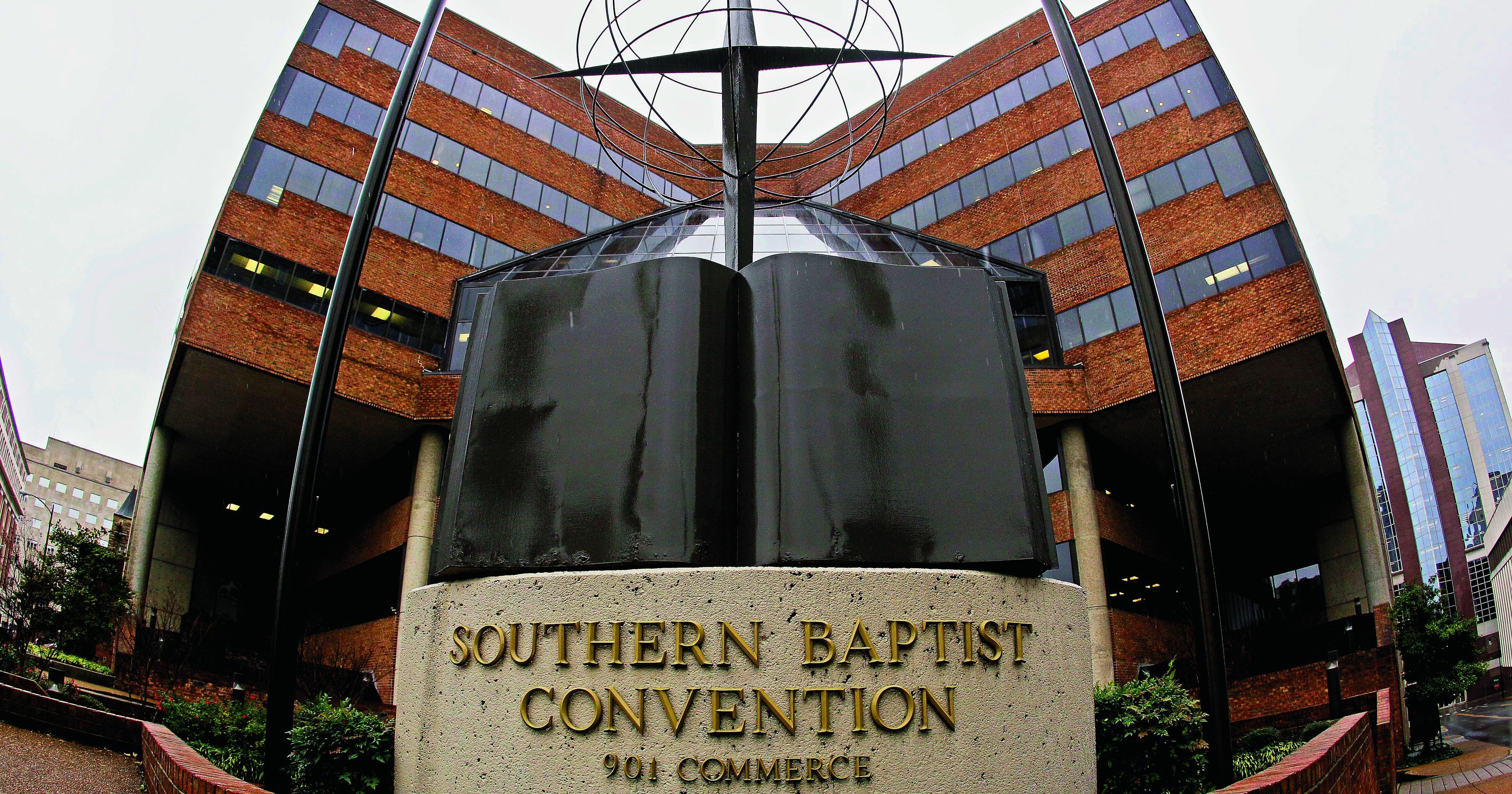
-murbrd02-21-2012dnj1a00320120220imgsouthernbaptistnam31ci11a.jpg

Last week (June 12-13, 2018), we all watched with bated breath as denominational leaders and messengers from local churches across the nation met in Dallas, TX for the annual meeting of the Southern Baptist Convention. To be quite honest, the weeks and months leading up to this year’s annual meeting were trying to say the least. We watched in horror and sadness as several of our top leaders resigned or were removed from their positions due to moral failings. We endured divisiveness and contention in social media outlets as various groups argued over their particular theological and ministerial soap boxes. And we questioned how, or maybe even if, it would possible for our beloved denomination to move forward in its primary purpose, i.e. the proclamation of the Gospel.

Now, looking back, we must say that there is great cause for hope for the future of the Southern Baptist Convention. Many good things were both said and done by our delegates in Dallas, and it seems, in hindsight, that Godly wisdom prevailed. Oh sure, there were some vocal minorities who continued to clamor for their particular pet agenda, but for the most part the Gospel was prioritized, Christian love and unity was maximized, and our churches were energized. However, this raises another question, namely, what is the benefit, the value, of denominational entities? Are they still useful and beneficial for the cause of Christ, or are they more like distractions that divide the body of Christ?

It is no secret that most of the mainline denominations in our country are on the decline, and, over the past 20 years or so, we have seen the exponential proliferation of “non-denominational” churches across the Christian landscape. Some groups even refer to themselves as “pre-denominational” as if they have thrown off the baggage of denominationalism and gone back to the nobler and more biblical way of being and doing church. Still others point to the numerous theological, ministerial, and organizational differences that separate and divide Christians from one another. “Can’t we all just get along?” seems to be the sentiment of the day. After all, didn’t Jesus and the New Testament authors teach us that our unity and love for one another is a primary means by which we display and proclaim the truth of the Gospel?

Living and ministering in the Bible Belt, I am uniquely sensitive to these critiques. Growing up, denominational divisions were like hard lines drawn in the sand which could never be crossed. There seemed to be constant argument over various denominational distinctives. So, it would be very easy for me to succumb to the temptation of believing that denominations are ultimately ploys of the enemy meant to divide us. However, I do believe that denominations are still good and useful in the body of Christ, so in what follows, I want to provide just a few reasons why I believe that denominations are still beneficial and valuable.

First, denominations allow us to embrace our cultural, theological, and ministerial distinctives. There is great diversity within the body of Christ when it comes to how we express and practice our faith in Christ. This diversity is a good thing, because it helps us to realize that the Gospel transcends the particularities of time and place. The simple fact of the matter is that no one person, group, or tradition can claim to have an exhaustive and complete knowledge of God’s word, God’s will, or God’s ways. Differences in belief and practice among Christian denominations are vivid indications that people and churches are grappling with the inspired Word and how God has revealed Himself to us through that Word by His Spirit. So, distinctives should be embraced, cherished, and held dear by those who have done the hard work of studying to show themselves approved.

Secondly, and this follows on the first,  denominations force us to listen to, learn from, and love those with whom we differ on the non-essential facets of belief and practice. An oft quoted but wrongly attributed quotation expresses this thought succinctly, “In essentials, unity; in non-essentials, liberty; in all things, charity.”  There are certainly beliefs and practices that are essential to the Christian faith. These essentials define Christian orthodoxy, and any person, group, or church calling themselves Christian must adhere to these essentials.  These are most clearly defined in the classic creeds of the church. However, beyond these first order essentials, there is room for discussion, or even passionate debate, all the while grounded in humility and Christian love for one another. There is a great many things Christian denominations can learn from each other, or as Proverbs 27.17 says, “Iron sharpens iron, and one person sharpens another.” Or we might say, “one denomination sharpens another.”

Finally, denominations allow people and churches of like minded belief and practice to pool their resources for the church’s primary mission, namely, the advancement of the kingdom. This is one hallmark of the Southern Baptist Convention that stands out in particular distinction among the many denominational bodies that speckle the Christian landscape. Southern Baptist churches across the country designate a portion of their undesignated receipts to the Cooperative Program, and through this Cooperative Program, the Southern Baptist Convention funds its six seminaries, the International and North American Mission Boards, the Ethics and Religious Liberty Commission, Lifeway, and Guidestone. Through this Cooperative Program, smaller churches with limited financial resources are able to join with churches across the nation in a participation that advances the global cause of Christ.

Ultimately, as good and beneficial as denominational bodies are, we must remember that

There is one body and one Spirit, just as you too were called to the one hope of your calling, one Lord, one faith, one baptism, one God and Father of all, who is over all and through all and in all. (Ephesians 4:4-6)

We are all part of the body of Christ, and as a part of that body, we all have our part to play in the advancement of the Kingdom of Our Lord and Savior Jesus Christ. So, let us embrace our unique theological and ecclesiological distinctives, even as we join together for to proclaim the good news of Jesus Christ.


Slow To Write

"let every person be quick to hear, slow to speak, slow to anger."

lovegavehope

Just another WordPress.com site

Jared Cornutt

Pastor | Speaker | Writer

Denny Burk

A commentary on theology, politics, and culture

G3 Ministries

Events + Resources for the Local Church

Biblical Reasoning

Biblical and Systematic Theology According to the Scriptures

RetroChristianity

Reclaiming the Forgotten Faith

SBC Voices

Southern Baptist News & Opinion

Lucid Theology

Thoughts on words, books, theology, and life.

Baptist21

A pastor-led voice for Baptists in the 21st century

Center For Baptist Renewal

The Personal and Professional Blog of Phillip Powers

The Pastor's Well - Pastor Well

The Personal and Professional Blog of Phillip Powers

Articles - AlbertMohler.com

The Personal and Professional Blog of Phillip Powers

The Gospel Coalition

The Personal and Professional Blog of Phillip Powers