Category Archives: Spiritual Formation

On the First Sunday of Advent

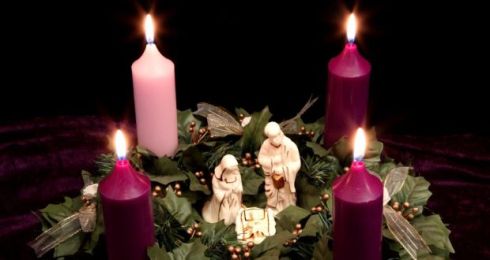
Adventskranz 1. Advent

As previously noted, this last Sunday, December 1, 2019, marked the beginning of the Christian season of Advent, and this first Sunday of the Advent season emphasizes hope, namely our expectation that Jesus the Christ will one day return to this earth in glory and power to establish His kingdom forever. Understandably, the corresponding lectionary readings (taken from the Revised Common Lectionary) help us to envision and to prepare ourselves for that day, and they reinforce our hope in the midst of the pain and difficulties that are so common in our world today.

Old Testament: Isaiah 2.1-5
In the Old Testament reading, we are confronted with “The vision that Isaiah son of Amoz saw concerning Judah and Jerusalem” (verse 1), and in this vision, the prophet looks forward to the last days to see the house of the Lord established and all the nations streaming to it. In verse 3, they say, “Come, let us go up to the mountain of the Lord, to the house of the God of Jacob. He will teach us about his ways so that we may walk in his paths.”  This reminds us that God’s plan was never solely for the people of Israel; rather, His plan was for the salvation of the nations, that all peoples might come to know Him and to enjoy His benevolence. Because on that day, “instruction will go out of Zion and the word of the Lord from Jerusalem.” 

And on that day, He will establish peace, as Isaiah describes in verse 4, “They will beat their swords into plows and their spears into pruning knives.” He goes on, “Nation will not take up the sword against nation, and they will never again train for war.” What a glorious hope that we have, that our Lord Jesus will come back to establish peace on earth once and for all. Oh, how we desperately long for that peace, and so, Isaiah encourages us, “House of Jacob, come and let us walk in the Lord’s light.” In other words, we are called to people of peace because of our hope. We know that one day our Lord Jesus will return.  This is our blessed hope, and so we must walk in the His light.

Psalm: Psalm 122
The Psalm reading follows up on Isaiah’s vision, then, with a prayer for the well being of Jerusalem. It is one of the “Songs of Ascent” which would be sang by Jewish pilgrims as they made their way up to the holy city to worship at the temple. As it says, “I rejoiced with those who said to me, ‘Let us go to the house of the Lord.'” (verse 1) And David tells us why we should rejoice in verse 3-4, where he writes, “Jerusalem, built as a city should be, solidly united, where the tribes, the Lord’s tribes, go up to give thanks to the name of the Lord.” Of course David was thinking of that earthly city, that temple which was made by hands, but we know, in light of our Lord’s first coming, that we are waiting for that heavenly Jerusalem, the city of God, where we will live in the presence of God for eternity. This is our hope.

Gospel: Matthew 24.36-44
The Gospel reading for this first Sunday of Advent, as it does every year, comes from the Olivet Discourse, in this case Matthew’s version. And this is a profound reminder that the season of Advent is radically eschatological in its scope. Yes, it prepares us to celebrate the birth of the Christ-child at Christmas, but it also reminds that our hope is yet future. And as Jesus says, “Now concerning that day and hour no one knows – neither the angels of heaven nor the Son – except the Father alone” (verse 36). And He concludes, “This is why you are also to be ready, because the Son of Man is coming at an hour you do not expect” (verse 44). The point here is clear, that we must be ready, that we must prepare ourselves for His arrival, and in the context of the Olivet Discourse, this means that we must be faithful to the responsibilities that He has left us. As it says in verse 46, “Blessed is that servant who the master finds doing his job when he comes.”

New Testament: Romans 13.11-14
And finally, the New Testament reading gives us a glimpse of what this readied faithfulness looks like. It is sufficient here, I believe, to simply quote the passage at length: Besides this, since you know the time, it is already the hour for you to wake up from sleep, because now our salvation is nearer than when we first believed. The night is nearly over, and the day is near; so let us discard the deeds of darkness and put on the armor of light. Let us walk with decency, as in the daytime: not in carousing and drunkenness; not in sexual impurity and promiscuity; not in quarreling and jealousy. But put on the Lord Jesus Christ, and don’t make plans to gratify the desires of the flesh.” That last line says it all, that we should put on Christ-likeness, because we know that our hope is certain and that our faithfulness will be rewarded on that day when Jesus comes again.

And so, let us renew our hope this Advent season. We live in a world that is completely inundated with conflict, confusion, and chaos; we are constantly bombarded with painful and tearful reminders that this world is not completely as it should be. But one day, it will all be put to rights, and until that time, we are called to endure in hope and to persevere in faithfulness, no matter how grim the outlook may be.

For further study:
On the Use and Benefit of the Lectionary
On the Season of Advent


On the Season of Advent

Advent

Well, it is that time of year again. ‘Tis the season, and all that jazz. Now that Thanksgiving has come and gone, the sights and sounds and smells of Christmas have begun to fill the air. However, with the month of December comes another season that sometimes gets lost in the hustle and bustle of the holidays. I am talking about the Christian season of Advent. Advent, that time of year, according to the Christian calendar, when followers of Jesus prepare themselves to celebrate the incarnation of the Savior at Christmas. Of course, the season of Advent, which consists of the four Sundays leading up to Christmas, stands at the beginning of the church year, and as such, it brings with it a sense of renewal and hope.

The name Advent comes from a Latin word that simply means “coming”, which itself is a translation of the Greek word parousia, meaning “coming”. And in the New Testament, this word almost always refers to the Second Coming of our Lord Jesus when He will return to the earth in glory and power. In other words, the season of Advent is a time when Christians reflect on the Second Coming of our Lord Jesus Christ, even as we prepare to celebrate His first coming. We look back, so that we may look forward. We look back into the hope and longing of Israel for the coming of Messiah, even as we look forward with hope and longing for the return of Messiah. And we let their expectations inform our expectation.

This sentiment is captured best in the well known hymn, O Come, O Come, Emmanuel, which begins, “O come, o come, Emmanuel, and ransom captive Israel that mourns in lonely Exile here until the Son of God appears.” The chorus follows, “Rejoice! Rejoice! Emmanuel shall come to you, O Israel.” Or again, in the hymn Come, thou long expected Jesus,” where we sing, “Come, thou long expected Jesus, born to set thy people free; from our fears and sins release us, let us find our rest in thee. Israel’s strength and consolation, hope of all the earth thou art; dear desire of every nation, joy of every longing heart.” And so, it is understandable that the corresponding lectionary readings for this season emphasize the prophetic expectation that is fulfilled in the coming of Jesus as Messiah.

For the follower of Jesus, then, I believe the season of Advent teaches us three things in preparation for the celebration of Christmas. First, it teaches us to wait. When we look back into the hopes of Israel for the coming of Messiah, we are reminded that they had to wait for quite some time. The last messianic prophecy is given in the Book of Malachi, and it was some 400 years or so after those words were spoken that the Christ-child was born. Even as Israel had to wait, so also we have been waiting for some 2000 years for the return of our King. And as long as He should tarry, we will continue to wait. Sadly, the notion of waiting well has been lost in our fast-paced, instant society, but Advent teaches us to wait patiently.

Secondly, Advent teaches us to hope. It is in the season of Advent that we are reminded that our hope has only partially been fulfilled. And even as we anticipate the celebration of Christmas, we are reminded that the incarnation is only half of the Gospel story. Our Lord Jesus came to this earth the first time as a baby in a manger, and He grew into a man who died on a cross for our sin and then rose again. And after His resurrection, He ascended unto the Father with a promise, that in the same way that He departed, so also would He return one day. He will come a second time with glory and power, and He will finally and permanently establish the kingdom of God on the earth in peace and righteousness. And we should long deeply for that day!

And lastly, Advent teaches us to be faithful. In other words, even as we wait, we are not waiting passively. We are not merely sitting back on our hands looking to the sky for His return. No, we have been given a commission, a Great Commission, to go into all the world making disciples of our Lord Jesus the Christ. We are called to be faithful, to serve, and love, and live in Christ-likeness, until that time when we will meet Him in the air. As the Apostle Paul puts it in the Letter to Titus, chapter 2, verses 11-13,

For the grace of God has appeared, bringing salvation for all people, instructing us to deny godlessness and worldly lusts and to live in a sensible, righteous, and godly way in the present age, while we wait for the blessed hope, the appearing of the glory of our great God and Savior, Jesus Christ.”

This Advent season, I pray that you all will be filled with this blessed hope.

For Further Study, see:
On the Use and Benefit of the Christian Calendar

See also:
On the Epiphany of Our Lord Jesus Christ
On the Season of Lent
On the Season of Easter


On Psalm 119.17-24 (Gimel)

340px-Gimel_Hebrew.svg17 Deal generously with your servant
so that I might live;
then I will keep your word.
18 Open my eyes so that I may contemplate
wondrous things from your instruction.
19 I am a resident alien on earth;
do not hide your commands from me.
20 I am continually overcome
with longing for your judgments.
21 You rebuke the arrogant,
the ones under a curse,
who wander from your commands.
22 Take insult and contempt away from me,
for I have kept your decrees.
23 Though princes sit together speaking against me,
your servant will think about your statutes;
24 your decrees are my delight
and my counselors.

In the third stanza, ג (gimel), our psalmist begins with what seems to be a condition to his obedience. Verse 17 reads, “Deal generously with your servant so that I might live; then I will keep your word.” However, we must not read this is a quid pro quo request. Our psalmist is not basing his obedience on the condition of God’s grace. He is not saying, “if you do this for me, then I’ll do this for you.” The footnotes in the NET Bible state that the cohortative verbal forms in this line indicate purpose or result. In other words, our psalmist is requesting the empowerment of God’s grace so that he will be able to keep God’s Word. This understanding is confirmed in verse 18, where we read, “Open my eyes so that I may contemplate wondrous things from your instruction.”

This is a much needed corrective in the contemporary understanding of the role of obedience in the Christian life, that the empowerment of God’s grace precedes all our effort to obey. Grace results in obedience, and not the other way around, because that would be legalism. In other words, what our psalmist is requesting is exactly what we have been given in the New Covenant. In Ezekiel’s description of the New Covenant (36.24-30), we read, “I will put my place my Spirit within you and cause you to follow my statues and carefully observe my ordinances” (verse 27).  And the Apostle Peter confirms, “His divine power has given us everything required for life and godliness through the knowledge of Him who called us by His own glory and goodness” (2 Peter 1.3).

And why is this gracious empowerment necessary? Well, our psalmist gives us the answer in verse 19, “I am a resident alien on earth.” The word is variously rendered as “foreigner”, “sojourner”, “stranger.” In other words, our psalmist understands that this world is not his native home, that his values, convictions, and principles are of another reality altogether. As he says, “I am continually overcome with longing for your judgments.” However, he also understands that while we live “on earth”, it is so easy to become distracted, confused, and misdirected in our lives, which is why we need the constant favor of God’s empowering grace to regularly reorient our perspectives. As our psalmist understands, “you rebuke the arrogant, the ones under a curse, who wander from your commands” (verse 21).

Of course, our psalmist knows that walking to the beat of God’s drum will necessarily result in misunderstandings, in ridicule, scorn, and contempt. One person’s obedience must necessarily expose someone else’s disobedience, and when that happens, we can automatically expect to face opposition. But our psalmist knows the source of his strength, “Your decrees are my delight and my counselors” (verse 24), and so he prays, “Take insult and contempt away from me, for I have kept your decrees” (verse 22). The psalmist understands that the one who has so graciously empowered his obedience will also graciously protect and sustain him through any circumstance.

This should be the perspective of every follower of Jesus. We are strangers living in a foreign land; we do believe, speak, feel, and behave according to another reality. We are  “continually overcome with longing for [His] judgments.” And as long as we live in this already/not yet season, we can trust that our God will empower us for obedience by His grace, even while He sustains us to perfection in glory.

For further study:
Introduction/Overview
Psalm 119.1-8
Psalm 119.9-16


On Psalm 119.9-16 (Beth)

2560px-Hebrew_letter_Beth.svg (2)9 How can a young man keep his way pure?
By keeping your word.
10 I have sought you with all my heart;
don’t let me wander from your commands.
11 I have treasured your word in my heart
so that I may not sin against you.
12 Lord, may you be blessed;
teach me your statutes.
13 With my lips I proclaim
all the judgments from your mouth.
14 I rejoice in the way revealed by your decrees
as much as in all riches.
15 I will meditate on your precepts
and think about your ways.
16 I will delight in your statutes;
I will not forget your word. (CSB)

The second stanza of Psalm 119, ב (beth), begins with a verse that has probably been drilled into the mind of every young man who has ever struggled with his thought life. But clearly these verses have application beyond that one application. In the wisdom literature, the word “young man” (verse 9) is metaphor for anyone who is naive, inexperienced, ignorant, or unlearned. And so, here in this stanza, the psalmist is reflecting on how the Word of God trains us in the way of purity. Of course, the basic assumption here is that a “young man” would want to keep his way “pure”, that this is understood as something that is both desirous and beneficial.

Now, purity here is simply another way of saying holy, and it is God’s clear expectation that His people will be holy, even as He is holy. (c.f. Leviticus 11.44-45, Matthew 5.48, 1 Peter 1.16). As it pertains to God, holiness refers to His divine otherness, that He is set apart, unique, and wholly different from His creation. However, it is much more than that; it also implies His moral rectitude, His absolute sinlessness, the unassailable perfections of His character. And we are told to be holy, even as He is holy. So, as it pertains to us, as believers in Jesus, it refers to the distinction of our behavior, values, and attitudes over and against the world. As James writes, “Pure and undefiled religion before God the Father is this: … to keep oneself unstained from the world.” (James 1.27)

And, how can we keep ourselves unstained from the world? Answer, “By keeping your Word.” But, the “keeping” that our psalmist has in mind here is much more than a rote dutiful obedience. No, it is to be sought with all the heart (verse 10), treasured in the heart (verse 11), and proclaimed with the lips (verse 13). It is something to be rejoiced in (verse 14), meditated on (verse 15), and delighted in (verse 16). And this is both a timely and a timeless affirmation, that the standards for living a holy life which are commanded in God’s Word are good and glorious and to be joyously embraced rather than begrudgingly accepted.

It is no secret that the current cultural climate is becoming more and more hostile to these standards, that the commands of God are increasingly seen as outdated, bigoted, prejudicial, and simply unfair. But, our psalmist understands that the ways of God as He has prescribed them in His Word are good, and they are meant for our satisfaction and enjoyment. And the way that we learn to enjoy God’s ways is not simply by a begrudging reluctant external obedience. No, we must relish in them internally by pouring over them in meditation, treasuring them in our hearts, and rejoicing gladly in them. And so, may we pray with the Psalmist,  Lord, may you be blessed; teach me your statutes.”

For further study:
Introduction/Overview
Psalm 119.1-8


On Psalm 119.1-8 (Aleph)

Aleph
1 How happy are those whose way is blameless,
who walk according to the Lord’s instruction!
2 Happy are those who keep his decrees
and seek him with all their heart.
3 They do nothing wrong;
they walk in his ways.
4 You have commanded that your precepts
be diligently kept.
5 If only my ways were committed
to keeping your statutes!
6 Then I would not be ashamed
when I think about all your commands.
7 I will praise you with an upright heart
when I learn your righteous judgments.
8 I will keep your statutes;
never abandon me. (CSB)

ℵ (aleph) is the first letter of the Hebrew alphabet, and therefore, it is the first stanza of Psalm 119. And when we read the first two verses, we are immediately confronted by the simple truth that obedience to the Word of God is the only way to experience God’s blessing. The CSB (see above) renders the verb as “happy”, whereas the majority of modern translations (NET, ESV, NASB, NIV) render it as “blessed”. Interestingly, the NLT renders this word as “joyful”, and this perhaps most accurately reflects the psalmists intent. “Joyful are people of integrity, who follow the instructions of the Lord. Joyful are those who obey his laws and search for him with all their hearts.” Nevertheless, no matter which English rendering we prefer, it is clear that something more than pleasing circumstances is being described here.

In the Bible, blessing or joy is something that is experienced more deeply in the human soul than mere surface level happiness. It is that inner sense of complete satisfaction and total contentment, of unwavering peace and ultimate fulfillment. It is nothing less then the ultimate thriving of the human soul as God intended it. And lets be clear, the source of this blessed joy is completely divine. It is not something that we can manufacture or achieve on our own. Our psalmist is clear that the only way into this experience of divine blessing is by obedience to the Word of God. In fact, he goes on to say in these verses that obedience is the only way that we can be set free from the bondage of guilt and shame and bring praise into his abiding presence.

Sadly, obedience is under emphasized in most Protestant versions of spirituality. Because of our Reformation heritage, we are quick to react against anything that smacks of works based salvation. We champion the cause of sola gratia, sola fide, solus Christus, that salvation is by grace alone through faith alone in Christ alone. As Paul said in Ephesians, chapter 2, verse 9, “not from works, so that no one can boast.” However, in our haste to affirm the unconditional nature of grace, we have neglected and omitted the role that obedience plays in the Christian life. As Paul went on to say in that very next verse, For we are his workmanship, created in Christ Jesus for good works, which God prepared ahead of time for us to do.” (Eph. 2.10) The simple truth that the psalmist is affirming in this first stanza of Psalm 119 is that obedience to God’s Word is the only available way into the fullness of divine blessing.

Of course, the reality is that none of us are able to perfectly keep the commands of God. As the Apostle James reminds us in chapter 2, verse 10 of his letter, “For whoever keeps the entire law, and yet stumbles at one point, is guilty of breaking it all.” The Gospel teaches us that we are all sinners, that we are all utterly incapable of obeying God’s Word. And left to ourselves, we can never experience the fullness of God’s blessing. This is why our Lord and Savior Jesus Christ became incarnate. He lived a life of perfect obedience to God’s Word in every way. And because we are united to Him by faith, His perfect obedience has become our obedience, His righteousness has become our righteousness. This is why Paul writes in Ephesians, chapter 1, verse 3, “Blessed is the God and Father of our Lord Jesus Christ, who has blessed us with every spiritual blessing in the heavens in Christ.”

And it is precisely because His perfect obedience has been graciously reckoned unto us as righteousness that we should value and cultivate the habits of obedience to God’s Word. We should love obedience the way that the psalmist does here, because when we walk in His ways, then we are able to experience the fullness of blessings that are already ours in Christ by the Spirit.

For further study:
Introduction/Overview


On Psalm 119: An Introduction and Overview

megillat-esther-persia-long-view

The Psalms are perhaps the best kept secret of the Old Testament; they are a deep well of food for the weary Christian soul. They are a rich resource for our spirituality, but sadly, more often than not, we neglect this spring of spiritual life in favor of the well worn tracts of the New Testament. However, this is merely a symptom of the larger problem, that being our fundamental neglect of the Old Testament in general, but more on that another time. For the purpose of this post, it is enough to say that most Christians are suffering from a feeble weakened spiritual life due to a basic disregard for the Book of Psalms.

Of course, there isn’t enough time or space here to completely explore the spiritual richness of each and every chapter in this central Old Testament Book, but there is one chapter in particular that demands our attention – Psalm 119. This chapter is a vast ocean of refreshing spiritual water for the dry and weary soul, and yet, so often, we fearfully ignore it simply due to its size. And at first glance it can be overwhelming; there are 176 total verses in this single chapter. However, in spite of its imposing length, there is an artistry about this chapter that is beautiful and majestic. It lifts us out of the despair of our circumstances into the glory and hope that is the Word of God.

From a composition perspective, this chapter is an absolute masterpiece of literary artistry. It is structured in a Hebrew acrostic pattern, which means that each successive stanza begins with the next letter of the Hebrew alphabet. There are twenty-two stanzas, one each for every letter of the Hebrew alphabet, and each stanza contains eight lines, each beginning with the designated Hebrew letter for that stanza. (22 x 8 = 176) However, what is truly masterful is that almost every line contains some synonym for the Word of God. Law, testimonies, ways, precepts, statutes, commandments, judgments/ordinances, Word, promises, etc. The psalmist enumerates the perfections of God’s Word in every line literally from A to Z.

And this is perhaps the most important aspect of this glorious chapter, namely that it is written as poetry, and as such, it is intended not only to speak to our intellect but to stir our affections, to lift our souls, to restore our hope and joy. It is impossible to read this psalm and not be completely awestruck by the authors absolute joy in God’s Word. In other words, for the psalmist, the Word of God is more than a mere resource for right thinking and right doing. No, it is so much more than that. It is the foundation upon which he stands; it is the source of all his hope and joy and comfort and assurance. It is the sustenance and provision for all of his being, all of his spirituality and devotion. The Word of the one true and living God is all that he needs.

However, in spite of all of this magnificent and majestic artistry, this Psalm is still largely neglected and/or completely ignored in the devotions of most Christians and their churches. Whether it is because we find it imposing and off putting due to its length, or simply because we believe it to be redundant and repetitive, we refuse to refresh our souls at this inexhaustible spring of spiritual life. And this is absolutely to our spiritual detriment. We severely need the testimony of this Psalm in both our personal and corporate devotions, especially at a time when the sufficiency of God’s Word is being questioned more and more. Let us turn back once again to the well worn paths of biblical spirituality, and linger long over Psalm 119.

For further study:
Spurgeon, Charles H. The Golden Alphabet: An Exposition of Psalm 119. Revised and Updated. Abbotsford, WI: Aneko Press, 2018.


On Sacred Marriage: A Book Review

art-sacredmarriagecover-v1

Thomas, Gary. Sacred Marriage: What if God Designed Marriage to Make Us Holy More Than to Make Us Happy. Grand Rapids, MI: Zondervan, 2015.

If you were to visit your local bookstore – who am I kidding? No one visit bookstores anymore, right?! So let me rephrase – If you were to google for books on marriage, you would probably find yourself overwhelmed by the sheer plethora of titles from both Christian and non-Christian perspectives offering this many steps or that new and unique approach to having a better a marriage. To be honest, it can almost lead to a feeling of despair and hopelessness for your marriage, especially if you find yourself in a particularly difficult season. That is why I found Sacred Marriage by Gary Thomas to be a refreshing and unique voice in this boisterous cacophony.

And the subtitle of the book really says it all: What if God designed marriage to makes us holy more than to make us happy?  Because the general sentiment of popular culture is that marriage is primarily for emotional fulfillment. In other words, the main and most often the only reason a couple might get married is so that they can find and experience romantic love and personal happiness in their partner. Of course, on a horizontal level, that is alright, as far as it goes, but might it be possible that God has a bigger plan for marriage than simply our personal fulfillment, our happiness? Might it be that God designed marriage to serve His purposes rather than our own? And might it be that if we set our minds and hearts to pursue God’s purpose for our marriages, that we might find that our relationship with our spouse improves as well?

Obviously, I think so, and this is where Sacred Marriage comes into the discussion. In this book, Thomas explores the various aspects of the marriage relationship, not by offering any practical “how to’s”, but by exploring how God might be using that particular area of our marriage to teach us about who He is and to draw us into a deeper relationship with Himself. We may, then, regard marriage as a spiritual discipline, a Christian practice that by engaging in which we grow more and more in our own Christ-likeness, a posture of submission and humility in which we allow the Spirit who indwells to do His perfect work.Or we might say that God has so designed marriage that it, more than any other human relationship, forces us to deal directly with our own sinfulness.

The chapter that was most impactful for me was chapter 9, “Sacred Struggle: Embracing Difficulty in Order to Build Character.” The following quote summarizes the overall gist of the chapter:

If your marriage is tough, get down on your knees and thank God that he has given you an opportunity for unparalleled spiritual growth. You have the prime potential to excel in Christian character and obedience. (125)

Now, I want to be careful here, especially in light of what has recently transpired in the Southern Baptist Convention. In speaking of a tough or difficult marriage, we are not including here any kind of abuse, whether that be physical, sexual, emotional or verbal. All forms of spousal abuse are an evil and heinous sin in the eyes of God, and where there is violation of civil or criminal law, there should most certainly be consequences. And there is a great and pressing need for Christian churches to train people and implement processes to assist victims in these cases.

However, outside of those kinds of situations, difficult trying seasons in marriage are not cause for dissolution, which is precisely why we need a grander understanding of the purpose of marriage than mere emotional fulfillment. If marriage is only for the satisfaction of my need to be loved, accepted, and cherished, then when I no longer feel those needs are being met, I will find it justifiable to leave and seek out a new marriage that will meet those needs. But if marriage is for our sanctification, then difficulties in the marriage relationship can be embraced as opportunities to grow in Christ-likeness. In my opinion, this is a point of view that is sorely needed in today’s easy-divorce culture.

There were many other insightful and challenging aspects of this book, which is why I believe it’s voice is even more needed and applicable today than when it was first published nearly 20 years ago. For example chapter 10, “Falling Forward: Marriage Teaches Us to Forgive” was particularly helpful for me and my wife. As a pastor, I would certainly recommend this book to any all persons in my congregation regardless of what seasons they are in as it relates to marriage. For unmarried singles to dating/engaged couples to newly weds to those who find themselves in marriages of various lengths, whether you marriage is good or not so good, this book can definitely help shape your understanding of what God is doing in and through your marriage.

See Also:
Thomas, Gary. Devotions for a Sacred Marriage: A Year of Weekly Devotionals for Couples. Grand Rapids: MI: Zondervan, 2017.


On the Season of Easter

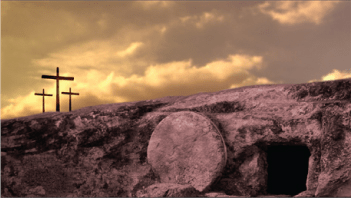
empty tomb

This past Sunday, the church universal celebrated Resurrection Sunday, which marks the annual commemoration of Jesus’ resurrection from the dead. And, unfortunately, for most churches, especially those stemming from low church or free church traditions, this celebration will be quickly forgotten as they slide back into their usual routine of doing church every week. Sadly, most of the people who attended church yesterday, because it was Easter Sunday, will simply resume their normal routines, and they will continue to live as if the resurrection is simply an interesting story that happened long ago but has no real impact on their daily lives.

This is where I believe the historic Church Calendar can aid us in our spiritual formation. According to that traditional reckoning of the church’s annual worship rhythms, the celebration of the resurrection is not simply something that is relegated to one Sunday per year. No, the season of the Resurrection lasts for almost two months and culminates in the church’s celebration of the coming of the Holy Spirit on the Day of Pentecost. Just as Jesus spent 40 days after His resurrection with His disciples teaching them about the kingdom before He ascended, observing the Resurrection as a season in the church’s worship can help us to more fully understand, appreciate, embrace, and be formed by that most essential of historical foundations that Christ is risen!

So, during my sermon this past Sunday, I challenged those who were in attendance simply because it was Easter, that if they really wanted to be Easter only Christians, then I would expect to see them in Church for the next seven consecutive Sundays. I doubt that many of them will heed that challenge, nevertheless, the Season of the Resurrection, sometimes called Eastertide, is an invitation for Christians, both corporately and individually, to intentionally position ourselves in a place where the Spirit may take us deeper into the wonder and mystery of Christ crucified and resurrected.

So, in the limited space that follows, let me offer some practical suggestions on how Christians, both as individuals and as congregations, might navigate the next seven weeks leading up to Pentecost so as to grow in and be formed by the wonderful mystery of the Gospel.

First, read through, or reread through, one of the four Gospels in the light of Jesus resurrection. The lectionary for the Season of the Resurrection is going to be taking us through the Gospel of John, but you may choose another one of the four. Whichever you choose, try to read it as one of the first followers of Jesus. The Gospels tells us that it was only after Jesus resurrection that they truly began to understand more fully all that He had said and done during His ministry. And one of Jesus’ last instructions to His followers was that they were to go into all nations teaching them to observe all that He had commanded them. (Matthew 28.20)

Second, whether you are a preacher or simply a listener, ask yourself how the resurrection makes what you are saying and/or hearing in the sermon possible. It has been said many times perhaps, but it bears repeating: if what you are preaching doesn’t require Jesus, then you’ve missed the point. Paul said that the resurrection is the linchpin, if you will, of the Gospel (1 Corinthians 15), so how does the truth of Christ’s resurrection impact or influence the message of whatever particular text you are preaching. Here again, I would suggest considering the lectionary as a basis for determining a preaching schedule (see my post here), but wherever your preaching schedule is going, it is all meaningless without the resurrection of our Lord.

Third, be actively and intentionally involved in the life of the local church. During the Season of the Resurrection, the Lectionary replaces the Old Testament reading with a passage from the Acts of the Apostles. This is because the 50 day Season of the Resurrection culminates in the celebration of the coming of the Spirit on Pentecost, which might be called the birthday of the church. Jesus’ resurrection makes it possible for His followers to live in new life free from the power of sin, and the indwelling of the Holy Spirit makes it possible for those followers to live in a new kind of Christian community, one characterized by love and service. So, during this Season of the Resurrection, seek out intentional ways to love and serve people in the local church.

The simple fact of the matter is that the Christian faith is meaningless without the resurrection of Jesus. Without it, Jesus is just another nameless victim executed by the Roman Empire; His death is pointless. The Apostle Paul said as much in his first letter to the church at Corinth, “And if Christ has not been raised, your faith is worthless; you are still in your sins.” (1 Corinthians 15.17). So, if we truly believe that the death and resurrection of Jesus is the necessary and essential heart of the Christian Gospel, then it deserves to be celebrated more than just one Sunday per year. This Resurrection Season, let us remember that we worship a Risen Lord!


On Partaking of the Lord’s Supper

UnworthyCommunion.jpg

So then, whoever eats the bread or drinks the cup of the Lord in an unworthy manner will be guilty of sin against the body and blood of the Lord.  Let a person examine himself; in this way let him eat the bread and drink from the cup.  For whoever eats and drinks without recognizing the body, eats and drinks judgment on himself.  This is why many are sick and ill among you, and many have fallen asleep. (1 Corinthians 11:27-30, CSB)

Certainly, no one wants to partake of the Lord’s Supper in an unworthy way, especially if the consequences are sickness and/or death! But because of our western cultural predispositions, especially toward individualism and toward feelings of guilt rather than shame, we usually read Paul’s warnings here as if they concern our individual relationship with God. In other words, when Paul speaks of partaking of the elements in an “unworthy way,” we typically think of that which makes us feel unworthy before God, namely unconfessed sins. Moreover, when we read that “a man should examine himself”, we primarily think of some kind of moralistic introspection. Practically speaking, this usually entails a time of “prayerful self-examination and confession” prior to the distribution of the elements.

The problem with this is that rather than drawing the believer to celebrate anew the glory of God’s forgiveness in the Gospel through the observance of the Lord’s Supper, we end up heaping more feelings of guilt on the believer who truly desires to confess ALL their sins before partaking of the elements. Besides, who could ever be certain that they had confessed 100% of their sins, and thus could partake “worthily”? And what about the forgiveness that we have already received when we placed our faith in the Gospel at conversion; was it not once-for-all? So, in order to understand Paul’s warning here, I think we must reevaluate Paul’s instructions light of the social issues which they were meant to address.

The text of 1 Corinthians chapter 11 is relatively clear; obviously, there were some problems in how the Corinthians were practicing the Lord’s Supper, so much so that Paul’s comments on this issue are very sharp. He minces no words so to speak, and the reason for Paul’s outrage is simply this: The behavior of the Corinthian Christians at the Lord’s Table denies all that the Gospel stands for. In verse 20, Paul says that when they come together, they aren’t eating the Lord’s Supper. They may be sharing a meal together, but it looks nothing like the Lord’s meal. In other words, their behavior at the Lord’s Table is based in the values of the surrounding culture and not in the values of the Gospel. But in order to understand how this is so, we must consider the significance of meals in Paul’s world.

For them, the purpose of meals was much broader than simply eating food and consuming the necessary nourishment for the day’s tasks. No, in the first century, sharing a meal with someone was the primary gesture of companionship and community. Table fellowship was the principal means for establishing, enriching, and reaffirming relational bonds between groups of people, whether those groups were familial, religious, or secular in nature. Sharing meals together was the primary means for developing relationships. On the other hand, though, the table could also be the place where divisions according to honor, status, and affluence were publicly displayed and reinforced. In other words, mealtimes in the first century reinforced social divisions between the social elites and the lower classes, between the wealthy and poor, between the “haves” and the “have-nots”.

It is this latter function of meals that explains the practice of the Corinthian Christians. They are eating in a way that reinforces and perpetuates the divisions that exist among them. In chapter 11, verses 18-19, Paul says, “For to begin with, I hear that when you come together as a church there are divisions among you, and in part I believe it. There must, indeed, be factions among you, so that those who are approved may be recognized among you.” And this is why their coming together is not for the better but for the worse. Apparently, the more well-to-do and affluent members of the congregation were arriving at the meeting early, gorging themselves on the best foods and the best wine, and they were getting downright drunk. Then, when the poorer day laborers arrived later in the evening, there was nothing left for them to eat, so they went hungry.

For Paul, this is an explicit denial of the unity that they should be sharing in Christ. Listen again to the words of Paul in chapter 11, verse 22, “Don’t you have houses to eat and drink in? Or do you look down on the church of God and embarrass those who have nothing? What should I say to you? Should I praise you? I do not praise you for this!” Obviously, Paul is outraged, and as a corrective, he reminds them of the Lord’s Supper tradition. In other words, he reminds them that in the Gospel, cultural values like honor, status, and wealth are no longer relevant. All people stand or fall on their response to the Gospel no matter who they are. And the gospel not only transforms our relationship with God; it also transforms our relationship with others. We no longer see people as the world sees them; instead, we see them as Christ sees them. We relate to people according to the values of the Gospel, because the ground is level at the foot of the cross. We all stand equally in need of Jesus.

So, in order to understand Paul’s warning in chapter 11, verses 27-30, we must remember that the central issue at stake for Paul is not moral or ethical; rather, it is primarily communal or social. The question is not about one’s individual worth before God. Rather, it is the quality of our relationships with each other. In other words, it is primarily social in nature. The self-examination that Paul envisions is an attempt to evaluate one’s attitudes toward others in the light of the Gospel of Jesus Christ. So, we might ask ourselves these questions:

Am I showing Christian love to the members of this community equally?
Am I reinforcing or breaking down worldly social distinctions by my actions?
Am I jockeying, competing, or striving for social advancement at the expense of others?Am I selflessly giving of myself, my time, my money in order to benefit others?
Am I evaluating people according the values of the culture or the values of the Gospel?Am I engendering unity or disunity within this community by my actions and behaviors?

If we will examine ourselves in this way, by honestly answering these questions, then we will be rightly discerning the body, and we will partake of the Lord’s Supper worthily. The Lord’s Table is where anyone who believes in Jesus Christ can come to receive the promise of pardon and forgiveness and bask in the grace and love of God the Father poured out through God the Son by the Holy Spirit. Let us celebrate this table together as one body of united believers in Jesus.


On the Practice of the Lord’s Supper

lord__s_supper_by_bclary-d37hhzp

More often than not, the way that the Lord’s Supper is practiced in low church traditions makes it seem as if the Lord’s Supper is a perfunctory addendum to the worship of the local church. Our usual practices of observance treat it as something that we are obligated to do because the Bible says so, but also as something that we don’t really believe to be all that important or crucial in worship. High Church traditions with formal liturgies, by contrast, tend to observe the Lord’s Supper every week, and they do so at the very climax of their services. In these churches, coming to the Lord’s table to partake of the body and blood of Christ, symbolized by the bread and cup, marks the very zenith of the worship experience. Congregants are presented with the Gospel through scripture reading and preaching and then invited to the Table to receive the Gospel by the Spirit as they partake of the elements.

Now, I grew up in a local Southern Baptist church in a small town in Arkansas, the buckle of the Bible Belt, and our practice of the Lord’ Supper usually went something like this. It always happened after a Sunday night service. First, we would have our 20-30 minute singing time, and then the pastor would preach a 25-30 minute message. Remember, the services weren’t supposed to go more than an hour. So, after the invitation we would move into a time of observing the Lord’s Supper. And it was always done the same way. The pastor tended to say the same words, read the same texts, and the elements were passed out the same way. Of course, time was always given for personal reflection and confession so that none of us would “partake unworthily.” Still, I was left with the impression that the Lord’s Supper was something to be observed out of duty and not out of joy.

Paul said, “For as often as you eat this bread and drink this cup, you proclaim the Lord’s death until he comes.” (1 Corinthians 11:26) Certainly, there is great freedom in the diversity of worship expression throughout churches across the world, and Paul, nor the rest of the New Testament authors, give any kind of regulation regarding the expected frequency of table observance. But it does seem, at least, that they viewed the Table as a central and primary element in the church’s worship, precisely because it is at the table that we come face to face with the very heart of the Gospel. In addition, the earliest Christians set the precedent, because “they devoted themselves to the apostle’s teaching, to the fellowship, to the breaking of bread, and to prayer.” (Acts 2:42) Of course, the celebration of the communal meal in the early church would have been more, but it certainly wouldn’t have been less than the observance of the Lord’s Supper.

So, it would seem that there is great spiritual and communal value in giving the Lord’s Table a much more central place in our weekly worship services. Perhaps, instead of observing once per quarter on a Sunday night at the end of the service, we should observe weekly during Sunday morning worship as the primary expression of our response to the Gospel invitation. This way of ordering our worship is what has been called the fourfold pattern for worship, i.e. gathering, Word, table (response), sending. This seems to be the historic ordering of the church’s worship throughout the ages. More simply, it follows the biblical pattern for worship which is proclamation followed by response. We gather together as the body of Christ through song and prayers. The Word is proclaimed through public reading and preaching. We respond in confession and repentance at the table. And, then, we are sent back into the world as God’s ambassadors and emissaries.

The importance of the Lord’s Table really boils down to how importantly we value the Gospel, because it is at the table that the Gospel is vividly and materially displayed through partaking of the bread and cup. So, by observing the Lord’s Supper each and every week, we move the Gospel to the center of our worship experience. When we partake of the elements, we are communing with the Spirit as he communicates the good news of the Gospel anew to us each and every week. The Spirit meets us at the Table, and He conveys the grace of God as we partake of the symbols of bread and cup. Jesus explains this very fact in John 6:53-58 where he says in part, “The one who eats my flesh and drinks my blood remains in me, and I in him.” (v.56)

Now, certainly, observing the Lord’s Supper each and every week requires great creativity on the part of pastors and worship leaders. Some have argued that partaking of the Supper every week would diminish its unique peculiarity and significance, but this is not necessarily the case. The onus lies with the pastors and worship leaders to incorporate the Table into the flow of the service in ways that are creative, meaningful, and refreshing. The invitation to the Table each week should flow directly out of the Scriptures that are being read and preached on that particular Sunday. The proclamation of the Gospel through the reading and preaching of Holy Scripture should drive our worship right back to the Table where our forgiveness and pardon are confirmed by the broken body and shed blood of our Lord and Savior Jesus Christ.

I believe that there is a great need in the church today to recover the centrality of the Gospel, and I can think of no better way than coming to the Table each and every week to receive the symbols of our Lord’s broken body and shed blood. We are essentially and fundamentally a Gospel people. We never out grow or mature beyond the wonder and mystery of the Gospel. Whether we have been saved for many years or we have recently come to know Jesus as Savior and Lord, the Gospel is for us. Lord, help us to recover the priority, the mystery, and the wonder of your Gospel as it is displayed at your Table.


Slow To Write

"let every person be quick to hear, slow to speak, slow to anger."

lovegavehope

Just another WordPress.com site

Jared Cornutt

Pastor | Speaker | Writer

Denny Burk

A commentary on theology, politics, and culture

G3 Ministries

Events + Resources for the Local Church

Biblical Reasoning

Biblical and Systematic Theology According to the Scriptures

RetroChristianity

Reclaiming the Forgotten Faith

SBC Voices

Southern Baptist News & Opinion

Lucid Theology

Thoughts on words, books, theology, and life.

Baptist21

A pastor-led voice for Baptists in the 21st century

Center For Baptist Renewal

The Personal and Professional Blog of Phillip Powers

The Pastor's Well - Pastor Well

The Personal and Professional Blog of Phillip Powers

Articles - AlbertMohler.com

The Personal and Professional Blog of Phillip Powers

The Gospel Coalition

The Personal and Professional Blog of Phillip Powers