1 The pronouncement that the prophet Habakkuk saw.
2 How long, Lord, must I call for help and you do not listen or cry out to you about violence and you do not save? 3 Why do you force me to look at injustice? Why do you tolerate wrongdoing? Oppression and violence are right in front of me. Strife is ongoing, and conflict escalates. 4 This is why the law is ineffective and justice never emerges. For the wicked restrict the righteous; therefore, justice comes out perverted.
~Habakkuk 1.1-4
16 I heard, and I trembled within; my lips quivered at the sound. Rottenness entered my bones; I trembled where I stood. Now I must quietly wait for the day of distress to come against the people invading us. 17 Though the fig tree does not bud and there is no fruit on the vines, though the olive crop fails and the fields produce no food, though the flocks disappear from the pen and there are no herds in the stalls, 18 yet I will celebrate in the Lord; I will rejoice in the God of my salvation! 19 The Lord my Lord is my strength; he makes my feet like those of a deer and enables me to walk on mountain heights!
For the choir director: on stringed instruments.
~Habakkuk 3.16-19
Text: Habakkuk 1.1-4, 3.16-19 Series: Supply Preaching Church: Fitzgerald Crossing Baptist Church, Wynne, AR Date: January 15, 2023
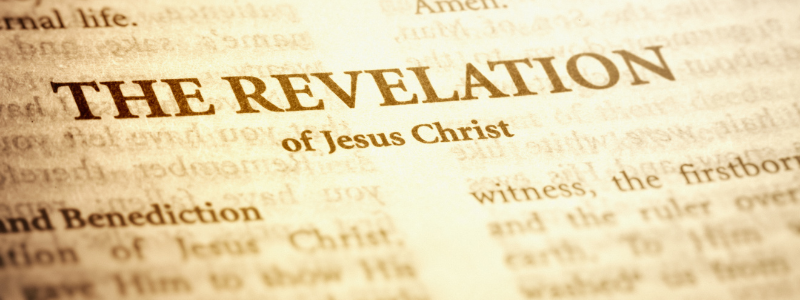
It is commonly accepted wisdom among most Christians that the Book of Revelation is the hardest book of the Bible to interpret and understand, and it certainly does stand out as one of the most unique books of the New Testament. Those who do attempt to read it are immediately confronted by literary forms, images and symbols, and pastoral concerns that are so unlike their own lived experiences that they tend to put it down faster than they picked it up. Couple this with the myriad of disagreements that exist over the meaning of all these details, and it seems easier to simply leave this book of the Bible to the domain of trained Biblical scholars. However, the book itself affirms, “Blessed is the one who reads aloud the words of this prophecy, and blessed are those who hear the words of this prophecy and keep what is written in it, because the time is near.” (Revelation 1.3) So, when we neglect and ignore this final book of the Bible, we miss out on the blessing that it very clearly promises. But how do we overcome the intimidating and off-putting obstacles that keep us from drinking deeply from its pages?
When we are met with an interpretive challenge like the Book of Revelation, we must return to our basic hermeneutical convictions, those fundamental interpretive principles that help us navigate the Scriptural waters. And one of those rules that is particularly helpful for understanding the Book of Revelation is this: A text without a context is a pretext for a proof text. In other words, when we understand who the biblical author is writing to and why he is writing to them, we are in a better position to understand what he is saying. Or to put it another way, the meaning of the text must be grounded in the inspired intention of the biblical author. He is writing to real people with real needs, and he intends for his message to truly address those needs. If we come up with an interpretation that would make zero sense for the original audience, then we must reevaluate our understanding of the text. Of course, any reconstruction of the historical audience must begin with the details in the text, but historical sources from the time period can add additional detail to our understanding of the audience and their situation.
Fortunately for us, John identifies his intended audience directly; in chapter 1, verse 11, we read, “Write on a scroll what you see and send it to the seven churches: Ephesus, Smyrna, Pergamum, Thyatira, Sardis, Philadelphia, and Laodicea.” We must affirm that these were seven real churches that were located in the Roman province of Asia Minor, or what we would call modern day Turkey. Each one of these seven churches is addressed directly in the letters of chapters 2 and 3, but the author’s concern for these churches cannot be limited to these first few chapters, even if they are primary for understanding the particular needs of these churches. The entire book was written to and for the members of these seven churches of Asia Minor. As to the date of writing, there are two views that are held by biblical scholars. The majority view holds that the book was written during the reign of the Emperor Domitian (81-96 CE); the minority view suggests that the book was written during the reign of the Emperor Nero (54-68 CE). Either of these dates is possible for the book’s composition, but a review of the historical evidence slightly favors the later date, meaning that the Book of Revelation was probably written sometime around 95 CE.
Regardless of which date is preferred, it is clear that these seven churches were facing challenges both internally and externally. These Christians were living in a world that was openly hostile to their faith in Christ, and while there was no official imperial policy of persecution at this time, they were facing intense social pressure in their local communities to compromise their convictions and conform to the Roman way of life. Culturally, they simply had no where to belong. The Jews had rejected them, and the Gentiles would not accept them. They were ostracized marginalized outsiders who did not belong to the world they lived in. And Jesus is writing to them through John to encourage them to persevere in faithfulness, to hold on to the blessed hope that is His appearing. The Revelation is a reminder that they are part of something bigger than themselves, that the victory and vindication that they long for is ahead of them, and that there will be a day when all oppression shall cease. This is the message of Revelation. It is not about beasts and bowls; rather, it is about Christ, our King, who is coming again in glory and power to do away with sin once and for all and establish His perfect Kingdom on earth.
Of course, there are those who would disagree with this assessment of the message of Revelation. Some, particularly those who hold to an early date for the book, would suggest that part or perhaps all of the book was fulfilled in the destruction of Jerusalem in 70 AD. Problems with the early date notwithstanding, it is not clear how this understanding addresses the needs of Christians living in the Roman province of Asia Minor. As noted above, they were facing persecution from the Jews living in those cities, but Jerusalem was not the primary enemy that they were facing. In fact, the Book of Revelation makes it clear that while earthly enemies may affect us, they are not our ultimate foe anyway. Therefore, the destruction Jerusalem would hold little promise for bringing their persecution to an end and accomplishing the victory that the book promises. Further, it isn’t clear how the book’s descriptions of “all the nations”, “all those who live on the face of the earth”, and “the whole earth” can refer only to the people of Israel or the citizens of Jerusalem. So, while this view attempts to maintain the book’s relevance for the original audience by positing all fulfillment in the first century, in actuality, it does the exact opposite. In fact, it completely undercuts the hope and blessing that the book promises its readers, both in the first century and today.
The Book of Revelation paints a glorious and beautiful picture of the hope that is ours in Christ Jesus. It is the promise of a world that is free from the contamination of sin, free from the heavy burden of the curse, free from all opposition to Christ and His people. As Christians, we must remember that this is our blessed hope. This world’s troubles and difficulties are not the end of our story; no, we are part of something that is bigger than ourselves, an eternal story that far surpasses our momentary lives here on earth. Moreover, the Book of Revelation teaches us that our sufferings, our difficulties, our heartaches, they matter deeply to God. He takes note of every wrong, every insult that we suffer, and one day, He will right those wrongs and vindicate His people. This is the central message of Revelation. Of course, the difference is in the details as they say, and there are still many details within the pages of Revelation that we must wrestle with. But this is the point, we must wrestle with them. We cannot ignore or neglect this last book of the Bible simply because it is too challenging, too difficult, too different. We must explore with our minds and our hearts what the Spirit is saying to His church. We must pray that He will give us ears to hear, and when we engage this book in earnest, we may be confident that we will find the strength to persevere and hold fast in hope.
For further study, see Osborne, Grant R. Revelation. Baker Exegetical Commentary on the New Testament. Grand Rapids, MI: Baker Academic, 2002.
9 In addition to the Teacher being a wise man, he constantly taught the people knowledge; he weighed, explored, and arranged many proverbs. 10 The Teacher sought to find delightful sayings and write words of truth accurately. 11 The sayings of the wise are like cattle prods, and those from masters of collections are like firmly embedded nails. The sayings are given by one Shepherd.
12 But beyond these, my son, be warned: there is no end to the making of many books, and much study wearies the body. 13 When all has been heard, the conclusion of the matter is this: fear God and keep his commands, because this is for all humanity. 14 For God will bring every act to judgment, including every hidden thing, whether good or evil.
Text: Ecclesiastes 12.9-14 Series: The Book of Ecclesiastes Church: South Caraway Baptist Church, Jonesboro, AR Date: October 2, 2022
24 As Jesus left and was going out of the temple, his disciples came up and called his attention to its buildings. 2 He replied to them, “Do you see all these things? Truly I tell you, not one stone will be left here on another that will not be thrown down.” 3 While he was sitting on the Mount of Olives, the disciples approached him privately and said, “Tell us, when will these things happen? And what is the sign of your coming and of the end of the age?”
Text: Matthew 24-25, c.f. Mark 13, Luke 21 Series: Eschatology: A Study of the End Times Church: South Caraway Baptist Church, Jonesboro, AR Date: September 7 , 2022
As most churches usually do, we begin our Sunday school class every week with a time for sharing prayer requests. And just personally, I am so glad that we do this. I have actually heard pastors criticize this practice, complaining that the requests are always the same, i.e. praying for someone’s illness or medical condition. The complaint, as it usually goes, has to do with the perceived depth of these requests, as if they are not important enough, not spiritual enough, to occupy our time and concern. What a shame! Sharing burdens with one another, no matter how trivial they may seem, is the beauty and the power of the body of Christ. But I digress; we will save that topic for another time. Over the last several weeks, I have been amazed to see and hear how many of the prayer requests that have been shared that have to do with COVID. Every week there is someone else who has been diagnosed with COVID. Every week there is someone else who has been hospitalized due to COVID. Every week there is someone else who has passed away from COVID.
Every time I hear one of these requests, along with the many others that are shared, I find myself taken by a twinge of grief. There is a sadness that is appropriate to the suffering of those that we love, and we must allow ourselves to feel it. The Scriptures encourage us to “rejoice with those who rejoice; weep with those who weep,” to “carry one another’s burdens; in this way you will fulfill the law of Christ.” (Romans 12.15, Galatians 6.2) However, we must not allow ourselves to be overtaken by this grief, whether it be that of others or even our own. When we allow our pain to become all-consuming, we fall quickly into feelings of depression, despair, and hopelessness. As Christians we must remember that we do “not grieve like the rest, who have no hope.” (1 Thessalonians 4.13) Grief, sadness, heartache; these are not the end of our story. “For our momentary light affliction is producing for us an absolutely incomparable eternal weight of glory.” (2 Corinthians 4.17)
This is the point, namely that what we are waiting for so far outshines our present difficulties as to almost make them seem trivial by comparison. They are not trivial, of course; we feel them acutely. But we know that when our Lord returns, all of our griefs, all of our groanings, will prove to have been worth it. “We wait for the blessed hope, the appearing of the glory of our great God and Savior, Jesus Christ.” (Titus 2.13) What I am trying to say is that this vibrant hope, this anxious expectation, should characterize the disciples of Jesus; it should stand at the very foundation of our faith. We should all be anticipating and desiring that day when our Lord Jesus will return to establish His Kingdom on this earth once and for all, when He will do away with sin and sickness and death, and when He will welcome us into His glorious presence to remain for all eternity. However, for many Christians, it would seem, this glorious hope is the farthest thing from their minds, and their lives sadly reflect the want of it.
For the most part, our eschatological reflection in the church is either entirely absent or hopelessly mired in frivolous speculation about secondary and tertiary details that result in even more confusion. This is not to say that questions regarding the rapture or the millennium are unimportant, but it is to say that having the right answers to these questions is not the basis of our hope. Our hope is grounded in the promise of our Lord Jesus Christ, who said, “If I go away and prepare a place for you, I will come again and take you to myself, so that where I am you may be also.” (John 14.3) This promise is the sure and firm foundation for our hope, especially when we are facing times of difficulty, sadness, and grief. And so, “Let us hold on to the confession of our hope without wavering, since he who promised is faithful.” (Hebrews 10.23.)
Throughout its history and even today, the body of Christ is beautifully and abundantly diverse, but one of the things that has united all Christians at all times and in all places is our vibrant hope that looks expectantly forward to the return of our Lord Jesus Christ. We are called to be a people who “love His appearing.” (c.f. 2 Timothy 4.8) And when the darkness of grief threatens to choke out every flicker of joy, on those days we must redouble our conviction, we must fan the flame of our expectation, we must set our gaze once again upon that day when “He will wipe away every tear from their eyes, [when] Death will be no more; grief, crying, and pain will be no more.” This is our blessed hope, and in it we find the strength to persevere, to endure every circumstance. Our waiting, our groaning, is not in vain. “He who testifies about these things says, “Yes, I am coming soon.” [And we say], Amen! Come, Lord Jesus!” (Revelation 22.20)
As previously noted, this last Sunday, December 1, 2019, marked the beginning of the Christian season of Advent, and this first Sunday of the Advent season emphasizes hope, namely our expectation that Jesus the Christ will one day return to this earth in glory and power to establish His kingdom forever. Understandably, the corresponding lectionary readings (taken from the Revised Common Lectionary) help us to envision and to prepare ourselves for that day, and they reinforce our hope in the midst of the pain and difficulties that are so common in our world today.
Old Testament: Isaiah 2.1-5
In the Old Testament reading, we are confronted with “The vision that Isaiah son of Amoz saw concerning Judah and Jerusalem” (verse 1), and in this vision, the prophet looks forward to the last days to see the house of the Lord established and all the nations streaming to it. In verse 3, they say, “Come, let us go up to the mountain of the Lord, to the house of the God of Jacob. He will teach us about his ways so that we may walk in his paths.” This reminds us that God’s plan was never solely for the people of Israel; rather, His plan was for the salvation of the nations, that all peoples might come to know Him and to enjoy His benevolence. Because on that day, “instruction will go out of Zion and the word of the Lord from Jerusalem.”
And on that day, He will establish peace, as Isaiah describes in verse 4, “They will beat their swords into plows and their spears into pruning knives.” He goes on, “Nation will not take up the sword against nation, and they will never again train for war.” What a glorious hope that we have, that our Lord Jesus will come back to establish peace on earth once and for all. Oh, how we desperately long for that peace, and so, Isaiah encourages us, “House of Jacob, come and let us walk in the Lord’s light.” In other words, we are called to people of peace because of our hope. We know that one day our Lord Jesus will return. This is our blessed hope, and so we must walk in the His light.
Psalm: Psalm 122
The Psalm reading follows up on Isaiah’s vision, then, with a prayer for the well being of Jerusalem. It is one of the “Songs of Ascent” which would be sang by Jewish pilgrims as they made their way up to the holy city to worship at the temple. As it says, “I rejoiced with those who said to me, ‘Let us go to the house of the Lord.'” (verse 1) And David tells us why we should rejoice in verse 3-4, where he writes, “Jerusalem, built as a city should be, solidly united, where the tribes, the Lord’s tribes, go up to give thanks to the name of the Lord.” Of course David was thinking of that earthly city, that temple which was made by hands, but we know, in light of our Lord’s first coming, that we are waiting for that heavenly Jerusalem, the city of God, where we will live in the presence of God for eternity. This is our hope.
Gospel: Matthew 24.36-44
The Gospel reading for this first Sunday of Advent, as it does every year, comes from the Olivet Discourse, in this case Matthew’s version. And this is a profound reminder that the season of Advent is radically eschatological in its scope. Yes, it prepares us to celebrate the birth of the Christ-child at Christmas, but it also reminds that our hope is yet future. And as Jesus says, “Now concerning that day and hour no one knows – neither the angels of heaven nor the Son – except the Father alone” (verse 36). And He concludes, “This is why you are also to be ready, because the Son of Man is coming at an hour you do not expect” (verse 44). The point here is clear, that we must be ready, that we must prepare ourselves for His arrival, and in the context of the Olivet Discourse, this means that we must be faithful to the responsibilities that He has left us. As it says in verse 46, “Blessed is that servant who the master finds doing his job when he comes.”
New Testament: Romans 13.11-14
And finally, the New Testament reading gives us a glimpse of what this readied faithfulness looks like. It is sufficient here, I believe, to simply quote the passage at length: “Besides this, since you know the time, it is already the hour for you to wake up from sleep, because now our salvation is nearer than when we first believed. The night is nearly over, and the day is near; so let us discard the deeds of darkness and put on the armor of light. Let us walk with decency, as in the daytime: not in carousing and drunkenness; not in sexual impurity and promiscuity; not in quarreling and jealousy. But put on the Lord Jesus Christ, and don’t make plans to gratify the desires of the flesh.” That last line says it all, that we should put on Christ-likeness, because we know that our hope is certain and that our faithfulness will be rewarded on that day when Jesus comes again.
And so, let us renew our hope this Advent season. We live in a world that is completely inundated with conflict, confusion, and chaos; we are constantly bombarded with painful and tearful reminders that this world is not completely as it should be. But one day, it will all be put to rights, and until that time, we are called to endure in hope and to persevere in faithfulness, no matter how grim the outlook may be.
Well, it is that time of year again. ‘Tis the season, and all that jazz. Now that Thanksgiving has come and gone, the sights and sounds and smells of Christmas have begun to fill the air. However, with the month of December comes another season that sometimes gets lost in the hustle and bustle of the holidays. I am talking about the Christian season of Advent. Advent, that time of year, according to the Christian calendar, when followers of Jesus prepare themselves to celebrate the incarnation of the Savior at Christmas. Of course, the season of Advent, which consists of the four Sundays leading up to Christmas, stands at the beginning of the church year, and as such, it brings with it a sense of renewal and hope.
The name Advent comes from a Latin word that simply means “coming”, which itself is a translation of the Greek word parousia, meaning “coming”. And in the New Testament, this word almost always refers to the Second Coming of our Lord Jesus when He will return to the earth in glory and power. In other words, the season of Advent is a time when Christians reflect on the Second Coming of our Lord Jesus Christ, even as we prepare to celebrate His first coming. We look back, so that we may look forward. We look back into the hope and longing of Israel for the coming of Messiah, even as we look forward with hope and longing for the return of Messiah. And we let their expectations inform our expectation.
This sentiment is captured best in the well known hymn, O Come, O Come, Emmanuel, which begins, “O come, o come, Emmanuel, and ransom captive Israel that mourns in lonely Exile here until the Son of God appears.” The chorus follows, “Rejoice! Rejoice! Emmanuel shall come to you, O Israel.” Or again, in the hymn Come, thou long expected Jesus,” where we sing, “Come, thou long expected Jesus, born to set thy people free; from our fears and sins release us, let us find our rest in thee. Israel’s strength and consolation, hope of all the earth thou art; dear desire of every nation, joy of every longing heart.” And so, it is understandable that the corresponding lectionary readings for this season emphasize the prophetic expectation that is fulfilled in the coming of Jesus as Messiah.
For the follower of Jesus, then, I believe the season of Advent teaches us three things in preparation for the celebration of Christmas. First, it teaches us to wait. When we look back into the hopes of Israel for the coming of Messiah, we are reminded that they had to wait for quite some time. The last messianic prophecy is given in the Book of Malachi, and it was some 400 years or so after those words were spoken that the Christ-child was born. Even as Israel had to wait, so also we have been waiting for some 2000 years for the return of our King. And as long as He should tarry, we will continue to wait. Sadly, the notion of waiting well has been lost in our fast-paced, instant society, but Advent teaches us to wait patiently.
Secondly, Advent teaches us to hope. It is in the season of Advent that we are reminded that our hope has only partially been fulfilled. And even as we anticipate the celebration of Christmas, we are reminded that the incarnation is only half of the Gospel story. Our Lord Jesus came to this earth the first time as a baby in a manger, and He grew into a man who died on a cross for our sin and then rose again. And after His resurrection, He ascended unto the Father with a promise, that in the same way that He departed, so also would He return one day. He will come a second time with glory and power, and He will finally and permanently establish the kingdom of God on the earth in peace and righteousness. And we should long deeply for that day!
And lastly, Advent teaches us to be faithful. In other words, even as we wait, we are not waiting passively. We are not merely sitting back on our hands looking to the sky for His return. No, we have been given a commission, a Great Commission, to go into all the world making disciples of our Lord Jesus the Christ. We are called to be faithful, to serve, and love, and live in Christ-likeness, until that time when we will meet Him in the air. As the Apostle Paul puts it in the Letter to Titus, chapter 2, verses 11-13,
“For the grace of God has appeared, bringing salvation for all people, instructing us to deny godlessness and worldly lusts and to live in a sensible, righteous, and godly way in the present age, while we wait for the blessed hope, the appearing of the glory of our great God and Savior, Jesus Christ.”
This Advent season, I pray that you all will be filled with this blessed hope.








 Faith seeking Understanding