Tag Archives: Second Coming of Christ

On Apocalyptic Eschatology and Christian Theology

In a frequently repeated statement, Ernst Käsemann famously said that “Apocalyptic was the mother of all Christian theology.” Not as well-known is that two years later, Käsemann clarified what he actually meant by “apocalyptic”: for him, it referred to “eschatology,” or in his words, “the expectation of an imminent Parousia.” Personally, I would define apocalyptic eschatology a bit more broadly. Apocalyptic eschatology is the belief that this present age is irredeemably corrupted by sin, that God is coming to intervene in a final judgment on the wicked, and that at that time he will vindicate the righteous and deliver them into a new of age of eschatological salvation that is both personal in the sense of resurrection and cosmic in the sense of renewal. The question remains, however, as to how this perspective might rightly be considered to be the “mother of all Christian theology,” and in the space that remains, I would simply like to offer a few brief explanations for this claim.

First, apocalyptic eschatology revolves around the final, climactic visitation of God to the earth. In the Old Testament, this visitation was often referred to as “the Day of the Lord.” In fact, there were many “days of the Lord” in the Old Testament, all of which function as typological portends of the final Day of the Lord when God comes in eschatological glory and power. Christian theology believes that this final Day of the Lord began when God came to earth in the incarnate Lord Jesus Christ. He was to be called Emmanuel, which is translated “God with us.” (Matthew 1.23). And the Lord Jesus himself said of Jerusalem, “you did not recognize the time when God visited you.” (Luke 19.44) This is exactly the point, namely that the coming of Christ in his incarnation was the beginning of the apocalyptic visitation of God to the earth. Of course, we know that He is coming again in glory and power to bring to consummation that which he began in His first coming, but the point here is that in Christ, God himself came in climactic apocalyptic visitation.

And this brings me to the second reason why apocalyptic eschatology is the mother of all Christian theology, namely that the first coming of Christ to the earth as a baby in a manger marked the beginning of the end of this corrupt present age. In New Testament theology, this is commonly referred to as the already and the not yet, namely that God’s plan for the final redemption of his people has already begun in Christ but it is not yet complete. Consequently, we live in this in between time of already and not yet, already saved, already filled with the eschatological spirit, already living under the blessings of God’s eschatological salvation in part, but we await the time when Christ will come again to consummate, or to bring to completion, that which he began by his death, resurrection and ascension. This is why Peter, in his Pentecost sermon, can say, “And it will be in the last days, says God, that I will pour out my Spirit on all people.” (Acts 2.17). The underlined phrase marks a change that Peter has applied to his source text (Joel 2.28), which simply says, “After this.” Peter understood that in Christ the last days had begun, and we have been living “in the [apocalyptic] last days” now for 2000 years.

But what about the final judgment of the wicked? Isn’t this something that is still yet future? How can we say that the apocalyptic judgment of the wicked began in Christ at his first coming? The answer is that this is exactly what we must say, as Jesus says in John 12.31-32, “Now is the judgment of this world. Now the ruler of this world will be cast out. As for me, if I am lifted up from the earth I will draw all people to myself.” The verb here, “lift up”, means to lift up on high, to exalt, or to raise to dignity and honor. This is why it is so ironic that John goes on to add the explanatory note, “He said this to indicate what kind of death he was about to die.” (John 12.33) The death of Jesus on the cross is nothing less than his enthronement. By his death, he judges the wickedness of this world and its ruler; He exposes the sinfulness and the ultimate fate of those that would reject him. This is why we can say that the final judgment began in Jesus, because a person’s response to the crucified and risen Christ will determine their eternal fate. In the death of Christ, judgment has begun, and it will be meted out when “the lamb who was slain,” as the Revelation calls him, returns in glory and power.

Finally, apocalyptic eschatology is the mother of all Christian theology because in Christ eschatological salvation has come. Salvation is inherently and irreducibly an eschatological concept. Saved from what, we might ask? We are saved from the eschatological wrath of God toward sin. And in Christ this salvation has broken into this present age and been made available to all those who respond to Christ in faith. This is why Peter refers to Joel’s prophecy to explain the coming of the Spirit at Pentecost, as we saw above. We have been filled with the eschatological Spirit, the seal and sign of the new age. We are new creatures, the fruit of a new creation, in Christ because of the Spirit. This is why the Apostle Paul can say, “Blessed is the God and Father of our Lord Jesus Christ, who has blessed us with every spiritual blessing in the heavens in Christ.” (Ephesians 1.3) Every spiritual blessing, every blessing of the age to come is already ours in Christ. We have been saved. We are being saved. And we will be saved. Apocalyptic salvation has already begun in Christ, and we are partakers of it by His indwelling Spirit.

So, I agree with the sentiments of Ernst Käsemann as expressed above. Apocalyptic eschatology is the mother of all Christian theology, because in Christ the apocalyptic visitation of God has come. All of the rest of our theology must be derived from this point, that the climactic work of God for the salvation of His people and His world has come in Christ. This is the Gospel; this is the good news of our salvation. In Christ, God himself has broken into this present age to redeem his people from their sin and set us free from its bondage, its corruption, even its very presence. And this is why we can have hope.


On the Errors of Full Preterism

Full preterism, or consistent eschatology as it is sometimes called, is the belief that all of the Bible’s prophecies regarding the consummation of God’s plan for the redemption of humanity, including but not limited to the second coming of Jesus, the resurrection, final judgment, and the establishment of the new heavens and the new earth, occurred in 70 AD when the Romans destroyed the temple in Jerusalem. This event in their understanding marked the eschatological transition from the Old Covenant to the New Covenant, meaning that no further fulfillment is necessary. The new has come; it is really and truly here to its fullest extent. There is no need for any further act of God to complete his redemptive purposes in the world.

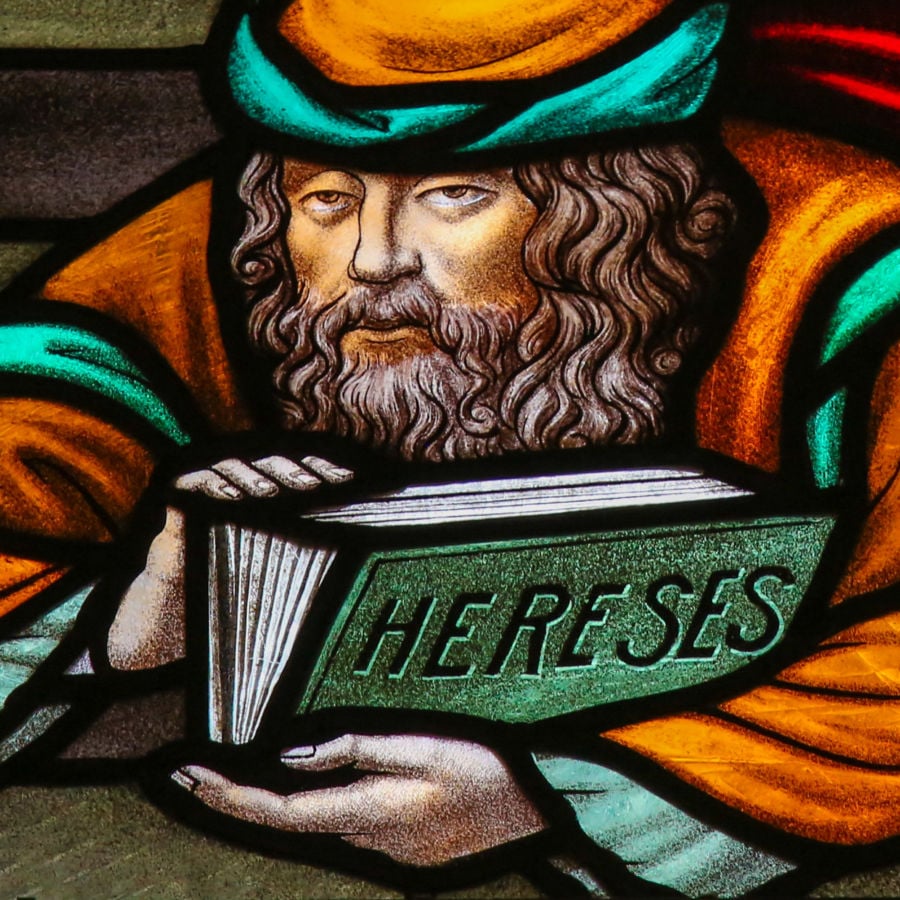
Now, let me be clear, this position is complete and utter heresy. It is a false gospel, because it denies the essential orthodox belief that “He will come again to judge the living and the dead” (Apostle’s Creed). It denies “the resurrection of the dead and the life of the world to come” (Nicene Creed). These denials among others put the views of full preterism wholly outside the boundaries of historic Christian orthodoxy. In the space that remains here, I would simply like to outline a few of the methodological and theological errors that are typical of this view, and then I will conclude by reaffirming the orthodox Christian hope.

The first error of full preterism is that they have a conspiracy theory view of hermeneutical method. In other words, their interpretations are based on a string of loosely related or even unrelated texts that are tied together by the occurrence of similar words. Of course, they would claim that they are following the principle of sola scriptura, namely that “scripture interprets scripture,” but I would submit that this is a theological conviction for biblical interpretation not a hermeneutical method for biblical interpretation. (See my post here). In stringing texts together the way that they do, they completely disregard concerns for the text’s historical and theological context and the author’s flow of thought. Instead, they flatten out the distinctive emphases of particular texts by smashing them together to say that same thing. More often than not, their exegesis comes across like someone throwing paint against a wall and then concluding they’ve painted Mona Lisa.

A second error of full preterism is that they hold to a gnostic view of the human person. Gnosticism is a heresy from the second century CE that suggests that Christ came to save us from this evil material world so that we could throw off the limits of our physical bodies and exist eternally as pure spirit. Of course, there is much more to it than this simple definition, but its weakness is that it disregards God’s design for human beings as embodied souls. We were made with a body and a soul, and to exist without either one of these is to be incomplete from the biblical point of view. This is why the resurrection of the body is such a primary doctrine; we are not merely transformed spiritually, we will be transformed physically when He comes again. Full preterism denies the future bodily resurrection of both the righteous and the wicked, and they suppose that when we die, we either go to heaven or hell to continue on as a “spiritual” being for eternity.

Thirdly, full preterism has an adoptionistic view of the incarnation. Adoptionism, or dynamic monarchianism, is a heresy from the third century CE that suggests that the divine logos came upon the man Jesus as his baptism, left him at his crucifixion, but then came upon him again at his resurrection. In other words, the man Jesus was “adopted” by God at his resurrection. The view of full preterism is not unlike adoptionistic Christology because they seem to believe the body of Jesus was only necessary during his earthly life. Often they suggest that his body was burnt up, or maybe it disappeared, at His ascension, so that He no longer has a body in heaven now. In other words, the son “adopted” a body for as long as he needed it, but then, when he no longer needed it, he discarded it. Along with the gnostic notions discussed above, this position negates the necessity of the resurrection. Why did Jesus even have to be resurrected from the dead with a body? Why not just rise as pure spirit? Here again, this view cannot explain the glorified body of Jesus, because it makes the incarnation temporary.

A fourth error that is part of the full preterist view is that they seem to have a fatalistic view of human history. Since they view this world as it is now as the “new heavens and new earth,” they have no expectation for any kind of renewal or transformation of the created order. According to this view, sin, death, disease, heartache, and the like will continue in perpetuity, eternally, without end. The only escape from the harsh realities of this world is when we die and go to heaven. But a renewed earth free of the corruption of sin and death is not in the purview of full preterism. This is fatalistic, because it essentially says that this is how the world is and this is how it will be. Nothing will ever get better, paradise will never be restored. Among others problems, this perspective denies the original purity and goodness of God’s creation and God’s intent to restore creation to that state of purity and goodness.

The final error that I see with full preterism, and perhaps the greatest, is that it offers a hopeless view of the Gospel. The reason for this is that it does not offer a final and full defeat of sin. Sure, the penalty of sin has been paid on the cross, and Satan has been defeated. But according to the full preterists, Satan and sin continue to run free forever. There is no final end to sin; there is no final defeat of Satan, no final judgment of the wicked. These things continue into perpetuity. The fact of the matter is that this is not the Gospel. Christ came, yes to pay the penalty for our sin, but also to free us from sin, and not only us, but the entirety of His creation. This is why the creation groans with yearning for the revelation of the sons of God (Romans 8.19-22). We look forward to a world that will be free of the domination and corruption of sin, free of the decay of death, where there will be no more tears, no more pains, no more heartaches. This is hope. This is the Gospel. And so we say, “Amen! Come, Lord Jesus!” (Revelation 22.20)

For further study:
On Christian Hope: Heaven or Resurrection
On Eschatology and the Gospel


On Optimism, Pessimism, and Hope

Navigating the eschatological frenzy can sometimes be quite daunting and intimidating. There are many questions, and to the dismay of many earnest students of the Bible, not many answers. Because of this, eschatological discussions among Christians often end up resulting in more confusion than clarity. This is especially true when those who affirm a particular position begin to misrepresent and/or caricature those who hold different conclusions than their own. We have seen this dynamic play out most recently in some social media forums, where some who hold the post-millennial position have begun to criticize the pre-millennial position as having a fundamentally pessimistic and defeatist outlook on the future, or even an essentially negative assessment of the power of the Gospel to save people and transform lives.

For those who are not aware, the post-millennial position holds that the millennial reign of Christ is the gradual result of the church’s mission. Through making disciples of all nations, the mission of the church will eventually result in a time when millennial conditions will characterize the whole earth. Christ is reigning at the right hand of the Father, and He reigns on earth through the ministry of His church. After an extended period of time of such conditions, Christ will return to judge the world, and the final state will begin. This, they suggest, is an essentially optimistic and hopeful assessment of the success of the Gospel, because it expects the gospel to be so effective in transforming lives, that it will organically result in a kind of utopian experience of the Kingdom of God on earth before Jesus comes again.

Consequently, they charge that the pre-millennial position expects conditions across the world to continue to deteriorate until Jesus comes again to establish His Kingdom on earth. Over time, sin will abound more and more, persecution of the righteous will become ever more intense, and things will progressively get worse until they reach their climax in the events of the Great Tribulation. Scripturally, this point of view might be based on verses like Second Timothy 3.1-5, which reads in part, “But know this: Hard times will come in the last days.” (See also Matthew 24.4-14) However, the question must be asked whether this is an accurate representation of the pre-millennial view. As someone who holds to the position in question, I would suggest that this portrayal of the pre-millennial view is partial at best and a dishonest caricature at worst. So, in the space that follows, I would like to offer two considerations that might help to bring clarity to this discussion.

First, every eschatological position must affirm that sin will remain present and active in the world until Jesus comes again to defeat it once and for all. The devil continues to prowl around like a lion seeking whom he might devour (1 Peter 5.8); spiritual warfare continues to be an ever present reality in the lives of followers of Jesus (Ephesians 6.10-18). The created order continues to groan under the burden of the curse even as it waits for the day of redemption (Romans 8.18-25). This is not some kind of pessimistic defeatism; no, this is simply theological realism. This is the tension that is the already and not yet. Yes, the death of Jesus on the cross made full and complete atonement for sin, and He cried out from the cross, “It is finished.” Those who trust in Him can be forgiven; in Christ, we have been saved from the punishment of sin. But we are not yet saved from the presence of sin, and we won’t be until Jesus comes again in glory and victory. But, a day is coming, a glorious day, when sin and death, pain and sorrow, brokenness and loss will be done away with once and for all (1 Corinthians 15.51-57, Revelation 21.3-4); a day is coming when the enemy will be finally and completely defeated and thrown into the lake of fire for eternity to torment the people of God no longer. (Revelation 20.7-10). And what a day that will be!

Secondly, we must affirm that Christians should be neither overly pessimistic nor naively optimistic; these emotions have zero connection to the idea of Christian hope. Christians should be a people of unshakable hope, but our hope is not some vague well wish that things might eventually get better. No, Christian hope is the firm conviction that what God has promised He will most certainly do. He has promised that He will come again to receive us to himself, that where He is we may be also; He has promised that He will come again to right every wrong, to heal every pain, to put a final and eternal end to sin and death. And it is because of this promise that we can face the difficulties and the ugliness of the world with honesty and compassion and perseverance. As the Apostle Paul puts it in 2 Corinthians, chapter 4, verses 8-10, “We are afflicted in every way but not crushed; we are perplexed but not in despair; we are persecuted but not abandoned; we are struck down but not destroyed.” He goes on to explain in verse 14 of that text, “For we know that the one who raised the Lord Jesus will also raise us with Jesus and present us with you.” This is Christian hope; it is neither a defeated pessimism nor a naïve optimism. Rather, it is a resolute conviction of future glory in the face of difficulty and hardship. It understand the reality of sin; it does not turn away from the ugliness and brokenness of this world. Instead, it holds onto the promise and power of the Gospel that Christ is our only hope, our only rescue, from the penalty, the power, and one day even the presence of sin.

Eschatology is the doctrine of hope; it is the biblical vision of the victory that we have in Christ. It should not be a source of conflict or consternation among Bible believing Christians. Of course, there are interpretive details over which we may continue to disagree, and “iron sharpens iron,
and one person sharpens another.” (Proverbs 27.17) And there are other interpretations out there that must be recognized and dismissed as the rank heresy that they are. This is why we must redouble and retriple our commitment to the tutelage of the Word of God. It is the Bible that defines the contours of our eschatological expectation, not our emotional perception of its outlook on the future, whether we consider that be optimistic or pessimistic. Christians should be people of firm and committed hope, because we know that Christ has promised to return bodily. As He said, “Look, I am coming soon, and my reward is with me to repay each person according to his work.” (Revelation 22.12) He is our hope, and this is something all Christians can agree on.

For further study, see also:
On Three Views on the Millennium
On Christian Hope: Heaven or Resurrection
On the Problem of Eschatological Imminence
On Three Views for Interpreting the Olivet Discourse
On Eschatology and the Gospel
On the Ground of Christian Hope
On Grief and Hope


On the Problem of Eschatological Imminence

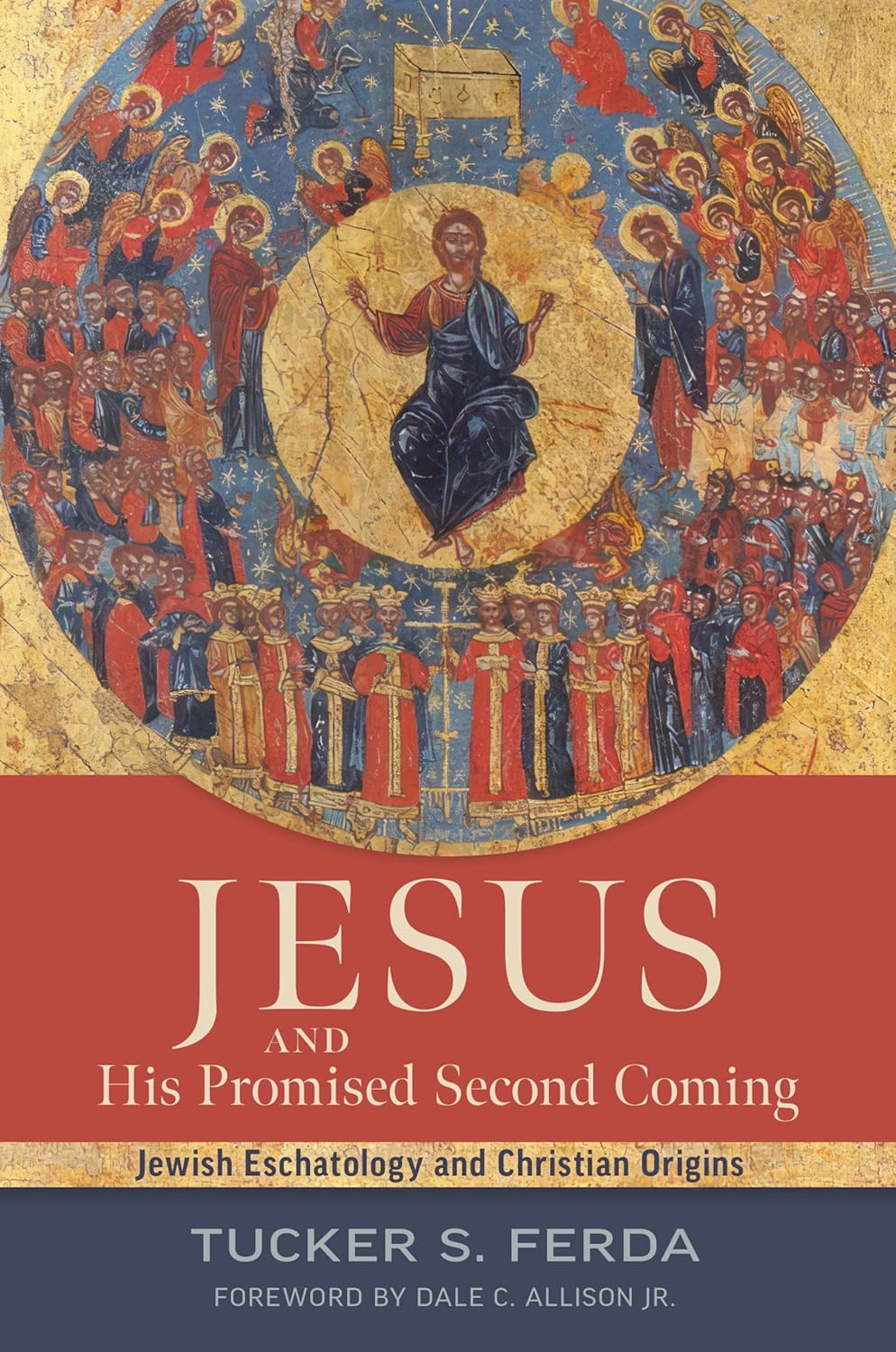
I love Christmas music, both the secular and sacred. When I hear it on the radio, in retail stores, or even in church, it just brings back all the wonderful memories of this time of year from my childhood. So, as the song goes, it’s the holiday season, so hoop-de-do and dickory dock. That means that Thanksgiving, Christmas, and New Year’s are right around the corner, and most of us are preoccupied with decorations and presents, parties and planning, and all of the other details that fill our minds during this time of year. But for Christians, this time of year is an invitation to reflect afresh on the coming of our Lord Jesus Christ. Traditionally, the season of Advent consists of the four Sundays that lead up to the celebration of Christmas, and it is a time when we are invited to look back on the first coming of Jesus at the incarnation even while we look forward to the second coming of Jesus. For more on this, see my post here.

However, most discussions of our Lord’s second coming always ends up with the same plaguing question, “So, when is he coming? When will it be?” This is a question that has plagued the people of God since the days of Jesus’ earthly ministry, and even before. We can read in the Psalms and prophets of the Old Testament where the people of God cried out in agony wondering, “Lord, how long will the wicked—how long will the wicked celebrate?” (Psalms 94.3), or “How long will you judge unjustly and show partiality to the wicked?” (Psalm 82.2), or even “How long, Lord, must I call for help and you do not listen or cry out to you about violence and you do not save?” (Habakkuk 1.2). This has been the longing of the people of God throughout history, that He would act finally and climatically to put an end to sin, vindicate His people, and establish His perfect reign on earth.

A quick review of the New Testament and what it says about the second coming of Jesus would seem to indicate that these prayers have been answered. In those hallowed pages, we read promises like, “In the same way, when you see all these things, recognize that he is near—at the door.” (Matthew 24.33), and “Look, I am coming soon, and my reward is with me to repay each person according to his work.” (Revelation 22.12), and  “The God of peace will soon crush Satan under your feet.” (Romans 16.20). Words like soon, near, at hand, quickly seem to indicate that the consummation the people of God had waited for so long was imminent and about to be realized, perhaps even within the first century. The reality, of course, is that those words were written some 2000 years ago, and we are still waiting for the return of Jesus in glory and power. This, then, is the problem. What are we to make of the New Testament’s promises of imminence, in light of the fact that we are still waiting for His coming some two millennia later?

There are really three options for answering this problem; however, one of them is out of bounds for those who hold orthodox convictions about the person of Christ and the nature of the Bible. Essentially, this option simply concludes that Jesus and His followers were wrong in their expectation. In other words, Jesus had promised and they believed that He would return in power and glory in the first century, i.e. within their lifetimes, and they were just wrong. But this solution charges both Jesus and the authors of Holy Scripture with error, which is something orthodoxy simply cannot abide. We confess that the Scriptures are wholly inerrant, that the authors of both the Old and New Testaments were kept from error by the Holy Spirit who inspired them. Their words are the very words of God himself; therefore, if they lied, he lied, but he cannot lie. Moreover, we confess that Jesus was God the Son incarnate, the very embodiment of truth. He lived a sinless life in complete obedience to God’s Law; therefore, He cannot and did not lie in anything He said. So, we cannot conclude that Jesus or the Apostles were in error in any way.

Another solution to the apparent problem of eschatological imminence is to reinterpret what Jesus and the New Testament authors meant by His coming. In other words, they did not understand His coming to mean the visible bodily return of Jesus to the earth in power and glory to judge the wicked and vindicate the righteous at the end of time. Rather, when they referred to His coming, they were simply referring to His coming in judgment on the people of Israel who rejected and murdered him, a judgment that was fulfilled when Jerusalem was destroyed by the Romans in 70 AD. This view is usually referred to as preterism, and there is certainly more to it than the definition given here. But its central tenet is that all of the New Testament’s predictions and descriptions of our Lord’s second coming are fulfilled in the first century. The strength of this view is that it seeks to maintain the relevance of the New Testament’s promises of imminence for the biblical audience, and rightly so. However, the conclusion that His coming refers to something other than a visible bodily coming is anticlimactic and unconvincing to say the least. As the church has confessed for nearly two millennia, so also must we affirm that, “He will come again in glory to judge the living and the dead and his kingdom will have no end.” (Nicene Creed)

The final solution, and the one that is most commonly accepted, is to reconsider what the Bible means by its promises of imminence. In other words, temporal qualifiers like near, soon, quickly, and at hand may not necessitate immediate fulfillment in the lifetime of Jesus and His first followers. This is even more likely when we remember that typological fulfillment is a typical characteristic of God’s comings throughout biblical history. Moreover, this is exactly how the question is answered within the New Testament itself. In Second Peter chapter 3, Peter addresses this very objection, “Where is his ‘coming’ that he promised?” (2 Peter 3.4). He gives a couple of different answers to this objection, the examination of which is beyond the scope of this post. However, in verse 8, he writes, “Dear friends, don’t overlook this one fact: With the Lord one day is like a thousand years, and a thousand years like one day.” In this verse, Peter is saying that eschatological imminence must be considered from the eternal perspective and not from a temporal one; the meaning of words like soon, near, quickly, and at hand must be measured from the perspective of the one who gave the promise to begin with. Of course, some might object that this verse should not be used as a kind of trump card that dismisses the biblical promises of imminence, and they would be right. However, whatever is meant by eschatological imminence, our understanding of those promises must be consistent with the principles outlined in Second Peter chapter 3, because there are no contradictions in the Bible.

In light of this discussion then, we may conclude that the Bible’s promises of eschatological imminence are just as relevant to the people of God today as they were when they were first given. His coming is near; it is at hand. He is coming soon; he is coming quickly. This means that the people of God must live in a constant state of ready expectation and eager anticipation, because this is our blessed hope, “the appearing of the glory of our great God and Savior, Jesus Christ.” (Titus 2.13). And while we wait, may we find ourselves consistently faithful, until we hear those wonderful and precious words, “Well done, good and faithful servant. Enter into the joy of your master.” As our Lord himself said, “Blessed is that servant whom the master finds doing his job when he comes.” (Luke 12.43)


On Three Views on the Millennium

TEXT

20 Then I saw an angel coming down from heaven holding the key to the abyss and a great chain in his hand. He seized the dragon, that ancient serpent who is the devil and Satan, and bound him for a thousand years. He threw him into the abyss, closed it, and put a seal on it so that he would no longer deceive the nations until the thousand years were completed. After that, he must be released for a short time.

Then I saw thrones, and people seated on them who were given authority to judge. I also saw the souls of those who had been beheaded because of their testimony about Jesus and because of the word of God, who had not worshiped the beast or his image, and who had not accepted the mark on their foreheads or their hands. They came to life and reigned with Christ for a thousand years. The rest of the dead did not come to life until the thousand years were completed.

This is the first resurrection. Blessed and holy is the one who shares in the first resurrection! The second death has no power over them, but they will be priests of God and of Christ, and they will reign with him for a thousand years.

When the thousand years are completed, Satan will be released from his prison and will go out to deceive the nations at the four corners of the earth, Gog and Magog, to gather them for battle. Their number is like the sand of the sea. They came up across the breadth of the earth and surrounded the encampment of the saints, the beloved city. Then fire came down from heaven and consumed them. 10 The devil who deceived them was thrown into the lake of fire and sulfur where the beast and the false prophet are, and they will be tormented day and night forever and ever.

Text: Revelation 20.1-10
Series: Eschatology: A Study of the End Times
Church: South Caraway Baptist Church, Jonesboro, AR
Date: October 5, 2022


Slow To Write

"let every person be quick to hear, slow to speak, slow to anger."

lovegavehope

Just another WordPress.com site

Jared Cornutt

Pastor | Speaker | Writer

Denny Burk

A commentary on theology, politics, and culture

G3 Ministries

Events + Resources for the Local Church

Biblical Reasoning

Biblical and Systematic Theology According to the Scriptures

RetroChristianity

Reclaiming the Forgotten Faith

SBC Voices

Southern Baptist News & Opinion

Lucid Theology

Thoughts on words, books, theology, and life.

Baptist21

A pastor-led voice for Baptists in the 21st century

Center For Baptist Renewal

The Personal and Professional Blog of Phillip Powers

The Pastor's Well - Pastor Well

The Personal and Professional Blog of Phillip Powers

Articles - AlbertMohler.com

The Personal and Professional Blog of Phillip Powers

The Gospel Coalition

The Personal and Professional Blog of Phillip Powers