TEXT 10 My goal is to know him and the power of his resurrection and the fellowship of his sufferings, being conformed to his death, 11 assuming that I will somehow reach the resurrection from among the dead.
~Philippians 3.10-11
Title: On Resurrection and the Path of Glory Text: Philippians 3.10-11 Church: Redeemer Baptist Church, Jonesboro, AR Date: March 31, 2024
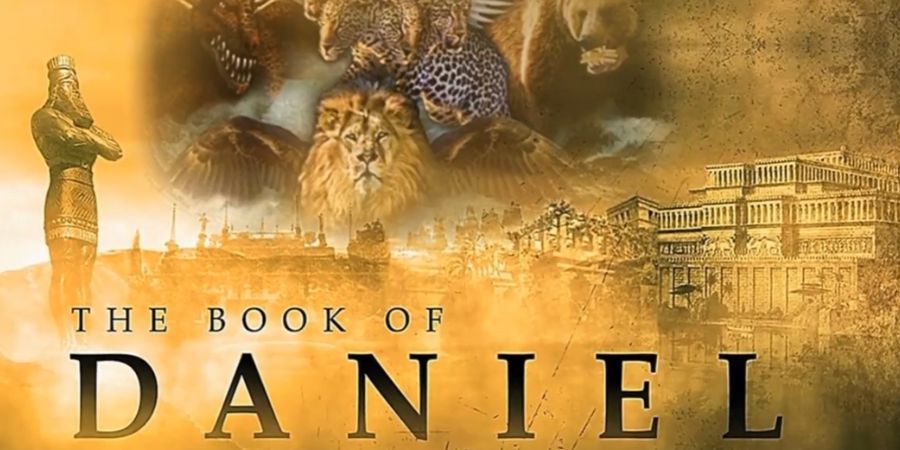
The unfortunate reality today is that the bulk of biblical scholarship on the Book of Daniel is mired in the abyss of higher critical presuppositions, not the least of which is a thoroughgoing rejection of predictive biblical prophecy as such. Because of this the Book of Daniel is viewed as a composite work that was compiled in the middle second century BCE in the midst of the Maccabean Crisis. This view would seem to be supported by the linguistic and generic divisions that exist within the text. Linguistically, chapters 2 thru 7 are written in Aramaic while chapter 1 and chapters 8 thru 12 are written in Hebrew; similarly, though not an exact correspondence, chapters 1 thru 6 comprise the court tails while chapters 7 thru 12 consist of the visionary material. The conclusion then of most biblical scholarship on Daniel is that the eschatological expectations of Daniel are essentially a contradictory hodgepodge of ex eventu (after the fact) depictions of the actions of the Seleucid King Antiochus IV Epiphanes.
Of course, to defend the book’s 6th century Danielic authorship would go beyond the limits of this medium, but in the space that follows I would like to briefly demonstrate the essential unity of Daniel’s visions. The clearest indication of this unity comes in the correspondence between Nebuchadnezzar’s dream in chapter 2 and in Daniel’s vision in chapter 7. While these chapters come from seemingly disparate parts of the book, they both present a sequence of four kingdoms followed by the establishment of the Kingdom of God. Of course, critical scholarship widely identifies these kingdoms as Babylon, Media, Persia, and Greece. This is mostly because they understand the actions of the fourth kingdom, and particularly the little horn, to be fulfilled in the actions of Antiochus IV Epiphanes during the Maccabean Crisis from 167-164 CE. I will come back to the identification of these kingdoms in a little bit, but suffice it to say here that it is difficult to see how Daniel’s expectation for the establishment Kingdom of God is fulfilled in this time period. The subsequent period of Hasmonean independence which followed was a far cry from the grandeur of Daniel’s expectations.
This is especially so when we turn our attention to Daniel chapter 9; in that chapter, Daniel is praying about the end of the exile, and he receives an answer from the angel Gabriel, which reads,
Seventy weeks are decreed about your people and your holy city—to bring the rebellion to an end, to put a stop to sin, to atone for iniquity, to bring in everlasting righteousness, to seal up vision and prophecy, and to anoint the most holy place.
Daniel 9.24
It seems rather clear that these seventy weeks span the timeframe from Daniel’s day (“from the issuing of the decree to restore and rebuild Jerusalem” in verse 25) to the time of final consummation, the time of “everlasting righteousness”. Because of this, we may presume then that the seventy weeks of Daniel 9 cover the same span of time as the visions of Daniel 2 and 7.
Now, the key to identifying the four kingdoms mentioned in Daniel’s sequence would seem to come in Daniel chapter 8. In that chapter, Daniel sees a vision of a ram with two horns, one longer than the other, and a goat whose large horn was broken off and replaced by four smaller horns. Again, the angel Gabriel gives the interpretation.
The two-horned ram that you saw represents the kings of Media and Persia. The shaggy goat represents the king of Greece, and the large horn between his eyes represents the first king. The four horns that took the place of the broken horn represent four kingdoms. They will rise from that nation, but without its power.
Daniel 8.20-22
This interpretation indicates that the second kingdom in Daniel’s sequence should be understood as the unified Kingdom of the Medes and Persians. It is described as a ram with two horns, one longer than the other (8.3) and as a bear which was raised up on one side (7.5). The third kingdom, then, should be understood as the Kingdom of Greece which is represented, of course, by Alexander the Great and the Diadochi, the four generals who followed him. They are variously described as a goat whose large horn was broken off and replaced by four smaller horns (8.8) and as a leopard with four wings and four heads (7.6).
This understanding is confirmed in Daniel chapter 11, where we read,
Three more kings will arise in Persia, and the fourth will be far richer than the others. By the power he gains through his riches, he will stir up everyone against the kingdom of Greece. Then a warrior king will arise; he will rule a vast realm and do whatever he wants. But as soon as he is established, his kingdom will be broken up and divided to the four winds of heaven, but not to his descendants; it will not be the same kingdom that he ruled, because his kingdom will be uprooted and will go to others besides them.
Daniel 11.3-4
The rest of chapter 11, then, goes on to detail the various campaigns of the “King of the North” and the “King of the South”, which describes the various conflicts between the Seleucids and the Ptolemies during the Third and Second century BCE respectively. The point of all this is to say that Daniel’s sequence of four kingdoms is best understood to refer to the progression of empires from Babylon to Medo-Persia to Greece and finally to Rome*. Of course, it must be noted that while the Roman Empire corresponds to Daniel’s fourth kingdom, it doesn’t completely fulfill it. That fulfillment comes ultimately in the eschatological kingdom of the beast, which is described in Book of Revelation, but this is a topic for another time.
By way of conclusion, then, Daniel’s visions reveal a remarkable and multifaceted unity in their expectation despite their seeming disparities. Daniel chapters 2, 7, and 9 give the overarching flow from Daniel’s day to the establishment of God’s Kingdom, and chapters 8 and 11 zoom in on the specific actions of the second and especially the third kingdom. More importantly, this understanding lays the foundation for the typological connection that Daniel draws between the third and fourth kingdoms, specifically between the actions of Antiochus IV Epiphanes and the eschatological little horn of the fourth kingdom. In addition, it helps us see how Daniel’s eschatological paradigm serves as the foundation for the message and ministry of Jesus, especially the Olivet Discourse, and for the message of the New Testament, particularly the Book of Revelation.
Of course, the most important aspect of all of this is the certain promise of God’s victory over His enemies and the enemies of His people. Our hope rests not in earthly powers, nations, or empires, but in the Kingdom of God and in His promised Messiah. That Messiah came incarnate 2000 years ago. He lived a perfect life, and then, He died on the cross for sin and rose again. Forty days later, He ascended to be seated at the right hand of the Father, and He left us this promise, that in the same way he ascended, he will also one day descend in glory and power (Acts 1.11). This is our glorious hope, and so we pray, “Amen, Come, Lord Jesus! (Revelation 22.20)
For further study, see: Hamilton, James M. With the Clouds of Heaven: The Book of Daniel in Biblical Theology. New Studies in Biblical Theology. Downers Grove, IL: InterVarsity, 2014
15 This is why, since I heard about your faith in the Lord Jesus and your love for all the saints, 16 I never stop giving thanks for you as I remember you in my prayers. 17 I pray that the God of our Lord Jesus Christ, the glorious Father, would give you the Spirit of wisdom and revelation in the knowledge of him. 18 I pray that the eyes of your heart may be enlightened so that you may know what is the hope of his calling, what is the wealth of his glorious inheritance in the saints, 19 and what is the immeasurable greatness of his power toward us who believe, according to the mighty working of his strength.
20 He exercised this power in Christ by raising him from the dead and seating him at his right hand in the heavens— 21 far above every ruler and authority, power and dominion, and every title given, not only in this age but also in the one to come. 22 And he subjected everything under his feet and appointed him as head over everything for the church, 23 which is his body, the fullness of the one who fills all things in every way.
~Ephesians 1.15-23
Title: On the Ground of Christian Hope Text: Ephesians 1.15-23 Series: The Letter to the Ephesians Church: South Caraway Baptist Church, Jonesboro, AR Date: May 28, 2023
It is commonplace in American Christianity to hear people talk about going to heaven when they die. For most people, this is the promise of the Gospel, that if you believe in Jesus for the forgiveness of sin and live a morally good and ethical life for the most part, then you will get to go to heaven when you die. This is usually conceptualized as a kind of purely spiritual (nonmaterial, nonphysical) existence of some kind (think halos, harps, and clouds). However, this is a far cry from the biblical picture of eternal life. First, eternal life is not simply a limitless quantity of life that we experience when we die, though it certainly includes this; rather is a certain quality of life, i.e. the life of the messianic age, that we begin to experience even now in part on this side of glory. But, more importantly, the Christian vision for life after death is for a resurrected embodied life. This is a crucial aspect of the biblical understanding of salvation, but it is so often neglected, ignored, or outright denied. And so, since this is the week in which we celebrate the resurrection of our Lord Jesus, I would like to use the space that follows to explore the biblical foundation of the biblical hope for resurrection.
First, we must affirm that human beings were created as composite wholes, that is with a body and a soul. Some theologians would argue for a tripartite division, i.e. body, soul, and spirit, but the point remains the same, namely that the body is essential for what it means to be human. In Genesis, chapter 2, verse 7, we read, “Then the Lord God formed the man out of the dust from the ground and breathed the breath of life into his nostrils, and the man became a living being.” In other words, when the “spirit of life” (the Hebrew word for “breath” can also be translated as “spirit”) entered into the body made of dust, the first man became a living being. Both components were necessary to complete the first man; therefore, to exist as spirit only would be an incomplete, non-human existence. This is why the incarnation was necessary; as the author of Hebrews argues in chapter 10, verse 5 (quoting Psalm 40.6 LXX), “Therefore, as he was coming into the world, he said: You did not desire sacrifice and offering, but you prepared a body for me.” In order to redeem humanity, it was necessary that the Son of God should become fully human, body and soul, and if He was anything less than fully human, then the redemption He secured would be incomplete. Or to put it another way, that which He did not assume, He cannot redeem. And the only way that the body can be redeemed from death is through resurrection.
Of course, this leads right into the second biblical foundation of our resurrection, namely that Jesus Christ was resurrected bodily from the dead. A cursory reading of the Gospel accounts of our Lord’s passion leads to the inescapable conclusion that Jesus died bodily, He was raised bodily, He ascended bodily, and He will return bodily. He was no mere apparition or ghost; He was not some kind of spirit only being that appeared at random. In the Gospel of Luke, we read that Jesus ate with the disciples after His resurrection, both on the road to Emmaus and in the upper room, and in the Gospel of John, we read that He invited Thomas to touch the holes in His hands and in His side. So, while His resurrected body was different in many ways, there was still a corporeal continuity to His bodily existence both before and after His resurrection. Moreover, and perhaps more importantly, the Apostle Paul argues that the physical bodily resurrection of Jesus is the lynchpin of the Gospel. “And if Christ has not been raised, your faith is worthless; you are still in your sins.” (1 Corinthians 15.17) In other words, the bodily resurrection of Jesus was necessary for our salvation to be complete. It was not only necessary for Him to die physically for our sin, but it was also necessary for Him to be raised physically to new life. The bodily resurrection makes His work of redemption complete, and because He has been raised, He is able to offer resurrection life to those who trust in Him.
Consequently, this is the third biblical foundation for the Christian hope of resurrection, namely that the bodily resurrection of Jesus is the ground and promise for the bodily resurrection of those who have trusted in Him. Because He has been raised bodily, we who have trusted in Him will also be raised bodily. This is the inescapable logic of our union with Christ. As the Apostle Paul argues in the Letter to the Romans, chapter 6, verse 5, “For if we have been united with him in the likeness of his death, we will certainly also be in the likeness of his resurrection.” Or again, in 1 Corinthians, chapter 15, verse 20, “But as it is, Christ has been raised from the dead, the firstfruits of those who have fallen asleep.” The fact that He is the “first fruit” necessarily implies that there will be more fruit to come, and it is clear that the fruit Paul is envisioning in this context is the bodily resurrection of those who have been united with Jesus by faith. So, the promise of the Gospel, the Christian hope, is not merely going to heaven when we die; it is nothing less than resurrection from the dead. “For if we believe that Jesus died and rose again, in the same way, through Jesus, God will bring with him those who have fallen asleep.” (1 Thessalonians 4.14)
So, while the idea of going to heaven when we die sounds nice and comforting, the truth of the matter is that those who ignore or deny the future resurrection of the body really have no hope at all. All they really have is a vague notion of something resembling hope, which is really no better than an empty wish. It has no substance, no grounding in biblical realities at all. Disembodied existence as spirit only is not true life, at least not life the way that God intended it for humanity. God alone is spirit, and we are His creatures. The desire to shed the flesh and exist as pure spirit is a desire that comes from pagan philosophy and not from the Bible. The true biblical Christian hope is far better. It is nothing less than the fullness of embodied life that God always intended for humanity. It is eternal life, resurrected life, in the presence of God forever. In other words, the promise of the Gospel is not so much that we will get to go up to heaven when we die, but that heaven will come down to us when Jesus comes again to establish His kingdom on earth once and for all. This is the blessed hope, the Christian hope.
See also: Chase, Mitchell L. Resurrection Hope and the Death of Death. Short Studies in Biblical Theology. Wheaton, IL: Crossway, 2022. Wright, N.T. Surprised by Hope: Rethinking Heaven, the Resurrection, and the Mission of the Church. New York, NY: HarperOne, 2008.
The events of Holy Week stand as the climax of the public ministry of Jesus in the Gospel accounts. All four of the Gospel writers devote almost half of their material to these events. Clearly, they intended for this story to stand at the center of our reflection on the person and work of Jesus. However, for most modern Christians, the events of Holy Week receive only a passing nod. Of course, we look forward to Easter and the cultural dressings that accompany it, and most churches emphasize the resurrection of Jesus on Easter Sunday, whether through song, sermon, or drama. But other than that, the final week of our Lord’s life mostly goes unacknowledged in the reflection and devotion of many people who call themselves His followers. As the Apostle James would say, “My brothers and sisters, these things should not be this way.” (James 3.10) The person and work of our Lord Jesus Christ should be the central focus of our reflection, not only during Holy Week, but every week of the year, because He is the never ending source of the sustaining grace that we need to live as His followers. So, in the space that follows, I would like to briefly sketch out the daily events of Holy week, so that we may grow in our understanding of what He accomplished on our behalf.
Palm Sunday On Palm Sunday, Jesus made His triumphant entry into Jerusalem. This was His official presentation before the Jerusalem religious establishment as the long-awaited Messianic King. Matthew informs us that this event is the fulfillment of the prophecy of Zechariah 9.9 (Matthew 21.4-5), and we have this confirmed by the shouts of the Galilean pilgrims who sang “Hosanna” (Mark 11.9-10). However, as elated and joyous as the crowds were that day, we know that there is darkness on the horizon. Even as He was approaching the Holy City, He paused to weep over their lack of faith (Luke 19.41-44). It is likely that many of those who joined in the procession that day expected that this would be the day when Jesus would overthrow the Romans and establish Israel as an independent kingdom, and yet His disciples knew that He had already predicted three times that He would be crucified in Jerusalem. So, even as the disciples celebrated the arrival of Messiah, they waited with bated breath as His public ministry began to approach its primary purpose.
Monday The last thing Jesus did on Sunday before retiring to Bethany for the night was to inspect the Temple (Mark 11.11), and in the subsequent scenes, the Gospel writers make it clear what He found there. On Monday, as they were heading back into the city, Jesus happened upon a fig tree that appeared to be fruitful, but finding it empty, He cursed it. It subsequently withered. In between these scenes, we have the familiar story of the temple cleansing. The implication is clear; the temple (and the Jerusalem religious establishment that it represents) was fruitless and empty. Though it had all the right external dressings, it was empty of any and all spiritual substance. And so, in what can only be described as a public act of prophetic judgment, Jesus clears the temple and begins to teach the people. This act was the final straw for the Jewish religious leaders, and from that point on, they began to look intently for a way to kill Him.
Tuesday, the “Day of Controversy” On Tuesday of His passion, Jesus returned to the “scene of the crime”, so to speak, and as He was walking through the Temple, various factions representing the leadership of the Jewish religious establishment began to question him. The first question that they ask is the most telling and sets the tone for the rest of the day. “By what authority are you doing these things? Who gave you this authority to do these things?” they asked, in what was clearly an accusatory manor. It is obvious that their questions were not in earnest, and each successive interaction reveals their scheme with more clarity. But as the “Day of Controversy” unfolds, Jesus ably avoids their traps, and in the process, He exposes the true nature of their problem. Time and again, He brings the discussion back to the Scriptures, exposing the stubborn refusal of His opponents to submit to their authority. In other words, their problem is not with Him per se; rather, it is with the authority of God which He represents as Messiah. His is an authority that they all but refuse to submit to, and it is this refusal that ultimately provokes Jesus to condemn of the Temple and all that it represents in the Olivet Discourse. In this discourse, Jesus turns the attention of His disciples away from the religious, political, and nationalistic hopes of the Jewish religious establishment to a hope that culminates in His return in glory to establish the Kingdom of God once and for all.
“Silent” Wednesday Wednesday of Holy Week is known as “Silent Wednesday”, because the Gospels are practically silent as to the activity of Jesus and the Disciples on that day. It is most likely that they spent the day in Bethany with Mary, Martha, and Lazarus enjoying the limited time that they had left to be together. It is also likely that it was on this Wednesday, as they were sharing a meal together in the home of Simon the Leper, that the woman with the alabaster jar came to anoint Jesus (Mark 14.3-10). Immediately, Judas raised the alarm that this valuable commodity had been wasted when it could have been sold and the profits given to the poor. But, when his concerns were seemingly dismissed by Jesus, it was the final straw. Apparently, this event was the breaking point for Judas, and immediately, he went out to plot with the Jewish religious leaders to betray Jesus for 30 pieces of silver. This is why this day is also known as “Spy” Wednesday.
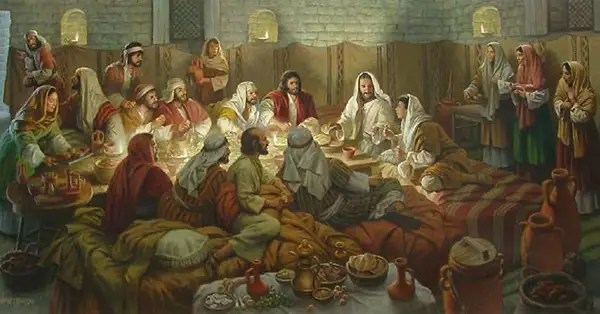
Maundy Thursday (See also “On Maundy Thursday”) On Thursday morning, Jesus instructed His disciples on where they could prepare to celebrate the Passover, and later that evening, Jesus arrived at the location where He would celebrate His Last Supper with them. The evening began with Jesus donning the apparel of a servant and washing the disciples feet. Using this action as an object lesson, Jesus went on to teach them in the Upper Room Discourse (John 13-17) about a New Commandment, “that you should love one another.” This is why we call it “Maundy” Thursday; the name comes from the Latin mandatum which means command, “a new commandment.” During the course of the evening, Jesus predicted that the disciples would betray Him (even Peter would do so three times before the rooster crowed), and Judas left to prepare for his act of betrayal. The evening concluded with the sharing of the bread and cup as symbols of His body that was about to be broken and His blood that was about to be shed for the forgiveness of sins as the inauguration of the New Covenant. After their meal, they adjourned to the Garden of Gethsemane, and while the disciples slept, Jesus prayed three times that “this cup” (by which He meant His passion) would pass from Him. Shortly thereafter, the mob arrived, Judas completed his betrayal with a kiss, and Jesus was arrested.
Good Friday After His arrest, Jesus was carried away to the house of the High Priest where He was subjected to a sham trial in the darkness of night. The fix was in, as they say, as one by one witnesses were brought in to make false accusations against Him, and yet, throughout it all, He remained quiet. At first light, they brought Him before the Roman authorities, because the Jewish religious leaders lacked the authority to put anyone to death, and after being examined and found innocent by both Pontius Pilate and Herod Antipas, the religious leaders stirred up the crowd to call for His death. So, Pilate offered them a choice; he would release Barabbas the murderer or Jesus, the so-called King of the Jews. Again, the religious leaders stirred up the crowd, and they called for the release of Barabbas and for the crucifixion of Jesus. Pilate gave them what they asked for; he turned Jesus over to the Romans soldiers to be mocked and beaten, and then they led him away to be crucified. At the top of Golgotha, they nailed him to a cross and crucified him between two criminals. The soldiers cast lots for His clothes, and the Jewish religious leaders mocked him. At about three in the afternoon, He cried out with a loud voice “It is finished” and yielded up His Spirit to His Father. The Roman soldiers pierced His side with a spear to confirm that He was dead. Joseph of Arimathea requested His body and buried it in his own personal tomb before the start of the Sabbath at sundown.
Holy Saturday The Gospels are mostly silent as to the details of Holy Saturday. Of course, it was the Jewish sabbath, a day dedicated to rest and to the worship of God, but for the followers of Jesus, this day was probably not very restful, to say the least. After all, they had just watched in horror as their beloved Master was wrongfully accused, unjustly convicted, and tragically executed. Jesus was dead, and it appeared that all their hopes had died with Him. He was supposed to be the Messiah, the prophesied and anointed King who would establish the Kingdom of God on earth, and He had been murdered, seemingly defeated by the worldly powers that be. Sure, he had predicted His own death and resurrection, but it is clear that they had no understanding of what that might mean until after all these things had taken place. On this Saturday, they were most likely overcome with grief and despair, and on top of that, there was the fear that what happened to Him might yet happen to them as well. And so, it is most likely that they spent the day locked behind closed doors cowering in terror. It was a dark day indeed, and yet, we know looking back that His death would not be the final word, that light and hope were still on the horizon. But this is the nature of Christian discipleship; sometimes we must endure the depths of the darkness before we ever begin to see the light of hope.
Resurrection Sunday On the first day of the week, Sunday morning, at daybreak, Mary Magdalene, Mary the mother of James, and Salome went to the tomb to anoint His body for burial; there hadn’t been time to do so on Friday due to the haste of getting Him buried before the start of the Sabbath. As they made their way to the tomb, they began to wonder how they might roll the stone away. However, when they arrived, they found the stone had already been rolled away, and when they looked inside the tomb, they were met by an angelic being who informed them of what had taken place. “Don’t be alarmed,” he told them. “You are looking for Jesus of Nazareth, who was crucified. He has risen! He is not here.” (Mark 16.6) Immediately, and with the angel’s express instruction, they returned to the city to inform the disciples of what they had seen. Of course, Peter, along with John ran off to see it for themselves, and finding it as the women had said, they were amazed at what this could mean. But Mary Magdalene stayed behind at the tomb, crying and confused. A man approached her, and at first, she did not recognize Him, assuming Him to be the gardener. “Sir, if you’ve carried him away, tell me where you’ve put him, and I will take him away.” (John 20.15) But when He called her by name, she immediately understood that this man was none other than her Lord and Savior. Later that day, He appeared to all of them in the upper room, even though the door was still locked, comforted them with the peace of His presence, and commissioned them to proclaim all that they had seen and heard.
If you are like me, and you have been raised in church, this may seem like the same ole’ story that has been told and retold too many times to count, but we must remember that this is the greatest story that has ever been told. These events are the pendulum upon which the course and destiny of human history hangs. The story of Jesus, especially His death and resurrection, are the foundation of God’s redemptive work in the world, and it is the very soul of our salvation. As followers of Jesus, we must never tire of hearing it, telling it, reading it, and singing it; we must never cease to be amazed at the wondrous work of Jesus on our behalf. And so this Holy week, let us echo the words of that great hymn writer, who wrote,
Tell me the story of Jesus Write on my heart every word Tell me the story most precious Sweetest that ever was heard
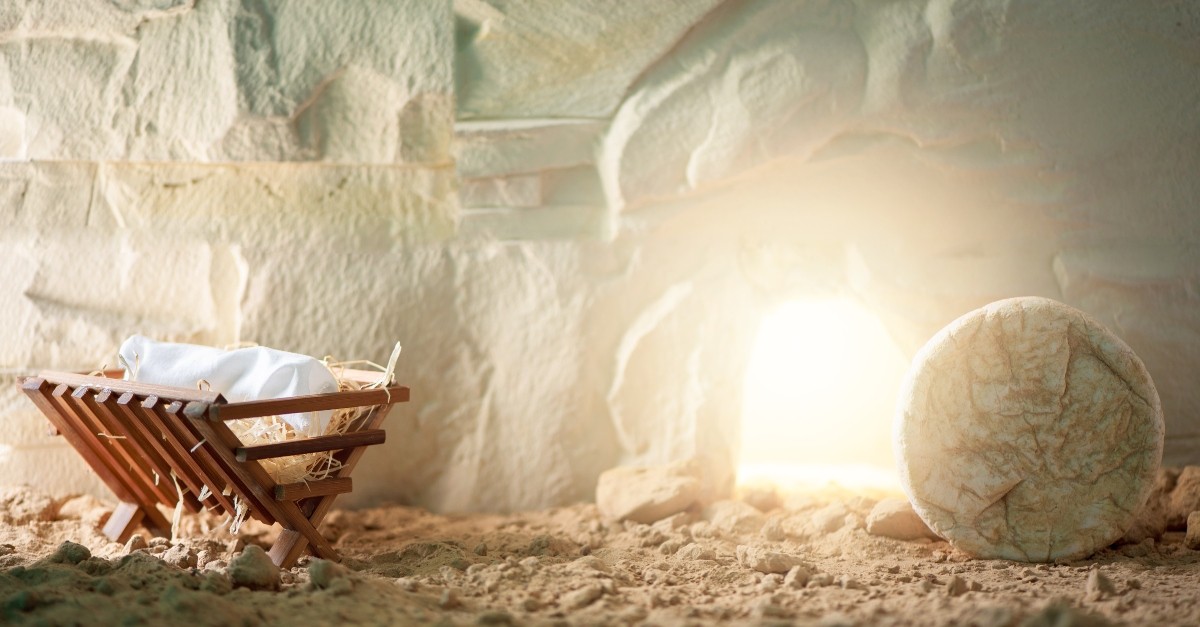
When it comes to a church’s life together, there are two pillars around which the rest of the annual calendar swings, i.e. Christmas and Easter. These are the high points in the church’s worship every year. Many churches still commemorate these holidays with special programs, musical and dramatic presentations of the Biblical story, and a focus on inviting the community in for high attendance, after all these are the only days that the CEOs come to church anyway (Christmas and Easter Onlys). It is clear that these holidays hold a special place in the devotion of most Christians. They focus our reflection on the primary movements of the story of redemption, how God the Son came to earth incarnate as a baby in a manger and how he died on the cross for sin and rose again some thirty years later. Even though they are mostly overcome by the cultural consumerism that so obviously characterizes our society these days, they are still a meaningful season in the worship of the church.
However, the question remains, “why do we celebrate these annual holidays anyway?” After all, there is no explicit command in the Scriptures to commemorate the nativity and/or the passion of our Lord Jesus Christ annually by a special holiday. In the New Testament, the church’s worship moved away from the annual calendar marked by special holidays and feasts that characterized the worship of the Jews in the Old Testament, and they moved to a weekly calendar marked by the gathering of the saints on the Lord’s Day for the preaching of the Word and the breaking of bread. Further, the Regulative Principle for Worship (RPW) states that only those elements that are clearly prescribed in the Scriptures should be included in the church’s worship. A strict application of this principle would mean that since Christmas and Easter are not explicitly prescribed by the New Testament, then we are in error when we make them a primary emphasis or central component in our devotion and worship, whether corporately or individually.
We do know that the church began to celebrate these holidays fairly early on in her existence. Within a century or so of the life and death of Jesus and His first followers, the church began to include these annual feasts as a regular part of the worship calendar. Of course, critics often suggest that these festivals were borrowed and adapted from the pagan world; however, these criticisms tend to fall apart quickly under close historical scrutiny. After examining the evidence, one author recently concluded that “no modern Christmas [or Easter] tradition can draw a straight line to any clear and decisive pagan origin.” While there has certainly been growth over the centuries in the lore and cultural traditions that surround these holidays, none of this is original and/or essential to the Christian celebration of them. Rather, it is evident that Christians recognized very early on in their history how important it was to commemorate the two decisive moments in redemptive history, namely the birth and death/resurrection of the one who is called Christ.
Of course, tradition alone is not a sufficient enough reason to justify the continued celebration of Christmas and Easter, but neither is it a sufficient reason for discontinuing the observance of them either. All traditions are not bad; in fact, some are quite helpful in the formation of our faith and practice. I have previously written on the question of tradition here, but suffice it to say that there is great wisdom in learning from the faith and practice of our Christian forebears, both from what they did well and from what they did not do well. So, perhaps the proper question should not be whether the celebration of Christmas and Easter is right or wrong, but whether it is wise and good. Does the annual observance of these holidays have spiritual value for the growth of the followers of Jesus in conformity to His image? And if this is the question, then we must answer in the affirmative. The fact of the matter is that we are a people who are quick to forget, quick to move on, quick to believe that we have outgrown our need for the Gospel. But there is nothing more foundational, nothing more crucial, for our formation in Christlikeness than to be reminded regularly of exactly what Christ has done on our behalf.
His incarnation and resurrection are the primary aspects of His redemptive work; they tell the story of how God the Son came to earth as a child, lived a sinless life, died on the cross for sin, and then rose again. In fact, the Apostle Paul instructs us in Second Timothy, chapter 2, verse 8, “Remember Jesus Christ, risen from the dead and descended from David, according to my gospel.” Or again, in the Letter to the Romans, that Jesus Christ “was a descendant of David according to the flesh and was appointed to be the powerful Son of God according to the Spirit of holiness by the resurrection of the dead.” Throughout the New Testament, these movements – the incarnation and the resurrection – are the hinge pins upon which the Gospel swings. And as followers of Jesus, we take great joy in celebrating these glorious acts of redemption each and every year, because it reminds us of the beautiful salvation that we have in Christ. It reminds us who we are, and it reminds us of why we are here. The church is a body of believers whose existence and purpose are defined by the redemptive work of God in Christ. Therefore, it is right and good that we celebrate these movements of God’s grace, not only every week, but as a matter of purposeful reflection every year on Christmas and Easter.
This, however, would seem to be the challenge in our modern culture, focusing our worship on Christ during these holidays and not becoming distracted by the cultural baggage that is so obviously associated with them. Just last month, I was chided vociferously on social media for suggesting that Santa Claus is neither necessary nor useful in the Christian enjoyment of the Christmas holiday. It would seem that in this particular cultural milieu Christians will need to be purposeful and strategic in how they celebrate going forward. We must make it clear that Christmas and Easter are about Christ and Christ alone, and if that means dispensing with some of the traditional festivities that have become associated with these holidays, then so be it. The celebration of Christmas and Easter should be a time when those who follow Jesus can celebrate anew the wonder and glory of what Christ has done for us in the Gospel. May we never grow tired of celebrating this timeless story each and every year.
32 Two others—criminals—were also led away to be executed with him. 33 When they arrived at the place called The Skull, they crucified him there, along with the criminals, one on the right and one on the left. 34 Then Jesus said, “Father, forgive them, because they do not know what they are doing.” And they divided his clothes and cast lots.
35 The people stood watching, and even the leaders were scoffing: “He saved others; let him save himself if this is God’s Messiah, the Chosen One!” 36 The soldiers also mocked him. They came offering him sour wine 37 and said, “If you are the king of the Jews, save yourself!”
38 An inscription was above him: This Is the King of the Jews.
~Luke 23.32-38
Title: On the Crucifixion and Why It Matters at Christmas Text: Luke 23.32-38 Series: Who is Jesus? A Study of the Gospel of Luke Church: South Caraway Baptist Church, Jonesboro, AR Date: December 18, 2022
TEXT 19 “There was a rich man who would dress in purple and fine linen, feasting lavishly every day. 20 But a poor man named Lazarus, covered with sores, was lying at his gate. 21 He longed to be filled with what fell from the rich man’s table, but instead the dogs would come and lick his sores. 22 One day the poor man died and was carried away by the angels to Abraham’s side. The rich man also died and was buried. 23 And being in torment in Hades, he looked up and saw Abraham a long way off, with Lazarus at his side. 24 ‘Father Abraham!’ he called out, ‘Have mercy on me and send Lazarus to dip the tip of his finger in water and cool my tongue, because I am in agony in this flame!’
25 “‘Son,’ Abraham said, ‘remember that during your life you received your good things, just as Lazarus received bad things, but now he is comforted here, while you are in agony. 26 Besides all this, a great chasm has been fixed between us and you, so that those who want to pass over from here to you cannot; neither can those from there cross over to us.’
27 “‘Father,’ he said, ‘then I beg you to send him to my father’s house— 28 because I have five brothers—to warn them, so that they won’t also come to this place of torment.’
29 “But Abraham said, ‘They have Moses and the prophets; they should listen to them.’
30 “‘No, father Abraham,’ he said. ‘But if someone from the dead goes to them, they will repent.’
31 “But he told him, ‘If they don’t listen to Moses and the prophets, they will not be persuaded if someone rises from the dead.’”
~Luke 16.19-31
Title: On the Parable of the Rich Man and Lazarus Series: Who is Jesus? A Study of the Gospel of Luke Church: South Caraway Baptist Church, Jonesboro, AR Date: May 08, 2022
A couple of weeks ago, Christians around the world celebrated the death and resurrection of our Lord Jesus Christ. It is a holiday that transcends all denominational lines, theological differences, national borders, language barriers, and time zones. Holy Week. Palm Sunday, Good Friday, Resurrection Sunday, these annual “holy-days” tell the story, that “old, old story, how a Savior came from glory, how He gave His life on Calvary, to save a wretch like me.” It is a time in which we pause to remember, when we focus our reflection, our worship on the good news that makes the Christian gospel unique, timeless, powerful, namely that Christ is risen. He is risen indeed. Each and every day of that week, from Palm Sunday through Resurrection Sunday, is absolutely rich, robust with significance for Christian faith and practice. However, there is one day of that week that is often neglected in the hustle and bustle that usually accompanies preparations for Easter Sunday.
On Thursday evening of our Lord’s Passion, Jesus gathered with His disciples in the upper room. The evening began with a beautiful act of loving service as Jesus washed the disciples feet. This seemingly simple moment subsequently shaped the entire evening as Jesus went on to teach them, saying, “I give you a new command: Love one another. Just as I have loved you, you are also to love one another.” (John 13.34). He then explained that this love would be the primary characteristic that would identify them as His disciples (verse 35). Of course, He would go on that evening to define this love by His own sacrificial death which would occur the following day on Good Friday (John 15.13). This is most likely why he referred to it as a “new command”. It wasn’t new in the sense that it had never been taught; in fact, the OT taught clearly that God’s people should “love your neighbor as yourself” (Lev 19.18). However, the love that Jesus was calling the disciples to that night was something more, something different, something new. This is why we traditionally refer to this day as Maundy, which comes from the Latin mandatum meaning command, “a new command.”
The evening continued around the table as they shared the Passover meal, and it concluded with the passing of the bread and cup, which Jesus reinterpreted as symbols of His body that would be broken and His blood that would be shed for the forgiveness of sins to inaugurate the New Covenant (Matthew 26.26-30). This Lord’s Supper subsequently became central to the worship of the early church. As Christians gathered each week for worship and Word, they would do so around the table; they would share a meal together which would of course include the breaking of bread and passing of the cup (c.f. Acts 2.46). This meal would eventually become known as the Agape Feast or “love feast”, so called after the new commandment that Jesus gave the disciples that Thursday night. It was a time when the followers of Christ could come together to experience the grace of fellowship that is available through the Holy Spirit.
In the modern church, this kind of observance is sadly lacking. Though a few traditions have revived the practice (for one example, click here), for the most part it is widely neglected. We are so caught up in the busyness of our own lives, that we fail to take the time to enjoy the fellowship that binds us together. Even immediate families today barely have the time to share an evening meal together, and when they do, they can hardly be bothered to look up from their screens to interact with one another. But for Jesus and His earliest followers, spending the time to share a meal together around the table was a precious gift of God. Unrushed fellowship over the course of a meal where mutual love to can be shared with one another was foundational in the weekly rhythms of the early church; it was paramount for their life together as disciples of Jesus.
We desperately need to recover this timeless grace, the age old spiritual discipline of table. Of course, this should begin with the weekly observance of the Lord’s Supper as a part of the church’s worship. This ordinance should stand at the center, alongside the preaching of the Word, as we gather together for mutual edification and encouragement every Sunday. It should not be relegated to the end of the service as an obligatory addendum. (For more on this, see my post here.) But it need not end there; it should extend from the weekly worship gathering to homes as brothers and sisters in Christ show each other the grace of hospitality, opening up their homes, sharing meals, loving one another, and doing life together. This is Jesus’ vision for Christian community, that we would love another, even as He loves us, and this is nowhere more on display than we we gather around the table.
8 Remember Jesus Christ, risen from the dead and descended from David, according to my gospel, 9 for which I suffer to the point of being bound like a criminal. But the word of God is not bound. 10 This is why I endure all things for the elect: so that they also may obtain salvation, which is in Christ Jesus, with eternal glory. 11 This saying is trustworthy:
For if we died with him, we will also live with him; 12 if we endure, we will also reign with him; if we deny him, he will also deny us; 13 if we are faithless, he remains faithful, for he cannot deny himself.
~2 Timothy 2.8-13
Title: On 2 Timothy 2.8-13 Series: Revival Church: First Baptist Church, DeValls Bluff, AR Date: March 16, 2022









 Faith seeking Understanding