Tag Archives: Moses

On the Old Testament’s Relevance for New Testament Believers

TEXT
“Are these things true?” the high priest asked.

“Brothers and fathers,” he replied, “listen: The God of glory appeared to our father Abraham when he was in Mesopotamia, before he settled in Haran, and said to him: Leave your country and relatives, and come to the land that I will show you. “Then he left the land of the Chaldeans and settled in Haran. From there, after his father died, God had him move to this land in which you are now living. He didn’t give him an inheritance in it—not even a foot of ground—but he promised to give it to him as a possession, and to his descendants after him, even though he was childless. God spoke in this way: His descendants would be strangers in a foreign country, and they would enslave and oppress them for four hundred years. I will judge the nation that they will serve as slaves, God said. After this, they will come out and worship me in this place. And so he gave Abraham the covenant of circumcision. After this, he fathered Isaac and circumcised him on the eighth day. Isaac became the father of Jacob, and Jacob became the father of the twelve patriarchs.

“The patriarchs became jealous of Joseph and sold him into Egypt, but God was with him 10 and rescued him out of all his troubles. He gave him favor and wisdom in the sight of Pharaoh, king of Egypt, who appointed him ruler over Egypt and over his whole household. 11 Now a famine and great suffering came over all of Egypt and Canaan, and our ancestors could find no food. 12 When Jacob heard there was grain in Egypt, he sent our ancestors there the first time. 13 The second time, Joseph revealed himself to his brothers, and Joseph’s family became known to Pharaoh. 14 Joseph invited his father Jacob and all his relatives, seventy-five people in all, 15 and Jacob went down to Egypt. He and our ancestors died there, 16 were carried back to Shechem, and were placed in the tomb that Abraham had bought for a sum of silver from the sons of Hamor in Shechem.

17 “As the time was approaching to fulfill the promise that God had made to Abraham, the people flourished and multiplied in Egypt 18 until a different king who did not know Joseph ruled over Egypt. 19 He dealt deceitfully with our race and oppressed our ancestors by making them abandon their infants outside so that they wouldn’t survive. 20 At this time Moses was born, and he was beautiful in God’s sight. He was cared for in his father’s home for three months. 21 When he was put outside, Pharaoh’s daughter adopted and raised him as her own son. 22 So Moses was educated in all the wisdom of the Egyptians and was powerful in his speech and actions.

23 “When he was forty years old, he decided to visit his own people, the Israelites. 24 When he saw one of them being mistreated, he came to his rescue and avenged the oppressed man by striking down the Egyptian. 25 He assumed his people would understand that God would give them deliverance through him, but they did not understand. 26 The next day he showed up while they were fighting and tried to reconcile them peacefully, saying, ‘Men, you are brothers. Why are you mistreating each other?’ 27 “But the one who was mistreating his neighbor pushed Moses aside, saying: Who appointed you a ruler and a judge over us? 28 Do you want to kill me, the same way you killed the Egyptian yesterday?

29 “When he heard this, Moses fled and became an exile in the land of Midian, where he became the father of two sons. 30 After forty years had passed, an angel appeared to him in the wilderness of Mount Sinai, in the flame of a burning bush. 31 When Moses saw it, he was amazed at the sight. As he was approaching to look at it, the voice of the Lord came: 32 I am the God of your ancestors—the God of Abraham, of Isaac, and of Jacob. Moses began to tremble and did not dare to look. 33 “The Lord said to him: Take off the sandals from your feet, because the place where you are standing is holy ground. 34 I have certainly seen the oppression of my people in Egypt; I have heard their groaning and have come down to set them free. And now, come, I will send you to Egypt. 35 “This Moses, whom they rejected when they said, Who appointed you a ruler and a judge?—this one God sent as a ruler and a deliverer through the angel who appeared to him in the bush. 36 This man led them out and performed wonders and signs in the land of Egypt, at the Red Sea, and in the wilderness for forty years.

37 “This is the Moses who said to the Israelites: God will raise up for you a prophet like me from among your brothers. 38 He is the one who was in the assembly in the wilderness, with the angel who spoke to him on Mount Sinai, and with our ancestors. He received living oracles to give to us. 39 Our ancestors were unwilling to obey him. Instead, they pushed him aside, and in their hearts turned back to Egypt. 40 They told Aaron: Make us gods who will go before us. As for this Moses who brought us out of the land of Egypt, we don’t know what’s happened to him. 41 They even made a calf in those days, offered sacrifice to the idol, and were celebrating what their hands had made. 42 God turned away and gave them up to worship the stars of heaven, as it is written in the book of the prophets: House of Israel, did you bring me offerings and sacrifices for forty years in the wilderness? 43 You took up the tent of Moloch and the star of your god Rephan, the images that you made to worship. So I will send you into exile beyond Babylon.

44 “Our ancestors had the tabernacle of the testimony in the wilderness, just as he who spoke to Moses commanded him to make it according to the pattern he had seen. 45 Our ancestors in turn received it and with Joshua brought it in when they dispossessed the nations that God drove out before them, until the days of David. 46 He found favor in God’s sight and asked that he might provide a dwelling place for the God of Jacob. 47 It was Solomon, rather, who built him a house, 48 but the Most High does not dwell in sanctuaries made with hands, as the prophet says: 49 Heaven is my throne, and the earth my footstool. What sort of house will you build for me? says the Lord, or what will be my resting place? 50 Did not my hand make all these things?

51 “You stiff-necked people with uncircumcised hearts and ears! You are always resisting the Holy Spirit. As your ancestors did, you do also. 52 Which of the prophets did your ancestors not persecute? They even killed those who foretold the coming of the Righteous One, whose betrayers and murderers you have now become. 53 You received the law under the direction of angels and yet have not kept it.”

~Acts 7.1-53

Title: On the Value and Relevance of the Old Testament
Text: Acts 7.1-53
Series: The Book of Acts
Church: Redeemer Baptist Church, Jonesboro, AR
Date: April 7, 2024

On Hosea, Matthew, and Authorial Intent

In my previous post, I argued that our hermeneutic for interpreting the Bible must be grounded in the conviction that what God intended to say in the Scriptures is accurately and faithfully conveyed in what the human authors actually wrote, and for most of the Bible, this seems to be rather clear. The question, however, arises when we come to texts in the New Testament that seem to interpret the Old Testament against the grain of the author’s intent. If we believe that “scripture interprets scripture” (see my post, here), then it would makes sense to suggest that we should follow the interpretive principles of the Apostles, and if they were not bound by a strict conception of authorial intent, then perhaps we should jettison this hermeneutical ground in our interpretive efforts as well. This then is the point that must be proven, namely that the New Testament authors did in fact disregard the human author’s intent when they interpreted the Old Testament. Of course, to examine every place where the New Testament author’s quote from or allude to the Old Testament would require far more space than is available here, and this work has already been done by many fine scholars in the field. I recommend Commentary on the New Testament use of the Old Testament, edited by G.K. Beale and D.A. Carson. But in lieu of that, I would like to explore one text as a test case for the thesis that the New Testament authors ignored the principle of authorial intent in their use of the Old Testament, that being Matthew’s use of Hosea 11.1 in chapter 2, verse 15 of his Gospel.

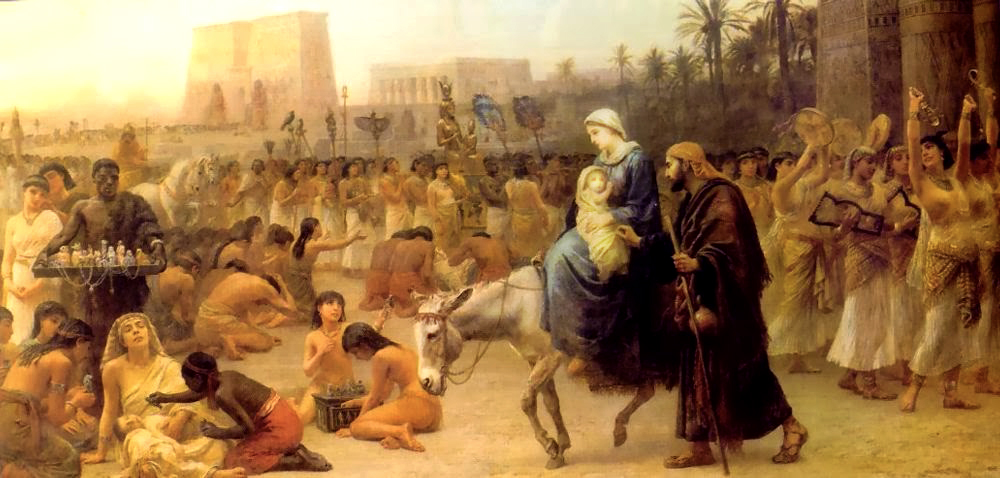
After they were gone, an angel of the Lord appeared to Joseph in a dream, saying, “Get up! Take the child and his mother, flee to Egypt, and stay there until I tell you. For Herod is about to search for the child to kill him.” So he got up, took the child and his mother during the night, and escaped to Egypt. He stayed there until Herod’s death, so that what was spoken by the Lord through the prophet might be fulfilled: Out of Egypt I called my Son.

~Matthew 2.13-15

The book of the prophet Hosea is a story of love and betrayal; set against the backdrop of Hosea’s own marriage to the adulteress Gomer, throughout the book, God repeatedly rebukes the northern Kingdom of Israel for scorning His grace, rejecting His love, forgetting His covenant, and playing the whore with the false gods of Baal. And so, in chapter 11, and verse 1, we read, “When Israel was a child, I loved him, and out of Egypt I called my son.” In these verses, God is looking back on the Exodus experience of His people as the initial overture of His love for Israel; as He goes on to say in verse 4 of that chapter, “I led them with human cords, with ropes of love. To them I was like one who eases the yoke from their jaws; I bent down to give them food.” It is clear that these verses are operating on the paternal imagery of parenthood. In the same way that parents nurture their newborn children, so also God nurtured His “son” Israel by bringing them out of Egyptian slavery, providing for them in the wilderness, and leading them into a land flowing with milk and honey. Even in spite of their repeated betrayal, God goes on to say in verse 8, “How can I give you up, Ephraim? How can I surrender you, Israel? How can I make you like Admah? How can I treat you like Zeboiim? I have had a change of heart; my compassion is stirred!” This chapter is a beautiful picture of the tenderness and mercy of God toward His rebellious son, and even though, the people of Israel will suffer His discipline, it holds out the hope that God has not ceased loving His people.

Now, in chapter 2 of the first canonical Gospel, Matthew connects the flight of the Holy family to Egypt to the words of Hosea 11.1, “so that what was spoken by the Lord through the prophet might be fulfilled: Out of Egypt I have called my Son (quoting Hosea 11.1b). But if the prophet Hosea wasn’t making a direct messianic prediction in the text in question, as we saw above, then how can the Egyptian flight of Mary, Joseph, and Jesus properly be considered a fulfillment? The answer is that this is a fulfillment by way of typology not prediction. Part of Matthew’s portrayal of Jesus is to show that He is the long awaited “prophet like Moses” (c.f. Deut 18.15-19), and he demonstrates this by highlighting the ways that Jesus recapitulates the story of Moses. A few examples should suffice. When Moses was born, Pharaoh killed all the Hebrew boys; when Jesus was born, Herod killed all the Jewish boys. According to 1 Corinthians 10.1-2, Moses had a baptism experience in the Red Sea, and Jesus was baptized in the Jordan River. Moses and the Israelites spent forty years in the wilderness; Jesus spent forty days in the wilderness. Moses went up on Mount Sinai to receive the Law; Jesus went up on a mountain to give the law (Sermon on the Mount). There are five books of Moses (Pentateuch); there are five discourses of Jesus’ sermons in the Gospel of Matthew. And “out of Egypt, I called my Son.” Based on this evidence, it is reasonably clear that the fulfillment that Matthew sees in the text of Hosea 11.1 is typological. Even as Israel was God’s typological “son”, Jesus is the true and better messianic Son of God.

In the final analysis, rather than violating the principle of authorial intent in his use of Hosea 11.1, the typological connection drawn by Matthew actually affirms the authorial intent of Hosea. And still, the question remains, “what of God’s intent in Hosea 11.1? When He inspired Hosea to write “out of Egypt, I called my son,” did he know that Matthew would take it in a different direction?” Of course, it is a theological truism to say that God knew the theological connections that Matthew would draw when He inspired Hosea to write, and so it is not wrong to say God “intended” more than Hosea understood at the time. However, this doesn’t mean that His intent stands in contradiction to or competition with the intent of Hosea. We must assume that God’s intent in Hosea 11 was to spark His people to repentance by reminding them of the great depths of His love that was demonstrated in the events of the Exodus, especially because the words of Hosea 11 are reported by the prophet as the very words spoken by God. (This is the Lord’s declaration, Hosea 11.11) Whatever “fuller sense” that we may understand from Hosea’s words, it must be grounded in the inspired intent of the human author, and this is exemplified in Matthew’s use of the text to explain the flight to Egypt.

But there is something that Matthew’s use of the Old Testament can teach us about our own interpretive efforts, namely that our hermeneutic for understanding of the Old Testament must reckon with the person and work of Christ. As Jesus himself affirms, “everything written about me in the Law of Moses, the Prophets, and the Psalms must be fulfilled.” (Luke 24.44) In other words, we have not done our full interpretive work in the Old Testament if we fail to consider how the text points to or is fulfilled in Jesus. If our understanding of the Old Testament would be accepted in a Jewish synagogue, then we haven’t understood the text Christianly. However, this does not mean that we can disregard the principle of authorial intent; we must still labor within the boundaries of literary and historical context before we can consider the broader canonical and theological implications. At the very least, our understanding of the human author’s intent must function as the true and necessary foundation upon which we stand as we seek the illumination of the Spirit in understanding the theological and applicational implications of the text for our lives in Christ. This is a thoroughly Christian understanding of how to interpret the Bible.


On the Spiritual Disciplines of Silence and Solitude

Quote

There is the view which misinterprets silence as a ceremonial gesture, as a mystical desire to get beyond the Word. This is to miss the essential relationship of silence to the Word. Silence is the simple stillness of the individual under the Word of God. Silence is nothing else but waiting for God’s Word and coming from God’s word with a blessing. … Silence before the Word leads to right hearing and thus also right speaking of the Word of God at the right time. … Let none expect from silence anything but a direct encounter with the Word of God, for the sake of which he has entered into silence. 

~Dietrich Bonhoeffer, Life Together

Topic: Silence and Solitude
Series: Spiritual Disciplines of the Christian Life
Church: South Caraway Baptist Church, Jonesboro, AR
Date: February 08, 2023


Slow To Write

"let every person be quick to hear, slow to speak, slow to anger."

lovegavehope

Just another WordPress.com site

Jared Cornutt

Pastor | Speaker | Writer

Denny Burk

A commentary on theology, politics, and culture

G3 Ministries

Events + Resources for the Local Church

Biblical Reasoning

Biblical and Systematic Theology According to the Scriptures

RetroChristianity

Reclaiming the Forgotten Faith

SBC Voices

Southern Baptist News & Opinion

Lucid Theology

Thoughts on words, books, theology, and life.

Baptist21

A pastor-led voice for Baptists in the 21st century

Center For Baptist Renewal

The Personal and Professional Blog of Phillip Powers

The Pastor's Well - Pastor Well

The Personal and Professional Blog of Phillip Powers

Articles - AlbertMohler.com

The Personal and Professional Blog of Phillip Powers

The Gospel Coalition

The Personal and Professional Blog of Phillip Powers