21 After these events, Paul resolved by the Spirit to pass through Macedonia and Achaia and go to Jerusalem. “After I’ve been there,” he said, “It is necessary for me to see Rome as well.” 22 After sending to Macedonia two of those who assisted him, Timothy and Erastus, he himself stayed in Asia for a while.
23 About that time there was a major disturbance about the Way. 24 For a person named Demetrius, a silversmith who made silver shrines of Artemis, provided a great deal of business for the craftsmen. 25 When he had assembled them, as well as the workers engaged in this type of business, he said, “Men, you know that our prosperity is derived from this business. 26 You see and hear that not only in Ephesus, but in almost all of Asia, this man Paul has persuaded and misled a considerable number of people by saying that gods made by hand are not gods. 27 Not only do we run a risk that our business may be discredited, but also that the temple of the great goddess Artemis may be despised and her magnificence come to the verge of ruin—the very one all of Asia and the world worship.”
28 When they had heard this, they were filled with rage and began to cry out, “Great is Artemis of the Ephesians!” 29 So the city was filled with confusion, and they rushed all together into the amphitheater, dragging along Gaius and Aristarchus, Macedonians who were Paul’s traveling companions. 30 Although Paul wanted to go in before the people, the disciples did not let him. 31 Even some of the provincial officials of Asia, who were his friends, sent word to him, pleading with him not to venture into the amphitheater. 32 Some were shouting one thing and some another, because the assembly was in confusion, and most of them did not know why they had come together. 33 Some Jews in the crowd gave instructions to Alexander after they pushed him to the front. Motioning with his hand, Alexander wanted to make his defense to the people. 34 But when they recognized that he was a Jew, they all shouted in unison for about two hours, “Great is Artemis of the Ephesians!”
35 When the city clerk had calmed the crowd down, he said, “People of Ephesus! What person is there who doesn’t know that the city of the Ephesians is the temple guardian of the great Artemis, and of the image that fell from heaven? 36 Therefore, since these things are undeniable, you must keep calm and not do anything rash. 37 For you have brought these men here who are not temple robbers or blasphemers of our goddess. 38 So if Demetrius and the craftsmen who are with him have a case against anyone, the courts are in session, and there are proconsuls. Let them bring charges against one another. 39 But if you seek anything further, it must be decided in a legal assembly. 40 In fact, we run a risk of being charged with rioting for what happened today, since there is no justification that we can give as a reason for this disturbance.” 41 After saying this, he dismissed the assembly.
~Acts 19.21-41
Title: On the Priorities of the Gospel Text: Acts 19.21-41 Series: The Book of Acts Church: Redeemer Baptist Church, Jonesboro, AR Date: October 20, 2024
17 After they passed through Amphipolis and Apollonia, they came to Thessalonica, where there was a Jewish synagogue. 2 As usual, Paul went into the synagogue, and on three Sabbath days reasoned with them from the Scriptures, 3 explaining and proving that it was necessary for the Messiah to suffer and rise from the dead: “This Jesus I am proclaiming to you is the Messiah.” 4 Some of them were persuaded and joined Paul and Silas, including a large number of God-fearing Greeks, as well as a number of the leading women.
5 But the Jews became jealous, and they brought together some wicked men from the marketplace, formed a mob, and started a riot in the city. Attacking Jason’s house, they searched for them to bring them out to the public assembly. 6 When they did not find them, they dragged Jason and some of the brothers before the city officials, shouting, “These men who have turned the world upside down have come here too, 7 and Jason has welcomed them. They are all acting contrary to Caesar’s decrees, saying that there is another king—Jesus.” 8 The crowd and city officials who heard these things were upset. 9 After taking a security bond from Jason and the others, they released them.
~ Acts 17.1-9
Title: On the Rejection of the Gospel at Thessalonica Text: Acts 17.1-9 Series: The Book of Acts Church: Redeemer Baptist Church, Jonesboro, AR Date: September 8, 2024
It is common in Biblical studies to suggest that the doctrine of the resurrection is a late development in Old Testament theology. Of course, the clearest Old Testament affirmation of this belief is found in Daniel 12.2, where we read, “Many who sleep in the dust of the earth will awake, some to eternal life, and some to disgrace and eternal contempt.” While the dating of Daniel is a much debated question, this verse certainly stands as a clear affirmation of the doctrine of a general resurrection possibly from as early as the exilic period. But is it possible that the doctrine of resurrection has a much longer presence in the Old Testament. I would suggest that it does, and I would base this suggestion, at least in part, on the words of David in Psalm 16, verse 10, where we read, “For you will not abandon me to Sheol; you will not allow your faithful one to see decay.” In this psalm, David is seeking divine protection because he has remained loyal to God, and he is praising God for his rich blessings with full confidence God will vindicate him and deliver him from death.
Now, this particular verse is quoted twice in the in the Book of Acts in defense of the resurrection of Jesus, once by Peter in Acts 2.27, and once again by Paul in Acts 13.35. Of course, their appeal to this verse raises all kinds of questions regarding the interpretive methods of Luke and the other apostles, but suffice it to say here that there is no need to suggest that they have misinterpreted it. They haven’t read something into it that wasn’t actually there in the first place. No, they have rightly understood the implications of David’s words, and by way of typological prediction, they have applied these words to the Messianic Son of David, Jesus the Christ. David genuinely believed that that God could and would deliver him even from death, so while the doctrine of resurrection is not spelled out explicitly, we have ample reason to believe that David held some conception of physical life after death. This is why he says, “you will not allow your faithful one to see decay.”
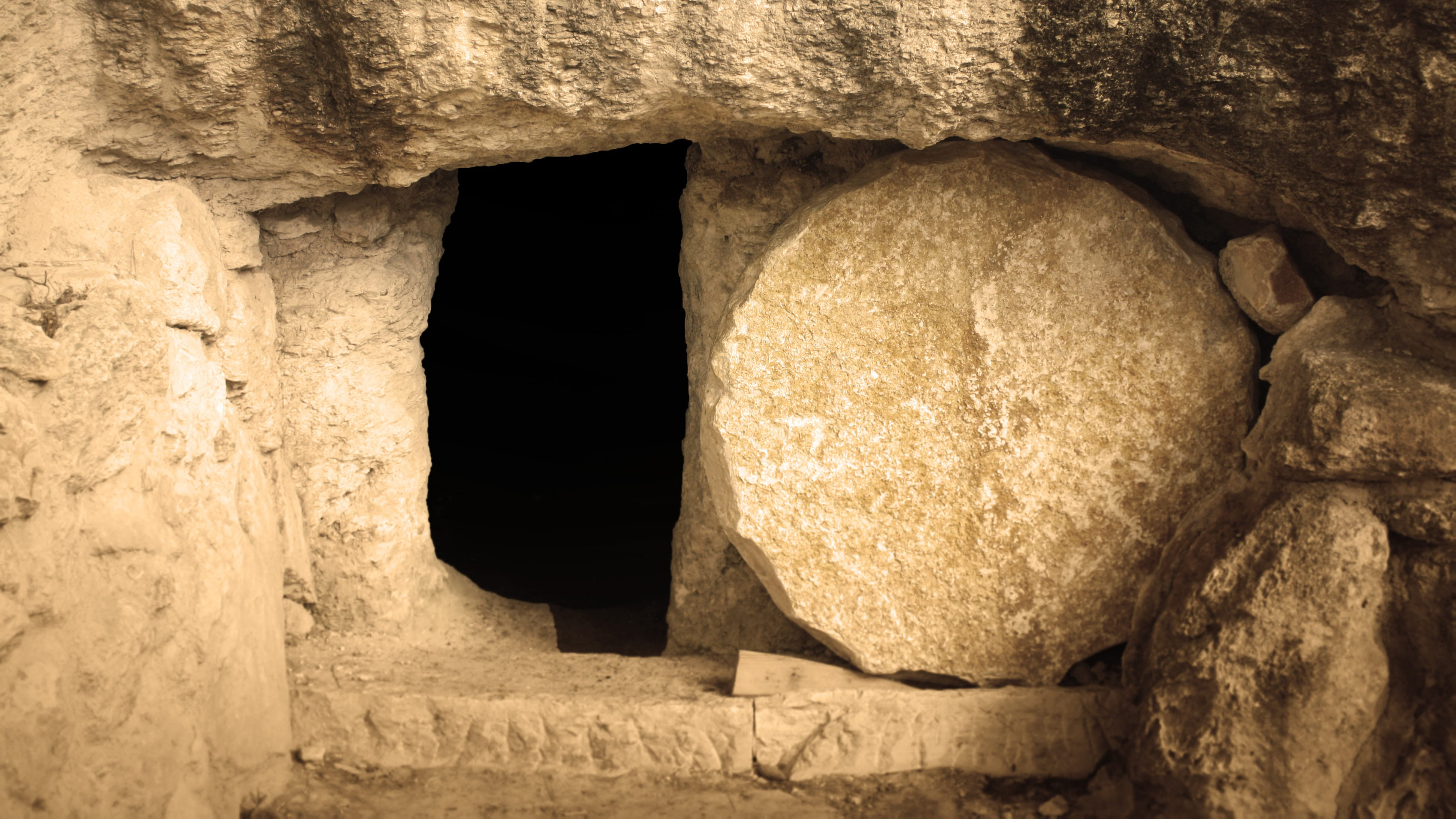
However, Peter’s explanation here deserves our attention. In Acts 2.29, he says, “Brothers and sisters, I can confidently speak to you about the patriarch David: He is both dead and buried, and his tomb is with us to this day.” Likewise, Paul explains similarly in Acts 13.36-37, “For David, after serving God’s purpose in his own generation, fell asleep, was buried with his fathers, and decayed,but the one God raised up did not decay.” Jesus was only in the grave for three days; there simply wasn’t enough time for his physical body to see decay. But David’s bones turned to dust a long time ago, as it is written, “All are going to the same place; all come from dust, and all return to dust.” (Ecclesiastes 3.20) This dusty fate is part of God’s curse on human sin, as we read in Genesis 3.19, “For you are dust, and you will return to dust.” It is a fate that awaits us all. So, we must ask the question: was David wrong in his expectation that his body would not see decay? Was he wrong in his hope for a bodily resurrection?
The answer to these questions must be a resounding, “May it never be.” David was not wrong to believe that God could and would deliver him even from the depths of death itself, and even though his physical body has long returned to the dust from whence it came, one day, his body will be raised new, perfectly whole and completely glorified. This is the hope of resurrection; it is the hope of de-dustification. As the Apostle Paul writes in Romans 8.11, “And if the Spirit of him who raised Jesus from the dead lives in you, then he who raised Christ from the dead will also bring your mortal bodies to life through his Spirit who lives in you.” Or again, in Philippians 3.21, “He will transform the body of our humble condition into the likeness of his glorious body, by the power that enables him to subject everything to himself.” If God can create man from the dust and breath the breath (the Hebrew word is the same word sometimes translated Spirit) of life into him so that he becomes a living soul, then he can certainly raise our bodies from the dust and give them eternal physical life by His Spirit.
In other words, far from being some late postulate in Old Testament theology, the idea of resurrection has a long standing place in Old Testament thought. It goes back at least to the time of David and the monarchy, some 1000 years before the time of Daniel and the exile, and it possibly goes back farther than that (but that is a topic for another time.) The point here is simply the Christian hope, nay, the biblical hope, is for nothing less than the perfected glory of bodily resurrection. As Jesus himself says, “a time is coming when all who are in the graves will hear his voice and come out—those who have done good things, to the resurrection of life, but those who have done wicked things, to the resurrection of condemnation.” (John 5.28-29) Maranatha!
It has been said on more than one occasion that “A text without a context is a pretext for a prooftext.” The point is that faithful bible reading must take the historical and literary context of the text into consideration. God spoke through real people living real lives with real questions, and in order to understand His Word, we must read it on its own terms, that is to say we must seek to understand it as it would have been understood by its intended audience. We must put ourselves into their shoes, so to speak, and look at things through their eyes. Then, and only then, will we be able to draw the parallel applications that transform our own lives. However, in the academic study of the New Testament, historical reconstructions of the life and times of the biblical audience can sometimes feel overly speculative and somewhat disconnected from the actual text. This is why, no matter how sophisticated our historical reconstruction may be, we must ask the question, “How does this help me to understand the text better?,” because at the end of the day, biblical studies is an irreducibly textual endeavor.
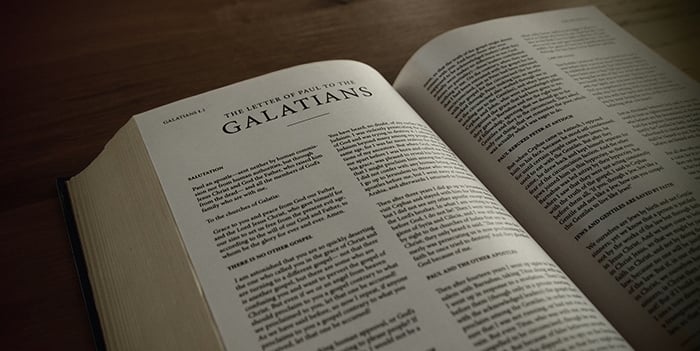
I recently had this point reiterated to me by a brother who is preparing to teach Paul’s Letter to the Galatians in our adult Sunday school class. Of course, the basic situation in Galatians is pretty straightforward. The newly converted Gentile Christians in Galatia are facing social and theological pressure from a group of Jewish “Christians” to be circumcised, so that they can truly be part of God’s (Jewish) people. This is a position that the Apostle Paul simply will not countenance under any circumstances; in fact, he condemns it outright in some of the harshest language in all of the New Testament. “As we have said before, I now say again: If anyone is preaching to you a gospel contrary to what you received, a curse be on him!” (1.9) Of course, Paul goes on in the letter to give historical and theological arguments against the position in question in chapters 3-4, and then he uses chapters 5-6 to emphasize those virtues and habits of character that truly distinguish someone as belonging to the people of God. In other words, the message of the letter is pretty clear.
However, we must ask whether or not this is all way can say about the situation in Galatians, particularly as this relates to chapters 1-2 and their relationship with the events in Acts 9-15. In these first two chapters, Paul gives a brief history of his own salvation and his relationship with the Jerusalem church; his point is that his gospel is not based on the traditions of men, but on the supernatural revelation of God himself in the person of Christ on the Damascus road. But the correspondence between Paul’s testimony and the events in Acts is less than clear to say the least. Of course, there are some that would say that the two are inherently incompatible, and to attempt any kind of combined reconstruction is hopeless and probably not even necessary. But for those of us who hold convictions regarding the inerrancy of the Scriptures, this is simply not an option. We must ask questions regarding the text’s larger coherence with the New Testament witness, especially when that text addresses events that are recorded by another author. For example, is the Jerusalem visit that Paul mentions in 2.1-10 to be understood as corresponding his visit at the Jerusalem council as it is recorded in Acts 15, or is it the famine visit that is mentioned in Acts 11? Who are these “men from James” (2.12), and what is the purpose of their visit in Antioch? Are they part of the circumcision party? Why would Peter withdraw from table fellowship from the Gentile Christians after his transformative experience with Cornelius (Acts 10)? And the list could go on.
I don’t have the answers to all of these questions, but in the space that follows, I would like to suggest a brief timeline that attempts to reconcile Galatians 1-2 with the events of Acts 9-15. In academic scholarship, this position is known as the Southern Galatia Theory, and it is associated with names such as F.F. Bruce and Richard Longenecker, to name but a few. In general, this theory posits that the Letter to the Galatians was written around 47-48 AD to the churches that Paul started during his first missionary journey (Acts 13-14) in the southern region of the Roman province of Galatia. The alternative view, known as the Northern Galatia Theory, argues that the Letter to the Galatians was written around 56-57 AD from Ephesus to ethnic Galatians in the north, the former kingdom of Galatia. Due to space considerations, I will not lay out this opposing theory in detail.
The timeline for the Southern Galatia Theory flows as follows: AD 34 – Conversion of Paul (Galatians 1.13-16, Acts 9.1-19), AD 34-37 – Paul in Arabia and Damascus (Galatians 1.17, Acts 9.19-22, 27), AD 37 – Paul visits Jerusalem after three years (Galatians 1.18-20, Acts 9.26-29), AD 37-47 – Paul in Syria and Cilicia (Galatians 1.21-24, Acts 9:30-31), AD 47 – Paul visits Jerusalem after 14 years (Famine Visit) (Galatians 2:1-10, Acts 11.27-30), AD 47-48 – Paul’s first missionary journey (Acts 13:1-14:28), AD 48 – Peter visits Antioch and confronts Peter (Galatians 2:11-14), AD 48 – Paul writes the Letter to the Galatians, AD 49 – Paul speaks at the Jerusalem Council (Acts 15.1-29), AD 49-51 – Paul visits the Galatian churches on his second missionary journey (Acts 16-18), AD 52-57 – Paul’s visits the Galatian churches on his third missionary journey (Acts 19-21).
This theory seems to be the most widely accepted in New Testament scholarship today, but we must return to the initial question of this post, namely, “how does this help me to understand the text better?” Again, this is the fundamental question; no matter how insightful and innovative our reconstruction may be, if it does not shed greater light on the meaning of the text, then it is nothing more than pointless speculation. In particular, I think the early date offered by this theory helps explain the actions of James and Peter in chapter 2. At this point in the history of the early church, the inclusion of the Gentiles was still a relatively new phenomenon. The details were still being worked out in the lives of real people on the frontlines of the church’s ministry. So, yes, even after Peter’s incredible experience with Cornelius, it is still possible for him to waiver under the social pressures of the circumcision party. Perhaps he thought his actions in Antioch would somehow hinder the evangelistic effort among the Jews in Jerusalem.
Moreover, it explains the apparent hesitancy of James and his representatives. Of course, James will go on to give the final argument against the requirement of circumcision at the Jerusalem Council, and he will write the apostolic letter detailing the council’s decision (Acts 15.23-29). But, perhaps at this moment, before the council, he was still considering the question. We don’t know, and we may never know. But for any theory to be considered probable, it must explain the evidence better than all the other possible explanations, and I believe that the Southern Galatia Theory does just that. Moreover, it shows us that the authors of Scripture were real fallible human beings. James, Peter, Paul – they were just ordinary men who God chose to use in extraordinary ways. They didn’t get everything right all the time, but they were “men [who] spoke from God as they were carried along by the Holy Spirit” (2 Peter 1.21), and in so doing, the produced the inerrant words of Holy Scripture. Thanks be to God for His incredible grace!
1 Paul, an apostle of Christ Jesus by God’s will: To the faithful saints in Christ Jesus at Ephesus. 2 Grace to you and peace from God our Father and the Lord Jesus Christ.
~Ephesians 1.1-2
Title: On a Historical, Literary, and Theological Overview of Ephesians Text: Ephesians 1.1-2 Series: The Letter to the Ephesians Church: South Caraway Baptist Church, Jonesboro, AR Date: April 30, 2023





 Faith seeking Understanding