Recently, I was following a thread on a friends Facebook post where the participants were discussing their disagreement on a question of biblical interpretation. The specific issue under debate is not important at the moment, and I’ll just say that I was surprised to find that this particular exchange was more graceful than these kinds of forums usually are. However, with that being said, after reading through the various points and counterpoints being made, I came across one response that made me pause. Figuring that the minds of the other participants were unlikely to change, one commenter attempted to conclude the discussion by saying:
“When it all comes down to it we should rely on The Holy Spirit of God to reveal His truths to us!! Don’t take what man has to say about it!!”
~Unnamed Facebook Commenter
In my previous post, I examined the question of “man-made” bible study resources, and I concluded that there is great wisdom in listening to the voices of those who have studied the Bible before us. We were never intended to approach Bible study as if we are the “lone ranger” of Bible interpretation, carving a path that has somehow never been carved before. Commentaries, theologies, and the like are part of God’s gift to the church (Ephesians 4.11-13); they are part of that “great cloud of witnesses” within which we pursue Christian maturity and godliness (Hebrews 12.1). However, even greater than these is the gift that is God’s Spirit. In the New Covenant, we who have been united with Christ by faith have been indwelt by God’s very Spirit, and He is the one who writes the Word upon our hearts and moves us to obey it (Jeremiah 31.33, Ezekiel 36.27). This is what makes Christian biblical interpretation unique; we have God’s Spirit (1 Corinthians 2.10-16).
Unfortunately, there is great misunderstanding as to the exact nature of the Spirit’s role in biblical interpretation, and in the space that follows, I would like to explore the contours of the Spirit’s work in Bible interpretation. According to the view represented by the Facebook comment above, all we need to do is read the Bible and then open our hearts and minds so that the Spirit can tell us what the Scripture means. This approach is essentially a recapitulation of the ancient heresy of Gnosticism. In other words, it suggests that Biblical knowledge comes to us by some kind of secret mystical experiential revelation from the Spirit apart from the text. But this is not the way that the Spirit works. Revelation is fixed, and the canon is closed. Moreover, the Spirit will not do for us what God has equipped us to do for ourselves. He has given us rational minds with the ability to read and comprehend His revealed Word. This is why we are repeatedly commanded to read, study, and grow in the knowledge of the Scriptures.
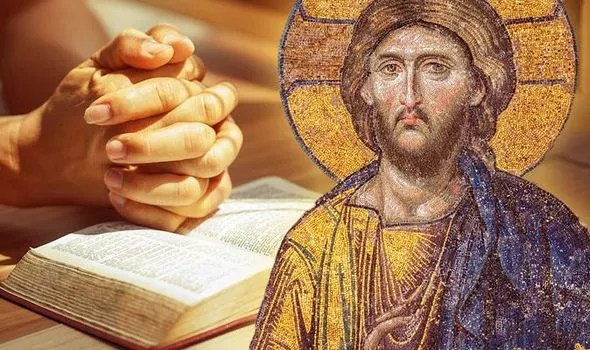
The Spirit’s work in biblical interpretation is not primarily revelatory; He does not impart the content of biblical meaning. Rather, His work pertains more to our accepting and obeying the principles that are revealed in the Scriptures. This is what is known in theology as the doctrine of illumination.
The Spirit convinces God’s people of the truth of the biblical message, and then convicts and enables them to live consistently with that truth. The Spirit does not inform us of Scripture’s meaning.
~Klein, Blomberg, & Hubbard, Introduction to Biblical Interpretation
The Spirit illuminates our hearts to accept the truth of God’s Word, and He helps to conform our will in submission to that Word through conviction. This illumination comes to us not through some mystical experiential supra-rational revelation, but through the classic word-centered spiritual disciplines. In other words, once we have done our exegetical work in the text, then we must do our closet work (ala Matt 6.6) through memorization, meditation, and prayer. When we engage in these rhythms of the Spirit, we put ourselves in a posture where He can use the fruits of our study to sift our souls. As the Scripture says,
“For the word of God is living and effective and sharper than any double-edged sword, penetrating as far as the separation of soul and spirit, joints and marrow. It is able to judge the thoughts and intentions of the heart.”
Hebrews 4.12
Under the New Covenant, one of the primary roles of the Spirit is to mediate the knowledge of God, but this ministry cannot, nay must not, be separated from the Word of God. Throughout all of Holy Scripture, the Spirit of God and the Word of God work together to transform the people of God into the image of God. More often than not, this transformation happens in ways and means that are consistent with the way God has made us. We do not seek any secret mystical revelation of God’s Word; rather, we use all of the natural and supernatural resources that God has given us to understand His revelation of Himself to us through His Word.
TEXT 11 He was praying in a certain place, and when he finished, one of his disciples said to him, “Lord, teach us to pray, just as John also taught his disciples.”
2 He said to them, “Whenever you pray, say,
Father, your name be honored as holy. Your kingdom come. 3 Give us each day our daily bread. 4 And forgive us our sins, for we ourselves also forgive everyone in debt to us. And do not bring us into temptation.”
5 He also said to them, “Suppose one of you has a friend and goes to him at midnight and says to him, ‘Friend, lend me three loaves of bread, 6 because a friend of mine on a journey has come to me, and I don’t have anything to offer him.’ 7 Then he will answer from inside and say, ‘Don’t bother me! The door is already locked, and my children and I have gone to bed. I can’t get up to give you anything.’ 8 I tell you, even though he won’t get up and give him anything because he is his friend, yet because of his friend’s shameless boldness, he will get up and give him as much as he needs.
9 “So I say to you, ask, and it will be given to you. Seek, and you will find. Knock, and the door will be opened to you. 10 For everyone who asks receives, and the one who seeks finds, and to the one who knocks, the door will be opened. 11 What father among you, if his son asks for a fish, will give him a snake instead of a fish? 12 Or if he asks for an egg, will give him a scorpion? 13 If you then, who are evil, know how to give good gifts to your children, how much more will the heavenly Father give the Holy Spirit to those who ask him?”
Text: Luke 11.1-13 Series: Supply Preaching Church: South Caraway Baptist Church, Jonesboro, AR Date: August 9, 2020
1 Paul, an apostle of Christ Jesus by God’s will: To the faithful saints in Christ Jesus at Ephesus. 2 Grace to you and peace from God our Father and the Lord Jesus Christ.
Title: On an Introduction to Ephesians Series: John Newton Pastors Conference Church: Grace Baptist Church, West Memphis, AR Date: May 20, 2022
17 The seventy-two returned with joy, saying, “Lord, even the demons submit to us in your name.” 18 He said to them, “I watched Satan fall from heaven like lightning. 19 Look, I have given you the authority to trample on snakes and scorpions and over all the power of the enemy; nothing at all will harm you. 20 However, don’t rejoice that the spirits submit to you, but rejoice that your names are written in heaven.”
21 At that time he rejoiced in the Holy Spirit and said, “I praise you, Father, Lord of heaven and earth, because you have hidden these things from the wise and intelligent and revealed them to infants. Yes, Father, because this was your good pleasure. 22 All things have been entrusted to me by my Father. No one knows who the Son is except the Father, and who the Father is except the Son, and anyone to whom the Son desires to reveal him.”
23 Then turning to his disciples he said privately, “Blessed are the eyes that see the things you see! 24 For I tell you that many prophets and kings wanted to see the things you see but didn’t see them; to hear the things you hear but didn’t hear them.”
~Luke 10.17-24
Title: On Luke 10.17-24 Series: Who is Jesus? A Study of the Gospel of Luke Church: South Caraway Baptist Church, Jonesboro, AR Date: October 24, 2021
As most churches usually do, we begin our Sunday school class every week with a time for sharing prayer requests. And just personally, I am so glad that we do this. I have actually heard pastors criticize this practice, complaining that the requests are always the same, i.e. praying for someone’s illness or medical condition. The complaint, as it usually goes, has to do with the perceived depth of these requests, as if they are not important enough, not spiritual enough, to occupy our time and concern. What a shame! Sharing burdens with one another, no matter how trivial they may seem, is the beauty and the power of the body of Christ. But I digress; we will save that topic for another time. Over the last several weeks, I have been amazed to see and hear how many of the prayer requests that have been shared that have to do with COVID. Every week there is someone else who has been diagnosed with COVID. Every week there is someone else who has been hospitalized due to COVID. Every week there is someone else who has passed away from COVID.
Every time I hear one of these requests, along with the many others that are shared, I find myself taken by a twinge of grief. There is a sadness that is appropriate to the suffering of those that we love, and we must allow ourselves to feel it. The Scriptures encourage us to “rejoice with those who rejoice; weep with those who weep,” to “carry one another’s burdens; in this way you will fulfill the law of Christ.” (Romans 12.15, Galatians 6.2) However, we must not allow ourselves to be overtaken by this grief, whether it be that of others or even our own. When we allow our pain to become all-consuming, we fall quickly into feelings of depression, despair, and hopelessness. As Christians we must remember that we do “not grieve like the rest, who have no hope.” (1 Thessalonians 4.13) Grief, sadness, heartache; these are not the end of our story. “For our momentary light affliction is producing for us an absolutely incomparable eternal weight of glory.” (2 Corinthians 4.17)
This is the point, namely that what we are waiting for so far outshines our present difficulties as to almost make them seem trivial by comparison. They are not trivial, of course; we feel them acutely. But we know that when our Lord returns, all of our griefs, all of our groanings, will prove to have been worth it. “We wait for the blessed hope, the appearing of the glory of our great God and Savior, Jesus Christ.” (Titus 2.13) What I am trying to say is that this vibrant hope, this anxious expectation, should characterize the disciples of Jesus; it should stand at the very foundation of our faith. We should all be anticipating and desiring that day when our Lord Jesus will return to establish His Kingdom on this earth once and for all, when He will do away with sin and sickness and death, and when He will welcome us into His glorious presence to remain for all eternity. However, for many Christians, it would seem, this glorious hope is the farthest thing from their minds, and their lives sadly reflect the want of it.
For the most part, our eschatological reflection in the church is either entirely absent or hopelessly mired in frivolous speculation about secondary and tertiary details that result in even more confusion. This is not to say that questions regarding the rapture or the millennium are unimportant, but it is to say that having the right answers to these questions is not the basis of our hope. Our hope is grounded in the promise of our Lord Jesus Christ, who said, “If I go away and prepare a place for you, I will come again and take you to myself, so that where I am you may be also.” (John 14.3) This promise is the sure and firm foundation for our hope, especially when we are facing times of difficulty, sadness, and grief. And so, “Let us hold on to the confession of our hope without wavering, since he who promised is faithful.” (Hebrews 10.23.)
Throughout its history and even today, the body of Christ is beautifully and abundantly diverse, but one of the things that has united all Christians at all times and in all places is our vibrant hope that looks expectantly forward to the return of our Lord Jesus Christ. We are called to be a people who “love His appearing.” (c.f. 2 Timothy 4.8) And when the darkness of grief threatens to choke out every flicker of joy, on those days we must redouble our conviction, we must fan the flame of our expectation, we must set our gaze once again upon that day when “He will wipe away every tear from their eyes, [when] Death will be no more; grief, crying, and pain will be no more.” This is our blessed hope, and in it we find the strength to persevere, to endure every circumstance. Our waiting, our groaning, is not in vain. “He who testifies about these things says, “Yes, I am coming soon.” [And we say], Amen! Come, Lord Jesus!” (Revelation 22.20)
In many ways, the nature of theological discourse, especially when it comes to navigating areas of disagreement, is like a crucible. It very quickly burns away every veneer, every façade, every pretense, and it reveals in no uncertain terms the condition of a person’s heart. It exposes the quality of person’s character in ways that no other interpersonal endeavor seems to. In my last post, I suggested that no matter how stark our disagreements may be, we must still engage our opponents Christianly. We must cultivate the virtues of Christ-likeness even when we are required to address questions of Biblical interpretation about which we hold strong convictions or for which we have the most zeal. Our Lord Jesus Christ is the exemplar par excellence when it comes to interacting with people with whom we have sharp and pointed disagreements, and as His disciples, we would do well to consider His conduct in these matters and do likewise.
Of course, a cursory reading of the Gospels quickly reveals that Jesus was not afraid of theological debate. There were many occasions where things got quite heated in the discussions that He had with the religious leaders of His day, and Jesus certainly did not hold back in His rebuke of them. He variously referred to them as a “brood of vipers” (Matt 12.34, 23.33), as “hypocrites” (Luke 12.56, 13.15), even as “sons of their father the devil”(John 8.44). To our modern ears, this sounds overly harsh and smacks of contempt. Moreover, it appears to be nothing more than a kind of ad hominem attack, which is a logical fallacy that attacks the person rather than engages the substance of their argument. However, Jesus was a master of language and rhetorical strategy; therefore, He cannot be charged with any kind of personal malice or fallacious argumentation. Upon further study of these exchanges, it becomes clear that Jesus’ disagreements with the Jewish religious were, in fact, quite substantive, and that these disagreements were a large part of the motivations that led the Jewish leaders to plot for His death by crucifixion.
Further reflection on these scenes is beyond the scope of this article; however, the question remains: to what extent are Jesus’ interchanges with the Jewish religious leaders exemplary for our approach to navigating disagreements in theological discourse? Does our pursuit of Christlikeness require that we emulate the rhetorical strategies of Jesus against the Pharisees? Are we supposed to treat our theological opponents with the same attitude and method as Jesus? In answer to these questions, I would like to offer the following thesis: Jesus’ interactions with the Jewish religious leaders of His day are not an example for how we should address our disagreements in modern theological discourse. And in the space remaining, I would like to offer three reasons in support of this conclusion.
First, Jesus had the proper authority to rebuke. The question of Jesus’ authority was the driving force in the majority of His conflict with the Jewish religious leaders. In Mark, chapter 1, and verse 22, we read that the people “were astonished at his teaching because he was teaching them as one who had authority, and not like the scribes.” Jesus possessed inherent authority as Messiah, and this was a direct threat to the Jewish religious establishment. This was the primary point of contention between Jesus and the religious leaders. In fact, the differences in biblical interpretation that separated them were not even that significant by comparison. The religious leaders rejected the messianic claim of Jesus, and that rejection pushed them to conspire for His death as early as Mark chapter 3. So, in truth, the conflict between Jesus and the religious leaders was never really a theological one to begin with. It was through and through a question of authority and submission, specifically the messianic authority of Jesus and the refusal of the Jewish leaders to submit to Him. Therefore, we must conclude that the rebukes that He spoke against them were aimed, not at their theological disagreements, but rather, they were meant to provoke the religious leaders to repentance and submission.
Secondly, Jesus had the necessary character to rebuke. We confess that Jesus is the second person of the Trinity incarnate, fully God and fully man, born of the virgin Mary, born without sin. He was “tempted in every way as we are, yet without sin” (Hebrews 4.15). He lived a sinless life in perfect obedience to the Father. He was not given to vices like pride and arrogance, contempt, scorn, guile, etc. Even in His anger, He was without sin. This means that the rebukes that He levied against the Jewish religious leaders came from a heart that was perfectly righteous and holy. He was genuinely driven by love for God and by love for His opponents; He championed the truth for the sake of the truth, not for personal gain or one-upmanship. His motives were never mixed, never polluted, never turned toward self, but always meant to bring His opponents to repentance and faith. This is the ideal to which we must aspire; however, on this side of glory, we can never be certain that our motives are perfectly pure. As long as we live in this fallen world, our attitudes will necessarily be mixed with sin, which is why we be ever conscious, always examining the motives of our hearts before venturing to rebuke those with whom we disagree. We should submit ourselves to the examination of the Spirit, praying as the psalmist taught us, “Search me, God, and know my heart; test me and know my concerns. See if there is any offensive way in me; lead me in the everlasting way.” (Psalm 139.23-24)
And lastly, Jesus had the ideal context to rebuke. It goes without saying that the world has changed since the days of Jesus and His first followers. His was a culture that was primarily oral, where theological discourse was a public affair, where disagreements were hammered out in face to face dialogue in front of a crowd of onlookers. By contrast, ours is a culture that is primary literary, where theological discourse is a written affair, where disagreements are hammered out in books and journal articles that are subject to peer review and the editorial process. Of course, the proliferation of social media has all but circumvented those processes; avenues for both formal and informal review are nearly nonexistent in the facebook realm, the twitterspace, and the blogosphere. But there is a big difference between discussing our theological differences in face to face conversation and taking anonymous potshots from behind a computer screen. When Jesus launched His rebukes against the Jewish religious leaders, He was operating in a open and public context that required active listening and clear argumentation. It was a context that had natural checks and balances in the form of the watching crowds. He knew His opponents, and they knew Him; there was no hiding. The point is this: context matters. In other words, context determines how we navigate our theological disagreements. How we discuss these matters in face to face dialogue is very different from how we handle them on social media or in the pages of published scholarship.
In conclusion, there is a vast difference between the rebukes that Jesus levied against those who had rejected Him as their Messiah and navigating our theological disagreements within the body of Christ. And what we must affirm is that Christians are called to navigate their disagreements with attitudes and approaches that are counter to the ways of the world at large. We are called to be different, we are called to righteousness and holiness. We are called to the way of love. It is natural and easy to love those with whom we agree, but it is whole other challenge to love those with whom we disagree, even when that disagreement is relatively minor. We must learn to love others theologically. The example of our Lord Jesus Christ demands nothing less than this.
Text 24 And let us consider one another in order to provoke love and good works, 25 not neglecting to gather together, as some are in the habit of doing, but encouraging each other, and all the more as you see the day approaching.
~Hebrews 10.24-25
Title: A Healthy Church Member … Gathers Series: A Healthy Church Member Church: South Caraway Baptist Church, Jonesboro, AR Date: January 31, 2021
If you have ever browsed pastoral job descriptions, then you know that for most churches Jesus himself wouldn’t measure up to their desired qualifications. After all, he was a single thirty something with almost no pastoral experience. But I digress. What you have probably also noticed is that almost every one of these descriptions makes some reference to the qualifications for elders mentioned in 1 Timothy 3.1-7 and/or Titus 1.6-9. In these passages, Paul lays out the character virtues that should be true of those who serve the church in the role of pastor/elder.
And this is the point that must be emphasized, that each and every one of these qualifications reflect a man’s character and not his achievements, skills, or experience. As God once told the prophet Samuel, “Humans do not see what the Lord sees, for humans see what is visible, but the Lord sees the heart.” (1 Samuel 16.7) Paul wants Timothy and Titus to understand this principle, that what matters in Christian service are the virtues of Christ-like character, godliness that flows outward from a heart that has been transformed by the Spirit. These are what make a person qualified to lead others down the path of Christian discipleship. As the old adage states, “it is impossible to lead someone down a path that you have never traveled yourself.” And so it is for those who would lead Christ’s church.
However, one of these qualifications seems to stand out from the rest, and that is where elders are called to be “able to teach.” (1 Timothy 3.2) Of course, a quick reading of the Pastoral Epistles makes it very clear that teaching/preaching is one of the primary duties of those who serve the church as pastors/elders. Time and again, Paul exhorts his young protégés, Timothy and Titus, to “Preach the word; be ready in season and out of season; rebuke, correct, and encourage with great patience and teaching.” (2 Timothy 4.2) The importance of teaching/preaching in the ministry of a pastor/elder almost seems to trump all other concerns, and understandably so, because “All Scripture is inspired by God and is profitable for teaching, for rebuking, for correcting, for training in righteousness, so that the man of God may be complete, equipped for every good work.” (2 Timothy 3.16-17)
Therefore, it would seem that an ability to teach is a primary qualification for those men who aspire to the noble work of pastoral/elder ministry. The problem, though, is that an ability to teach is more of a skill than it is a quality of godly character. It is almost out of place for Paul to include the skill of teaching ability in a list of what is otherwise qualities of Christ-like character. More than that though, in actual practice, we have come to the point where we exalt a man’s rhetorical ability over and above all other concerns when it comes to evaluating pastoral candidates. We have created a celebrity culture in the church where mega-church pastors who have remarkable speaking and teaching ability have become the standard against which all other pastors are measured. Style, personality, and delivery become the criterion by which we judge a pastor/elder. And so, in most cases, pastoral candidates are invited to preach in view of a call, and after a single hearing, the church is asked to vote on that candidate for pastor, a decision which more often than not boils down to mere stylistic preference.
If Paul prioritizes qualities of character over achievements, skills, and experience, then how can a congregation expect to evaluate a man’s character after only a few hours of interaction. This system is flawed, but that is a topic for another post. My concern in this post is to consider anew what the Apostle Paul meant by the phrase “able to teach.” Now, this three word phrase in English renders a single word in the Greek text, διδακτικός/didaktikos, and this word only occurs twice in the New Testament, here in 1 Timothy 3.2 and also in 2 Timothy 2.24. So, we have scant evidence within the New Testament to which we might appeal for a better understanding of this word. However, we do have a similar word that may shed some light on our text, and that is the word διδακτός/didaktos. This adjective describes someone who is taught or instructed (c.f. John 6.45, 1 Corinthians 2.13, 1 Thessalonians 4.9). So, what we have in our text is simply this same adjective with the ending -(t)ikos. This Greek suffix carries the meaning of “concerned with” and “having characteristics of.” In light of this evidence, we may conclude that the meaning of the word in question carries the idea of something like “having the characteristics of someone who has been taught.” In other words, someone who is teachable.
And in the context of both 1 Timothy 3.2 and 2 Timothy 2.24, the meaning “teachable” would seem to fit squarely with the argument that Paul is making. An elder/pastor “must be above reproach, the husband of one wife, self-controlled, sensible, respectable, hospitable, [teachable].” (1 Timothy 3.2) Likewise, he “must be gentle to everyone, [teachable], and patient.” (2 Timothy 2.24). This reading simply fits better with the contextual and linguistic evidence. The bottom line is that teaching/preaching ability is a skill that can be learned and honed over time. In fact, I would suggest that it is something that even the most prolific preachers continually work on, as they constantly seek to be better communicators of God’s truth. But being teachable is the fruit of God’s spirit working within to make us more like Christ. It is a reflection of godly humility that recognizes that we do not have all the answers, a reflection of the heart that understands there is always more to learn in the School of Christ.
Of course, we must hasten to add that the one directly affects the other, that is to say that being teachable is necessary in the work of preaching and teaching effectively, because the pastor/elder that assumes that he knows it all has already fallen headlong into the pride of human self-sufficiency. But godly pastor/elders understand that they have no sufficiency in themselves, nothing of value to offer; rather, they only speak as those who have been taught of God by the Spirit through the Word, and this is what makes their teaching and preaching effective, namely that it comes from God and not from themselves. This is in keeping with the example of our Lord Jesus who said, “For I have not spoken on my own, but the Father himself who sent me has given me a command to say everything I have said. I know that his command is eternal life. So the things that I speak, I speak just as the Father has told me.” (John 12.49-50)
This, I believe, is what Paul intended when he called pastor/elders to be “able to teach”, namely that they speak only as they have heard from the inspired Word of the one true and living God, that they eschew the temptations of originality, creativity, and novelty in the pulpit, that they accurately and faithfully deliver what was once for all delivered to the saints. As the Apostle Paul puts it,
When I came to you, brothers and sisters, announcing the mystery of God to you, I did not come with brilliance of speech or wisdom. I decided to know nothing among you except Jesus Christ and him crucified. I came to you in weakness, in fear, and in much trembling. My speech and my preaching were not with persuasive words of wisdom but with a demonstration of the Spirit’s power, so that your faith might not be based on human wisdom but on God’s power.
Text 14 I write these things to you, hoping to come to you soon. 15 But if I should be delayed, I have written so that you will know how people ought to conduct themselves in God’s household, which is the church of the living God, the pillar and foundation of the truth. 16 And most certainly, the mystery of godliness is great:
He was manifested in the flesh, vindicated in the Spirit, seen by angels, preached among the nations, believed on in the world, taken up in glory.
4 Now the Spirit explicitly says that in later times some will depart from the faith, paying attention to deceitful spirits and the teachings of demons, 2 through the hypocrisy of liars whose consciences are seared. 3 They forbid marriage and demand abstinence from foods that God created to be received with gratitude by those who believe and know the truth. 4 For everything created by God is good, and nothing is to be rejected if it is received with thanksgiving, 5 since it is sanctified by the word of God and by prayer.
6 If you point these things out to the brothers and sisters, you will be a good servant of Christ Jesus, nourished by the words of the faith and the good teaching that you have followed. 7 But have nothing to do with pointless and silly myths. Rather, train yourself in godliness. 8 For the training of the body has limited benefit, but godliness is beneficial in every way, since it holds promise for the present life and also for the life to come. 9 This saying is trustworthy and deserves full acceptance. 10 For this reason we labor and strive, because we have put our hope in the living God, who is the Savior of all people, especially of those who believe.
Title: On the Practice of Holiness Series: All I Want for Christmas Church: South Caraway Baptist Church, Jonesboro, AR Date: December 27, 2020
Charles-André van Loo’s 18th-century Augustine arguing with Donatists
I once was told by a well meaning deacon in a church that I previously pastored that my preaching was not “spirit led”. Now, in the interest of transparency, at that time, for the AM services I was ordering my preaching schedule by the traditional Christian calendar and selecting my texts from the Revised Common Lectionary. For my reasoning on this, see my posts here and here. And for the PM services, I was preaching expositionally verse-by-verse through the Minor Prophets. My purpose in this post is not to defend myself against the criticism; it was perhaps well intended. Rather, I would like to examine the underlying presupposition that informs such a critique.
In many rural Bible-Belt churches, it is usually assumed that being “spirit led” is synonymous with spontaneity, that the preacher who is “led by the Spirit” receives a direct word from the Lord to be preached to the church every week. To put it another way, it is the spiritual perception of the preacher that informs and empowers the preaching task rather than the systematic study of Holy Scripture. In its most egregious expression, I have seen many a preacher step into the pulpit and cast his prepared sermon aside, explaining that God had given him another sermon just a few moments before during the song service.
The problem with this kind of perspective on preaching is that it locates the efficacy of preaching in the preacher, in his spirituality, in his perceptivity and attunement to the voice of the Spirit. It removes the power of preaching from the inspired Word of God and puts it in the experience of the “so-called” man of God. As the Apostle Paul would say, “May it never be!”
Of course, this is not a new question in the life of the church; after all, there is nothing new under the sun (Eccl 1.9). This same issue had to be addressed in the early church, and at that time it was called Donatism, so named after Donatus Magnus, who was consecrated as Bishop of Carthage in 313 AD. Beginning in 303 AD, the Emperor Diocletian issued a series of edicts rescinding the legal rights of Christians in the Roman Empire and demanding that they comply with traditional pagan worship practices. This time period is now known as the “Great Persecution”, because this was the last and most severe persecution of Christians in the Roman Empire before Constantine issued the Edict of Milan in 313 AD, essentially legalizing Christianity.
However, during that ten year period of persecution, rather than become martyrs, some Christian priests capitulated to the persecution and surrendered their copies of Holy Scripture as a token repudiation of their faith. These traditores, as they were later called, were eventually reinstated to their ministerial service, but the validity of their continued ministry was questioned by Donatus and his followers. In other words, the Donatists argued that the administration of the sacraments by traditores was invalidated by their previous moral compromise. This position became known as ex opere operantis, which is Latin for “from the work of the worker”, meaning that the validity of the ministry depended on the worthiness of the bishop performing it.
It was the great theologian Augustine, Bishop of Hippo from 396-430 AD, that was the most vocal opponent of the Donatists. In his seven volume work On Baptism, Against the Donatists, he argued for the counter position ex opere operato, which is Latin for “from the work worked”, meaning that the validity of the ministry rests not in the one who performs it but in the finished work of Christ and is guaranteed by the promise of God. In other words, the efficacy of God’s grace is not dependent upon the human vessel offering it but on the power of God to affect change in the one who receives it. This position eventually won the day, and the Donatists were subsequently condemned by the church as heretics.
Coming back to our original question as to the efficacy and power of preaching, the assumption that this is based on the spirituality of the preacher is not unlike the heresy of the Donatists. It puts the power in the man instead of putting it where it belongs, which is in the Spirit inspired Word of God. As the Apostle Paul reminds us, “All Scripture is inspired by God and is profitable for teaching, for rebuking, for correcting, for training in righteousness.” (2 Tim 3.16), and as God promises through the prophet Isaiah, “my word that comes from my mouth will not return to me empty, but it will accomplish what I please and will prosper in what I send it to do.” (Isa 55.11)
So, instead of placing the blame on our pastors for ineffective and powerless preaching, maybe we should turn the question back on ourselves and ask if we are open to receiving what the Spirit has already said in His Word. As long as the Word of God is being faithfully and accurately proclaimed, then the responsibility falls to the hearers to respond accordingly. Therefore, let us pray that the Spirit will give us the eyes to see, the ears to hear, and the heart to receive what He is saying to the church through His inspired Word!




 Faith seeking Understanding
On Biblical Interpretation and the Holy Spirit
Recently, I was following a thread on a friends Facebook post where the participants were discussing their disagreement on a question of biblical interpretation. The specific issue under debate is not important at the moment, and I’ll just say that I was surprised to find that this particular exchange was more graceful than these kinds of forums usually are. However, with that being said, after reading through the various points and counterpoints being made, I came across one response that made me pause. Figuring that the minds of the other participants were unlikely to change, one commenter attempted to conclude the discussion by saying:
In my previous post, I examined the question of “man-made” bible study resources, and I concluded that there is great wisdom in listening to the voices of those who have studied the Bible before us. We were never intended to approach Bible study as if we are the “lone ranger” of Bible interpretation, carving a path that has somehow never been carved before. Commentaries, theologies, and the like are part of God’s gift to the church (Ephesians 4.11-13); they are part of that “great cloud of witnesses” within which we pursue Christian maturity and godliness (Hebrews 12.1). However, even greater than these is the gift that is God’s Spirit. In the New Covenant, we who have been united with Christ by faith have been indwelt by God’s very Spirit, and He is the one who writes the Word upon our hearts and moves us to obey it (Jeremiah 31.33, Ezekiel 36.27). This is what makes Christian biblical interpretation unique; we have God’s Spirit (1 Corinthians 2.10-16).
Unfortunately, there is great misunderstanding as to the exact nature of the Spirit’s role in biblical interpretation, and in the space that follows, I would like to explore the contours of the Spirit’s work in Bible interpretation. According to the view represented by the Facebook comment above, all we need to do is read the Bible and then open our hearts and minds so that the Spirit can tell us what the Scripture means. This approach is essentially a recapitulation of the ancient heresy of Gnosticism. In other words, it suggests that Biblical knowledge comes to us by some kind of secret mystical experiential revelation from the Spirit apart from the text. But this is not the way that the Spirit works. Revelation is fixed, and the canon is closed. Moreover, the Spirit will not do for us what God has equipped us to do for ourselves. He has given us rational minds with the ability to read and comprehend His revealed Word. This is why we are repeatedly commanded to read, study, and grow in the knowledge of the Scriptures.
The Spirit’s work in biblical interpretation is not primarily revelatory; He does not impart the content of biblical meaning. Rather, His work pertains more to our accepting and obeying the principles that are revealed in the Scriptures. This is what is known in theology as the doctrine of illumination.
The Spirit illuminates our hearts to accept the truth of God’s Word, and He helps to conform our will in submission to that Word through conviction. This illumination comes to us not through some mystical experiential supra-rational revelation, but through the classic word-centered spiritual disciplines. In other words, once we have done our exegetical work in the text, then we must do our closet work (ala Matt 6.6) through memorization, meditation, and prayer. When we engage in these rhythms of the Spirit, we put ourselves in a posture where He can use the fruits of our study to sift our souls. As the Scripture says,
Under the New Covenant, one of the primary roles of the Spirit is to mediate the knowledge of God, but this ministry cannot, nay must not, be separated from the Word of God. Throughout all of Holy Scripture, the Spirit of God and the Word of God work together to transform the people of God into the image of God. More often than not, this transformation happens in ways and means that are consistent with the way God has made us. We do not seek any secret mystical revelation of God’s Word; rather, we use all of the natural and supernatural resources that God has given us to understand His revelation of Himself to us through His Word.
For further study:
On the Spirit and the Word
Share this:
3 Comments | tags: Bible Study Resources, Closet Work, Commentaries, Exegetical Work, Gnosticism, Holy Spirit, Illumination, Meditation, Memorization, New Covenant, Phillip Powers, Prayer, Spiritual Disciplines, Theologies | posted in Biblical Theology, Hermeneutics, Spiritual Formation