Tag Archives: Son of Man

On the Jesus of History and the Christ of Faith

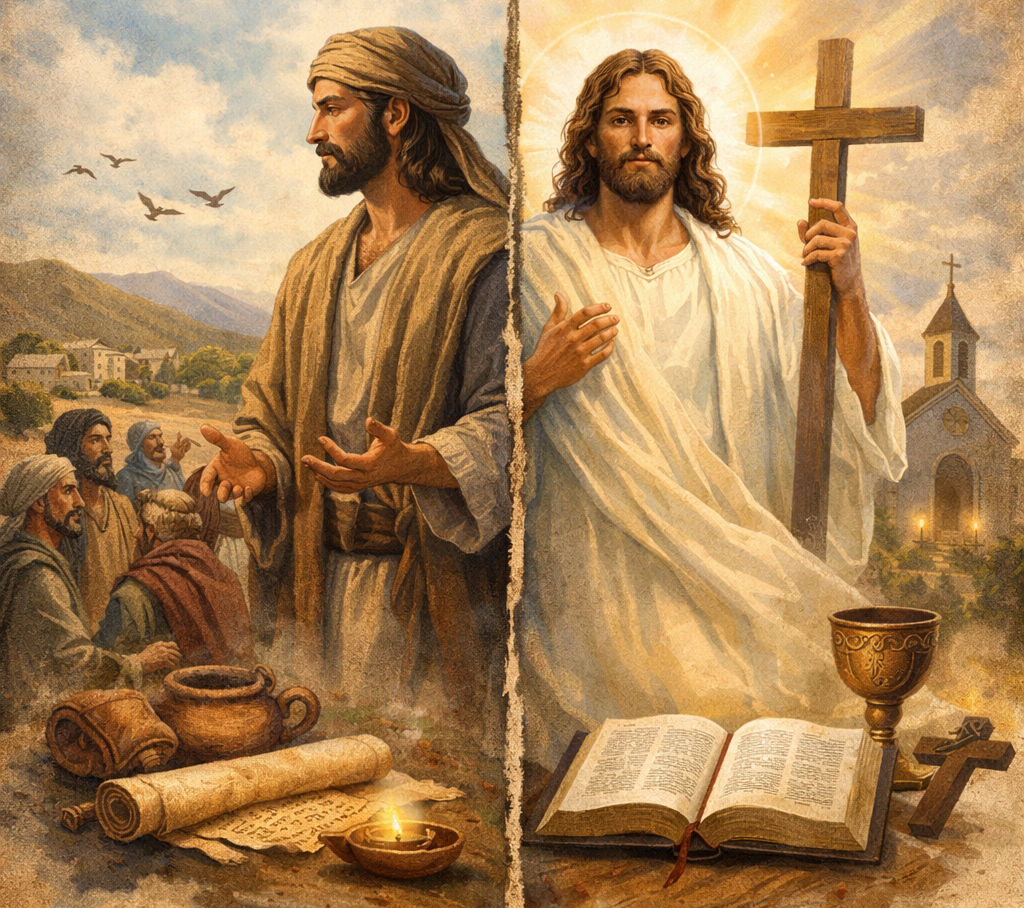
One of my favorite topics in the study of the New Testament is the historical Jesus; it is an area of study that attempts to understand Jesus as he was within the context of first century Judaism. However, many who study the historical Jesus argue that the Jesus of history (the first century Jewish teacher) is not the Christ of faith (the exalted Lord proclaimed by the church). In other words, the early church’s understanding of Jesus has been embellished and augmented by influences that go well beyond who Jesus actually was and what he taught. This presupposition is one of the the primary factors that originally inspired the now century old quest(s) for the historical Jesus. Of course, we must affirm that historical investigation is indispensable for understanding the person and work of Jesus, but the hard distinction between the Jesus of history and the Christ of faith collapses under the weight of the earliest evidence. The church’s confession of Christ emerges not as a departure from Jesus, but as the historically grounded interpretation of his life, death, and resurrection. In the space that follows, I would like to defend this thesis by examining why history matters, where the split came from, and why the evidence actually favors continuity and not discontinuity.

It would seem to be readily evident that the historical study of the New Testament is essential for understanding the Christian faith. This is because Christianity makes several direct and specific claims about real events that took place in historical space and time. So understanding these events and their historical and theological significance is a matter of first importance when it comes to understanding our faith. As a case in point, when the eternal Son came incarnate in the person of Jesus Christ, he stepped into a particular place at a particular time, the fullness of time according to Galatians 4.4. In other words, the doctrine of the incarnation requires some historical understanding of the place and time when Jesus was born. In fact, the Gospels themselves are anchored in the geography, personalities, and events of the first century Palestine. The point is that if Jesus is severed from the places and times in which he lived, then we run the risk of distorting the significance of his life and teaching. More than this, we run the risk of reshaping Jesus into a man of our making, as a some kind of modern therapist or social reform mascot. The bottom line is that the hard work of history disciplines our theology and grounds it in the life of our savior as he lived it. Or to put it more simply, to confess that the Word became flesh is to confess that history matters.

The point of this is to say that historical inquiry is not the enemy of faith. The problem comes when we presume to dictate what history is allowed to contain. During the Enlightenment of the 18th Century, philosophers and historians began to doubt the details of the New Testament’s depictions of Jesus. Because of their presuppositions about the supremacy of human reason in the pursuit of truth, they were highly skeptical of the Gospels’ accounts of Jesus’s miracles, particularly his resurrection. Their skepticism resulted in an approach to history that might be called methodological naturalism, or the idea that anything that even remotely smells like it might be supernatural must be ruled out as a theological fabrication. Ultimately, their dismissal of the miracles of Jesus, particularly his resurrection, led them to conclude that the church’s high Christology, or its understanding of Jesus as the divine Lord of heaven, must be a late addition to the New Testament that has nothing to do with who Jesus was and what he did and taught during his lifetime, a conclusion which had more to do with their own presuppositions than with any actual analysis of the evidence. The real question, however, is not whether the theology of the early church developed over time (it clearly did), but the question is whether that development moved away from Jesus or unfolded from within the impact of his life and resurrection. An examination of the earliest documents clearly demonstrates that this is in fact what happened.

Now, the earliest Christian documents are the 13 letters of Paul, which were likely written between the years 49 CE and 68 CE. (The earliest of these is most likely 1 Thessalonians, and the latest is 2 Timothy.) Important for this post is the fact that several of these letters include embedded hymns and creedal material that clearly exalt Jesus as the divine Lord. For example, in Philippians 2.6, he “existed in the form of God,” and in Colossians 1.15, “He is the image of the invisible God.” In 1 Corinthians 8.6, the Apostle writes, “for us there is one God, the Father. All things are from him, and we exist for him. And there is one Lord, Jesus Christ. All things are through him, and we exist through him.” This is clearly a reworking of the Shema (Deut 6.4) which equates Jesus with the God of Israel. Even outside of Paul, in Hebrews 1.3, Jesus is “the radiance of God’s glory and the exact expression of his nature, sustaining all things by his powerful word.” And in James 5.9 (possibly the earliest document in the New Testament), he is “the judge [who] stands at the door!” The point of all this is to show that the church’s so called “high Christology” developed very early in the life of the church, and that within the context of strict Jewish monotheism. And so the question must be asked, “How did first century Jews come to worship Jesus as God so quickly?” The only possible answer is that the seeds of this belief were already present in the life and ministry of Jesus.

Of course, Jesus never articulated his identity in the language of the Nicaean Creed, but he clearly acted with divine authority. When the Pharisees ask, “Who can forgive sins but God alone?” Jesus says to the paralytic, “Son, your sins are forgiven. Get up, take your mat, and go home.” (Mark 2.1-12) When his disciples were rebuked for picking heads of grain on the sabbath, he responded, “For the Son of Man is Lord of the Sabbath.” (Matthew 12.1-8) He calmed the storms, he healed the sick, he cast out demons, he raised the dead. He equated his body with the temple, and he proclaimed a Kingdom of God that centered on his own person and work. And when the High Priest asked him if he was indeed the Christ, he responded, ““I am, and you will see the Son of Man seated at the right hand of Power and coming with the clouds of heaven,” to which the High Priest responded by accusing him of blasphemy. (Mark 14.61-64) As a side note, the title Son of Man is most likely taken from Daniel 7, where Daniel sees “one like a son of Man” approaching the Ancient of Days to be vindicated and enthroned as king. The identity of this “one like a Son of Man” is debated, but it is highly likely that Daniel understood him as (quasi) divine figure. The point is that Jesus made several extraordinarily “high” claims about himself, claims that clearly threatened the Jerusalem religious establishment and eventually got him killed.

Moreover, the church did not invent these categories out of thin air; rather, it interpreted the shock of Jesus’ life and resurrection within the context and storyline of Israel’s Scriptures. And for them, the resurrection was the decisive interpretive key. The historical plausibility of the resurrection is practically certain given the cumulative effect of the evidence. The earliest confessions assume the truth of the resurrection (1 Cor 15.3-8). The earliest disciples went from fearing for their lives in the upper room to boldly proclaiming the truth of the resurrection in the temple square. The first witnesses of the resurrection were a couple of women whose testimony would have been viewed as untrustworthy in their day. All eleven of the disciples went to their deaths preaching Christ as risen from the dead, and the apostle Paul went from hateful persecutor of Christians to the most effective preacher and missionary in the early church. In other words, the resurrection was a central component of the early church’s belief, and its exalted understanding of Jesus flows naturally from this belief. If Christ was truly raised from the dead, then he truly was who he said he was, i.e. “the Christ, the Son of the living God.” The point is that the Christ of the church’s faith is what the Jesus of history looks like after Easter. Without the resurrection, a hard divide makes sense, but with the resurrection, the continuity between the two becomes inherently plausible. Or to put it another way, the resurrection is not some theological embroidery added to the story of the historical Jesus. No, it is the primary engine of the early church’s “high” Christology.

The bottom of line is simply this, namely that the hard division between historical events and their theological significance is a false dichotomy. There simply is no such thing as uninterpreted history; all historical events are immediately interpreted. The moment something happens, it is interpreted. The question, then, is not whether theology exists, but whether it faithfully corresponds to what actually occurred. In other words, theology is not the corruption of history; it is reflection upon it. And when it comes the person and work of Jesus, the Gospel accounts are just historical testimony that has been shaped by conviction. The faith of the early church was an organic and continuous development that grew out of the life and teaching of the historical Jesus, and the earliest confessions of Christ are best understood as historically grounded worship. If we separate the Jesus of history from the Christ of faith, the our faith becomes mere myth layered on memory. Jesus came incarnate at a particular time in a concrete place, and he was resurrected and he ascended to be seated at the right hand of the Father. And this is why both the history of Jesus and the faith of the early church matter. The one worshiped in the church is not a theological invention layered upon a forgotten Galilean. He is the crucified and risen Jesus of Nazareth. There is theological development, yes. There is interpretation, certainly. But there is no canyon between the Jesus who walked the hills of Galilee and the Christ that the church confesses as Lord. There is continuity — deep, historical, and theologically unavoidable continuity between the Jesus of history and the Christ of faith.


On the Spiritual Disciplines of Submission and Service

43 But it is not so among you. On the contrary, whoever wants to become great among you will be your servant, 44 and whoever wants to be first among you will be a slave to all. 45 For even the Son of Man did not come to be served, but to serve, and to give his life as a ransom for many.”

~Mark 10.43-45

Topic: Submission and Service
Series: Spiritual Disciplines of the Christian Life
Church: South Caraway Baptist Church, Jonesboro, AR
Date: March 08, 2023


On the Beauty of the Fourfold Gospel Witness

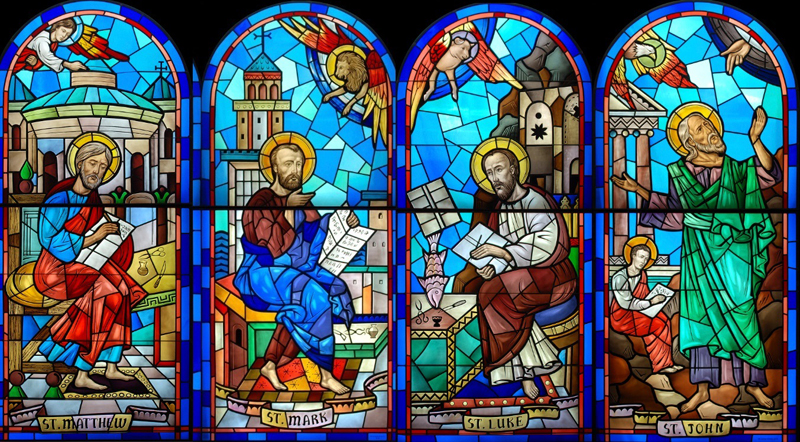
It is truly a manifestation of the grace of God that there are four accounts of the life of Jesus in the New Testament. They are rightly called theological history, because each one of them details the life of Jesus in a way that emphasizes and highlights particular aspects of who He is and what He has done for His people. While any one of them may have been sufficient on their own to convey the pertinent historical facts of His life, the four of them together paint a beautiful multilayered tapestry that has sparked the reflection and devotion of His followers now for two millennia. In the space that follows, I will sketch out the contours of that tapestry by discussing the particular emphases of each Gospel. 

According to the documentary hypothesis, Mark wrote his gospel first based on the memoirs of the Apostle Peter. The vast majority of Mark’s gospel is reproduced in both Matthew and Luke, but this does not mean that Mark’s Gospel is incomplete, redundant, or lacking in historical and theological value. This value is seen clearly in the very first verse of his work, “The beginning of the Gospel of Jesus Christ, the Son of God.” Functioning somewhat like a title or purpose statement, this verse is packed with theological significance. It tells us that Mark’s work is a “gospel”, a word that means good news; it also states clearly that this good news has to do with Jesus, the messianic Son of God. That this is the primary way that Mark wants his audience to see Jesus is confirmed following His death, when a Roman Centurion says, “Truly, this man was the Son of God.” 

However, what makes Mark’s gospel so compelling is that this truth is hidden throughout most of the Gospel. The so-called messianic secret, in which Jesus repeatedly instructs people not to make His identity known, stands in stark contrast to the bold affirmations at the beginning and end of Mark’s Gospel. This is probably because Mark wants his readers to understand that the messianic identity of Jesus is defined by His death on the cross for sin. Almost half of Mark’s gospel is dedicated to the events of Passion week. Whereas the first ten chapters are quickly paced and action oriented, the final six slow down to something like a snail’s pace in detailing the events of the final seven days of Jesus’ life. This is why many have considered Mark’s gospel to be an apology or a defense of the cross that was likely written for Christians in Rome shortly before the persecutions of Nero. 

Of course, though chronologically prior, the Gospel of Mark is not ordered first in the New Testament canon; that pride of place belongs to the Gospel of Matthew, and it is easy to understand why. Not only does Matthew’s Gospel begin with a genealogy that traces the lineage of Jesus through David to Abraham, it also includes an infancy narrative that captivates those who read it. However, this is part of Matthew’s unique purpose to show that Jesus is the Son of David, Son of Abraham. Not only does this connect the New Testament back to the Old Testament, it also would have been particularly important if Matthew was writing to Jewish Christians, as many suppose. For Matthew, Jesus is the fulfillment of God’s covenant promises, both to Abraham and to David; he is the long awaited Davidic messiah, heir to the throne of  God’s Kingdom, and the one who mediates the blessings of the Abrahamic Covenant. 

More than that though, for Matthew, Jesus is a new and better Moses. This is evident in the many ways that the events of the first four chapters recapitulate the life of Moses. On top of this, Matthew has structured His gospel around five primary discourses, a fact that likely refers back to the five books of Moses. In the same way that Moses was the mediator of the Law under the Old Covenant, likewise, Jesus is the mediator of the “law” under the New Covenant.  This is confirmed in the Great Commission, where Jesus commands His disciples to “teach all that I have commanded you.” The phrase “all that I have commanded you” most naturally refers back to the content of the five primary discourses in Matthew’s Gospel. Because of this, many consider Matthew’s Gospel to be a handbook on discipleship, a manual that instructs us in what it means to follow Jesus. 

The Gospel of Luke rounds out the “Synoptic Gospels”, and like Matthew, it begins with a beautiful retelling of the Christmas story. However, what stands out in Luke’s infancy narrative is the role of the Holy Spirit. Of course, many consider Luke to be the theologian of the Spirit par excellence in the New Testament, not least of which is due to the continued role that the Spirit plays in Luke’s second volume, the Book of Acts, otherwise known as the Acts of the Holy Spirit. Luke’s emphasis on the role of the Spirit is largely due to his desire to present Jesus as the Spirit anointed messiah. This is confirmed in chapter 4 of Luke’s Gospel, when Jesus reads a passage from the Book of Isaiah, which says in part “The Spirit is upon me.” After He sits down, He says, “Today, this scripture is fulfilled in your hearing.” In other words, Luke wants us to see that Jesus is the spirit anointed Messiah who has finally come to pour out the blessings of the Messianic jubilee. According to the passage from Isaiah, chapter 61, these blessings are primarily manifested in the compassionate healing of those who are blind, deaf, mute, etc, and throughout Jesus’ ministry, Luke repeatedly details the compassion that Jesus demonstrated during his healing ministry. For Luke in particular, Jesus is a man of sorrows, well acquainted with grief, bearing the burdens and ailments of many. 

In addition to this, a large portion of Luke’s unique material is dedicated to Jesus’ final journey toward Jerusalem. In Luke, chapter 9, we read that “He set his face like flint to go to Jerusalem;” this simply means that the final journey of Jesus to Jerusalem to be crucified was purposeful and intentional on the part of Jesus, so that “the scriptures might be fulfilled.” The fulfillment of God’s plan for salvation history is a primary emphasis in both Luke’s Gospel and in the Book of Acts. In other words, Jesus was not a victim of circumstance or the maniacal plots of evil men; He was delivered up according to the predetermined plan of God from before the foundations of the world. Luke wants his audience to understand that everything that happened during the life of Jesus from his birth to his death, resurrection, ascension, and session is the fulfillment of God’s eternal plan to redeem humanity from their sins. In fact, in the final chapter of Luke’s gospel, we read on more than one occasion that “all that was written in the Law, the Prophets, and the Psalms must be fulfilled.”

Last, but certainly not least, is the Gospel of John, and the relationship between John and the synoptics is a question that has bewildered many throughout the centuries. This is mostly because John begins His gospel with a striking description of the eternal Word, God the Son, who came incarnate and “dwelt among us”. Clearly, “the disciple whom Jesus loved” wants his readers to understand that this Jesus was no ordinary man; He is the incarnate God man, the Word made flesh, and as he indicates at the end of His gospel, “These things are written so that you may believe that Jesus is the Christ, and by believing, have life in His name.” The deity of Jesus practically jumps off of the page in John’s gospel, not the least of which is because of the several “I am” statements that are found throughout the book, the most profound of which is “Before Abraham was, I am.” Of course, these “I am” statements refer back to the divine name which was revealed to Moses at the burning bush, and so indicate a startling awareness in the mind of Jesus of His own divinity. 

Of course, in the service of this purpose, John structures His gospel around seven specific miracles, or, as he calls them, “signs.” If John did, in fact, write two to three decades after the synoptics, then it seems clear that he did not believe it necessary to record all that Jesus began to do and teach; he even confesses that to do so would require more books than could be humanly conceived. But these seven signs were singled out by John because they advance His thesis that Jesus is the Christ. From the turning of water into wine to the raising of Lazarus from the dead, every one of these signs demonstrate a particular aspect of Jesus messianic identity and so prove that He is the Christ, the one who gives and sustains life in all those who are filled with His Spirit. 

In the final analysis, it seems clear that if one of these four gospels were lost or removed from the canon, the followers of Jesus would be at a severe disadvantage. Each and every one of them is necessary for us to appreciate the multi-faceted beauty of the person and work of Him who is called Christ. From the earliest centuries of the Christian movement, these four evangelists have stood together in chorus, singing not in unison but in harmony, and because of this, the followers of Jesus have a sure and certain foundation upon which they can stand as they attempt to follow Christ and be more like Him.


Slow To Write

"let every person be quick to hear, slow to speak, slow to anger."

lovegavehope

Just another WordPress.com site

Jared Cornutt

Pastor | Speaker | Writer

Denny Burk

A commentary on theology, politics, and culture

G3 Ministries

Events + Resources for the Local Church

Biblical Reasoning

Biblical and Systematic Theology According to the Scriptures

RetroChristianity

Reclaiming the Forgotten Faith

SBC Voices

Southern Baptist News & Opinion

Lucid Theology

Thoughts on words, books, theology, and life.

Baptist21

A pastor-led voice for Baptists in the 21st century

Center For Baptist Renewal

The Personal and Professional Blog of Phillip Powers

The Pastor's Well - Pastor Well

The Personal and Professional Blog of Phillip Powers

Articles - AlbertMohler.com

The Personal and Professional Blog of Phillip Powers

The Gospel Coalition

The Personal and Professional Blog of Phillip Powers