
Tag Archives: Romans

On the Curse of Death and the Hope of Resurrection

TEXT

12 The iniquity of Ephraim is bound up;
His sin is stored up.
13 The pains of childbirth come upon him;
He is not a wise son,
For it is not the time that he should delay at the opening of the womb.
14 Shall I ransom them from the power of Sheol?
Shall I redeem them from death?
O Death, where are your thorns?
O Sheol, where is your sting?
Compassion will be hidden from My sight.

15 Though he flourishes among the reeds,
An east wind will come,
The wind of the Lord coming up from the wilderness;
And his fountain will become dry
And his spring will be dried up;
It will plunder his treasury of every precious article.
16 Samaria will be held guilty,
For she has rebelled against her God.
They will fall by the sword,
Their little ones will be dashed in pieces,
And their pregnant women will be ripped open.

~Hosea 13.12-16 (NASB95)

Title: On the Curse of Death and the Hope of Resurrection
Text: Hosea 13.12-16
Series: Hosea: A Love Story Like No Other
Church: Redeemer Baptist Church, Jonesboro, AR
Date: July 13, 2025


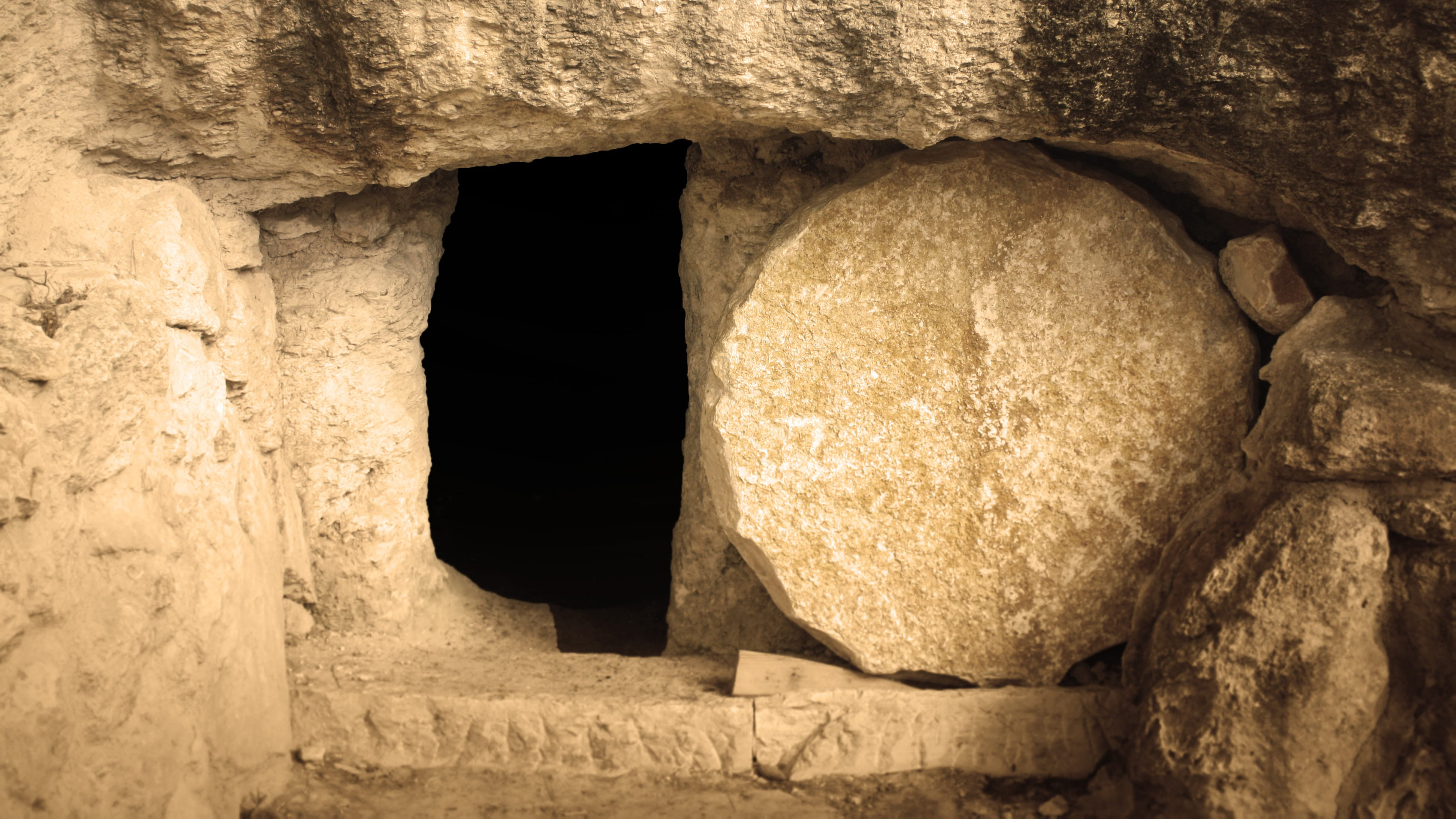
On Resurrection and De-dustification

It is common in Biblical studies to suggest that the doctrine of the resurrection is a late development in Old Testament theology. Of course, the clearest Old Testament affirmation of this belief is found in Daniel 12.2, where we read, “Many who sleep in the dust of the earth will awake, some to eternal life, and some to disgrace and eternal contempt.” While the dating of Daniel is a much debated question, this verse certainly stands as a clear affirmation of the doctrine of a general resurrection possibly from as early as the exilic period. But is it possible that the doctrine of resurrection has a much longer presence in the Old Testament. I would suggest that it does, and I would base this suggestion, at least in part, on the words of David in Psalm 16, verse 10, where we read, “For you will not abandon me to Sheol; you will not allow your faithful one to see decay.” In this psalm, David is  seeking divine protection because he has remained loyal to God, and he is praising God for his rich blessings with full confidence God will vindicate him and deliver him from death.

Now, this particular verse is quoted twice in the in the Book of Acts in defense of the resurrection of Jesus, once by Peter in Acts 2.27, and once again by Paul in Acts 13.35. Of course, their appeal to this verse raises all kinds of questions regarding the interpretive methods of Luke and the other apostles, but suffice it to say here that there is no need to suggest that they have misinterpreted it. They haven’t read something into it that wasn’t actually there in the first place. No, they have rightly understood the implications of David’s words, and by way of typological prediction, they have applied these words to the Messianic Son of David, Jesus the Christ. David genuinely believed that that God could and would deliver him even from death, so while the doctrine of resurrection is not spelled out explicitly, we have ample reason to believe that David held some conception of physical life after death. This is why he says, “you will not allow your faithful one to see decay.”

However, Peter’s explanation here deserves our attention. In Acts 2.29, he says, “Brothers and sisters, I can confidently speak to you about the patriarch David: He is both dead and buried, and his tomb is with us to this day.” Likewise, Paul explains similarly in Acts 13.36-37, “For David, after serving God’s purpose in his own generation, fell asleep, was buried with his fathers, and decayed, but the one God raised up did not decay.” Jesus was only in the grave for three days; there simply wasn’t enough time for his physical body to see decay. But David’s bones turned to dust a long time ago, as it is written, “All are going to the same place; all come from dust, and all return to dust.” (Ecclesiastes 3.20) This dusty fate is part of God’s curse on human sin, as we read in Genesis 3.19, “For you are dust, and you will return to dust.” It is a fate that awaits us all. So, we must ask the question: was David wrong in his expectation that his body would not see decay? Was he wrong in his hope for a bodily resurrection?

The answer to these questions must be a resounding, “May it never be.” David was not wrong to believe that God could and would deliver him even from the depths of death itself, and even though his physical body has long returned to the dust from whence it came, one day, his body will be raised new, perfectly whole and completely glorified. This is the hope of resurrection; it is the hope of de-dustification. As the Apostle Paul writes in Romans 8.11, “And if the Spirit of him who raised Jesus from the dead lives in you, then he who raised Christ from the dead will also bring your mortal bodies to life through his Spirit who lives in you.” Or again, in Philippians 3.21, “He will transform the body of our humble condition into the likeness of his glorious body, by the power that enables him to subject everything to himself.” If God can create man from the dust and breath the breath (the Hebrew word is the same word sometimes translated Spirit) of life into him so that he becomes a living soul, then he can certainly raise our bodies from the dust and give them eternal physical life by His Spirit.

In other words, far from being some late postulate in Old Testament theology, the idea of resurrection has a long standing place in Old Testament thought. It goes back at least to the time of David and the monarchy, some 1000 years before the time of Daniel and the exile, and it possibly goes back farther than that (but that is a topic for another time.) The point here is simply the Christian hope, nay, the biblical hope, is for nothing less than the perfected glory of bodily resurrection. As Jesus himself says, “a time is coming when all who are in the graves will hear his voice and come out—those who have done good things, to the resurrection of life, but those who have done wicked things, to the resurrection of condemnation.” (John 5.28-29) Maranatha!

For further study, see:
On the Logic of the Resurrection
On Christian Hope: Heaven or Resurrection
On Resurrection and the Path of Glory

See also,
Chase, Mitchell L. Resurrection Hope and the Death of Death. Short Studies in Biblical Theology. Wheaton, IL: Crossway, 2022.


On Christian Hope: Heaven or Resurrection

It is commonplace in American Christianity to hear people talk about going to heaven when they die. For most people, this is the promise of the Gospel, that if you believe in Jesus for the forgiveness of sin and live a morally good and ethical life for the most part, then you will get to go to heaven when you die. This is usually conceptualized as a kind of purely spiritual (nonmaterial, nonphysical) existence of some kind (think halos, harps, and clouds). However, this is a far cry from the biblical picture of eternal life. First, eternal life is not simply a limitless quantity of life that we experience when we die, though it certainly includes this; rather is a certain quality of life, i.e. the life of the messianic age, that we begin to experience even now in part on this side of glory. But, more importantly, the Christian vision for life after death is for a resurrected embodied life. This is a crucial aspect of the biblical understanding of salvation, but it is so often neglected, ignored, or outright denied. And so, since this is the week in which we celebrate the resurrection of our Lord Jesus, I would like to use the space that follows to explore the biblical foundation of the biblical hope for resurrection.

First, we must affirm that human beings were created as composite wholes, that is with a body and a soul. Some theologians would argue for a tripartite division, i.e. body, soul, and spirit, but the point remains the same, namely that the body is essential for what it means to be human. In Genesis, chapter 2, verse 7, we read, “Then the Lord God formed the man out of the dust from the ground and breathed the breath of life into his nostrils, and the man became a living being.” In other words, when the “spirit of life” (the Hebrew word for “breath” can also be translated as “spirit”) entered into the body made of dust, the first man became a living being. Both components were necessary to complete the first man; therefore, to exist as spirit only would be an incomplete, non-human existence. This is why the incarnation was necessary; as the author of Hebrews argues in chapter 10, verse 5 (quoting Psalm 40.6 LXX), “Therefore, as he was coming into the world, he said: You did not desire sacrifice and offering, but you prepared a body for me.” In order to redeem humanity, it was necessary that the Son of God should become fully human, body and soul, and if He was anything less than fully human, then the redemption He secured would be incomplete. Or to put it another way, that which He did not assume, He cannot redeem. And the only way that the body can be redeemed from death is through resurrection.

Of course, this leads right into the second biblical foundation of our resurrection, namely that Jesus Christ was resurrected bodily from the dead. A cursory reading of the Gospel accounts of our Lord’s passion leads to the inescapable conclusion that Jesus died bodily, He was raised bodily, He ascended bodily, and He will return bodily. He was no mere apparition or ghost; He was not some kind of spirit only being that appeared at random. In the Gospel of Luke, we read that Jesus ate with the disciples after His resurrection, both on the road to Emmaus and in the upper room, and in the Gospel of John, we read that He invited Thomas to touch the holes in His hands and in His side. So, while His resurrected body was different in many ways, there was still a corporeal continuity to His bodily existence both before and after His resurrection. Moreover, and perhaps more importantly, the Apostle Paul argues that the physical bodily resurrection of Jesus is the lynchpin of the Gospel. “And if Christ has not been raised, your faith is worthless; you are still in your sins.” (1 Corinthians 15.17) In other words, the bodily resurrection of Jesus was necessary for our salvation to be complete. It was not only necessary for Him to die physically for our sin, but it was also necessary for Him to be raised physically to new life. The bodily resurrection makes His work of redemption complete, and because He has been raised, He is able to offer resurrection life to those who trust in Him.

Consequently, this is the third biblical foundation for the Christian hope of resurrection, namely that the bodily resurrection of Jesus is the ground and promise for the bodily resurrection of those who have trusted in Him. Because He has been raised bodily, we who have trusted in Him will also be raised bodily. This is the inescapable logic of our union with Christ. As the Apostle Paul argues in the Letter to the Romans, chapter 6, verse 5, “For if we have been united with him in the likeness of his death, we will certainly also be in the likeness of his resurrection.” Or again, in 1 Corinthians, chapter 15, verse 20, “But as it is, Christ has been raised from the dead, the firstfruits of those who have fallen asleep.” The fact that He is the “first fruit” necessarily implies that there will be more fruit to come, and it is clear that the fruit Paul is envisioning in this context is the bodily resurrection of those who have been united with Jesus by faith. So, the promise of the Gospel, the Christian hope, is not merely going to heaven when we die; it is nothing less than resurrection from the dead. “For if we believe that Jesus died and rose again, in the same way, through Jesus, God will bring with him those who have fallen asleep.” (1 Thessalonians 4.14)

So, while the idea of going to heaven when we die sounds nice and comforting, the truth of the matter is that those who ignore or deny the future resurrection of the body really have no hope at all. All they really have is a vague notion of something resembling hope, which is really no better than an empty wish. It has no substance, no grounding in biblical realities at all. Disembodied existence as spirit only is not true life, at least not life the way that God intended it for humanity. God alone is spirit, and we are His creatures. The desire to shed the flesh and exist as pure spirit is a desire that comes from pagan philosophy and not from the Bible. The true biblical Christian hope is far better. It is nothing less than the fullness of embodied life that God always intended for humanity. It is eternal life, resurrected life, in the presence of God forever. In other words, the promise of the Gospel is not so much that we will get to go up to heaven when we die, but that heaven will come down to us when Jesus comes again to establish His kingdom on earth once and for all. This is the blessed hope, the Christian hope.

See also:
Chase, Mitchell L. Resurrection Hope and the Death of Death. Short Studies in Biblical Theology. Wheaton, IL: Crossway, 2022.
Wright, N.T. Surprised by Hope: Rethinking Heaven, the Resurrection, and the Mission of the Church. New York, NY: HarperOne, 2008.


On the Fourth Sunday of Advent

advent 4

The fourth Sunday of the season of Advent is dedicated to the contemplation of love, namely that it was love that motivated the Father to send the Son into the world as the incarnate Christ-child. And though the lectionary readings do not mention the love of God specifically, they do focus us on that great act of love, whereby our Savior became like unto us so that we may become like Him. So, before we turn our attention to the readings for this fourth Sunday, let us remind ourselves of that most memorable of verses,

For God loved the world in this way: He gave his one and only Son, so that everyone who believes in him will no perish but have everlasting life. (John 3.16)

This is the gift that we celebrate at Christmas, and the lectionary readings prepare us for that celebration by reminding us that this was the eternal plan of God from the very beginning of time.

Old Testament: Isaiah 7.10-16
Of course, this is the passage where we find God’s prediction of the virgin birth, that “the virgin will conceive, have a son, and name him Immanuel,” (verse 14), and this is the verse that will be cited by Matthew in today’s Gospel reading. And so it is tempting to fast forward immediately to the those events surrounding the birth of the Christ-child. However, we would be completely remiss if we ignored the original context within which this prophecy is given. And while we do not have the space here to recount the whole story, it would behoove us to linger in these chapters, specifically chapters 7-9, before jumping to the details of the Christmas story. This passage recounts the promise given through the prophet Isaiah that God would deliver the Kingdom of Judah from the enemies, even in spite of the seemingly insurmountable odds that were arrayed against them. “For before the boy knows to reject what is bad and choose what is good, the land of the two kings you dread will be abandoned.” (Verse 16) And it is this pattern then that becomes the typological precedent for the coming of Messiah. In other words, because God loves His people, He will deliver them from their enemies, whether those enemies be temporal (as with the people of Judah) or eternal (as with us and our enemy – sin).

Psalm: Psalm 80.1-7, 17-19
In the Psalm reading, “the psalmist laments Israel’s demise and asks the Lord to show favor toward his people, as he did in earlier times.” (Study Note, NET Bible) In other words, the psalmist is praying for God’s salvation specifically as that pertains to the restoration of the people of Israel. “Listen, Shepherd of Israel, who leads Joseph like a flock; you who sit enthroned between the cherubim, shine on Ephraim, Benjamin, and Manasseh. Rally your power and come to save us.” (Verses 1-2) But what is most sobering in this Psalm is that the psalmist admits that the people of Israel have reaped the just and due consequence of their sin in punishment from God, and that it is God and God alone who can must intervene on behalf of His people for their forgiveness and restoration. “Lord God of Armies, how long will you be angry with your people’s prayers? You fed them the bread of tears and gave them the full measure of tears to drink.  (Verse 4-5) And this is not unlike the spiritual condition of all humanity; we are too justly under the judgment of God for our sin, and He and He alone is the one who must act for our salvation. And so we pray, “Restore us, Lord, God of Armies; make your face shine on us, so that we may be saved.”

New Testament: Matthew 1.18-25
The Gospel reading for this fourth and final Sunday of Advent, then, takes us to the events leading up the birth of the Christ-child. “After his mother Mary have been engaged to Joseph, it was discovered before they came together that she was pregnant from the Holy Spirit. So her husband Joseph, being a righteous man, and not wanting to disgrace her publicly, decided to divorce her secretly.” (Verse 18-19) Obviously, Joseph was facing a perplexing dilemma, and who’s to say what we might have done under those same circumstances. But God intervened in a dream telling Joseph to take Mary as his wife. “She will give birth to a son, and you are to name him Jesus, because he will save his people from their sins.” (Verse 21) Of course, Matthew goes on in verses 22-23 to make the point that this was in fulfillment of what God had said through the prophet Isaiah, as we saw in our Old Testament reading. And “When Joseph woke up, he did as the Lord’s angel had commanded him. He married her but did not have sexual relations with her until she gave birth to a son. And he named him Jesus.” (Verses 24-25) But the important point to note in this passage is that in the Christ-child, God himself has come into the world “to save His people from their sins.” 

New Testament: Romans 1.1-7
And this was God’s plan A all along, as Paul goes on to show in the New Testament reading. Of course, in the Letter to the Romans, Paul is writing to a church that he himself had never visited. He was practically a stranger to them, and so, in these introductory verses, he must establish his identity and the authority from which he writes, which he ultimately grounds in the Gospel of God. “Paul, a servant of Christ Jesus, called as an apostle and set apart for the gospel of God.” (Verse 1) And it is this concept, the Gospel of God that Paul goes on to define in verses 2 thru 6 of the passage, that it was promised beforehand through the prophets in the Scriptures (verse 2), that it concerns his son, Jesus Christ our Lord, that he was a descendant of David (verse 3), appointed the powerful Son of God by the Spirit through resurrection (verse 4), and that through Him, we have been given a mission to bring about the obedience of faith for the sake of His name throughout the nations (verse 5). The point being that this was God’s plan all along from eternity past to eternity future, the Gospel of God is the script by which history unfolds. And the coming of Christ, both in His first Advent and in His second, is the cornerstone of that Gospel.

And so, we return to where we began, that the Gospel of God is nothing less than the expression of His love for His people, and that is what we celebrate at Christmas. God himself entered into the creation as the Christ-child incarnate to save His people from their sins. And thanks be to God for giving us this gift.

For further study:
On the Season of Advent
On the First Sunday of Advent
On the Second Sunday of Advent
On the Third Sunday of Advent


On the Second Sunday of Advent

second-sunday-in-advent

In the second week of Advent, we focus on peace, that the Christ-child came into the world to offer us peace. Peace, meaning the absence of conflict, of animosity, of antagonism. In the words of the angels on the night of His birth, “Glory to God in the highest heaven, and peace on earth to people he favors.” (Luke 2.14) And when the Prince of Peace returns one day, He will establish His kingdom of perpetual peace once and for all. However, the good news pf Advent is that this is a peace that we, as His people, already experience in the here and now. And so, the lectionary readings for the Second Sunday of Advent invite us into the peace that His coming offers us and that we desperately look forward to at His coming.

Old Testament: Isaiah 11.1-10
Of course, the prophecies of Isaiah are replete with messianic overtones, and this week’s Old Testament reading is no different. In verse 1, we read, “Then a shoot will grow from the stump of Jesse,” which is Isaiah’s way of describing the Messiah according to His biological lineage descended from David, Son of Jesse. But the important thing about Him is what He will do, specifically how He will rule. Verse 2 of the passage tells us that, “The Spirit of the Lord will rest on him.” In other words, Messiah will be anointed with the Spirit of God for the purpose of ruling in justice. And what we must understand is that a just rule, established in righteousness and faithfulness (verse 5), is a prerequisite for peace, because, “He will judge the poor righteously and execute justice for the oppressed of the land.” (verse 4)

And it is His just rule that establishes the idyllic serenity that Isaiah goes on to describe in verses 6-9. “The wolf (traditionally read as lion) will dwell with lamb, and the leopard will lie down with the goat,” etc. And notice in verse 9, “They will not harm or destroy each other on my entire holy mountain, for the land will be full of the knowledge of the Lord as the sea is filled with water.” This is Isaiah’s vision for the reign of Messiah, that violence will be no more, that bloodshed and conflict will be no more. Oh, how we long for that day, because, “On that day the root of Jesse will stand as a banner for the peoples. The nations will look to him for guidance, and his resting place will be glorious.” In other words, the reign of Messiah will be characterized by perfect peace. 

Psalm: Psalm 72.1-7, 18-19
According to the traditional heading, this psalm appears to be a prayer that was written by King David (see verse 20) for his son and successor Solomon. David is praying for Solomon as he prepares to ascend to the throne. And so, in verse 1, we read, “God, give your justice to the king and your righteousness to the king’s son.” However, given the messianic implications of the term “son of David”, we must see this as a prayer for the perfect and peaceful rule of Messiah. “He will judge your people with righteousness and your afflicted ones with justice.” (verse 2) And again, “May he vindicate the afflicted among the people, help the poor, and crush the oppressor.” (verse 4)  In other words, this psalm is an expression of longing for peace that is written on every human soul, and it reminds us that our longings for peace on earth will never be fully satisified by any human ruler or government. No, “Blessed be the Lord God, the God of Israel, who alone does wonders. Blessed be his glorious name forever; the whole earth is filled with his glory. Amen and amen.” (verse 18-19). There is a deep and severe longing in every human soul for the peace, and in this prayer, we affirm that it will only be realized with the coming of Messiah.

Gospel: Matthew 3.1-12
In the Gospel reading, then, we read of a familiar character in the Gospel accounts, namely John the Baptizer. And though we may not think of him in conjunction with the Christmas story, he is, nevertheless, important because of His role as herald. “For he is the one spoke of through the prophet Isaiah, who said: A voice of one crying out in the wilderness: Prepare the way for the Lord; make his paths straight.” (verse 3) And so, as we think about our Lord’s Advent, we must recognize that John was the appointed herald to announce His initial arrival. And he did so my preaching, “Repent, because the kingdom of heaven has come near.” (verse 2) This, by the way, is the same message that Jesus preached at the beginning of His ministry in Galilee.

But what makes this passage appropriate for Advent is what John says to the Pharisees and Sadducees who came out to be baptized. In verse 7, we read, “Brood of vipers! Who warned you to flee from the coming wrath?” Admittedly, it is somewhat awkward to read about wrath when we are supposed to be focusing on peace; however, John has hit on something that is important to understand about our Lord’s coming, namely that before there can be peace, there must be wrath. Evil must be dealt with, and the wicked must be removed so that peace can rise.  And so, John proclaims that one who comes after him has “His winnowing shovel is in his hand, and he will clear his threshing floor and gather his wheat into the barn. But the chaff he will burn with the fire that never goes out.” When our Lord Christ returns to in glory, He will bring with Him two things, peace for those who repent of their sins and wrath for those that do not. And so John tells us, “Therefore produce fruit consistent with repentance.”

New Testament: Romans 15.4-13
And finally, in the New Testament reading, we can see exactly what kind of fruit that is, namely that we who have repented of our sins, trusted in Christ, and received His peace should show forth that peace toward others. As Paul puts it in verse 7, “Therefore accept one another, just as Christ also accepted you, to the glory of God.” In other words, we are called to be Christ’s agents of peace in the world; we give to others what we ourselves have already received. This is in keeping with Paul’s prayer in verse 13, where he prays, “Now may the God of hope fill you with all joy and peace as you believe so that you may overflow with hope by the power of the Holy Spirit.” The point is that the foundation for peaceful human relationships is grounded in the finished work of the Christ-child.

And the proof of Paul’s point in this passage is the full and equal inclusion of the Gentiles in the people of God. In the first century, there was no more antagonistic vitriolic relationship as that between the Jews and the Gentiles, but Paul strings together a handful of Old Testament quotes in this passage to show that it was always God’s plan to bring the Gentiles into the kingdom of Messiah. So, all of a sudden, Jewish followers of Jesus were faced with a dilemma, namely how could they accept Gentile followers of Jesus  into their communities as brothers and sisters in Christ. And Paul’s answer is that they can because they have received the peace of Christ. So, he prays, “Now may the God who gives endurance and encouragement grant you to live in harmony with one another, according to Christ Jesus, so that you may glorify the God and Father of our Lord Jesus Christ with one mind and one voice.” This is the crucial point: He gives peace, we embrace peace, and He gets the glory.

May this Advent season bring you and yours all the peace of Christ that passes all understanding, and may we all show forth His peace to a world that is in so desperate need of it!

For Further Study:
On the Season of Advent
On the First Sunday of Advent


On the First Sunday of Advent
Adventskranz 1. Advent

As previously noted, this last Sunday, December 1, 2019, marked the beginning of the Christian season of Advent, and this first Sunday of the Advent season emphasizes hope, namely our expectation that Jesus the Christ will one day return to this earth in glory and power to establish His kingdom forever. Understandably, the corresponding lectionary readings (taken from the Revised Common Lectionary) help us to envision and to prepare ourselves for that day, and they reinforce our hope in the midst of the pain and difficulties that are so common in our world today.

Old Testament: Isaiah 2.1-5
In the Old Testament reading, we are confronted with “The vision that Isaiah son of Amoz saw concerning Judah and Jerusalem” (verse 1), and in this vision, the prophet looks forward to the last days to see the house of the Lord established and all the nations streaming to it. In verse 3, they say, “Come, let us go up to the mountain of the Lord, to the house of the God of Jacob. He will teach us about his ways so that we may walk in his paths.”  This reminds us that God’s plan was never solely for the people of Israel; rather, His plan was for the salvation of the nations, that all peoples might come to know Him and to enjoy His benevolence. Because on that day, “instruction will go out of Zion and the word of the Lord from Jerusalem.” 

And on that day, He will establish peace, as Isaiah describes in verse 4, “They will beat their swords into plows and their spears into pruning knives.” He goes on, “Nation will not take up the sword against nation, and they will never again train for war.” What a glorious hope that we have, that our Lord Jesus will come back to establish peace on earth once and for all. Oh, how we desperately long for that peace, and so, Isaiah encourages us, “House of Jacob, come and let us walk in the Lord’s light.” In other words, we are called to people of peace because of our hope. We know that one day our Lord Jesus will return.  This is our blessed hope, and so we must walk in the His light.

Psalm: Psalm 122
The Psalm reading follows up on Isaiah’s vision, then, with a prayer for the well being of Jerusalem. It is one of the “Songs of Ascent” which would be sang by Jewish pilgrims as they made their way up to the holy city to worship at the temple. As it says, “I rejoiced with those who said to me, ‘Let us go to the house of the Lord.'” (verse 1) And David tells us why we should rejoice in verse 3-4, where he writes, “Jerusalem, built as a city should be, solidly united, where the tribes, the Lord’s tribes, go up to give thanks to the name of the Lord.” Of course David was thinking of that earthly city, that temple which was made by hands, but we know, in light of our Lord’s first coming, that we are waiting for that heavenly Jerusalem, the city of God, where we will live in the presence of God for eternity. This is our hope.

Gospel: Matthew 24.36-44
The Gospel reading for this first Sunday of Advent, as it does every year, comes from the Olivet Discourse, in this case Matthew’s version. And this is a profound reminder that the season of Advent is radically eschatological in its scope. Yes, it prepares us to celebrate the birth of the Christ-child at Christmas, but it also reminds that our hope is yet future. And as Jesus says, “Now concerning that day and hour no one knows – neither the angels of heaven nor the Son – except the Father alone” (verse 36). And He concludes, “This is why you are also to be ready, because the Son of Man is coming at an hour you do not expect” (verse 44). The point here is clear, that we must be ready, that we must prepare ourselves for His arrival, and in the context of the Olivet Discourse, this means that we must be faithful to the responsibilities that He has left us. As it says in verse 46, “Blessed is that servant who the master finds doing his job when he comes.”

New Testament: Romans 13.11-14
And finally, the New Testament reading gives us a glimpse of what this readied faithfulness looks like. It is sufficient here, I believe, to simply quote the passage at length: Besides this, since you know the time, it is already the hour for you to wake up from sleep, because now our salvation is nearer than when we first believed. The night is nearly over, and the day is near; so let us discard the deeds of darkness and put on the armor of light. Let us walk with decency, as in the daytime: not in carousing and drunkenness; not in sexual impurity and promiscuity; not in quarreling and jealousy. But put on the Lord Jesus Christ, and don’t make plans to gratify the desires of the flesh.” That last line says it all, that we should put on Christ-likeness, because we know that our hope is certain and that our faithfulness will be rewarded on that day when Jesus comes again.

And so, let us renew our hope this Advent season. We live in a world that is completely inundated with conflict, confusion, and chaos; we are constantly bombarded with painful and tearful reminders that this world is not completely as it should be. But one day, it will all be put to rights, and until that time, we are called to endure in hope and to persevere in faithfulness, no matter how grim the outlook may be.

For further study:
On the Use and Benefit of the Lectionary
On the Season of Advent


Slow To Write

"let every person be quick to hear, slow to speak, slow to anger."

lovegavehope

Just another WordPress.com site

Jared Cornutt

Pastor | Speaker | Writer

Denny Burk

A commentary on theology, politics, and culture

G3 Ministries

Events + Resources for the Local Church

Biblical Reasoning

Biblical and Systematic Theology According to the Scriptures

RetroChristianity

Reclaiming the Forgotten Faith

SBC Voices

Southern Baptist News & Opinion

Lucid Theology

Thoughts on words, books, theology, and life.

Baptist21

A pastor-led voice for Baptists in the 21st century

Center For Baptist Renewal

The Personal and Professional Blog of Phillip Powers

The Pastor's Well - Pastor Well

The Personal and Professional Blog of Phillip Powers

Articles - AlbertMohler.com

The Personal and Professional Blog of Phillip Powers

The Gospel Coalition

The Personal and Professional Blog of Phillip Powers