Tag Archives: Typology

On Hosea, Matthew, and Authorial Intent

In my previous post, I argued that our hermeneutic for interpreting the Bible must be grounded in the conviction that what God intended to say in the Scriptures is accurately and faithfully conveyed in what the human authors actually wrote, and for most of the Bible, this seems to be rather clear. The question, however, arises when we come to texts in the New Testament that seem to interpret the Old Testament against the grain of the author’s intent. If we believe that “scripture interprets scripture” (see my post, here), then it would makes sense to suggest that we should follow the interpretive principles of the Apostles, and if they were not bound by a strict conception of authorial intent, then perhaps we should jettison this hermeneutical ground in our interpretive efforts as well. This then is the point that must be proven, namely that the New Testament authors did in fact disregard the human author’s intent when they interpreted the Old Testament. Of course, to examine every place where the New Testament author’s quote from or allude to the Old Testament would require far more space than is available here, and this work has already been done by many fine scholars in the field. I recommend Commentary on the New Testament use of the Old Testament, edited by G.K. Beale and D.A. Carson. But in lieu of that, I would like to explore one text as a test case for the thesis that the New Testament authors ignored the principle of authorial intent in their use of the Old Testament, that being Matthew’s use of Hosea 11.1 in chapter 2, verse 15 of his Gospel.

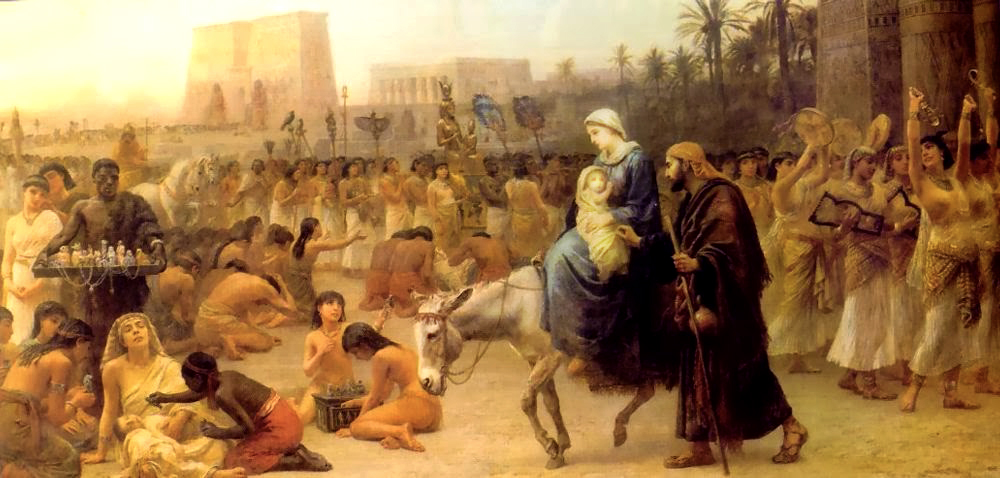
After they were gone, an angel of the Lord appeared to Joseph in a dream, saying, “Get up! Take the child and his mother, flee to Egypt, and stay there until I tell you. For Herod is about to search for the child to kill him.” So he got up, took the child and his mother during the night, and escaped to Egypt. He stayed there until Herod’s death, so that what was spoken by the Lord through the prophet might be fulfilled: Out of Egypt I called my Son.

~Matthew 2.13-15

The book of the prophet Hosea is a story of love and betrayal; set against the backdrop of Hosea’s own marriage to the adulteress Gomer, throughout the book, God repeatedly rebukes the northern Kingdom of Israel for scorning His grace, rejecting His love, forgetting His covenant, and playing the whore with the false gods of Baal. And so, in chapter 11, and verse 1, we read, “When Israel was a child, I loved him, and out of Egypt I called my son.” In these verses, God is looking back on the Exodus experience of His people as the initial overture of His love for Israel; as He goes on to say in verse 4 of that chapter, “I led them with human cords, with ropes of love. To them I was like one who eases the yoke from their jaws; I bent down to give them food.” It is clear that these verses are operating on the paternal imagery of parenthood. In the same way that parents nurture their newborn children, so also God nurtured His “son” Israel by bringing them out of Egyptian slavery, providing for them in the wilderness, and leading them into a land flowing with milk and honey. Even in spite of their repeated betrayal, God goes on to say in verse 8, “How can I give you up, Ephraim? How can I surrender you, Israel? How can I make you like Admah? How can I treat you like Zeboiim? I have had a change of heart; my compassion is stirred!” This chapter is a beautiful picture of the tenderness and mercy of God toward His rebellious son, and even though, the people of Israel will suffer His discipline, it holds out the hope that God has not ceased loving His people.

Now, in chapter 2 of the first canonical Gospel, Matthew connects the flight of the Holy family to Egypt to the words of Hosea 11.1, “so that what was spoken by the Lord through the prophet might be fulfilled: Out of Egypt I have called my Son (quoting Hosea 11.1b). But if the prophet Hosea wasn’t making a direct messianic prediction in the text in question, as we saw above, then how can the Egyptian flight of Mary, Joseph, and Jesus properly be considered a fulfillment? The answer is that this is a fulfillment by way of typology not prediction. Part of Matthew’s portrayal of Jesus is to show that He is the long awaited “prophet like Moses” (c.f. Deut 18.15-19), and he demonstrates this by highlighting the ways that Jesus recapitulates the story of Moses. A few examples should suffice. When Moses was born, Pharaoh killed all the Hebrew boys; when Jesus was born, Herod killed all the Jewish boys. According to 1 Corinthians 10.1-2, Moses had a baptism experience in the Red Sea, and Jesus was baptized in the Jordan River. Moses and the Israelites spent forty years in the wilderness; Jesus spent forty days in the wilderness. Moses went up on Mount Sinai to receive the Law; Jesus went up on a mountain to give the law (Sermon on the Mount). There are five books of Moses (Pentateuch); there are five discourses of Jesus’ sermons in the Gospel of Matthew. And “out of Egypt, I called my Son.” Based on this evidence, it is reasonably clear that the fulfillment that Matthew sees in the text of Hosea 11.1 is typological. Even as Israel was God’s typological “son”, Jesus is the true and better messianic Son of God.

In the final analysis, rather than violating the principle of authorial intent in his use of Hosea 11.1, the typological connection drawn by Matthew actually affirms the authorial intent of Hosea. And still, the question remains, “what of God’s intent in Hosea 11.1? When He inspired Hosea to write “out of Egypt, I called my son,” did he know that Matthew would take it in a different direction?” Of course, it is a theological truism to say that God knew the theological connections that Matthew would draw when He inspired Hosea to write, and so it is not wrong to say God “intended” more than Hosea understood at the time. However, this doesn’t mean that His intent stands in contradiction to or competition with the intent of Hosea. We must assume that God’s intent in Hosea 11 was to spark His people to repentance by reminding them of the great depths of His love that was demonstrated in the events of the Exodus, especially because the words of Hosea 11 are reported by the prophet as the very words spoken by God. (This is the Lord’s declaration, Hosea 11.11) Whatever “fuller sense” that we may understand from Hosea’s words, it must be grounded in the inspired intent of the human author, and this is exemplified in Matthew’s use of the text to explain the flight to Egypt.

But there is something that Matthew’s use of the Old Testament can teach us about our own interpretive efforts, namely that our hermeneutic for understanding of the Old Testament must reckon with the person and work of Christ. As Jesus himself affirms, “everything written about me in the Law of Moses, the Prophets, and the Psalms must be fulfilled.” (Luke 24.44) In other words, we have not done our full interpretive work in the Old Testament if we fail to consider how the text points to or is fulfilled in Jesus. If our understanding of the Old Testament would be accepted in a Jewish synagogue, then we haven’t understood the text Christianly. However, this does not mean that we can disregard the principle of authorial intent; we must still labor within the boundaries of literary and historical context before we can consider the broader canonical and theological implications. At the very least, our understanding of the human author’s intent must function as the true and necessary foundation upon which we stand as we seek the illumination of the Spirit in understanding the theological and applicational implications of the text for our lives in Christ. This is a thoroughly Christian understanding of how to interpret the Bible.


On the Problem of Eschatological Imminence

I love Christmas music, both the secular and sacred. When I hear it on the radio, in retail stores, or even in church, it just brings back all the wonderful memories of this time of year from my childhood. So, as the song goes, it’s the holiday season, so hoop-de-do and dickory dock. That means that Thanksgiving, Christmas, and New Year’s are right around the corner, and most of us are preoccupied with decorations and presents, parties and planning, and all of the other details that fill our minds during this time of year. But for Christians, this time of year is an invitation to reflect afresh on the coming of our Lord Jesus Christ. Traditionally, the season of Advent consists of the four Sundays that lead up to the celebration of Christmas, and it is a time when we are invited to look back on the first coming of Jesus at the incarnation even while we look forward to the second coming of Jesus. For more on this, see my post here.

However, most discussions of our Lord’s second coming always ends up with the same plaguing question, “So, when is he coming? When will it be?” This is a question that has plagued the people of God since the days of Jesus’ earthly ministry, and even before. We can read in the Psalms and prophets of the Old Testament where the people of God cried out in agony wondering, “Lord, how long will the wicked—how long will the wicked celebrate?” (Psalms 94.3), or “How long will you judge unjustly and show partiality to the wicked?” (Psalm 82.2), or even “How long, Lord, must I call for help and you do not listen or cry out to you about violence and you do not save?” (Habakkuk 1.2). This has been the longing of the people of God throughout history, that He would act finally and climatically to put an end to sin, vindicate His people, and establish His perfect reign on earth.

A quick review of the New Testament and what it says about the second coming of Jesus would seem to indicate that these prayers have been answered. In those hallowed pages, we read promises like, “In the same way, when you see all these things, recognize that he is near—at the door.” (Matthew 24.33), and “Look, I am coming soon, and my reward is with me to repay each person according to his work.” (Revelation 22.12), and  “The God of peace will soon crush Satan under your feet.” (Romans 16.20). Words like soon, near, at hand, quickly seem to indicate that the consummation the people of God had waited for so long was imminent and about to be realized, perhaps even within the first century. The reality, of course, is that those words were written some 2000 years ago, and we are still waiting for the return of Jesus in glory and power. This, then, is the problem. What are we to make of the New Testament’s promises of imminence, in light of the fact that we are still waiting for His coming some two millennia later?

There are really three options for answering this problem; however, one of them is out of bounds for those who hold orthodox convictions about the person of Christ and the nature of the Bible. Essentially, this option simply concludes that Jesus and His followers were wrong in their expectation. In other words, Jesus had promised and they believed that He would return in power and glory in the first century, i.e. within their lifetimes, and they were just wrong. But this solution charges both Jesus and the authors of Holy Scripture with error, which is something orthodoxy simply cannot abide. We confess that the Scriptures are wholly inerrant, that the authors of both the Old and New Testaments were kept from error by the Holy Spirit who inspired them. Their words are the very words of God himself; therefore, if they lied, he lied, but he cannot lie. Moreover, we confess that Jesus was God the Son incarnate, the very embodiment of truth. He lived a sinless life in complete obedience to God’s Law; therefore, He cannot and did not lie in anything He said. So, we cannot conclude that Jesus or the Apostles were in error in any way.

Another solution to the apparent problem of eschatological imminence is to reinterpret what Jesus and the New Testament authors meant by His coming. In other words, they did not understand His coming to mean the visible bodily return of Jesus to the earth in power and glory to judge the wicked and vindicate the righteous at the end of time. Rather, when they referred to His coming, they were simply referring to His coming in judgment on the people of Israel who rejected and murdered him, a judgment that was fulfilled when Jerusalem was destroyed by the Romans in 70 AD. This view is usually referred to as preterism, and there is certainly more to it than the definition given here. But its central tenet is that all of the New Testament’s predictions and descriptions of our Lord’s second coming are fulfilled in the first century. The strength of this view is that it seeks to maintain the relevance of the New Testament’s promises of imminence for the biblical audience, and rightly so. However, the conclusion that His coming refers to something other than a visible bodily coming is anticlimactic and unconvincing to say the least. As the church has confessed for nearly two millennia, so also must we affirm that, “He will come again in glory to judge the living and the dead and his kingdom will have no end.” (Nicene Creed)

The final solution, and the one that is most commonly accepted, is to reconsider what the Bible means by its promises of imminence. In other words, temporal qualifiers like near, soon, quickly, and at hand may not necessitate immediate fulfillment in the lifetime of Jesus and His first followers. This is even more likely when we remember that typological fulfillment is a typical characteristic of God’s comings throughout biblical history. Moreover, this is exactly how the question is answered within the New Testament itself. In Second Peter chapter 3, Peter addresses this very objection, “Where is his ‘coming’ that he promised?” (2 Peter 3.4). He gives a couple of different answers to this objection, the examination of which is beyond the scope of this post. However, in verse 8, he writes, “Dear friends, don’t overlook this one fact: With the Lord one day is like a thousand years, and a thousand years like one day.” In this verse, Peter is saying that eschatological imminence must be considered from the eternal perspective and not from a temporal one; the meaning of words like soon, near, quickly, and at hand must be measured from the perspective of the one who gave the promise to begin with. Of course, some might object that this verse should not be used as a kind of trump card that dismisses the biblical promises of imminence, and they would be right. However, whatever is meant by eschatological imminence, our understanding of those promises must be consistent with the principles outlined in Second Peter chapter 3, because there are no contradictions in the Bible.

In light of this discussion then, we may conclude that the Bible’s promises of eschatological imminence are just as relevant to the people of God today as they were when they were first given. His coming is near; it is at hand. He is coming soon; he is coming quickly. This means that the people of God must live in a constant state of ready expectation and eager anticipation, because this is our blessed hope, “the appearing of the glory of our great God and Savior, Jesus Christ.” (Titus 2.13). And while we wait, may we find ourselves consistently faithful, until we hear those wonderful and precious words, “Well done, good and faithful servant. Enter into the joy of your master.” As our Lord himself said, “Blessed is that servant whom the master finds doing his job when he comes.” (Luke 12.43)


On Three Views for Interpreting the Olivet Discourse

TEXT

24 As Jesus left and was going out of the temple, his disciples came up and called his attention to its buildings. He replied to them, “Do you see all these things? Truly I tell you, not one stone will be left here on another that will not be thrown down.” While he was sitting on the Mount of Olives, the disciples approached him privately and said, “Tell us, when will these things happen? And what is the sign of your coming and of the end of the age?”

Text: Matthew 24-25, c.f. Mark 13, Luke 21
Series: Eschatology: A Study of the End Times
Church: South Caraway Baptist Church, Jonesboro, AR
Date: September 7 , 2022


Slow To Write

"let every person be quick to hear, slow to speak, slow to anger."

lovegavehope

Just another WordPress.com site

Jared Cornutt

Pastor | Speaker | Writer

Denny Burk

A commentary on theology, politics, and culture

G3 Ministries

Events + Resources for the Local Church

Biblical Reasoning

Biblical and Systematic Theology According to the Scriptures

RetroChristianity

Reclaiming the Forgotten Faith

SBC Voices

Southern Baptist News & Opinion

Lucid Theology

Thoughts on words, books, theology, and life.

Baptist21

A pastor-led voice for Baptists in the 21st century

Center For Baptist Renewal

The Personal and Professional Blog of Phillip Powers

The Pastor's Well - Pastor Well

The Personal and Professional Blog of Phillip Powers

Articles - AlbertMohler.com

The Personal and Professional Blog of Phillip Powers

The Gospel Coalition

The Personal and Professional Blog of Phillip Powers