Tag Archives: Psalms

On the Second Sunday of Advent

second-sunday-in-advent

In the second week of Advent, we focus on peace, that the Christ-child came into the world to offer us peace. Peace, meaning the absence of conflict, of animosity, of antagonism. In the words of the angels on the night of His birth, “Glory to God in the highest heaven, and peace on earth to people he favors.” (Luke 2.14) And when the Prince of Peace returns one day, He will establish His kingdom of perpetual peace once and for all. However, the good news pf Advent is that this is a peace that we, as His people, already experience in the here and now. And so, the lectionary readings for the Second Sunday of Advent invite us into the peace that His coming offers us and that we desperately look forward to at His coming.

Old Testament: Isaiah 11.1-10
Of course, the prophecies of Isaiah are replete with messianic overtones, and this week’s Old Testament reading is no different. In verse 1, we read, “Then a shoot will grow from the stump of Jesse,” which is Isaiah’s way of describing the Messiah according to His biological lineage descended from David, Son of Jesse. But the important thing about Him is what He will do, specifically how He will rule. Verse 2 of the passage tells us that, “The Spirit of the Lord will rest on him.” In other words, Messiah will be anointed with the Spirit of God for the purpose of ruling in justice. And what we must understand is that a just rule, established in righteousness and faithfulness (verse 5), is a prerequisite for peace, because, “He will judge the poor righteously and execute justice for the oppressed of the land.” (verse 4)

And it is His just rule that establishes the idyllic serenity that Isaiah goes on to describe in verses 6-9. “The wolf (traditionally read as lion) will dwell with lamb, and the leopard will lie down with the goat,” etc. And notice in verse 9, “They will not harm or destroy each other on my entire holy mountain, for the land will be full of the knowledge of the Lord as the sea is filled with water.” This is Isaiah’s vision for the reign of Messiah, that violence will be no more, that bloodshed and conflict will be no more. Oh, how we long for that day, because, “On that day the root of Jesse will stand as a banner for the peoples. The nations will look to him for guidance, and his resting place will be glorious.” In other words, the reign of Messiah will be characterized by perfect peace. 

Psalm: Psalm 72.1-7, 18-19
According to the traditional heading, this psalm appears to be a prayer that was written by King David (see verse 20) for his son and successor Solomon. David is praying for Solomon as he prepares to ascend to the throne. And so, in verse 1, we read, “God, give your justice to the king and your righteousness to the king’s son.” However, given the messianic implications of the term “son of David”, we must see this as a prayer for the perfect and peaceful rule of Messiah. “He will judge your people with righteousness and your afflicted ones with justice.” (verse 2) And again, “May he vindicate the afflicted among the people, help the poor, and crush the oppressor.” (verse 4)  In other words, this psalm is an expression of longing for peace that is written on every human soul, and it reminds us that our longings for peace on earth will never be fully satisified by any human ruler or government. No, “Blessed be the Lord God, the God of Israel, who alone does wonders. Blessed be his glorious name forever; the whole earth is filled with his glory. Amen and amen.” (verse 18-19). There is a deep and severe longing in every human soul for the peace, and in this prayer, we affirm that it will only be realized with the coming of Messiah.

Gospel: Matthew 3.1-12
In the Gospel reading, then, we read of a familiar character in the Gospel accounts, namely John the Baptizer. And though we may not think of him in conjunction with the Christmas story, he is, nevertheless, important because of His role as herald. “For he is the one spoke of through the prophet Isaiah, who said: A voice of one crying out in the wilderness: Prepare the way for the Lord; make his paths straight.” (verse 3) And so, as we think about our Lord’s Advent, we must recognize that John was the appointed herald to announce His initial arrival. And he did so my preaching, “Repent, because the kingdom of heaven has come near.” (verse 2) This, by the way, is the same message that Jesus preached at the beginning of His ministry in Galilee.

But what makes this passage appropriate for Advent is what John says to the Pharisees and Sadducees who came out to be baptized. In verse 7, we read, “Brood of vipers! Who warned you to flee from the coming wrath?” Admittedly, it is somewhat awkward to read about wrath when we are supposed to be focusing on peace; however, John has hit on something that is important to understand about our Lord’s coming, namely that before there can be peace, there must be wrath. Evil must be dealt with, and the wicked must be removed so that peace can rise.  And so, John proclaims that one who comes after him has “His winnowing shovel is in his hand, and he will clear his threshing floor and gather his wheat into the barn. But the chaff he will burn with the fire that never goes out.” When our Lord Christ returns to in glory, He will bring with Him two things, peace for those who repent of their sins and wrath for those that do not. And so John tells us, “Therefore produce fruit consistent with repentance.”

New Testament: Romans 15.4-13
And finally, in the New Testament reading, we can see exactly what kind of fruit that is, namely that we who have repented of our sins, trusted in Christ, and received His peace should show forth that peace toward others. As Paul puts it in verse 7, “Therefore accept one another, just as Christ also accepted you, to the glory of God.” In other words, we are called to be Christ’s agents of peace in the world; we give to others what we ourselves have already received. This is in keeping with Paul’s prayer in verse 13, where he prays, “Now may the God of hope fill you with all joy and peace as you believe so that you may overflow with hope by the power of the Holy Spirit.” The point is that the foundation for peaceful human relationships is grounded in the finished work of the Christ-child.

And the proof of Paul’s point in this passage is the full and equal inclusion of the Gentiles in the people of God. In the first century, there was no more antagonistic vitriolic relationship as that between the Jews and the Gentiles, but Paul strings together a handful of Old Testament quotes in this passage to show that it was always God’s plan to bring the Gentiles into the kingdom of Messiah. So, all of a sudden, Jewish followers of Jesus were faced with a dilemma, namely how could they accept Gentile followers of Jesus  into their communities as brothers and sisters in Christ. And Paul’s answer is that they can because they have received the peace of Christ. So, he prays, “Now may the God who gives endurance and encouragement grant you to live in harmony with one another, according to Christ Jesus, so that you may glorify the God and Father of our Lord Jesus Christ with one mind and one voice.” This is the crucial point: He gives peace, we embrace peace, and He gets the glory.

May this Advent season bring you and yours all the peace of Christ that passes all understanding, and may we all show forth His peace to a world that is in so desperate need of it!

For Further Study:
On the Season of Advent
On the First Sunday of Advent


On the First Sunday of Advent

Adventskranz 1. Advent

As previously noted, this last Sunday, December 1, 2019, marked the beginning of the Christian season of Advent, and this first Sunday of the Advent season emphasizes hope, namely our expectation that Jesus the Christ will one day return to this earth in glory and power to establish His kingdom forever. Understandably, the corresponding lectionary readings (taken from the Revised Common Lectionary) help us to envision and to prepare ourselves for that day, and they reinforce our hope in the midst of the pain and difficulties that are so common in our world today.

Old Testament: Isaiah 2.1-5
In the Old Testament reading, we are confronted with “The vision that Isaiah son of Amoz saw concerning Judah and Jerusalem” (verse 1), and in this vision, the prophet looks forward to the last days to see the house of the Lord established and all the nations streaming to it. In verse 3, they say, “Come, let us go up to the mountain of the Lord, to the house of the God of Jacob. He will teach us about his ways so that we may walk in his paths.”  This reminds us that God’s plan was never solely for the people of Israel; rather, His plan was for the salvation of the nations, that all peoples might come to know Him and to enjoy His benevolence. Because on that day, “instruction will go out of Zion and the word of the Lord from Jerusalem.” 

And on that day, He will establish peace, as Isaiah describes in verse 4, “They will beat their swords into plows and their spears into pruning knives.” He goes on, “Nation will not take up the sword against nation, and they will never again train for war.” What a glorious hope that we have, that our Lord Jesus will come back to establish peace on earth once and for all. Oh, how we desperately long for that peace, and so, Isaiah encourages us, “House of Jacob, come and let us walk in the Lord’s light.” In other words, we are called to people of peace because of our hope. We know that one day our Lord Jesus will return.  This is our blessed hope, and so we must walk in the His light.

Psalm: Psalm 122
The Psalm reading follows up on Isaiah’s vision, then, with a prayer for the well being of Jerusalem. It is one of the “Songs of Ascent” which would be sang by Jewish pilgrims as they made their way up to the holy city to worship at the temple. As it says, “I rejoiced with those who said to me, ‘Let us go to the house of the Lord.'” (verse 1) And David tells us why we should rejoice in verse 3-4, where he writes, “Jerusalem, built as a city should be, solidly united, where the tribes, the Lord’s tribes, go up to give thanks to the name of the Lord.” Of course David was thinking of that earthly city, that temple which was made by hands, but we know, in light of our Lord’s first coming, that we are waiting for that heavenly Jerusalem, the city of God, where we will live in the presence of God for eternity. This is our hope.

Gospel: Matthew 24.36-44
The Gospel reading for this first Sunday of Advent, as it does every year, comes from the Olivet Discourse, in this case Matthew’s version. And this is a profound reminder that the season of Advent is radically eschatological in its scope. Yes, it prepares us to celebrate the birth of the Christ-child at Christmas, but it also reminds that our hope is yet future. And as Jesus says, “Now concerning that day and hour no one knows – neither the angels of heaven nor the Son – except the Father alone” (verse 36). And He concludes, “This is why you are also to be ready, because the Son of Man is coming at an hour you do not expect” (verse 44). The point here is clear, that we must be ready, that we must prepare ourselves for His arrival, and in the context of the Olivet Discourse, this means that we must be faithful to the responsibilities that He has left us. As it says in verse 46, “Blessed is that servant who the master finds doing his job when he comes.”

New Testament: Romans 13.11-14
And finally, the New Testament reading gives us a glimpse of what this readied faithfulness looks like. It is sufficient here, I believe, to simply quote the passage at length: Besides this, since you know the time, it is already the hour for you to wake up from sleep, because now our salvation is nearer than when we first believed. The night is nearly over, and the day is near; so let us discard the deeds of darkness and put on the armor of light. Let us walk with decency, as in the daytime: not in carousing and drunkenness; not in sexual impurity and promiscuity; not in quarreling and jealousy. But put on the Lord Jesus Christ, and don’t make plans to gratify the desires of the flesh.” That last line says it all, that we should put on Christ-likeness, because we know that our hope is certain and that our faithfulness will be rewarded on that day when Jesus comes again.

And so, let us renew our hope this Advent season. We live in a world that is completely inundated with conflict, confusion, and chaos; we are constantly bombarded with painful and tearful reminders that this world is not completely as it should be. But one day, it will all be put to rights, and until that time, we are called to endure in hope and to persevere in faithfulness, no matter how grim the outlook may be.

For further study:
On the Use and Benefit of the Lectionary
On the Season of Advent


On Psalm 119.9-16 (Beth)

2560px-Hebrew_letter_Beth.svg (2)9 How can a young man keep his way pure?
By keeping your word.
10 I have sought you with all my heart;
don’t let me wander from your commands.
11 I have treasured your word in my heart
so that I may not sin against you.
12 Lord, may you be blessed;
teach me your statutes.
13 With my lips I proclaim
all the judgments from your mouth.
14 I rejoice in the way revealed by your decrees
as much as in all riches.
15 I will meditate on your precepts
and think about your ways.
16 I will delight in your statutes;
I will not forget your word. (CSB)

The second stanza of Psalm 119, ב (beth), begins with a verse that has probably been drilled into the mind of every young man who has ever struggled with his thought life. But clearly these verses have application beyond that one application. In the wisdom literature, the word “young man” (verse 9) is metaphor for anyone who is naive, inexperienced, ignorant, or unlearned. And so, here in this stanza, the psalmist is reflecting on how the Word of God trains us in the way of purity. Of course, the basic assumption here is that a “young man” would want to keep his way “pure”, that this is understood as something that is both desirous and beneficial.

Now, purity here is simply another way of saying holy, and it is God’s clear expectation that His people will be holy, even as He is holy. (c.f. Leviticus 11.44-45, Matthew 5.48, 1 Peter 1.16). As it pertains to God, holiness refers to His divine otherness, that He is set apart, unique, and wholly different from His creation. However, it is much more than that; it also implies His moral rectitude, His absolute sinlessness, the unassailable perfections of His character. And we are told to be holy, even as He is holy. So, as it pertains to us, as believers in Jesus, it refers to the distinction of our behavior, values, and attitudes over and against the world. As James writes, “Pure and undefiled religion before God the Father is this: … to keep oneself unstained from the world.” (James 1.27)

And, how can we keep ourselves unstained from the world? Answer, “By keeping your Word.” But, the “keeping” that our psalmist has in mind here is much more than a rote dutiful obedience. No, it is to be sought with all the heart (verse 10), treasured in the heart (verse 11), and proclaimed with the lips (verse 13). It is something to be rejoiced in (verse 14), meditated on (verse 15), and delighted in (verse 16). And this is both a timely and a timeless affirmation, that the standards for living a holy life which are commanded in God’s Word are good and glorious and to be joyously embraced rather than begrudgingly accepted.

It is no secret that the current cultural climate is becoming more and more hostile to these standards, that the commands of God are increasingly seen as outdated, bigoted, prejudicial, and simply unfair. But, our psalmist understands that the ways of God as He has prescribed them in His Word are good, and they are meant for our satisfaction and enjoyment. And the way that we learn to enjoy God’s ways is not simply by a begrudging reluctant external obedience. No, we must relish in them internally by pouring over them in meditation, treasuring them in our hearts, and rejoicing gladly in them. And so, may we pray with the Psalmist,  Lord, may you be blessed; teach me your statutes.”

For further study:
Introduction/Overview
Psalm 119.1-8


On Psalm 119.1-8 (Aleph)

Aleph
1 How happy are those whose way is blameless,
who walk according to the Lord’s instruction!
2 Happy are those who keep his decrees
and seek him with all their heart.
3 They do nothing wrong;
they walk in his ways.
4 You have commanded that your precepts
be diligently kept.
5 If only my ways were committed
to keeping your statutes!
6 Then I would not be ashamed
when I think about all your commands.
7 I will praise you with an upright heart
when I learn your righteous judgments.
8 I will keep your statutes;
never abandon me. (CSB)

ℵ (aleph) is the first letter of the Hebrew alphabet, and therefore, it is the first stanza of Psalm 119. And when we read the first two verses, we are immediately confronted by the simple truth that obedience to the Word of God is the only way to experience God’s blessing. The CSB (see above) renders the verb as “happy”, whereas the majority of modern translations (NET, ESV, NASB, NIV) render it as “blessed”. Interestingly, the NLT renders this word as “joyful”, and this perhaps most accurately reflects the psalmists intent. “Joyful are people of integrity, who follow the instructions of the Lord. Joyful are those who obey his laws and search for him with all their hearts.” Nevertheless, no matter which English rendering we prefer, it is clear that something more than pleasing circumstances is being described here.

In the Bible, blessing or joy is something that is experienced more deeply in the human soul than mere surface level happiness. It is that inner sense of complete satisfaction and total contentment, of unwavering peace and ultimate fulfillment. It is nothing less then the ultimate thriving of the human soul as God intended it. And lets be clear, the source of this blessed joy is completely divine. It is not something that we can manufacture or achieve on our own. Our psalmist is clear that the only way into this experience of divine blessing is by obedience to the Word of God. In fact, he goes on to say in these verses that obedience is the only way that we can be set free from the bondage of guilt and shame and bring praise into his abiding presence.

Sadly, obedience is under emphasized in most Protestant versions of spirituality. Because of our Reformation heritage, we are quick to react against anything that smacks of works based salvation. We champion the cause of sola gratia, sola fide, solus Christus, that salvation is by grace alone through faith alone in Christ alone. As Paul said in Ephesians, chapter 2, verse 9, “not from works, so that no one can boast.” However, in our haste to affirm the unconditional nature of grace, we have neglected and omitted the role that obedience plays in the Christian life. As Paul went on to say in that very next verse, For we are his workmanship, created in Christ Jesus for good works, which God prepared ahead of time for us to do.” (Eph. 2.10) The simple truth that the psalmist is affirming in this first stanza of Psalm 119 is that obedience to God’s Word is the only available way into the fullness of divine blessing.

Of course, the reality is that none of us are able to perfectly keep the commands of God. As the Apostle James reminds us in chapter 2, verse 10 of his letter, “For whoever keeps the entire law, and yet stumbles at one point, is guilty of breaking it all.” The Gospel teaches us that we are all sinners, that we are all utterly incapable of obeying God’s Word. And left to ourselves, we can never experience the fullness of God’s blessing. This is why our Lord and Savior Jesus Christ became incarnate. He lived a life of perfect obedience to God’s Word in every way. And because we are united to Him by faith, His perfect obedience has become our obedience, His righteousness has become our righteousness. This is why Paul writes in Ephesians, chapter 1, verse 3, “Blessed is the God and Father of our Lord Jesus Christ, who has blessed us with every spiritual blessing in the heavens in Christ.”

And it is precisely because His perfect obedience has been graciously reckoned unto us as righteousness that we should value and cultivate the habits of obedience to God’s Word. We should love obedience the way that the psalmist does here, because when we walk in His ways, then we are able to experience the fullness of blessings that are already ours in Christ by the Spirit.

For further study:
Introduction/Overview


On Psalm 119: An Introduction and Overview

megillat-esther-persia-long-view

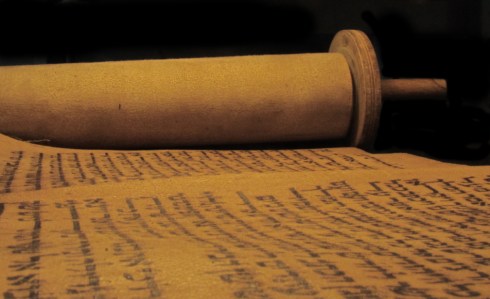
The Psalms are perhaps the best kept secret of the Old Testament; they are a deep well of food for the weary Christian soul. They are a rich resource for our spirituality, but sadly, more often than not, we neglect this spring of spiritual life in favor of the well worn tracts of the New Testament. However, this is merely a symptom of the larger problem, that being our fundamental neglect of the Old Testament in general, but more on that another time. For the purpose of this post, it is enough to say that most Christians are suffering from a feeble weakened spiritual life due to a basic disregard for the Book of Psalms.

Of course, there isn’t enough time or space here to completely explore the spiritual richness of each and every chapter in this central Old Testament Book, but there is one chapter in particular that demands our attention – Psalm 119. This chapter is a vast ocean of refreshing spiritual water for the dry and weary soul, and yet, so often, we fearfully ignore it simply due to its size. And at first glance it can be overwhelming; there are 176 total verses in this single chapter. However, in spite of its imposing length, there is an artistry about this chapter that is beautiful and majestic. It lifts us out of the despair of our circumstances into the glory and hope that is the Word of God.

From a composition perspective, this chapter is an absolute masterpiece of literary artistry. It is structured in a Hebrew acrostic pattern, which means that each successive stanza begins with the next letter of the Hebrew alphabet. There are twenty-two stanzas, one each for every letter of the Hebrew alphabet, and each stanza contains eight lines, each beginning with the designated Hebrew letter for that stanza. (22 x 8 = 176) However, what is truly masterful is that almost every line contains some synonym for the Word of God. Law, testimonies, ways, precepts, statutes, commandments, judgments/ordinances, Word, promises, etc. The psalmist enumerates the perfections of God’s Word in every line literally from A to Z.

And this is perhaps the most important aspect of this glorious chapter, namely that it is written as poetry, and as such, it is intended not only to speak to our intellect but to stir our affections, to lift our souls, to restore our hope and joy. It is impossible to read this psalm and not be completely awestruck by the authors absolute joy in God’s Word. In other words, for the psalmist, the Word of God is more than a mere resource for right thinking and right doing. No, it is so much more than that. It is the foundation upon which he stands; it is the source of all his hope and joy and comfort and assurance. It is the sustenance and provision for all of his being, all of his spirituality and devotion. The Word of the one true and living God is all that he needs.

However, in spite of all of this magnificent and majestic artistry, this Psalm is still largely neglected and/or completely ignored in the devotions of most Christians and their churches. Whether it is because we find it imposing and off putting due to its length, or simply because we believe it to be redundant and repetitive, we refuse to refresh our souls at this inexhaustible spring of spiritual life. And this is absolutely to our spiritual detriment. We severely need the testimony of this Psalm in both our personal and corporate devotions, especially at a time when the sufficiency of God’s Word is being questioned more and more. Let us turn back once again to the well worn paths of biblical spirituality, and linger long over Psalm 119.

For further study:
Spurgeon, Charles H. The Golden Alphabet: An Exposition of Psalm 119. Revised and Updated. Abbotsford, WI: Aneko Press, 2018.


Slow To Write

"let every person be quick to hear, slow to speak, slow to anger."

lovegavehope

Just another WordPress.com site

Jared Cornutt

Pastor | Speaker | Writer

Denny Burk

A commentary on theology, politics, and culture

G3 Ministries

Events + Resources for the Local Church

Biblical Reasoning

Biblical and Systematic Theology According to the Scriptures

RetroChristianity

Reclaiming the Forgotten Faith

SBC Voices

Southern Baptist News & Opinion

Lucid Theology

Thoughts on words, books, theology, and life.

Baptist21

A pastor-led voice for Baptists in the 21st century

Center For Baptist Renewal

The Personal and Professional Blog of Phillip Powers

The Pastor's Well - Pastor Well

The Personal and Professional Blog of Phillip Powers

Articles - AlbertMohler.com

The Personal and Professional Blog of Phillip Powers

The Gospel Coalition

The Personal and Professional Blog of Phillip Powers