26 In the sixth month, the angel Gabriel was sent by God to a town in Galilee called Nazareth, 27 to a virgin engaged to a man named Joseph, of the house of David. The virgin’s name was Mary. 28 And the angel came to her and said, “Greetings, favored woman! The Lord is with you.” 29 But she was deeply troubled by this statement, wondering what kind of greeting this could be. 30 Then the angel told her, “Do not be afraid, Mary, for you have found favor with God. 31 Now listen: You will conceive and give birth to a son, and you will name him Jesus. 32 He will be great and will be called the Son of the Most High, and the Lord God will give him the throne of his father David. 33 He will reign over the house of Jacob forever, and his kingdom will have no end.”
34 Mary asked the angel, “How can this be, since I have not had sexual relations with a man?” 35 The angel replied to her, “The Holy Spirit will come upon you, and the power of the Most High will overshadow you. Therefore, the holy one to be born will be called the Son of God. 36 And consider your relative Elizabeth—even she has conceived a son in her old age, and this is the sixth month for her who was called childless. 37 For nothing will be impossible with God.” 38 “See, I am the Lord’s servant,” said Mary. “May it happen to me as you have said.” Then the angel left her.
Title: On Jesus was Born to Reign Text: Isaiah 9.6-7, Luke 1. 26-38, Matthew 2.1-12, Revelation 11.15-19 Series: Promises Fulfilled Church: Redeemer Baptist Church, Jonesboro, AR Date: December 29, 2024
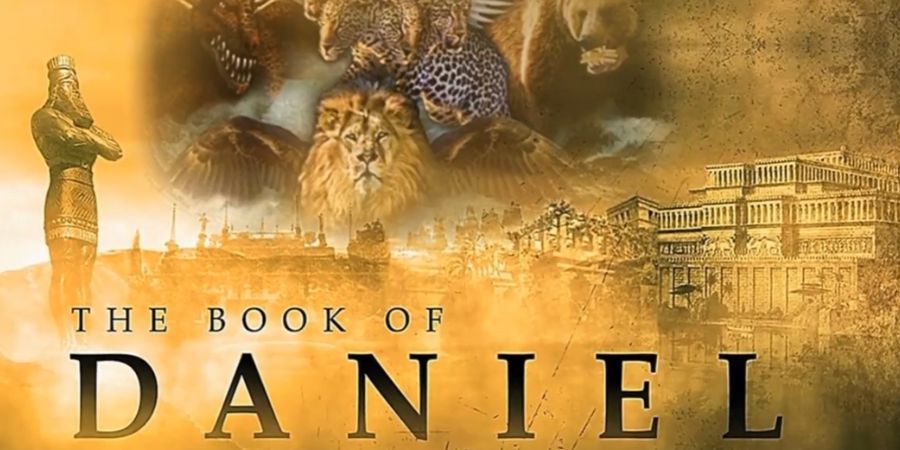
The unfortunate reality today is that the bulk of biblical scholarship on the Book of Daniel is mired in the abyss of higher critical presuppositions, not the least of which is a thoroughgoing rejection of predictive biblical prophecy as such. Because of this the Book of Daniel is viewed as a composite work that was compiled in the middle second century BCE in the midst of the Maccabean Crisis. This view would seem to be supported by the linguistic and generic divisions that exist within the text. Linguistically, chapters 2 thru 7 are written in Aramaic while chapter 1 and chapters 8 thru 12 are written in Hebrew; similarly, though not an exact correspondence, chapters 1 thru 6 comprise the court tails while chapters 7 thru 12 consist of the visionary material. The conclusion then of most biblical scholarship on Daniel is that the eschatological expectations of Daniel are essentially a contradictory hodgepodge of ex eventu (after the fact) depictions of the actions of the Seleucid King Antiochus IV Epiphanes.
Of course, to defend the book’s 6th century Danielic authorship would go beyond the limits of this medium, but in the space that follows I would like to briefly demonstrate the essential unity of Daniel’s visions. The clearest indication of this unity comes in the correspondence between Nebuchadnezzar’s dream in chapter 2 and in Daniel’s vision in chapter 7. While these chapters come from seemingly disparate parts of the book, they both present a sequence of four kingdoms followed by the establishment of the Kingdom of God. Of course, critical scholarship widely identifies these kingdoms as Babylon, Media, Persia, and Greece. This is mostly because they understand the actions of the fourth kingdom, and particularly the little horn, to be fulfilled in the actions of Antiochus IV Epiphanes during the Maccabean Crisis from 167-164 CE. I will come back to the identification of these kingdoms in a little bit, but suffice it to say here that it is difficult to see how Daniel’s expectation for the establishment Kingdom of God is fulfilled in this time period. The subsequent period of Hasmonean independence which followed was a far cry from the grandeur of Daniel’s expectations.
This is especially so when we turn our attention to Daniel chapter 9; in that chapter, Daniel is praying about the end of the exile, and he receives an answer from the angel Gabriel, which reads,
Seventy weeks are decreed about your people and your holy city—to bring the rebellion to an end, to put a stop to sin, to atone for iniquity, to bring in everlasting righteousness, to seal up vision and prophecy, and to anoint the most holy place.
Daniel 9.24
It seems rather clear that these seventy weeks span the timeframe from Daniel’s day (“from the issuing of the decree to restore and rebuild Jerusalem” in verse 25) to the time of final consummation, the time of “everlasting righteousness”. Because of this, we may presume then that the seventy weeks of Daniel 9 cover the same span of time as the visions of Daniel 2 and 7.
Now, the key to identifying the four kingdoms mentioned in Daniel’s sequence would seem to come in Daniel chapter 8. In that chapter, Daniel sees a vision of a ram with two horns, one longer than the other, and a goat whose large horn was broken off and replaced by four smaller horns. Again, the angel Gabriel gives the interpretation.
The two-horned ram that you saw represents the kings of Media and Persia. The shaggy goat represents the king of Greece, and the large horn between his eyes represents the first king. The four horns that took the place of the broken horn represent four kingdoms. They will rise from that nation, but without its power.
Daniel 8.20-22
This interpretation indicates that the second kingdom in Daniel’s sequence should be understood as the unified Kingdom of the Medes and Persians. It is described as a ram with two horns, one longer than the other (8.3) and as a bear which was raised up on one side (7.5). The third kingdom, then, should be understood as the Kingdom of Greece which is represented, of course, by Alexander the Great and the Diadochi, the four generals who followed him. They are variously described as a goat whose large horn was broken off and replaced by four smaller horns (8.8) and as a leopard with four wings and four heads (7.6).
This understanding is confirmed in Daniel chapter 11, where we read,
Three more kings will arise in Persia, and the fourth will be far richer than the others. By the power he gains through his riches, he will stir up everyone against the kingdom of Greece. Then a warrior king will arise; he will rule a vast realm and do whatever he wants. But as soon as he is established, his kingdom will be broken up and divided to the four winds of heaven, but not to his descendants; it will not be the same kingdom that he ruled, because his kingdom will be uprooted and will go to others besides them.
Daniel 11.3-4
The rest of chapter 11, then, goes on to detail the various campaigns of the “King of the North” and the “King of the South”, which describes the various conflicts between the Seleucids and the Ptolemies during the Third and Second century BCE respectively. The point of all this is to say that Daniel’s sequence of four kingdoms is best understood to refer to the progression of empires from Babylon to Medo-Persia to Greece and finally to Rome*. Of course, it must be noted that while the Roman Empire corresponds to Daniel’s fourth kingdom, it doesn’t completely fulfill it. That fulfillment comes ultimately in the eschatological kingdom of the beast, which is described in Book of Revelation, but this is a topic for another time.
By way of conclusion, then, Daniel’s visions reveal a remarkable and multifaceted unity in their expectation despite their seeming disparities. Daniel chapters 2, 7, and 9 give the overarching flow from Daniel’s day to the establishment of God’s Kingdom, and chapters 8 and 11 zoom in on the specific actions of the second and especially the third kingdom. More importantly, this understanding lays the foundation for the typological connection that Daniel draws between the third and fourth kingdoms, specifically between the actions of Antiochus IV Epiphanes and the eschatological little horn of the fourth kingdom. In addition, it helps us see how Daniel’s eschatological paradigm serves as the foundation for the message and ministry of Jesus, especially the Olivet Discourse, and for the message of the New Testament, particularly the Book of Revelation.
Of course, the most important aspect of all of this is the certain promise of God’s victory over His enemies and the enemies of His people. Our hope rests not in earthly powers, nations, or empires, but in the Kingdom of God and in His promised Messiah. That Messiah came incarnate 2000 years ago. He lived a perfect life, and then, He died on the cross for sin and rose again. Forty days later, He ascended to be seated at the right hand of the Father, and He left us this promise, that in the same way he ascended, he will also one day descend in glory and power (Acts 1.11). This is our glorious hope, and so we pray, “Amen, Come, Lord Jesus! (Revelation 22.20)
For further study, see: Hamilton, James M. With the Clouds of Heaven: The Book of Daniel in Biblical Theology. New Studies in Biblical Theology. Downers Grove, IL: InterVarsity, 2014
There is an inherent fascination in the human psyche with knowing the future. We all would like to have the ability to know and/or predict the future, because, let’s be honest, the unknown can be downright frightening. In the Christian context, this fascination works itself out in an obsession with the prophetic portions of Holy Scripture. Passages like Daniel’s 70 weeks, Jesus’ Olivet Discourse, or John’s Revelation along with numerous others become the seed bed for a diversity of end-times scenarios and perspectives. Modern day geo-political entities and events are identified with biblical images to suggest that we are living in the end times, or even to predict specific dates for the end of the world and Jesus’ second coming. So-called prophecy teachers write books espousing their views on end-times events, and they host prophecy conferences to advance their particular eschatological agendas.
The problem with all of this is that it is based on a fundamental hermeneutical error as it relates to the interpretation of the prophetic genres of Holy Scripture, namely that these prophecies speak with specificity to the events and political personalities of our own day. Certainly, the teaching of Holy Scripture, especially its prophetic portions, applies to the day in which we live, but these passages do not identify the specific movements of geo-political entities or personalities as we know them. The actions of nations like Russia, Iran, Syria, or Israel in our world have no relationship whatsoever to the prophecies of Holy Scripture. So, instead of trying to use current newspaper headlines like a cipher to “decode” the prophecies of the Bible, we should attempt to understand these texts within the boundaries of a reasonable and sound hermeneutical method. In the space that remains, I will attempt to lay out some of interpretive principles that may guide us in our understanding of the prophetic genres of Holy Scripture.
First, we must give interpretive priority to the original author’s intended message for his specific audience. In other words, a text cannot mean something today that it did not mean when it was originally written/spoken. But, someone might say, “well, isn’t the Holy Spirit the original author of all of scripture,” and then, they might go on to argue for a sensus plenior, a fuller sense than the human author was able to realize. However, we must affirm that in inspiration God did not violate or override the identity of the human authors. Rather, in His graceful condescension, he used the personality and circumstances of the human authors to convey timeless truths, even while speaking to a specific people at a specific time in a specific way. So, any “fuller sense” we may supposedly identify must be consistent with the human author’s intended message, and if an interpretation or any applications we come up with would not make sense to the original audience, then we have violated this fundamental principle.
Second, and somewhat related to the first, we must give interpretive respect to the original context in which a particular a text occurs. In other words, a text without a context is a pretext for a proof text. The original authors of Holy Scripture were writing to specific people living at a particular time in a particular place, so, in order to understand their intended message, we must give consideration to the particulars of their historical and literary contexts. This is especially true when it comes to texts like the prophets, because, more often than not, they are using evocative cultural imagery, symbolism, and metaphors that would resonate with their intended audience. So, any supposed correspondence or identification of their imagery with persons, places, or things our modern context must be considered suspect if it could not have made sense in the original context within which it was spoken/written.
Third, we must reconsider our understanding of the prophetic task. The prophets of the Old Testament, and those prophetic texts in the New Testament, are not interested in laying out a step by step playbook for the events culminating in the end of the world. That kind question is more a reflection of our own interests than it is of theirs. The prophets were more interested in forth-telling God’s truth for their audiences than they were in foretelling future events, and all of their foretelling serves their overall purpose of forth-telling. Their primary interests and motives were moral, to bring about change in behavior and conduct; they were not interested in prediction simply for the sake of prediction. In other words, the prophets purpose is to indict Israel for her failure to keep God’s covenant and call her to repentance, to warn of impending judgment and punishment for disobedience, and to instill a hope for the future restoration in spite of that punishment. We must remember that almost all of their predictions find their fulfillment in Israel’s immediate future, and the ones that do refer beyond that immediate time frame find their fulfillment in the eschaton at Jesus’ coming. So, any supposed fulfillment in our own day should be rejected outright as outside the boundaries of the prophetic task.
Finally, we must not let our theological/eschatological presuppositions (read hobby horses) control our understanding of Holy Scripture. Rather, Holy Scripture should govern our theological/eschatological conclusions. Most of the obsession with the prophetic scriptures presupposes the framework of classic dispensational premillenialism; however, this kind of presupposition puts the proverbial cart before the horse. Now, I am not interested here in evaluating the particular tenets of that eschatological perspective, but it is important that we do not impose our preferred theological or eschatological viewpoint on the text. We certainly can and should draw theological conclusions from Holy Scripture as a part of the interpretive process, but we must remember that those theological conclusions should be held in submission to not in presumption of the teaching of Holy Scripture.
Ultimately, we must remember that the purpose of eschatology in the Bible is always sanctification. In nearly every instance, the foretelling of future events is meant to elicit life changing transformation. So, when we teach or preach from the prophetic portions of Holy Scripture, we would do well to follow their lead and invite our audiences to respond likewise. Even when our world seems dark and dim, our eschatological hope in Jesus’ second coming should lead to renewed and strengthened faith for living. If our interpretation of the prophets does not accomplish this task in us and in our hearers, then we have completely misunderstood the prophetic genres of the Bible.




 Faith seeking Understanding