Tag Archives: Preaching

On Celebrity Preachers and Plagiarism

There is a reason that previous generations referred to the pulpit as “the sacred desk;” it is, no doubt, the same reason that the prophets of the Old Testament sometimes referred to “the burden of the Lord”. The responsibility of proclaiming the Word of God to the people of God is a serious and oftentimes heavy calling, and those who have been entrusted with this task should carry out their service with the utmost theological fidelity and personal integrity. In recent years, this concern has become even more evident in light of the growing awareness of the problem of plagiarism. This problem soared to the forefront of denominational concerns a couple of years ago when Ed Litton, then president of the SBC, was found to have plagiarized sermons of the previous president, J.D. Greear. Now, with the proliferation of AI programs like chatGPT that can not only check for plagiarism anywhere on the internet but also write full original sermons on their own, the need for sincere and authentic work in the pulpit is even more pressing.

So, when I came across an article from 2021 entitled “6 Undeniable Reasons Its Nearly Impossible to Plagiarize a Sermon”, I was obviously perplexed, to say the least. At the time of writing, the author was a regional consultant for the Kentucky Baptist Convention, but now he serves on staff at a megachurch in the DFW metroplex area where his son is the pastor. His purpose for writing this article seems to be to defend pastors from erroneous or perhaps even malicious accusations of plagiarism; the article begins, “Recently there have been pastors dismissed based on the ignorance of a few influential, judgmental, overzealous, Internet-exploring individuals.” Of course, he eventually acknowledges that the wholesale presentation of another individual’s sermon word for word is plagiarism, but he argues throughout the piece that borrowing a theological or textual observation here or an effective illustration or application there is not only not plagiarism, but is both wise and good. He concludes, “I want to say to preachers: if my bullet fits your gun then shoot it. I’m guessing you’d say the same to me and I’m nearly certain that almost every pastor in the world would give the same wise counsel to every other pastor.”

Now, I take no issue with the overall thesis of this article; certainly, every preacher of God’s Word is formed and informed by the voices that they consult in the study process, and of course, that will inevitably show up in the pulpit. Moreover, the accusation of plagiarism should never be made lightly, nor should it ever be weaponized. However, it is the underlying reasoning for sermonic borrowing that is assumed in this piece that I find problematic, namely that if I want to be an effective preacher, then I should borrow from other more effective (read celebrity) preachers. In other words, there is an unstated assumption that success in the preaching enterprise is measured by the number of people sitting in the pews or listening online, and that those who have achieved this success are worthy of emulation. In the Evangelical subculture, we have regularly platformed and praised those whose personality and charisma in preaching is able to draw the biggest crowds, and this has lead to an epidemic of comparison whose only cure seems to be achieved by copying both the style and the content of those who epitomize it. But the problem is that this way of evaluating preaching is more cultural than it is biblical. We are not called to preaching methods and styles that tickle the ears and fill the seats; we are called to preaching that transforms lives, both the life of the preacher and the life of those who hear him.

The biblical standard for sermon evaluation is not charisma but fidelity. If we are faithful to the text, clear in our delivery of its truth, and consistent in pointing people to Jesus, then we have accomplished the task. We are called to faithfully expound upon the Word of God, to proclaim its message, and to bring its truths to bear upon the lives of those with whom we have been entrusted. The only way that this can be accomplished is by being absorbed in, with, and by the text, by letting the text form and mold us through the illumination of the Holy Spirit. When and only when the heart of the preacher has been truly convicted by the scripture’s truth will he then be able to preach it effectively and with power. Effective preaching is not achieved through the polish of personal charisma, rhetorical flourish, or grandiloquence. It comes only through the personal conviction of a heart and mind that has been gripped by the power of the Word of God. After we have done our historical work in the text, our literary and linguistic work, our theological work, we must do our “closet work”. Then and only then will we be prepared and equipped to do our homiletical work. This, and this alone, is what makes the preaching of the Word of God effective and powerful, and the truth of the matter is that this is the only part of sermon preparation that simply cannot be plagiarized.

The problem of plagiarism will continue to be a problem in the church as long as we continue to worship and glorify the personas and personalities that draw the biggest followings, whether in person or online. However, the reality is that the most effective preaching comes from someone who knows their congregation intimately, someone who knows how to exegete people as well as they exegete the Scriptures. Celebrity pastors and online personalities do not know the people that sit in our pews; therefore, they will never be able to shepherd our churches effectively. The most effective pastors/preachers are those who know the Scriptures, know themselves, and know their congregations, because this allows them to bring the truths of God’s Word to bear on the specific questions, the real problems, that their people are facing in their day to day lives. While plagiarism may seem to offer the hope of effective and powerful preaching, ultimately, it is an empty promise that will never be able to deliver. There is simply no substitute, no shortcuts, for the transformation that comes by the Spirit through the disciplines of the Word.

This blog is also posted at SBCvoices, here.

For further study, see:
Edwards, J. Kent. Deep Preaching: Creating Sermons that Go Beyond the Superficial. Nashville, TN: B&H Academic, 2009.


On a Vision for Cooperative Preaching Ministry

A well known seminary president recently tweeted, “Any consideration of Christian preaching must begin with the realization that preaching is essentially an act of worship—the central act of Christian worship.” Putting the possible overstatement aside, the preached word has been a staple of the church’s theological, doxological, and ethical life together since its very inception. Even today, in most churches, preaching occupies the primary place of emphasis and importance in the weekly worship gathering. However, more often than not, the priority of preaching in today’s churches has to do with the charisma and polish of the preacher rather than the authority of God’s Word. We have created a celebrity culture that platforms the personality of the most proficient speakers among us, so that the local church’s experience of the word of God revolves around the insight and understanding of one man.

However, if we believe that a plurality model is the most biblically consistent model for pastoral leadership in the church, then it necessarily follows that we should apply that model to the ministry of preaching as well. In other words, if the responsibilities and burdens of pastoral ministry are best shared among a band of brothers who are equal in position and authority, then the responsibility and burden of the word of God should be shared also. In the paragraphs that follow, I would like to highlight three ways in which a cooperative approach to preaching can benefit the local church, and then I would like to sketch briefly what this approach might look like practically.

The first way that this approach benefits the local church is that it nourishes the primary preaching pastor(s) by helping him to keep his spiritual tank full and avoid burnout. Week after week, the teaching pastor is responsible for feeding the flock; he is locked away in his study preparing lessons and bible studies and sermons. He is expected to give and give and give of himself, and when this continues without any respite, eventually his spiritual fuel tank will hit zero. Of course, most teaching pastors are glad to do this, but the question remains: who feeds the pastors? Shouldn’t the teaching pastor also be able to find spiritual nourishment within the local body of Christ as God intended, or must he resort to online preaching from pastors he admires but doesn’t know personally? A cooperative approach to teaching in the local church helps us to care for and sustain every part of our body, especially the pastors and teachers who faithfully sustain us. 

A second way this approach benefits the local church is that it provides the flock with a diversified diet of spiritual truth. Of course, God’s truth is absolute and unchanging, but it comes to us in vessels that are finite, broken, incomplete. No one has an exhaustive and complete understanding of everything in the Bible. No matter how much they might prepare and study, on this side of glory, their understanding of its truths will always be incomplete. Moreover, every minister of God’s Word comes to the text with different backgrounds, different experiences, different perspectives, and this is a good thing, because, as the Scriptures remind us, “iron sharpens iron” (Proverbs 27.17). There is nothing wrong with one pastor or elder holding the primary teaching responsibility, but it is good and healthy for the congregation to hear from other faithful voices from time to time. In this way, the congregation cultivates a complementary and more holistic understanding of the truth.

And lastly, the third way that a cooperative approach to pulpit ministry benefits the local church is that it accomplishes our commission. The Great Commission is to make disciples, and part of making disciples, as the Apostle Paul instructed Timothy in Second Timothy, chapter 2, verse 2, is committing to faithful men what we have heard who will then be able to teach others also. Local churches are called to train up the next generation of leaders, faithful men who can step into the pulpit and teach the Word of God faithfully. As pastors and elders, we must look forward to our succession. Who have we invested in that will be able to take up the baton of God’s Word when we are gone? A collaborative approach to teaching allows us to train and prepare faithful men, to give them the opportunity to stand before their spiritual family and teach the Word of God in the safety of a community that loves and supports them. 

In an ideal plurality situation, the primary preaching pastor should preach between 35 and 40 sermons annually; mathematically, this would come out to about three sermons per month. The remaining 15 or so can be equally shared among the other members of the elder team. However, a cooperative approach to the ministry of preaching goes beyond the allocation of Sundays. It should include discussion and planning of the direction for not only the series overall but of individual texts, and it should also include the opportunity for evaluation and feedback. Of course, this approach does not remove the individual pastor’s responsibility for textual work; every minister of the word must commit themselves to hard work of plumbing its depths. But it does mean that we are not alone in the process. As plurality of brothers, we come alongside each other in the ministry of the Word, so that we all can attain unto “maturity with a stature measured by Christ’s fullness.” (Ephesians 4.13)

This article is also posted at SBCvoices, here.


On the Fear of God and Gathered Worship

TEXT

Guard your steps when you go to the house of God. Better to approach in obedience than to offer the sacrifice as fools do, for they ignorantly do wrong. Do not be hasty to speak, and do not be impulsive to make a speech before God. God is in heaven and you are on earth, so let your words be few. Just as dreams accompany much labor, so also a fool’s voice comes with many words. When you make a vow to God, don’t delay fulfilling it, because he does not delight in fools. Fulfill what you vow. Better that you do not vow than that you vow and not fulfill it. Do not let your mouth bring guilt on you, and do not say in the presence of the messenger that it was a mistake. Why should God be angry with your words and destroy the work of your hands? For many dreams bring futility; so do many words. Therefore, fear God.

Text: Ecclesiastes 5.1-7
Series: The Book of Ecclesiastes
Church: South Caraway Baptist Church, Jonesboro, AR
Date: July 17, 2022


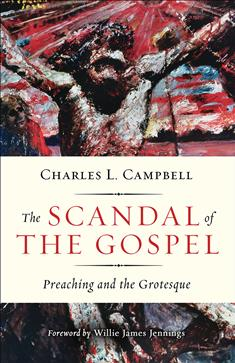
On Preaching and the Grotesque: A Book Review

Campbell, Charles L. The Scandal of the Gospel: Preaching and the Grotesque. Louisville, KY: Westminster John Knox, 2021.

Painters have their colors and canvas, sculptors have their clay, and preachers have their words. And words are powerful. As the Bible so often indicates, words have the power to build up and to tear down, and this is especially so in the ministry of preaching, as Charles L. Campbell discusses in his latest book, The Scandal of the Gospel: Preaching and the Grotesque. Campbell is James T. and Alice Mead Cleland Professor Emeritus of Homiletics at Duke Divinity School. He is a past president of the Academy of Homiletics, a highly sought-after lecturer, and he is well published in the field.  Most of the content for this latest book comes from his 2018 Lyman Beecher Lectures at Yale Divinity School; only the fourth chapter contains new material.

In the forward, Campbell explains that he is not seeking any consistency or system; rather, he says that he is “simply trying to make some homiletical connections between preaching and the grotesque” (p. xiv). This concept of the grotesque subsequently stands at the center of the book. The term is borrowed from the world of visual art, where it originally referred to paintings found in ancient Roman grottos, i.e. grotto-esque. These “murals presented unsettling, disorienting hybrids that transgressed accepted categories. They distorted what was considered ‘normal’ or ‘beautiful.’ They messed with accepted patterns. They were, as they came to be called, ‘grotesque’” (p. 6). This description encapsulates the homiletical vision that Campbell sets forth in these chapters, i.e. preaching that is unsettling, disorienting, that transgresses accepted categories and norms, that is “grotesque.”

In the first chapter Campbell considers how this concept of the grotesque fits with the scandal of the Gospel. Taking his cue from 1 Corinthians 1:23, he explains that the Gospel confronts with the destabilizing pairings of opposites: God-cross, life-death, repulsion-fascination, horror-hope. A God that is violently crucified on a cruel Roman cross is inherently “grotesque.” In chapter 2, Campbell explores how the grotesque is often weaponized in the act of preaching. Specifically, when one compares sociological and/or theological opponents with non-human objects, one is using the grotesque to dehumanize and minimize them in order to maintain one’s own particular understanding of order. In chapter 3, Campbell offers an alternative to this kind of weaponization by explaining how the grotesque creates preaching that is “open, protruding, irregular, secreting, multiple, and changing” (p. 55). Preaching that is grotesque welcomes input and insights from a variety of voices, and not merely biblical and theological ones. It is preaching that “becomes real when truth happens among the cacophony and incongruities of diverse voices and diverse lives” (p. 57). Finally, in chapter 4, Campbell imagines how the grotesque could be employed in preaching to address the environmental crisis.

Campbell’s application of the grotesque to the discipline of preaching is provocative to say the least because it stands in such stark contrast to the kind of preaching that is the focus of Campbell’s critiques. Sermons that offer simplistic principles for improving marriage, managing finances, or raising godly children attempt to “give people a nice focused nugget to carry home – not the shocking unresolved contradictions of the grotesque gospel” (p.11).  This kind of preaching is neat, clean, even idealistic. The problem, however, is that “when we rush to order, when we avoid the interval of the grotesque, our preaching may become shallow, unreal, clichéd. We don’t go deep enough. We’re not honest enough. And we end up falsifying both the gospel and life itself – we end up imposing false patterns” (p. 12). Life is so often the opposite of the neat and clean categories we attempt to impose on it from the pulpit. It is complex and messy; it is “grotesque.” Campbell would have readers embrace these tensions rather than attempting to resolve them.

Though he rightly critiques this “humanistic” (his label) approach to preaching, the alternative that he proposes is inherently more so. Grotesque preaching is “shaped by the dynamic and open life of Jesus’ grotesque body. Grotesque preaching calls the church to be open to the world and calls the pulpit to be open to different bodies and new voices” (p. 56). It springs forth from the lived experiences of people rather than from the authoritative Word of God. What is glaringly absent from Campbell’s vision for preaching is how it relates to the principle of “Thus saith the Lord.” Christian preaching springs forth from the fact that God has spoken. The Apostle Paul instructed his protégé Timothy to “Preach the Word” (2 Timothy 4.2). God has spoken; therefore, we speak. In other words, the purpose of Christian preaching is to exposit the declared Word, “giving the meaning so that the people could understand what was read” (Nehemiah 8.8). It is not merely to listen to people’s stories or to appreciate the diversities and complexities of the human experience.

In the final analysis, Campbell’s invitation for preachers to approach the complexities, difficulties, and tensions of life with greater compassion is a welcomed alternative to the idealistic naiveté that characterizes most preaching today. That being said, his alternative is essentially void of the very resources that God has provided to address those complexities and difficulties. In other words, grotesque preaching, as Campbell envisions it, comes off merely as a way to exalt and platform human experiences over the Word of God. However, it is ultimately powerless as a homiletical method for proclaiming the inspired Word of the one true and living God. In my view, preachers would be better served by attending to the text of Holy Scripture, giving its meaning through systematic exposition, than by any clever attempts to be “grotesque.”

This Book Review was originally published in the Journal of Biblical and Theological Studies, here.


On “Able to Teach” as a Qualification for Elders

If you have ever browsed pastoral job descriptions, then you know that for most churches Jesus himself wouldn’t measure up to their desired qualifications. After all, he was a single thirty something with almost no pastoral experience. But I digress. What you have probably also noticed is that almost every one of these descriptions makes some reference to the qualifications for elders mentioned in 1 Timothy 3.1-7 and/or Titus 1.6-9. In these passages, Paul lays out the character virtues that should be true of those who serve the church in the role of pastor/elder.

And this is the point that must be emphasized, that each and every one of these qualifications reflect a man’s character and not his achievements, skills, or experience. As God once told the prophet Samuel, “Humans do not see what the Lord sees, for humans see what is visible, but the Lord sees the heart.” (1 Samuel 16.7) Paul wants Timothy and Titus to understand this principle, that what matters in Christian service are the virtues of Christ-like character, godliness that flows outward from a heart that has been transformed by the Spirit. These are what make a person qualified to lead others down the path of Christian discipleship. As the old adage states, “it is impossible to lead someone down a path that you have never traveled yourself.” And so it is for those who would lead Christ’s church.

However, one of these qualifications seems to stand out from the rest, and that is where elders are called to be “able to teach.” (1 Timothy 3.2) Of course, a quick reading of the Pastoral Epistles makes it very clear that teaching/preaching is one of the primary duties of those who serve the church as pastors/elders. Time and again, Paul exhorts his young protégés, Timothy and Titus, to “ Preach the word; be ready in season and out of season; rebuke, correct, and encourage with great patience and teaching.” (2 Timothy 4.2) The importance of teaching/preaching in the ministry of a pastor/elder almost seems to trump all other concerns, and understandably so, because “All Scripture is inspired by God and is profitable for teaching, for rebuking, for correcting, for training in righteousness, so that the man of God may be complete, equipped for every good work.” (2 Timothy 3.16-17)

Therefore, it would seem that an ability to teach is a primary qualification for those men who aspire to the noble work of pastoral/elder ministry. The problem, though, is that an ability to teach is more of a skill than it is a quality of godly character. It is almost out of place for Paul to include the skill of teaching ability in a list of what is otherwise qualities of Christ-like character. More than that though, in actual practice, we have come to the point where we exalt a man’s rhetorical ability over and above all other concerns when it comes to evaluating pastoral candidates. We have created a celebrity culture in the church where mega-church pastors who have remarkable speaking and teaching ability have become the standard against which all other pastors are measured. Style, personality, and delivery become the criterion by which we judge a pastor/elder. And so, in most cases, pastoral candidates are invited to preach in view of a call, and after a single hearing, the church is asked to vote on that candidate for pastor, a decision which more often than not boils down to mere stylistic preference.

If Paul prioritizes qualities of character over achievements, skills, and experience, then how can a congregation expect to evaluate a man’s character after only a few hours of interaction. This system is flawed, but that is a topic for another post. My concern in this post is to consider anew what the Apostle Paul meant by the phrase “able to teach.” Now, this three word phrase in English renders a single word in the Greek text, διδακτικός/didaktikos, and this word only occurs twice in the New Testament, here in 1 Timothy 3.2 and also in 2 Timothy 2.24. So, we have scant evidence within the New Testament to which we might appeal for a better understanding of this word. However, we do have a similar word that may shed some light on our text, and that is the word διδακτός/didaktos. This adjective describes someone who is taught or instructed (c.f. John 6.45, 1 Corinthians 2.13, 1 Thessalonians 4.9). So, what we have in our text is simply this same adjective with the ending -(t)ikos. This Greek suffix carries the meaning of “concerned with” and “having characteristics of.” In light of this evidence, we may conclude that the meaning of the word in question carries the idea of something like “having the characteristics of someone who has been taught.” In other words, someone who is teachable.

And in the context of both 1 Timothy 3.2 and 2 Timothy 2.24, the meaning “teachable” would seem to fit squarely with the argument that Paul is making. An elder/pastor “must be above reproach, the husband of one wife, self-controlled, sensible, respectable, hospitable, [teachable].” (1 Timothy 3.2) Likewise, he “must be gentle to everyone, [teachable], and patient.” (2 Timothy 2.24). This reading simply fits better with the contextual and linguistic evidence. The bottom line is that teaching/preaching ability is a skill that can be learned and honed over time. In fact, I would suggest that it is something that even the most prolific preachers continually work on, as they constantly seek to be better communicators of God’s truth. But being teachable is the fruit of God’s spirit working within to make us more like Christ. It is a reflection of godly humility that recognizes that we do not have all the answers, a reflection of the heart that understands there is always more to learn in the School of Christ.

Of course, we must hasten to add that the one directly affects the other, that is to say that being teachable is necessary in the work of preaching and teaching effectively, because the pastor/elder that assumes that he knows it all has already fallen headlong into the pride of human self-sufficiency. But godly pastor/elders understand that they have no sufficiency in themselves, nothing of value to offer; rather, they only speak as those who have been taught of God by the Spirit through the Word, and this is what makes their teaching and preaching effective, namely that it comes from God and not from themselves. This is in keeping with the example of our Lord Jesus who said, “For I have not spoken on my own, but the Father himself who sent me has given me a command to say everything I have said. I know that his command is eternal life. So the things that I speak, I speak just as the Father has told me.” (John 12.49-50)

This, I believe, is what Paul intended when he called pastor/elders to be “able to teach”, namely that they speak only as they have heard from the inspired Word of the one true and living God, that they eschew the temptations of originality, creativity, and novelty in the pulpit, that they accurately and faithfully deliver what was once for all delivered to the saints. As the Apostle Paul puts it,

When I came to you, brothers and sisters, announcing the mystery of God to you, I did not come with brilliance of speech or wisdom. I decided to know nothing among you except Jesus Christ and him crucified. I came to you in weakness, in fear, and in much trembling. My speech and my preaching were not with persuasive words of wisdom but with a demonstration of the Spirit’s power, so that your faith might not be based on human wisdom but on God’s power.

1 Corinthians 2.1-5

On Spirit Led Preaching and the Heresy of Donatism

Painting of Augustine of Hippo arguing with a man before an audience
Charles-André van Loo’s 18th-century Augustine arguing with Donatists

I once was told by a well meaning deacon in a church that I previously pastored that my preaching was not “spirit led”. Now, in the interest of transparency, at that time, for the AM services I was ordering my preaching schedule by the traditional Christian calendar and selecting my texts from the Revised Common Lectionary. For my reasoning on this, see my posts here and here. And for the PM services, I was preaching expositionally verse-by-verse through the Minor Prophets. My purpose in this post is not to defend myself against the criticism; it was perhaps well intended. Rather, I would like to examine the underlying presupposition that informs such a critique.

In many rural Bible-Belt churches, it is usually assumed that being “spirit led” is synonymous with spontaneity, that the preacher who is “led by the Spirit” receives a direct word from the Lord to be preached to the church every week. To put it another way, it is the spiritual perception of the preacher that informs and empowers the preaching task rather than the systematic study of Holy Scripture. In its most egregious expression, I have seen many a preacher step into the pulpit and cast his prepared sermon aside, explaining that God had given him another sermon just a few moments before during the song service.

The problem with this kind of perspective on preaching is that it locates the efficacy of preaching in the preacher, in his spirituality, in his perceptivity and attunement to the voice of the Spirit. It removes the power of preaching from the inspired Word of God and puts it in the experience of the “so-called” man of God. As the Apostle Paul would say, “May it never be!”

Of course, this is not a new question in the life of the church; after all, there is nothing new under the sun (Eccl 1.9). This same issue had to be addressed in the early church, and at that time it was called Donatism, so named after Donatus Magnus, who was consecrated as Bishop of Carthage in 313 AD. Beginning in 303 AD, the Emperor Diocletian issued a series of edicts rescinding the legal rights of Christians in the Roman Empire and demanding that they comply with traditional pagan worship practices. This time period is now known as the “Great Persecution”, because this was the last and most severe persecution of Christians in the Roman Empire before Constantine issued the Edict of Milan in 313 AD, essentially legalizing Christianity.

However, during that ten year period of persecution, rather than become martyrs, some Christian priests capitulated to the persecution and surrendered their copies of Holy Scripture as a token repudiation of their faith. These traditores, as they were later called, were eventually reinstated to their ministerial service, but the validity of their continued ministry was questioned by Donatus and his followers. In other words, the Donatists argued that the administration of the sacraments by traditores was invalidated by their previous moral compromise. This position became known as ex opere operantis, which is Latin for “from the work of the worker”, meaning that the validity of the ministry depended on the worthiness of the bishop performing it.

It was the great theologian Augustine, Bishop of Hippo from 396-430 AD, that was the most vocal opponent of the Donatists. In his seven volume work On Baptism, Against the Donatists, he argued for the counter position ex opere operato, which is Latin for “from the work worked”, meaning that the validity of the ministry rests not in the one who performs it but in the finished work of Christ and is guaranteed by the promise of God. In other words, the efficacy of God’s grace is not dependent upon the human vessel offering it but on the power of God to affect change in the one who receives it. This position eventually won the day, and the Donatists were subsequently condemned by the church as heretics.

Coming back to our original question as to the efficacy and power of preaching, the assumption that this is based on the spirituality of the preacher is not unlike the heresy of the Donatists. It puts the power in the man instead of putting it where it belongs, which is in the Spirit inspired Word of God. As the Apostle Paul reminds us, “All Scripture is inspired by God and is profitable for teaching, for rebuking, for correcting, for training in righteousness.” (2 Tim 3.16), and as God promises through the prophet Isaiah, “my word that comes from my mouth will not return to me empty, but it will accomplish what I please and will prosper in what I send it to do.” (Isa 55.11)

So, instead of placing the blame on our pastors for ineffective and powerless preaching, maybe we should turn the question back on ourselves and ask if we are open to receiving what the Spirit has already said in His Word. As long as the Word of God is being faithfully and accurately proclaimed, then the responsibility falls to the hearers to respond accordingly. Therefore, let us pray that the Spirit will give us the eyes to see, the ears to hear, and the heart to receive what He is saying to the church through His inspired Word!


On the Interpretation of the Prophetic Genre

solar-eclipse-apocalypse-853728

There is an inherent fascination in the human psyche with knowing the future. We all would like to have the ability to know and/or predict the future, because, let’s be honest, the unknown can be downright frightening. In the Christian context, this fascination works itself out in an obsession with the prophetic portions of Holy Scripture. Passages like Daniel’s 70 weeks, Jesus’ Olivet Discourse, or John’s Revelation along with numerous others become the seed bed for a diversity of end-times scenarios and perspectives. Modern day geo-political entities and events are identified with biblical images to suggest that we are living in the end times, or even to predict specific dates for the end of the world and Jesus’ second coming. So-called prophecy teachers write books espousing their views on end-times events, and they host prophecy conferences to advance their particular eschatological agendas.

The problem with all of this is that it is based on a fundamental hermeneutical error as it relates to the interpretation of the prophetic genres of Holy Scripture, namely that these prophecies speak with specificity to the events and political personalities of our own day. Certainly, the teaching of Holy Scripture, especially its prophetic portions, applies to the day in which we live, but these passages do not identify the specific movements of geo-political entities or personalities as we know them. The actions of nations like Russia, Iran, Syria, or Israel in our world have no relationship whatsoever to the prophecies of Holy Scripture. So, instead of trying to use current newspaper headlines like a cipher to “decode” the prophecies of the Bible, we should attempt to understand these texts within the boundaries of a reasonable and sound hermeneutical method. In the space that remains, I will attempt to lay out some of interpretive principles that may guide us in our understanding of the prophetic genres of Holy Scripture.

First, we must give interpretive priority to the original author’s intended message for his specific audience. In other words, a text cannot mean something today that it did not mean when it was originally written/spoken. But, someone might say, “well, isn’t the Holy Spirit the original author of all of scripture,” and then, they might go on to argue for a sensus plenior, a fuller sense than the human author was able to realize.  However, we must affirm that in inspiration God did not violate or override the identity of the human authors. Rather, in His graceful condescension, he used the personality and circumstances of the human authors to convey timeless truths, even while speaking to a specific people at a specific time in a specific way. So, any “fuller sense” we may supposedly identify must be consistent with the human author’s intended message, and if an interpretation or any applications we come up with would not make sense to the original audience, then we have violated this fundamental principle.

Second, and somewhat related to the first, we must give interpretive respect to the original context in which a particular a text occurs. In other words, a text without a context is a pretext for a proof text. The original authors of Holy Scripture were writing to specific people living at a particular time in a particular place, so, in order to understand their intended message, we must give consideration to the particulars of their historical and literary contexts. This is especially true when it comes to texts like the prophets, because, more often than not, they are using evocative cultural imagery, symbolism, and metaphors that would resonate with their intended audience. So, any supposed correspondence or identification of their imagery with persons, places, or things our modern context must be considered suspect if it could not have made sense in the original context within which it was spoken/written.

Third, we must reconsider our understanding of the prophetic task. The prophets of the Old Testament, and those prophetic texts in the New Testament, are not interested in laying out a step by step playbook for the events culminating in the end of the world. That kind question is more a reflection of our own interests than it is of theirs. The prophets were more interested in forth-telling God’s truth for their audiences than they were in foretelling future events, and all of their foretelling serves their overall purpose of forth-telling. Their primary interests and motives were moral, to bring about change in behavior and conduct; they were not interested in prediction simply for the sake of prediction. In other words, the prophets purpose is to indict Israel for her failure to keep God’s covenant and call her to repentance, to warn of impending judgment and punishment for disobedience, and to instill a hope for the future restoration in spite of that punishment.  We must remember that almost all of their predictions find their fulfillment in Israel’s immediate future, and the ones that do refer beyond that immediate time frame find their fulfillment in the eschaton at Jesus’ coming. So, any supposed fulfillment in our own day should be rejected outright as outside the boundaries of the prophetic task.

Finally, we must not let our theological/eschatological presuppositions (read hobby horses) control our understanding of Holy Scripture. Rather, Holy Scripture should govern our theological/eschatological conclusions.  Most of the obsession with the prophetic scriptures presupposes the framework of classic dispensational premillenialism; however, this kind of presupposition puts the proverbial cart before the horse. Now, I am not interested here in evaluating the particular tenets of that eschatological perspective, but it is important that we do not impose our preferred theological or eschatological viewpoint on the text. We certainly can and should draw theological conclusions from Holy Scripture as a part of the interpretive process, but we must remember that those theological conclusions should be held in submission to not in presumption of the teaching of Holy Scripture.

Ultimately, we must remember that the purpose of eschatology in the Bible is always sanctification. In nearly every instance, the foretelling of future events is meant to elicit life changing transformation. So, when we teach or preach from the prophetic portions of Holy Scripture, we would do well to follow their lead and invite our audiences to respond likewise. Even when our world seems dark and dim, our eschatological hope in Jesus’ second coming should lead to renewed and strengthened faith for living. If our interpretation of the prophets does not accomplish this task in us and in our hearers, then we have completely misunderstood the prophetic genres of the Bible.


On the Lack of Deep Biblical Preaching in the Church Today

teaching_preaching_church_teachers

When I was in seminary, it was pretty commonplace to hear my fellow classmates lamenting the lack of deep biblical preaching in churches today. These were pastors, teachers, and missionaries in training, and, certainly, their passion for the preaching office in the church is to be lauded. However, I think that in our zeal for deep preaching, it would be easy to develop an overly critical attitude when listening to sermons being preached. Nevertheless, as listeners, we must be discerning of what we hear. The difficulty is that the very concept of deep preaching is somewhat nebulous. What makes a particular sermon deep? What are the defining characteristics of a deep sermon? It is probably easier to define what deep preaching is not as opposed to what it is, so in that regard, what follows are some guidelines for identifying what deep preaching is not.

Deep preaching is not a seminary lecture. Preaching is not the time for an information dump of all that a preacher knows about a given passage. A seminary lecture has as its primary purpose to educate and to inform, and it is set in a classroom setting that is focused primarily on learning. Now, while these purposes certainly overlap with that of a sermon, they are still two quite distinct entities. A sermon must be catered to the audience and context for which it is intended, and it must be more than the dissemination of information.

Deep preaching is not a lesson in Greek or Hebrew. Studying the original languages of Holy Scripture is certainly a valuable, and I think it is a necessary resource for sharpening a pastor’s understanding of a given passage. But the pulpit is not the place to be giving vocabulary lessons. Use the original languages to inform your study, but then translate that meaning into the sermon in a way that people who have never been exposed to the original languages can understand. And don’t try to pronounce or include words from the original language in order to impress people with how much you know.

Deep preaching is not locked in the past. Here again, historical analysis and socio-cultural insights are important and helpful for understanding a given passage, and as those details serve to make the meaning of the text clearer, they can and should be included in the sermon to help listeners understand the text. However, a sermon that remains in the past and never brings the meaning forward to the present is not deep. It is merely a history lesson.

Deep preaching is not unnecessarily complex. All of the above leads us to this, that deep preaching is not complex for the sake of being complex. Literary, linguistic, historical, and cultural details all must serve the ultimate purpose of making the meaning of the text clear. Certainly some passages and genres are more demanding than others making the various contextual details necessary, but, ultimately, everything that is said and done in a sermon must relate to overall meaning of the text and serve to make it clear.

Deep preaching is not interested in self help, nor does it seek to entertain. This is perhaps what my seminary peers were concerned with in their laments, but ultimately the purpose of a sermon is not to give helpful advice for life, to make people laugh or feel good about themselves or their lives. The purpose of a sermon is to present listeners with the risen Lord Jesus Christ, to point them to the Gospel and their need for a savior, and to be the avenue the Spirit uses to call people to repentance and faith.

Now, let me be clear, I love studying the literary/grammatical and historical sociocultural contexts of the Bible, but expository preaching must not content itself with what the Biblical authors once said. No, it must move forward to what the Spirit is saying. So, in that light, let us move on to what deep preaching is.

Deep preaching is focused on the text. Let the main thing be the main thing, and the main thing in preaching is the text of Holy Scripture. It is the text that is inspired by the Holy Spirit, it is the text that the Spirit uses to touch hearts and change lives, and it the text that ultimately holds up Jesus as the author and finisher of our faith. In the sermon, pastors should not be giving their opinions or addressing their favorite soapboxes or hobbyhorses or whatever may be the hot topic from the news cycle that week. As Paul told the young pastor Timothy, “Preach the Word!” (2 Tim. 4:2)

Deep preaching is geared toward life change. The Bible refers to it as edification, but all that really means is that preaching is for the purpose of making more faithful disciples of Jesus Christ. That should be the goal in all we do from pulpit to piano to parking lot, to equip people for living this thing called the Christian life. Ultimately, we know that true life change is brought about by the Spirit, and the Word is His sword. Preachers are the handles of that sword as they faithfully proclaim the Spirit inspired message of Holy Scripture week in and week out, so that the Spirit can do His work of transforming sinful human beings into the image of Jesus Christ.

Deep preaching comes from a place of personal conviction. If a pastor has not been personally touched, convicted, comforted, challenged, or changed by a particular passage or sermon, then he should not be preaching it. This means that in addition to historical and literary study of the text, the preacher should be spending time in those classic word centered spiritual disciplines, i.e. meditation, prayer, and fasting, so that the truth of the Scripture is burned into his very soul. Preaching from a place of Spirit led conviction yields spiritual power, authenticity, and real life to the sermon being preached. If you want your listeners to be changed by the sermon you are preaching, then you had better be changed by it too.

See also Edwards, J. Kent. Deep Preaching: Creating Sermons that Go Beyond the Superficial. Nashville, Tenn.: B&H Academic, 2009.


On the Use and Benefit of the Lectionary

lectionary

I have recently begun using the lectionary as the basis for my Sunday morning sermons. Now, this is a practice that is quite alien to most of the non-liturgical free church origin churches here in the “Bible Belt”. However, I can report that the reception of this practice has been quite positive.

For those who do not know, a lectionary is simply a weekly schedule of scripture readings that takes us through the entire text of the Bible once every three years, and the way it does this is by assigning four scripture readings per week that are then read aloud during weekly community worship gatherings. These four passages always include an Old Testament passage, a Psalm, and New Testament passage from Acts through Revelation, and a Gospel passage.

The following are some reasons I find this practice beneficial and useful::

  1. The Public Reading of Scripture – Paul gives clear instruction to Timothy for his ministry in Ephesus, saying, “Until I come, give attention to the public reading of scripture, to exhortation, to teaching.” (1 Timothy 4:13 NET) The corresponding note on that verse gives the following explanation:

    tn Grk “reading” sn The public reading of scripture refers to reading the scripture out loud in the church services. In a context where many were illiterate and few could afford private copies of scripture, such public reading was especially important.

    Even though the modern context is no longer challenged by the problem of illiteracy and practically everyone has their own private copy of the Holy Scriptures, Paul’s instruction is nevertheless pressing for churches today. More often than not, the only scripture that is read out loud during a worship service is that which pertains to the pastor’s sermon. So, in total, congregants are exposed to only a handful of verses, a minimal amount of God’s word, week after week. However, by following a lectionary, the congregation is exposed to larger chunks of Holy Scripture from a variety of books, authors, and genres. When these larger pericopes are read out loud every week after week during community worship, it guarantees that the church’s corporate life together is being shaped and molded by the Scriptures themselves.

  2. Biblical Literacy and the Metanarrative of Scripture – Now, as I stated, our modern culture is no longer challenged by the problem of illiteracy, but our churches are filled with people who are biblically illiterate, people who are mostly unfamiliar with the warp and woof of the Bible’s story, who cannot identify the important people and major events in salvation history, who do not understand the Bible’s major themes, big ideas, and central emphases. When we read out loud every week from an Old Testament passage, a Psalm, a New Testament passage from Acts-Revelation, and a Gospel, we are helping our congregations get a grasp of the metanarrative of Scripture, to see how the parts relate to the whole, to see how God’s plan for the salvation of His people runs through every book of the Bible.
  3. Relation to the Church Calendar – The lectionary schedule of readings typically follows the seasons of the church calendar, i.e. Advent, Christmas, Epiphany, Lent, Easter, Pentecost, Ordinary Time, and by doing so, it focuses our reflections on the life and ministry of our Lord Jesus Christ. So, instead of having to find a text to match a particular civil, cultural, or sentimental holiday, the texts of the lectionary center on the movements of the Gospel as we walk through the seasons of the church year. Every Sunday, the corresponding texts from the lectionary drive us back into the Gospel story, and by doing this, they form our identity and self understanding, they form our community worship life together, and they form our sense of purpose and mission.
  4. Freedom from the Burden of Selecting Texts/Topics – Perhaps one of the most challenging burdens for pastors/teachers is the weekly question of what to teach for the upcoming week. Often, in spite of an already full schedule of meetings, appointments, planning, and programs, leaders have to try to carve out time for study, meditation, and writing, usually, 2-3 lessons per week. Now, of course, we certainly want to rely upon the guidance of the Spirit in this process, because it is His words that congregants need to hear. He is the one who convicts sin, calls people to salvation, changes hearts, etc. However, more often than not, pastors/teachers tend to gravitate toward passages they have already studied and/or preached, toward their preferred hobbyhorses or soapboxes, or toward passages that are fairly easy and straightforward. The lectionary can help pastors plan out their preaching schedules, and it can challenge them to preach on texts and/or topics that they otherwise wouldn’t necessarily address.

Of course, pastors have the freedom to preach from all the lectionary texts, just a few, or even just one. They also have the freedom to depart from the lectionary for purposes of sermons and lessons, if so led by the Spirit; still, the lectionary passages could be read out loud as a part of the larger worship experience. In the final analysis, we want to let the main thing be the main thing, and for Christians the main thing is the inspired Word of God. May it be central to all that we are and all that we do.


On the Lord’s Prayer – Part 1

Title: How, then, should we pray? (Matt 6:9-15)
Series: Lord, Teach Us to Pray
Church: Wynne Baptist Church, Wynne, AR
Date: May 16, 2010


Slow To Write

"let every person be quick to hear, slow to speak, slow to anger."

lovegavehope

Just another WordPress.com site

Jared Cornutt

Pastor | Speaker | Writer

Denny Burk

A commentary on theology, politics, and culture

G3 Ministries

Events + Resources for the Local Church

Biblical Reasoning

Biblical and Systematic Theology According to the Scriptures

RetroChristianity

Reclaiming the Forgotten Faith

SBC Voices

Southern Baptist News & Opinion

Lucid Theology

Thoughts on words, books, theology, and life.

Baptist21

A pastor-led voice for Baptists in the 21st century

Center For Baptist Renewal

The Personal and Professional Blog of Phillip Powers

The Pastor's Well - Pastor Well

The Personal and Professional Blog of Phillip Powers

Articles - AlbertMohler.com

The Personal and Professional Blog of Phillip Powers

The Gospel Coalition

The Personal and Professional Blog of Phillip Powers