Tag Archives: Mission

On Our Conduct as Members of the Local Church

TEXT

14 I write these things to you, hoping to come to you soon. 15 But if I should be delayed, I have written so that you will know how people ought to conduct themselves in God’s household, which is the church of the living God, the pillar and foundation of the truth. 16 And most certainly, the mystery of godliness is great:

He was manifested in the flesh,
vindicated in the Spirit,
seen by angels,
preached among the nations,
believed on in the world,
taken up in glory.

~1 Timothy 3.14-16

Title: On Our Conduct in the Local Church
Text: 1 Timothy 3.14-16
Series: 1 Timothy: God’s Design for a Healthy Church
Church: Redeemer Baptist Church, Jonesboro, AR
Date: October 5, 2025


On the Priorities of the Gospel

TEXT

21 After these events, Paul resolved by the Spirit to pass through Macedonia and Achaia and go to Jerusalem. “After I’ve been there,” he said, “It is necessary for me to see Rome as well.” 22 After sending to Macedonia two of those who assisted him, Timothy and Erastus, he himself stayed in Asia for a while.

23 About that time there was a major disturbance about the Way. 24 For a person named Demetrius, a silversmith who made silver shrines of Artemis, provided a great deal of business for the craftsmen. 25 When he had assembled them, as well as the workers engaged in this type of business, he said, “Men, you know that our prosperity is derived from this business. 26 You see and hear that not only in Ephesus, but in almost all of Asia, this man Paul has persuaded and misled a considerable number of people by saying that gods made by hand are not gods. 27 Not only do we run a risk that our business may be discredited, but also that the temple of the great goddess Artemis may be despised and her magnificence come to the verge of ruin—the very one all of Asia and the world worship.”

28 When they had heard this, they were filled with rage and began to cry out, “Great is Artemis of the Ephesians!” 29 So the city was filled with confusion, and they rushed all together into the amphitheater, dragging along Gaius and Aristarchus, Macedonians who were Paul’s traveling companions. 30 Although Paul wanted to go in before the people, the disciples did not let him. 31 Even some of the provincial officials of Asia, who were his friends, sent word to him, pleading with him not to venture into the amphitheater. 32 Some were shouting one thing and some another, because the assembly was in confusion, and most of them did not know why they had come together. 33 Some Jews in the crowd gave instructions to Alexander after they pushed him to the front. Motioning with his hand, Alexander wanted to make his defense to the people. 34 But when they recognized that he was a Jew, they all shouted in unison for about two hours, “Great is Artemis of the Ephesians!”

35 When the city clerk had calmed the crowd down, he said, “People of Ephesus! What person is there who doesn’t know that the city of the Ephesians is the temple guardian of the great Artemis, and of the image that fell from heaven? 36 Therefore, since these things are undeniable, you must keep calm and not do anything rash. 37 For you have brought these men here who are not temple robbers or blasphemers of our goddess. 38 So if Demetrius and the craftsmen who are with him have a case against anyone, the courts are in session, and there are proconsuls. Let them bring charges against one another. 39 But if you seek anything further, it must be decided in a legal assembly. 40 In fact, we run a risk of being charged with rioting for what happened today, since there is no justification that we can give as a reason for this disturbance.” 41 After saying this, he dismissed the assembly.

~Acts 19.21-41

Title: On the Priorities of the Gospel
Text: Acts 19.21-41
Series: The Book of Acts
Church: Redeemer Baptist Church, Jonesboro, AR
Date: October 20, 2024


On Theological Foundations for Mission

TEXT

17 The seventy-two returned with joy, saying, “Lord, even the demons submit to us in your name.” 18 He said to them, “I watched Satan fall from heaven like lightning. 19 Look, I have given you the authority to trample on snakes and scorpions and over all the power of the enemy; nothing at all will harm you. 20 However, don’t rejoice that the spirits submit to you, but rejoice that your names are written in heaven.”

21 At that time he rejoiced in the Holy Spirit and said, “I praise you, Father, Lord of heaven and earth, because you have hidden these things from the wise and intelligent and revealed them to infants. Yes, Father, because this was your good pleasure. 22 All things have been entrusted to me by my Father. No one knows who the Son is except the Father, and who the Father is except the Son, and anyone to whom the Son desires to reveal him.”

23 Then turning to his disciples he said privately, “Blessed are the eyes that see the things you see! 24 For I tell you that many prophets and kings wanted to see the things you see but didn’t see them; to hear the things you hear but didn’t hear them.”

~Luke 10.17-24

Title: On Luke 10.17-24
Series: Who is Jesus? A Study of the Gospel of Luke
Church: South Caraway Baptist Church, Jonesboro, AR
Date: October 24, 2021


On the Season of Advent

Advent

Well, it is that time of year again. ‘Tis the season, and all that jazz. Now that Thanksgiving has come and gone, the sights and sounds and smells of Christmas have begun to fill the air. However, with the month of December comes another season that sometimes gets lost in the hustle and bustle of the holidays. I am talking about the Christian season of Advent. Advent, that time of year, according to the Christian calendar, when followers of Jesus prepare themselves to celebrate the incarnation of the Savior at Christmas. Of course, the season of Advent, which consists of the four Sundays leading up to Christmas, stands at the beginning of the church year, and as such, it brings with it a sense of renewal and hope.

The name Advent comes from a Latin word that simply means “coming”, which itself is a translation of the Greek word parousia, meaning “coming”. And in the New Testament, this word almost always refers to the Second Coming of our Lord Jesus when He will return to the earth in glory and power. In other words, the season of Advent is a time when Christians reflect on the Second Coming of our Lord Jesus Christ, even as we prepare to celebrate His first coming. We look back, so that we may look forward. We look back into the hope and longing of Israel for the coming of Messiah, even as we look forward with hope and longing for the return of Messiah. And we let their expectations inform our expectation.

This sentiment is captured best in the well known hymn, O Come, O Come, Emmanuel, which begins, “O come, o come, Emmanuel, and ransom captive Israel that mourns in lonely Exile here until the Son of God appears.” The chorus follows, “Rejoice! Rejoice! Emmanuel shall come to you, O Israel.” Or again, in the hymn Come, thou long expected Jesus,” where we sing, “Come, thou long expected Jesus, born to set thy people free; from our fears and sins release us, let us find our rest in thee. Israel’s strength and consolation, hope of all the earth thou art; dear desire of every nation, joy of every longing heart.” And so, it is understandable that the corresponding lectionary readings for this season emphasize the prophetic expectation that is fulfilled in the coming of Jesus as Messiah.

For the follower of Jesus, then, I believe the season of Advent teaches us three things in preparation for the celebration of Christmas. First, it teaches us to wait. When we look back into the hopes of Israel for the coming of Messiah, we are reminded that they had to wait for quite some time. The last messianic prophecy is given in the Book of Malachi, and it was some 400 years or so after those words were spoken that the Christ-child was born. Even as Israel had to wait, so also we have been waiting for some 2000 years for the return of our King. And as long as He should tarry, we will continue to wait. Sadly, the notion of waiting well has been lost in our fast-paced, instant society, but Advent teaches us to wait patiently.

Secondly, Advent teaches us to hope. It is in the season of Advent that we are reminded that our hope has only partially been fulfilled. And even as we anticipate the celebration of Christmas, we are reminded that the incarnation is only half of the Gospel story. Our Lord Jesus came to this earth the first time as a baby in a manger, and He grew into a man who died on a cross for our sin and then rose again. And after His resurrection, He ascended unto the Father with a promise, that in the same way that He departed, so also would He return one day. He will come a second time with glory and power, and He will finally and permanently establish the kingdom of God on the earth in peace and righteousness. And we should long deeply for that day!

And lastly, Advent teaches us to be faithful. In other words, even as we wait, we are not waiting passively. We are not merely sitting back on our hands looking to the sky for His return. No, we have been given a commission, a Great Commission, to go into all the world making disciples of our Lord Jesus the Christ. We are called to be faithful, to serve, and love, and live in Christ-likeness, until that time when we will meet Him in the air. As the Apostle Paul puts it in the Letter to Titus, chapter 2, verses 11-13,

For the grace of God has appeared, bringing salvation for all people, instructing us to deny godlessness and worldly lusts and to live in a sensible, righteous, and godly way in the present age, while we wait for the blessed hope, the appearing of the glory of our great God and Savior, Jesus Christ.”

This Advent season, I pray that you all will be filled with this blessed hope.

For Further Study, see:
On the Use and Benefit of the Christian Calendar

See also:
On the Epiphany of Our Lord Jesus Christ
On the Season of Lent
On the Season of Easter


On the Epiphany of Our Lord Jesus Christ

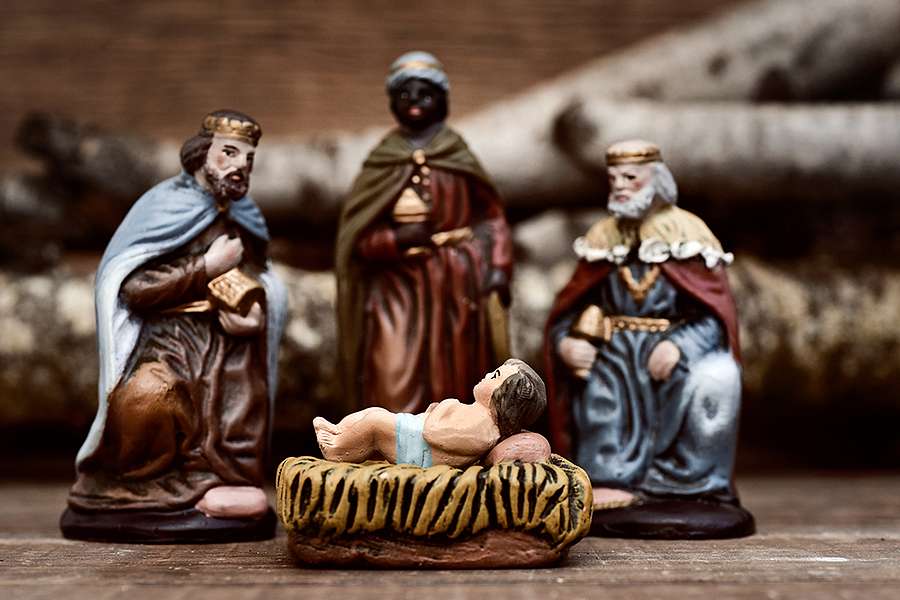
According to the Christian calendar, yesterday, January 6th, marked the celebration of a holiday known as the Epiphany of Our Lord Jesus Christ. It immediately follows the conclusion of the twelve day celebration of the festival of Christmas, which, of course, begins on December 25, and it signifies the beginning of a season in the church’s worship that lasts all the way up to the beginning of the season of Lent, which begins with Ash Wednesday, this year occuring on March 6th. Traditionally, the holiday of Epiphany commemorates the visitation of the wise men who came to worship the child Jesus which is recorded in Matthew, chapter 2.

However, for most non-liturgical churches, it is safe to say that this holiday is completely non-existent. The story of the wise men and their search for the king that would be born gets wrapped up into the warp and woof of the Christmas story, such that it loses its unique and separate import for our faith. So, by the time we come to the first Sunday of the month of January, the original significance of the Epiphany is completely lost in favor of other kinds of New Year’s foci, i.e. resolutions, goal setting, year in review, etc. Perhaps, we have become so familiar with the story of the wise men, that we have completely lost our ability to stand in amazement at this distinct and astounding scene.

The dictionary defines the word “epiphany” as a sudden, intuitive perception of or insight into the reality or essential meaning of something, usually initiated by some simple, homely, or commonplace occurrence or experience. And so, for Christians, this seemingly simple and straightforward scene where the wise men come to worship the child Jesus as “he who has been born King of the Jews” is actually seen to be the revelation of Christ as the Savior of the Gentiles. The Apostle Paul calls this the mystery that was hidden in ages past but is now revealed, that “the Gentiles are coheirs, members of the same body, and partners in the promise in Christ Jesus through the gospel.” (Ephesians 3.6)

And it was essentially this revelation, this “epiphany”, that drove the mission of the Apostle Paul, a mission which took him all the way across the known world at that time from Jerusalem to Spain. So, the bottom line, then, is this: the celebration of Epiphany should motivate us to mission. In the same way, that it motivated Paul and the leaders of the early church, it is our responsibility as followers of Christ to take the Gospel of our Lord around the world, even to the ends of the earth. That is what Epiphany is all about.

For further study:

Sermon: On the Epiphany of Our Lord Jesus Christ
Church: Bethabara Baptist Church, Lake City, AR
Date: January 6, 2019


Slow To Write

"let every person be quick to hear, slow to speak, slow to anger."

lovegavehope

Just another WordPress.com site

Jared Cornutt

Pastor | Speaker | Writer

Denny Burk

A commentary on theology, politics, and culture

G3 Ministries

Events + Resources for the Local Church

Biblical Reasoning

Biblical and Systematic Theology According to the Scriptures

RetroChristianity

Reclaiming the Forgotten Faith

SBC Voices

Southern Baptist News & Opinion

Lucid Theology

Thoughts on words, books, theology, and life.

Baptist21

A pastor-led voice for Baptists in the 21st century

Center For Baptist Renewal

The Personal and Professional Blog of Phillip Powers

The Pastor's Well - Pastor Well

The Personal and Professional Blog of Phillip Powers

Articles - AlbertMohler.com

The Personal and Professional Blog of Phillip Powers

The Gospel Coalition

The Personal and Professional Blog of Phillip Powers