Category Archives: Practical Theology

On the Formation of the Canon

TEXT

2. The Holy Scriptures, or the Word of God written, consist of all the books of the Old and New Testaments. These are:

THE OLD TESTAMENT: Genesis, Exodus, Leviticus, Numbers, Deuteronomy, Joshua, Judges, Ruth, 1 Samuel, 2 Samuel, 1 Kings, 2 Kings, 1 Chronicles, 2 Chronicles, Ezra, Nehemiah, Esther, Job, Psalms, Proverbs, Ecclesiastes, Song of Solomon, Isaiah, Jeremiah, Lamentations, Ezekiel, Daniel, Hosea, Joel, Amos, Obadiah, Jonah, Micah, Nahum, Habakkuk, Zephaniah, Haggai, Zechariah, Malachi.

THE NEW TESTAMENT: Matthew, Mark, Luke, John, Acts, Romans, 1 Corinthians, 2 Corinthians, Galatians, Ephesians, Philippians, Colossians, 1 Thessalonians, 2 Thessalonians, 1 Timothy, 2 Timothy, Titus, Philemon, Hebrews, James, 1 Peter, 2 Peter, 1 John, 2 John, 3 John, Jude, Revelation.

All of these are given by the inspiration of God to be the standard of faith and life.

3. The books commonly called the Apocrypha were not given by divine inspiration and so are not part of the canon or standard of the Scriptures. Therefore, they have no authority for the church of God and are not to be recognized or used in any way different from other human writings.

~Second London Baptist Confession (1689), 1.2 & 1.3

Series: The 1689 Baptist Confession of Faith
Church: South Caraway Baptist Church, Jonesboro, AR
Date: September 6, 2023


On How Christians are Different

TEXT

Therefore I, the prisoner in the Lord, urge you to walk worthy of the calling you have received, with all humility and gentleness, with patience, bearing with one another in love, making every effort to keep the unity of the Spirit through the bond of peace. There is one body and one Spirit—just as you were called to one hope at your calling— one Lord, one faith, one baptism, one God and Father of all, who is above all and through all and in all.

Now grace was given to each one of us according to the measure of Christ’s gift. For it says:

When he ascended on high,
he took the captives captive;
he gave gifts to people.

But what does “he ascended” mean except that he also descended to the lower parts of the earth? 10 The one who descended is also the one who ascended far above all the heavens, to fill all things. 11 And he himself gave some to be apostles, some prophets, some evangelists, some pastors and teachers, 12 to equip the saints for the work of ministry, to build up the body of Christ, 13 until we all reach unity in the faith and in the knowledge of God’s Son, growing into maturity with a stature measured by Christ’s fullness. 14 Then we will no longer be little children, tossed by the waves and blown around by every wind of teaching, by human cunning with cleverness in the techniques of deceit. 15 But speaking the truth in love, let us grow in every way into him who is the head—Christ. 16 From him the whole body, fitted and knit together by every supporting ligament, promotes the growth of the body for building itself up in love by the proper working of each individual part.

~Ephesians 4.1-16

Title: On How Christians are Different
Text: Ephesians 4.1-16
Series: The Letter to the Ephesians
Church: South Caraway Baptist Church, Jonesboro, AR
Date: July 23, 2023


On Optimism, Pessimism, and Hope

Navigating the eschatological frenzy can sometimes be quite daunting and intimidating. There are many questions, and to the dismay of many earnest students of the Bible, not many answers. Because of this, eschatological discussions among Christians often end up resulting in more confusion than clarity. This is especially true when those who affirm a particular position begin to misrepresent and/or caricature those who hold different conclusions than their own. We have seen this dynamic play out most recently in some social media forums, where some who hold the post-millennial position have begun to criticize the pre-millennial position as having a fundamentally pessimistic and defeatist outlook on the future, or even an essentially negative assessment of the power of the Gospel to save people and transform lives.

For those who are not aware, the post-millennial position holds that the millennial reign of Christ is the gradual result of the church’s mission. Through making disciples of all nations, the mission of the church will eventually result in a time when millennial conditions will characterize the whole earth. Christ is reigning at the right hand of the Father, and He reigns on earth through the ministry of His church. After an extended period of time of such conditions, Christ will return to judge the world, and the final state will begin. This, they suggest, is an essentially optimistic and hopeful assessment of the success of the Gospel, because it expects the gospel to be so effective in transforming lives, that it will organically result in a kind of utopian experience of the Kingdom of God on earth before Jesus comes again.

Consequently, they charge that the pre-millennial position expects conditions across the world to continue to deteriorate until Jesus comes again to establish His Kingdom on earth. Over time, sin will abound more and more, persecution of the righteous will become ever more intense, and things will progressively get worse until they reach their climax in the events of the Great Tribulation. Scripturally, this point of view might be based on verses like Second Timothy 3.1-5, which reads in part, “But know this: Hard times will come in the last days.” (See also Matthew 24.4-14) However, the question must be asked whether this is an accurate representation of the pre-millennial view. As someone who holds to the position in question, I would suggest that this portrayal of the pre-millennial view is partial at best and a dishonest caricature at worst. So, in the space that follows, I would like to offer two considerations that might help to bring clarity to this discussion.

First, every eschatological position must affirm that sin will remain present and active in the world until Jesus comes again to defeat it once and for all. The devil continues to prowl around like a lion seeking whom he might devour (1 Peter 5.8); spiritual warfare continues to be an ever present reality in the lives of followers of Jesus (Ephesians 6.10-18). The created order continues to groan under the burden of the curse even as it waits for the day of redemption (Romans 8.18-25). This is not some kind of pessimistic defeatism; no, this is simply theological realism. This is the tension that is the already and not yet. Yes, the death of Jesus on the cross made full and complete atonement for sin, and He cried out from the cross, “It is finished.” Those who trust in Him can be forgiven; in Christ, we have been saved from the punishment of sin. But we are not yet saved from the presence of sin, and we won’t be until Jesus comes again in glory and victory. But, a day is coming, a glorious day, when sin and death, pain and sorrow, brokenness and loss will be done away with once and for all (1 Corinthians 15.51-57, Revelation 21.3-4); a day is coming when the enemy will be finally and completely defeated and thrown into the lake of fire for eternity to torment the people of God no longer. (Revelation 20.7-10). And what a day that will be!

Secondly, we must affirm that Christians should be neither overly pessimistic nor naively optimistic; these emotions have zero connection to the idea of Christian hope. Christians should be a people of unshakable hope, but our hope is not some vague well wish that things might eventually get better. No, Christian hope is the firm conviction that what God has promised He will most certainly do. He has promised that He will come again to receive us to himself, that where He is we may be also; He has promised that He will come again to right every wrong, to heal every pain, to put a final and eternal end to sin and death. And it is because of this promise that we can face the difficulties and the ugliness of the world with honesty and compassion and perseverance. As the Apostle Paul puts it in 2 Corinthians, chapter 4, verses 8-10, “We are afflicted in every way but not crushed; we are perplexed but not in despair; we are persecuted but not abandoned; we are struck down but not destroyed.” He goes on to explain in verse 14 of that text, “For we know that the one who raised the Lord Jesus will also raise us with Jesus and present us with you.” This is Christian hope; it is neither a defeated pessimism nor a naïve optimism. Rather, it is a resolute conviction of future glory in the face of difficulty and hardship. It understand the reality of sin; it does not turn away from the ugliness and brokenness of this world. Instead, it holds onto the promise and power of the Gospel that Christ is our only hope, our only rescue, from the penalty, the power, and one day even the presence of sin.

Eschatology is the doctrine of hope; it is the biblical vision of the victory that we have in Christ. It should not be a source of conflict or consternation among Bible believing Christians. Of course, there are interpretive details over which we may continue to disagree, and “iron sharpens iron,
and one person sharpens another.” (Proverbs 27.17) And there are other interpretations out there that must be recognized and dismissed as the rank heresy that they are. This is why we must redouble and retriple our commitment to the tutelage of the Word of God. It is the Bible that defines the contours of our eschatological expectation, not our emotional perception of its outlook on the future, whether we consider that be optimistic or pessimistic. Christians should be people of firm and committed hope, because we know that Christ has promised to return bodily. As He said, “Look, I am coming soon, and my reward is with me to repay each person according to his work.” (Revelation 22.12) He is our hope, and this is something all Christians can agree on.

For further study, see also:
On Three Views on the Millennium
On Christian Hope: Heaven or Resurrection
On the Problem of Eschatological Imminence
On Three Views for Interpreting the Olivet Discourse
On Eschatology and the Gospel
On the Ground of Christian Hope
On Grief and Hope


On Pastoral Ministry and Job Titles

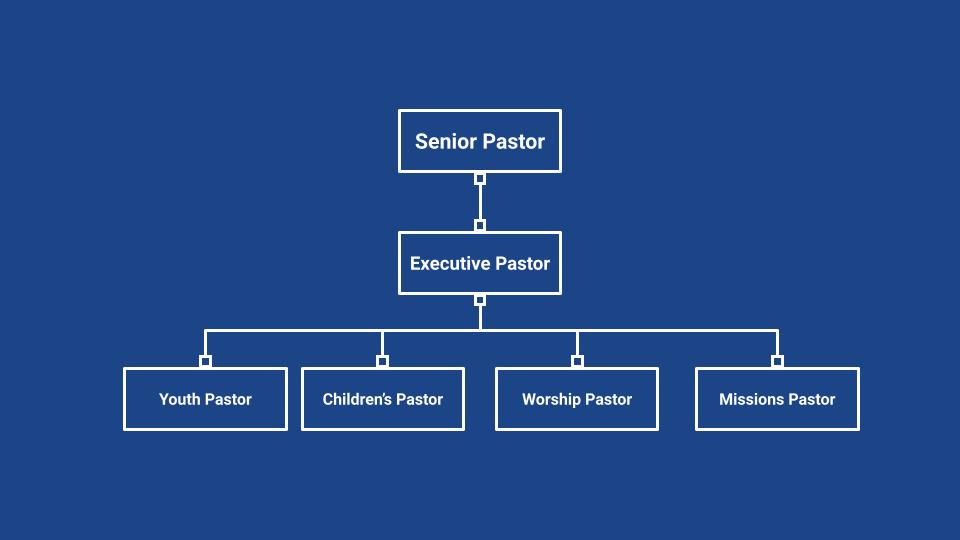
Language really is a funny thing, because so often how words are used determines what they mean regardless of their actual definition. Or to put it another way, meaning is dictated by connotation more than by actual denotation. This is especially so when it comes to current discussions in the Southern Baptist Convention about who can and cannot serve as pastor. Over the past several decades, the titles and types of pastors on church staffs all across this country have proliferated exponentially. We now have Senior Pastors, Lead Pastors, Teaching Pastors, Executive Pastors, Assistant Pastors, Associate Pastors, Youth Pastors, Children’s Pastors, Worship Pastors, Discipleship Pastors, Missions Pastors, Small Group Pastors, Assimilation Pastors, and on and on the list could go ad infinitum. Just a quick perusal of any ministry job board shows that we have practically become enamored with pastoral titles.

Of course, there is a certain wisdom to this structure. No one pastor is omnicompetent in every area of ministry, and as survey after survey has proven, expecting a single or solo pastor to be such quickly leads to burnout among other things. So, dividing pastoral duties among a group of leaders allows the pastoral staff to share the load of ministry responsibilities. This is in keeping with the vision of the body that is painted in 1 Corinthians 12.12-31. In that passage, we read “For just as the body is one and has many parts, and all the parts of that body, though many, are one body—so also is Christ.” The point is that dividing ministry responsibilities according to age groups (youth, children, seniors) or according to ministry focus (missions, discipleship, pastoral care) is an efficient way for a pastoral staff to share the many and varied tasks of church ministry. This division of labor maximizes the personality strengths, training, and experience of each individual pastor by allowing them to prioritize and focus on the ministry tasks for which they are best equipped.

The difficulty, however, is that the Bible never mentions associate or assistant pastors of any kind. In fact, the word “pastor”, which is the most commonly used title for ministry leaders today, is not even the primary designation used to refer to church leadership roles in the New Testament. In those sacred pages, we read more often of bishops (overseers) and elders, but we must affirm that these three terms, i.e. pastor, bishop, and elder, are meant to be viewed as synonymous terms, all of which refer to the ministerial leaders of the local church. Of course, this claim is not without its critics. Those who claim that women can serve as pastors are quick to claim that the role and function of pastor/teacher is separate and distinct from the role of bishop/elder. And so, the logic goes, women can serve in the role of pastor/teacher (e.g. as children’s pastor, women’s pastor, missions pastor, etc.) under the supervisory authority of the senior or lead pastor and/or elders.

Unfortunately, a thorough examination of the scriptural evidence would go beyond the limits of this space, but a quick examination of one particular passage will serve to demonstrate the thesis that the role of pastor, bishop (overseer), and elder are in fact the same role. In 1 Peter, chapter 5, verses 2, the Apostle Peter gives the following exhortation to the elders (c.f. 5.1) of the churches that he is writing to, shepherd (or pastor, same word) the flock of God among you, exercising oversight, not under compulsion but voluntarily, according to the will of God”. Peter goes on to show that elders exercise these responsibilities under the authority of Jesus Christ, the Chief Shepherd (or “Senior Pastor”, c.f. 5.4), who is the “shepherd (or pastor) and guardian (or bishop) of your souls” (2.25). This is not the only text that relates these ideas, but it is reasonably clear from this text that the responsibility for oversight and pastoring belongs primarily to those who serve as elders. If this analysis is sound, then the qualifications and restrictions that pertain to one must equally pertain to the others.

This is why we must reevaluate our use of pastor as a title for ministry leadership, particularly as it relates to the role of women leaders in the church. The application of the title “pastor” to women leaders who serve, for example, in the area of children or missions is careless at best and a complete disregard of the prescriptions of Scripture at worst. Further, we must affirm that changing the title from “pastor” to “director” while leaving the ministry responsibilities the same is merely wordplay. The New Testament is never interested in titles solely for the sake of titles; the biblical titles for leadership always refer first and foremost to the functions of leadership. And it is the function of bishop, elder, and pastor that is restricted to qualified men according to the Scriptures. Here again, this does not mean that women cannot participate in the ministry of the church, but it does mean that women should not serve in the role or function of pastor.

At the very least, this means that we desperately need to reevaluate our (over)usage of the title pastor. As the 2000 Baptist Faith & Message states, “[The church’s] scriptural officers are pastors and deacons. While both men and women are gifted for service in the church, the office of pastor is limited to men as qualified by Scripture.” There are two and only two offices of leadership in the church, i.e. pastors and deacons, and the office and function of pastors is limited to qualified men. This is the design of God given in His inspired, authoritative, and sufficient Word, and it cannot be dismissed simply because we find it to be distasteful or out of step with modern cultural concerns. We must obey the Scriptures; we cannot play fast and loose with words, change their meanings, or fit them to our own preferred usage. Words have power and meaning, and we must use them in ways that are scripturally faithful.

This article is also published at SBCvoices, here.


On the Spiritual Gift of Pastoral Ministry

It seems like there has been a lot of discussion recently, especially within the Southern Baptist community, regarding pastoral ministry and the role of women. This is largely due to the actions taken by Rick Warren and Saddleback Church. In May 2021, the southern California megachurch made denominational headlines when it ordained three women as pastors. Since then, it has also recognized Stacie Wood, wife of current pastor Andy Wood who succeeded Warren in 2022, as a Teaching Pastor. Because of these actions, the Credentials Committee of the Southern Baptist Convention determined that Saddleback Church is no longer “in friendly cooperation” with and therefore is no longer a part of the SBC. Saddleback intends to appeal this decision at this year’s national convention.

In this post, I am not concerned with the question of Saddleback or its future relationship with the SBC. Rather, I am interested in some of the biblical arguments that have been proffered throughout this discussion in the attempt to justify the pastoral service of women in the church. One pastor in particular, Dwight McKissic of Cornerstone Baptist Church in Arlington, TX, regularly advances the argument that pastoral ministry is a spiritual gift that can be exercised apart from the function and office of pastor. In his defense, he affirms that the role of lead or senior pastor is reserved for men according to the Scriptures, but he suggests that, under the pastor’s authority, the gift of pastor may be exercised by anyone so gifted regardless of gender.

This argument is primarily based on Ephesians 4.11, which says, “And he himself gave some to be apostles, some prophets, some evangelists, some pastors and teachers.” The verb “gave” points back to verse 8 (quoting Psalm 68.18), which reads, “When he ascended on high, he took the captives captive; he gave gifts to people.” The language of “gifts” and “giving” suggests to some that this passage should be read alongside the paradigmatic “spiritual gift” passages, e.g. 1 Corinthians 12, Romans 12, and it is this coalescence of passages that leads to the conclusion that pastoral ministry is a spiritual gift that can be exercised apart from the office and function of pastor. I believe there are several problems with this interpretation, and in the space that follows, I would like to highlight three of them.

First, this view rests on a grave misunderstanding of “spiritual gifts”. In English, the word “gift” can be used to refer to an ability or a talent; it is customary to speak of someone who is extremely skilled in a particular ability as someone who is “gifted.” This is the fundamental assumption of so-called “spiritual-gift inventories”, namely that a person’s “spiritual gifts” are in keeping with or even identical to their natural abilities and personality strengths. If this is the case, then anyone who has a strong personal charisma or is particularly skilled in public speaking could be viewed as having the “spiritual gift” of pastor/teacher. The problem is that none of the qualifications for pastoral ministry in the NT are based on a person’s ability or skill; almost all of them are grounded in the qualities of a person’s character. In his book What are the Spiritual Gifts?: Rethinking the Conventional View, Ken Berding suggests that this connotation of gifts as abilities has significantly skewed our understanding of what Paul actually means by “spiritual gifts”. Rather, he argues that spiritual gifts should be understood as ministry roles or areas of service. In this sense, pastors are a gift to the church; they are called by God to serve a particular role or function in the life of the body.

This brings me to the second concern I have with this view, namely that it misunderstands the role and function of pastors in the life of the body. In Ephesians 4.12, we read that these gifts, i.e. apostles, prophets, evangelists, and pastor/teachers, are given “to equip the saints for the work of ministry, to build up the body of Christ.” In other words, the roles that are given in verse 11 are given for the edification of the body in verse 12, meaning that they are not exercised among the body at large. They are leadership roles given by Christ to care for and serve His body, “until we all reach unity in the faith and in the knowledge of God’s Son, growing into maturity with a stature measured by Christ’s fullness” (4.13). This understanding would seem to be confirmed by Ephesians 2.20, which says that the church is “built on the foundation of the apostles and prophets, with Christ Jesus himself as the cornerstone.” This would mean that pastoral ministry is a leadership role in the church, and therefore it is not a gift to be exercised among the various members of the body regardless of gender.

A final concern that I would like to highlight in this regard has to do with the misunderstanding of the phrase “some pastors and teachers”. Is this phrase referring to one group, i.e. pastor/teachers, or is it actually two groups that are in view, i.e. some pastors and some teachers? Exegetically speaking, the two nouns are governed by one article, and this is the same article that identifies the other three groups. So, literally translated, the verse in question reads, “And he gave the apostles, the prophets, the evangelists, the shepherds and teachers(Eph 4.11 ESV). The most natural reading would indicate that there are four groups of leaders in view here, and that the last group, i.e. “pastors and teachers,” should be understood as one group with a compound role of shepherding and teaching. Of course, this is not the only way to understand this line (e.g. see the footnote in the NET Bible for an alternative view), but the fact remains that all pastors are teachers, even if not all teachers are pastors. The close proximity of the terms here along with the use of the article would seem to imply that it is pastor/teachers who have been gifted by Christ to His church, and therefore, pastoring cannot be viewed as a gift that is exercised apart from the role and function of pastor.

If this is the case, then the question of who may fill such a function in the church must be answered in light of the qualifications that are given for pastoral service. In particular, this would mean that the famous (or perhaps infamous) prohibition found in 1 Timothy, chapter 2, verse 12 must be taken into consideration; in that verse, we read, “I do not allow a woman to teach or to have authority over a man; instead, she is to remain quiet.” This is not to say that women cannot teach in the church, but it is to say that Ephesians 4.11 cannot be used to define such a role. Pastoral ministry is a leadership role in the church that is limited to qualified men per the Scriptures, and we simply cannot set those limitations aside based on our modern understanding of giftedness or ability. Certainly, the service of women in the church is vital and necessary for the health and growth of the church (c.f. Titus 2), but we must submit ourselves to the prescriptions of Holy Scripture, which limit the role and function of pastor to qualified men.

This article is also posted at SBCvoices, here.


On a Vision for Cooperative Preaching Ministry

A well known seminary president recently tweeted, “Any consideration of Christian preaching must begin with the realization that preaching is essentially an act of worship—the central act of Christian worship.” Putting the possible overstatement aside, the preached word has been a staple of the church’s theological, doxological, and ethical life together since its very inception. Even today, in most churches, preaching occupies the primary place of emphasis and importance in the weekly worship gathering. However, more often than not, the priority of preaching in today’s churches has to do with the charisma and polish of the preacher rather than the authority of God’s Word. We have created a celebrity culture that platforms the personality of the most proficient speakers among us, so that the local church’s experience of the word of God revolves around the insight and understanding of one man.

However, if we believe that a plurality model is the most biblically consistent model for pastoral leadership in the church, then it necessarily follows that we should apply that model to the ministry of preaching as well. In other words, if the responsibilities and burdens of pastoral ministry are best shared among a band of brothers who are equal in position and authority, then the responsibility and burden of the word of God should be shared also. In the paragraphs that follow, I would like to highlight three ways in which a cooperative approach to preaching can benefit the local church, and then I would like to sketch briefly what this approach might look like practically.

The first way that this approach benefits the local church is that it nourishes the primary preaching pastor(s) by helping him to keep his spiritual tank full and avoid burnout. Week after week, the teaching pastor is responsible for feeding the flock; he is locked away in his study preparing lessons and bible studies and sermons. He is expected to give and give and give of himself, and when this continues without any respite, eventually his spiritual fuel tank will hit zero. Of course, most teaching pastors are glad to do this, but the question remains: who feeds the pastors? Shouldn’t the teaching pastor also be able to find spiritual nourishment within the local body of Christ as God intended, or must he resort to online preaching from pastors he admires but doesn’t know personally? A cooperative approach to teaching in the local church helps us to care for and sustain every part of our body, especially the pastors and teachers who faithfully sustain us. 

A second way this approach benefits the local church is that it provides the flock with a diversified diet of spiritual truth. Of course, God’s truth is absolute and unchanging, but it comes to us in vessels that are finite, broken, incomplete. No one has an exhaustive and complete understanding of everything in the Bible. No matter how much they might prepare and study, on this side of glory, their understanding of its truths will always be incomplete. Moreover, every minister of God’s Word comes to the text with different backgrounds, different experiences, different perspectives, and this is a good thing, because, as the Scriptures remind us, “iron sharpens iron” (Proverbs 27.17). There is nothing wrong with one pastor or elder holding the primary teaching responsibility, but it is good and healthy for the congregation to hear from other faithful voices from time to time. In this way, the congregation cultivates a complementary and more holistic understanding of the truth.

And lastly, the third way that a cooperative approach to pulpit ministry benefits the local church is that it accomplishes our commission. The Great Commission is to make disciples, and part of making disciples, as the Apostle Paul instructed Timothy in Second Timothy, chapter 2, verse 2, is committing to faithful men what we have heard who will then be able to teach others also. Local churches are called to train up the next generation of leaders, faithful men who can step into the pulpit and teach the Word of God faithfully. As pastors and elders, we must look forward to our succession. Who have we invested in that will be able to take up the baton of God’s Word when we are gone? A collaborative approach to teaching allows us to train and prepare faithful men, to give them the opportunity to stand before their spiritual family and teach the Word of God in the safety of a community that loves and supports them. 

In an ideal plurality situation, the primary preaching pastor should preach between 35 and 40 sermons annually; mathematically, this would come out to about three sermons per month. The remaining 15 or so can be equally shared among the other members of the elder team. However, a cooperative approach to the ministry of preaching goes beyond the allocation of Sundays. It should include discussion and planning of the direction for not only the series overall but of individual texts, and it should also include the opportunity for evaluation and feedback. Of course, this approach does not remove the individual pastor’s responsibility for textual work; every minister of the word must commit themselves to hard work of plumbing its depths. But it does mean that we are not alone in the process. As plurality of brothers, we come alongside each other in the ministry of the Word, so that we all can attain unto “maturity with a stature measured by Christ’s fullness.” (Ephesians 4.13)

This article is also posted at SBCvoices, here.


On the Spiritual Disciplines of Submission and Service

43 But it is not so among you. On the contrary, whoever wants to become great among you will be your servant, 44 and whoever wants to be first among you will be a slave to all. 45 For even the Son of Man did not come to be served, but to serve, and to give his life as a ransom for many.”

~Mark 10.43-45

Topic: Submission and Service
Series: Spiritual Disciplines of the Christian Life
Church: South Caraway Baptist Church, Jonesboro, AR
Date: March 08, 2023


On the Spiritual Discipline of Fasting

According to the Christian calendar, today is Ash Wednesday which marks the beginning of the liturgical season of Lent. I have previously written on the season of Lent here and here, so I refer you to these posts for my thoughts on the season of Lent and its spiritual value. Of course, the primary spiritual practice that is traditionally associated with the observance of Lent is the spiritual discipline of fasting, but, even outside of the season of Lent, the spiritual discipline of fasting is a valuable practice for those who wish to be more like Jesus. However, in our consumeristic culture, the discipline of fasting is a spiritual practice that is rarely, if ever, engaged in the Christian life, and this is much to our loss. The witness of Holy Scripture and of church history is replete with examples of men and women whose engagement in the spiritual discipline of fasting had meaningful and abiding value in their walk with Christ. If this is true, why then are we so resistant to this biblically grounded and historically proven discipline of the Christian life?

Part of our resistance may stem from the fact that we simply do not understand what the spiritual discipline of fasting is all about. Because our pulpits are almost completely silent on the topic, the only kind of fasting with which we are familiar has to do with nutrition, weight loss, or some other physical or medical concern. For this reason, our consideration of the question of fasting is primarily focused on the physical aspects of the practice. What to eat, when to eat, how much to eat, we are practically consumed with our need for physical nourishment. Of course, this is very purpose of the spiritual discipline of fasting, to expose our complete and total dependence on food for the production of energy and the cultivation of physical health. In the same way that our bodies are dependent on physical nourishment, so also our souls are dependent on spiritual nourishment for the cultivation of spiritual health and vitality. The purpose of the spiritual discipline of fasting is to teach our souls to hunger and thirst for spiritual food in the same way that our bodies hunger for spiritual food. As Jesus says in the Sermon on the Mount, “Blessed are those who hunger and thirst for righteousness, for they will be filled.” (Matthew 5.6)

Another reason for our reluctance to practice this discipline, and perhaps a more fundamental one, is simply our aversion to anything that might cause us discomfort. As creatures, we love our comfort, our ease, our physical pleasure, and we resist, sometimes vehemently, any kind of activity or behavior that might take away our comfort, even temporarily. Simply put, we don’t like pain, and going without food, even if it is just for one meal, can cause some quite unpleasant physical side effects. But we must be willing to entertain the possibility that this pain is good pain, that some temporary physical discomfort could be beneficial if it results in lasting spiritual benefit. Based on the clear scriptural and historical evidence, we must conclude that this is the case. In the same way that physical exercise is often associated with aches and pains in the short term, we all know that regular exercise habits lead to a higher likelihood of physical health in the long run. So, rather than avoiding the temporary discomforts of the spiritual discipline of fasting, we must learn to embrace these as a pathway to long term spiritual health. As the Apostle Paul writes in 1 Timothy, chapter 4, verse 8, “For the training of the body has limited benefit, but godliness is beneficial in every way, since it holds promise for the present life and also for the life to come.”

However, the primary reason for why we should relearn the value of the spiritual discipline of fasting is simply this, namely that our Lord expected us to engage in it. Of course, in the Sermon on the Mount, he did say “when you fast” and not “if you fast” (Matthew 6.16), but his expectation for His disciples is even more clear in Mark, chapter 2. In verse 18 of that chapter, the disciples of the Pharisees and the disciples of John the Baptist come to Jesus to ask Him why His disciples do not fast. Apparently, their lack of practice in this area did not go unnoticed, and so, Jesus explains that they cannot fast while “the bridegroom” is with them, by which He clearly refers to Himself. “But the time will come when the groom will be taken away from them, and then they will fast on that day.” (Mark 2.20) The footnote in the NET Bible indicates that this is a veiled reference to His death, a prediction that He would make more clearly following Peter’s confession at Caesarea Philippi (cf. Mark 8.31, 9.31, 10.33). So, here Jesus is looking forward to the time when His disciples will live without His physical embodied presence, and “they will fast on that day.” In other words, one way that we commune with the risen and ascended Christ is through our submission to His Spirit in the discipline of fasting.

Of course, we must hasten to add that while Jesus may have expected that His disciples would fast, He did not expressly command them to do so. So, our lack of engagement in this spiritual discipline can in no way be construed as sin. However, if we have no driving desire to be more like Jesus, no deep longing to commune with Him by the Spirit, no genuine affection for Christ and His glory, then we may need to consider whether we know Him at all. The Scriptures are clear that to know Christ, to sit in His presence, is far better sustenance than any physical nourishment that food may offer. This is why Jesus told Martha that Mary had chosen the “better meal” (Luke 10.42, author’s translation). This is the irony, namely that fasting is feasting. In other words, the spiritual discipline of fasting is one way by which we feast on the sustenance that comes from Christ.

So Jesus said to them, “Truly I tell you, unless you eat the flesh of the Son of Man and drink his blood, you do not have life in yourselves. The one who eats my flesh and drinks my blood has eternal life, and I will raise him up on the last day, because my flesh is true food and my blood is true drink. The one who eats my flesh and drinks my blood remains in me, and I in him. Just as the living Father sent me and I live because of the Father, so the one who feeds on me will live because of me. This is the bread that came down from heaven; it is not like the manna your ancestors ate—and they died. The one who eats this bread will live forever.”

John 6.53-58

On the Spiritual Disciplines of Silence and Solitude

Quote

There is the view which misinterprets silence as a ceremonial gesture, as a mystical desire to get beyond the Word. This is to miss the essential relationship of silence to the Word. Silence is the simple stillness of the individual under the Word of God. Silence is nothing else but waiting for God’s Word and coming from God’s word with a blessing. … Silence before the Word leads to right hearing and thus also right speaking of the Word of God at the right time. … Let none expect from silence anything but a direct encounter with the Word of God, for the sake of which he has entered into silence. 

~Dietrich Bonhoeffer, Life Together

Topic: Silence and Solitude
Series: Spiritual Disciplines of the Christian Life
Church: South Caraway Baptist Church, Jonesboro, AR
Date: February 08, 2023


On the Spiritual Disciplines: An Introduction

TEXT

For this very reason, make every effort to supplement your faith with goodness, goodness with knowledge, knowledge with self-control, self-control with endurance, endurance with godliness, godliness with brotherly affection, and brotherly affection with love. For if you possess these qualities in increasing measure, they will keep you from being useless or unfruitful in the knowledge of our Lord Jesus Christ.

~2 Peter 1.5-8

Topic: Introduction and Overview
Series: Spiritual Disciplines of the Christian Life
Church: South Caraway Baptist Church, Jonesboro, AR
Date: January 11, 2023


Slow To Write

"let every person be quick to hear, slow to speak, slow to anger."

lovegavehope

Just another WordPress.com site

Jared Cornutt

Pastor | Speaker | Writer

Denny Burk

A commentary on theology, politics, and culture

G3 Ministries

Events + Resources for the Local Church

Biblical Reasoning

Biblical and Systematic Theology According to the Scriptures

RetroChristianity

Reclaiming the Forgotten Faith

SBC Voices

Southern Baptist News & Opinion

Lucid Theology

Thoughts on words, books, theology, and life.

Baptist21

A pastor-led voice for Baptists in the 21st century

Center For Baptist Renewal

The Personal and Professional Blog of Phillip Powers

The Pastor's Well - Pastor Well

The Personal and Professional Blog of Phillip Powers

Articles - AlbertMohler.com

The Personal and Professional Blog of Phillip Powers

The Gospel Coalition

The Personal and Professional Blog of Phillip Powers