Tag Archives: Destruction of Jerusalem

On the Errors of Full Preterism

Full preterism, or consistent eschatology as it is sometimes called, is the belief that all of the Bible’s prophecies regarding the consummation of God’s plan for the redemption of humanity, including but not limited to the second coming of Jesus, the resurrection, final judgment, and the establishment of the new heavens and the new earth, occurred in 70 AD when the Romans destroyed the temple in Jerusalem. This event in their understanding marked the eschatological transition from the Old Covenant to the New Covenant, meaning that no further fulfillment is necessary. The new has come; it is really and truly here to its fullest extent. There is no need for any further act of God to complete his redemptive purposes in the world.

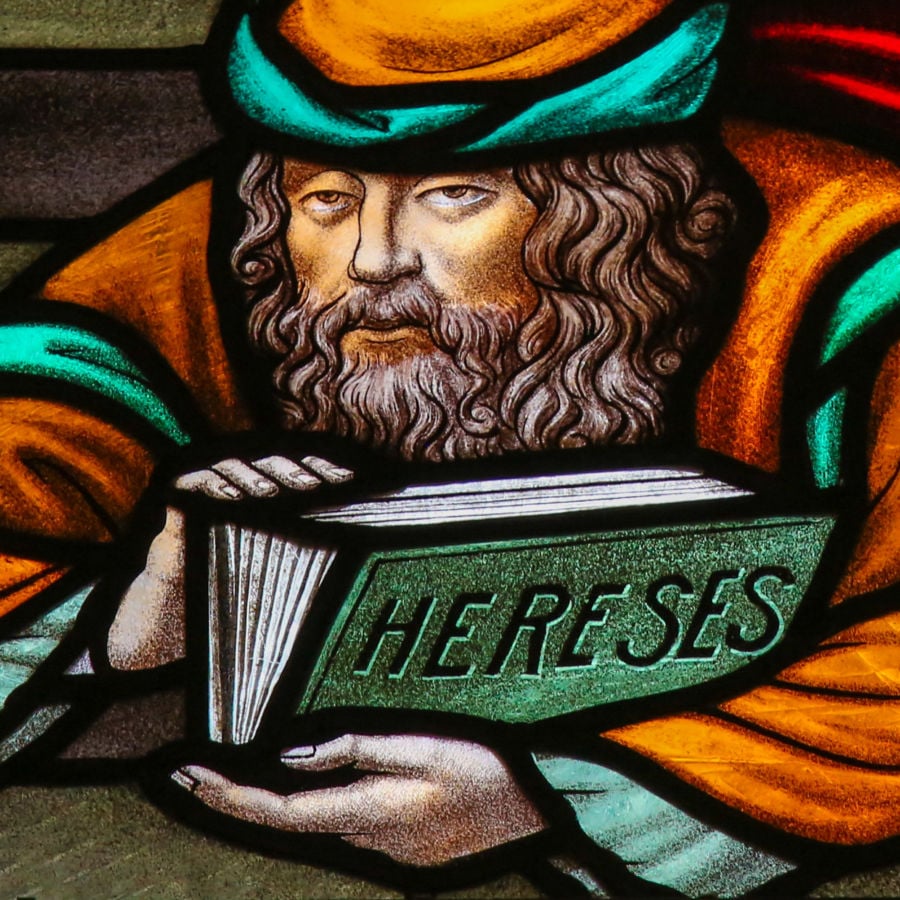
Now, let me be clear, this position is complete and utter heresy. It is a false gospel, because it denies the essential orthodox belief that “He will come again to judge the living and the dead” (Apostle’s Creed). It denies “the resurrection of the dead and the life of the world to come” (Nicene Creed). These denials among others put the views of full preterism wholly outside the boundaries of historic Christian orthodoxy. In the space that remains here, I would simply like to outline a few of the methodological and theological errors that are typical of this view, and then I will conclude by reaffirming the orthodox Christian hope.

The first error of full preterism is that they have a conspiracy theory view of hermeneutical method. In other words, their interpretations are based on a string of loosely related or even unrelated texts that are tied together by the occurrence of similar words. Of course, they would claim that they are following the principle of sola scriptura, namely that “scripture interprets scripture,” but I would submit that this is a theological conviction for biblical interpretation not a hermeneutical method for biblical interpretation. (See my post here). In stringing texts together the way that they do, they completely disregard concerns for the text’s historical and theological context and the author’s flow of thought. Instead, they flatten out the distinctive emphases of particular texts by smashing them together to say that same thing. More often than not, their exegesis comes across like someone throwing paint against a wall and then concluding they’ve painted Mona Lisa.

A second error of full preterism is that they hold to a gnostic view of the human person. Gnosticism is a heresy from the second century CE that suggests that Christ came to save us from this evil material world so that we could throw off the limits of our physical bodies and exist eternally as pure spirit. Of course, there is much more to it than this simple definition, but its weakness is that it disregards God’s design for human beings as embodied souls. We were made with a body and a soul, and to exist without either one of these is to be incomplete from the biblical point of view. This is why the resurrection of the body is such a primary doctrine; we are not merely transformed spiritually, we will be transformed physically when He comes again. Full preterism denies the future bodily resurrection of both the righteous and the wicked, and they suppose that when we die, we either go to heaven or hell to continue on as a “spiritual” being for eternity.

Thirdly, full preterism has an adoptionistic view of the incarnation. Adoptionism, or dynamic monarchianism, is a heresy from the third century CE that suggests that the divine logos came upon the man Jesus as his baptism, left him at his crucifixion, but then came upon him again at his resurrection. In other words, the man Jesus was “adopted” by God at his resurrection. The view of full preterism is not unlike adoptionistic Christology because they seem to believe the body of Jesus was only necessary during his earthly life. Often they suggest that his body was burnt up, or maybe it disappeared, at His ascension, so that He no longer has a body in heaven now. In other words, the son “adopted” a body for as long as he needed it, but then, when he no longer needed it, he discarded it. Along with the gnostic notions discussed above, this position negates the necessity of the resurrection. Why did Jesus even have to be resurrected from the dead with a body? Why not just rise as pure spirit? Here again, this view cannot explain the glorified body of Jesus, because it makes the incarnation temporary.

A fourth error that is part of the full preterist view is that they seem to have a fatalistic view of human history. Since they view this world as it is now as the “new heavens and new earth,” they have no expectation for any kind of renewal or transformation of the created order. According to this view, sin, death, disease, heartache, and the like will continue in perpetuity, eternally, without end. The only escape from the harsh realities of this world is when we die and go to heaven. But a renewed earth free of the corruption of sin and death is not in the purview of full preterism. This is fatalistic, because it essentially says that this is how the world is and this is how it will be. Nothing will ever get better, paradise will never be restored. Among others problems, this perspective denies the original purity and goodness of God’s creation and God’s intent to restore creation to that state of purity and goodness.

The final error that I see with full preterism, and perhaps the greatest, is that it offers a hopeless view of the Gospel. The reason for this is that it does not offer a final and full defeat of sin. Sure, the penalty of sin has been paid on the cross, and Satan has been defeated. But according to the full preterists, Satan and sin continue to run free forever. There is no final end to sin; there is no final defeat of Satan, no final judgment of the wicked. These things continue into perpetuity. The fact of the matter is that this is not the Gospel. Christ came, yes to pay the penalty for our sin, but also to free us from sin, and not only us, but the entirety of His creation. This is why the creation groans with yearning for the revelation of the sons of God (Romans 8.19-22). We look forward to a world that will be free of the domination and corruption of sin, free of the decay of death, where there will be no more tears, no more pains, no more heartaches. This is hope. This is the Gospel. And so we say, “Amen! Come, Lord Jesus!” (Revelation 22.20)

For further study:
On Christian Hope: Heaven or Resurrection
On Eschatology and the Gospel


On the Message of Habakkuk

TEXT

The pronouncement that the prophet Habakkuk saw.

How long, Lord, must I call for help
and you do not listen
or cry out to you about violence
and you do not save?
Why do you force me to look at injustice?
Why do you tolerate wrongdoing?
Oppression and violence are right in front of me.
Strife is ongoing, and conflict escalates.
This is why the law is ineffective
and justice never emerges.
For the wicked restrict the righteous;
therefore, justice comes out perverted.

~Habakkuk 1.1-4

16 I heard, and I trembled within;
my lips quivered at the sound.
Rottenness entered my bones;
I trembled where I stood.
Now I must quietly wait for the day of distress
to come against the people invading us.
17 Though the fig tree does not bud
and there is no fruit on the vines,
though the olive crop fails
and the fields produce no food,
though the flocks disappear from the pen
and there are no herds in the stalls,
18 yet I will celebrate in the Lord;
I will rejoice in the God of my salvation!
19 The Lord my Lord is my strength;
he makes my feet like those of a deer
and enables me to walk on mountain heights!

For the choir director: on stringed instruments.

~Habakkuk 3.16-19

Text: Habakkuk 1.1-4, 3.16-19
Series: Supply Preaching
Church: Fitzgerald Crossing Baptist Church, Wynne, AR
Date: January 15, 2023


On Historical Context and Purpose in the Book of Revelation

It is commonly accepted wisdom among most Christians that the Book of Revelation is the hardest book of the Bible to interpret and understand, and it certainly does stand out as one of the most unique books of the New Testament. Those who do attempt to read it are immediately confronted by literary forms, images and symbols, and pastoral concerns that are so unlike their own lived experiences that they tend to put it down faster than they picked it up. Couple this with the myriad of disagreements that exist over the meaning of all these details, and it seems easier to simply leave this book of the Bible to the domain of trained Biblical scholars. However, the book itself affirms, “Blessed is the one who reads aloud the words of this prophecy, and blessed are those who hear the words of this prophecy and keep what is written in it, because the time is near.” (Revelation 1.3) So, when we neglect and ignore this final book of the Bible, we miss out on the blessing that it very clearly promises. But how do we overcome the intimidating and off-putting obstacles that keep us from drinking deeply from its pages?

When we are met with an interpretive challenge like the Book of Revelation, we must return to our basic hermeneutical convictions, those fundamental interpretive principles that help us navigate the Scriptural waters. And one of those rules that is particularly helpful for understanding the Book of Revelation is this: A text without a context is a pretext for a proof text. In other words, when we understand who the biblical author is writing to and why he is writing to them, we are in a better position to understand what he is saying. Or to put it another way, the meaning of the text must be grounded in the inspired intention of the biblical author. He is writing to real people with real needs, and he intends for his message to truly address those needs. If we come up with an interpretation that would make zero sense for the original audience, then we must reevaluate our understanding of the text. Of course, any reconstruction of the historical audience must begin with the details in the text, but historical sources from the time period can add additional detail to our understanding of the audience and their situation.

Fortunately for us, John identifies his intended audience directly; in chapter 1, verse 11, we read, “Write on a scroll what you see and send it to the seven churches: Ephesus, Smyrna, Pergamum, Thyatira, Sardis, Philadelphia, and Laodicea.” We must affirm that these were seven real churches that were located in the Roman province of Asia Minor, or what we would call modern day Turkey. Each one of these seven churches is addressed directly in the letters of chapters 2 and 3, but the author’s concern for these churches cannot be limited to these first few chapters, even if they are primary for understanding the particular needs of these churches. The entire book was written to and for the members of these seven churches of Asia Minor. As to the date of writing, there are two views that are held by biblical scholars. The majority view holds that the book was written during the reign of the Emperor Domitian (81-96 CE); the minority view suggests that the book was written during the reign of the Emperor Nero (54-68 CE). Either of these dates is possible for the book’s composition, but a review of the historical evidence slightly favors the later date, meaning that the Book of Revelation was probably written sometime around 95 CE.

Regardless of which date is preferred, it is clear that these seven churches were facing challenges both internally and externally. These Christians were living in a world that was openly hostile to their faith in Christ, and while there was no official imperial policy of persecution at this time, they were facing intense social pressure in their local communities to compromise their convictions and conform to the Roman way of life. Culturally, they simply had no where to belong. The Jews had rejected them, and the Gentiles would not accept them. They were ostracized marginalized outsiders who did not belong to the world they lived in. And Jesus is writing to them through John to encourage them to persevere in faithfulness, to hold on to the blessed hope that is His appearing. The Revelation is a reminder that they are part of something bigger than themselves, that the victory and vindication that they long for is ahead of them, and that there will be a day when all oppression shall cease. This is the message of Revelation. It is not about beasts and bowls; rather, it is about Christ, our King, who is coming again in glory and power to do away with sin once and for all and establish His perfect Kingdom on earth.

Of course, there are those who would disagree with this assessment of the message of Revelation. Some, particularly those who hold to an early date for the book, would suggest that part or perhaps all of the book was fulfilled in the destruction of Jerusalem in 70 AD. Problems with the early date notwithstanding, it is not clear how this understanding addresses the needs of Christians living in the Roman province of Asia Minor. As noted above, they were facing persecution from the Jews living in those cities, but Jerusalem was not the primary enemy that they were facing. In fact, the Book of Revelation makes it clear that while earthly enemies may affect us, they are not our ultimate foe anyway. Therefore, the destruction Jerusalem would hold little promise for bringing their persecution to an end and accomplishing the victory that the book promises. Further, it isn’t clear how the book’s descriptions of “all the nations”, “all those who live on the face of the earth”, and “the whole earth” can refer only to the people of Israel or the citizens of Jerusalem. So, while this view attempts to maintain the book’s relevance for the original audience by positing all fulfillment in the first century, in actuality, it does the exact opposite. In fact, it completely undercuts the hope and blessing that the book promises its readers, both in the first century and today.

The Book of Revelation paints a glorious and beautiful picture of the hope that is ours in Christ Jesus. It is the promise of a world that is free from the contamination of sin, free from the heavy burden of the curse, free from all opposition to Christ and His people. As Christians, we must remember that this is our blessed hope. This world’s troubles and difficulties are not the end of our story; no, we are part of something that is bigger than ourselves, an eternal story that far surpasses our momentary lives here on earth. Moreover, the Book of Revelation teaches us that our sufferings, our difficulties, our heartaches, they matter deeply to God. He takes note of every wrong, every insult that we suffer, and one day, He will right those wrongs and vindicate His people. This is the central message of Revelation. Of course, the difference is in the details as they say, and there are still many details within the pages of Revelation that we must wrestle with. But this is the point, we must wrestle with them. We cannot ignore or neglect this last book of the Bible simply because it is too challenging, too difficult, too different. We must explore with our minds and our hearts what the Spirit is saying to His church. We must pray that He will give us ears to hear, and when we engage this book in earnest, we may be confident that we will find the strength to persevere and hold fast in hope.

For further study, see
Osborne, Grant R. Revelation. Baker Exegetical Commentary on the New Testament. Grand Rapids, MI: Baker Academic, 2002.


Slow To Write

"let every person be quick to hear, slow to speak, slow to anger."

lovegavehope

Just another WordPress.com site

Jared Cornutt

Pastor | Speaker | Writer

Denny Burk

A commentary on theology, politics, and culture

G3 Ministries

Events + Resources for the Local Church

Biblical Reasoning

Biblical and Systematic Theology According to the Scriptures

RetroChristianity

Reclaiming the Forgotten Faith

SBC Voices

Southern Baptist News & Opinion

Lucid Theology

Thoughts on words, books, theology, and life.

Baptist21

A pastor-led voice for Baptists in the 21st century

Center For Baptist Renewal

The Personal and Professional Blog of Phillip Powers

The Pastor's Well - Pastor Well

The Personal and Professional Blog of Phillip Powers

Articles - AlbertMohler.com

The Personal and Professional Blog of Phillip Powers

The Gospel Coalition

The Personal and Professional Blog of Phillip Powers