Category Archives: Church History

On Maundy Thursday

A couple of weeks ago, Christians around the world celebrated the death and resurrection of our Lord Jesus Christ. It is a holiday that transcends all denominational lines, theological differences, national borders, language barriers, and time zones. Holy Week. Palm Sunday, Good Friday, Resurrection Sunday, these annual “holy-days” tell the story, that “old, old story, how a Savior came from glory, how He gave His life on Calvary, to save a wretch like me.” It is a time in which we pause to remember, when we focus our reflection, our worship on the good news that makes the Christian gospel unique, timeless, powerful, namely that Christ is risen. He is risen indeed. Each and every day of that week, from Palm Sunday through Resurrection Sunday, is absolutely rich, robust with significance for Christian faith and practice. However, there is one day of that week that is often neglected in the hustle and bustle that usually accompanies preparations for Easter Sunday.

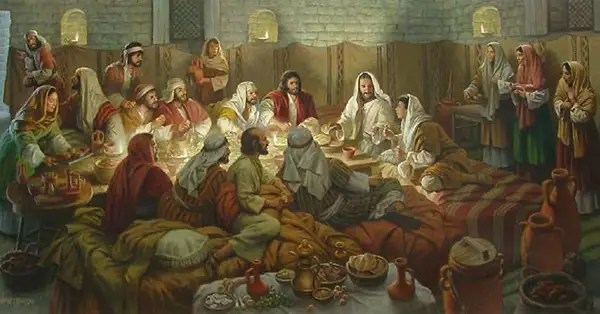
On Thursday evening of our Lord’s Passion, Jesus gathered with His disciples in the upper room. The evening began with a beautiful act of loving service as Jesus washed the disciples feet. This seemingly simple moment subsequently shaped the entire evening as Jesus went on to teach them, saying, “I give you a new command: Love one another. Just as I have loved you, you are also to love one another.” (John 13.34). He then explained that this love would be the primary characteristic that would identify them as His disciples (verse 35). Of course, He would go on that evening to define this love by His own sacrificial death which would occur the following day on Good Friday (John 15.13). This is most likely why he referred to it as a “new command”. It wasn’t new in the sense that it had never been taught; in fact, the OT taught clearly that God’s people should “love your neighbor as yourself” (Lev 19.18). However, the love that Jesus was calling the disciples to that night was something more, something different, something new. This is why we traditionally refer to this day as Maundy, which comes from the Latin mandatum meaning command, “a new command.”

The evening continued around the table as they shared the Passover meal, and it concluded with the passing of the bread and cup, which Jesus reinterpreted as symbols of His body that would be broken and His blood that would be shed for the forgiveness of sins to inaugurate the New Covenant (Matthew 26.26-30). This Lord’s Supper subsequently became central to the worship of the early church. As Christians gathered each week for worship and Word, they would do so around the table; they would share a meal together which would of course include the breaking of bread and passing of the cup (c.f. Acts 2.46). This meal would eventually become known as the Agape Feast or “love feast”, so called after the new commandment that Jesus gave the disciples that Thursday night. It was a time when the followers of Christ could come together to experience the grace of fellowship that is available through the Holy Spirit.

In the modern church, this kind of observance is sadly lacking. Though a few traditions have revived the practice (for one example, click here), for the most part it is widely neglected. We are so caught up in the busyness of our own lives, that we fail to take the time to enjoy the fellowship that binds us together. Even immediate families today barely have the time to share an evening meal together, and when they do, they can hardly be bothered to look up from their screens to interact with one another. But for Jesus and His earliest followers, spending the time to share a meal together around the table was a precious gift of God. Unrushed fellowship over the course of a meal where mutual love to can be shared with one another was foundational in the weekly rhythms of the early church; it was paramount for their life together as disciples of Jesus.

We desperately need to recover this timeless grace, the age old spiritual discipline of table. Of course, this should begin with the weekly observance of the Lord’s Supper as a part of the church’s worship. This ordinance should stand at the center, alongside the preaching of the Word, as we gather together for mutual edification and encouragement every Sunday. It should not be relegated to the end of the service as an obligatory addendum. (For more on this, see my post here.) But it need not end there; it should extend from the weekly worship gathering to homes as brothers and sisters in Christ show each other the grace of hospitality, opening up their homes, sharing meals, loving one another, and doing life together. This is Jesus’ vision for Christian community, that we would love another, even as He loves us, and this is nowhere more on display than we we gather around the table.

On Common Objections to the Observation of Lent

Well, as they say, it is that time of year again. No, I am not talking about tax season; I am talking about the season in the traditional Christian calendar which is set aside for the purpose of self-reflection, examination, confession, and repentance. I am talking about that time of the year when we are asked to set aside the creature comforts that we are so dependent on and to cultivate that pure and singular dependence upon Christ through His Spirit. It is that time of year when Christians from all around the world from many varied theological and cultural backgrounds are invited to set their gaze on the cross of our Lord Jesus and the price that He paid for our sin, even as they begin to anticipate that victorious day when we will celebrate His resurrection from the dead. I am talking about the season of Lent. (For more on this season and its usefulness in the Christian life, see my post here.)

However, in most non-liturgical, low-church traditions, especially down here in the good ole’ Bible belt, the idea of observing the season of Lent is most often met with hostility and a host of objections as to why Christians should not observe this ancient practice. In this post, I would like to consider just a few of these, so that we may perhaps have a clearer understanding as to the benefits and the dangers of observing the season of Lent.

One of the primary objections that is most often given against the practice of Lent, as well as any other practice that might remotely be considered liturgical, is that it comes to us from the traditions of the Roman Catholic Church. There is a deep seated antipathy, an unstated but ever present aversion to any and all things Roman Catholic, that lives just under the surface in many Protestant denominations, and this is much to our shame. (This may be a symptom of a wider problem, i.e. the hubris of denominational tribalism that treats all those outside of our own tradition with skepticism and disdain.) Now, I will be the first to admit that there are many facets of Roman Catholic theology that I find troublesome and concerning, many aspects of their belief and practice that are hard to square with the teaching of the Bible, but we do ourselves a great disservice when we dismiss their contributions to the Christian faith altogether.

After all, the Roman Catholic Church was the only church for the first 1500 years of Christian history, and though they might have gone astray along the way, they actually got many things right. From their centuries long faithfulness comes classic formulations of doctrines like the trinity, the hypostatic union, etc., and for these we must be ever grateful. But not only in matters of doctrinal orthodoxy, but in the details of faithful orthopraxy, their contributions must be considered, and not merely dismissed. They have given us a rich and beautiful liturgical tradition which we would do well to consider in our own attempts to be faithful worshippers of Christ. Practices like the lectionary and the calendar are just some of the contributions that come to us from that tradition. I believe the season of Lent to be one of these contributions from which our faith and practice could benefit deeply. In other words, we don’t have to throw the baby out with the bathwater, so to speak.

A second objection that is somewhat connected with the first has do with the purpose of the season of Lent. In some traditions, Lent is presented as a way of “earning” God’s forgiveness, as a meritorious act by which we might deserve God’s grace, even as a kind of penance. In this light, the observance of Lent is made to be a mandatory practice for all of those who call themselves Christians. Clearly, this flies in the face of the clear teaching of the Bible. Our sins were once and for all completely forgiven when we placed our faith in Christ. This is what it means to be justified. There are no actions that we can take to earn or deserve more grace from God, because He has already poured out grace upon grace to us through the person and work of Jesus Christ. We are not required to do any works of penance for our sins, because the once and for all punishment for our sins fell on the shoulders of Jesus Christ as He was nailed to the cross to die. The payment for sin has been made in full; nothing more is necessary.

However, the repentance that God requires is more than a one time event; on the contrary, it is the lifelong discipline of a follower of Christ as we turn from our sin daily. This is the first of Martin Luther’s 95 Theses, that “When our Lord and Master Jesus Christ said, “Repent” (Mt 4:17), he willed the entire life of believers to be one of repentance.” Repentance is a habit, and setting aside a season for intentional reflection and cultivation of that habit can be quite beneficial in the life of the Christian. Especially as we prepare ourselves for the festivities of Holy Week, which culminate in the events of Good Friday and Easter Sunday, this season can aid us in our sanctification by exposing our sin and then reminding us anew of the wonder of the atoning work of our Savior and the victory that we have over sin through His resurrection. So, while the season of Lent should not be observed as a means to earning God’s grace, it can help us to understand and appreciate the grace that we have already received in new and fresh ways.

A final objection that is often raised in this conversation is that the practice of Lent is nowhere explicitly commanded in Holy Scripture. And if I am being honest, this is the strongest objection to be considered, because we all want to be biblical in the practice and expression of our faith. This is often expressed as a formulation of the regulative principle for worship (RPW), which states, “The acceptable way of worshiping the true God, is instituted by himself, and so limited by his own revealed will, that he may not be worshiped according to the imagination and devices of men, nor the suggestions of Satan, under any visible representations, or any other way not prescribed in the Holy Scriptures.” (2nd London Baptist Confession, 1689) Anyone who believes that the Bible is the inspired inerrant Word of the one true and living God must affirm this as being true. And so, if lent is nowhere commanded in Holy Scripture, then why would we concern ourselves with observing it. Aren’t the Scriptures sufficient for all matters of faith and practice?

We are required to answer this question in the affirmative. (2 Timothy 3.16-17) YES, the Scriptures are sufficient. But just because something is not expressly commanded in Scripture does not mean that it is not beneficial for our faith and practice. There are many things we do in the practice of our faith, both personally and corporately, that are not directly commanded in Scripture. For example, the Scriptures do not command us to have Vacation Bible Schools during the summer, but almost every church I know and have been a part of has a VBS. The point is simply that no one follows the RPW absolutely; in fact, to do so would be impossible. The Scriptures give us general guidelines, and we are called to use our Holy Spirit guided Biblically informed wisdom in the specific applications of those guidelines. (cf. Romans 12.1-2) In the case of Lent, the Bible clearly emphasizes the importance and priority of repentance, and it is up to us, with the help of Scripture and tradition, to cultivate repentance in our lives.

In the final analysis, we must conclude that the decision to observe the season of Lent, whether that observance is personal or corporate, it must remain at the level of Christian freedom. For those who have come out of liturgically rigorous traditions bordering on the legalistic, where observing Lent was a matter of obligation, then I would advise against it. Instead, I would encourage you to relish in the finished work of Christ. However, for others, and I would surmise that this is most of my readers, observing Lent can be an opportunity to cultivate the spiritual discipline of repentance, to intentionally reflect on the condition of our souls, to identify those unacknowledged and unadmitted sins, and to turn again toward Christ in faithful obedience. We are hardly in danger of taking our repentance too seriously, and the season of Lent can help us appreciate anew the reality and significance of sin and its ongoing power in our lives, even as we anticipate the day when we will finally be set free from its very presence. And oh, how we long for that day! Even so, Lord Jesus, come quickly!


On Spirit Led Preaching and the Heresy of Donatism

Painting of Augustine of Hippo arguing with a man before an audience
Charles-André van Loo’s 18th-century Augustine arguing with Donatists

I once was told by a well meaning deacon in a church that I previously pastored that my preaching was not “spirit led”. Now, in the interest of transparency, at that time, for the AM services I was ordering my preaching schedule by the traditional Christian calendar and selecting my texts from the Revised Common Lectionary. For my reasoning on this, see my posts here and here. And for the PM services, I was preaching expositionally verse-by-verse through the Minor Prophets. My purpose in this post is not to defend myself against the criticism; it was perhaps well intended. Rather, I would like to examine the underlying presupposition that informs such a critique.

In many rural Bible-Belt churches, it is usually assumed that being “spirit led” is synonymous with spontaneity, that the preacher who is “led by the Spirit” receives a direct word from the Lord to be preached to the church every week. To put it another way, it is the spiritual perception of the preacher that informs and empowers the preaching task rather than the systematic study of Holy Scripture. In its most egregious expression, I have seen many a preacher step into the pulpit and cast his prepared sermon aside, explaining that God had given him another sermon just a few moments before during the song service.

The problem with this kind of perspective on preaching is that it locates the efficacy of preaching in the preacher, in his spirituality, in his perceptivity and attunement to the voice of the Spirit. It removes the power of preaching from the inspired Word of God and puts it in the experience of the “so-called” man of God. As the Apostle Paul would say, “May it never be!”

Of course, this is not a new question in the life of the church; after all, there is nothing new under the sun (Eccl 1.9). This same issue had to be addressed in the early church, and at that time it was called Donatism, so named after Donatus Magnus, who was consecrated as Bishop of Carthage in 313 AD. Beginning in 303 AD, the Emperor Diocletian issued a series of edicts rescinding the legal rights of Christians in the Roman Empire and demanding that they comply with traditional pagan worship practices. This time period is now known as the “Great Persecution”, because this was the last and most severe persecution of Christians in the Roman Empire before Constantine issued the Edict of Milan in 313 AD, essentially legalizing Christianity.

However, during that ten year period of persecution, rather than become martyrs, some Christian priests capitulated to the persecution and surrendered their copies of Holy Scripture as a token repudiation of their faith. These traditores, as they were later called, were eventually reinstated to their ministerial service, but the validity of their continued ministry was questioned by Donatus and his followers. In other words, the Donatists argued that the administration of the sacraments by traditores was invalidated by their previous moral compromise. This position became known as ex opere operantis, which is Latin for “from the work of the worker”, meaning that the validity of the ministry depended on the worthiness of the bishop performing it.

It was the great theologian Augustine, Bishop of Hippo from 396-430 AD, that was the most vocal opponent of the Donatists. In his seven volume work On Baptism, Against the Donatists, he argued for the counter position ex opere operato, which is Latin for “from the work worked”, meaning that the validity of the ministry rests not in the one who performs it but in the finished work of Christ and is guaranteed by the promise of God. In other words, the efficacy of God’s grace is not dependent upon the human vessel offering it but on the power of God to affect change in the one who receives it. This position eventually won the day, and the Donatists were subsequently condemned by the church as heretics.

Coming back to our original question as to the efficacy and power of preaching, the assumption that this is based on the spirituality of the preacher is not unlike the heresy of the Donatists. It puts the power in the man instead of putting it where it belongs, which is in the Spirit inspired Word of God. As the Apostle Paul reminds us, “All Scripture is inspired by God and is profitable for teaching, for rebuking, for correcting, for training in righteousness.” (2 Tim 3.16), and as God promises through the prophet Isaiah, “my word that comes from my mouth will not return to me empty, but it will accomplish what I please and will prosper in what I send it to do.” (Isa 55.11)

So, instead of placing the blame on our pastors for ineffective and powerless preaching, maybe we should turn the question back on ourselves and ask if we are open to receiving what the Spirit has already said in His Word. As long as the Word of God is being faithfully and accurately proclaimed, then the responsibility falls to the hearers to respond accordingly. Therefore, let us pray that the Spirit will give us the eyes to see, the ears to hear, and the heart to receive what He is saying to the church through His inspired Word!


On Modern Translations of the Bible and Missing Verses

bible_greek

One of the primary complaints that is most often levied against modern translations of the Bible into English by the King James Version faithful is that modern translations of the Bible omit some verses. Of course, it is typically the New International Version (NIV) that bears the brunt of these critiques, but the truth is that all modern translations omit some verses that are otherwise included in the Authorized Version (AV/KJV). Surprisingly, that point is actually not up for debate. There are verses that are found in the King James Version of the Bible that are generally not found in modern translations. There are other verses where the text is shortened as compared with their KJV counterparts, and there are still others where words and phrases are modified. The question, then, is not whether there are differences in modern translations as compared with the KJV; rather, the more important question is why there are differences.

And we cannot get too far into the consideration of this question without running headlong in the discipline of textual criticism. However, the problem is that most of the people who sit in the pews week in and week out have very little, or even no, understanding of this important discipline; they have no conception of how the text of Holy Scripture was transmitted from the pen of the original authors to the Bibles that we hold in our hands today. And whether it is due to the negative connotations associated with the word “criticism” or other presuppositions about the way that modern translations came to be, this crucial science is usually met with skepticism, fear, and denial. And this simply should not be.

Simply defined, textual criticism is “the process of attempting to ascertain the original wording of a text.” In other words, the Biblical authors of Holy Scripture were the ones who were inspired by God; therefore, it is their words that are the words of God. The challenge, though, for modern translators is that none of the documents that they produced actually exist. These original documents, called the autographs, have passed into the dust of history. Nevertheless, what we do have are copies of those autographs that have been passed down through time, called manuscripts. Of course, before the invention of the printing press by Johannes Gutenberg in the 15th century CE, these copies had to be made manually by the hands of scribes.

Yet, what is perhaps rather obvious but is sometimes forgotten is that these scribal copyists were humans, and as humans, they sometimes made mistakes in the duplication process. Whether in spelling or word order, whether by omission of words, phrases, and verses or by the addition of words, phrases, and verses, the reality is that no inerrant copy of scripture exists. So, when manuscripts from different places and from different times in the history of the church are compared, the truth is that there are incongruities and discrepancies in the manuscript tradition; no one manuscript agrees with every other manuscript in every instance. But this is where the role of textual criticism comes into the discussion. It is the textual critics role to compare these manuscripts with each other, along with evidence from patristic citations and other ancient versions, in an effort to reconstruct the original inspired wording of the Biblical authors.

And the result of this very tedious and time consuming endeavor is referred to as a critical edition. A critical edition represents what textual scholars, after much analysis and research, believe to be the earliest form of the text, the closest reproduction of the autographs, the most accurate reconstruction of the actual words of the inspired biblical authors. This critical edition, then, is used as the basis for translations into other languages like English. Of course, bible translators don’t just take the critical edition at its face value. Where a textual discrepancy makes significant difference in translation, I am sure they analyze the evidence for themselves, but, for the most part, the latest critical edition, usually Nestle/Aland or UBS, is what is translated into English in our modern translations.

Now, going back to the original question regarding omitted and modified verses in modern versions of the Bible as compared to the KJV, the reality is that the KJV, first published in 1611, is not based on the best and most reliable manuscripts that are available today. Of course, for its time, it was the epitome of textual scholarship and translation, but since then, many additional discoveries of biblical manuscripts have been made around the world that are both older and more reliable. Therefore, when there is a difference in the modern translations, rather than jumping to the conclusion that bad people are trying to change the Bible, we must entertain the possibility that they are simply translating a more accurate version of the text.

In the final analysis, the simple fact of the matter is that textual issues cannot simply be ignored in the teaching ministry of the local church. The sheer proliferation of footnotes, asteri, and other such indications in the vast majority of modern translations begs the question as to their meaning and significance. So, whether it is in small group bible studies, e.g. Sunday School, women’s groups, men’s groups, etc., or in the large group preaching/teaching setting, eventually this issue will demand our attention, and both pastors/teachers and members must be willing to have an open and honest discussion about these things.

For further study:
Metzger, Bruce M., and Bart D. Ehrman. The Text of the New Testament: Its Transmission, Corruption, and Restoration. 4th ed. New York: Oxford University Press, 2005.


On Penal Substitution Theory in the Early Church

church fathers

Recently, I have been reflecting on the penal substitution theory of the atonement as it relates to the significance of Jesus death, both in the thinking of Jesus himself and in the understanding of his first followers. And the conclusion that I came to in both of those posts is that a penal substitution understanding is essential and necessary for a proper understanding of the atonement. The witness of Holy Scripture requires us to conclude that Jesus died for our sin. He took the place we deserved when he was nailed to the cross, and, in his death, he satisfied the just and due penalty for our sin required by a Holy and Righteous God.

This my seem like an injustice to us, that the innocent Son of God was unjustly punished by His Father for the sins of human beings, but simply because our modern sensibilities may view this as distasteful and hard to swallow, we cannot simply dismiss this understanding of the cross as so-called “cosmic child abuse”. Any attempt to bypass the offense of the cross to make it more palatable must ultimately be rejected. It is the very injustice of the cross that makes the Gospel beautiful and powerful, because that injustice was suffered by God himself that we might be reconciled to Him. He himself paid the penalty that He himself required so that we might be saved.

However, if we truly believe that this understanding of the cross is true and necessary, then it would make sense that we would see it throughout the history of the church. In their attempts to disprove this view, some critics of penal substitution suggest that the theory did not exist in the early church. They argue that it first appeared in the late eleventh century in the writings of Anselm of Canterbury, specifically in his work Cur Deus Homo. It was then further developed in the 13th century by Thomas Aquinas in his work Summa Theologiae, and then crystalized into the doctrine we know today in the 16th century by John Calvin in The Institutes of Christian Religion.

While the contributions of these works to our understanding of the atonement certainly hold great value, these critics question that if a penal substitution theory of the atonement is so central and essential, then why is not represented in the theological tradition before the 11th century. It is further argued that the early church fathers unanimously held to a Christus Victor or ransom theory of the atonement, and that if that’s how the earliest theologians viewed the atonement, then so should we. The problem with this argument, though, is that this it is often more assumed than it is demonstrated.

So, in what follows, rather then examining the views of any specific church father, I would simply like to list some resources that challenge this prevailing understanding of the development of the theology of the atonement.

Books
Jeffery, Steve, et al. Pierced for Our Transgressions: Rediscovering the Glory of Penal Substitution. Wheaton, IL: Crossway, 2007.
McDonald, H.D. The Atonement of the Death of Christ: In Faith, Revelation, and History. Grand Rapids, MI: Baker, 1985.

Articles
Chatfield, Graeme. “Penal Substitutionary Atonement in the Early Church Fathers, the Creeds, and Trinitarian Theology.” The Pacific Journal of Baptist Research 10/1 (May 2015). 3-10.
Vlach, Michael J. “Penal Substitution in Church History.” The Masters Seminary Journal 20/2 (Fall 2009). 199-214.
Williams, Garry J. ” Penal Substitutionary Atonement in the Church Fathers.” Evangelical Quarterly 83/3 (Fall 2011). 195-216.

Weblinks
“Historical Reflections on Substitutionary Atonement” posted at FullerStudio.Fuller.edu
“Penal Substitution a Sixteenth-Century Innovation?” posted at ReformationTheology.com, 05.11.12
“No Christus Victor Here – Atonement According to the Apostolic Fathers” posted at HolySpiritActivism.com, 04.07.14
“A Common (But Bad) Reason for Rejecting Penal Substitution” posted at Christianity.com, 07.15.14
“Did Early Christians Believe in Substitutionary Atonement?” posted at TheGospelCoalition.org, 04.03.15
“Penal Substitution as a Theory of Atonement in the Early Church Fathers” posted at OrthodoxChristianTheology.com, 06.03.15
“Penal Substitution in the Church Fathers: Part II” posted at OrthodoxChristianTheology.com, 11.26.15
“10 Things You should Know about Penal Substitution” posted at SamStorms.com, 05.02.16
“Penal Substitution In The Writings Of The Church Fathers” posted at PirateChristian.com,  05.04.16

Now, we certainly do not want read later theological concepts back in to the early church fathers anachronistically, but we may conclude that “an author can be held to teach the penal doctrine if he plainly states that the punishment deserved by sin from God was borne and dealt with by Jesus Christ in his death on the cross.” This means that the early church fathers can be shown to affirm the essential features of a penal substitution view, even if their understanding of that essential truth was not as developed as it would be by later authors. The church fathers were not univocal or unanimous in their support of the Christus Victor view as critics of the penal substitution view claim. They seemingly held a multifaceted understanding of the atonement with no one view overshadowing any others.

And this final observation is quite instructive for Christians today. No one view, no matter how essential, central, and necessary it is, can exhaust the mystery of Jesus’ death on the cross. So, even while affirming the centrality of the penal substitution view, we must not overlook or ignore other possible significances. The crucifixion and resurrection of Jesus is to the Christian faith like a beautiful diamond whose many facets all shine forth the glory of God in our salvation.


On the Season of Easter

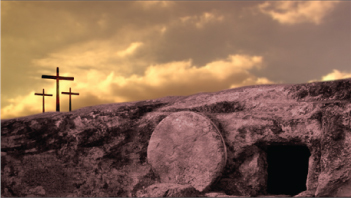
empty tomb

This past Sunday, the church universal celebrated Resurrection Sunday, which marks the annual commemoration of Jesus’ resurrection from the dead. And, unfortunately, for most churches, especially those stemming from low church or free church traditions, this celebration will be quickly forgotten as they slide back into their usual routine of doing church every week. Sadly, most of the people who attended church yesterday, because it was Easter Sunday, will simply resume their normal routines, and they will continue to live as if the resurrection is simply an interesting story that happened long ago but has no real impact on their daily lives.

This is where I believe the historic Church Calendar can aid us in our spiritual formation. According to that traditional reckoning of the church’s annual worship rhythms, the celebration of the resurrection is not simply something that is relegated to one Sunday per year. No, the season of the Resurrection lasts for almost two months and culminates in the church’s celebration of the coming of the Holy Spirit on the Day of Pentecost. Just as Jesus spent 40 days after His resurrection with His disciples teaching them about the kingdom before He ascended, observing the Resurrection as a season in the church’s worship can help us to more fully understand, appreciate, embrace, and be formed by that most essential of historical foundations that Christ is risen!

So, during my sermon this past Sunday, I challenged those who were in attendance simply because it was Easter, that if they really wanted to be Easter only Christians, then I would expect to see them in Church for the next seven consecutive Sundays. I doubt that many of them will heed that challenge, nevertheless, the Season of the Resurrection, sometimes called Eastertide, is an invitation for Christians, both corporately and individually, to intentionally position ourselves in a place where the Spirit may take us deeper into the wonder and mystery of Christ crucified and resurrected.

So, in the limited space that follows, let me offer some practical suggestions on how Christians, both as individuals and as congregations, might navigate the next seven weeks leading up to Pentecost so as to grow in and be formed by the wonderful mystery of the Gospel.

First, read through, or reread through, one of the four Gospels in the light of Jesus resurrection. The lectionary for the Season of the Resurrection is going to be taking us through the Gospel of John, but you may choose another one of the four. Whichever you choose, try to read it as one of the first followers of Jesus. The Gospels tells us that it was only after Jesus resurrection that they truly began to understand more fully all that He had said and done during His ministry. And one of Jesus’ last instructions to His followers was that they were to go into all nations teaching them to observe all that He had commanded them. (Matthew 28.20)

Second, whether you are a preacher or simply a listener, ask yourself how the resurrection makes what you are saying and/or hearing in the sermon possible. It has been said many times perhaps, but it bears repeating: if what you are preaching doesn’t require Jesus, then you’ve missed the point. Paul said that the resurrection is the linchpin, if you will, of the Gospel (1 Corinthians 15), so how does the truth of Christ’s resurrection impact or influence the message of whatever particular text you are preaching. Here again, I would suggest considering the lectionary as a basis for determining a preaching schedule (see my post here), but wherever your preaching schedule is going, it is all meaningless without the resurrection of our Lord.

Third, be actively and intentionally involved in the life of the local church. During the Season of the Resurrection, the Lectionary replaces the Old Testament reading with a passage from the Acts of the Apostles. This is because the 50 day Season of the Resurrection culminates in the celebration of the coming of the Spirit on Pentecost, which might be called the birthday of the church. Jesus’ resurrection makes it possible for His followers to live in new life free from the power of sin, and the indwelling of the Holy Spirit makes it possible for those followers to live in a new kind of Christian community, one characterized by love and service. So, during this Season of the Resurrection, seek out intentional ways to love and serve people in the local church.

The simple fact of the matter is that the Christian faith is meaningless without the resurrection of Jesus. Without it, Jesus is just another nameless victim executed by the Roman Empire; His death is pointless. The Apostle Paul said as much in his first letter to the church at Corinth, “And if Christ has not been raised, your faith is worthless; you are still in your sins.” (1 Corinthians 15.17). So, if we truly believe that the death and resurrection of Jesus is the necessary and essential heart of the Christian Gospel, then it deserves to be celebrated more than just one Sunday per year. This Resurrection Season, let us remember that we worship a Risen Lord!


On so called ‘Cosmic Child Abuse’ and the Atonement

o-CRUCIFIXION-facebook

In recent years, it has become rather faddish for critics of traditional atonement theory to dismiss the idea of penal substitution as a form of cosmic child abuse. In other words, these critics assert that it is a morally evil injustice for God to punish His innocent Son for the sins of all other human beings. They further assert that this kind of “redemptive violence” is simply incompatible with a God who is love. Stephen Chalk and Alan Mann, in their book The Lost Message of Jesus, state it this way:

The fact is that the cross isn’t a form of cosmic child abuse—a vengeful Father, punishing his Son for an offence he has not even committed. Understandably, both people inside and outside of the church have found this twisted version of events morally dubious and a huge barrier to faith. Deeper than that, however, is that such a concept stands in total contradiction to the statement “God is love”. If the cross is a personal act of violence perpetrated by God towards humankind but borne by his Son, then it makes a mockery of Jesus’ own teaching to love your enemies and to refuse to repay evil with evil.

Later, they give their understanding of the atonement when they state:

The truth is, the cross is a symbol of love. It is a demonstration of just how far God as Father and Jesus as his Son are prepared to go to prove that love. The cross is a vivid statement of the powerlessness of love.

This moral influence theory of the atonement is not new or original with Chalk and Mann. It was first advanced by a medieval scholastic theologian named Peter Abelard (1079-1142), who

“emphasized the primacy of God’s love and insisted that Christ did not make some sort of sacrificial payment to the Father to satisfy his offended dignity. Rather, Jesus demonstrated to humanity the full extent of God’s love for them” (Millard J. Erickson, Christian Theology, 803)

In other words, on the cross, God showed to what extent He was willing to go to demonstrate the depth of His love for humanity, and His great love so demonstrated should cause human beings to respond in love to God. Certainly, God is love (1 John 4:7-21) and the cross is a demonstration of God’s love (Romans 5:8), but the above definition simply does not go far enough to explain why the cross is effective as a means of salvation for human beings. In what follows, I will give some reasons why this critique, that penal substitutionary atonement is “cosmic child abuse”, is completely unfounded and why a penal substitution view of the atonement is essential to the Gospel of our Lord Jesus Christ.

First, it goes against the overwhelming testimony of Holy Scripture. It is no overstatement to conclude that the nearly unanimous witness of the Biblical authors from beginning to end is that Christ died as a substitute for the sins of humanity. There is not enough space here to quote all the verses that would serve to prove this point, so a few will simply have to suffice. As it relates to the Old Testament, one could argue that the entire sacrificial system was pointing to the death of Jesus, because that system is based upon the foundational assumption that the death of animals can substitute and atone for the sins of human beings. But, the premier text on this topic is the “Suffering Servant Song” of Isaiah 53, which says in part:

But he was pierced because of our rebellion, crushed because of our iniquities; punishment for our peace was on him, and we are healed by his wounds. We all went astray like sheep; we all have turned to our own way; and the Lord has punished him for the iniquity of us all. (verses 5-6)

And, in the New Testament, there are numerous verses that could be quoted to show that the first followers of Jesus understood his death as a substitutionary atonement for sin. Due to space limitations, a few will have to suffice. In 1 Corinthians 15:3, Paul says, “For I passed on to you as most important what I also received: that Christ died for our sins according to the Scriptures.” Also, in 2 Corinthians 5:21, “He made the one who did not know sin to be sin for us, so that in him we might become the righteousness of God.” In Romans 4:25, he says “He was delivered up for our trespasses and raised for our justification.” And not only Paul, but we see that the other writers of the New Testament understood the atonement in this way as well. In 1 Peter 2:24, Peter wrote, “He himself bore our sins in his body on the tree; so that, having died to sins, we might live for righteousness.” And in 1 Peter 3:18, he wrote, “For Christ also suffered for sins once for all, the righteous for the unrighteous, that he might bring you to God.” In 1 John 4:10, John writes, “Love consists in this: not that we loved God, but that he loved us and sent his Son to be the atoning sacrifice (propitiation) for our sins.” And the author of Hebrews, says in Hebrews 2:9, “But we do see Jesus—made lower than the angels for a short time so that by God’s grace he might taste death for everyone.”

In light of all this, we are safe to conclude that the Old and New Testament authors unanimously understand the death of Jesus as a substitute making atonement to God for the sins of humanity.

Second, this view also misunderstands the essential character and nature of God in two ways. First, as it relates to His character, proponents of this kind of moral influence theory exalt God’s love over and against His other attributes, namely His holiness and justice. God’s character attributes cannot be so divided as to pit them against one another. He is a God of love, but he is also and equally a God of holiness and justice. Moreover, His attributes are interrelated, such that his love is just and holy, and his holiness and justice are loving. To pit God’s justice against His love is to recapitulate that ancient heresy attributed to Marcion of Sinope (c. 85-c. 160), who believed the wrathful Hebrew God of the Old Testament was a separate and lower entity than the all-forgiving God of the New Testament. That heresy was rightly condemned by the fathers of early church.

Also, as it relates to the nature of God, this view fundamentally misunderstands the doctrine of the trinity. These critics of the traditional penal substitutionary view seem to assume that the Son was an innocent third party separate and distinct from God the Father. Therefore, they argue that it is unjust for God to punish the Son for the sins of all humanity. However, the Son is not some innocent disconnected third party in this discussion; no, the Son is God himself. The second person of the trinity was incarnated as Jesus of Nazareth, so it was the second person of the Trinity that died on the cross. We must not disconnect God’s threeness (in persons) from his oneness (in essence). After all, Christians are fundamentally monotheists; Holy Scripture clearly teaches that there is one God. So, we must conclude that all three Persons are the same God. In other words, there is one God who eternally exists as three distinct Persons. So, if the second person of the trinity died on the cross for the sins of humanity, then we must say that God himself died on the cross for the sins of humanity. Thus, the Son was a willing participant in the crucifixion, as God took the sins of humanity onto himself.

The atonement, a penal substitutionary atonement, is at the very center of the Christian Gospel, that Jesus Christ bore the sins of humanity on the cross and died in their place to satisfy their deserved punishment before a just and holy God. Let us not shrink from this fact in fear or shame, but embrace it as the glorious demonstration of God’s love that it is.


On the Use and Benefit of Tradition

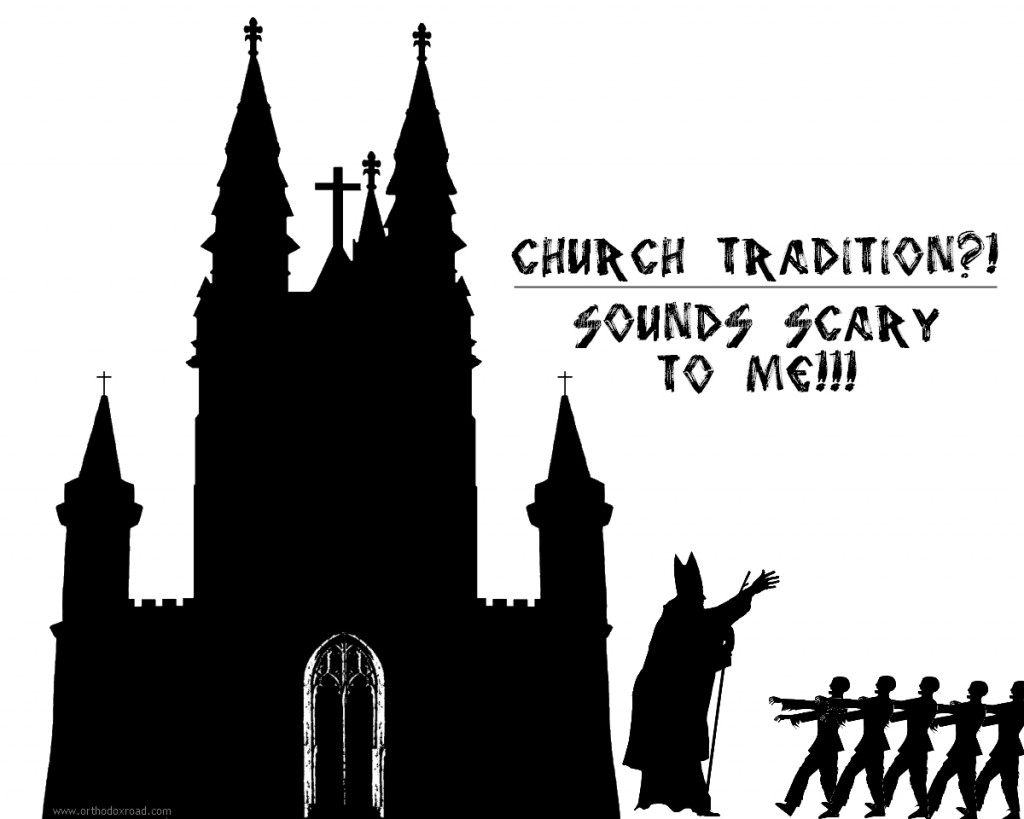
church-zombie-tradition-1024x819

In my recent posts, I have addressed the use and benefit of the lectionary and of the Christian calendar respectively. I also discussed the season of Lent. Here in the “buckle” of the Bible Belt, these types of discussions necessarily raise the bigger question about the church’s interaction with larger church history and tradition. Given the fundamental roots of most churches in this area, there is unspoken antagonism, or almost hostility, to adopting or adapting anything from the great traditions of church history. We have “no creed but the Bible” as it is often stated. It’s almost as if people believe that there was Jesus and the Apostles and now there is us, and no one has ever tried to follow Jesus in between the two. This kind of attitude leads to a Christian experience that is largely ahistorical, ungrounded, and lacking in any kind of depth or richness. This is easily seen in the lack of definition, conviction, and identity among so-called Evangelicals in the larger American culture.

The bottom line is that every church, every community for that matter, has some kind of tradition, whether formal or informal, whether spoken or assumed. And to act as if this is not so is simply intellectually dishonest. Traditions are the building blocks of culture; they are how culture is passed on from one generation to the next. Without them, ideas, values, and habits would die out and fade away as if they never existed. We are traditioned creatures, and that is not such a bad thing. Traditions tells us who we are and what we value, and they form our identity as members of the community to whom those particular traditions belong.

Of course, not all traditions are good and/or beneficial. There are many examples throughout Christian history going all the way back to times of Jesus or even into the Old Testament where the traditions of men were placed above the commands and teachings of Holy Scripture, where they were used to enslave people and populations rather than lift them up into the godly life. The Old Testament prophets, Jesus himself, and the New Testament authors are all very specific in their critiques of the misuse of traditions. But this does not mean that we may simply disregard them as having no benefit. Even Jesus kept the traditions of His people as an upstanding Jew.

Now, when it comes to the Great Tradition, as it is sometimes called, there are basically three ways we can respond, which are not original with me but are helpful nonetheless. We can reject the parts that are out of date, inappropriate, and/or unhelpful. We can receive the parts that are still good, helpful, and uplifting. Or we can “redeem” the parts that can be useful and beneficial by changing what is bad and reframing what is good. Reject. Receive. Redeem. Or, said another way: abandon, accept, accommodate, but the meaning is essentially the same.

The parts that we reject are easily identifiable, and most, but not all, stem from the Roman Catholic Church, because that was the only church for the first 1500 years of Christian history. So, concepts like those that pertain to the pope or the virgin Mary or purgatory, for example, are all parts of church tradition that we rightly reject. The Reformers were quite specific in their attacks on the traditions of the Catholic Church with which they disagreed. Another example of a tradition that we rightly reject might be John Calvin’s perspective on infant baptism. There is much we can learn from the writings and teachings of Calvin, but we should rightly reject his teaching on that particular topic. There are others, which need not be enumerated, but suffice it to say that some traditions that we see in Church history are temporally bound, specific to a particular people in particular place and time, and these should be respected and understood while not being emulated. Still others are downright unscriptural and should be rejected altogether.

Some parts that we can receive are the historic creeds of the church, e.g. the Apostle’s Creed, the Nicene-Constantinopolitan Creed, the Chalcedonian Creed, and the Athanasian Creed, and the insights from the historic ecumenical councils. There are also plenty of confessions and catechisms that have been passed down through the ages that still hold great value for theological education today. Southern Baptists themselves have their own version of this in the Baptist Faith and Message, first adopted in 1925, revised in 1963, amended in 1998, and revised again in 2000. Another aspect of the Great Tradition that we can receive are the writings of the great figures of church history, especially those that have withstood the test of time. From the patristic era, through the medieval era, the Reformation era, and into the modern era, there have been great Christian writers, thinkers, theologians, and pastors whose teachings are preserved for us in their literary works. As I pointed out above, we do not have to agree with them on every point, but there is still much we can learn from the timeless classics of the Christian faith. This is as true for the pastor, theologian, or professor as it is for the medical doctor, lawyer, grocery worker, or farmer who believes in Christ. If has often been said and it bears repeating that we should spend more time working through old books than we do sprinting through new ones.

Lastly, some aspects of the Great Tradition that we might redeem include things like the lectionary and the Christian calendar among others. These would fall under the category of devotional and ministry practices, both those for individuals and those for communities. The question of how the Spirit forms us into the image of Christ is not a new one. Faithful Christians throughout the ages have walked the same path of Christian discipleship that we are called to walk today. Certainly the challenges may be different in our cultural context than it was in theirs, but the principles and values have remained mostly the same. We are still called to grow in Christ-likeness, to advance the Gospel in our neighborhoods and around the world, and to love each other as Christ loves us. And we can learn a lot from the beliefs and practices of those who have gone before us.

The Great Tradition of the church is the norma normata (the norm that is normed), and Holy Scripture is norma normans non normata (the norming norm that cannot be normed). Yes, we should hold fast to  the doctrine of Sola Scriptura, but we cannot allow that belief to devolve into nuda scriptura. If we can learn to drink deeply from the springs of Christian tradition, instead of isolating ourselves in the now, then I believe that we will find our faith experience to be more enriched and more robust, than what is currently on offer in the Christian culture of today’s churches.

For further study, see:
Williams, D.H. Retrieving the Tradition and Renewing Evangelicalism: A Primer for Suspicious Protestants. Grand Rapids, Mich.: Eerdmans, 1999.

Also updated in:
Williams, D.H. Evangelicals and Tradition: The Formative Influences of the Early Church. Grand Rapids, Mich.: Baker Academic, 2005.


Slow To Write

"let every person be quick to hear, slow to speak, slow to anger."

lovegavehope

Just another WordPress.com site

Jared Cornutt

Pastor | Speaker | Writer

Denny Burk

A commentary on theology, politics, and culture

G3 Ministries

Events + Resources for the Local Church

Biblical Reasoning

Biblical and Systematic Theology According to the Scriptures

RetroChristianity

Reclaiming the Forgotten Faith

SBC Voices

Southern Baptist News & Opinion

Lucid Theology

Thoughts on words, books, theology, and life.

Baptist21

A pastor-led voice for Baptists in the 21st century

Center For Baptist Renewal

The Personal and Professional Blog of Phillip Powers

The Pastor's Well - Pastor Well

The Personal and Professional Blog of Phillip Powers

Articles - AlbertMohler.com

The Personal and Professional Blog of Phillip Powers

The Gospel Coalition

The Personal and Professional Blog of Phillip Powers