4 When Mordecai learned all that had occurred, he tore his clothes, put on sackcloth and ashes, went into the middle of the city, and cried loudly and bitterly. 2 He went only as far as the King’s Gate, since the law prohibited anyone wearing sackcloth from entering the King’s Gate. 3 There was great mourning among the Jewish people in every province where the king’s command and edict reached. They fasted, wept, and lamented, and many lay in sackcloth and ashes.
4 Esther’s female servants and her eunuchs came and reported the news to her, and the queen was overcome with fear. She sent clothes for Mordecai to wear so that he would take off his sackcloth, but he did not accept them. 5 Esther summoned Hathach, one of the king’s eunuchs who attended her, and dispatched him to Mordecai to learn what he was doing and why. 6 So Hathach went out to Mordecai in the city square in front of the King’s Gate. 7 Mordecai told him everything that had happened as well as the exact amount of money Haman had promised to pay the royal treasury for the slaughter of the Jews.
8 Mordecai also gave him a copy of the written decree issued in Susa ordering their destruction, so that Hathach might show it to Esther, explain it to her, and command her to approach the king, implore his favor, and plead with him personally for her people. 9 Hathach came and repeated Mordecai’s response to Esther.
10 Esther spoke to Hathach and commanded him to tell Mordecai, 11 “All the royal officials and the people of the royal provinces know that one law applies to every man or woman who approaches the king in the inner courtyard and who has not been summoned—the death penalty—unless the king extends the gold scepter, allowing that person to live. I have not been summoned to appear before the king for the last thirty days.” 12 Esther’s response was reported to Mordecai.
13 Mordecai told the messenger to reply to Esther, “Don’t think that you will escape the fate of all the Jews because you are in the king’s palace. 14 If you keep silent at this time, relief and deliverance will come to the Jewish people from another place, but you and your father’s family will be destroyed. Who knows, perhaps you have come to your royal position for such a time as this.”
15 Esther sent this reply to Mordecai: 16 “Go and assemble all the Jews who can be found in Susa and fast for me. Don’t eat or drink for three days, night or day. I and my female servants will also fast in the same way. After that, I will go to the king even if it is against the law. If I perish, I perish.” 17 So Mordecai went and did everything Esther had commanded him.
~Esther 4.1-17
Title: On Faithfulness in the Face of Evil Text: Esther 4.1-17 Series: The Book of Esther Church: South Caraway Baptist Church, Jonesboro, AR Date: March 19, 2023
If there was one word that might be used to describe the culture that we live in, it would most likely be “discontent”; we are a people who have forgotten what it means to be content with what we have. We are constantly inundated with media and ad campaigns that promise satisfaction and fulfillment through some new product or service. On top of that, the proliferation of social media has caused the disease of comparison to rise to pandemic levels, such that we are unconsciously driven by a nagging need to have more and better than our “friends”. Whether because of materialistic consumerism or the sickness of comparison, we have become a culture that has completely forgotten how to be content. However, for those who are in Christ, the Scriptures remind us that “godliness with contentment is great gain.” (1 Timothy 6.6) In other words, our submission to the kingship of Christ, our citizenship in His Kingdom, is exhibited in our contentment with all that He has and has not blessed us with.
This is exactly the point that Jesus makes in the “Sermon on the Mount” in Matthew, chapters 5-7. The Sermon on the Mount is essentially the manifesto of Jesus’ Kingdom; it is Jesus’ vision for what life in His Kingdom should look like. In it, He describes the attitudes, the habits of character, and the behaviors that should identify His people. And this is exactly the point, namely that the Kingdom of God is not something that is just a future hope to be realized. It is that, but during His earthly ministry, by His death, resurrection, and ascension, Jesus inaugurated the Kingdom of God, and now, He is seated at the right hand of the Father, ruling over His people through the indwelling presence of His Spirit. This is often described by the phrase “already but not yet”, which is a short hand way of saying that the Kingdom of God is already inaugurated but not yet consummated. And because we are currently living under the benevolent and gracious rule of King Jesus, we are able to cultivate the spiritual discipline of contentment. As Jesus himself says,
Therefore I tell you: Don’t worry about your life, what you will eat or what you will drink; or about your body, what you will wear. … But seek first the kingdom of God and his righteousness, and all these things will be provided for you.
Matthew 6.25, 33
In these verses, Jesus encourages His disciples to replace their worry and anxiety with contentment because His good Father knows their needs before they even ask Him. Even as He cares for the birds of the sky and lilies of the field, how much more will He certainly care for those who have been united with His Son by faith. “Therefore don’t worry about tomorrow, because tomorrow will worry about itself. Each day has enough trouble of its own.” (Matthew 6.34) But, of course, this is easier said than done. Worry and anxiety are subtle; they are feelings that often well up inside of us unexpectedly and unnoticed. How, then, can we prevent ourselves from being overcome by these stumbling blocks? Is there a spiritual inoculation that will help us fight against their infection? I would submit that there is, and I believe Jesus identifies it for us in the section that immediately precedes His discussion of contentment.
In the first half of Matthew, chapter 6, Jesus discusses the spiritual disciplines of giving, prayer, and fasting. Of course, He lays out the primary principle for the practice of these disciplines in verse 1 of the chapter, “Be careful not to practice your righteousness in front of others to be seen by them. Otherwise, you have no reward with your Father in heaven.” However, there is a reason why He follows up His discussion of these by commands us not to worry. These spiritual disciplines are the primary means by which we cultivate the inner quietude of peace and contentment. When we give sacrificially of our material possessions for the blessing of others and devote ourselves the pursuit of God rather than material comforts through prayer and fasting, we will find ourselves being more and more content with what we do or do not have. In other words, spiritual contentment is borne out of soul that is fully satisfied in its own communion with the one true and living God.
In the piety of American Evangelicalism, the discipline of contentment among the disciples of Jesus is a glaring whole in our cultivation of Christlikeness. Sadly, we often look more like citizens of this world than citizens of the already but not yet Kingdom of God. We are driven by the felt needs of the moment instead of walking in satisfied contentment with our God, and it shows. We would do well to reconsider what it means to live under the reign of Christ and submit our material resources and our physical needs to the one who taught us to pray, “Give us this day our daily bread.” (Matthew 6.11) This is the secret to the cultivation of contentment. As the Apostle Paul said,
I don’t say this out of need, for I have learned to be content in whatever circumstances I find myself. I know how to make do with little, and I know how to make do with a lot. In any and all circumstances I have learned the secret of being content—whether well fed or hungry, whether in abundance or in need. I am able to do all things through him who strengthens me.
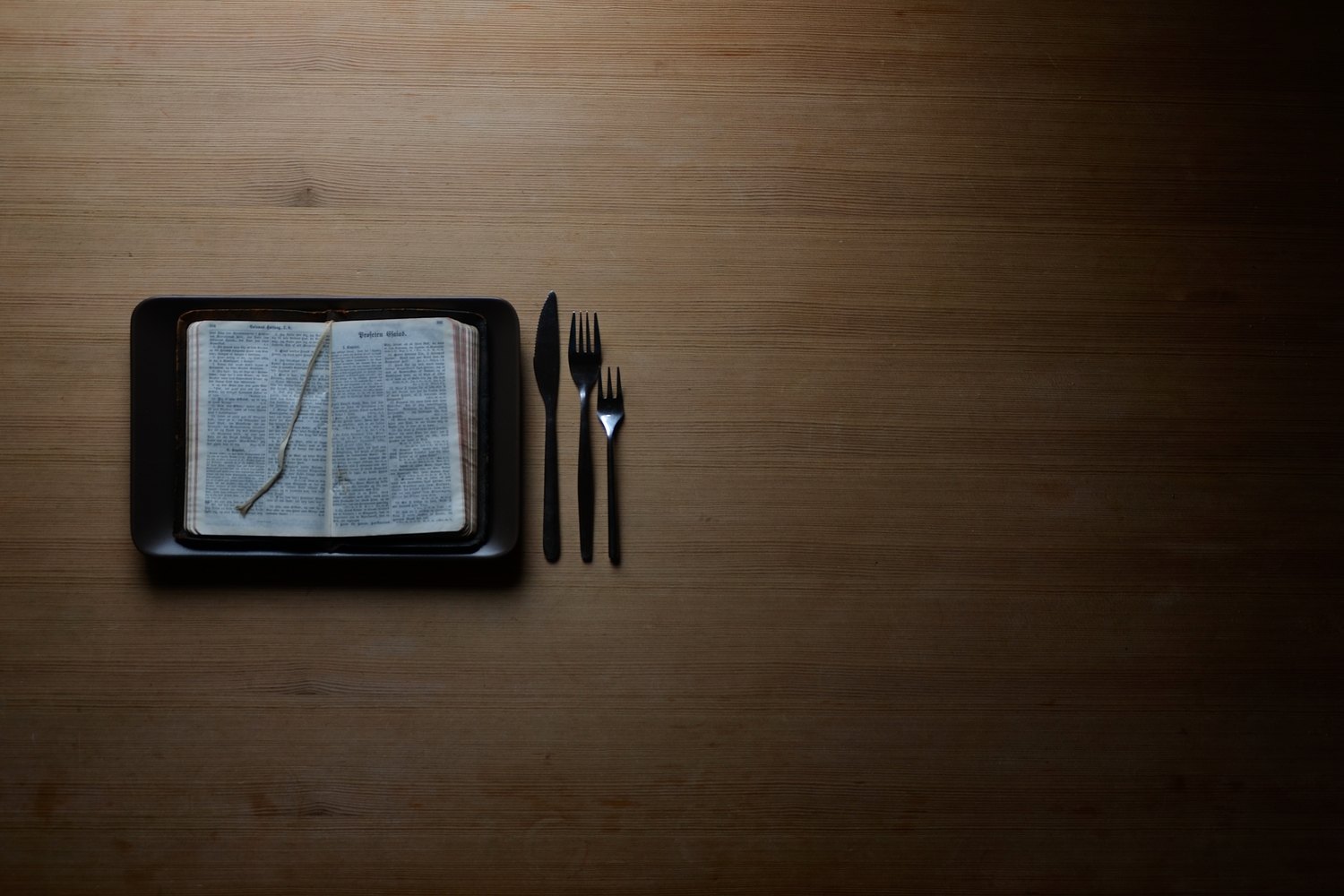
According to the Christian calendar, today is Ash Wednesday which marks the beginning of the liturgical season of Lent. I have previously written on the season of Lent here and here, so I refer you to these posts for my thoughts on the season of Lent and its spiritual value. Of course, the primary spiritual practice that is traditionally associated with the observance of Lent is the spiritual discipline of fasting, but, even outside of the season of Lent, the spiritual discipline of fasting is a valuable practice for those who wish to be more like Jesus. However, in our consumeristic culture, the discipline of fasting is a spiritual practice that is rarely, if ever, engaged in the Christian life, and this is much to our loss. The witness of Holy Scripture and of church history is replete with examples of men and women whose engagement in the spiritual discipline of fasting had meaningful and abiding value in their walk with Christ. If this is true, why then are we so resistant to this biblically grounded and historically proven discipline of the Christian life?
Part of our resistance may stem from the fact that we simply do not understand what the spiritual discipline of fasting is all about. Because our pulpits are almost completely silent on the topic, the only kind of fasting with which we are familiar has to do with nutrition, weight loss, or some other physical or medical concern. For this reason, our consideration of the question of fasting is primarily focused on the physical aspects of the practice. What to eat, when to eat, how much to eat, we are practically consumed with our need for physical nourishment. Of course, this is very purpose of the spiritual discipline of fasting, to expose our complete and total dependence on food for the production of energy and the cultivation of physical health. In the same way that our bodies are dependent on physical nourishment, so also our souls are dependent on spiritual nourishment for the cultivation of spiritual health and vitality. The purpose of the spiritual discipline of fasting is to teach our souls to hunger and thirst for spiritual food in the same way that our bodies hunger for spiritual food. As Jesus says in the Sermon on the Mount, “Blessed are those who hunger and thirst for righteousness, for they will be filled.” (Matthew 5.6)
Another reason for our reluctance to practice this discipline, and perhaps a more fundamental one, is simply our aversion to anything that might cause us discomfort. As creatures, we love our comfort, our ease, our physical pleasure, and we resist, sometimes vehemently, any kind of activity or behavior that might take away our comfort, even temporarily. Simply put, we don’t like pain, and going without food, even if it is just for one meal, can cause some quite unpleasant physical side effects. But we must be willing to entertain the possibility that this pain is good pain, that some temporary physical discomfort could be beneficial if it results in lasting spiritual benefit. Based on the clear scriptural and historical evidence, we must conclude that this is the case. In the same way that physical exercise is often associated with aches and pains in the short term, we all know that regular exercise habits lead to a higher likelihood of physical health in the long run. So, rather than avoiding the temporary discomforts of the spiritual discipline of fasting, we must learn to embrace these as a pathway to long term spiritual health. As the Apostle Paul writes in 1 Timothy, chapter 4, verse 8, “For the training of the body has limited benefit, but godliness is beneficial in every way, since it holds promise for the present life and also for the life to come.”
However, the primary reason for why we should relearn the value of the spiritual discipline of fasting is simply this, namely that our Lord expected us to engage in it. Of course, in the Sermon on the Mount, he did say “when you fast” and not “if you fast” (Matthew 6.16), but his expectation for His disciples is even more clear in Mark, chapter 2. In verse 18 of that chapter, the disciples of the Pharisees and the disciples of John the Baptist come to Jesus to ask Him why His disciples do not fast. Apparently, their lack of practice in this area did not go unnoticed, and so, Jesus explains that they cannot fast while “the bridegroom” is with them, by which He clearly refers to Himself. “But the time will come when the groom will be taken away from them, and then they will fast on that day.” (Mark 2.20) The footnote in the NET Bible indicates that this is a veiled reference to His death, a prediction that He would make more clearly following Peter’s confession at Caesarea Philippi (cf. Mark 8.31, 9.31, 10.33). So, here Jesus is looking forward to the time when His disciples will live without His physical embodied presence, and “they will fast on that day.” In other words, one way that we commune with the risen and ascended Christ is through our submission to His Spirit in the discipline of fasting.
Of course, we must hasten to add that while Jesus may have expected that His disciples would fast, He did not expressly command them to do so. So, our lack of engagement in this spiritual discipline can in no way be construed as sin. However, if we have no driving desire to be more like Jesus, no deep longing to commune with Him by the Spirit, no genuine affection for Christ and His glory, then we may need to consider whether we know Him at all. The Scriptures are clear that to know Christ, to sit in His presence, is far better sustenance than any physical nourishment that food may offer. This is why Jesus told Martha that Mary had chosen the “better meal” (Luke 10.42, author’s translation). This is the irony, namely that fasting is feasting. In other words, the spiritual discipline of fasting is one way by which we feast on the sustenance that comes from Christ.
So Jesus said to them, “Truly I tell you, unless you eat the flesh of the Son of Man and drink his blood, you do not have life in yourselves. The one who eats my flesh and drinks my blood has eternal life, and I will raise him up on the last day, because my flesh is true food and my blood is true drink. The one who eats my flesh and drinks my blood remains in me, and I in him. Just as the living Father sent me and I live because of the Father, so the one who feeds on me will live because of me. This is the bread that came down from heaven; it is not like the manna your ancestors ate—and they died. The one who eats this bread will live forever.”




 Faith seeking Understanding