Tag Archives: Authorial Intent

On Hosea, Matthew, and Authorial Intent

In my previous post, I argued that our hermeneutic for interpreting the Bible must be grounded in the conviction that what God intended to say in the Scriptures is accurately and faithfully conveyed in what the human authors actually wrote, and for most of the Bible, this seems to be rather clear. The question, however, arises when we come to texts in the New Testament that seem to interpret the Old Testament against the grain of the author’s intent. If we believe that “scripture interprets scripture” (see my post, here), then it would makes sense to suggest that we should follow the interpretive principles of the Apostles, and if they were not bound by a strict conception of authorial intent, then perhaps we should jettison this hermeneutical ground in our interpretive efforts as well. This then is the point that must be proven, namely that the New Testament authors did in fact disregard the human author’s intent when they interpreted the Old Testament. Of course, to examine every place where the New Testament author’s quote from or allude to the Old Testament would require far more space than is available here, and this work has already been done by many fine scholars in the field. I recommend Commentary on the New Testament use of the Old Testament, edited by G.K. Beale and D.A. Carson. But in lieu of that, I would like to explore one text as a test case for the thesis that the New Testament authors ignored the principle of authorial intent in their use of the Old Testament, that being Matthew’s use of Hosea 11.1 in chapter 2, verse 15 of his Gospel.

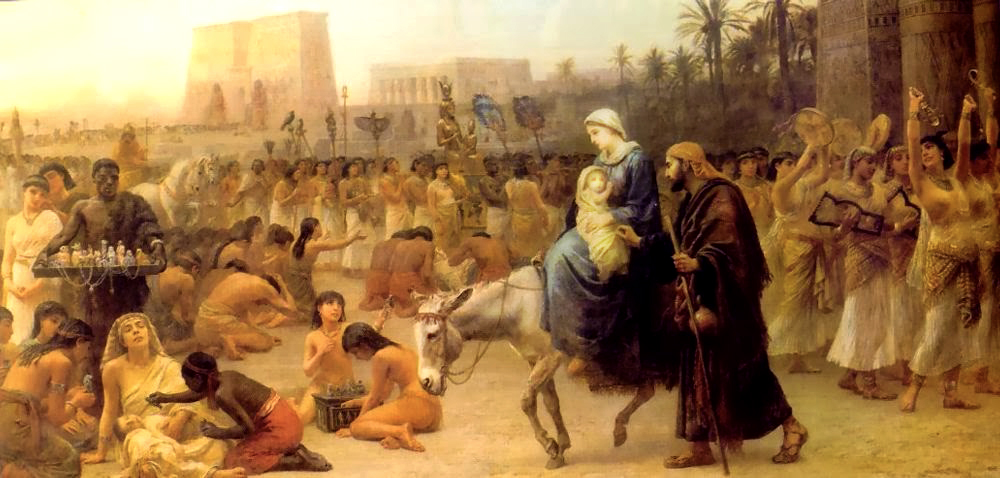
After they were gone, an angel of the Lord appeared to Joseph in a dream, saying, “Get up! Take the child and his mother, flee to Egypt, and stay there until I tell you. For Herod is about to search for the child to kill him.” So he got up, took the child and his mother during the night, and escaped to Egypt. He stayed there until Herod’s death, so that what was spoken by the Lord through the prophet might be fulfilled: Out of Egypt I called my Son.

~Matthew 2.13-15

The book of the prophet Hosea is a story of love and betrayal; set against the backdrop of Hosea’s own marriage to the adulteress Gomer, throughout the book, God repeatedly rebukes the northern Kingdom of Israel for scorning His grace, rejecting His love, forgetting His covenant, and playing the whore with the false gods of Baal. And so, in chapter 11, and verse 1, we read, “When Israel was a child, I loved him, and out of Egypt I called my son.” In these verses, God is looking back on the Exodus experience of His people as the initial overture of His love for Israel; as He goes on to say in verse 4 of that chapter, “I led them with human cords, with ropes of love. To them I was like one who eases the yoke from their jaws; I bent down to give them food.” It is clear that these verses are operating on the paternal imagery of parenthood. In the same way that parents nurture their newborn children, so also God nurtured His “son” Israel by bringing them out of Egyptian slavery, providing for them in the wilderness, and leading them into a land flowing with milk and honey. Even in spite of their repeated betrayal, God goes on to say in verse 8, “How can I give you up, Ephraim? How can I surrender you, Israel? How can I make you like Admah? How can I treat you like Zeboiim? I have had a change of heart; my compassion is stirred!” This chapter is a beautiful picture of the tenderness and mercy of God toward His rebellious son, and even though, the people of Israel will suffer His discipline, it holds out the hope that God has not ceased loving His people.

Now, in chapter 2 of the first canonical Gospel, Matthew connects the flight of the Holy family to Egypt to the words of Hosea 11.1, “so that what was spoken by the Lord through the prophet might be fulfilled: Out of Egypt I have called my Son (quoting Hosea 11.1b). But if the prophet Hosea wasn’t making a direct messianic prediction in the text in question, as we saw above, then how can the Egyptian flight of Mary, Joseph, and Jesus properly be considered a fulfillment? The answer is that this is a fulfillment by way of typology not prediction. Part of Matthew’s portrayal of Jesus is to show that He is the long awaited “prophet like Moses” (c.f. Deut 18.15-19), and he demonstrates this by highlighting the ways that Jesus recapitulates the story of Moses. A few examples should suffice. When Moses was born, Pharaoh killed all the Hebrew boys; when Jesus was born, Herod killed all the Jewish boys. According to 1 Corinthians 10.1-2, Moses had a baptism experience in the Red Sea, and Jesus was baptized in the Jordan River. Moses and the Israelites spent forty years in the wilderness; Jesus spent forty days in the wilderness. Moses went up on Mount Sinai to receive the Law; Jesus went up on a mountain to give the law (Sermon on the Mount). There are five books of Moses (Pentateuch); there are five discourses of Jesus’ sermons in the Gospel of Matthew. And “out of Egypt, I called my Son.” Based on this evidence, it is reasonably clear that the fulfillment that Matthew sees in the text of Hosea 11.1 is typological. Even as Israel was God’s typological “son”, Jesus is the true and better messianic Son of God.

In the final analysis, rather than violating the principle of authorial intent in his use of Hosea 11.1, the typological connection drawn by Matthew actually affirms the authorial intent of Hosea. And still, the question remains, “what of God’s intent in Hosea 11.1? When He inspired Hosea to write “out of Egypt, I called my son,” did he know that Matthew would take it in a different direction?” Of course, it is a theological truism to say that God knew the theological connections that Matthew would draw when He inspired Hosea to write, and so it is not wrong to say God “intended” more than Hosea understood at the time. However, this doesn’t mean that His intent stands in contradiction to or competition with the intent of Hosea. We must assume that God’s intent in Hosea 11 was to spark His people to repentance by reminding them of the great depths of His love that was demonstrated in the events of the Exodus, especially because the words of Hosea 11 are reported by the prophet as the very words spoken by God. (This is the Lord’s declaration, Hosea 11.11) Whatever “fuller sense” that we may understand from Hosea’s words, it must be grounded in the inspired intent of the human author, and this is exemplified in Matthew’s use of the text to explain the flight to Egypt.

But there is something that Matthew’s use of the Old Testament can teach us about our own interpretive efforts, namely that our hermeneutic for understanding of the Old Testament must reckon with the person and work of Christ. As Jesus himself affirms, “everything written about me in the Law of Moses, the Prophets, and the Psalms must be fulfilled.” (Luke 24.44) In other words, we have not done our full interpretive work in the Old Testament if we fail to consider how the text points to or is fulfilled in Jesus. If our understanding of the Old Testament would be accepted in a Jewish synagogue, then we haven’t understood the text Christianly. However, this does not mean that we can disregard the principle of authorial intent; we must still labor within the boundaries of literary and historical context before we can consider the broader canonical and theological implications. At the very least, our understanding of the human author’s intent must function as the true and necessary foundation upon which we stand as we seek the illumination of the Spirit in understanding the theological and applicational implications of the text for our lives in Christ. This is a thoroughly Christian understanding of how to interpret the Bible.



On Inspiration and Authorial Intent

Despite the claims of postmodern literary critics, it is reasonably certain that the meaning of any given document or literary work is grounded in and governed by its author. To put it another way, the meaning of the text is limited by the message that the writer of that text intended to communicate. This principle has been the foundation of biblical interpretation for most of the modern period, and rightly so. The Word of God comes to us through human authors who were writing to historical audiences, so we must work within the boundaries of literary and historical context in order to understand it. The problem, however, is that an overemphasis on authorial intent could relegate our interpretive efforts to nothing more than an exercise in historical investigation. But, the Word of God is more than a historical artifact; it is living and active, and its truths are just as relevant today as they were when they were first written. Over the last twenty years or so, more and more emphasis has been given to the intent of the divine author in an attempt to arrive at a more robustly theological interpretation.

However, this too has led to certain hermeneutical problems, particularly when the supposed divine intent in a given text is set in competition with or in contradiction to the human intent. This appears to be the underlying assumption of a question that was posed on Twitter a few days ago (pictured above). A pastor on Twitter recently asked, “Did the human authors have perfect/sinless intentions while writing Scripture?” Of course, Twitter polls are probably not the best resource for scholarly research, but the results are nevertheless concerning. Some 73% of respondents answered the question in the negative, meaning that almost three quarters of those who answered the poll believe that the human authors of the Bible had sinful intentions when they wrote the words of Holy Scripture. While the relationship between the human and the divine in the writing of Holy Scripture may be complex, we must conclude that this answer is out of bounds for those who believe that the Bible is the Word of God. How can sinful words be received as the Word of a sinless and righteous God? This is a contradiction in terms. As we read in Second Peter, chapter 1, verse 21, “instead men spoke from God as they were carried along by the Holy Spirit.”

Based on this text, we must affirm that there is no divine intent apart from the words of the human author. In other words, our interpretive efforts must deal directly with the words of Holy Scripture; we must labor to understand the genre, the syntax, the vocabulary, the grammatical relationships, and the literary flow of thought of the documents themselves. This is the fundamental work of biblical interpretation. There is no such thing as meaning that is separate from the text; there is no mystical or hidden Word that may be sought apart from the words on the page. Whatever the timeless supernatural theological implications of the text may be, these truths must be grounded in and derived from the actual words of Holy Scripture. In theology, this doctrine is known as verbal plenary inspiration, meaning that the quality of inspiration extends to very words that comprise the text and not just the ideas that stand behind those words. In the act of inspiration, God so worked in through and with the human authors of Holy Scripture, such that their words are His very words, thus they are without error in every way.

If their words are His words, then we may conclude that their intent is His intent as well. The difficulty, however, lies in the reality that the God of the Bible is infinite in His understanding, that He sees more and knows more than the human authors could possibly comprehend when they were writing. So, there is a sense in which the divine intent is so much more than what the human authors could understand; some have referred to this as the sensus plenior, or the fuller sense of the text. In their book Introduction to Biblical Interpretation, Klein, Blomberg, and Hubbard identify the problem with this idea, namely that “we have no objective criteria to posit the existence of a sensus, or to determine where it might exist, or how one might proceed to unravel its significance. In other words, if the human author of a text did not intend and was unaware of a deeper level of meaning, how can we be confident today that we can detect it?” To put it another way, if we understand textual meaning as something that is grounded in authorial intent, then we must assume a certain amount of similitude, if not even near identity, between the intent of both the Divine and the human author. Otherwise, we would never be able to understand what God is saying to us in any real or meaningful way.

In the final analysis, we must conclude that there is no competition or contradiction between the intent of the human the divine authors of Holy Scripture. While it is possible that the Spirit intended more than human authors, He certainly did not intend less than what they intended to communicate to their audiences through the words that they wrote. In other words, authorial intent in the Bible must be viewed as finely woven tapestry in which the human and divine is so interlaced and knitted together, such that any attempts to divide or separate them would in effect destroy its beauty and grandeur. As interpreters, we must hold these facets of the text in harmony and proceed with conviction the Bible is the very Word of God. B.B. Warfield puts it this way in his book The Inspiration and Authority of the Bible, “The Scriptures, in other words, are conceived by the writers of the New Testament as through and through God’s book, in every part expressive of His mind, given through men after a fashion which does no violence to their nature as men, and constitutes the book also men’s book as well as God’s, in every part expressive of the mind of its human authors.”

For further study, see:
Warfield, B.B. “The Divine and the Human in the Bible.” Pages 542-548 in Selected Shorter Writings, 2 Vols.


On Historical Context and Purpose in the Book of Revelation

It is commonly accepted wisdom among most Christians that the Book of Revelation is the hardest book of the Bible to interpret and understand, and it certainly does stand out as one of the most unique books of the New Testament. Those who do attempt to read it are immediately confronted by literary forms, images and symbols, and pastoral concerns that are so unlike their own lived experiences that they tend to put it down faster than they picked it up. Couple this with the myriad of disagreements that exist over the meaning of all these details, and it seems easier to simply leave this book of the Bible to the domain of trained Biblical scholars. However, the book itself affirms, “Blessed is the one who reads aloud the words of this prophecy, and blessed are those who hear the words of this prophecy and keep what is written in it, because the time is near.” (Revelation 1.3) So, when we neglect and ignore this final book of the Bible, we miss out on the blessing that it very clearly promises. But how do we overcome the intimidating and off-putting obstacles that keep us from drinking deeply from its pages?

When we are met with an interpretive challenge like the Book of Revelation, we must return to our basic hermeneutical convictions, those fundamental interpretive principles that help us navigate the Scriptural waters. And one of those rules that is particularly helpful for understanding the Book of Revelation is this: A text without a context is a pretext for a proof text. In other words, when we understand who the biblical author is writing to and why he is writing to them, we are in a better position to understand what he is saying. Or to put it another way, the meaning of the text must be grounded in the inspired intention of the biblical author. He is writing to real people with real needs, and he intends for his message to truly address those needs. If we come up with an interpretation that would make zero sense for the original audience, then we must reevaluate our understanding of the text. Of course, any reconstruction of the historical audience must begin with the details in the text, but historical sources from the time period can add additional detail to our understanding of the audience and their situation.

Fortunately for us, John identifies his intended audience directly; in chapter 1, verse 11, we read, “Write on a scroll what you see and send it to the seven churches: Ephesus, Smyrna, Pergamum, Thyatira, Sardis, Philadelphia, and Laodicea.” We must affirm that these were seven real churches that were located in the Roman province of Asia Minor, or what we would call modern day Turkey. Each one of these seven churches is addressed directly in the letters of chapters 2 and 3, but the author’s concern for these churches cannot be limited to these first few chapters, even if they are primary for understanding the particular needs of these churches. The entire book was written to and for the members of these seven churches of Asia Minor. As to the date of writing, there are two views that are held by biblical scholars. The majority view holds that the book was written during the reign of the Emperor Domitian (81-96 CE); the minority view suggests that the book was written during the reign of the Emperor Nero (54-68 CE). Either of these dates is possible for the book’s composition, but a review of the historical evidence slightly favors the later date, meaning that the Book of Revelation was probably written sometime around 95 CE.

Regardless of which date is preferred, it is clear that these seven churches were facing challenges both internally and externally. These Christians were living in a world that was openly hostile to their faith in Christ, and while there was no official imperial policy of persecution at this time, they were facing intense social pressure in their local communities to compromise their convictions and conform to the Roman way of life. Culturally, they simply had no where to belong. The Jews had rejected them, and the Gentiles would not accept them. They were ostracized marginalized outsiders who did not belong to the world they lived in. And Jesus is writing to them through John to encourage them to persevere in faithfulness, to hold on to the blessed hope that is His appearing. The Revelation is a reminder that they are part of something bigger than themselves, that the victory and vindication that they long for is ahead of them, and that there will be a day when all oppression shall cease. This is the message of Revelation. It is not about beasts and bowls; rather, it is about Christ, our King, who is coming again in glory and power to do away with sin once and for all and establish His perfect Kingdom on earth.

Of course, there are those who would disagree with this assessment of the message of Revelation. Some, particularly those who hold to an early date for the book, would suggest that part or perhaps all of the book was fulfilled in the destruction of Jerusalem in 70 AD. Problems with the early date notwithstanding, it is not clear how this understanding addresses the needs of Christians living in the Roman province of Asia Minor. As noted above, they were facing persecution from the Jews living in those cities, but Jerusalem was not the primary enemy that they were facing. In fact, the Book of Revelation makes it clear that while earthly enemies may affect us, they are not our ultimate foe anyway. Therefore, the destruction Jerusalem would hold little promise for bringing their persecution to an end and accomplishing the victory that the book promises. Further, it isn’t clear how the book’s descriptions of “all the nations”, “all those who live on the face of the earth”, and “the whole earth” can refer only to the people of Israel or the citizens of Jerusalem. So, while this view attempts to maintain the book’s relevance for the original audience by positing all fulfillment in the first century, in actuality, it does the exact opposite. In fact, it completely undercuts the hope and blessing that the book promises its readers, both in the first century and today.

The Book of Revelation paints a glorious and beautiful picture of the hope that is ours in Christ Jesus. It is the promise of a world that is free from the contamination of sin, free from the heavy burden of the curse, free from all opposition to Christ and His people. As Christians, we must remember that this is our blessed hope. This world’s troubles and difficulties are not the end of our story; no, we are part of something that is bigger than ourselves, an eternal story that far surpasses our momentary lives here on earth. Moreover, the Book of Revelation teaches us that our sufferings, our difficulties, our heartaches, they matter deeply to God. He takes note of every wrong, every insult that we suffer, and one day, He will right those wrongs and vindicate His people. This is the central message of Revelation. Of course, the difference is in the details as they say, and there are still many details within the pages of Revelation that we must wrestle with. But this is the point, we must wrestle with them. We cannot ignore or neglect this last book of the Bible simply because it is too challenging, too difficult, too different. We must explore with our minds and our hearts what the Spirit is saying to His church. We must pray that He will give us ears to hear, and when we engage this book in earnest, we may be confident that we will find the strength to persevere and hold fast in hope.

For further study, see
Osborne, Grant R. Revelation. Baker Exegetical Commentary on the New Testament. Grand Rapids, MI: Baker Academic, 2002.


On Biblical Interpretation and the Analogy of Faith

The reality is that no one comes to the interpretation of Scripture with a completely blank slate; we all have some amount of pre-understanding that we bring with us when we read the Bible. This pre-understanding is formed through our education and our experiences, the combination of which overtime becomes part of the lenses through which we read Holy Scripture. Most of the time, our pre-understanding is helpful, because it forms a foundation from which we are able to engage the text and grasp its meaning; however, sometimes our pre-understanding can be a hindrance, if and when we are unwilling to submit it to the authority of the Biblical text. This is why the interpretive process is sometimes referred to as a “hermeneutical spiral”, because even as our pre-understanding helps us to understand the text, so in turn, the text shapes and forms our pre-understanding to be conformed with Biblical truth.

For those of us who are committed to the principle that the Bible is God’s Word, part of that pre-understanding includes our theological convictions about the nature of Bible. The inspiration, inerrancy, authority, sufficiency, perspicuity, et al. are foundational truths which ground Evangelical biblical interpretation. The truth that the one true and living God has spoken through His Word in ways that we may understand and apply is what makes our attempts to understand the Bible so significant. We are reading God’s very word. And it is precisely because we are reading God’s word that we hold to a conviction known as the “analogy of faith,” or the idea that scripture interprets scripture. It is a hermeneutical conviction that has been passed down to us from our Reformation forebears, and it is the veritable corner stone of Protestant biblical interpretation. However, in application, it has caused much confusion, because more often than not it is treated as an interpretive method rather than as a theological conviction.

The “analogy of faith”, sometimes also referred to as the “analogy of scripture,” is primarily a theological conviction about the unity and coherence of Biblical truth. It is grounded in the truth that the Bible, though it was written by many diverse human authors over several centuries, actually has only one primary author, i.e. the one true and living God. He has spoken clearly through His Word for the purpose that it may be understood, and He is not the author of confusion. Therefore, the overarching story of the Bible, its primary message and its central tenets, is essentially clear, consistent, and consonant with itself. There are no actual contradictions in the Biblical text, and if there is an apparent contradiction, then the problem lies with our understanding of the text and not with the text itself. So, the principle that scripture interprets scripture merely means that when multiple passages say something on a particular topic (either explicitly or implicitly), then what those passages say about that topic will be complementary and not contradictory.

On the other hand, the “analogy of faith” is not primarily a hermeneutical method; it does not necessarily tell us how to interpret the Bible. It does not permit us to ignore the social, cultural, or historical context of a passage, nor does it allow us to disregard the literary and grammatical conventions by which it is communicated. It also does not require that the various human authors of Holy Scripture say exactly the same thing in exactly the same way. In other words, we must allow for diversity of nuance, differences in emphasis, and uniqueness in application among the biblical authors. Our interpretation must be grounded in the meaning that the Spirit inspired human author intended to convey to his primary audience. We must follow his flow of thought, consider his purpose for writing, analyze his meaning on his terms. These are the essential building blocks of a sound interpretive method.

The “analogy of faith” also does not give us the license to move haphazardly through the Scriptures connecting passages that are otherwise unconnected. When the biblical authors quote directly from or make clear allusion to other passages, we may consider their relationship, but the principle that scripture interprets scripture does not mean that particularities and distinctions between passages can be minimized or ignored. Individual passages must be engaged on their own merits within their immediate context. This is because biblical meaning flows outward from smaller units of thought to wider units of thought, starting with the sentence, then the paragraph, then the pericope, then the section, the book, books by the same author, books in the same testament, and finally the whole Bible. To reverse this process is to impose meaning on the scriptures from the top down; it is reading meaning into the scriptures that may not otherwise be present or supported by the passage.

The composition and preservation of the Bible is nothing less than a manifestation of God’s providence and sovereignty. It was written over the course of 2000 years by several dozen different authors in three different languages across three continents, and yet, its central truths and primary message are remarkably consistent and harmonious. Its message is so simple that a child could understand it, and yet so profound that the greatest minds throughout history have failed to exhaust its mysteries. And God has ordained that it should be the primary means by which we might come to know Him and His will for our lives. The good news of the Gospel is that He wants to be known, and He has revealed Himself in the Bible so that we may read, understand, and be transformed. If we will simply seek Him in, by, and through His Word, then we may be sure that He will be found.

For further study, see also:
On Sola Scriptura and the Use of Bible Study Resources
On Biblical Interpretation and the Holy Spirit
On Hermeneutics & Interpreting the Bible


Slow To Write

"let every person be quick to hear, slow to speak, slow to anger."

lovegavehope

Just another WordPress.com site

Jared Cornutt

Pastor | Speaker | Writer

Denny Burk

A commentary on theology, politics, and culture

G3 Ministries

Events + Resources for the Local Church

Biblical Reasoning

Biblical and Systematic Theology According to the Scriptures

RetroChristianity

Reclaiming the Forgotten Faith

SBC Voices

Southern Baptist News & Opinion

Lucid Theology

Thoughts on words, books, theology, and life.

Baptist21

A pastor-led voice for Baptists in the 21st century

Center For Baptist Renewal

The Personal and Professional Blog of Phillip Powers

The Pastor's Well - Pastor Well

The Personal and Professional Blog of Phillip Powers

Articles - AlbertMohler.com

The Personal and Professional Blog of Phillip Powers

The Gospel Coalition

The Personal and Professional Blog of Phillip Powers