Tag Archives: Lectionary

On the Beauty of the Church’s Worship

Several months ago, Matthew Barrett, then a professor at Midwestern Baptist Theological Seminary, announced that he was leaving the SBC to become Anglican. Shortly thereafter, he took a position as Research Professor of Theology at Trinity Anglican Seminary, and he and his family joined St. Aidan’s Anglican Church in Kansas City. He detailed his reasons for making this change in an article on his blog/newsletter, Anselm House. Basically, he suggests that the SBC “officially rejected” Nicene orthodoxy, that the SBC values image over external (read episcopal) authority, and that the “baptist” hermeneutic is ultimately individualistic in its rejection of infant baptism. Though I find these criticisms to be greatly flawed and wholly inaccurate as representations of Baptist theology and ecclesiology, it is not my purpose to respond to them here. This has already been done by several others who are more capable than me. (For example, see Denny Burke’s response here.)

Rather, I would like to respond to another component of Barrett’s argument for Anglicanism, that being the beauty and and antiquity of its liturgy. After giving a rather glowing description of the elements and order of an Anglican worship service, including pictures, he goes on to write, “What a comfort to tell our kids, “The way we are worshipping is how Christians have worshipped across history. It’s really, really old. You are participating in the church universal.”” Now, let me just say that I have no small appreciation for high church liturgy. I have previously written on the use and value of the lectionary, the Christian calendar, and church tradition. I think there is much that modern churches, with their consumeristic performance based, emotion driven worship services, could learn from these practices. However, to say that “Anglicanism is the most beautiful representation of classical Christianity” is surely to place preferences of form over matters of substance.

The fact of the matter is that the early church’s worship was simple; it revolved around Word and Table, fellowship and prayer. As we read in Acts 2.42,  “They devoted themselves to the apostles’ teaching, to the fellowship, to the breaking of bread, and to prayer.” Beyond this, we simply do not know what worship services in the early church consisted of. We have scattered liturgical details and other descriptions throughout the New Testament, but we do not have an official liturgy for the early church. Did they sing psalms? Probably. Did they read the Scriptures? Definitely. Did they pray together? Likely. Did they observe the ordinances of baptism an the Lord’s Supper? Clearly. Did they recite early kinds of creedal statements? Possibly. Of course, as the church grew, more formal liturgies were understandably developed, especially in the second and third centuries, and by the fourth century, there seems to have been a common or shared understanding of what the worship of the church should include and how it should progress. But, contrary to Dr. Barrett’s claim above, there is simply no proof that the Anglican liturgy is “how Christians have worshipped across history.” No doubt there are many similarities, but there is likely just as many differences that vary across place and time.

However, the more basic point that needs to be underscored here, I believe, is that the church’s worship, no matter what form or style it is expressed in, is beautiful. When God’s people gather together to sing His praise, to hear from His Word, to intercede in prayer for one another, to commemorate the Gospel is baptism and eucharist, there is simply nothing that is more beautiful, nothing more majestic, nothing more glorious. The voices of the saints singing and praying and confessing and expositing the great works of God in Christ as one gathered and united body in the Spirit is the most beautiful thing in this world. Of course, as I noted above, this beauty has sadly been lost in many churches today; we have turned the church’s worship into a show. We have exchanged beauty for spectacle, truth for emotion, participation for entertainment, and this is especially so in churches that do not come stand in the line of high church traditions. But, the point is that it is narrow minded and arrogant to suggest that one particular form or tradition of worship is the most beautiful, the most ancient, the most formation to the exclusion of all others.

In the Book of Revelation, John writes, “After this I looked, and there was a vast multitude from every nation, tribe, people, and language, which no one could number, standing before the throne and before the Lamb” (Revelation 7.9). This vision of the diversified and redeemed people of God standing before the heavenly throne praising God should help us to understand the beauty of the church’s worship. We do not all sing with one voice, we do not all worship in the same way. Every tradition, every culture, every community has its own way of worshiping God, and this is beautiful. The glory of God in Christ cannot be wholly encapsulated in just one worship tradition, but wherever there are genuine believers who are gathered together to worship God in Spirit an truth, this is beautiful. Every church has its own liturgy, whether it be formal or informal, but when we prioritize the form of our worship over the object of our worship, then we have missed the mark. Christ is the focus of our worship, there is no way that we could ever find enough ways to magnify and exult in His glory.


On the Second Sunday of Advent

second-sunday-in-advent

In the second week of Advent, we focus on peace, that the Christ-child came into the world to offer us peace. Peace, meaning the absence of conflict, of animosity, of antagonism. In the words of the angels on the night of His birth, “Glory to God in the highest heaven, and peace on earth to people he favors.” (Luke 2.14) And when the Prince of Peace returns one day, He will establish His kingdom of perpetual peace once and for all. However, the good news pf Advent is that this is a peace that we, as His people, already experience in the here and now. And so, the lectionary readings for the Second Sunday of Advent invite us into the peace that His coming offers us and that we desperately look forward to at His coming.

Old Testament: Isaiah 11.1-10
Of course, the prophecies of Isaiah are replete with messianic overtones, and this week’s Old Testament reading is no different. In verse 1, we read, “Then a shoot will grow from the stump of Jesse,” which is Isaiah’s way of describing the Messiah according to His biological lineage descended from David, Son of Jesse. But the important thing about Him is what He will do, specifically how He will rule. Verse 2 of the passage tells us that, “The Spirit of the Lord will rest on him.” In other words, Messiah will be anointed with the Spirit of God for the purpose of ruling in justice. And what we must understand is that a just rule, established in righteousness and faithfulness (verse 5), is a prerequisite for peace, because, “He will judge the poor righteously and execute justice for the oppressed of the land.” (verse 4)

And it is His just rule that establishes the idyllic serenity that Isaiah goes on to describe in verses 6-9. “The wolf (traditionally read as lion) will dwell with lamb, and the leopard will lie down with the goat,” etc. And notice in verse 9, “They will not harm or destroy each other on my entire holy mountain, for the land will be full of the knowledge of the Lord as the sea is filled with water.” This is Isaiah’s vision for the reign of Messiah, that violence will be no more, that bloodshed and conflict will be no more. Oh, how we long for that day, because, “On that day the root of Jesse will stand as a banner for the peoples. The nations will look to him for guidance, and his resting place will be glorious.” In other words, the reign of Messiah will be characterized by perfect peace. 

Psalm: Psalm 72.1-7, 18-19
According to the traditional heading, this psalm appears to be a prayer that was written by King David (see verse 20) for his son and successor Solomon. David is praying for Solomon as he prepares to ascend to the throne. And so, in verse 1, we read, “God, give your justice to the king and your righteousness to the king’s son.” However, given the messianic implications of the term “son of David”, we must see this as a prayer for the perfect and peaceful rule of Messiah. “He will judge your people with righteousness and your afflicted ones with justice.” (verse 2) And again, “May he vindicate the afflicted among the people, help the poor, and crush the oppressor.” (verse 4)  In other words, this psalm is an expression of longing for peace that is written on every human soul, and it reminds us that our longings for peace on earth will never be fully satisified by any human ruler or government. No, “Blessed be the Lord God, the God of Israel, who alone does wonders. Blessed be his glorious name forever; the whole earth is filled with his glory. Amen and amen.” (verse 18-19). There is a deep and severe longing in every human soul for the peace, and in this prayer, we affirm that it will only be realized with the coming of Messiah.

Gospel: Matthew 3.1-12
In the Gospel reading, then, we read of a familiar character in the Gospel accounts, namely John the Baptizer. And though we may not think of him in conjunction with the Christmas story, he is, nevertheless, important because of His role as herald. “For he is the one spoke of through the prophet Isaiah, who said: A voice of one crying out in the wilderness: Prepare the way for the Lord; make his paths straight.” (verse 3) And so, as we think about our Lord’s Advent, we must recognize that John was the appointed herald to announce His initial arrival. And he did so my preaching, “Repent, because the kingdom of heaven has come near.” (verse 2) This, by the way, is the same message that Jesus preached at the beginning of His ministry in Galilee.

But what makes this passage appropriate for Advent is what John says to the Pharisees and Sadducees who came out to be baptized. In verse 7, we read, “Brood of vipers! Who warned you to flee from the coming wrath?” Admittedly, it is somewhat awkward to read about wrath when we are supposed to be focusing on peace; however, John has hit on something that is important to understand about our Lord’s coming, namely that before there can be peace, there must be wrath. Evil must be dealt with, and the wicked must be removed so that peace can rise.  And so, John proclaims that one who comes after him has “His winnowing shovel is in his hand, and he will clear his threshing floor and gather his wheat into the barn. But the chaff he will burn with the fire that never goes out.” When our Lord Christ returns to in glory, He will bring with Him two things, peace for those who repent of their sins and wrath for those that do not. And so John tells us, “Therefore produce fruit consistent with repentance.”

New Testament: Romans 15.4-13
And finally, in the New Testament reading, we can see exactly what kind of fruit that is, namely that we who have repented of our sins, trusted in Christ, and received His peace should show forth that peace toward others. As Paul puts it in verse 7, “Therefore accept one another, just as Christ also accepted you, to the glory of God.” In other words, we are called to be Christ’s agents of peace in the world; we give to others what we ourselves have already received. This is in keeping with Paul’s prayer in verse 13, where he prays, “Now may the God of hope fill you with all joy and peace as you believe so that you may overflow with hope by the power of the Holy Spirit.” The point is that the foundation for peaceful human relationships is grounded in the finished work of the Christ-child.

And the proof of Paul’s point in this passage is the full and equal inclusion of the Gentiles in the people of God. In the first century, there was no more antagonistic vitriolic relationship as that between the Jews and the Gentiles, but Paul strings together a handful of Old Testament quotes in this passage to show that it was always God’s plan to bring the Gentiles into the kingdom of Messiah. So, all of a sudden, Jewish followers of Jesus were faced with a dilemma, namely how could they accept Gentile followers of Jesus  into their communities as brothers and sisters in Christ. And Paul’s answer is that they can because they have received the peace of Christ. So, he prays, “Now may the God who gives endurance and encouragement grant you to live in harmony with one another, according to Christ Jesus, so that you may glorify the God and Father of our Lord Jesus Christ with one mind and one voice.” This is the crucial point: He gives peace, we embrace peace, and He gets the glory.

May this Advent season bring you and yours all the peace of Christ that passes all understanding, and may we all show forth His peace to a world that is in so desperate need of it!

For Further Study:
On the Season of Advent
On the First Sunday of Advent


On the First Sunday of Advent

Adventskranz 1. Advent

As previously noted, this last Sunday, December 1, 2019, marked the beginning of the Christian season of Advent, and this first Sunday of the Advent season emphasizes hope, namely our expectation that Jesus the Christ will one day return to this earth in glory and power to establish His kingdom forever. Understandably, the corresponding lectionary readings (taken from the Revised Common Lectionary) help us to envision and to prepare ourselves for that day, and they reinforce our hope in the midst of the pain and difficulties that are so common in our world today.

Old Testament: Isaiah 2.1-5
In the Old Testament reading, we are confronted with “The vision that Isaiah son of Amoz saw concerning Judah and Jerusalem” (verse 1), and in this vision, the prophet looks forward to the last days to see the house of the Lord established and all the nations streaming to it. In verse 3, they say, “Come, let us go up to the mountain of the Lord, to the house of the God of Jacob. He will teach us about his ways so that we may walk in his paths.”  This reminds us that God’s plan was never solely for the people of Israel; rather, His plan was for the salvation of the nations, that all peoples might come to know Him and to enjoy His benevolence. Because on that day, “instruction will go out of Zion and the word of the Lord from Jerusalem.” 

And on that day, He will establish peace, as Isaiah describes in verse 4, “They will beat their swords into plows and their spears into pruning knives.” He goes on, “Nation will not take up the sword against nation, and they will never again train for war.” What a glorious hope that we have, that our Lord Jesus will come back to establish peace on earth once and for all. Oh, how we desperately long for that peace, and so, Isaiah encourages us, “House of Jacob, come and let us walk in the Lord’s light.” In other words, we are called to people of peace because of our hope. We know that one day our Lord Jesus will return.  This is our blessed hope, and so we must walk in the His light.

Psalm: Psalm 122
The Psalm reading follows up on Isaiah’s vision, then, with a prayer for the well being of Jerusalem. It is one of the “Songs of Ascent” which would be sang by Jewish pilgrims as they made their way up to the holy city to worship at the temple. As it says, “I rejoiced with those who said to me, ‘Let us go to the house of the Lord.'” (verse 1) And David tells us why we should rejoice in verse 3-4, where he writes, “Jerusalem, built as a city should be, solidly united, where the tribes, the Lord’s tribes, go up to give thanks to the name of the Lord.” Of course David was thinking of that earthly city, that temple which was made by hands, but we know, in light of our Lord’s first coming, that we are waiting for that heavenly Jerusalem, the city of God, where we will live in the presence of God for eternity. This is our hope.

Gospel: Matthew 24.36-44
The Gospel reading for this first Sunday of Advent, as it does every year, comes from the Olivet Discourse, in this case Matthew’s version. And this is a profound reminder that the season of Advent is radically eschatological in its scope. Yes, it prepares us to celebrate the birth of the Christ-child at Christmas, but it also reminds that our hope is yet future. And as Jesus says, “Now concerning that day and hour no one knows – neither the angels of heaven nor the Son – except the Father alone” (verse 36). And He concludes, “This is why you are also to be ready, because the Son of Man is coming at an hour you do not expect” (verse 44). The point here is clear, that we must be ready, that we must prepare ourselves for His arrival, and in the context of the Olivet Discourse, this means that we must be faithful to the responsibilities that He has left us. As it says in verse 46, “Blessed is that servant who the master finds doing his job when he comes.”

New Testament: Romans 13.11-14
And finally, the New Testament reading gives us a glimpse of what this readied faithfulness looks like. It is sufficient here, I believe, to simply quote the passage at length: Besides this, since you know the time, it is already the hour for you to wake up from sleep, because now our salvation is nearer than when we first believed. The night is nearly over, and the day is near; so let us discard the deeds of darkness and put on the armor of light. Let us walk with decency, as in the daytime: not in carousing and drunkenness; not in sexual impurity and promiscuity; not in quarreling and jealousy. But put on the Lord Jesus Christ, and don’t make plans to gratify the desires of the flesh.” That last line says it all, that we should put on Christ-likeness, because we know that our hope is certain and that our faithfulness will be rewarded on that day when Jesus comes again.

And so, let us renew our hope this Advent season. We live in a world that is completely inundated with conflict, confusion, and chaos; we are constantly bombarded with painful and tearful reminders that this world is not completely as it should be. But one day, it will all be put to rights, and until that time, we are called to endure in hope and to persevere in faithfulness, no matter how grim the outlook may be.

For further study:
On the Use and Benefit of the Lectionary
On the Season of Advent


On the Season of Easter

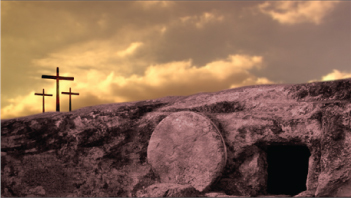
empty tomb

This past Sunday, the church universal celebrated Resurrection Sunday, which marks the annual commemoration of Jesus’ resurrection from the dead. And, unfortunately, for most churches, especially those stemming from low church or free church traditions, this celebration will be quickly forgotten as they slide back into their usual routine of doing church every week. Sadly, most of the people who attended church yesterday, because it was Easter Sunday, will simply resume their normal routines, and they will continue to live as if the resurrection is simply an interesting story that happened long ago but has no real impact on their daily lives.

This is where I believe the historic Church Calendar can aid us in our spiritual formation. According to that traditional reckoning of the church’s annual worship rhythms, the celebration of the resurrection is not simply something that is relegated to one Sunday per year. No, the season of the Resurrection lasts for almost two months and culminates in the church’s celebration of the coming of the Holy Spirit on the Day of Pentecost. Just as Jesus spent 40 days after His resurrection with His disciples teaching them about the kingdom before He ascended, observing the Resurrection as a season in the church’s worship can help us to more fully understand, appreciate, embrace, and be formed by that most essential of historical foundations that Christ is risen!

So, during my sermon this past Sunday, I challenged those who were in attendance simply because it was Easter, that if they really wanted to be Easter only Christians, then I would expect to see them in Church for the next seven consecutive Sundays. I doubt that many of them will heed that challenge, nevertheless, the Season of the Resurrection, sometimes called Eastertide, is an invitation for Christians, both corporately and individually, to intentionally position ourselves in a place where the Spirit may take us deeper into the wonder and mystery of Christ crucified and resurrected.

So, in the limited space that follows, let me offer some practical suggestions on how Christians, both as individuals and as congregations, might navigate the next seven weeks leading up to Pentecost so as to grow in and be formed by the wonderful mystery of the Gospel.

First, read through, or reread through, one of the four Gospels in the light of Jesus resurrection. The lectionary for the Season of the Resurrection is going to be taking us through the Gospel of John, but you may choose another one of the four. Whichever you choose, try to read it as one of the first followers of Jesus. The Gospels tells us that it was only after Jesus resurrection that they truly began to understand more fully all that He had said and done during His ministry. And one of Jesus’ last instructions to His followers was that they were to go into all nations teaching them to observe all that He had commanded them. (Matthew 28.20)

Second, whether you are a preacher or simply a listener, ask yourself how the resurrection makes what you are saying and/or hearing in the sermon possible. It has been said many times perhaps, but it bears repeating: if what you are preaching doesn’t require Jesus, then you’ve missed the point. Paul said that the resurrection is the linchpin, if you will, of the Gospel (1 Corinthians 15), so how does the truth of Christ’s resurrection impact or influence the message of whatever particular text you are preaching. Here again, I would suggest considering the lectionary as a basis for determining a preaching schedule (see my post here), but wherever your preaching schedule is going, it is all meaningless without the resurrection of our Lord.

Third, be actively and intentionally involved in the life of the local church. During the Season of the Resurrection, the Lectionary replaces the Old Testament reading with a passage from the Acts of the Apostles. This is because the 50 day Season of the Resurrection culminates in the celebration of the coming of the Spirit on Pentecost, which might be called the birthday of the church. Jesus’ resurrection makes it possible for His followers to live in new life free from the power of sin, and the indwelling of the Holy Spirit makes it possible for those followers to live in a new kind of Christian community, one characterized by love and service. So, during this Season of the Resurrection, seek out intentional ways to love and serve people in the local church.

The simple fact of the matter is that the Christian faith is meaningless without the resurrection of Jesus. Without it, Jesus is just another nameless victim executed by the Roman Empire; His death is pointless. The Apostle Paul said as much in his first letter to the church at Corinth, “And if Christ has not been raised, your faith is worthless; you are still in your sins.” (1 Corinthians 15.17). So, if we truly believe that the death and resurrection of Jesus is the necessary and essential heart of the Christian Gospel, then it deserves to be celebrated more than just one Sunday per year. This Resurrection Season, let us remember that we worship a Risen Lord!


On the Use and Benefit of Tradition

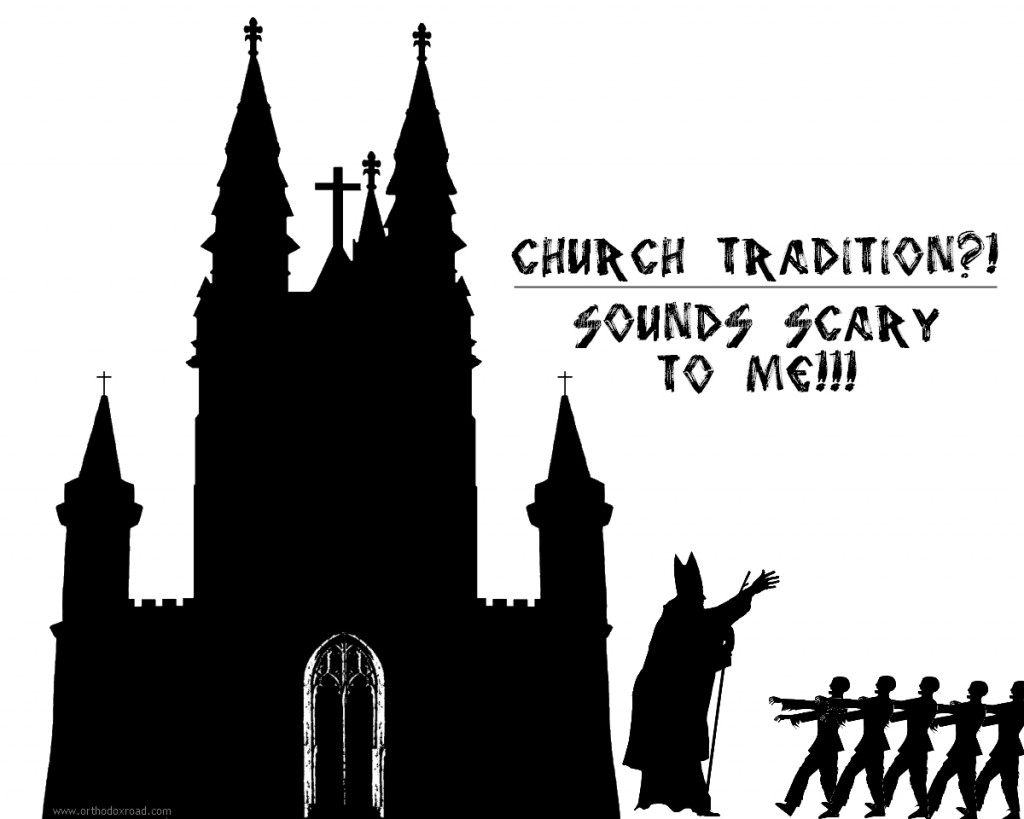
church-zombie-tradition-1024x819

In my recent posts, I have addressed the use and benefit of the lectionary and of the Christian calendar respectively. I also discussed the season of Lent. Here in the “buckle” of the Bible Belt, these types of discussions necessarily raise the bigger question about the church’s interaction with larger church history and tradition. Given the fundamental roots of most churches in this area, there is unspoken antagonism, or almost hostility, to adopting or adapting anything from the great traditions of church history. We have “no creed but the Bible” as it is often stated. It’s almost as if people believe that there was Jesus and the Apostles and now there is us, and no one has ever tried to follow Jesus in between the two. This kind of attitude leads to a Christian experience that is largely ahistorical, ungrounded, and lacking in any kind of depth or richness. This is easily seen in the lack of definition, conviction, and identity among so-called Evangelicals in the larger American culture.

The bottom line is that every church, every community for that matter, has some kind of tradition, whether formal or informal, whether spoken or assumed. And to act as if this is not so is simply intellectually dishonest. Traditions are the building blocks of culture; they are how culture is passed on from one generation to the next. Without them, ideas, values, and habits would die out and fade away as if they never existed. We are traditioned creatures, and that is not such a bad thing. Traditions tells us who we are and what we value, and they form our identity as members of the community to whom those particular traditions belong.

Of course, not all traditions are good and/or beneficial. There are many examples throughout Christian history going all the way back to times of Jesus or even into the Old Testament where the traditions of men were placed above the commands and teachings of Holy Scripture, where they were used to enslave people and populations rather than lift them up into the godly life. The Old Testament prophets, Jesus himself, and the New Testament authors are all very specific in their critiques of the misuse of traditions. But this does not mean that we may simply disregard them as having no benefit. Even Jesus kept the traditions of His people as an upstanding Jew.

Now, when it comes to the Great Tradition, as it is sometimes called, there are basically three ways we can respond, which are not original with me but are helpful nonetheless. We can reject the parts that are out of date, inappropriate, and/or unhelpful. We can receive the parts that are still good, helpful, and uplifting. Or we can “redeem” the parts that can be useful and beneficial by changing what is bad and reframing what is good. Reject. Receive. Redeem. Or, said another way: abandon, accept, accommodate, but the meaning is essentially the same.

The parts that we reject are easily identifiable, and most, but not all, stem from the Roman Catholic Church, because that was the only church for the first 1500 years of Christian history. So, concepts like those that pertain to the pope or the virgin Mary or purgatory, for example, are all parts of church tradition that we rightly reject. The Reformers were quite specific in their attacks on the traditions of the Catholic Church with which they disagreed. Another example of a tradition that we rightly reject might be John Calvin’s perspective on infant baptism. There is much we can learn from the writings and teachings of Calvin, but we should rightly reject his teaching on that particular topic. There are others, which need not be enumerated, but suffice it to say that some traditions that we see in Church history are temporally bound, specific to a particular people in particular place and time, and these should be respected and understood while not being emulated. Still others are downright unscriptural and should be rejected altogether.

Some parts that we can receive are the historic creeds of the church, e.g. the Apostle’s Creed, the Nicene-Constantinopolitan Creed, the Chalcedonian Creed, and the Athanasian Creed, and the insights from the historic ecumenical councils. There are also plenty of confessions and catechisms that have been passed down through the ages that still hold great value for theological education today. Southern Baptists themselves have their own version of this in the Baptist Faith and Message, first adopted in 1925, revised in 1963, amended in 1998, and revised again in 2000. Another aspect of the Great Tradition that we can receive are the writings of the great figures of church history, especially those that have withstood the test of time. From the patristic era, through the medieval era, the Reformation era, and into the modern era, there have been great Christian writers, thinkers, theologians, and pastors whose teachings are preserved for us in their literary works. As I pointed out above, we do not have to agree with them on every point, but there is still much we can learn from the timeless classics of the Christian faith. This is as true for the pastor, theologian, or professor as it is for the medical doctor, lawyer, grocery worker, or farmer who believes in Christ. If has often been said and it bears repeating that we should spend more time working through old books than we do sprinting through new ones.

Lastly, some aspects of the Great Tradition that we might redeem include things like the lectionary and the Christian calendar among others. These would fall under the category of devotional and ministry practices, both those for individuals and those for communities. The question of how the Spirit forms us into the image of Christ is not a new one. Faithful Christians throughout the ages have walked the same path of Christian discipleship that we are called to walk today. Certainly the challenges may be different in our cultural context than it was in theirs, but the principles and values have remained mostly the same. We are still called to grow in Christ-likeness, to advance the Gospel in our neighborhoods and around the world, and to love each other as Christ loves us. And we can learn a lot from the beliefs and practices of those who have gone before us.

The Great Tradition of the church is the norma normata (the norm that is normed), and Holy Scripture is norma normans non normata (the norming norm that cannot be normed). Yes, we should hold fast to  the doctrine of Sola Scriptura, but we cannot allow that belief to devolve into nuda scriptura. If we can learn to drink deeply from the springs of Christian tradition, instead of isolating ourselves in the now, then I believe that we will find our faith experience to be more enriched and more robust, than what is currently on offer in the Christian culture of today’s churches.

For further study, see:
Williams, D.H. Retrieving the Tradition and Renewing Evangelicalism: A Primer for Suspicious Protestants. Grand Rapids, Mich.: Eerdmans, 1999.

Also updated in:
Williams, D.H. Evangelicals and Tradition: The Formative Influences of the Early Church. Grand Rapids, Mich.: Baker Academic, 2005.


On the Use and Benefit of the Lectionary

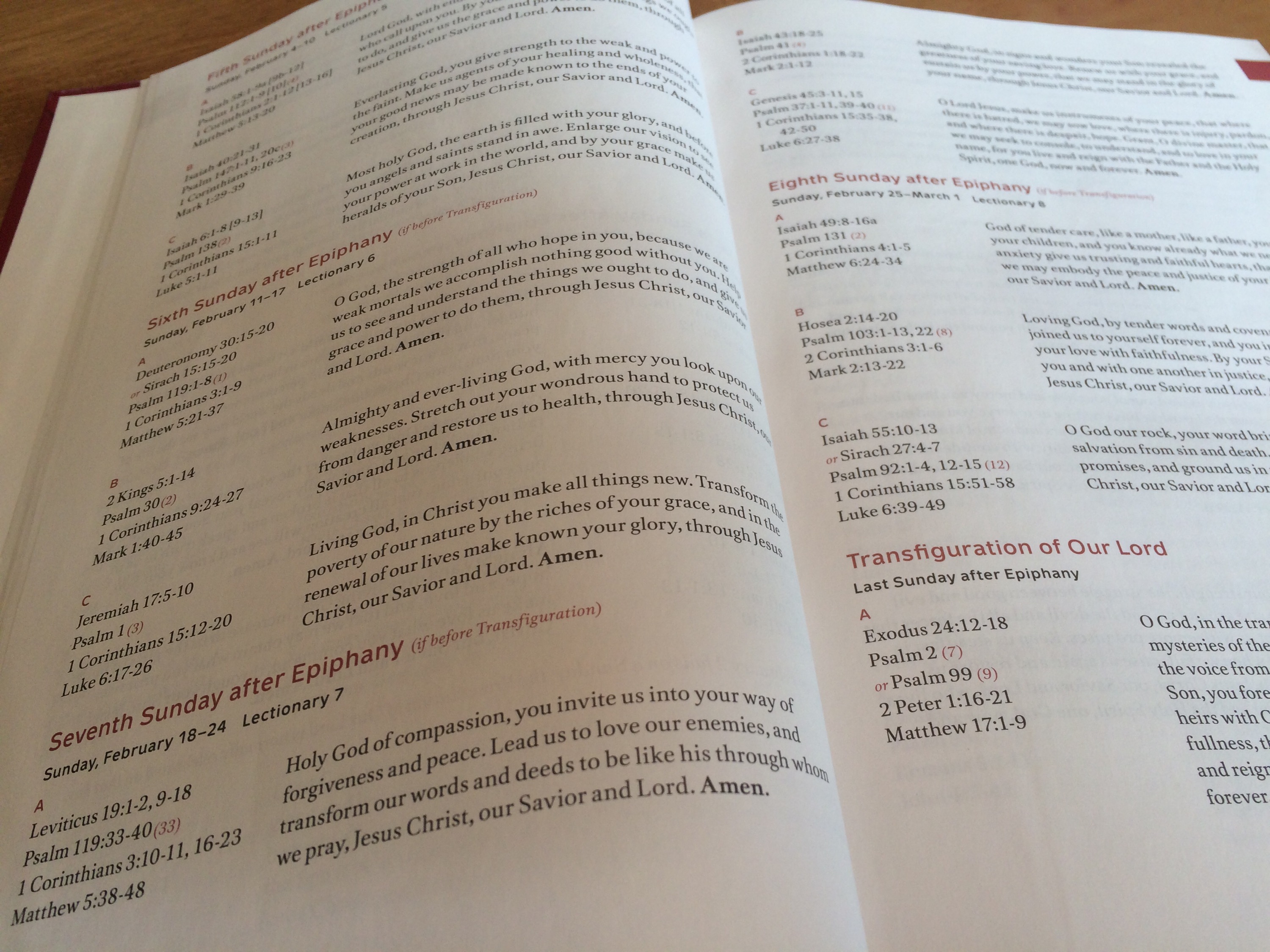
lectionary

I have recently begun using the lectionary as the basis for my Sunday morning sermons. Now, this is a practice that is quite alien to most of the non-liturgical free church origin churches here in the “Bible Belt”. However, I can report that the reception of this practice has been quite positive.

For those who do not know, a lectionary is simply a weekly schedule of scripture readings that takes us through the entire text of the Bible once every three years, and the way it does this is by assigning four scripture readings per week that are then read aloud during weekly community worship gatherings. These four passages always include an Old Testament passage, a Psalm, and New Testament passage from Acts through Revelation, and a Gospel passage.

The following are some reasons I find this practice beneficial and useful::

  1. The Public Reading of Scripture – Paul gives clear instruction to Timothy for his ministry in Ephesus, saying, “Until I come, give attention to the public reading of scripture, to exhortation, to teaching.” (1 Timothy 4:13 NET) The corresponding note on that verse gives the following explanation:

    tn Grk “reading” sn The public reading of scripture refers to reading the scripture out loud in the church services. In a context where many were illiterate and few could afford private copies of scripture, such public reading was especially important.

    Even though the modern context is no longer challenged by the problem of illiteracy and practically everyone has their own private copy of the Holy Scriptures, Paul’s instruction is nevertheless pressing for churches today. More often than not, the only scripture that is read out loud during a worship service is that which pertains to the pastor’s sermon. So, in total, congregants are exposed to only a handful of verses, a minimal amount of God’s word, week after week. However, by following a lectionary, the congregation is exposed to larger chunks of Holy Scripture from a variety of books, authors, and genres. When these larger pericopes are read out loud every week after week during community worship, it guarantees that the church’s corporate life together is being shaped and molded by the Scriptures themselves.

  2. Biblical Literacy and the Metanarrative of Scripture – Now, as I stated, our modern culture is no longer challenged by the problem of illiteracy, but our churches are filled with people who are biblically illiterate, people who are mostly unfamiliar with the warp and woof of the Bible’s story, who cannot identify the important people and major events in salvation history, who do not understand the Bible’s major themes, big ideas, and central emphases. When we read out loud every week from an Old Testament passage, a Psalm, a New Testament passage from Acts-Revelation, and a Gospel, we are helping our congregations get a grasp of the metanarrative of Scripture, to see how the parts relate to the whole, to see how God’s plan for the salvation of His people runs through every book of the Bible.
  3. Relation to the Church Calendar – The lectionary schedule of readings typically follows the seasons of the church calendar, i.e. Advent, Christmas, Epiphany, Lent, Easter, Pentecost, Ordinary Time, and by doing so, it focuses our reflections on the life and ministry of our Lord Jesus Christ. So, instead of having to find a text to match a particular civil, cultural, or sentimental holiday, the texts of the lectionary center on the movements of the Gospel as we walk through the seasons of the church year. Every Sunday, the corresponding texts from the lectionary drive us back into the Gospel story, and by doing this, they form our identity and self understanding, they form our community worship life together, and they form our sense of purpose and mission.
  4. Freedom from the Burden of Selecting Texts/Topics – Perhaps one of the most challenging burdens for pastors/teachers is the weekly question of what to teach for the upcoming week. Often, in spite of an already full schedule of meetings, appointments, planning, and programs, leaders have to try to carve out time for study, meditation, and writing, usually, 2-3 lessons per week. Now, of course, we certainly want to rely upon the guidance of the Spirit in this process, because it is His words that congregants need to hear. He is the one who convicts sin, calls people to salvation, changes hearts, etc. However, more often than not, pastors/teachers tend to gravitate toward passages they have already studied and/or preached, toward their preferred hobbyhorses or soapboxes, or toward passages that are fairly easy and straightforward. The lectionary can help pastors plan out their preaching schedules, and it can challenge them to preach on texts and/or topics that they otherwise wouldn’t necessarily address.

Of course, pastors have the freedom to preach from all the lectionary texts, just a few, or even just one. They also have the freedom to depart from the lectionary for purposes of sermons and lessons, if so led by the Spirit; still, the lectionary passages could be read out loud as a part of the larger worship experience. In the final analysis, we want to let the main thing be the main thing, and for Christians the main thing is the inspired Word of God. May it be central to all that we are and all that we do.


Slow To Write

"let every person be quick to hear, slow to speak, slow to anger."

lovegavehope

Just another WordPress.com site

Jared Cornutt

Pastor | Speaker | Writer

Denny Burk

A commentary on theology, politics, and culture

G3 Ministries

Events + Resources for the Local Church

Biblical Reasoning

Biblical and Systematic Theology According to the Scriptures

RetroChristianity

Reclaiming the Forgotten Faith

SBC Voices

Southern Baptist News & Opinion

Lucid Theology

Thoughts on words, books, theology, and life.

Baptist21

A pastor-led voice for Baptists in the 21st century

Center For Baptist Renewal

The Personal and Professional Blog of Phillip Powers

The Pastor's Well - Pastor Well

The Personal and Professional Blog of Phillip Powers

Articles - AlbertMohler.com

The Personal and Professional Blog of Phillip Powers

The Gospel Coalition

The Personal and Professional Blog of Phillip Powers