Tag Archives: Gospel of God

On Apocalyptic Eschatology and Christian Theology

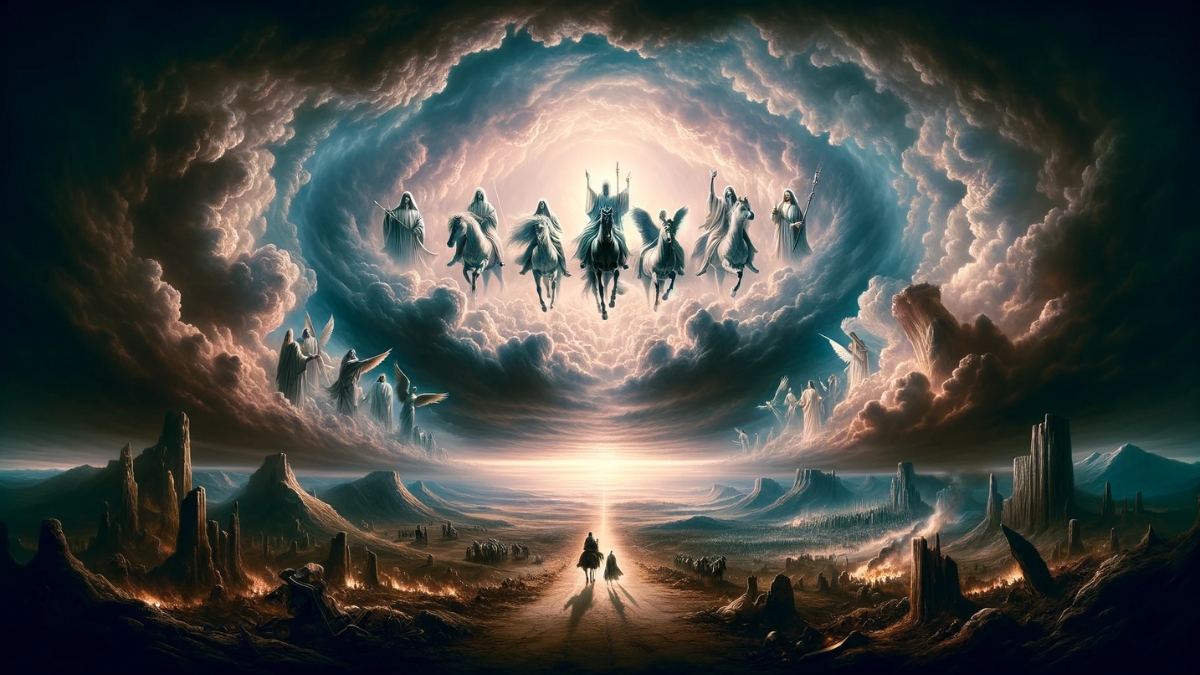
In a frequently repeated statement, Ernst Käsemann famously said that “Apocalyptic was the mother of all Christian theology.” Not as well-known is that two years later, Käsemann clarified what he actually meant by “apocalyptic”: for him, it referred to “eschatology,” or in his words, “the expectation of an imminent Parousia.” Personally, I would define apocalyptic eschatology a bit more broadly. Apocalyptic eschatology is the belief that this present age is irredeemably corrupted by sin, that God is coming to intervene in a final judgment on the wicked, and that at that time he will vindicate the righteous and deliver them into a new of age of eschatological salvation that is both personal in the sense of resurrection and cosmic in the sense of renewal. The question remains, however, as to how this perspective might rightly be considered to be the “mother of all Christian theology,” and in the space that remains, I would simply like to offer a few brief explanations for this claim.

First, apocalyptic eschatology revolves around the final, climactic visitation of God to the earth. In the Old Testament, this visitation was often referred to as “the Day of the Lord.” In fact, there were many “days of the Lord” in the Old Testament, all of which function as typological portends of the final Day of the Lord when God comes in eschatological glory and power. Christian theology believes that this final Day of the Lord began when God came to earth in the incarnate Lord Jesus Christ. He was to be called Emmanuel, which is translated “God with us.” (Matthew 1.23). And the Lord Jesus himself said of Jerusalem, “you did not recognize the time when God visited you.” (Luke 19.44) This is exactly the point, namely that the coming of Christ in his incarnation was the beginning of the apocalyptic visitation of God to the earth. Of course, we know that He is coming again in glory and power to bring to consummation that which he began in His first coming, but the point here is that in Christ, God himself came in climactic apocalyptic visitation.

And this brings me to the second reason why apocalyptic eschatology is the mother of all Christian theology, namely that the first coming of Christ to the earth as a baby in a manger marked the beginning of the end of this corrupt present age. In New Testament theology, this is commonly referred to as the already and the not yet, namely that God’s plan for the final redemption of his people has already begun in Christ but it is not yet complete. Consequently, we live in this in between time of already and not yet, already saved, already filled with the eschatological spirit, already living under the blessings of God’s eschatological salvation in part, but we await the time when Christ will come again to consummate, or to bring to completion, that which he began by his death, resurrection and ascension. This is why Peter, in his Pentecost sermon, can say, “And it will be in the last days, says God, that I will pour out my Spirit on all people.” (Acts 2.17). The underlined phrase marks a change that Peter has applied to his source text (Joel 2.28), which simply says, “After this.” Peter understood that in Christ the last days had begun, and we have been living “in the [apocalyptic] last days” now for 2000 years.

But what about the final judgment of the wicked? Isn’t this something that is still yet future? How can we say that the apocalyptic judgment of the wicked began in Christ at his first coming? The answer is that this is exactly what we must say, as Jesus says in John 12.31-32, “Now is the judgment of this world. Now the ruler of this world will be cast out. As for me, if I am lifted up from the earth I will draw all people to myself.” The verb here, “lift up”, means to lift up on high, to exalt, or to raise to dignity and honor. This is why it is so ironic that John goes on to add the explanatory note, “He said this to indicate what kind of death he was about to die.” (John 12.33) The death of Jesus on the cross is nothing less than his enthronement. By his death, he judges the wickedness of this world and its ruler; He exposes the sinfulness and the ultimate fate of those that would reject him. This is why we can say that the final judgment began in Jesus, because a person’s response to the crucified and risen Christ will determine their eternal fate. In the death of Christ, judgment has begun, and it will be meted out when “the lamb who was slain,” as the Revelation calls him, returns in glory and power.

Finally, apocalyptic eschatology is the mother of all Christian theology because in Christ eschatological salvation has come. Salvation is inherently and irreducibly an eschatological concept. Saved from what, we might ask? We are saved from the eschatological wrath of God toward sin. And in Christ this salvation has broken into this present age and been made available to all those who respond to Christ in faith. This is why Peter refers to Joel’s prophecy to explain the coming of the Spirit at Pentecost, as we saw above. We have been filled with the eschatological Spirit, the seal and sign of the new age. We are new creatures, the fruit of a new creation, in Christ because of the Spirit. This is why the Apostle Paul can say, “Blessed is the God and Father of our Lord Jesus Christ, who has blessed us with every spiritual blessing in the heavens in Christ.” (Ephesians 1.3) Every spiritual blessing, every blessing of the age to come is already ours in Christ. We have been saved. We are being saved. And we will be saved. Apocalyptic salvation has already begun in Christ, and we are partakers of it by His indwelling Spirit.

So, I agree with the sentiments of Ernst Käsemann as expressed above. Apocalyptic eschatology is the mother of all Christian theology, because in Christ the apocalyptic visitation of God has come. All of the rest of our theology must be derived from this point, that the climactic work of God for the salvation of His people and His world has come in Christ. This is the Gospel; this is the good news of our salvation. In Christ, God himself has broken into this present age to redeem his people from their sin and set us free from its bondage, its corruption, even its very presence. And this is why we can have hope.


On the Fourth Sunday of Advent

advent 4

The fourth Sunday of the season of Advent is dedicated to the contemplation of love, namely that it was love that motivated the Father to send the Son into the world as the incarnate Christ-child. And though the lectionary readings do not mention the love of God specifically, they do focus us on that great act of love, whereby our Savior became like unto us so that we may become like Him. So, before we turn our attention to the readings for this fourth Sunday, let us remind ourselves of that most memorable of verses,

For God loved the world in this way: He gave his one and only Son, so that everyone who believes in him will no perish but have everlasting life. (John 3.16)

This is the gift that we celebrate at Christmas, and the lectionary readings prepare us for that celebration by reminding us that this was the eternal plan of God from the very beginning of time.

Old Testament: Isaiah 7.10-16
Of course, this is the passage where we find God’s prediction of the virgin birth, that “the virgin will conceive, have a son, and name him Immanuel,” (verse 14), and this is the verse that will be cited by Matthew in today’s Gospel reading. And so it is tempting to fast forward immediately to the those events surrounding the birth of the Christ-child. However, we would be completely remiss if we ignored the original context within which this prophecy is given. And while we do not have the space here to recount the whole story, it would behoove us to linger in these chapters, specifically chapters 7-9, before jumping to the details of the Christmas story. This passage recounts the promise given through the prophet Isaiah that God would deliver the Kingdom of Judah from the enemies, even in spite of the seemingly insurmountable odds that were arrayed against them. “For before the boy knows to reject what is bad and choose what is good, the land of the two kings you dread will be abandoned.” (Verse 16) And it is this pattern then that becomes the typological precedent for the coming of Messiah. In other words, because God loves His people, He will deliver them from their enemies, whether those enemies be temporal (as with the people of Judah) or eternal (as with us and our enemy – sin).

Psalm: Psalm 80.1-7, 17-19
In the Psalm reading, “the psalmist laments Israel’s demise and asks the Lord to show favor toward his people, as he did in earlier times.” (Study Note, NET Bible) In other words, the psalmist is praying for God’s salvation specifically as that pertains to the restoration of the people of Israel. “Listen, Shepherd of Israel, who leads Joseph like a flock; you who sit enthroned between the cherubim, shine on Ephraim, Benjamin, and Manasseh. Rally your power and come to save us.” (Verses 1-2) But what is most sobering in this Psalm is that the psalmist admits that the people of Israel have reaped the just and due consequence of their sin in punishment from God, and that it is God and God alone who can must intervene on behalf of His people for their forgiveness and restoration. “Lord God of Armies, how long will you be angry with your people’s prayers? You fed them the bread of tears and gave them the full measure of tears to drink.  (Verse 4-5) And this is not unlike the spiritual condition of all humanity; we are too justly under the judgment of God for our sin, and He and He alone is the one who must act for our salvation. And so we pray, “Restore us, Lord, God of Armies; make your face shine on us, so that we may be saved.”

New Testament: Matthew 1.18-25
The Gospel reading for this fourth and final Sunday of Advent, then, takes us to the events leading up the birth of the Christ-child. “After his mother Mary have been engaged to Joseph, it was discovered before they came together that she was pregnant from the Holy Spirit. So her husband Joseph, being a righteous man, and not wanting to disgrace her publicly, decided to divorce her secretly.” (Verse 18-19) Obviously, Joseph was facing a perplexing dilemma, and who’s to say what we might have done under those same circumstances. But God intervened in a dream telling Joseph to take Mary as his wife. “She will give birth to a son, and you are to name him Jesus, because he will save his people from their sins.” (Verse 21) Of course, Matthew goes on in verses 22-23 to make the point that this was in fulfillment of what God had said through the prophet Isaiah, as we saw in our Old Testament reading. And “When Joseph woke up, he did as the Lord’s angel had commanded him. He married her but did not have sexual relations with her until she gave birth to a son. And he named him Jesus.” (Verses 24-25) But the important point to note in this passage is that in the Christ-child, God himself has come into the world “to save His people from their sins.” 

New Testament: Romans 1.1-7
And this was God’s plan A all along, as Paul goes on to show in the New Testament reading. Of course, in the Letter to the Romans, Paul is writing to a church that he himself had never visited. He was practically a stranger to them, and so, in these introductory verses, he must establish his identity and the authority from which he writes, which he ultimately grounds in the Gospel of God. “Paul, a servant of Christ Jesus, called as an apostle and set apart for the gospel of God.” (Verse 1) And it is this concept, the Gospel of God that Paul goes on to define in verses 2 thru 6 of the passage, that it was promised beforehand through the prophets in the Scriptures (verse 2), that it concerns his son, Jesus Christ our Lord, that he was a descendant of David (verse 3), appointed the powerful Son of God by the Spirit through resurrection (verse 4), and that through Him, we have been given a mission to bring about the obedience of faith for the sake of His name throughout the nations (verse 5). The point being that this was God’s plan all along from eternity past to eternity future, the Gospel of God is the script by which history unfolds. And the coming of Christ, both in His first Advent and in His second, is the cornerstone of that Gospel.

And so, we return to where we began, that the Gospel of God is nothing less than the expression of His love for His people, and that is what we celebrate at Christmas. God himself entered into the creation as the Christ-child incarnate to save His people from their sins. And thanks be to God for giving us this gift.

For further study:
On the Season of Advent
On the First Sunday of Advent
On the Second Sunday of Advent
On the Third Sunday of Advent


Slow To Write

"let every person be quick to hear, slow to speak, slow to anger."

lovegavehope

Just another WordPress.com site

Jared Cornutt

Pastor | Speaker | Writer

Denny Burk

A commentary on theology, politics, and culture

G3 Ministries

Events + Resources for the Local Church

Biblical Reasoning

Biblical and Systematic Theology According to the Scriptures

RetroChristianity

Reclaiming the Forgotten Faith

SBC Voices

Southern Baptist News & Opinion

Lucid Theology

Thoughts on words, books, theology, and life.

Baptist21

A pastor-led voice for Baptists in the 21st century

Center For Baptist Renewal

The Personal and Professional Blog of Phillip Powers

The Pastor's Well - Pastor Well

The Personal and Professional Blog of Phillip Powers

Articles - AlbertMohler.com

The Personal and Professional Blog of Phillip Powers

The Gospel Coalition

The Personal and Professional Blog of Phillip Powers