Tag Archives: Holy Spirit

On the Season of Lent

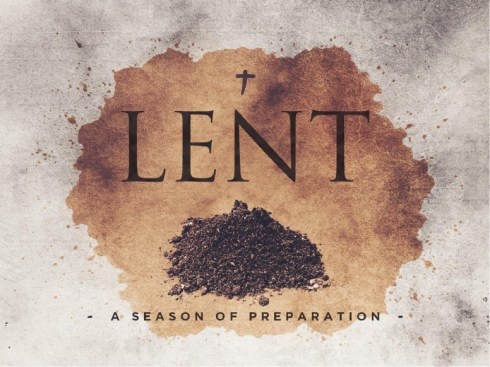
Yesterday, February 14th, marked the annual cultural commemoration of Valentine’s Day. It is a day that is supposed to celebrate romantic love and affection, and it is usually expressed through the giving of flowers, candy, cards, and the like. And there is nothing wrong with that; however, for Christians, this February 14th also marked another holiday, namely Ash Wednesday. Ash Wednesday marks the beginning of the season of Lent, a 40 day period of preparation for the celebration of Holy Week climaxing in Easter. This preparation is usually characterized by repentance, confession, fasting, and acts of service.

Since most churches here in the area do not observe Lent, or if they do they don’t have a traditional Ash Wednesday service, my wife and I attended Ash Wednesday Mass at Blessed Sacrament Church, so that we could participate in the imposition of ashes, where a cross is marked on a worshippers forehead with ash. In the Bible ashes are most often a symbol of repentance, contrition, even mourning; a pentitent person would mark themselves with and/or sit in ashes to show outwardly their inward emotional state. Ashes also symbolize our mortality, as in the stanza, “Remember that you are but dust and into dust you shall return.” During Lent, we remember our mortality, because Jesus took our mortality into himself at the incarnation. He went to the cross to die, even as we all will die someday, and he rose again to new life, even as we all shall be raised. This life is passing, short, and fleeting, but our eternal hope rests in the immortality of Jesus in his resurrection.

Repentance means to change one’s mind, and it implies an intentional turn from sin to godliness. However, what is missing in this definition is that true repentance is motivated by godly grief over our sin. (2 Corinthians 7:10) During Lent, we try to see and feel our sin the way God sees it, so that we can appreciate the atoning death of Jesus even more. He who knew no sin became sin for us. So, in repentance, we acknowledge our sin as the abhorrent afront it is before a holy God. We turn away from it in righteous disgust as we learn to truly desire godliness in our character and behavior.

Lent is also usually accompanied by fasting. And Jesus did not say “If you fast”; he said “when you fast”, implying that He assumed that fasting would be a regular part of Christian discipleship. (See Matthew 6) Fasting is a timeless and valuable spiritual discipline, but our cultural aversion to anything uncomfortable and our insatiable need for self-indulgence has caused us to neglect it altogether. Yes, fasting challenges us to throw off the insanity of our cultural slavery to consumerism, to give up our creature comforts, and to forsake our dependence on stuff for the sake of Christ.

Now, when it comes to fasting, the specifics of the fast are ultimately irrelevant; whether you fast one meal or one whole day, whether you do it every Friday or not, or whether you give up something other than food. The goal of fasting is to free us from our dependence on things and to cultivate our dependency on Christ. I am giving up coffee for this Lent season, and if you know me, then you know that coffee is vital part of my morning routine. I am not a morning person, not even close. But I have chosen to give up this creature comfort, this practical addiction, for the 40 day duration of Lent, because as my body aches for the fix of caffeine, so my soul should ache for communion with the Spirit of the living God.

The season of Lent is also usually accompanied by acts of service or charity, as we seek to become more like Jesus. He spent his time ministering to the bottom rungs of society, the sick, the lame, the blind, the demon possessed, and we are called to be His hands and feet in the communities and neighborhoods we live in. After all, He said, “whatever you did for one of the least of these brothers and sisters of mine, you did for me.” Some people choose to give the money that they would have spent on whatever they chose to give up to charitable or Christian causes. Whatever you choose to do, the teaching of Jesus is clear, do it in secret without seeking the praise of others, “and your Father who sees in secret will reward you.” (Again, see Matthew 6)

Lent is an invitation to follow Jesus, once again, as He journeys toward the cross. Along the way, we seek to become more like Him, to be set free from “the sin that so easily entangles”, and to soak in anew our need for a savior, for His atonig death and His lifegiving resurrection. There are no rules, regulations, or requirements for its observance, only freedom in the Spirit as we seek to allow the Spirit make us more like Jesus. It is a time to renew once again our repentance from the way of the world and our embracing of life in the Spirit.


On the Spirit and the Word

Title: On the Spirit and the Word
Church: Redeemer Church, La Mirada, CA
Date: Pentecost Sunday, May 27, 2012


On Hermeneutics & Interpreting the Bible

I once heard a pastor say, “It doesn’t really matter what people think about the Bible.” He went on to explain that, in this statement, he is addressing a (mostly) “bible-belt phenomenon” in which people get together for informal Bible studies, “pool their collective ignorance”, and without any real authority on the matter claim “Well, I think the text means this or that.” He concludes that this practice reflects a break down of basic hermeneutical skills, because it empties the text of its objective meaning by making it dependent upon what a person brings to it.

Now, let me just say that I share this pastor’s concern. In our study of the Biblical text, we must give interpretive priority to the meaning that the original authors – both divine and human – intended in light of their historical and cultural context. However, it would be easy for someone with no seminary or bible college training to infer from this that it is impossible to really understand the Bible without the proper training in hermeneutics & Bible study methods. From this, they might even conclude that it is pointless to even read/study the Bible on their own or that they should really just leave study of the Bible to the “experts” (read scholars/pastors) who have been trained to do it. As the Apostle Paul would say, “May it never be!”

In other words, we must affirm, as one of our fundamental theological values, something called the perspicuity of Scripture. We must believe that the message of Holy Scripture is essentially clear and understandable to any and all who are willing to open its pages. Of course, this does not mean that every nuance is easily defined or that there are no obstacles to overcome in the interpretive process. However, it does mean that God has revealed himself in the Bible in a way that He meant for us to be able to understand.

Scripture can be and is read with profit, with appreciation and with transformative results. It is open and transparent to earnest readers; it is intelligible and comprehensible to attentive readers. Scripture itself is coherent and obvious. It is direct and unambiguous as written; what is written is sufficient. Scripture’s concern or focal point is readily presented as the redemptive story of God. It displays a progressively more specific identification of that story, culminating in the gospel of Jesus Christ. All this is to say: Scripture is clear about what it is about. (Callahan, The Clarity of Scripture, 9)

Secondly, as pastors and teachers, if we truly believe that a basic understanding of hermeneutical principles and bible study methods is necessary in the study of the bible – and it is – then we should include this as a foundational part of the teaching/preaching ministry of the church, both implicitly and explicitly. Implicitly, we must model good hermeneutics in the pulpit; yes, our lessons and sermons must serve as examples of how to study the Bible well. We must let principles like authorial intent, historical/cultural context, literary flow-of-thought, and the big idea guide us in our sermon/teaching preparation. We must give first priority to what the text says over our own thoughts (read soapboxes). On the other hand, explicitly, we should make it a goal to teach people how to study the Bible, both from the pulpit in a large gathering and in a small group setting. People need to understand the contours of the biblical genres, and they need to know how to evaluate and use the wide range of Bible study resources that are so readily available in today’s information culture. They could even stand to learn a little about the biblical languages and how they work. In other words, our goal in preaching and teaching should be to work ourselves out of a job, i.e. to teach people how to study and understand the Bible for themselves.

Lastly, we should trust the Holy Spirit. He is the one who inspired Holy Scripture, and He is the one who illuminates our minds to its truths. Moreover, He is the one who applies those truths in our lives to bring about radical lifechange. In other words, engaging in the study of the Bible without giving attention to the work of the Spirit can never be more than historical investigation, no matter how consistently the principles of hermeneutics are applied. We must remember that Bible study is one of the spiritual disciplines by which the Spirit makes us more like Christ, and He can be trusted to testify to the truth. (John 14:26, 15:26, 16:12-15) This does not negate the role of the preacher/Bible teacher, but it does move our dependency from fallible human beings to the Holy Spirit of God. He is the only infallible interpreter of Scripture.

Ultimately, hermeneutical considerations are a means to an end, and that end is a more accurate and clearer understanding the biblical text itself. Studying hermeneutics gives us the basic skills and tools to understand the Bible better, i.e. the way the original audience would have understood it, the way that the inspired authors intended for it to be understood. So, what we need to say is: “It doesn’t matter what people think; it matters what the text says!”


Slow To Write

"let every person be quick to hear, slow to speak, slow to anger."

lovegavehope

Just another WordPress.com site

Jared Cornutt

Pastor | Speaker | Writer

Denny Burk

A commentary on theology, politics, and culture

G3 Ministries

Events + Resources for the Local Church

Biblical Reasoning

Biblical and Systematic Theology According to the Scriptures

RetroChristianity

Reclaiming the Forgotten Faith

SBC Voices

Southern Baptist News & Opinion

Lucid Theology

Thoughts on words, books, theology, and life.

Baptist21

A pastor-led voice for Baptists in the 21st century

Center For Baptist Renewal

The Personal and Professional Blog of Phillip Powers

The Pastor's Well - Pastor Well

The Personal and Professional Blog of Phillip Powers

Articles - AlbertMohler.com

The Personal and Professional Blog of Phillip Powers

The Gospel Coalition

The Personal and Professional Blog of Phillip Powers