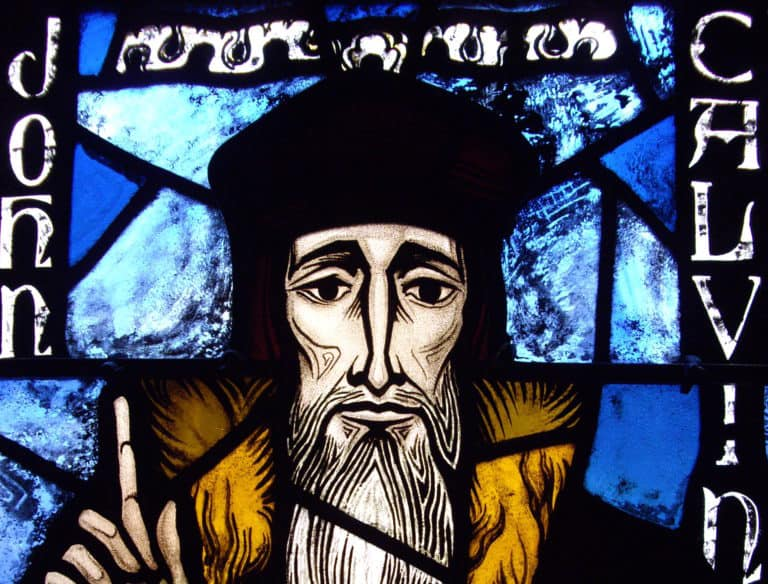
A few days ago, I posted a quote on my social media feed from the reformer John Calvin. Now, the quote in question said nothing about the doctrines or concepts that are usually associated with that name; actually, it had to with the usefulness of catechism in the transmission of the faith to the next generation. However, within a short amount of time, a recent acquaintance of mine messaged me with concern that if churches saw me posting quotes from this particular figure, then they would not ask me to preach. I am sure his concern was well intended, but since moving back to the Bible Belt five years ago, I have been constantly perplexed by the reactions that Calvin and his teaching seems to provoke.
On another occasion a few years ago, I was interviewing with a church in another state. They had received my resume from a state convention, and so they reached out to set up a virtual interview. After logging on, we exchanged pleasantries and said a word of prayer, but before asking me for my testimony or personal background, the first question they asked right out of the gate was “What do you believe about Calvinism?” Examples like this could be multiplied, but the fact remains that the slightest scent of affinity for John Calvin or for the doctrines known as “Calvinism” often provokes a visceral reaction in most churches in this area. There is a ubiquitous disdain for these concepts, especially in the more rural churches, and to be quite honest, it boggles my mind.
Reasonable disagreement on the question of God’s sovereignty and man’s ability when it comes to our salvation is understandable; this is a debate that has ebbed and flowed for the entire history of the church, but this kind of revulsion is simply beyond the pale. And so, in the space that remains, I would like to suggest four possible reasons for why rural Bible Belt Christians are so put off by so-called “Calvinism”.
First, there seems to be widespread misunderstanding when it comes what so-called “Calvinists” actually believe. Because of this, those beliefs are regularly mischaracterized and misrepresented in ways that no reasonable student of Reformed theology would ever agree with. Accusations that “Calvinists” do not believe in evangelism or that “Calvinism” makes God the author of sin are such tired critiques that they almost need no response. Answers to these questions and many more are readily available from reputable and godly scholars in both printed and electronic forms, but it is easier to label and dismiss someone’s beliefs than to listen and engage the merits of those beliefs. Whether you agree with the concepts or not, if you cannot explain those concepts in ways that their adherents would agree with, then you probably shouldn’t be critiquing them to begin with. As I have suggested in another post, this is how we show grace to those with whom we disagree.
Another reason why Bible Belt Christians harbor such vehement resentment for so-called “Calvinism” is that many rural churches have been hurt by pastors who held these beliefs in an unhealthy, unchristian manor. Time and time again, I have heard stories about how “Calvinism split our church”, and this absolutely saddens my soul. However, I would suggest that the essential cause of the pain had more to do with the character of the pastor in question and less to do with the theological concepts that he espoused. In most cases, “Calvinism” is simply a symptom of the problem, not the root cause. Pastors are called to the highest standards of Christlikeness, and a consistent attitude of combativeness or divisiveness driven by the nagging need to always be right should be a direct and immediate disqualification from pastoral ministry. The glaring absence of Christlikeness coupled with biased preaching that beats its preferred theological hobby horse every week, regardless of what it may be, is a recipe for heartache every time.
A third possible reason for the emotional overreaction to “Calvinism” in the Bible Belt might be linked to the lasting influence of Revivalism in this area. The theological example of men like Billy Graham and Adrian Rogers casts a long shadow over those who were directly influenced by their ministries. These were faithful, godly men whose proclamation of the Gospel led many to faith in Christ. For these Christians, the lasting memories of multi-night revivals with altars filled with throngs of people coming to faith in Christ represent the good ole’ days of the church. Even to this day, there is a deeply felt and inherent longing in many churches to experience those highs once again, and the assumption is that if we just preach the way that they preached, believe the way that they believed, program the way that they programmed, then we can reproduce the same results. Unfortunately, the culture has changed significantly since the heyday of these ministries, and the methods that worked then are unlikely to work in the same way now. However, as they did so well, so also must we proclaim the Gospel boldly and invite people to repent and believe, whatever that may look like.
Lastly, I think a final and more fundamental reason for the vitriolic reaction to so-called “Calvinism” has do with the conflict between the sovereignty of God and the ability of man. Again, my purpose is not answer that age old question, but simply to point out that the exaltation of God’s sovereignty, which is a basic principle in Reformed theology, is a direct affront to our own innate sinful desire to exalt ourselves. The suggestion that there is nothing that I can do to save myself or to turn myself toward God and away from sin apart from His gracious intervention is an insult to my own prideful sense of self. No one wants to admit that they are so deeply corrupted and enslaved to their own sin that they cannot lift themselves up by their own volitional, moral and spiritual effort. Except this is exactly what the Gospel teaches us. Whether we hold to the theology of so-called “Calvinism” or not, we must admit that we cannot, nay will not, save ourselves, even if we were given the opportunity. We are completely and totally dependent upon God to save us from sin and from ourselves, and this He did by sending His Son to die on the cross and rise again. This is what all Christians must believe.
In the final analysis, whether a person agrees or disagrees with John Calvin and his theology is not the point. We must be willing to listen to and learn from one another “as iron sharpens iron”; we must learn to discuss our differences with grace and understanding. And if we must disagree, then may the content of our disagreement be concerned with the Scriptures and with what they teach us about God and mankind, about sin and salvation, because these are the questions that matter in eternity. As our Lord Jesus said, “The time is fulfilled, and the kingdom of God has come near. Repent and believe the good news!” (Mark 1.15)

 Faith seeking Understanding