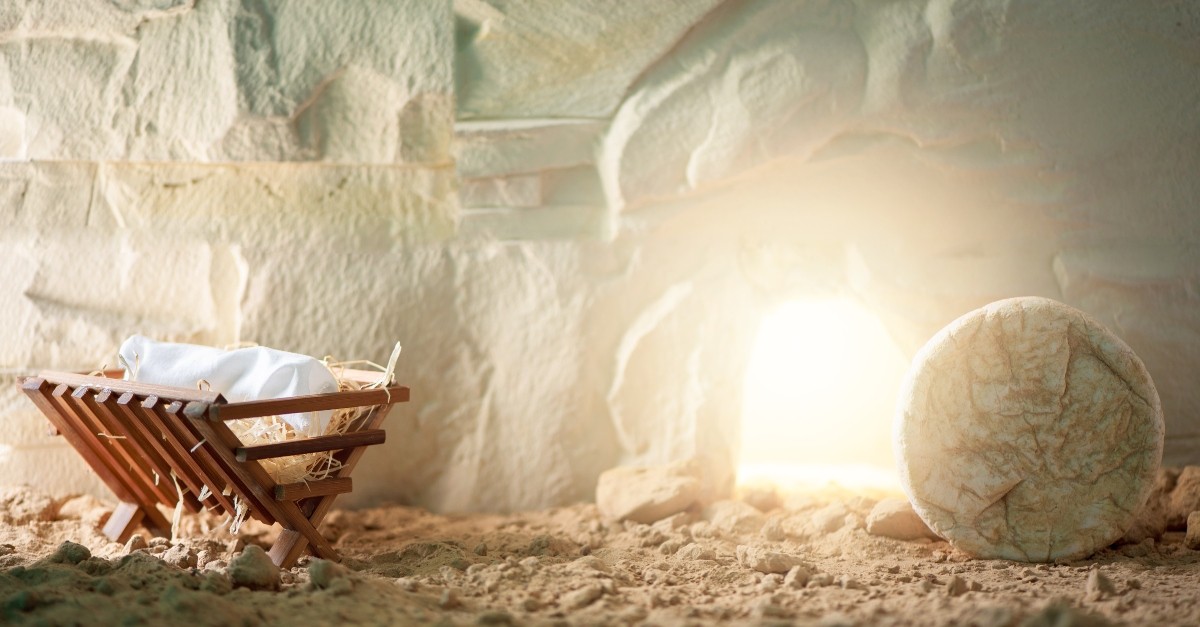
When it comes to a church’s life together, there are two pillars around which the rest of the annual calendar swings, i.e. Christmas and Easter. These are the high points in the church’s worship every year. Many churches still commemorate these holidays with special programs, musical and dramatic presentations of the Biblical story, and a focus on inviting the community in for high attendance, after all these are the only days that the CEOs come to church anyway (Christmas and Easter Onlys). It is clear that these holidays hold a special place in the devotion of most Christians. They focus our reflection on the primary movements of the story of redemption, how God the Son came to earth incarnate as a baby in a manger and how he died on the cross for sin and rose again some thirty years later. Even though they are mostly overcome by the cultural consumerism that so obviously characterizes our society these days, they are still a meaningful season in the worship of the church.
However, the question remains, “why do we celebrate these annual holidays anyway?” After all, there is no explicit command in the Scriptures to commemorate the nativity and/or the passion of our Lord Jesus Christ annually by a special holiday. In the New Testament, the church’s worship moved away from the annual calendar marked by special holidays and feasts that characterized the worship of the Jews in the Old Testament, and they moved to a weekly calendar marked by the gathering of the saints on the Lord’s Day for the preaching of the Word and the breaking of bread. Further, the Regulative Principle for Worship (RPW) states that only those elements that are clearly prescribed in the Scriptures should be included in the church’s worship. A strict application of this principle would mean that since Christmas and Easter are not explicitly prescribed by the New Testament, then we are in error when we make them a primary emphasis or central component in our devotion and worship, whether corporately or individually.
We do know that the church began to celebrate these holidays fairly early on in her existence. Within a century or so of the life and death of Jesus and His first followers, the church began to include these annual feasts as a regular part of the worship calendar. Of course, critics often suggest that these festivals were borrowed and adapted from the pagan world; however, these criticisms tend to fall apart quickly under close historical scrutiny. After examining the evidence, one author recently concluded that “no modern Christmas [or Easter] tradition can draw a straight line to any clear and decisive pagan origin.” While there has certainly been growth over the centuries in the lore and cultural traditions that surround these holidays, none of this is original and/or essential to the Christian celebration of them. Rather, it is evident that Christians recognized very early on in their history how important it was to commemorate the two decisive moments in redemptive history, namely the birth and death/resurrection of the one who is called Christ.
Of course, tradition alone is not a sufficient enough reason to justify the continued celebration of Christmas and Easter, but neither is it a sufficient reason for discontinuing the observance of them either. All traditions are not bad; in fact, some are quite helpful in the formation of our faith and practice. I have previously written on the question of tradition here, but suffice it to say that there is great wisdom in learning from the faith and practice of our Christian forebears, both from what they did well and from what they did not do well. So, perhaps the proper question should not be whether the celebration of Christmas and Easter is right or wrong, but whether it is wise and good. Does the annual observance of these holidays have spiritual value for the growth of the followers of Jesus in conformity to His image? And if this is the question, then we must answer in the affirmative. The fact of the matter is that we are a people who are quick to forget, quick to move on, quick to believe that we have outgrown our need for the Gospel. But there is nothing more foundational, nothing more crucial, for our formation in Christlikeness than to be reminded regularly of exactly what Christ has done on our behalf.
His incarnation and resurrection are the primary aspects of His redemptive work; they tell the story of how God the Son came to earth as a child, lived a sinless life, died on the cross for sin, and then rose again. In fact, the Apostle Paul instructs us in Second Timothy, chapter 2, verse 8, “Remember Jesus Christ, risen from the dead and descended from David, according to my gospel.” Or again, in the Letter to the Romans, that Jesus Christ “was a descendant of David according to the flesh and was appointed to be the powerful Son of God according to the Spirit of holiness by the resurrection of the dead.” Throughout the New Testament, these movements – the incarnation and the resurrection – are the hinge pins upon which the Gospel swings. And as followers of Jesus, we take great joy in celebrating these glorious acts of redemption each and every year, because it reminds us of the beautiful salvation that we have in Christ. It reminds us who we are, and it reminds us of why we are here. The church is a body of believers whose existence and purpose are defined by the redemptive work of God in Christ. Therefore, it is right and good that we celebrate these movements of God’s grace, not only every week, but as a matter of purposeful reflection every year on Christmas and Easter.
This, however, would seem to be the challenge in our modern culture, focusing our worship on Christ during these holidays and not becoming distracted by the cultural baggage that is so obviously associated with them. Just last month, I was chided vociferously on social media for suggesting that Santa Claus is neither necessary nor useful in the Christian enjoyment of the Christmas holiday. It would seem that in this particular cultural milieu Christians will need to be purposeful and strategic in how they celebrate going forward. We must make it clear that Christmas and Easter are about Christ and Christ alone, and if that means dispensing with some of the traditional festivities that have become associated with these holidays, then so be it. The celebration of Christmas and Easter should be a time when those who follow Jesus can celebrate anew the wonder and glory of what Christ has done for us in the Gospel. May we never grow tired of celebrating this timeless story each and every year.
This article is also posted at SBCvoices, here.


 Faith seeking Understanding