Tag Archives: Sacred Time

On the Season of Lent

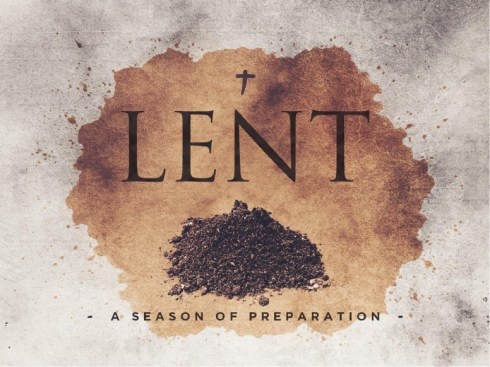
Yesterday, February 14th, marked the annual cultural commemoration of Valentine’s Day. It is a day that is supposed to celebrate romantic love and affection, and it is usually expressed through the giving of flowers, candy, cards, and the like. And there is nothing wrong with that; however, for Christians, this February 14th also marked another holiday, namely Ash Wednesday. Ash Wednesday marks the beginning of the season of Lent, a 40 day period of preparation for the celebration of Holy Week climaxing in Easter. This preparation is usually characterized by repentance, confession, fasting, and acts of service.

Since most churches here in the area do not observe Lent, or if they do they don’t have a traditional Ash Wednesday service, my wife and I attended Ash Wednesday Mass at Blessed Sacrament Church, so that we could participate in the imposition of ashes, where a cross is marked on a worshippers forehead with ash. In the Bible ashes are most often a symbol of repentance, contrition, even mourning; a pentitent person would mark themselves with and/or sit in ashes to show outwardly their inward emotional state. Ashes also symbolize our mortality, as in the stanza, “Remember that you are but dust and into dust you shall return.” During Lent, we remember our mortality, because Jesus took our mortality into himself at the incarnation. He went to the cross to die, even as we all will die someday, and he rose again to new life, even as we all shall be raised. This life is passing, short, and fleeting, but our eternal hope rests in the immortality of Jesus in his resurrection.

Repentance means to change one’s mind, and it implies an intentional turn from sin to godliness. However, what is missing in this definition is that true repentance is motivated by godly grief over our sin. (2 Corinthians 7:10) During Lent, we try to see and feel our sin the way God sees it, so that we can appreciate the atoning death of Jesus even more. He who knew no sin became sin for us. So, in repentance, we acknowledge our sin as the abhorrent afront it is before a holy God. We turn away from it in righteous disgust as we learn to truly desire godliness in our character and behavior.

Lent is also usually accompanied by fasting. And Jesus did not say “If you fast”; he said “when you fast”, implying that He assumed that fasting would be a regular part of Christian discipleship. (See Matthew 6) Fasting is a timeless and valuable spiritual discipline, but our cultural aversion to anything uncomfortable and our insatiable need for self-indulgence has caused us to neglect it altogether. Yes, fasting challenges us to throw off the insanity of our cultural slavery to consumerism, to give up our creature comforts, and to forsake our dependence on stuff for the sake of Christ.

Now, when it comes to fasting, the specifics of the fast are ultimately irrelevant; whether you fast one meal or one whole day, whether you do it every Friday or not, or whether you give up something other than food. The goal of fasting is to free us from our dependence on things and to cultivate our dependency on Christ. I am giving up coffee for this Lent season, and if you know me, then you know that coffee is vital part of my morning routine. I am not a morning person, not even close. But I have chosen to give up this creature comfort, this practical addiction, for the 40 day duration of Lent, because as my body aches for the fix of caffeine, so my soul should ache for communion with the Spirit of the living God.

The season of Lent is also usually accompanied by acts of service or charity, as we seek to become more like Jesus. He spent his time ministering to the bottom rungs of society, the sick, the lame, the blind, the demon possessed, and we are called to be His hands and feet in the communities and neighborhoods we live in. After all, He said, “whatever you did for one of the least of these brothers and sisters of mine, you did for me.” Some people choose to give the money that they would have spent on whatever they chose to give up to charitable or Christian causes. Whatever you choose to do, the teaching of Jesus is clear, do it in secret without seeking the praise of others, “and your Father who sees in secret will reward you.” (Again, see Matthew 6)

Lent is an invitation to follow Jesus, once again, as He journeys toward the cross. Along the way, we seek to become more like Him, to be set free from “the sin that so easily entangles”, and to soak in anew our need for a savior, for His atonig death and His lifegiving resurrection. There are no rules, regulations, or requirements for its observance, only freedom in the Spirit as we seek to allow the Spirit make us more like Jesus. It is a time to renew once again our repentance from the way of the world and our embracing of life in the Spirit.

On the Use and Benefit of the Christian Calendar

Every church has a calendar, and by that I mean that every church has an annual rhythm of seasons that defines their corporate life together. Every year, churches tend to observe the same set of holidays, seasonal emphases, remembrances, and milestones. Now, in most low church or free church traditions, especially here in the “Bible Belt”, these annual rhythms are usually indistinguishable from the civic, cultural, and sentimental holidays celebrated in the larger culture, so, in the final analysis, we would have to acknowledge that this type of annual calendar cycle is not distinctively Christian.

We celebrate our American civil and patriotic holidays, like Independence Day, Memorial Day, Veterans Day, Flag Day, or Presidents Day. We remember the Hallmark holidays, like Valentine’s day, Mother’s Day, Father’s Day. We even commemorate holidays for history and heritage, like Halloween, Thanksgiving, , Columbus Day, or Martin Luther King’s birthday. And these are not bad or wrong things to remember or celebrate; they are unique to our cultural and historical identity, but, are they making us more like Christ? By marking our year by this calendar, are we growing in our understanding of the person and work of Jesus, and are we conforming our identity and values to his?

Of course, there are two Christian holidays that we celebrate every year, those being Christmas and Easter. However, it seems their Christian meaning often gets lost in the unbridled consumerism of our culture. These historically Christian holy days have become more about Santa Claus and the Easter Bunny, Christmas trees and other seasonal decorations, exchanging gifts, egg hunting, and having holiday parties, and their Christian significance is relegated to a 1-2 hour Church service, if that. So, is there a way to reckon our yearly and seasonal cycles in a way that is more centered on the person and work of Jesus Christ? Is there a way to move the Gospel from the periphery of our remembrances, our celebrations, and our commemorations to the center of them?

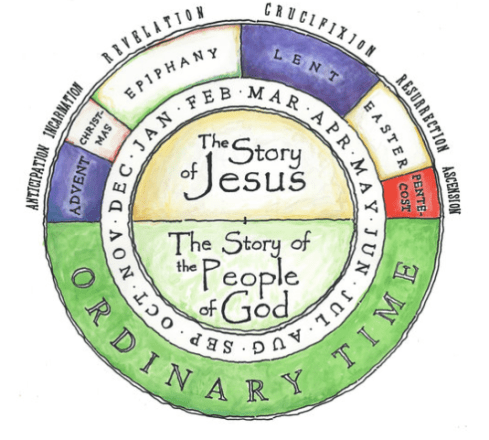
I would submit that there is, and I would also submit that the church has been following this annual seasonal cycle for the vast majority of its existence. For most of church history, Christians all over the world have followed the Christian calendar or the Church year. This is a calendar that begins four Sundays before Christmas with the season of Advent, proceeds through the seasons of Christmas and Epiphany, continues through the seasons of Lent, Holy Week, Easter, and Pentecost, then ends with the celebration of Ordinary Time which climaxes on Christ the King Sunday. This annual celebration of the Gospel focuses our celebration, remembrances, and commemorations on the person and work of Jesus Christ, and as we repeat it every year, it forms us more and more into his image. It conforms our values, our priorities, and our perspectives to those of the Kingdom of God.

This is what might be called the spiritual discipline of time. Richard Foster has the best definition of spiritual disciplines in his book Celebration of Discipline: The Path to Spiritual Growth. He describes the spiritual disciplines as a way of assuming a posture of submission within which God can do his sanctifying work. In other words, they are God’s way of putting us where God can work within us and transform us. The Disciplines can only get us to the place where something can be done; they open the door to life in, with, and through the Spirit.

And the need for a spiritual discipline of time has never been more pressing than in today’s fast paced instant gratification seeking culture. In our world, we do not know how to wait for anything. We rush from one experience to the next hardly allowing the time and space necessary for the significance of those experiences to soak into our souls. The seasons of the Christian Calendar force us to slow down and to sit in the grand narrative of Gospel of Jesus Christ week after week, Sunday after Sunday.

In the final analysis, the holidays and occasions that we choose to remember reveal our true values and priorities; they tell a story that reveals the most fundamental realities about who we understand ourselves to be. As Christians, our identity is to be grounded in and conformed to the identity of Jesus Christ. We are Christians first and foremost, and all other claims that attempt to form our identity must come second. Observing the Church Year tells the story of Gospel as the controlling narrative for who we are and what we are called to do, and as we cycle through it year after year, we hopefully move deeper and deeper into it’s mystery. May we rediscover this historical discipline as we seek to be made more and more into the image of Christ.

For further study, see: Emerson, Matthew Y. On Objections to the Church Calendar. The Center for Baptist Renewal, posted 2.15.18.


Slow To Write

"let every person be quick to hear, slow to speak, slow to anger."

lovegavehope

Just another WordPress.com site

Jared Cornutt

Pastor | Speaker | Writer

Denny Burk

A commentary on theology, politics, and culture

G3 Ministries

Events + Resources for the Local Church

Biblical Reasoning

Biblical and Systematic Theology According to the Scriptures

RetroChristianity

Reclaiming the Forgotten Faith

SBC Voices

Southern Baptist News & Opinion

Lucid Theology

Thoughts on words, books, theology, and life.

Baptist21

A pastor-led voice for Baptists in the 21st century

Center For Baptist Renewal

The Personal and Professional Blog of Phillip Powers

The Pastor's Well - Pastor Well

The Personal and Professional Blog of Phillip Powers

Articles - AlbertMohler.com

The Personal and Professional Blog of Phillip Powers

The Gospel Coalition

The Personal and Professional Blog of Phillip Powers