
Tag Archives: Jesus Christ

On Partaking of the Lord’s Supper

UnworthyCommunion.jpg

So then, whoever eats the bread or drinks the cup of the Lord in an unworthy manner will be guilty of sin against the body and blood of the Lord.  Let a person examine himself; in this way let him eat the bread and drink from the cup.  For whoever eats and drinks without recognizing the body, eats and drinks judgment on himself.  This is why many are sick and ill among you, and many have fallen asleep. (1 Corinthians 11:27-30, CSB)

Certainly, no one wants to partake of the Lord’s Supper in an unworthy way, especially if the consequences are sickness and/or death! But because of our western cultural predispositions, especially toward individualism and toward feelings of guilt rather than shame, we usually read Paul’s warnings here as if they concern our individual relationship with God. In other words, when Paul speaks of partaking of the elements in an “unworthy way,” we typically think of that which makes us feel unworthy before God, namely unconfessed sins. Moreover, when we read that “a man should examine himself”, we primarily think of some kind of moralistic introspection. Practically speaking, this usually entails a time of “prayerful self-examination and confession” prior to the distribution of the elements.

The problem with this is that rather than drawing the believer to celebrate anew the glory of God’s forgiveness in the Gospel through the observance of the Lord’s Supper, we end up heaping more feelings of guilt on the believer who truly desires to confess ALL their sins before partaking of the elements. Besides, who could ever be certain that they had confessed 100% of their sins, and thus could partake “worthily”? And what about the forgiveness that we have already received when we placed our faith in the Gospel at conversion; was it not once-for-all? So, in order to understand Paul’s warning here, I think we must reevaluate Paul’s instructions light of the social issues which they were meant to address.

The text of 1 Corinthians chapter 11 is relatively clear; obviously, there were some problems in how the Corinthians were practicing the Lord’s Supper, so much so that Paul’s comments on this issue are very sharp. He minces no words so to speak, and the reason for Paul’s outrage is simply this: The behavior of the Corinthian Christians at the Lord’s Table denies all that the Gospel stands for. In verse 20, Paul says that when they come together, they aren’t eating the Lord’s Supper. They may be sharing a meal together, but it looks nothing like the Lord’s meal. In other words, their behavior at the Lord’s Table is based in the values of the surrounding culture and not in the values of the Gospel. But in order to understand how this is so, we must consider the significance of meals in Paul’s world.

For them, the purpose of meals was much broader than simply eating food and consuming the necessary nourishment for the day’s tasks. No, in the first century, sharing a meal with someone was the primary gesture of companionship and community. Table fellowship was the principal means for establishing, enriching, and reaffirming relational bonds between groups of people, whether those groups were familial, religious, or secular in nature. Sharing meals together was the primary means for developing relationships. On the other hand, though, the table could also be the place where divisions according to honor, status, and affluence were publicly displayed and reinforced. In other words, mealtimes in the first century reinforced social divisions between the social elites and the lower classes, between the wealthy and poor, between the “haves” and the “have-nots”.

It is this latter function of meals that explains the practice of the Corinthian Christians. They are eating in a way that reinforces and perpetuates the divisions that exist among them. In chapter 11, verses 18-19, Paul says, “For to begin with, I hear that when you come together as a church there are divisions among you, and in part I believe it. There must, indeed, be factions among you, so that those who are approved may be recognized among you.” And this is why their coming together is not for the better but for the worse. Apparently, the more well-to-do and affluent members of the congregation were arriving at the meeting early, gorging themselves on the best foods and the best wine, and they were getting downright drunk. Then, when the poorer day laborers arrived later in the evening, there was nothing left for them to eat, so they went hungry.

For Paul, this is an explicit denial of the unity that they should be sharing in Christ. Listen again to the words of Paul in chapter 11, verse 22, “Don’t you have houses to eat and drink in? Or do you look down on the church of God and embarrass those who have nothing? What should I say to you? Should I praise you? I do not praise you for this!” Obviously, Paul is outraged, and as a corrective, he reminds them of the Lord’s Supper tradition. In other words, he reminds them that in the Gospel, cultural values like honor, status, and wealth are no longer relevant. All people stand or fall on their response to the Gospel no matter who they are. And the gospel not only transforms our relationship with God; it also transforms our relationship with others. We no longer see people as the world sees them; instead, we see them as Christ sees them. We relate to people according to the values of the Gospel, because the ground is level at the foot of the cross. We all stand equally in need of Jesus.

So, in order to understand Paul’s warning in chapter 11, verses 27-30, we must remember that the central issue at stake for Paul is not moral or ethical; rather, it is primarily communal or social. The question is not about one’s individual worth before God. Rather, it is the quality of our relationships with each other. In other words, it is primarily social in nature. The self-examination that Paul envisions is an attempt to evaluate one’s attitudes toward others in the light of the Gospel of Jesus Christ. So, we might ask ourselves these questions:

Am I showing Christian love to the members of this community equally?
Am I reinforcing or breaking down worldly social distinctions by my actions?
Am I jockeying, competing, or striving for social advancement at the expense of others?Am I selflessly giving of myself, my time, my money in order to benefit others?
Am I evaluating people according the values of the culture or the values of the Gospel?Am I engendering unity or disunity within this community by my actions and behaviors?

If we will examine ourselves in this way, by honestly answering these questions, then we will be rightly discerning the body, and we will partake of the Lord’s Supper worthily. The Lord’s Table is where anyone who believes in Jesus Christ can come to receive the promise of pardon and forgiveness and bask in the grace and love of God the Father poured out through God the Son by the Holy Spirit. Let us celebrate this table together as one body of united believers in Jesus.

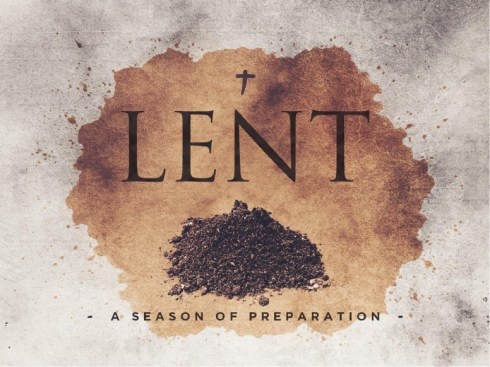


On the Season of Lent

Yesterday, February 14th, marked the annual cultural commemoration of Valentine’s Day. It is a day that is supposed to celebrate romantic love and affection, and it is usually expressed through the giving of flowers, candy, cards, and the like. And there is nothing wrong with that; however, for Christians, this February 14th also marked another holiday, namely Ash Wednesday. Ash Wednesday marks the beginning of the season of Lent, a 40 day period of preparation for the celebration of Holy Week climaxing in Easter. This preparation is usually characterized by repentance, confession, fasting, and acts of service.

Since most churches here in the area do not observe Lent, or if they do they don’t have a traditional Ash Wednesday service, my wife and I attended Ash Wednesday Mass at Blessed Sacrament Church, so that we could participate in the imposition of ashes, where a cross is marked on a worshippers forehead with ash. In the Bible ashes are most often a symbol of repentance, contrition, even mourning; a pentitent person would mark themselves with and/or sit in ashes to show outwardly their inward emotional state. Ashes also symbolize our mortality, as in the stanza, “Remember that you are but dust and into dust you shall return.” During Lent, we remember our mortality, because Jesus took our mortality into himself at the incarnation. He went to the cross to die, even as we all will die someday, and he rose again to new life, even as we all shall be raised. This life is passing, short, and fleeting, but our eternal hope rests in the immortality of Jesus in his resurrection.

Repentance means to change one’s mind, and it implies an intentional turn from sin to godliness. However, what is missing in this definition is that true repentance is motivated by godly grief over our sin. (2 Corinthians 7:10) During Lent, we try to see and feel our sin the way God sees it, so that we can appreciate the atoning death of Jesus even more. He who knew no sin became sin for us. So, in repentance, we acknowledge our sin as the abhorrent afront it is before a holy God. We turn away from it in righteous disgust as we learn to truly desire godliness in our character and behavior.

Lent is also usually accompanied by fasting. And Jesus did not say “If you fast”; he said “when you fast”, implying that He assumed that fasting would be a regular part of Christian discipleship. (See Matthew 6) Fasting is a timeless and valuable spiritual discipline, but our cultural aversion to anything uncomfortable and our insatiable need for self-indulgence has caused us to neglect it altogether. Yes, fasting challenges us to throw off the insanity of our cultural slavery to consumerism, to give up our creature comforts, and to forsake our dependence on stuff for the sake of Christ.

Now, when it comes to fasting, the specifics of the fast are ultimately irrelevant; whether you fast one meal or one whole day, whether you do it every Friday or not, or whether you give up something other than food. The goal of fasting is to free us from our dependence on things and to cultivate our dependency on Christ. I am giving up coffee for this Lent season, and if you know me, then you know that coffee is vital part of my morning routine. I am not a morning person, not even close. But I have chosen to give up this creature comfort, this practical addiction, for the 40 day duration of Lent, because as my body aches for the fix of caffeine, so my soul should ache for communion with the Spirit of the living God.

The season of Lent is also usually accompanied by acts of service or charity, as we seek to become more like Jesus. He spent his time ministering to the bottom rungs of society, the sick, the lame, the blind, the demon possessed, and we are called to be His hands and feet in the communities and neighborhoods we live in. After all, He said, “whatever you did for one of the least of these brothers and sisters of mine, you did for me.” Some people choose to give the money that they would have spent on whatever they chose to give up to charitable or Christian causes. Whatever you choose to do, the teaching of Jesus is clear, do it in secret without seeking the praise of others, “and your Father who sees in secret will reward you.” (Again, see Matthew 6)

Lent is an invitation to follow Jesus, once again, as He journeys toward the cross. Along the way, we seek to become more like Him, to be set free from “the sin that so easily entangles”, and to soak in anew our need for a savior, for His atonig death and His lifegiving resurrection. There are no rules, regulations, or requirements for its observance, only freedom in the Spirit as we seek to allow the Spirit make us more like Jesus. It is a time to renew once again our repentance from the way of the world and our embracing of life in the Spirit.


On Persistence in Prayer – Part 3

32948-kneeling-prayer-1200_1200w_tn.jpg

I have recently been considering Jesus’ teaching on the topic of prayer. In my last post in particular, I looked at Luke 11 and the parable of the friend at midnight, and I concluded that Jesus is calling us to a persistence in prayer that is general in scope, a persistence in the spiritual discipline of prayer, itself. Our Father is not the kind of God who needs to worn down, pestered, or annoyed into answering our prayers. He is an essentially good and trustworthy father who knows what His children need before we even ask him, and he delights in meeting the needs of his children.

Now, in chapter 18, just seven chapters later, Luke presents a parable that would seem to negate that very conclusion. In Luke 18:1, Luke states that “Now he told them a parable on the need for them to pray always and not give up,” and he goes on to relay the parable of the unjust judge in which a widow repeatedly goes before a local magistrate seeking justice against her “adversary.” Ultimately, the judge concludes that “because this widow keeps pestering me, I will give her justice, so that she doesn’t wear me out by her persistent coming.” (v5-6) If we assume that this parable relates to the practice of prayer in general, then we have no choice but to conclude that perhaps we need pester God into giving in to our requests.

This is exactly the assumption that we must reconsider in this passage: is Luke and, by way of implication, Jesus telling this parable to illustrate something about prayer in general? I think not.

Luke often arranges the teaching and parabolic material of Jesus topically, and he indicates the topic usually at the beginning of a new section. So, in Luke 17:20, Luke begins a new section about “when the kingdom of God would come,” and this section dealing with the coming of the kingdom begins in 17:20 and extends all the way until Luke 18:8. (Remember, Luke did not originally have chapter divisions). Then, in Luke 18:9, he begins a new section in which “He also told this parable to some who trusted in themselves that they were righteous and looked down on everyone else.” This informs us that Jesus is not addressing our practice of prayer in general, but he is addressing a very specific kind of prayer, i.e. the prayer for the coming of the kingdom.

Secondly, in order to understand the exact nature of the widow’s request, we have to see her in light of the first century world in which Jesus lived. In Jesus’ day, women were essentially powerless, and, if their husband died, then they were left without many options for survival. Most likely, this widow was not allowed to inherit her husband’s property. So, her only options were to remain with her husband’s family where she would probably be treated as a servant, or to return to her family and repay her dowry to her parents. If she could not do either of these, she would probably be sold as a slave for debt. She was faced with homelessness, poverty, and starvation. So, her request to the judge “give me justice against my adversary” is a once-in-a-lifetime request, it was unique to her situation, and it was not something she would repeat ever again. Her situation is desperate, and she is powerless to change it.

Lastly, just like in Luke 11, so here we must recognize that Jesus is using a rhetorical technique called “from the lesser to the greater”; he is making a “how much more” argument, and he is doing so by way of contrast and not comparison. It is patently obvious in this passage that we are not supposed to identify God with the unjust judge, since the passage tells us twice that he neither feared God nor respected men. The God of the Bible is fair, good, and just. He treats all people equally; He blesses those who call upon him in faith. No, God is not like the judge in this passage.

So, hear Jesus’ conclusion,

“Listen to what the unjust judge says. Will not God grant justice to his elect who cry out to him day and night? Will he delay in helping them? I tell you he will swiftly grant them justice.” (vv6-8)

In the final analysis, Jesus is teaching us to pray always as he taught us in The Lord’s Prayer, “May your kingdom come,” and not give up hope. He is coming soon. “Amen, come Lord Jesus!”


On Persistence in Prayer – Part 2

“Lord, teach us to pray.” (Luke 11:1) A seemingly simple question, but what is striking is that the disciples must have known how to pray. After all, they were raised in a Jewish religious system that placed a significant value on prayer. Nevertheless, when they compared their experience to that of Jesus, they couldn’t help but conclude that there must be something that they were missing out on in their practice of prayer.

And Jesus’ answer to the disciples’ question is the Lord’s prayer, a text that is probably not completely unfamiliar to most. (Luke 11:2-4) So, in lieu of an extended discussion on all the clauses of this “model prayer”, we may simply conclude that Jesus’ understanding of prayer was grounded in His relationship with the Father which He had by nature as the Son of God, and, in the gospel, that relationship is extended to us by grace through faith. We may now bring all of our needs and concerns to God in prayer, because He has become our Father and we have become His children. (On this, see my post: On the Lord’s Prayer)

Jesus’ answer to the disciples’ question, however, doesn’t simply stop with the model prayer. He goes on in this passage to describe what kind of a father God actually is, i.e. a good and trustworthy Father who responds to the requests of his children. This much is explicitly stated in Luke 11:11-13; this much seems reasonably clear. The difficulty, though, lies in between these two seemingly clear pieces of Jesus’ answer, and this being the “parable of the friend at midnight”. (Luke 11:5-8)

5 And he said to them, “Which of you who has a friend will go to him at midnight and say to him, ‘Friend, lend me three loaves, 6 for a friend of mine has arrived on a journey, and I have nothing to set before him’; 7 and he will answer from within, ‘Do not bother me; the door is now shut, and my children are with me in bed. I cannot get up and give you anything’? 8 I tell you, though he will not get up and give him anything because he is his friend, yet because of his impudence he will rise and give him whatever he needs. (ESV)

On a first reading, it might seem that Jesus is suggesting that, when we have a particular need or concern, we ought to persistently bring that request to God in prayer until He responds. After all, isn’t that what the friend in the parable had to do to get his neighbor to give in to his request? And doesn’t Jesus say that it is because of the friend’s persistence (cf. v8, so NASB, NET, NKJV, HCSB) that causes the neighbor to rise and respond to his request.

However, there are several exegetical and theological problems with this “persistence” interpretation

  1. In vv. 5-7, Jesus is asking a rhetorical question similar to the question he asks a little later in the same passage in vv. 11-12. In both places, the question is simply “would any of you do something like this?”, and in both places, the implied answer is “No!” Just as no father would give their child something that is harmful like a snake or a scorpion, no person in Jesus’ day would act like the friend in this parable.
  2. Jesus confirms this when he describes the friends actions as “impudence” (v.8, so ESV). Now, a quick survey of the major translations reveals quite a bit of diversity in the translation of this word even though, most translations opt for something like “persistence”. The problem is that this is the only occurrence of this Greek word in the entire NT, a hapax legomena, and when we look at the uses of this word outside of the NT, it is reasonably clear that it never means anything like persistence. It always carries a negative connotation of something like shamelessness, impertinence, impudence, ignoring of convention. It describes a lack of sensitivity to what is proper, or a carelessness about the good opinion of others (so BDAG).
  3. Lastly, Jesus is making an argument from the lesser to the greater, a how much more argument, and he is doing so by way of contrast and not comparison. In other words, if this sleeping neighbor will respond to the embarrassing, culturally inappropriate, shameless request of his friend, then how much more will God certainly respond to the appropriate and legitimate requests of His children. The parallel question in the passage, which we alluded to earlier (v. 11-13) drives this point home: God will certainly give His children good things when they ask Him.

For these reasons, it is unfortunate that translators and commentators continue to import the idea of persistence into this parable. Jesus is not calling us to be more persistent (read insistent) in our prayers; rather, he is calling us to grow in our faith and trust that God is a good father who responds to the needs of His children when they bring them to Him in prayer. If this is so then, one cannot help but wonder if there is not some other scriptural warrant upon which we might base a theology of persistence in prayer. In this regard, some turn to the “ask, seek, knock” saying in 11:9-10.

9 And I tell you, ask, and it will be given to you; seek, and you will find; knock, and it will be opened to you. 10 For everyone who asks receives, and the one who seeks finds, and to the one who knocks it will be opened.

The imperatives in this saying – ask! seek! knock! – are in the present tense, and in the original language, this usually refers to a continuous action. So, the HCSB translation “keep asking… keep searching… keep knocking” is not completely unwarranted. However, it would be wrong to conclude that repetition in asking, seeking, and knocking is what causes it to be given to or opened for us, especially in light of the preceding parable of the friend at midnight. In light of what we said there, it seems more likely that Jesus is saying that we should keep on asking, seeking, and knocking because we can trust God our Father to give and to open. In other words, the cause-effect relationship does not flow from prayers voiced to answers received, but the other way around. God’s fatherly goodness should motivate us to keep on asking, seeking, and knocking.

So, we may need to reconsider our definition of persistence in prayer. Most of the time, when people think of persistence in prayer, they think of the repetitive bringing of the same request over and over to God until He gives us an answer. However, this definition simply doesn’t reflect what Jesus is teaching in this passage. Further, the path between this kind of “persistence” and sinful insistence would seem to be quite slippery indeed. No, I think Jesus is envisioning a different kind of persistence – one that is more general in its scope, one that is grounded in faithfulness to the spiritual discipline of prayer itself, one that is motivated by our fundamental belief in God’s Fatherly goodness. In other words, Jesus is calling us to a persistence that is characterized by the regular bringing of all our requests to God in prayer, always trusting in Him to respond to our needs as a Father.

For further study:

Sermon: Lord, Teach Us to Pray! (Luke 11:1-13)
Series: The Parables of Jesus
Church: Redeemer Church, La Mirada, CA
Date: June 19, 2011

See also Snodgrass, Klyne. Stories with Intent: A Comprehensive Guide to the Parables of Jesus. Grand Rapids, Mich.: Eerdmans, 2008.


On the Lord’s Prayer – Part 1

Title: How, then, should we pray? (Matt 6:9-15)
Series: Lord, Teach Us to Pray
Church: Wynne Baptist Church, Wynne, AR
Date: May 16, 2010


Slow To Write

"let every person be quick to hear, slow to speak, slow to anger."

lovegavehope

Just another WordPress.com site

Jared Cornutt

Pastor | Speaker | Writer

Denny Burk

A commentary on theology, politics, and culture

G3 Ministries

Events + Resources for the Local Church

Biblical Reasoning

Biblical and Systematic Theology According to the Scriptures

RetroChristianity

Reclaiming the Forgotten Faith

SBC Voices

Southern Baptist News & Opinion

Lucid Theology

Thoughts on words, books, theology, and life.

Baptist21

A pastor-led voice for Baptists in the 21st century

Center For Baptist Renewal

The Personal and Professional Blog of Phillip Powers

The Pastor's Well - Pastor Well

The Personal and Professional Blog of Phillip Powers

Articles - AlbertMohler.com

The Personal and Professional Blog of Phillip Powers

The Gospel Coalition

The Personal and Professional Blog of Phillip Powers