Tag Archives: Holidays

On the Ascension as a Christian Holiday

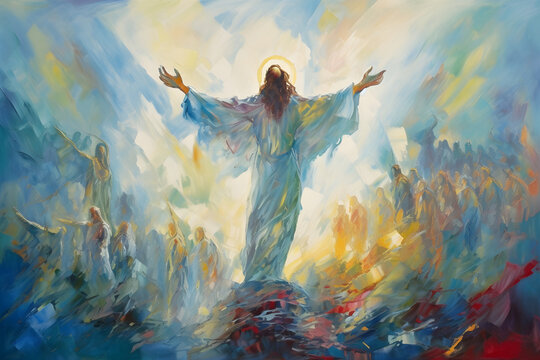
According to the Christian calendar, Thursday, May 9, 2024 marked the celebration of our Lord’s ascension, because it marks 40 days after the celebration of His resurrection, which we celebrated on March 31, 2024. (See Acts 1.1-11) But for many Christians, who are not part of more liturgically minded traditions, I would surmise that this “holiday” likely came and went without any fireworks or fanfare. For most folks, it was probably just another Thursday, which like all Thursdays was likely filled with the normal day to day responsibilities of professional and personal life. The question, then, that must be answered here is why celebrate the Ascension at all? Should it be considered a “holiday” on the pale with Christmas and Easter? Or is just another ritualistic trapping of church tradition that has been held over from ages now past? In the space that remains, I would like to suggest that Ascension Day is in fact a Christian “holiday”, because it is an opportunity to reflection on and celebrate another aspect of the person and work of Christ, particularly his session at the right hand of the Father.

Etymologically, the word “holiday” comes from the Old English word hāligdæg, which literally means “holy day”, and it was originally used to refer solely to days that were set aside for religious observance. These original “holy-days” are laid out in in the church’s annual calendar. For more on the traditional Christian calendar, see my post here. The point, however, is that a holiday is first and foremost a time for celebration and reflection on what Christ has done on our behalf. Of course, this significance is mostly all but lost on the secular society in which we now live, but as Christians, we have an opportunity to recover this particular significance, especially on days that otherwise have no cultural significance. I would submit that the Ascension is just such an opportunity.

But it is necessary to ask what an Ascension holiday would even celebrate. Sadly, for most Christians, the ascension of our Lord Jesus is somewhat of an after thought. It pales in significance to other aspects of His work, e.g. crucifixion, resurrection, return. While all of those are primary for understanding the person and work of Christ, the ascension is no less significant for our reflection on what Christ has accomplished for our salvation. The ascension celebrates the enthronement of Christ at the right hand of the Father. It is the fulfillment of the most quoted Old Testament verse in the New Testament, Psalm 110:1, which says “The Lord says to my lord: ‘Sit at my right hand until I make your enemies a footstool for your feet.’” He is now seated at the right hand of God, reigning in power until such a time as He should come again to finally defeat sin and establish His kingdom on earth.

The reality that Jesus is seated at the right hand of God is rich with significance for the devotion, reflection, and worship of Christians today. From this, we understand that Christ intercedes for his people (Hebrews 7:23-25), that he rules over and guides His church (Ephesians 1:20-23), that He will come again to receive us unto Himself (John 14:2-4). The present session of Christ is vital for our understanding of the ongoing ministry of the resurrected Christ, but so many churches, so many Christians for that matter, give it such short shrift. The Ascension holiday calls us back to an understanding of Christian time, to the perspective that all of the cycles and rhythms of life should revolve around the Gospel. Jesus Christ – His person and His work – should stand at the center of Christian living, and holidays like Ascension Day, just like Easter and Christmas, call us to focus on the centrality and necessity of Christ and His work.

Of course, there is no prescribed ritual or formula for observing the Ascension. It could be as simple as a private devotion, giving some time to the reading of relevant biblical texts, to meditation and prayer. On the other hand, it could be observed with a church service dedicated to the theme in which we sing and pray together and hear a sermon on some aspect of its significance. It may mean that someone who is a member of a church that does not observe the holiday looks for a more liturgically oriented church that does. It is perfectly fine to visit and participate in other Christian worship traditions, but, of course, we must use discernment in this. Families could set aside a time for family bible study and worship in which the story and significance of the ascension is related to children or other family members. It could even include the observance of the Lord’s supper, for Jesus promised us, “I will not drink from this fruit of the vine from now on until that day when I drink it new with you in my Father’s kingdom” (Matthew 26.29). And when we observe the Lord’s Supper, we “proclaim the Lord’s death until he comes.” (1 Corinthians 11.26)

The point of all this is to say that Ascension Day is another opportunity to extol the worth of Christ Jesus, to proclaim his powerful name, to relish in His sustaining grace that is constantly at work on our behalf. And there simply is no other person in our lives who deserves to be celebrated in this way. We celebrate birthdays, anniversaries, and other Hallmark holidays; these things order our lives. Wouldn’t it be better to order our lives around the person and work of Christ, so that we are constantly reminded of the great salvation in which we share. I think so.

For further study, see:
Schreiner, Patrick. The Ascension of Christ: Recovering a Neglected Doctrine. Bellingham, WA: Lexham Press, 2020.

On the Annual Celebration of Christmas and Easter

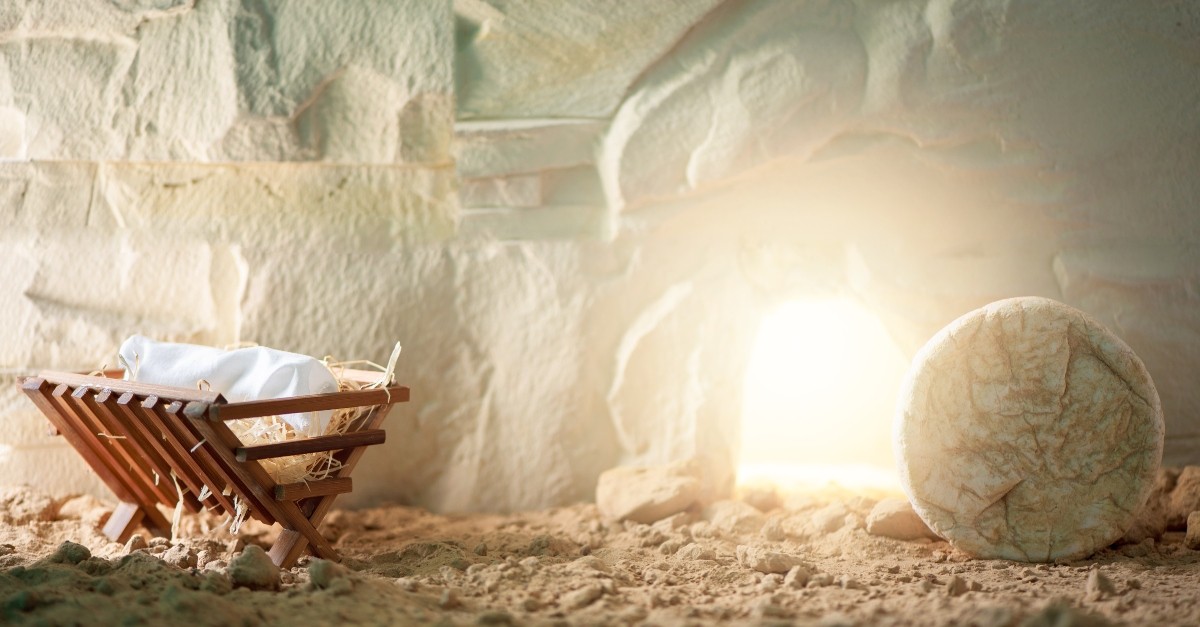
When it comes to a church’s life together, there are two pillars around which the rest of the annual calendar swings, i.e. Christmas and Easter. These are the high points in the church’s worship every year. Many churches still commemorate these holidays with special programs, musical and dramatic presentations of the Biblical story, and a focus on inviting the community in for high attendance, after all these are the only days that the CEOs come to church anyway (Christmas and Easter Onlys). It is clear that these holidays hold a special place in the devotion of most Christians. They focus our reflection on the primary movements of the story of redemption, how God the Son came to earth incarnate as a baby in a manger and how he died on the cross for sin and rose again some thirty years later. Even though they are mostly overcome by the cultural consumerism that so obviously characterizes our society these days, they are still a meaningful season in the worship of the church.

However, the question remains, “why do we celebrate these annual holidays anyway?” After all, there is no explicit command in the Scriptures to commemorate the nativity and/or the passion of our Lord Jesus Christ annually by a special holiday. In the New Testament, the church’s worship moved away from the annual calendar marked by special holidays and feasts that characterized the worship of the Jews in the Old Testament, and they moved to a weekly calendar marked by the gathering of the saints on the Lord’s Day for the preaching of the Word and the breaking of bread. Further, the Regulative Principle for Worship (RPW) states that only those elements that are clearly prescribed in the Scriptures should be included in the church’s worship. A strict application of this principle would mean that since Christmas and Easter are not explicitly prescribed by the New Testament, then we are in error when we make them a primary emphasis or central component in our devotion and worship, whether corporately or individually.

We do know that the church began to celebrate these holidays fairly early on in her existence. Within a century or so of the life and death of Jesus and His first followers, the church began to include these annual feasts as a regular part of the worship calendar. Of course, critics often suggest that these festivals were borrowed and adapted from the pagan world; however, these criticisms tend to fall apart quickly under close historical scrutiny. After examining the evidence, one author recently concluded that “no modern Christmas [or Easter] tradition can draw a straight line to any clear and decisive pagan origin.” While there has certainly been growth over the centuries in the lore and cultural traditions that surround these holidays, none of this is original and/or essential to the Christian celebration of them. Rather, it is evident that Christians recognized very early on in their history how important it was to commemorate the two decisive moments in redemptive history, namely the birth and death/resurrection of the one who is called Christ.

Of course, tradition alone is not a sufficient enough reason to justify the continued celebration of Christmas and Easter, but neither is it a sufficient reason for discontinuing the observance of them either. All traditions are not bad; in fact, some are quite helpful in the formation of our faith and practice. I have previously written on the question of tradition here, but suffice it to say that there is great wisdom in learning from the faith and practice of our Christian forebears, both from what they did well and from what they did not do well. So, perhaps the proper question should not be whether the celebration of Christmas and Easter is right or wrong, but whether it is wise and good. Does the annual observance of these holidays have spiritual value for the growth of the followers of Jesus in conformity to His image? And if this is the question, then we must answer in the affirmative. The fact of the matter is that we are a people who are quick to forget, quick to move on, quick to believe that we have outgrown our need for the Gospel. But there is nothing more foundational, nothing more crucial, for our formation in Christlikeness than to be reminded regularly of exactly what Christ has done on our behalf.

His incarnation and resurrection are the primary aspects of His redemptive work; they tell the story of how God the Son came to earth as a child, lived a sinless life, died on the cross for sin, and then rose again. In fact, the Apostle Paul instructs us in Second Timothy, chapter 2, verse 8, “Remember Jesus Christ, risen from the dead and descended from David, according to my gospel.” Or again, in the Letter to the Romans, that Jesus Christ “was a descendant of David according to the flesh and was appointed to be the powerful Son of God according to the Spirit of holiness by the resurrection of the dead.” Throughout the New Testament, these movements – the incarnation and the resurrection – are the hinge pins upon which the Gospel swings. And as followers of Jesus, we take great joy in celebrating these glorious acts of redemption each and every year, because it reminds us of the beautiful salvation that we have in Christ. It reminds us who we are, and it reminds us of why we are here. The church is a body of believers whose existence and purpose are defined by the redemptive work of God in Christ. Therefore, it is right and good that we celebrate these movements of God’s grace, not only every week, but as a matter of purposeful reflection every year on Christmas and Easter.

This, however, would seem to be the challenge in our modern culture, focusing our worship on Christ during these holidays and not becoming distracted by the cultural baggage that is so obviously associated with them. Just last month, I was chided vociferously on social media for suggesting that Santa Claus is neither necessary nor useful in the Christian enjoyment of the Christmas holiday. It would seem that in this particular cultural milieu Christians will need to be purposeful and strategic in how they celebrate going forward. We must make it clear that Christmas and Easter are about Christ and Christ alone, and if that means dispensing with some of the traditional festivities that have become associated with these holidays, then so be it. The celebration of Christmas and Easter should be a time when those who follow Jesus can celebrate anew the wonder and glory of what Christ has done for us in the Gospel. May we never grow tired of celebrating this timeless story each and every year.

This article is also posted at SBCvoices, here.


Slow To Write

"let every person be quick to hear, slow to speak, slow to anger."

lovegavehope

Just another WordPress.com site

Jared Cornutt

Pastor | Speaker | Writer

Denny Burk

A commentary on theology, politics, and culture

G3 Ministries

Events + Resources for the Local Church

Biblical Reasoning

Biblical and Systematic Theology According to the Scriptures

RetroChristianity

Reclaiming the Forgotten Faith

SBC Voices

Southern Baptist News & Opinion

Lucid Theology

Thoughts on words, books, theology, and life.

Baptist21

A pastor-led voice for Baptists in the 21st century

Center For Baptist Renewal

The Personal and Professional Blog of Phillip Powers

The Pastor's Well - Pastor Well

The Personal and Professional Blog of Phillip Powers

Articles - AlbertMohler.com

The Personal and Professional Blog of Phillip Powers

The Gospel Coalition

The Personal and Professional Blog of Phillip Powers