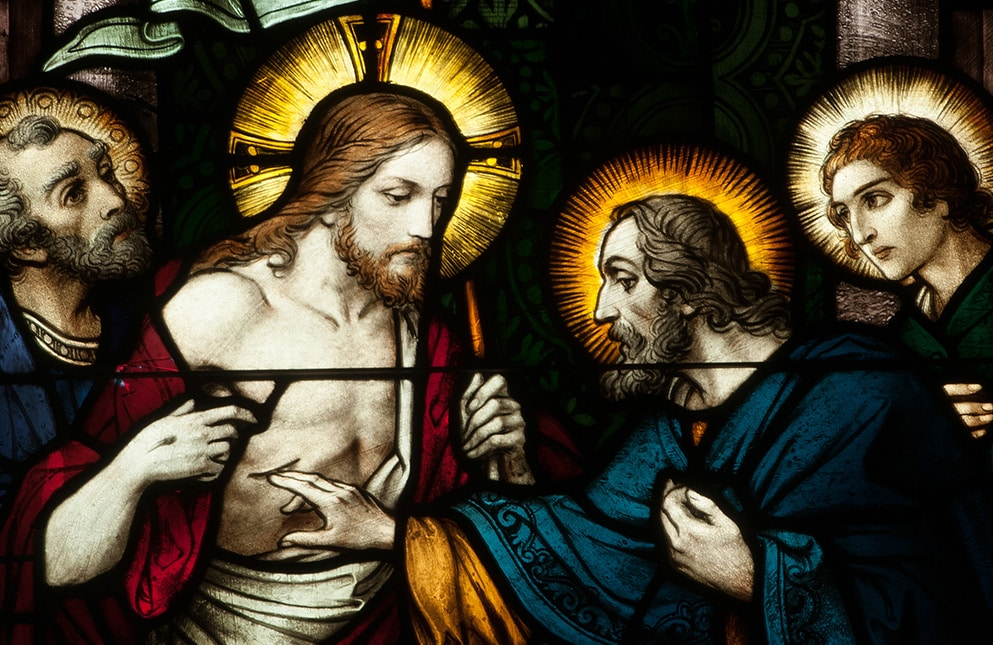
In my last post, I argued that the apocryphal Gospel of Thomas has little to no value when it comes to the study of the historical Jesus. However, ever since the Jesus Seminar published their book, The Five Gospels, it has become somewhat common among Jesus scholars to include Thomas as another source for Jesus studies. The Gospel of Thomas is a collection of 114 logia, or sayings, that are attributed to Jesus, most of which are enigmatic and/or aphoristic in style. For example, saying 7 reads, “Blessed is the lion which becomes man when consumed by man; and cursed is the man whom the lion consumes, and the lion becomes man.” Thomas was discovered in 1945 at Nag Hammadi among some 52 other documents, most of which are from the 4th century CE. While Thomas contains intriguing sayings, its late date, its wholesale dependence on the Synoptic tradition, and its Gnostic coloring render it of very little importance for reconstructing the historical Jesus. Its primary value lies in understanding early Christian Gnostic interpretation and theological creativity, not the life and teaching of Jesus of Nazareth.
As noted above, the Gospel of Thomas, sometimes referred to as the Secret Gospel of Thomas, contains some 114 independent sayings attributed to Jesus without any kind of narrative structure or frame. Although the complete text found at Nag Hammadi in 1945 is in Coptic and dates to the 4th century CE, it also exists in three Greek fragments previously found at Oxyrhynchus around the turn of the twentieth century that date to the mid-second century CE. Some scholars argue that the oral traditions behind these Greek texts may be earlier, but this is speculation that is not supported by any physical textual evidence. The biggest difference between Thomas and the canonical Gospels is that it is completely lacking in narrative details; it contains no geographic markers, no passion narrative, and no account of the resurrection. More often than not, it simply reworks material from the Synoptic tradition. In spite of these differences, its non-narrative, aphoristic style is perhaps part of its appeal, but it is also the reason for its interpretive challenges.
This is perhaps why many, both scholars and popular readers alike, find Thomas so intriguing. It is cryptic, wisdom-oriented, less overtly theological, and resembles Synoptic style. For many, especially those who are skeptical of the canonical accounts of Jesus, Thomas reflects a non-apocalyptic, secretive, purely ethical Jesus, which is more in keeping with modern sensibilities. For example, saying 98 reads, “The kingdom of the father is like a certain man who wanted to kill a powerful man. In his own house he drew his sword and stuck it into the wall in order to find out whether his hand could carry through. Then he slew the powerful man.” Or again, saying 77 reads, “It is I who am the light which is above them all. It is I who am the all. From me did the all come forth, and unto me did the all extend. Split a piece of wood, and I am there. Lift up the stone, and you will find me there.” According to the scholars of the Jesus Seminar, these sayings represent independent (read secret) traditions not found in the canonical Gospels. However, these claims often overlook Thomas‘s dependence on earlier Synoptic material and its interpretive framing.
Estimates vary, but roughly half of Thomas‘s 114 sayings have parallel, often more primitive, versions in the Synoptics. For example, saying 54 reads, “Blessed are the poor, for yours is the kingdom of heaven.” This is clearly a restatement of the beatitude found in Matthew 5.3 and its parallel in Luke 6.20. Saying 55 reads, “Whoever does not hate his father and his mother cannot become a disciple to me. And whoever does not hate his brothers and sisters and take up his cross in my way will not be worthy of me.” This is taken from Matthew 10.37-38 and its parallel in Luke14.26-27. Saying 65 is simply a retelling of the parable of the vineyard owner found in Matthew 21, Mark 12, and Luke 20; saying 57 is simply a retelling of the parable of the wheat and tares found in Matthew 13. Other examples could be cited, but the point is clear, namely that the author(s) of Thomas have simply reworked Synoptic material, typically drawn from the Sermon on the Mount or the Kingdom sayings/parables of Jesus. Moreover, the ordering and grouping of these sayings typically mimics that which is found in Matthew, Mark, and Luke. This evidence clearly demonstrates the secondary literary dependence of Thomas and mitigates against arguments that it preserves independent oral traditions. To put it another way, if Thomas is so clearly dependent, then it cannot be used as an independent historical source in the study of the historical Jesus.
Beyond its late date and its dependence on the Synoptic traditions, another reason Thomas holds no value for the study of Jesus is its clear Gnostic leanings. Gnosticism is a second century syncretistic heresy that combined elements of Christianity with Jewish mysticism and Greco-Roman philosophy. It is primarily characterized by its dualistic worldview, its emphasis on hidden knowledge (gnosis) and spiritual ascent, and its devaluation of material reality. The Gospel of Thomas, as well as most of the other documents found at Nag Hammadi, clearly fall into this stream of thought. For example, saying 62 reads, “It is to those who are worthy of my mysteries that I tell my mysteries.” Saying 24 reads, “There is light within a man of light, and he lights up the whole world. If he does not shine, he is darkness.” Or again, saying 108 reads, “He who will drink from my mouth will become like me. I myself shall become he, and the things that are hidden will be revealed to him.” Clearly, sayings from the canonical Gospels have been filtered through Thomas’s Gnostic framework. This theological overlay makes Thomas more a reflection of early heretical Christian thoughts than of Jesus’ own teaching. While Gnostic themes are historically interesting for understanding the history of the early church, they further limit Thomas’s usefulness for reconstructing the historical Jesus.
Methodologically speaking, for a source to contribute meaningfully to historical reconstruction, it must be anchored in some kind of narrative frame, some cultural or geographic context, some chronological markers by which its historical veracity can be evaluated. The Gospel of Thomas is clearly lacking in this regard. It does not contain any of the details of Jesus’s life, his public ministry in Galilee, his conflicts with the Jewish authorities, or his passion, death, and resurrection. Without any anchoring in actual historical events like these, a collection of sayings cannot be attributed to Jesus with any real confidence. Therefore, using Thomas as a primary source in the study of the historical Jesus risks reconstructing him as an abstract, decontextualized, disconnected figure. Or to put it another way, a Jesus disconnected from historical realities can become anything and everything, except who he truly was. The Gospel of Thomas is simply too late, too dependent, and too Gnostic to be of any value in the study of the historical Jesus. Of course, this does not mean that Thomas has no value at all. After all, the Gospel of Thomas gives us an open window into early Christian theological creativity within heretical movements. It highlights the role of wisdom and of spiritual and mystical orientations in the beliefs of the early church. And it gives us insight into how the teachings of the historical Jesus were received and interpreted by one particularly Gnostic tradition. However, whereas canonical sources like the Synoptics and Paul ground their theological reflections in the reality of historical events, Thomas abstracts wisdom and secret knowledge from reality. In this regard, then, Thomas illuminates early Christian imagination and hermeneutics rather than the life of Jesus of Nazareth.
In light of the above evidence, I can only conclude that because Thomas is derivative and shaped by Gnostic and Synoptic traditions, it cannot be used as an independent source to reconstruct the historical Jesus. Sound theological reflection must be grounded in the historical realities of the person and work of Jesus. Or to put it another way, history grounds theology, and theology interprets history. The two must remain interconnected in the theological task. To neglect one or the other would necessarily lead us into either hardened skepticism or wild theological speculation. While Thomas is a great source for understanding early Christian diversity, it simply should not be conflated with the life of Jesus of Nazareth. Thomas may open a window onto early Christian imagination, but the historical Jesus stands firmly in the Synoptic Gospels and the apostolic testimony of the New Testament.


 Faith seeking Understanding