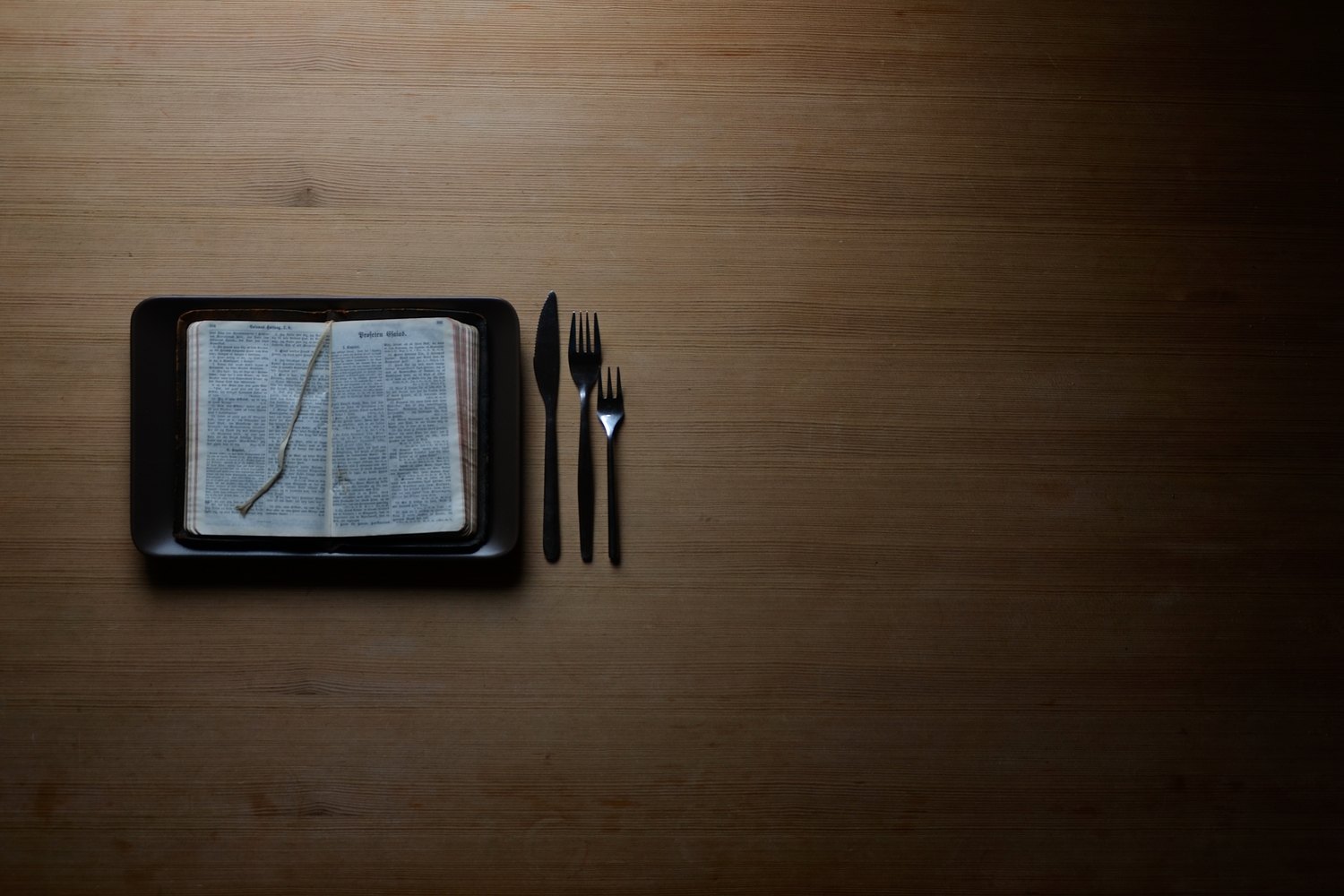
According to the Christian calendar, today is Ash Wednesday which marks the beginning of the liturgical season of Lent. I have previously written on the season of Lent here and here, so I refer you to these posts for my thoughts on the season of Lent and its spiritual value. Of course, the primary spiritual practice that is traditionally associated with the observance of Lent is the spiritual discipline of fasting, but, even outside of the season of Lent, the spiritual discipline of fasting is a valuable practice for those who wish to be more like Jesus. However, in our consumeristic culture, the discipline of fasting is a spiritual practice that is rarely, if ever, engaged in the Christian life, and this is much to our loss. The witness of Holy Scripture and of church history is replete with examples of men and women whose engagement in the spiritual discipline of fasting had meaningful and abiding value in their walk with Christ. If this is true, why then are we so resistant to this biblically grounded and historically proven discipline of the Christian life?
Part of our resistance may stem from the fact that we simply do not understand what the spiritual discipline of fasting is all about. Because our pulpits are almost completely silent on the topic, the only kind of fasting with which we are familiar has to do with nutrition, weight loss, or some other physical or medical concern. For this reason, our consideration of the question of fasting is primarily focused on the physical aspects of the practice. What to eat, when to eat, how much to eat, we are practically consumed with our need for physical nourishment. Of course, this is very purpose of the spiritual discipline of fasting, to expose our complete and total dependence on food for the production of energy and the cultivation of physical health. In the same way that our bodies are dependent on physical nourishment, so also our souls are dependent on spiritual nourishment for the cultivation of spiritual health and vitality. The purpose of the spiritual discipline of fasting is to teach our souls to hunger and thirst for spiritual food in the same way that our bodies hunger for spiritual food. As Jesus says in the Sermon on the Mount, “Blessed are those who hunger and thirst for righteousness, for they will be filled.” (Matthew 5.6)
Another reason for our reluctance to practice this discipline, and perhaps a more fundamental one, is simply our aversion to anything that might cause us discomfort. As creatures, we love our comfort, our ease, our physical pleasure, and we resist, sometimes vehemently, any kind of activity or behavior that might take away our comfort, even temporarily. Simply put, we don’t like pain, and going without food, even if it is just for one meal, can cause some quite unpleasant physical side effects. But we must be willing to entertain the possibility that this pain is good pain, that some temporary physical discomfort could be beneficial if it results in lasting spiritual benefit. Based on the clear scriptural and historical evidence, we must conclude that this is the case. In the same way that physical exercise is often associated with aches and pains in the short term, we all know that regular exercise habits lead to a higher likelihood of physical health in the long run. So, rather than avoiding the temporary discomforts of the spiritual discipline of fasting, we must learn to embrace these as a pathway to long term spiritual health. As the Apostle Paul writes in 1 Timothy, chapter 4, verse 8, “For the training of the body has limited benefit, but godliness is beneficial in every way, since it holds promise for the present life and also for the life to come.”
However, the primary reason for why we should relearn the value of the spiritual discipline of fasting is simply this, namely that our Lord expected us to engage in it. Of course, in the Sermon on the Mount, he did say “when you fast” and not “if you fast” (Matthew 6.16), but his expectation for His disciples is even more clear in Mark, chapter 2. In verse 18 of that chapter, the disciples of the Pharisees and the disciples of John the Baptist come to Jesus to ask Him why His disciples do not fast. Apparently, their lack of practice in this area did not go unnoticed, and so, Jesus explains that they cannot fast while “the bridegroom” is with them, by which He clearly refers to Himself. “But the time will come when the groom will be taken away from them, and then they will fast on that day.” (Mark 2.20) The footnote in the NET Bible indicates that this is a veiled reference to His death, a prediction that He would make more clearly following Peter’s confession at Caesarea Philippi (cf. Mark 8.31, 9.31, 10.33). So, here Jesus is looking forward to the time when His disciples will live without His physical embodied presence, and “they will fast on that day.” In other words, one way that we commune with the risen and ascended Christ is through our submission to His Spirit in the discipline of fasting.
Of course, we must hasten to add that while Jesus may have expected that His disciples would fast, He did not expressly command them to do so. So, our lack of engagement in this spiritual discipline can in no way be construed as sin. However, if we have no driving desire to be more like Jesus, no deep longing to commune with Him by the Spirit, no genuine affection for Christ and His glory, then we may need to consider whether we know Him at all. The Scriptures are clear that to know Christ, to sit in His presence, is far better sustenance than any physical nourishment that food may offer. This is why Jesus told Martha that Mary had chosen the “better meal” (Luke 10.42, author’s translation). This is the irony, namely that fasting is feasting. In other words, the spiritual discipline of fasting is one way by which we feast on the sustenance that comes from Christ.
So Jesus said to them, “Truly I tell you, unless you eat the flesh of the Son of Man and drink his blood, you do not have life in yourselves. The one who eats my flesh and drinks my blood has eternal life, and I will raise him up on the last day, because my flesh is true food and my blood is true drink. The one who eats my flesh and drinks my blood remains in me, and I in him. Just as the living Father sent me and I live because of the Father, so the one who feeds on me will live because of me. This is the bread that came down from heaven; it is not like the manna your ancestors ate—and they died. The one who eats this bread will live forever.”
John 6.53-58



 Faith seeking Understanding