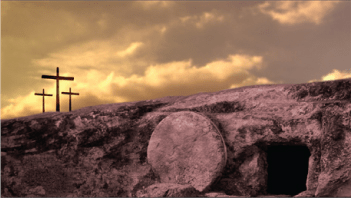
This past Sunday, the church universal celebrated Resurrection Sunday, which marks the annual commemoration of Jesus’ resurrection from the dead. And, unfortunately, for most churches, especially those stemming from low church or free church traditions, this celebration will be quickly forgotten as they slide back into their usual routine of doing church every week. Sadly, most of the people who attended church yesterday, because it was Easter Sunday, will simply resume their normal routines, and they will continue to live as if the resurrection is simply an interesting story that happened long ago but has no real impact on their daily lives.
This is where I believe the historic Church Calendar can aid us in our spiritual formation. According to that traditional reckoning of the church’s annual worship rhythms, the celebration of the resurrection is not simply something that is relegated to one Sunday per year. No, the season of the Resurrection lasts for almost two months and culminates in the church’s celebration of the coming of the Holy Spirit on the Day of Pentecost. Just as Jesus spent 40 days after His resurrection with His disciples teaching them about the kingdom before He ascended, observing the Resurrection as a season in the church’s worship can help us to more fully understand, appreciate, embrace, and be formed by that most essential of historical foundations that Christ is risen!
So, during my sermon this past Sunday, I challenged those who were in attendance simply because it was Easter, that if they really wanted to be Easter only Christians, then I would expect to see them in Church for the next seven consecutive Sundays. I doubt that many of them will heed that challenge, nevertheless, the Season of the Resurrection, sometimes called Eastertide, is an invitation for Christians, both corporately and individually, to intentionally position ourselves in a place where the Spirit may take us deeper into the wonder and mystery of Christ crucified and resurrected.
So, in the limited space that follows, let me offer some practical suggestions on how Christians, both as individuals and as congregations, might navigate the next seven weeks leading up to Pentecost so as to grow in and be formed by the wonderful mystery of the Gospel.
First, read through, or reread through, one of the four Gospels in the light of Jesus resurrection. The lectionary for the Season of the Resurrection is going to be taking us through the Gospel of John, but you may choose another one of the four. Whichever you choose, try to read it as one of the first followers of Jesus. The Gospels tells us that it was only after Jesus resurrection that they truly began to understand more fully all that He had said and done during His ministry. And one of Jesus’ last instructions to His followers was that they were to go into all nations teaching them to observe all that He had commanded them. (Matthew 28.20)
Second, whether you are a preacher or simply a listener, ask yourself how the resurrection makes what you are saying and/or hearing in the sermon possible. It has been said many times perhaps, but it bears repeating: if what you are preaching doesn’t require Jesus, then you’ve missed the point. Paul said that the resurrection is the linchpin, if you will, of the Gospel (1 Corinthians 15), so how does the truth of Christ’s resurrection impact or influence the message of whatever particular text you are preaching. Here again, I would suggest considering the lectionary as a basis for determining a preaching schedule (see my post here), but wherever your preaching schedule is going, it is all meaningless without the resurrection of our Lord.
Third, be actively and intentionally involved in the life of the local church. During the Season of the Resurrection, the Lectionary replaces the Old Testament reading with a passage from the Acts of the Apostles. This is because the 50 day Season of the Resurrection culminates in the celebration of the coming of the Spirit on Pentecost, which might be called the birthday of the church. Jesus’ resurrection makes it possible for His followers to live in new life free from the power of sin, and the indwelling of the Holy Spirit makes it possible for those followers to live in a new kind of Christian community, one characterized by love and service. So, during this Season of the Resurrection, seek out intentional ways to love and serve people in the local church.
The simple fact of the matter is that the Christian faith is meaningless without the resurrection of Jesus. Without it, Jesus is just another nameless victim executed by the Roman Empire; His death is pointless. The Apostle Paul said as much in his first letter to the church at Corinth, “And if Christ has not been raised, your faith is worthless; you are still in your sins.” (1 Corinthians 15.17). So, if we truly believe that the death and resurrection of Jesus is the necessary and essential heart of the Christian Gospel, then it deserves to be celebrated more than just one Sunday per year. This Resurrection Season, let us remember that we worship a Risen Lord!


 Faith seeking Understanding
December 1st, 2019 at 5:10 PM
[…] For Further Study, see: On the Use and Benefit of the Christian Calendar On the Use and Benefit of the Lectionary On the Epiphany of Our Lord Jesus Christ On the Season of Lent On the Season of Easter […]
April 3rd, 2023 at 12:04 PM
[…] For further study, seeOn the Annual Celebration of Christmas and EasterOn the Crucifixion and Why It Matters at ChristmasOn the How the Death of Jesus Changed EverythingOn Why Christians Still Need the GospelOn Remembering the GospelOn Jesus’ Understanding of His DeathOn the Season of Easter […]