Several months ago, Matthew Barrett, then a professor at Midwestern Baptist Theological Seminary, announced that he was leaving the SBC to become Anglican. Shortly thereafter, he took a position as Research Professor of Theology at Trinity Anglican Seminary, and he and his family joined St. Aidan’s Anglican Church in Kansas City. He detailed his reasons for making this change in an article on his blog/newsletter, Anselm House. Basically, he suggests that the SBC “officially rejected” Nicene orthodoxy, that the SBC values image over external (read episcopal) authority, and that the “baptist” hermeneutic is ultimately individualistic in its rejection of infant baptism. Though I find these criticisms to be greatly flawed and wholly inaccurate as representations of Baptist theology and ecclesiology, it is not my purpose to respond to them here. This has already been done by several others who are more capable than me. (For example, see Denny Burke’s response here.)
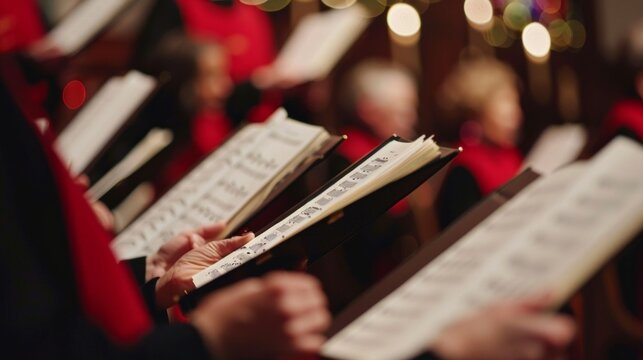
Rather, I would like to respond to another component of Barrett’s argument for Anglicanism, that being the beauty and and antiquity of its liturgy. After giving a rather glowing description of the elements and order of an Anglican worship service, including pictures, he goes on to write, “What a comfort to tell our kids, “The way we are worshipping is how Christians have worshipped across history. It’s really, really old. You are participating in the church universal.”” Now, let me just say that I have no small appreciation for high church liturgy. I have previously written on the use and value of the lectionary, the Christian calendar, and church tradition. I think there is much that modern churches, with their consumeristic performance based, emotion driven worship services, could learn from these practices. However, to say that “Anglicanism is the most beautiful representation of classical Christianity” is surely to place preferences of form over matters of substance.
The fact of the matter is that the early church’s worship was simple; it revolved around Word and Table, fellowship and prayer. As we read in Acts 2.42, “They devoted themselves to the apostles’ teaching, to the fellowship, to the breaking of bread, and to prayer.” Beyond this, we simply do not know what worship services in the early church consisted of. We have scattered liturgical details and other descriptions throughout the New Testament, but we do not have an official liturgy for the early church. Did they sing psalms? Probably. Did they read the Scriptures? Definitely. Did they pray together? Likely. Did they observe the ordinances of baptism an the Lord’s Supper? Clearly. Did they recite early kinds of creedal statements? Possibly. Of course, as the church grew, more formal liturgies were understandably developed, especially in the second and third centuries, and by the fourth century, there seems to have been a common or shared understanding of what the worship of the church should include and how it should progress. But, contrary to Dr. Barrett’s claim above, there is simply no proof that the Anglican liturgy is “how Christians have worshipped across history.” No doubt there are many similarities, but there is likely just as many differences that vary across place and time.
However, the more basic point that needs to be underscored here, I believe, is that the church’s worship, no matter what form or style it is expressed in, is beautiful. When God’s people gather together to sing His praise, to hear from His Word, to intercede in prayer for one another, to commemorate the Gospel is baptism and eucharist, there is simply nothing that is more beautiful, nothing more majestic, nothing more glorious. The voices of the saints singing and praying and confessing and expositing the great works of God in Christ as one gathered and united body in the Spirit is the most beautiful thing in this world. Of course, as I noted above, this beauty has sadly been lost in many churches today; we have turned the church’s worship into a show. We have exchanged beauty for spectacle, truth for emotion, participation for entertainment, and this is especially so in churches that do not come stand in the line of high church traditions. But, the point is that it is narrow minded and arrogant to suggest that one particular form or tradition of worship is the most beautiful, the most ancient, the most formation to the exclusion of all others.
In the Book of Revelation, John writes, “After this I looked, and there was a vast multitude from every nation, tribe, people, and language, which no one could number, standing before the throne and before the Lamb” (Revelation 7.9). This vision of the diversified and redeemed people of God standing before the heavenly throne praising God should help us to understand the beauty of the church’s worship. We do not all sing with one voice, we do not all worship in the same way. Every tradition, every culture, every community has its own way of worshiping God, and this is beautiful. The glory of God in Christ cannot be wholly encapsulated in just one worship tradition, but wherever there are genuine believers who are gathered together to worship God in Spirit an truth, this is beautiful. Every church has its own liturgy, whether it be formal or informal, but when we prioritize the form of our worship over the object of our worship, then we have missed the mark. Christ is the focus of our worship, there is no way that we could ever find enough ways to magnify and exult in His glory.

 Faith seeking Understanding