Tag Archives: Leadership

On Pastoral Ministry and Job Titles

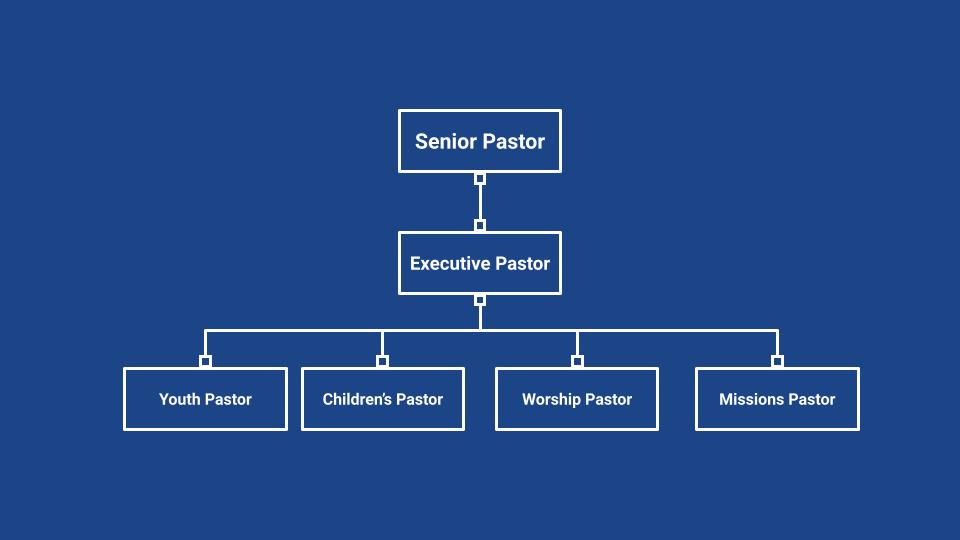
Language really is a funny thing, because so often how words are used determines what they mean regardless of their actual definition. Or to put it another way, meaning is dictated by connotation more than by actual denotation. This is especially so when it comes to current discussions in the Southern Baptist Convention about who can and cannot serve as pastor. Over the past several decades, the titles and types of pastors on church staffs all across this country have proliferated exponentially. We now have Senior Pastors, Lead Pastors, Teaching Pastors, Executive Pastors, Assistant Pastors, Associate Pastors, Youth Pastors, Children’s Pastors, Worship Pastors, Discipleship Pastors, Missions Pastors, Small Group Pastors, Assimilation Pastors, and on and on the list could go ad infinitum. Just a quick perusal of any ministry job board shows that we have practically become enamored with pastoral titles.

Of course, there is a certain wisdom to this structure. No one pastor is omnicompetent in every area of ministry, and as survey after survey has proven, expecting a single or solo pastor to be such quickly leads to burnout among other things. So, dividing pastoral duties among a group of leaders allows the pastoral staff to share the load of ministry responsibilities. This is in keeping with the vision of the body that is painted in 1 Corinthians 12.12-31. In that passage, we read “For just as the body is one and has many parts, and all the parts of that body, though many, are one body—so also is Christ.” The point is that dividing ministry responsibilities according to age groups (youth, children, seniors) or according to ministry focus (missions, discipleship, pastoral care) is an efficient way for a pastoral staff to share the many and varied tasks of church ministry. This division of labor maximizes the personality strengths, training, and experience of each individual pastor by allowing them to prioritize and focus on the ministry tasks for which they are best equipped.

The difficulty, however, is that the Bible never mentions associate or assistant pastors of any kind. In fact, the word “pastor”, which is the most commonly used title for ministry leaders today, is not even the primary designation used to refer to church leadership roles in the New Testament. In those sacred pages, we read more often of bishops (overseers) and elders, but we must affirm that these three terms, i.e. pastor, bishop, and elder, are meant to be viewed as synonymous terms, all of which refer to the ministerial leaders of the local church. Of course, this claim is not without its critics. Those who claim that women can serve as pastors are quick to claim that the role and function of pastor/teacher is separate and distinct from the role of bishop/elder. And so, the logic goes, women can serve in the role of pastor/teacher (e.g. as children’s pastor, women’s pastor, missions pastor, etc.) under the supervisory authority of the senior or lead pastor and/or elders.

Unfortunately, a thorough examination of the scriptural evidence would go beyond the limits of this space, but a quick examination of one particular passage will serve to demonstrate the thesis that the role of pastor, bishop (overseer), and elder are in fact the same role. In 1 Peter, chapter 5, verses 2, the Apostle Peter gives the following exhortation to the elders (c.f. 5.1) of the churches that he is writing to, shepherd (or pastor, same word) the flock of God among you, exercising oversight, not under compulsion but voluntarily, according to the will of God”. Peter goes on to show that elders exercise these responsibilities under the authority of Jesus Christ, the Chief Shepherd (or “Senior Pastor”, c.f. 5.4), who is the “shepherd (or pastor) and guardian (or bishop) of your souls” (2.25). This is not the only text that relates these ideas, but it is reasonably clear from this text that the responsibility for oversight and pastoring belongs primarily to those who serve as elders. If this analysis is sound, then the qualifications and restrictions that pertain to one must equally pertain to the others.

This is why we must reevaluate our use of pastor as a title for ministry leadership, particularly as it relates to the role of women leaders in the church. The application of the title “pastor” to women leaders who serve, for example, in the area of children or missions is careless at best and a complete disregard of the prescriptions of Scripture at worst. Further, we must affirm that changing the title from “pastor” to “director” while leaving the ministry responsibilities the same is merely wordplay. The New Testament is never interested in titles solely for the sake of titles; the biblical titles for leadership always refer first and foremost to the functions of leadership. And it is the function of bishop, elder, and pastor that is restricted to qualified men according to the Scriptures. Here again, this does not mean that women cannot participate in the ministry of the church, but it does mean that women should not serve in the role or function of pastor.

At the very least, this means that we desperately need to reevaluate our (over)usage of the title pastor. As the 2000 Baptist Faith & Message states, “[The church’s] scriptural officers are pastors and deacons. While both men and women are gifted for service in the church, the office of pastor is limited to men as qualified by Scripture.” There are two and only two offices of leadership in the church, i.e. pastors and deacons, and the office and function of pastors is limited to qualified men. This is the design of God given in His inspired, authoritative, and sufficient Word, and it cannot be dismissed simply because we find it to be distasteful or out of step with modern cultural concerns. We must obey the Scriptures; we cannot play fast and loose with words, change their meanings, or fit them to our own preferred usage. Words have power and meaning, and we must use them in ways that are scripturally faithful.

This article is also published at SBCvoices, here.


On the Spiritual Gift of Pastoral Ministry

It seems like there has been a lot of discussion recently, especially within the Southern Baptist community, regarding pastoral ministry and the role of women. This is largely due to the actions taken by Rick Warren and Saddleback Church. In May 2021, the southern California megachurch made denominational headlines when it ordained three women as pastors. Since then, it has also recognized Stacie Wood, wife of current pastor Andy Wood who succeeded Warren in 2022, as a Teaching Pastor. Because of these actions, the Credentials Committee of the Southern Baptist Convention determined that Saddleback Church is no longer “in friendly cooperation” with and therefore is no longer a part of the SBC. Saddleback intends to appeal this decision at this year’s national convention.

In this post, I am not concerned with the question of Saddleback or its future relationship with the SBC. Rather, I am interested in some of the biblical arguments that have been proffered throughout this discussion in the attempt to justify the pastoral service of women in the church. One pastor in particular, Dwight McKissic of Cornerstone Baptist Church in Arlington, TX, regularly advances the argument that pastoral ministry is a spiritual gift that can be exercised apart from the function and office of pastor. In his defense, he affirms that the role of lead or senior pastor is reserved for men according to the Scriptures, but he suggests that, under the pastor’s authority, the gift of pastor may be exercised by anyone so gifted regardless of gender.

This argument is primarily based on Ephesians 4.11, which says, “And he himself gave some to be apostles, some prophets, some evangelists, some pastors and teachers.” The verb “gave” points back to verse 8 (quoting Psalm 68.18), which reads, “When he ascended on high, he took the captives captive; he gave gifts to people.” The language of “gifts” and “giving” suggests to some that this passage should be read alongside the paradigmatic “spiritual gift” passages, e.g. 1 Corinthians 12, Romans 12, and it is this coalescence of passages that leads to the conclusion that pastoral ministry is a spiritual gift that can be exercised apart from the office and function of pastor. I believe there are several problems with this interpretation, and in the space that follows, I would like to highlight three of them.

First, this view rests on a grave misunderstanding of “spiritual gifts”. In English, the word “gift” can be used to refer to an ability or a talent; it is customary to speak of someone who is extremely skilled in a particular ability as someone who is “gifted.” This is the fundamental assumption of so-called “spiritual-gift inventories”, namely that a person’s “spiritual gifts” are in keeping with or even identical to their natural abilities and personality strengths. If this is the case, then anyone who has a strong personal charisma or is particularly skilled in public speaking could be viewed as having the “spiritual gift” of pastor/teacher. The problem is that none of the qualifications for pastoral ministry in the NT are based on a person’s ability or skill; almost all of them are grounded in the qualities of a person’s character. In his book What are the Spiritual Gifts?: Rethinking the Conventional View, Ken Berding suggests that this connotation of gifts as abilities has significantly skewed our understanding of what Paul actually means by “spiritual gifts”. Rather, he argues that spiritual gifts should be understood as ministry roles or areas of service. In this sense, pastors are a gift to the church; they are called by God to serve a particular role or function in the life of the body.

This brings me to the second concern I have with this view, namely that it misunderstands the role and function of pastors in the life of the body. In Ephesians 4.12, we read that these gifts, i.e. apostles, prophets, evangelists, and pastor/teachers, are given “to equip the saints for the work of ministry, to build up the body of Christ.” In other words, the roles that are given in verse 11 are given for the edification of the body in verse 12, meaning that they are not exercised among the body at large. They are leadership roles given by Christ to care for and serve His body, “until we all reach unity in the faith and in the knowledge of God’s Son, growing into maturity with a stature measured by Christ’s fullness” (4.13). This understanding would seem to be confirmed by Ephesians 2.20, which says that the church is “built on the foundation of the apostles and prophets, with Christ Jesus himself as the cornerstone.” This would mean that pastoral ministry is a leadership role in the church, and therefore it is not a gift to be exercised among the various members of the body regardless of gender.

A final concern that I would like to highlight in this regard has to do with the misunderstanding of the phrase “some pastors and teachers”. Is this phrase referring to one group, i.e. pastor/teachers, or is it actually two groups that are in view, i.e. some pastors and some teachers? Exegetically speaking, the two nouns are governed by one article, and this is the same article that identifies the other three groups. So, literally translated, the verse in question reads, “And he gave the apostles, the prophets, the evangelists, the shepherds and teachers(Eph 4.11 ESV). The most natural reading would indicate that there are four groups of leaders in view here, and that the last group, i.e. “pastors and teachers,” should be understood as one group with a compound role of shepherding and teaching. Of course, this is not the only way to understand this line (e.g. see the footnote in the NET Bible for an alternative view), but the fact remains that all pastors are teachers, even if not all teachers are pastors. The close proximity of the terms here along with the use of the article would seem to imply that it is pastor/teachers who have been gifted by Christ to His church, and therefore, pastoring cannot be viewed as a gift that is exercised apart from the role and function of pastor.

If this is the case, then the question of who may fill such a function in the church must be answered in light of the qualifications that are given for pastoral service. In particular, this would mean that the famous (or perhaps infamous) prohibition found in 1 Timothy, chapter 2, verse 12 must be taken into consideration; in that verse, we read, “I do not allow a woman to teach or to have authority over a man; instead, she is to remain quiet.” This is not to say that women cannot teach in the church, but it is to say that Ephesians 4.11 cannot be used to define such a role. Pastoral ministry is a leadership role in the church that is limited to qualified men per the Scriptures, and we simply cannot set those limitations aside based on our modern understanding of giftedness or ability. Certainly, the service of women in the church is vital and necessary for the health and growth of the church (c.f. Titus 2), but we must submit ourselves to the prescriptions of Holy Scripture, which limit the role and function of pastor to qualified men.

This article is also posted at SBCvoices, here.


On a Vision for Cooperative Preaching Ministry

A well known seminary president recently tweeted, “Any consideration of Christian preaching must begin with the realization that preaching is essentially an act of worship—the central act of Christian worship.” Putting the possible overstatement aside, the preached word has been a staple of the church’s theological, doxological, and ethical life together since its very inception. Even today, in most churches, preaching occupies the primary place of emphasis and importance in the weekly worship gathering. However, more often than not, the priority of preaching in today’s churches has to do with the charisma and polish of the preacher rather than the authority of God’s Word. We have created a celebrity culture that platforms the personality of the most proficient speakers among us, so that the local church’s experience of the word of God revolves around the insight and understanding of one man.

However, if we believe that a plurality model is the most biblically consistent model for pastoral leadership in the church, then it necessarily follows that we should apply that model to the ministry of preaching as well. In other words, if the responsibilities and burdens of pastoral ministry are best shared among a band of brothers who are equal in position and authority, then the responsibility and burden of the word of God should be shared also. In the paragraphs that follow, I would like to highlight three ways in which a cooperative approach to preaching can benefit the local church, and then I would like to sketch briefly what this approach might look like practically.

The first way that this approach benefits the local church is that it nourishes the primary preaching pastor(s) by helping him to keep his spiritual tank full and avoid burnout. Week after week, the teaching pastor is responsible for feeding the flock; he is locked away in his study preparing lessons and bible studies and sermons. He is expected to give and give and give of himself, and when this continues without any respite, eventually his spiritual fuel tank will hit zero. Of course, most teaching pastors are glad to do this, but the question remains: who feeds the pastors? Shouldn’t the teaching pastor also be able to find spiritual nourishment within the local body of Christ as God intended, or must he resort to online preaching from pastors he admires but doesn’t know personally? A cooperative approach to teaching in the local church helps us to care for and sustain every part of our body, especially the pastors and teachers who faithfully sustain us. 

A second way this approach benefits the local church is that it provides the flock with a diversified diet of spiritual truth. Of course, God’s truth is absolute and unchanging, but it comes to us in vessels that are finite, broken, incomplete. No one has an exhaustive and complete understanding of everything in the Bible. No matter how much they might prepare and study, on this side of glory, their understanding of its truths will always be incomplete. Moreover, every minister of God’s Word comes to the text with different backgrounds, different experiences, different perspectives, and this is a good thing, because, as the Scriptures remind us, “iron sharpens iron” (Proverbs 27.17). There is nothing wrong with one pastor or elder holding the primary teaching responsibility, but it is good and healthy for the congregation to hear from other faithful voices from time to time. In this way, the congregation cultivates a complementary and more holistic understanding of the truth.

And lastly, the third way that a cooperative approach to pulpit ministry benefits the local church is that it accomplishes our commission. The Great Commission is to make disciples, and part of making disciples, as the Apostle Paul instructed Timothy in Second Timothy, chapter 2, verse 2, is committing to faithful men what we have heard who will then be able to teach others also. Local churches are called to train up the next generation of leaders, faithful men who can step into the pulpit and teach the Word of God faithfully. As pastors and elders, we must look forward to our succession. Who have we invested in that will be able to take up the baton of God’s Word when we are gone? A collaborative approach to teaching allows us to train and prepare faithful men, to give them the opportunity to stand before their spiritual family and teach the Word of God in the safety of a community that loves and supports them. 

In an ideal plurality situation, the primary preaching pastor should preach between 35 and 40 sermons annually; mathematically, this would come out to about three sermons per month. The remaining 15 or so can be equally shared among the other members of the elder team. However, a cooperative approach to the ministry of preaching goes beyond the allocation of Sundays. It should include discussion and planning of the direction for not only the series overall but of individual texts, and it should also include the opportunity for evaluation and feedback. Of course, this approach does not remove the individual pastor’s responsibility for textual work; every minister of the word must commit themselves to hard work of plumbing its depths. But it does mean that we are not alone in the process. As plurality of brothers, we come alongside each other in the ministry of the Word, so that we all can attain unto “maturity with a stature measured by Christ’s fullness.” (Ephesians 4.13)

This article is also posted at SBCvoices, here.


Slow To Write

"let every person be quick to hear, slow to speak, slow to anger."

lovegavehope

Just another WordPress.com site

Jared Cornutt

Pastor | Speaker | Writer

Denny Burk

A commentary on theology, politics, and culture

G3 Ministries

Events + Resources for the Local Church

Biblical Reasoning

Biblical and Systematic Theology According to the Scriptures

RetroChristianity

Reclaiming the Forgotten Faith

SBC Voices

Southern Baptist News & Opinion

Lucid Theology

Thoughts on words, books, theology, and life.

Baptist21

A pastor-led voice for Baptists in the 21st century

Center For Baptist Renewal

The Personal and Professional Blog of Phillip Powers

The Pastor's Well - Pastor Well

The Personal and Professional Blog of Phillip Powers

Articles - AlbertMohler.com

The Personal and Professional Blog of Phillip Powers

The Gospel Coalition

The Personal and Professional Blog of Phillip Powers